
Inferensys

Integration

AI Integration for ServiceTitan Asset Management

Connect AI to ServiceTitan's asset tracking to predict equipment failures, automate preventive maintenance scheduling, and build intelligent lifetime service histories for customers.
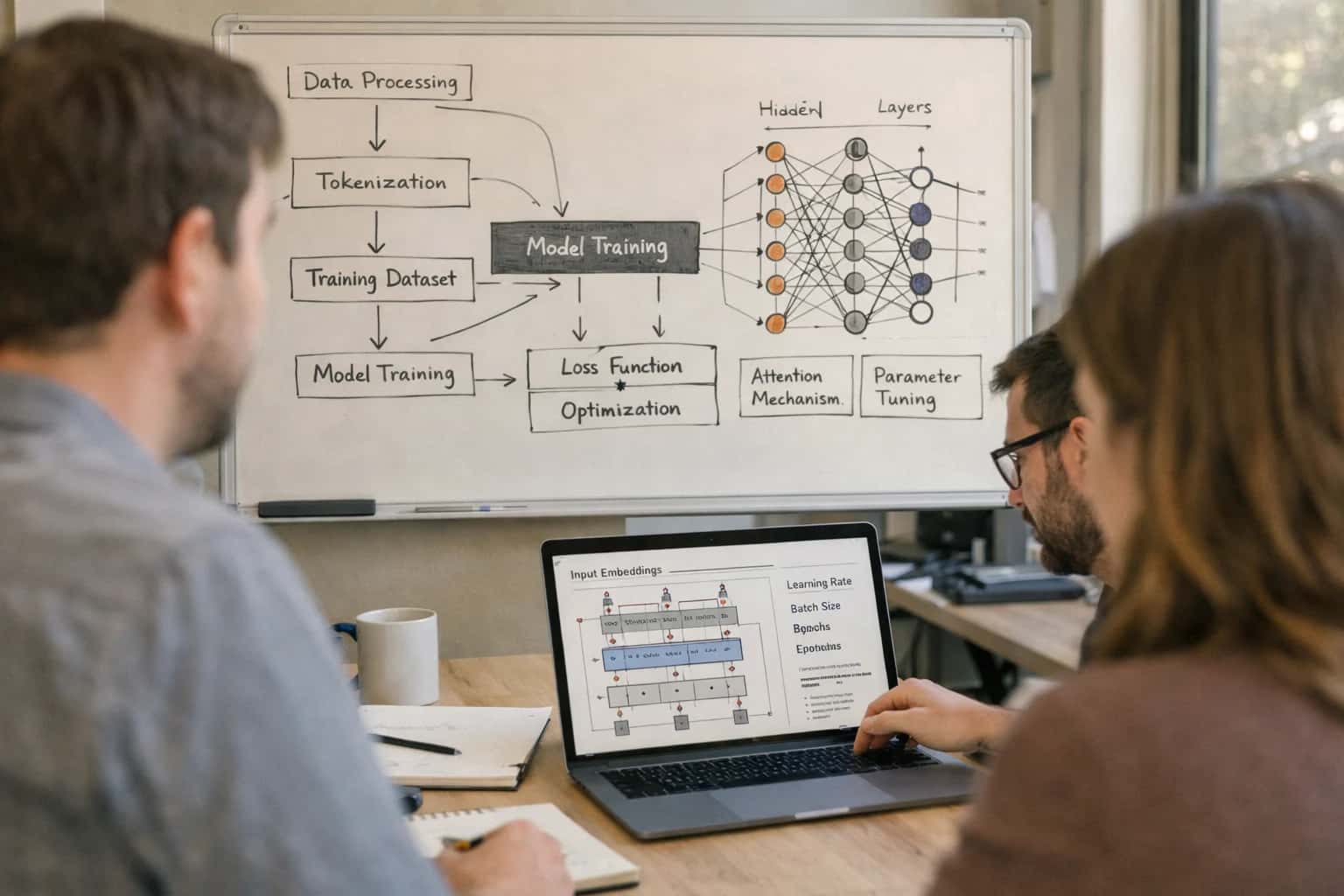
ML engineer developing custom LLM, model architecture diagrams on screens, technical deep work environment.
ARCHITECTURE AND ROLLOUT

Where AI Fits into ServiceTitan Asset Management

Integrating AI into ServiceTitan's asset management module transforms reactive service into predictive maintenance and intelligent lifecycle management.

AI connects to ServiceTitan's asset data model through its Asset and ServiceHistory objects, the PreventiveMaintenance campaign engine, and the Job API. The integration focuses on three key surfaces:

  • Asset Health Scoring: Continuously analyzes work order history, parts replaced, and technician notes to calculate a real-time health score for each piece of equipment.
  • Predictive Maintenance Triggers: Uses ML models on historical failure data to predict the next likely service event, automatically generating a recommended PreventiveMaintenance campaign or a draft Job linked to the asset.
  • Lifetime Value Analytics: Correlates asset service cost, warranty status, and customer contract data to identify high-risk or high-value assets for proactive account management.


Implementation typically involves a middleware service that subscribes to ServiceTitan webhooks for new Jobs and Invoices. This service uses the data to train and run lightweight models, then writes predictions and recommendations back to custom fields on the Asset record or creates tasks in the ServiceTitan Dispatch Board. For example, after a HVAC repair job is marked complete, the system can:

  1. Update the asset's health score and predicted next failure date.
  2. Check inventory for the recommended replacement part and trigger a low-stock alert if needed.
  3. Optionally, draft a follow-up PreventiveMaintenance quote and schedule a callback for the customer.

Rollout should be phased, starting with a pilot on a single asset type (e.g., commercial boilers). Governance is critical: predictions should be presented as recommendations to dispatchers or service managers, not automatic job creation, with clear audit trails in ServiceTitan's Notes or a custom log object. This ensures human oversight while capturing data to refine model accuracy over time. The business impact is directional: reducing emergency "no heat" calls by shifting work to scheduled maintenance windows, improving first-time-fix rates through better parts forecasting, and increasing customer retention by demonstrating proactive care for their investments.

ASSET MANAGEMENT

Key ServiceTitan Surfaces for AI Integration

The Foundation for Predictive Intelligence

The Asset Registry is the core system of record for every piece of equipment your customers own. Each asset record contains critical metadata (make, model, serial number, installation date) and, most importantly, its complete service history. This linked timeline of work orders, parts used, technician notes, and invoices is the primary data source for AI models.

Integrating AI here allows you to:

  • Build a Lifetime Health Profile: Correlate service frequency, repair types, and parts failure rates to calculate an asset's "reliability score."
  • Enable Semantic Search: Use RAG (Retrieval-Augmented Generation) to let technicians ask natural language questions (e.g., "What's the most common fix for this furnace's error code E4?") and get answers grounded in your company's historical work on that specific model.
  • Automate Documentation: Use AI to summarize lengthy technician notes from past visits into concise maintenance narratives for customer reports or internal review.
SERVICETITAN

High-Value AI Use Cases for Asset Management

Transform static asset records into intelligent, predictive service drivers. These AI integration patterns connect directly to ServiceTitan's asset objects, work order history, and inventory data to automate maintenance, reduce emergency calls, and build customer lifetime value.

01

Predictive Failure & Proactive Scheduling

Analyze historical work orders, parts replaced, and service intervals attached to each asset record. AI models identify failure patterns and automatically generate preventive maintenance work orders in ServiceTitan, scheduling them based on technician skill and parts availability. Shifts service from reactive to planned.

Emergency -> Planned
Service model shift
02

Lifetime Cost & Renewal Intelligence

Build a dynamic cost-of-ownership model for every customer asset by aggregating labor, parts, and warranty data from past jobs. AI surfaces high-value renewal opportunities and generates personalized service agreement proposals within ServiceTitan's CRM, prioritizing assets with rising repair costs.

Same day
Proposal generation
03

Intelligent Parts Forecasting

Link asset service history to ServiceTitan's inventory module. AI predicts parts consumption for upcoming scheduled PMs and common repairs, generating automated purchase orders and optimizing van stock levels. Reduces parts-related reschedules and truck rolls.

Stockouts ↓
Inventory impact
04

Warranty & Recall Automation

Continuously monitor asset makes, models, and serial numbers against manufacturer databases. AI automatically flags in-warranty assets on new work orders and identifies recall-eligible equipment, creating service campaigns and notifying customers through ServiceTitan's communication tools.

Batch -> Real-time
Compliance monitoring
05

Technician Context for Asset History

When a technician opens a job, an AI copilot instantly summarizes the asset's complete service history—past issues, replaced parts, customer notes—from ServiceTitan's records. Provides diagnostic context in seconds, improving first-time fix rates and customer trust.

Minutes -> Seconds
History access
06

IoT Sensor Integration & Alerting

Ingest data from connected customer equipment (HVAC, plumbing sensors) via webhook. AI analyzes telemetry against asset baselines in ServiceTitan, creating high-priority work orders for anomalies before failure. Turns IoT data into actionable, revenue-protecting service tickets.

Proactive Alerts
Incident model
SERVICE TITAN ASSET MANAGEMENT

Example AI-Powered Asset Workflows

These workflows illustrate how AI agents and models can be integrated with ServiceTitan's asset objects, maintenance records, and scheduling engine to automate preventive care, predict failures, and build intelligent service histories.

Trigger: A nightly batch job analyzes all customer assets in ServiceTitan against failure models.

Context Pulled: For each asset (Asset object), the agent retrieves:

  • Service history (Job records linked to the asset)
  • Manufacturer, model, and installation date
  • Recent IoT sensor readings (if integrated via custom fields or external API)
  • Environmental data (e.g., local weather API for HVAC units)

AI Action: A machine learning model scores each asset for failure risk in the next 30-90 days. For high-risk assets, a reasoning agent generates a recommended maintenance action (e.g., "Replace capacitor," "Clean condenser coil") based on historical repair data.

System Update: The agent creates a new PreventiveMaintenanceCampaign record in ServiceTitan for the customer. It then uses the Scheduling API to propose available appointment slots, respecting:

  • Technician certifications (e.g., "HVAC Level 2")
  • Required part availability in the local warehouse
  • Customer's preferred service windows

Human Review: The proposed PM job appears on the dispatcher's board with an "AI-Recommended" flag and the risk score. The dispatcher can approve, modify, or reject the job with one click.

BUILDING A PREDICTIVE MAINTENANCE PIPELINE

Implementation Architecture: Data Flow & Integration Patterns

A practical blueprint for connecting AI models to ServiceTitan's asset data to predict failures and automate maintenance scheduling.

The integration architecture connects three core layers: ServiceTitan's Equipment and Service History objects, an external AI/ML inference service, and the platform's Preventive Maintenance (PM) Campaign and Job creation APIs. The primary data flow begins by extracting historical work orders, parts usage, and customer notes for tagged assets via ServiceTitan's REST API on a scheduled basis. This data is enriched with external signals (e.g., local weather, manufacturer recall feeds) and transformed into features for a machine learning model hosted in your cloud (e.g., an AWS SageMaker endpoint or Azure ML workspace). The model outputs a risk score and recommended service window for each asset, which is then written back to a custom Asset Health object in ServiceTitan via the API.

High-impact workflows are triggered from these predictions. For assets flagged as high-risk, the system can automatically:

  • Create a Preventive Maintenance Job linked to the asset and customer, pre-populating the likely tasks and required parts based on historical patterns.
  • Add the job to a smart PM Campaign with a dynamically calculated priority, making it visible on the dispatch board.
  • Send a templated, personalized recommendation to the customer via ServiceTitan's communication tools, proposing the service and offering a link to self-schedule. The integration must respect business rules—such as not creating jobs for customers on a credit hold or for out-of-warranty assets without approval—which are enforced through a lightweight orchestration layer (using a tool like n8n or a custom service) that sits between the AI service and ServiceTitan.

Rollout and governance are critical. Start with a pilot on a single asset category (e.g., residential HVAC units). Implement a human-in-the-loop approval step for the first 100 AI-generated job recommendations, allowing service managers to validate or reject them in a dedicated dashboard. This creates a feedback loop to retrain the model. Ensure all AI-generated actions create a clear audit trail by logging the source prediction, triggering data, and user approval (if required) as notes on the ServiceTitan job record. For a production implementation, consider using a vector database like Pinecone to power a RAG-based Technician Copilot that provides repair history and manuals contextually, creating a closed-loop system where field notes improve future predictions. Explore our related guide on AI Integration for ServiceTitan Technician Copilots for details on that mobile layer.

SERVICETITAN ASSET MANAGEMENT

Code & Payload Examples

Triggering a Predictive Maintenance Work Order

When an asset's health score drops below a defined threshold, you can call the ServiceTitan API to create a preventive maintenance work order automatically. This Python example uses a hypothetical ML service to get a prediction and then creates the job in ServiceTitan.

python
import requests

# 1. Fetch asset data and get AI prediction
asset_data = get_servicetitan_asset(asset_id="AST-12345")
prediction = call_ml_service(
    model="failure_predictor",
    features={
        "age_months": asset_data["age"],
        "last_service_hours": asset_data["runtime_since_service"],
        "error_code_history": asset_data["recent_faults"]
    }
)

# 2. If high risk, create a PM work order
if prediction["risk_score"] > 0.85:
    job_payload = {
        "customerId": asset_data["customerId"],
        "jobTypeId": 112233,  # ID for 'Preventive Maintenance'
        "priority": "Medium",
        "summary": f"AI-Generated PM: {asset_data['name']} - High failure risk predicted.",
        "description": prediction["reasoning"],
        "customFields": [
            {
                "name": "AI_Risk_Score",
                "value": str(prediction["risk_score"])
            }
        ]
    }
    
    response = requests.post(
        "https://api.servicetitan.io/jobs/v2/jobs",
        headers={"Authorization": f"Bearer {API_TOKEN}"},
        json=job_payload
    )
    print(f"Created PM job: {response.json()['id']}")
AI-POWERED ASSET MANAGEMENT

Realistic Time Savings & Business Impact

How integrating AI with ServiceTitan's asset tracking transforms maintenance from reactive to predictive, reducing downtime and building customer lifetime value.

Asset Management WorkflowBefore AI IntegrationAfter AI IntegrationImplementation Notes

Preventive Maintenance Scheduling

Calendar-based or manual triggers

AI-driven, condition-based triggers

Uses asset age, usage, service history, and IoT data to predict optimal service windows.

Failure Prediction & Alerting

Reactive, after customer call

Proactive, days or weeks in advance

Models analyze historical failure patterns and sensor trends to flag at-risk assets.

Service History Compilation

Manual entry by technicians

Automated lifetime record building

AI aggregates notes, parts, invoices, and photos into a searchable asset timeline.

Parts & Labor Estimation

Manual lookup from catalogs and past jobs

AI-recommended kits and durations

Suggests common part replacements and labor hours based on similar asset repairs.

Warranty & Contract Compliance

Manual review of paperwork

Automated validation and alerts

Cross-references service actions with warranty terms and contract SLAs.

Customer Renewal Proposal Generation

Manual analysis and drafting

AI-generated, personalized proposals

Creates renewal quotes with ROI analysis based on asset health and service value.

Asset Health Reporting

Static, periodic reports

Dynamic, executive dashboards

Provides natural language queries (e.g., 'show me assets with rising repair costs').

ARCHITECTING A CONTROLLED IMPLEMENTATION

Governance, Security, and Phased Rollout

A production-ready AI integration for ServiceTitan Asset Management requires deliberate planning for security, data governance, and incremental value delivery.

Governance starts with defining which asset data is accessible to the AI. This typically involves scoping access to ServiceTitan's Equipment and ServiceHistory objects, Preventive Maintenance schedules, and related Job records. A secure integration uses ServiceTitan's OAuth 2.0 API with role-based access controls (RBAC) to ensure the AI agent only reads and writes to permitted data scopes. All predictions and recommendations should be logged to a dedicated AI_Audit_Log custom object within ServiceTitan, creating a transparent lineage for every AI-suggested maintenance action, part order, or failure prediction.

For security, the AI model and its vector store for equipment manuals or historical work orders should be deployed in a private cloud environment, not directly within ServiceTitan's infrastructure. This creates a clear security boundary. API calls between ServiceTitan and the inference service are encrypted in transit, and sensitive customer or asset identifiers are hashed or tokenized before processing. The system should be designed for phased rollout: start with a pilot on a single, non-critical asset class (e.g., residential water heaters) to validate prediction accuracy and user adoption before expanding to commercial HVAC systems or fleet vehicles.

A successful rollout follows a crawl-walk-run approach: Phase 1 focuses on read-only insights, where the AI analyzes asset history to surface high-risk equipment on a dashboard without automating any workflows. Phase 2 introduces assisted actions, such as AI-drafted preventive maintenance recommendations that a manager must approve before they become scheduled jobs in ServiceTitan. Phase 3 enables conditional automation, where the system can automatically generate and dispatch low-risk, high-confidence PM work orders based on predefined rules and confidence thresholds, always with an option for human override. This controlled, audit-friendly approach minimizes operational risk while building trust in the AI's decision-making, ensuring the integration enhances—rather than disrupts—your field service operations.

IMPLEMENTATION

Frequently Asked Questions

Common technical and operational questions about integrating AI with ServiceTitan's asset management module to enable predictive maintenance and lifetime service histories.

AI integration typically connects via ServiceTitan's REST API to key objects. The primary targets are:

  • Asset Objects: Pull make, model, serialNumber, installationDate, and custom fields.
  • Job History: Retrieve all completed Job records linked to the asset, including labor details, parts used, and technician notes.
  • Preventive Maintenance (PM) Campaigns: Read existing PM schedules and completion rates.
  • Equipment Meter Readings: Access historical meter data for usage-based analysis.

An integration architecture often involves:

  1. A scheduled sync job (e.g., nightly) that extracts asset and job data to a secure data store.
  2. An AI service that processes this data, running predictive models for failure risk and optimal PM intervals.
  3. API calls back to ServiceTitan to create recommended PreventiveMaintenanceRecommendation records or update asset health scores in a custom field.

This keeps the core system intact while adding an intelligence layer.

Prasad Kumkar

About the author

Prasad Kumkar

CEO & MD, Inference Systems

Prasad Kumkar is the CEO & MD of Inference Systems and writes about AI systems architecture, LLM infrastructure, model serving, evaluation, and production deployment. Over 5+ years, he has worked across computer vision models, L5 autonomous vehicle systems, and LLM research, with a focus on taking complex AI ideas into real-world engineering systems.

His work and writing cover AI systems, large language models, AI agents, multimodal systems, autonomous systems, inference optimization, RAG, evaluation, and production AI engineering.


