Traditional Salesforce reporting, even within Einstein Analytics, often surfaces what happened last week or last month. AI integration shifts the focus to what will happen next. This means connecting predictive models to core Service Appointment, Work Order, and Service Report objects to forecast key operational metrics like First-Time Fix Rate (FTFR), technician utilization, and Customer Satisfaction (CSAT) trends before the week begins. Instead of just charting past performance, your dashboards can highlight at-risk appointments, forecast parts shortages based on scheduled jobs, and recommend daily dispatch adjustments to maintain SLAs.

Integration
AI Integration for Salesforce Field Service Reporting
Architect AI-enhanced reporting for Salesforce Field Service using Einstein Analytics, focusing on predictive insights for first-time fix rate, technician utilization, and customer satisfaction trends.
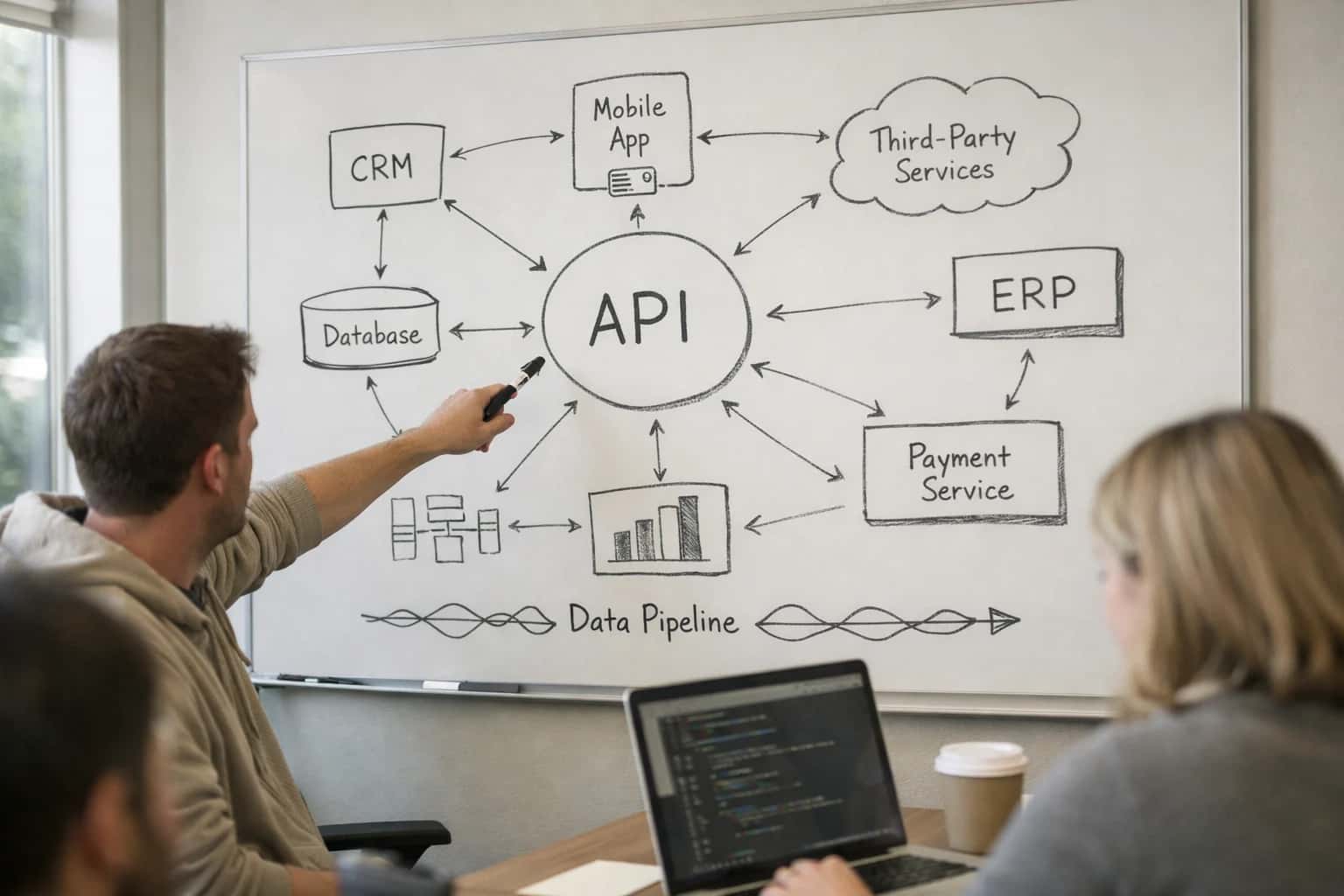
ARCHITECTING AI-ENHANCED REPORTING
From Static Dashboards to Predictive Intelligence
Transform your Salesforce Field Service reporting from historical summaries into a proactive intelligence layer that predicts outcomes and recommends actions.
Implementation involves embedding inference endpoints directly into your reporting pipeline. For example, a daily batch job can call a trained model passing features like technician_certification_level, scheduled_duration, asset_service_history, and weather_forecast to predict the probability of a first-time fix for each upcoming job. These scores are written back to a custom object like Predicted_Job_Outcome__c and surfaced in a Salesforce Dashboard component or Tableau CRM lens. More advanced, real-time patterns use Salesforce Platform Events to trigger model calls when a dispatcher modifies the schedule, providing immediate feedback on the impact to daily FTFR and drive time.
Rollout requires a phased approach, starting with a single predictive KPI (e.g., FTFR risk) in a pilot dashboard for dispatchers. Governance is critical: every prediction should have an audit trail linking back to the source data and model version, and dashboards must clearly distinguish between historical facts and AI-generated forecasts. The goal isn't to replace dispatcher judgment but to augment it with quantified intelligence, turning static reports into interactive command centers that help you manage outcomes before they occur.
ARCHITECTING PREDICTIVE INSIGHTS
Where AI Connects to Salesforce Field Service Reporting
Augmenting Standard Reports with Predictive Insights
AI integration transforms static Salesforce Field Service dashboards into proactive intelligence hubs. The primary surface is Einstein Analytics (now Tableau CRM) and the standard Reports & Dashboards module. Here, AI connects to:
- Service Appointment and Work Order objects to predict First-Time Fix Rate (FTFR) based on technician skill, parts availability, and historical job data.
- Resource Absence and Service Territory data to forecast technician utilization and identify scheduling bottlenecks before they impact SLAs.
- Customer Satisfaction (CSAT) survey results linked to Service Reports to analyze sentiment trends and correlate them with job duration, parts used, or specific technicians.
Implementation involves building AI-powered lenses and datasets that enrich standard report filters. For example, a dispatcher's dashboard can surface a predictive alert: "Jobs in the Northwest territory tomorrow have a 35% risk of low FTFR due to forecasted rain and complex HVAC calls." This moves reporting from descriptive to prescriptive.
EINSTEIN ANALYTICS INTEGRATION
High-Value AI Reporting Use Cases for Salesforce Field Service
Move beyond static dashboards with AI-enhanced reporting that transforms raw Salesforce Field Service data into predictive insights and automated operational guidance.
01
Predictive First-Time Fix Rate Analysis
Use AI to analyze historical WorkOrder, ServiceAppointment, and ProductConsumption data to predict which upcoming jobs are at risk of a repeat visit. Models correlate technician skill, part availability, and problem complexity to flag jobs needing pre-dispatch review.
Proactive > Reactive
Insight shift
02
Technician Utilization & Capacity Forecasting
Integrate AI with the ServiceResource and AssignedResource objects to forecast weekly capacity. Models process scheduled hours, travel time, and skill mix to recommend optimal hiring or cross-training, surfacing insights directly in Einstein Analytics dashboards.
1 sprint
Planning lead time
03
Automated Customer Satisfaction (CSAT) Driver Analysis
Deploy NLP on Survey responses and Case notes linked to service appointments. AI identifies recurring themes (e.g., communication delays, cleanliness) and correlates them with operational data (e.g., EstimatedDuration vs ActualDuration) to generate root-cause reports for service managers.
Batch -> Real-time
Feedback cycle
04
Intelligent Service Contract & SLA Performance Reporting
Build AI-powered monitors on ServiceContract and Entitlement objects. Automatically track SLA adherence (like ArrivalWindowStart), predict contract renewal risk based on service history, and generate executive summaries highlighting profitable vs. high-maintenance agreements.
Same day
Compliance visibility
05
Parts & Inventory Cost Trend Detection
Connect AI to Product2, ProductConsumption, and Warehouse objects. Analyze usage patterns and supplier lead times to detect cost creep, recommend alternative parts, and forecast inventory needs for seasonal service campaigns, reducing emergency order premiums.
Hours -> Minutes
Analysis time
06
Natural-Language KPI Exploration
Implement a chat interface atop Einstein Analytics that allows dispatchers and managers to ask questions like “Show me overtime hours by region last month” or “Why did drive time increase?” The AI parses intent, queries the relevant data model, and returns narrative explanations with visual highlights.
Self-service
Report access
FOR SALESFORCE FIELD SERVICE
Example AI-Enhanced Reporting Workflows
These workflows demonstrate how to architect AI-powered reporting that moves beyond static dashboards to predictive, actionable insights. Each example connects Einstein Analytics, Service Cloud, and Field Service Lightning data with AI models to automate analysis and drive operational decisions.
Trigger: A new Work Order is created or a Service Appointment is scheduled.
Context Pulled: The AI agent queries the Work Order object for details (Asset, Problem Code, Priority) and joins related historical data:
- Past 50 similar Work Orders for the same Asset Type/Problem Code.
- Technician skill ratings and certifications from the Service Resource object.
- Current inventory levels for likely required parts from Product Consumptions.
- Weather and traffic conditions for the appointment date/time via external API.
Model Action: A classification model (e.g., XGBoost or a fine-tuned LLM) analyzes the context to predict the probability of a first-time fix. The model outputs a risk score (High/Medium/Low) and the top 2-3 contributing factors (e.g., "Part likely out of stock," "Technician lacks advanced certification for this model").
System Update: The prediction and factors are written to a custom field on the Work Order (AI_FTFR_Score__c, AI_FTFR_Risk_Factors__c). An Einstein Analytics dataset is updated in near-real-time, powering a dashboard tile that shows:
- Predicted FTFR for the day/week vs. target.
- A list of "At-Risk" appointments for dispatchers to review.
- A trending chart of the primary risk factor over time.
Human Review Point: Dispatchers and service managers review the "At-Risk Appointments" list each morning. They can manually reassign technicians, ensure parts are kitted, or proactively call the customer to set expectations.
BUILDING AI-READY REPORTING PIPELINES
Implementation Architecture: Data Flow & Integration Patterns
A practical blueprint for integrating predictive AI into Salesforce Field Service reporting workflows, focusing on data orchestration, model deployment, and actionable insight delivery.
The integration architecture connects three core layers: the Salesforce Data Layer, the AI Processing Layer, and the Insight Delivery Layer. In Salesforce, key objects like WorkOrder, ServiceAppointment, ServiceResource, and Asset feed the pipeline. Data is extracted via the Salesforce Bulk API 2.0 or Change Data Capture (CDC) events into a staging environment like Snowflake or BigQuery. This ensures reporting models operate on a consolidated, historical dataset without impacting transactional performance in Salesforce.
Within the AI Processing Layer, orchestration tools like Apache Airflow or Prefect manage scheduled feature engineering jobs. Predictive models—trained on historical data to forecast metrics like First-Time Fix Rate or Technician Utilization—are served via MLflow or SageMaker endpoints. For natural language queries (e.g., "Why did customer satisfaction drop in Q3?"), a RAG pipeline retrieves relevant work notes and customer feedback from Salesforce Knowledge or WorkOrderLineItem records, grounding responses in your specific service history.
Processed insights are written back to Salesforce through a governed API pattern. Predictive scores populate custom fields on Account or Asset records, while aggregated trends are pushed to Einstein Analytics datasets or Salesforce Reports & Dashboards. To ensure trust and actionability, the system includes an audit trail for all AI-generated insights and a human-in-the-loop approval step for high-stakes recommendations, such as revising preventive maintenance schedules. This architecture enables service managers to move from reactive reporting to proactive operations, using AI to highlight at-risk SLAs or underutilized resources before they impact customer satisfaction.
ARCHITECTING AI-ENHANCED REPORTING
Code & Payload Examples
Augmenting SAQL Queries with Predictive Features
Integrating AI directly into your Salesforce Einstein Analytics (Tableau CRM) pipelines allows you to enrich standard operational reports with predictive scores. Instead of just reporting on historical First-Time Fix Rate (FTFR), you can generate a predictive FTFR score for upcoming jobs based on technician, equipment, and job complexity.
A common pattern is to call an external inference endpoint from within a SAQL query or a Dataflow sfdcDigest node, appending the prediction as a new column to your dataset. This enables dashboards that blend historical performance with forward-looking risk indicators.
python# Example: Python service called by a Salesforce Platform Event # This service generates a predictive FTFR score for a work order. import requests import pandas as pd from inference_client import InferenceClient def predict_ftfr(work_order_data: dict): """ Calls an ML model endpoint to predict First-Time Fix probability. Input features are extracted from the Salesforce WorkOrder object. """ client = InferenceClient(api_key=os.getenv('INFERENCE_API_KEY')) # Prepare feature vector from Salesforce payload features = { "technician_tier": work_order_data.get('ServiceResourceSkillLevel'), "equipment_age_days": work_order_data.get('AssetAgeDays'), "scheduled_duration": work_order_data.get('Duration'), "time_of_day": work_order_data.get('AppointmentSlot'), "same_tech_as_last": work_order_data.get('PreviousTechId') == work_order_data.get('AssignedResourceId') } # Call model endpoint prediction = client.predict( model_id="ftfr-predictor-v2", inputs=features ) # Return score for updating Salesforce record return { "WorkOrderId": work_order_data.get('Id'), "PredictedFTFRScore": prediction.get('score'), "Confidence": prediction.get('confidence'), "TopFactor": prediction.get('key_factor') }
AI-ENHANCED REPORTING FOR SALESFORCE FIELD SERVICE
Realistic Time Savings & Operational Impact
This table illustrates the operational impact of integrating AI into Salesforce Field Service reporting workflows, focusing on Einstein Analytics and predictive insights.
| Reporting Workflow | Before AI | After AI | Implementation Notes |
|---|---|---|---|
First-Time Fix Rate Analysis | Weekly manual report compilation from work order data | Daily predictive dashboard with root-cause insights | AI correlates technician skill, parts used, and job type to predict failure risks |
Technician Utilization Reporting | End-of-month spreadsheet analysis of timesheet vs. scheduled hours | Real-time capacity heatmap with overload/underload alerts | AI model ingests schedule, travel time, and job completion data from FSL objects |
Customer Satisfaction (CSAT) Trend Analysis | Quarterly survey review; manual tagging of feedback themes | Automated sentiment analysis on service notes & call logs; weekly trend alerts | NLP on Service Cloud data surfaces emerging issues before they impact NPS |
Preventive Maintenance (PM) Compliance | Manual audit of completed vs. scheduled PM work orders | Automated compliance scorecard with forecasted risk for missed appointments | AI cross-references Asset Management data and service history to prioritize outreach |
Parts & Inventory Forecasting | Historical usage averages; frequent stockouts or overstock | Predictive demand model based on scheduled jobs, seasonality, and supplier lead times | Integrates Product Consumption records and external inventory APIs for recommendations |
Revenue & Profitability by Job Type | Monthly P&L reconciliation in Excel; delayed insight into unprofitable services | Interactive dashboard showing real-time margin by service line, technician, and region | AI enriches Salesforce Billing/CPQ data with actual labor and material costs from the field |
Dispatch Efficiency Metrics | Post-day analysis of route adherence and on-time arrivals | Live dispatcher console with AI suggestions for dynamic re-routing and load balancing | Leverages Salesforce Maps API and real-time traffic; focuses on reducing mean drive time |
ARCHITECTING CONTROLLED AI ADOPTION
Governance, Security, and Phased Rollout
A practical blueprint for deploying AI-enhanced reporting in Salesforce Field Service with security, governance, and incremental value in mind.
Integrating AI into Salesforce Field Service (FSL) reporting requires a security-first approach to data access. This means implementing strict CRUD/FLS and sharing rules to ensure AI agents and models only access the ServiceAppointment, WorkOrder, ServiceResource, and Asset records they are authorized to see. All AI-generated insights should be written to a custom AI_Insight__c object with a clear audit trail linking back to the source data and the prompting user, maintaining full lineage for compliance.
A phased rollout is critical for adoption and risk management. Start with a read-only pilot focused on a single, high-value metric like First-Time Fix Rate. Deploy AI to analyze historical WorkOrderLineItem and ServiceReport data, generating predictive insights surfaced in a Salesforce Dashboard or Einstein Analytics lens for service managers. This delivers immediate value without altering core processes. Subsequent phases can introduce prescriptive recommendations (e.g., "schedule Technician A for this job type") and automated data enrichment, each gated by approval workflows.
Governance is managed through a centralized Prompt Hub within your Salesforce org, versioning all prompts used for insight generation. This allows for controlled A/B testing, performance monitoring for drift, and easy rollback. All AI operations should be executed via named Salesforce users with specific permission sets, ensuring every action is logged in Setup Audit Trail and Field History Tracking. This architecture ensures your AI-powered reporting is a scalable, trusted component of your field service operations, not a black box.
Enabling Efficiency, Speed & Accuracy
Intelligent Analysis, Decision & Execution
We build AI systems for teams that need search across company data, workflow automation across tools, or AI features inside products and internal software.
Talk to Us
Search across company data
Give teams answers from docs, tickets, runbooks, and product data with sources and permissions.
Useful when people spend too long searching or get different answers from different systems.
Enterprise searchRAGPermissions
Read more
Automate internal workflows
Use AI to route work, draft outputs, trigger actions, and keep approvals and logs in place.
Useful when repetitive work moves across multiple tools and teams.
AI agentsWorkflow automationGovernance
Read more
Add AI to products and internal tools
Build assistants, guided actions, or decision support into the software your team or customers already use.
Useful when AI needs to be part of the product, not a separate tool.
AI integrationDecision supportModel routing
Read moreSALESFORCE FIELD SERVICE REPORTING
Implementation & Workflow FAQs
Practical answers for architects and service leaders planning AI-enhanced reporting in Salesforce Field Service. Focused on Einstein Analytics, predictive insights, and production rollout.
Integrating external AI models with Einstein Analytics (now Tableau CRM) involves a hybrid architecture where predictions are generated outside Salesforce and written back as insights.
Typical Data Flow:
- Trigger & Extract: A scheduled flow or external job queries Salesforce for raw service data (e.g.,
WorkOrder,ServiceAppointment,ServiceResourcerecords, time sheets, customer feedback). - Enrich & Predict: This data is sent securely (via API) to your inference environment. Models trained on historical data generate predictions—like the likelihood of a first-time fix for a given job type/technician pairing, or forecasted technician utilization for the next week.
- Write-Back: Predictions are written back to Salesforce as custom objects (e.g.,
AI_Prediction__c) or used to update existing records with new score fields. - Visualization: Einstein Analytics datasets are configured to include these new prediction objects. Analysts can then build lenses and dashboards that blend historical KPIs with forward-looking AI scores.
Key Consideration: Maintain a clear audit trail by logging prediction inputs, model version, and timestamp in a related AI_Audit_Log__c object.

About the author
Prasad Kumkar
CEO & MD, Inference Systems
Prasad Kumkar is the CEO & MD of Inference Systems and writes about AI systems architecture, LLM infrastructure, model serving, evaluation, and production deployment. Over 5+ years, he has worked across computer vision models, L5 autonomous vehicle systems, and LLM research, with a focus on taking complex AI ideas into real-world engineering systems.
His work and writing cover AI systems, large language models, AI agents, multimodal systems, autonomous systems, inference optimization, RAG, evaluation, and production AI engineering.
LinkedIn
Limited slotsGet a Free AI Consultation
Partnered with leading AI, data, and software stack.





How We Work
Custom AI workflows for your Business
One-fit-all AI don't work for modern businesses. At Inferensys, we aim to understand your business & custom requirements; which we use to define most efficient agentic workflows, the data, and the tools for your business.
01
Review the use case
We understand the task, the users, and where AI can actually help.
Read more02
Pick the right approach
We define what needs search, automation, or product integration.
Read more03
Build the first useful version
We implement the part that proves the value first.
Read more04
Improve from there
We add the checks and visibility needed to keep it useful.
Read moreThe first call is a practical review of your use case and the right next step.
Talk to Us