Transitioning from rigid calendar-based schedules to dynamic condition-based maintenance requires integrating AI logic with core Salesforce objects. The architecture typically connects to the Service Appointment, Work Order, and Asset objects, using the Field Service Gantt and OmniStudio for scheduling and customer-facing flows. An AI agent, hosted securely, ingests real-time data streams from IoT sensors (via Platform Events or external APIs), historical work order completion notes, and external context like weather forecasts. It analyzes this data against learned failure patterns to predict asset health and generate a Maintenance Plan recommendation, which is then created as a Service Resource request in the dispatch console.

Integration
AI Integration for Salesforce Field Service Preventive Maintenance
Architect AI-driven preventive maintenance workflows within Salesforce Field Service. Use asset data, IoT sensors, and external factors to automatically trigger and schedule service appointments, moving from reactive to predictive service operations.
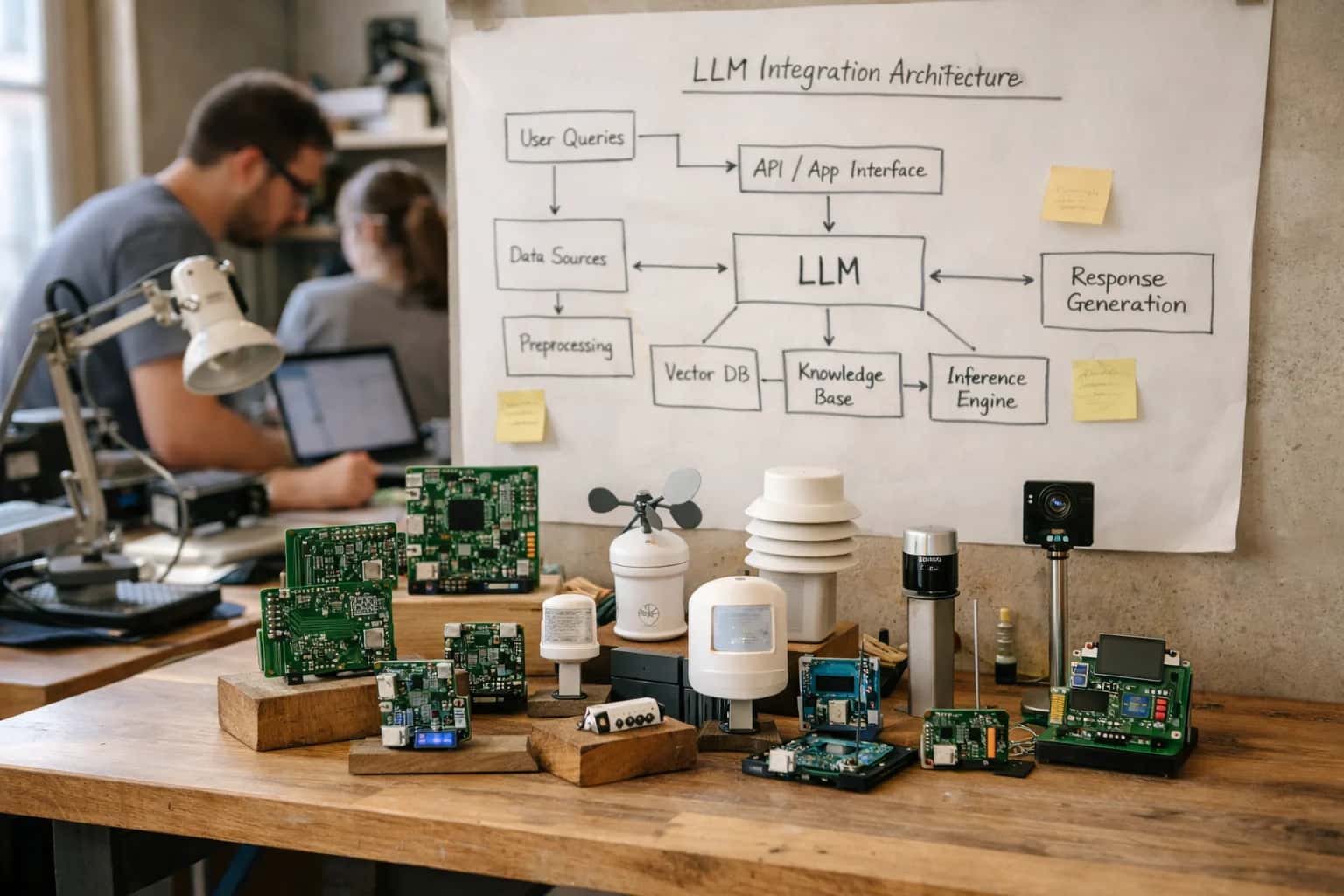
ARCHITECTURE & ROLLOUT
From Calendar-Based to Condition-Based Maintenance
How to architect AI-driven preventive maintenance workflows within Salesforce Field Service, using asset data and external factors to trigger service automatically.
The implementation detail lies in the workflow nuance. For example, a predictive alert for an HVAC unit doesn't just create a generic work order. The AI populates the Work Order Line Item with the likely faulty part (e.g., Condenser Fan Motor), suggests the required skill certification (Service Crew or Skill Requirement), and checks Product Consumptions for local truck stock. It can also trigger an OmniStudio flow in the customer portal to present flexible scheduling options, respecting the customer's Service Contract SLA window. The impact is operational: reducing emergency 'no heat' calls by 20-30%, improving first-time-fix rates through better part forecasting, and extending asset life by addressing issues before catastrophic failure.
Rollout and governance are critical. Start with a pilot on a single asset class (e.g., commercial boilers). Implement a human-in-the-loop approval step, where the AI's recommended Preventive Maintenance work order is routed via Approval Processes to a service manager for final review before dispatch. This builds trust and provides a feedback loop. Ensure all AI inferences and triggered actions are logged to a custom Audit Trail object for model performance tracking and regulatory compliance. The final phase involves scaling the integration to automatically adjust Resource Absences and Service Territories based on predicted maintenance demand, transforming the service operation from reactive to strategically proactive.
PREVENTIVE MAINTENANCE
Where AI Connects in Salesforce Field Service
Ingesting and Correlating Asset Health Signals
AI-driven preventive maintenance starts with the data layer. This involves integrating external IoT sensor streams, equipment usage logs, and manufacturer service bulletins with Salesforce's core asset records (Asset object) and related service histories (WorkOrder, WorkOrderLineItem).
An AI agent can be configured to:
- Monitor real-time sensor data (temperature, vibration, runtime hours) via platform events or external APIs.
- Correlate this telemetry with historical failure patterns stored in Salesforce Service Cloud.
- Calculate a real-time asset health score, writing it back to a custom field on the
Assetrecord.
This creates a single source of truth where dispatchers can see predictive alerts directly on the asset's record page, enabling proactive scheduling before a customer reports a failure.
SALESFORCE FIELD SERVICE
High-Value AI Use Cases for Preventive Maintenance
Transform reactive service into predictable, profitable maintenance contracts by integrating AI directly with Salesforce's Service Cloud and Field Service Lightning (FSL) objects. These workflows use asset history, IoT data, and external factors to automate scheduling, optimize resources, and prevent failures.
01
Predictive Asset Failure Scheduling
AI models analyze Asset and Work Order History records, correlating sensor data (via IoT Cloud) and service notes to predict failure windows. Automatically creates Preventive Maintenance Work Orders and uses the Scheduling Optimization API to book the right technician before a breakdown occurs.
Weeks -> Days
Advanced warning
02
Dynamic PM Interval Optimization
Instead of fixed calendar-based schedules, AI evaluates Product Consumed records, Operating Conditions, and Service Report details to recommend personalized maintenance intervals for each Service Contract. Updates the Maintenance Plan object and triggers contract amendments.
Reduce Waste
Overtime & Parts
03
Intelligent Parts & Technician Matching
When a PM work order is generated, AI cross-references the Asset's BOM (via Product2), checks Inventory levels at the nearest warehouse (or on the assigned Service Resource's truck), and ensures the scheduled technician has the required Skill and Certification.
First-Time-Fix Rate
Critical KPI
04
Weather & External Risk Integration
Integrates external APIs (weather, pollen, air quality) with Service Territory and Asset Location data. AI triggers rescheduling of outdoor PM visits or recommends specific inspections (e.g., HVAC filters after a dust storm) by creating Service Appointments with contextual notes.
05
Automated Customer Communication & Renewals
Post-PM visit, AI drafts personalized Email Messages summarizing work performed (from Work Order Line Item data) and attaches a visual inspection report. Analyzes visit history to generate a Contract Renewal proposal with optimized scope and pricing, pushing it to the Sales Cloud opportunity.
Same Day
Proposal Delivery
06
PM Performance & ROI Dashboard
An AI-powered Einstein Analytics dashboard ingests PM vs. emergency work order data. It calculates true ROI of preventive contracts by comparing Total Cost (labor, parts) against avoided Emergency Dispatch costs and Customer Churn Risk, providing actionable insights for service managers.
SALESFORCE FIELD SERVICE
Example AI-Driven Preventive Maintenance Workflows
These concrete workflows illustrate how AI agents can be integrated with Salesforce Field Service Lightning (FSL) objects to automate preventive maintenance from prediction to completion, reducing manual oversight and emergency calls.
Trigger: An IoT platform (e.g., AWS IoT, Azure IoT Hub) sends an alert via webhook to a middleware service, indicating an asset's vibration sensor reading has exceeded a predictive failure threshold.
AI Agent Action:
- The agent receives the alert payload containing the asset's serial number and sensor data.
- It queries Salesforce (
Asset,ServiceResource,WorkType) to:- Retrieve the asset's full service history, warranty status, and location.
- Identify the recommended
WorkTypeand estimated duration based on historical similar repairs. - Find available and certified technicians (
ServiceResource) near the asset's location for the proposed service window.
- The agent calls the Salesforce API to create a new
WorkOrderrecord with:Subject: "Preventive Maintenance: Excessive Vibration Detected on [Asset Name]"Priority: "Medium"WorkTypeId,AccountId,AssetIdpopulated.SuggestedMaintenanceDateset to within the next 3 business days.
System Update: The new WorkOrder is automatically routed to the dispatcher's console in Salesforce FSL with a "Predictive" flag. The dispatcher reviews and uses the FSL scheduling assistant to assign the recommended technician and create a ServiceAppointment.
FROM ASSET DATA TO SCHEDULED SERVICE
Implementation Architecture: Data Flow & System Design
A practical blueprint for connecting AI-driven predictive models to Salesforce's core service objects to automate preventive maintenance workflows.
The integration architecture centers on the Service Appointment, Work Order, and Asset objects in Salesforce Field Service (FSL). The AI system acts as a middleware orchestrator, ingesting time-series data from connected assets (via IoT platforms or manual logs), external signals like weather forecasts, and historical service records from the WorkOrder and WorkOrderLineItem objects. A scheduled job or platform event triggers the AI model, which evaluates each asset against failure patterns and maintenance schedules. For assets flagged as 'at-risk', the system automatically creates a draft Preventive Maintenance Work Order using the FSL API, pre-populating required parts (referencing Product2 and PricebookEntry), estimated duration, and recommended skill requirements (linked to ServiceResourceSkill).
The newly created Work Order is then placed into a queue for the Scheduling Optimization Service. This service calls the Salesforce Field Service Scheduling API, considering real-time constraints like technician location (from ServiceResource), parts availability at the nearest warehouse (ProductConsumption), and customer-preferred time windows (OperatingHours). The AI scheduling logic aims to batch nearby PM jobs, respect SLA windows from associated ServiceContract records, and maximize first-time-fix probability. Once scheduled, the ServiceAppointment is created and synced to the technician's Salesforce Field Service Mobile app, with the AI-generated context on predicted failure mode and required checks attached as a PDF work instruction to the record.
Governance is baked into the data flow. Each AI-generated recommendation and automated action is logged as a custom Audit Trail object, recording the input data, model version, confidence score, and the business rule that triggered the creation. High-cost or non-standard part recommendations are routed through an Approval Process on the Work Order before the appointment is confirmed. The system is designed for incremental rollout, starting with a single asset type or geographic region. Performance is monitored by tracking the ratio of AI-generated PM work orders to subsequent emergency repair orders for the same asset, providing a clear, closed-loop measure of the model's accuracy and business impact.
ARCHITECTING AI-DRIVEN WORKFLOWS
Code & Payload Examples
AI-Powered Asset Scoring Logic
A core component is an AI service that ingests asset data from Salesforce and external sources to calculate a predictive health score. This score determines maintenance urgency. The logic typically runs nightly via a scheduled Apex job or an external orchestrator calling Salesforce APIs.
python# Example: External AI service scoring a Salesforce Asset import requests def score_asset_health(asset_record): """ Calls an AI model endpoint with asset data. Returns a score and recommended action. """ payload = { "asset_id": asset_record["Id"], "service_history": asset_record["Service_Count__c"], "last_service_date": asset_record["Last_Service_Date__c"], "operating_hours": asset_record["Meter_Reading__c"], "external_factors": { "location_weather": get_weather_forecast(asset_record["Location__c"]), "manufacturer_recall_flag": check_recall_db(asset_record["Model__c"]) } } response = requests.post(AI_SCORING_URL, json=payload, headers={"Authorization": f"Bearer {API_KEY}"}) return response.json() # e.g., {"score": 0.82, "risk": "HIGH", "recommended_action": "SCHEDULE_INSPECTION"}
The returned score is written back to a custom field like Asset.Health_Score__c, which triggers automation.
AI-PREVENTIVE MAINTENANCE WORKFLOW
Realistic Time Savings & Operational Impact
This table illustrates the tangible efficiency gains and process improvements from integrating AI-driven preventive maintenance into Salesforce Field Service, focusing on key operational metrics.
| Metric | Before AI | After AI | Notes |
|---|---|---|---|
Maintenance Schedule Generation | Manual review of asset history & calendars (2-4 hours/week) | AI-triggered recommendations in <15 minutes | AI analyzes Service History, IoT data, and external factors like weather |
Work Order Creation | Manual data entry from inspection forms or calls | Auto-populated from AI-recommended templates | Links to standard job plans, parts lists, and SLAs automatically |
Technician Dispatch & Scheduling | Manual matching based on location and粗略 skill | AI-optimized assignment considering certs, parts stock, and route | Integrates with Salesforce's Gantt chart for visual scheduling |
Customer Communication & Booking | Manual phone calls/emails to confirm availability | Automated portal notifications & self-service booking | AI suggests optimal time slots, reducing call volume by ~40% |
Parts & Inventory Reconciliation | Reactive check before dispatch; frequent emergency orders | Proactive van stock recommendations based on scheduled jobs | AI predicts parts consumption from historical work orders |
Asset Health & Failure Prediction | Reactive repairs after breakdowns | Predictive alerts for at-risk assets 7-14 days in advance | Correlates sensor data, service notes, and warranty info |
Contract Renewal & Upsell Identification | Quarterly manual review of expiring agreements | Automated alerts with AI-scored renewal likelihood & value | Analyzes service frequency, customer satisfaction, and asset age |
ARCHITECTING FOR PRODUCTION
Governance, Security & Phased Rollout
A practical guide to implementing, securing, and scaling AI-driven preventive maintenance in Salesforce Field Service.
A production-grade integration connects to core Salesforce objects like ServiceAppointment, WorkOrder, Asset, and Account. AI agents, typically orchestrated via a middleware layer, analyze historical WorkOrderLineItem data, external IoT feeds, and weather APIs to generate maintenance recommendations. These are written back to Salesforce as new ServiceAppointment records with proposed schedules, linked parts lists from ProductConsumption, and pre-populated checklists. Governance starts with a sandbox-first deployment, using Salesforce's Apex triggers and platform events to control the flow of data to and from the AI system, ensuring all automated record creation respects existing validation rules and approval processes.
Security is managed through the principle of least privilege. The integration service account should have a custom Salesforce profile with explicit Field-Level Security (FLS) and Object Permissions—typically Read on Asset and WorkOrder history and Create on ServiceAppointment. All prompts and AI-generated content should be logged in a separate AI_Audit_Log__c custom object for traceability. For customer communications, use Omni-Channel or Service Cloud Voice integrations to ensure AI-suggested messages are queued for agent review or sent via governed, logged channels.
A phased rollout mitigates risk. Phase 1 (Pilot): Target a single asset class (e.g., commercial HVAC units) and a pilot team of dispatchers. Use AI to generate recommendations in a custom Recommended_Maintenance__c object for manual review and conversion. Phase 2 (Guided Automation): Enable auto-creation of draft Service Appointments for dispatcher approval, integrating with the Field Service Gantt for schedule visibility. Phase 3 (Full Automation): For high-confidence, routine PMs, allow fully automated scheduling with a 24-hour customer confirmation window, monitored by exception reports. Continuous evaluation against KPIs like emergency call reduction and PM contract adherence ensures the AI model's recommendations remain aligned with business outcomes.
Enabling Efficiency, Speed & Accuracy
Intelligent Analysis, Decision & Execution
We build AI systems for teams that need search across company data, workflow automation across tools, or AI features inside products and internal software.
Talk to Us
Search across company data
Give teams answers from docs, tickets, runbooks, and product data with sources and permissions.
Useful when people spend too long searching or get different answers from different systems.
Enterprise searchRAGPermissions
Read more
Automate internal workflows
Use AI to route work, draft outputs, trigger actions, and keep approvals and logs in place.
Useful when repetitive work moves across multiple tools and teams.
AI agentsWorkflow automationGovernance
Read more
Add AI to products and internal tools
Build assistants, guided actions, or decision support into the software your team or customers already use.
Useful when AI needs to be part of the product, not a separate tool.
AI integrationDecision supportModel routing
Read moreIMPLEMENTATION BLUEPRINT
Frequently Asked Questions
Practical questions for architects planning AI-driven preventive maintenance in Salesforce Field Service. Focused on data, triggers, workflows, and rollout.
An effective AI preventive maintenance system synthesizes data from multiple sources within and outside Salesforce. The core setup includes:
Primary Salesforce Objects:
- Asset (or Product2 with serial numbers): The core record, requiring populated fields like
InstallationDate,LastServicedDate,ModelNumber, and custom fields forUsageHoursorCycleCount. - WorkOrder & WorkOrderLineItem: Historical service data is critical for training and pattern recognition.
- ServiceContract & Entitlement: To understand coverage terms and SLA obligations for scheduled work.
External & IoT Data (via API):
- Equipment Sensor Feeds: Telemetry data (vibration, temperature, pressure) streamed into a time-series database. A middleware service aggregates and evaluates this against failure thresholds.
- Environmental Factors: Weather data APIs for assets affected by conditions (e.g., HVAC units, roofing).
- Usage Logs: From connected equipment or manual entry apps to track operational hours.
The AI agent typically polls a consolidated "asset health score" from an external analytics service or runs a lightweight model on aggregated data within a Salesforce platform event. The trigger is often a platform event that fires when an asset's predicted failure probability exceeds a configured threshold (e.g., 85%).

About the author
Prasad Kumkar
CEO & MD, Inference Systems
Prasad Kumkar is the CEO & MD of Inference Systems and writes about AI systems architecture, LLM infrastructure, model serving, evaluation, and production deployment. Over 5+ years, he has worked across computer vision models, L5 autonomous vehicle systems, and LLM research, with a focus on taking complex AI ideas into real-world engineering systems.
His work and writing cover AI systems, large language models, AI agents, multimodal systems, autonomous systems, inference optimization, RAG, evaluation, and production AI engineering.
LinkedIn
Limited slotsGet a Free AI Consultation
Partnered with leading AI, data, and software stack.





How We Work
Custom AI workflows for your Business
One-fit-all AI don't work for modern businesses. At Inferensys, we aim to understand your business & custom requirements; which we use to define most efficient agentic workflows, the data, and the tools for your business.
01
Review the use case
We understand the task, the users, and where AI can actually help.
Read more02
Pick the right approach
We define what needs search, automation, or product integration.
Read more03
Build the first useful version
We implement the part that proves the value first.
Read more04
Improve from there
We add the checks and visibility needed to keep it useful.
Read moreThe first call is a practical review of your use case and the right next step.
Talk to Us