This integration focuses on the critical handoff between the Service Appointment, Work Order, and Work Order Line Item objects in Salesforce Field Service and the billing engine, whether that's Salesforce Billing, Salesforce CPQ, or an external system like QuickBooks. The core AI agent listens for status changes (e.g., WorkOrder.Status changing to 'Completed') and triggers a multi-step validation workflow. It reviews the completed work against the original Service Contract or Entitlement, checks that all required Product Consumptions are logged, validates technician notes and photos for billable extras, and ensures labor hours align with the estimated scope. This pre-flight check happens in minutes, flagging discrepancies for human review before any financial data is committed.

Integration
AI Integration for Salesforce Field Service Invoicing
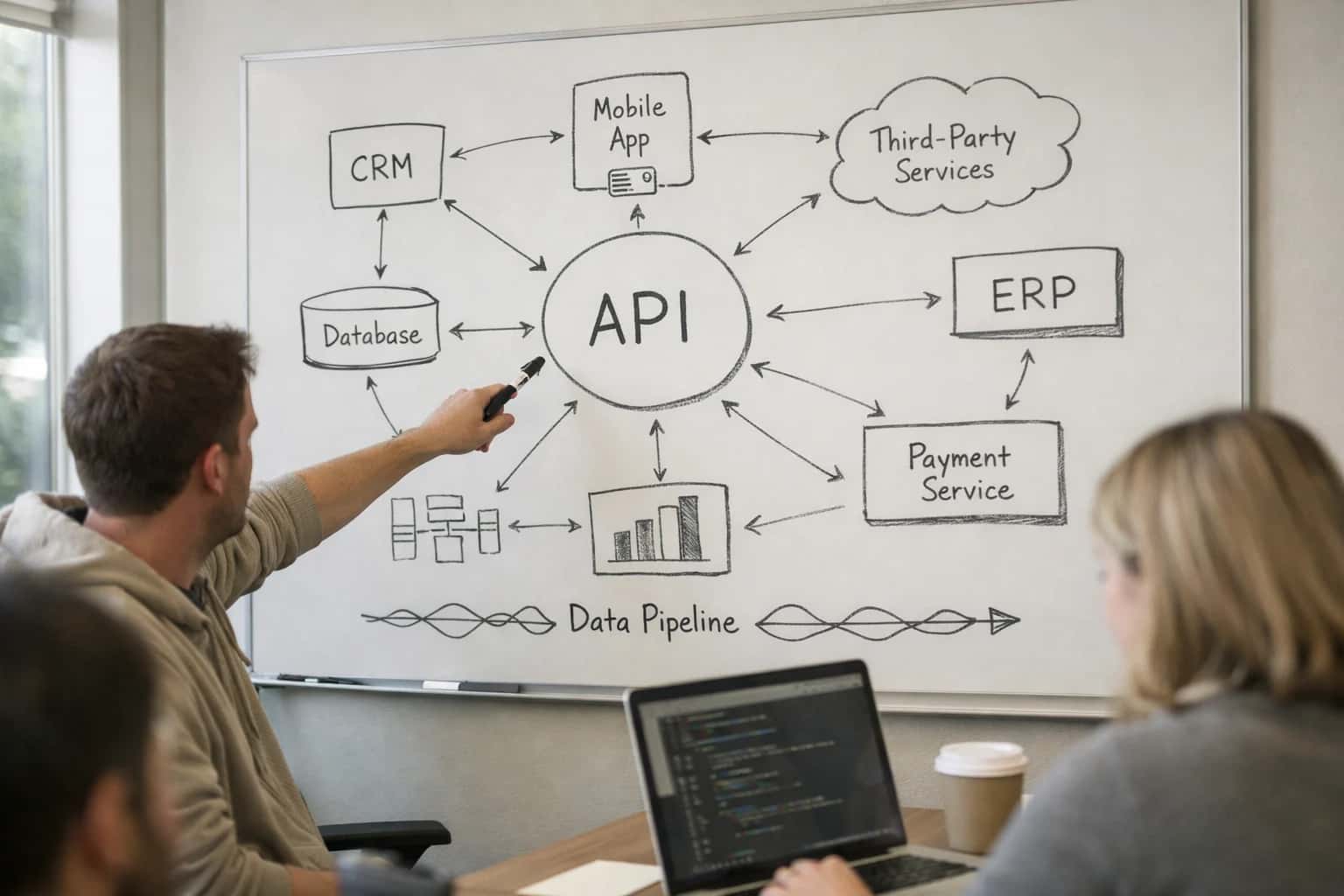
Automating the Invoice-to-Cash Cycle in Salesforce Field Service
A technical blueprint for using AI to connect Salesforce Field Service work completion data to billing systems, reducing invoice lag and manual errors.
For implementation, we architect a serverless workflow (using tools like n8n or a custom service on Heroku/AWS Lambda) that sits between Salesforce and the billing system. This workflow uses an LLM with retrieval-augmented generation (RAG) over your company's service catalogs, pricing rules, and historical billing data to accurately map field activities to invoice line items. Key technical steps include: 1) Event Capture via Salesforce Platform Events or Change Data Capture on key objects; 2) Data Enrichment where the AI agent queries related records (Assets, Customer History); 3) Decision & Drafting where the agent applies business rules to generate a draft invoice payload; and 4) Approval Routing which can be handled by Salesforce's native approval processes or a custom Lightning flow. The result is invoices that are generated the same day service is rendered, dramatically improving cash flow.
Rollout requires a phased approach, starting with a single service line or region. Governance is critical: all AI-generated invoices should be logged in a custom Audit Log object with a trace of the source data and decision rationale. Implement a human-in-the-loop step for invoices over a certain amount or for new types of work, using a Salesforce Lightning component for quick review and override. This controlled automation reduces manual data entry by 60-80% for standard jobs while maintaining financial control. For a deeper dive into connecting these financial workflows to accounting platforms, see our guide on AI Integration for Salesforce Field Service QuickBooks.
Where AI Plugs Into the Salesforce Field Service Stack
The Trigger Point for Billing
AI integration begins at the point of service completion. The WorkOrder and ServiceAppointment objects in Salesforce Field Service (FSL) are the primary sources of truth for what was performed, by whom, for how long, and with which parts.
An AI agent monitors these records for status changes to Completed or Cannot Complete. It then extracts key billing signals:
- Labor Details:
ActualDurationfromServiceResourcerecords andSkillRequirementfor rate tiering. - Consumed Products: Line items from the
ProductConsumedobject, including part numbers and quantities used from truck or warehouse stock. - Additional Charges: Notes or custom fields indicating trip fees, after-hours premiums, or environmental charges.
This structured data forms the foundation for an automated, accurate invoice, eliminating manual transcription from technician notes to the billing system.
High-Value AI Use Cases for Field Service Invoicing
Integrating AI into the invoicing workflow between Salesforce Field Service and billing systems (like Salesforce Billing or CPQ) automates data-to-cash cycles, reduces errors, and accelerates revenue recognition. These use cases target the specific objects, automations, and approval surfaces within the Salesforce platform.
Automated Invoice Generation from Work Orders
AI agents monitor the WorkOrder and WorkOrderLineItem status in Salesforce, automatically triggering invoice creation in Salesforce Billing or CPQ when a job is marked 'Completed'. The system populates line items, applies correct service/product codes, and calculates taxes based on location and customer record, eliminating manual data transfer.
Intelligent Line-Item Validation & Upsell
Before finalizing an invoice, an AI reviews the WorkOrderLineItem against the original ServiceContract or Quote. It flags missing billable items (like travel fees or disposal charges), suggests relevant upsell items from the Product2 catalog based on job notes, and ensures compliance with pricing rules. This happens within the same transaction, before the invoice is saved.
AI-Powered Approval Routing & Anomaly Detection
Instead of static rules, AI analyzes each generated invoice for anomalies—unusual discounts, high-cost parts deviations, or mismatched labor hours. It then dynamically routes the invoice through the correct Approval Process in Salesforce (e.g., to a manager, finance, or the customer's procurement portal) based on risk score, amount, and customer history.
Automated Reconciliation & Payment Application
When a payment is recorded in an external system (e.g., Stripe, bank feed), an AI agent matches it to the correct Invoice in Salesforce. It handles partial payments, applies cash to the oldest invoice first, and automatically updates the Account receivable balance. Unmatched payments are flagged with suggested invoices for review, slashing manual reconciliation time.
Proactive Collections & Customer Communication
AI monitors the Invoice object and Payment history to predict late payments. It can trigger personalized, compliant SMS or email sequences via Salesforce Marketing Cloud or Pardot, offering payment plans or clarifying questions. For high-value accounts, it creates tasks for account managers in Salesforce Sales Cloud with context and suggested talking points.
Invoice Data Enrichment for Analytics
AI extracts and structures unstructured data from technician notes (WorkOrder comments) and photos, tagging invoices with metadata like issue_cause, parts_used, customer_sentiment. This enriched data flows into Salesforce Reports & Dashboards and Einstein Analytics, providing insights into profitable service types, common cost overruns, and customer lifetime value.
Example AI-Driven Invoicing Workflows
These workflows demonstrate how AI can automate and enhance the invoicing process within Salesforce Field Service, connecting work completion data in Field Service Lightning (FSL) to billing systems like Salesforce Billing or CPQ to reduce errors, accelerate cash flow, and ensure compliance.
Trigger: A Work Order's status is updated to 'Completed' in Salesforce Field Service.
AI Action & Context:
- An AI agent is triggered via a Flow or Apex trigger. It retrieves the Work Order record and all related child records:
WorkOrderLineItemrecords for labor and materials.ProductConsumptionrecords for parts used from inventory.ServiceAppointmentrecords for actual time spent vs. estimated.
- The agent uses a language model to analyze the
DescriptionandSubjectfields, cross-referencing them with a catalog of billable services to ensure all work is captured. It flags any discrepancies between planned and actual work (e.g., extra labor hours, unplanned parts). - The agent structures a clean, itemized invoice payload.
System Update: The payload is sent to Salesforce Billing to create a new Invoice and InvoiceLineItem records, or to Salesforce CPQ to generate a final quote for approval. The Work Order is automatically updated with a link to the generated invoice.
Human Review Point: Invoices with flagged discrepancies (e.g., cost overruns beyond a threshold) are routed via an Approval Process to the service manager before being finalized.
Implementation Architecture: Data Flow, APIs, and Guardrails
A technical blueprint for automating invoice creation and reconciliation in Salesforce Field Service by connecting work completion data to billing systems.
The integration architecture connects three core Salesforce objects: WorkOrder, WorkOrderLineItem, and ServiceAppointment to the billing engine, typically Salesforce Billing or Salesforce CPQ. The primary trigger is a ServiceAppointment status change to 'Completed' or a WorkOrder status change to 'Closed'. An AI agent, deployed as a Salesforce Apex trigger or a middleware service listening via the Salesforce Streaming API, ingests the completed job record. It uses the WorkOrderLineItem data—which details labor hours, parts used (linked to ProductConsumption records), and any flat-rate service codes—as the source for invoice line items.
The AI layer performs several critical validation and enrichment steps before invoice generation. It cross-references consumed parts against the Product2 object to apply correct pricing and tax codes, checks for missed billable items by comparing the work description to historical job data using a RAG system on past invoices, and applies complex billing rules (e.g., trip charges, after-hours premiums) defined in a Salesforce Custom Metadata Type. The final, validated payload is then passed via the Salesforce Billing API (or the CPQ Quote API) to create a Invoice and InvoiceLine records. For integrations with external accounting systems like QuickBooks, the AI agent formats the data into the required schema and queues it for sync via a secure, managed middleware layer.
Governance is enforced through a pre-approval workflow for invoices exceeding a configurable threshold or containing non-standard line items. These are routed as Salesforce Approval Processes to the service manager. All AI-generated invoices are stamped with a trace ID in a custom field, linking them to the source work order and the specific data points used, creating a full audit trail. Rollout typically begins in a pilot phase, where the AI acts as a 'copilot'—drafting invoices for human review—before progressing to fully automated generation for standard, low-risk job types, ensuring accuracy and building stakeholder confidence in the system.
Code and Payload Examples
Automating Invoice Creation
When a Work Order's status changes to Completed in Salesforce Field Service, an Apex trigger or platform event can invoke an AI agent to review the record and initiate billing. The agent validates the work against the Service Contract, checks for billable parts consumptions, and ensures all required approvals are captured before creating an Invoice object.
Example Apex Trigger Snippet:
apextrigger WorkOrderAfterUpdate on WorkOrder (after update) { for (WorkOrder wo : Trigger.new) { if (wo.Status == 'Completed' && Trigger.oldMap.get(wo.Id).Status != 'Completed') { // Queue AI Invoice Agent AI_Invoice_Service.initiateInvoiceGeneration(wo.Id); } } }
The AI service fetches the Work Order with related WorkOrderLineItems, ProductConsumptions, and ServiceAppointment records to construct the invoice line items.
Realistic Time Savings and Business Impact
This table illustrates the operational impact of integrating AI between Salesforce Field Service and billing systems (e.g., Salesforce Billing, CPQ) to automate invoice creation, approval, and reconciliation.
| Process Step | Before AI Integration | After AI Integration | Key Notes & Impact |
|---|---|---|---|
Invoice Data Compilation | Manual review of 5+ objects (WorkOrder, ProductConsumption, ServiceReport) | AI auto-aggregates line items from completed work | Reduces compilation from 15-30 minutes to <1 minute per invoice |
Pricing & Tax Application | Manual lookup in Pricebooks, risk of outdated rates or tax errors | AI applies correct pricing, discounts, and jurisdictional tax rules | Ensures 100% rate compliance, eliminates manual validation |
Approval Routing | Email-based routing; approvers miss emails causing 1-2 day delays | AI routes to correct approver based on amount & rules; sends Slack reminders | Cuts approval cycle from next-day to same-day |
Discrepancy Flagging | Bookkeeper manually compares work order scope to invoice | AI compares initial estimate to final invoice, flags variances >5% | Proactively catches scope creep or missed billables before submission |
Payment Application & Reconciliation | Manual matching of customer payments to invoices in accounting system | AI suggests likely invoice matches for payments, auto-applies upon confirmation | Reduces reconciliation effort from hours to minutes per batch |
Exception Handling (e.g., partial payments) | Manual investigation, back-and-forth with account managers | AI analyzes payment history, suggests standard payment plan options | Accelerates resolution of non-standard payments by 75% |
Audit Trail Generation | Manual compilation of change history from notes and emails | AI auto-generates immutable audit log for each invoice lifecycle step | Ensures compliance, ready for financial or customer audits instantly |
Governance, Security, and Phased Rollout
A practical blueprint for deploying AI-driven invoicing in Salesforce Field Service with built-in controls and measurable phases.
A production-ready integration for Salesforce Field Service invoicing must enforce strict data governance from the start. This means the AI agent or workflow operates with explicit, role-based permissions (Salesforce Profile and Permission Set controls) to only access the necessary objects: WorkOrder, WorkOrderLineItem, ServiceAppointment, Product2, PricebookEntry, and Invoice (or Salesforce Billing objects). All AI-generated invoice drafts should be written to a staging custom object or a dedicated Invoice_Draft__c record with a clear Status__c (e.g., 'AI Generated', 'Needs Review', 'Approved') before any financial transaction is posted. Every automated action—from line item creation to tax calculation—must be logged in Salesforce Platform Events or a custom audit object, creating an immutable trail for compliance and debugging.
Security is non-negotiable when AI handles financial data. The integration architecture should isolate the AI processing layer, using Salesforce's outbound Named Credentials for secure API calls to LLM providers. Sensitive customer and pricing data should be masked or pseudonymized before leaving the Salesforce trust boundary for any external processing. For retrievals from internal knowledge bases (e.g., service manuals, pricing rules), a RAG system should be implemented within your secure cloud environment, querying a vector store indexed only with approved, non-PII documents. All prompts should be version-controlled and include strict guardrails to prevent hallucinations in line-item descriptions or monetary values.
A phased rollout de-risks implementation and builds organizational trust. Phase 1 (Pilot): Target a single, low-risk service line or geographic territory. Configure the AI to auto-generate invoices but require mandatory human approval (Approval Process on the Invoice_Draft__c) before any record is sent to the billing system. Use this phase to measure accuracy rates (e.g., % of line items needing manual correction) and refine prompts. Phase 2 (Controlled Expansion): Enable auto-approval for invoices under a specific monetary threshold or for repeat, standard jobs, while maintaining human-in-the-loop for complex, high-value, or non-standard work. Implement automated quality checks, like flagging invoices where the AI's confidence score is below a defined threshold. Phase 3 (Scale & Optimize): Integrate feedback loops where corrections made by billing staff are used to fine-tune the AI models or prompt library. Expand automation to related workflows, such as automated payment application or reconciliation flagging, always governed by the established audit and control framework. This measured approach ensures the AI becomes a reliable copilot, not an uncontrolled automation, directly impacting cash flow velocity by turning completed work into submitted invoices in hours instead of days.
Enabling Efficiency, Speed & Accuracy
Intelligent Analysis, Decision & Execution
We build AI systems for teams that need search across company data, workflow automation across tools, or AI features inside products and internal software.
Talk to Us
Search across company data
Give teams answers from docs, tickets, runbooks, and product data with sources and permissions.
Useful when people spend too long searching or get different answers from different systems.

Automate internal workflows
Use AI to route work, draft outputs, trigger actions, and keep approvals and logs in place.
Useful when repetitive work moves across multiple tools and teams.

Add AI to products and internal tools
Build assistants, guided actions, or decision support into the software your team or customers already use.
Useful when AI needs to be part of the product, not a separate tool.
Frequently Asked Questions
Practical questions for architects and service operations leaders planning AI integration between Salesforce Field Service and their billing systems.
The integration is built on Salesforce's APIs and triggered by a Work Order status change to Completed. Here’s the typical automation flow:
- Trigger: A field technician marks a Work Order as
Completedin the Salesforce Field Service Mobile app. - Context Retrieval: An AI agent (via a Salesforce Apex trigger or an external middleware service) calls the Salesforce API to gather all relevant data:
WorkOrderobject (Labor hours, notes, technician ID)WorkOrderLineItemrecords (Parts used, materials consumed)ServiceAppointment(Actual start/end times, travel duration)ProductConsumptionrecords (for tracked inventory)AccountandContactdetails (Billing address, payment terms)
- AI Action: The agent uses an LLM with a structured prompt to:
- Validate completeness: Check for missing required fields (e.g., part serial numbers, technician signatures).
- Apply pricing logic: Cross-reference the
PricebookEntryfor each line item, applying any customer-specific contract rates or discounts stored inContractorServiceContractobjects. - Generate line-item descriptions: Transform technician notes ("Replaced faulty capacitor on unit X") into clear, billable descriptions.
- Flag anomalies: Identify discrepancies, like parts used that weren't on the original estimate.
- System Update: The validated data is used to automatically create an
InvoiceorInvoiceStatementrecord in Salesforce Billing, or to generate a payload for an external billing system like QuickBooks or NetSuite. - Human Review Point: Invoices flagged with anomalies (e.g., high labor overage) are routed via an
Approval Processto a service manager before finalization.

About the author
Prasad Kumkar
CEO & MD, Inference Systems
Prasad Kumkar is the CEO & MD of Inference Systems and writes about AI systems architecture, LLM infrastructure, model serving, evaluation, and production deployment. Over 5+ years, he has worked across computer vision models, L5 autonomous vehicle systems, and LLM research, with a focus on taking complex AI ideas into real-world engineering systems.
His work and writing cover AI systems, large language models, AI agents, multimodal systems, autonomous systems, inference optimization, RAG, evaluation, and production AI engineering.
Partnered with leading AI, data, and software stack.





How We Work
Custom AI workflows for your Business
One-fit-all AI don't work for modern businesses. At Inferensys, we aim to understand your business & custom requirements; which we use to define most efficient agentic workflows, the data, and the tools for your business.
01
Review the use case
We understand the task, the users, and where AI can actually help.
Read more02
Pick the right approach
We define what needs search, automation, or product integration.
Read more03
Build the first useful version
We implement the part that proves the value first.
Read more04
Improve from there
We add the checks and visibility needed to keep it useful.
Read moreThe first call is a practical review of your use case and the right next step.
Talk to Us