AI integration for Conservis Procurement focuses on three key surfaces: the Purchase Order (PO) module, the Supplier/Vendor records, and the Input Inventory objects. An AI agent can be triggered via webhook from a new requisition in Conservis, or scheduled to analyze upcoming needs against inventory levels and crop plans. The agent's core tasks are to validate requisition details against historical data, evaluate approved supplier terms and pricing from vendor records, and auto-generate a draft PO with optimal quantities and timing, which is then routed through Conservis's existing approval workflows. This turns a multi-step, manual data lookup and form-filling process into a single review step for the farm manager.

Integration
AI Integration with Conservis Procurement
A technical guide to embedding AI agents for automating purchase order generation, evaluating supplier terms, and optimizing input buying strategies within Conservis's procurement workflows.
ARCHITECTURE & ROLLOUT
Where AI Fits into Conservis Procurement
A technical blueprint for embedding AI agents into Conservis's procurement workflows to automate purchase orders, evaluate supplier terms, and optimize input buying.
Implementation typically involves a middleware layer that connects Conservis's REST API to an orchestration platform like n8n or a custom agent built with CrewAI. The agent calls out to LLMs for natural language understanding of requisition notes and supplier contract documents, and can integrate external data feeds for real-time input pricing (e.g., fertilizer indices). Key governance considerations include maintaining a full audit trail of the agent's decisions, setting confidence thresholds for auto-generation versus flagging for human review, and implementing role-based access controls (RBAC) so the agent only acts on behalf of authorized users. The impact is measured in reduced procurement cycle time (from hours to minutes) and more consistent adherence to negotiated terms and budget plans.
A phased rollout is advised, starting with low-risk, repetitive POs for commodities like fuel or common chemicals. Begin by deploying the agent in a 'copilot' mode, where it suggests a PO draft but requires manual submission. After validating accuracy and building user trust, rules can be configured for full automation of specific PO types under defined monetary thresholds. This approach de-risks the integration while delivering immediate productivity gains. For teams evaluating this build, see our related guide on AI Integration with Conservis Financial Planning to connect procurement optimization with broader farm financial intelligence.
AI-PROCUREMENT WORKFLOWS
Key Integration Surfaces in Conservis
Automating PO Generation from Requisitions
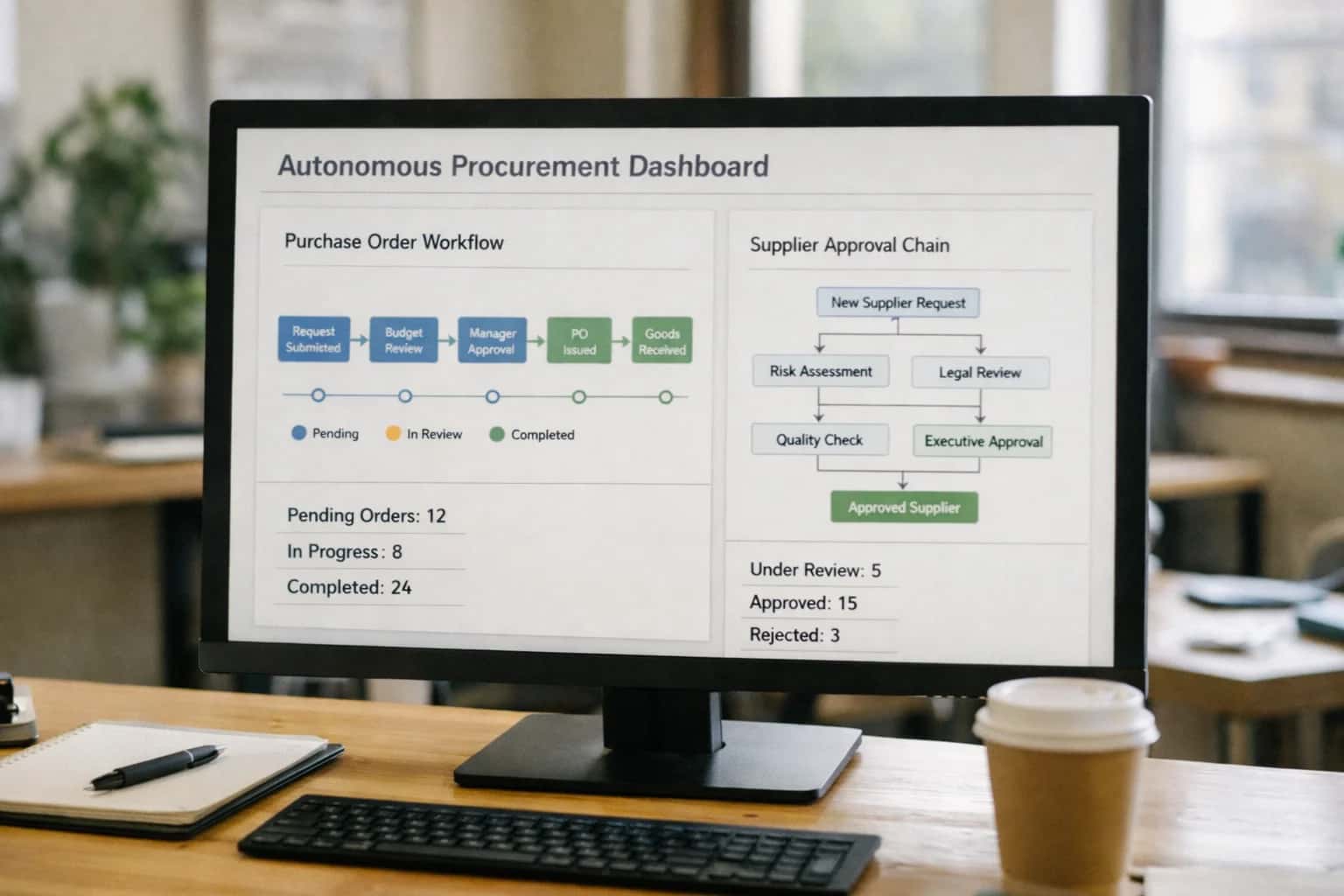
AI agents can be integrated directly into Conservis's procurement workflow to transform requisitions into structured purchase orders. The primary integration point is the Requisition-to-PO approval chain. An agent can be triggered via a webhook when a requisition is approved, or it can poll the Conservis API for new approved items.
The agent's role is to enrich the requisition data: it can validate supplier details against a master list, apply correct GL coding based on historical patterns, and check for budget availability in real-time. For recurring orders (e.g., seed, fertilizer), the agent can reference past POs to auto-populate terms and pricing. The final, validated PO is then posted back to Conservis via the PurchaseOrder API endpoint, ready for final review or automated sending.
This surface reduces manual data entry errors and cuts the time from request to order from hours to minutes, especially for high-volume input seasons.
CONSERVIS PROCUREMENT
High-Value AI Procurement Use Cases
Integrate AI agents directly into Conservis's procurement workflows to automate purchase order generation, evaluate supplier terms, and optimize input buying strategies based on real-time field data and market conditions.
01
Automated Purchase Order Generation
AI agents monitor field-level work orders, inventory levels, and input schedules within Conservis to auto-generate draft POs. The agent validates against budgets, checks for duplicate orders, and routes for approval, turning a weekly manual process into a daily automated workflow.
Weekly -> Daily
Order Cycle
02
Supplier & Term Analysis
An AI co-pilot analyzes supplier contracts, payment terms, and historical delivery performance stored in Conservis. It flags unfavorable clauses, suggests negotiation points, and recommends alternative vendors based on cost, reliability, and sustainability scores from integrated market data.
Hours -> Minutes
Contract Review
03
Predictive Input Replenishment
Connect AI forecasting models to Conservis inventory and field operation data. The system predicts seed, chemical, and fertilizer needs weeks in advance based on planting schedules, field conditions, and consumption rates, triggering proactive POs to avoid rush charges and stockouts.
Reactive -> Proactive
Replenishment Mode
04
Dynamic Pricing & Sourcing
An AI sourcing agent monitors commodity markets and distributor price feeds. When a PO is drafted in Conservis, the agent suggests optimal buy timing and vendors, simulating total landed cost (price + freight) and potential bulk-buy discounts against the farm's cash flow forecast.
3-5%
Potential Input Cost Savings
05
Budget Guardrail & Approval Routing
Integrate AI as a policy layer on top of Conservis's budgeting module. The agent enforces category-level spend limits, automatically routes POs to the correct manager based on amount and GL code, and escalates exceptions, ensuring procurement aligns with the operational plan.
100% Policy Adherence
Automated Compliance
06
Invoice Matching & Exception Handling
Post-purchase, an AI workflow matches supplier invoices against Conservis POs and delivery receipts. It flags discrepancies in quantity or price, extracts data from PDFs, and creates resolution tickets, reducing manual data entry and accelerating payment cycles.
Batch -> Real-time
Exception Detection
CONSERVIS INTEGRATION PATTERNS
Example AI-Powered Procurement Workflows
These workflows illustrate how AI agents can automate and optimize key procurement operations within Conservis, connecting to its Purchase Order, Inventory, and Supplier modules to reduce manual effort and improve decision-making.
Trigger: A work order is created or updated in Conservis for a field operation (e.g., planting, spraying).
Context Pulled: The AI agent queries the Conservis API for:
- Work order details (crop, acreage, operation type, target date).
- Linked field history (previous inputs applied, soil test results).
- Current inventory levels for required inputs (seed, fertilizer, crop protection).
Agent Action: The agent uses a grounded LLM to interpret the work order against agronomic rules and inventory data. It generates a draft purchase order line item list, specifying product, quantity (calculated from acreage and rate), and preferred supplier based on contract terms.
System Update: The draft PO is posted back to Conservis as a pending record in the Procurement module, with a clear flag indicating it was AI-generated.
Human Review Point: The farm manager or purchaser reviews the draft PO in Conservis, can adjust quantities or suppliers, and then approves it with one click, triggering the standard supplier submission workflow.
AUTOMATING INPUT PROCUREMENT
Implementation Architecture & Data Flow
A practical blueprint for integrating AI agents into Conservis's procurement workflows to automate purchase order generation, supplier evaluation, and buying strategy optimization.
The integration connects to Conservis's core data model, primarily the Inputs, Suppliers, Fields, and Purchase Orders objects via its REST API. An AI agent acts as an orchestration layer, triggered by events such as a planned operation being finalized in the Work Orders module or inventory levels falling below a reorder point. The agent retrieves contextual data—including current input prices, supplier terms and ratings, field-specific application plans, and budget constraints—to evaluate the procurement need. It then executes a multi-step workflow: first, it generates a draft purchase order with recommended supplier, quantity, and delivery timing; second, it can analyze supplier contracts and historical performance to flag unfavorable terms; and third, it can suggest alternative buying strategies, like bulk purchasing across multiple farms or pre-season contracting, by modeling against market data and cash flow projections.
For production, we implement this as a secure, event-driven microservice. A webhook listener captures relevant events from Conservis, placing jobs into a message queue (e.g., RabbitMQ or AWS SQS). The AI agent service, built with a framework like LangChain or CrewAI, pulls jobs, calls the necessary Conservis APIs for data, and uses configured LLMs (OpenAI, Anthropic, or open-source) for reasoning and generation. All agent decisions and draft POs are logged to an audit trail database before being posted back to Conservis as a draft record in the Purchase Orders module, routed for human approval based on existing Conservis roles and permissions. This ensures governance and allows farm managers to review and adjust AI recommendations before commitment.
Rollout is typically phased, starting with low-risk, high-volume input categories like fertilizer or seed. The AI is first deployed in a "co-pilot" mode, where its recommendations are presented as suggestions within the existing Conservis UI for manual approval. Success metrics—such as reduction in manual data entry time, improvement in input cost per acre, or faster PO turnaround—are tracked. As trust is built, workflows can be expanded to include automated supplier communication via email integrations and more complex multi-variable optimization for input buying across an entire operation. This architecture ensures the AI augments Conservis's native workflow without disrupting established approval chains or data integrity.
CONSERVIS PROCUREMENT WORKFLOWS
Code & Payload Examples
Automating PO Drafting from Input Plans
An AI agent can monitor the Input Planning module in Conservis for approved input lists (seed, fertilizer, crop protection). When a plan is finalized, the agent extracts line items, validates against current inventory levels, and generates a structured purchase order draft. This payload is then posted back to Conservis's Procurement API to create a pending PO record for review.
Key integration points:
- Conservis Input Plan Object: Contains
cropYear,fieldId,productId,plannedRate,totalUnits. - Inventory API: Check
availableQuantityfor theproductIdat the relevant storage location. - Purchase Order API: Create a new PO with
vendorId,lineItems,deliveryDate, andnotes.
json// Example payload to create a PO draft in Conservis { "purchaseOrder": { "vendorId": "VND-2024-AGCO", "expectedDeliveryDate": "2024-08-15", "shipToLocationId": "BIN-SILO-5", "notes": "AI-generated from approved Input Plan PL-2024-SPRING-WHEAT. Inventory check passed.", "lineItems": [ { "productId": "PROD-NPK-15-15-15", "quantity": 12.5, "unit": "TON", "unitPrice": 680.00 } ] } }
The agent can be triggered via a webhook from Conservis when an input plan status changes to APPROVED, or run on a scheduled basis to batch process plans ready for ordering.
CONSERVIS PROCUREMENT WORKFLOWS
Realistic Time Savings & Operational Impact
How AI integration transforms manual, reactive purchasing into a proactive, optimized process.
| Procurement Activity | Before AI | After AI | Key Notes |
|---|---|---|---|
Purchase Order Creation | Manual entry from requisitions or emails | Auto-generated from inventory triggers or work orders | Reduces data entry errors; links to field plans |
Supplier & Price Evaluation | Manual review of catalogs and past invoices | AI-assisted comparison of terms, lead times, and total cost | Considers historical performance and seasonal availability |
Input Buying Strategy | Reactive buying based on immediate needs | Proactive recommendations using price forecasts and crop plans | Optimizes for cost, delivery windows, and cash flow |
Exception & Approval Routing | Manual forwarding and follow-up | Intelligent routing based on amount, category, and approver availability | Reduces cycle time; maintains full audit trail |
Invoice Matching & Reconciliation | Manual 3-way match (PO, receipt, invoice) | AI flags discrepancies for human review; auto-matches clean items | Focuses staff effort on true exceptions |
Inventory Replenishment Signal | Periodic manual stock checks | Predictive alerts based on consumption rates and upcoming tasks | Prevents stockouts and reduces carrying costs |
Reporting & Spend Analysis | Monthly manual spreadsheet compilation | Automated category spend reports with anomaly highlights | Provides real-time visibility for budget adjustments |
PRODUCTION-READY ARCHITECTURE
Governance, Security & Phased Rollout
A secure, governed approach to deploying AI agents within Conservis procurement workflows.
AI agents interact with Conservis through its REST API and webhook system, operating as a middleware layer that never stores raw farm financial data. Agents are scoped to specific tenant IDs and user roles, ensuring a procurement manager's agent cannot access another farm's purchase orders. All AI-generated outputs—like PO drafts or supplier comparisons—are written to a dedicated audit log within your cloud environment before any write-back to Conservis, creating a reviewable trail of every suggestion and its source data.
We implement a phased rollout, starting with a single crop input category (e.g., seed, fertilizer) and a pilot user group. The initial workflow is human-in-the-loop: the agent drafts the purchase order in a sandboxed Draft status, requiring a manager's review and manual approval in Conservis before submission. This allows validation of AI accuracy and user comfort. Subsequent phases automate more categories and introduce auto-approval rules for low-risk, repeat purchases from pre-vetted suppliers, based on configurable thresholds for dollar amount and supplier performance score.
Governance is managed through a central prompt registry and evaluation dashboard. Each procurement agent's instructions—like rules for comparing payment terms or calculating optimal order quantities—are version-controlled prompts. The dashboard tracks key performance indicators such as time-to-PO, negotiation savings identified, and user override rates, enabling continuous tuning. This controlled, metrics-driven approach ensures the AI augments your team's expertise without introducing unmanaged risk into a critical financial workflow.
Enabling Efficiency, Speed & Accuracy
Intelligent Analysis, Decision & Execution
We build AI systems for teams that need search across company data, workflow automation across tools, or AI features inside products and internal software.
Talk to Us
Search across company data
Give teams answers from docs, tickets, runbooks, and product data with sources and permissions.
Useful when people spend too long searching or get different answers from different systems.
Enterprise searchRAGPermissions
Read more
Automate internal workflows
Use AI to route work, draft outputs, trigger actions, and keep approvals and logs in place.
Useful when repetitive work moves across multiple tools and teams.
AI agentsWorkflow automationGovernance
Read more
Add AI to products and internal tools
Build assistants, guided actions, or decision support into the software your team or customers already use.
Useful when AI needs to be part of the product, not a separate tool.
AI integrationDecision supportModel routing
Read moreAI-PROCUREMENT WORKFLOWS
Frequently Asked Questions
Practical questions about implementing AI agents within Conservis's procurement and purchasing modules to automate workflows, optimize buying, and reduce administrative load.
This workflow transforms manual data entry into a validated, system-ready purchase order.
- Trigger: A user submits a new input requisition in Conservis (e.g., for seed, fertilizer, or chemicals).
- Context Pulled: The AI agent retrieves the requisition details and cross-references them with master data:
- Item Master: Validates product SKU, description, and unit of measure.
- Supplier List: Identifies pre-approved vendors for the item.
- Historical Pricing: Pulls the last 3-5 order prices for cost validation.
- Farm/Budget Data: Confirms the requisitioning farm and checks available budget in the relevant cost center.
- Agent Action: Using a configured LLM, the agent:
- Populates the PO form with validated data.
- Calculates extended costs and taxes.
- Selects the optimal supplier based on price, delivery terms, and performance history.
- Drafts PO-specific terms or notes if required.
- System Update: The completed PO draft is posted to a designated queue in Conservis for human review and approval.
- Next Step: Upon approval, the PO is finalized in Conservis and can be electronically sent to the supplier via integrated email or EDI.

About the author
Prasad Kumkar
CEO & MD, Inference Systems
Prasad Kumkar is the CEO & MD of Inference Systems and writes about AI systems architecture, LLM infrastructure, model serving, evaluation, and production deployment. Over 5+ years, he has worked across computer vision models, L5 autonomous vehicle systems, and LLM research, with a focus on taking complex AI ideas into real-world engineering systems.
His work and writing cover AI systems, large language models, AI agents, multimodal systems, autonomous systems, inference optimization, RAG, evaluation, and production AI engineering.
LinkedIn
Limited slotsGet a Free AI Consultation
Partnered with leading AI, data, and software stack.





How We Work
Custom AI workflows for your Business
One-fit-all AI don't work for modern businesses. At Inferensys, we aim to understand your business & custom requirements; which we use to define most efficient agentic workflows, the data, and the tools for your business.
01
Review the use case
We understand the task, the users, and where AI can actually help.
Read more02
Pick the right approach
We define what needs search, automation, or product integration.
Read more03
Build the first useful version
We implement the part that proves the value first.
Read more04
Improve from there
We add the checks and visibility needed to keep it useful.
Read moreThe first call is a practical review of your use case and the right next step.
Talk to Us