AI integration for Trimble Ag equipment monitoring connects directly to the platform's telematics API streams, ingesting real-time data from CAN bus sensors, GPS, and implement controllers. The primary surfaces for AI intervention are the Connected Farm dashboard, task management modules, and maintenance logs. AI models analyze this stream to detect anomalies in engine hours, fuel consumption, hydraulic pressure, and implement performance, correlating them with historical failure patterns and maintenance records stored in Trimble's asset database. This creates a closed-loop system where AI-generated insights—like a predicted bearing failure on a planter unit—automatically create a prioritized work order in the task manager and alert the farm manager via the mobile app.

Integration
AI Integration for Trimble Ag Equipment Monitoring
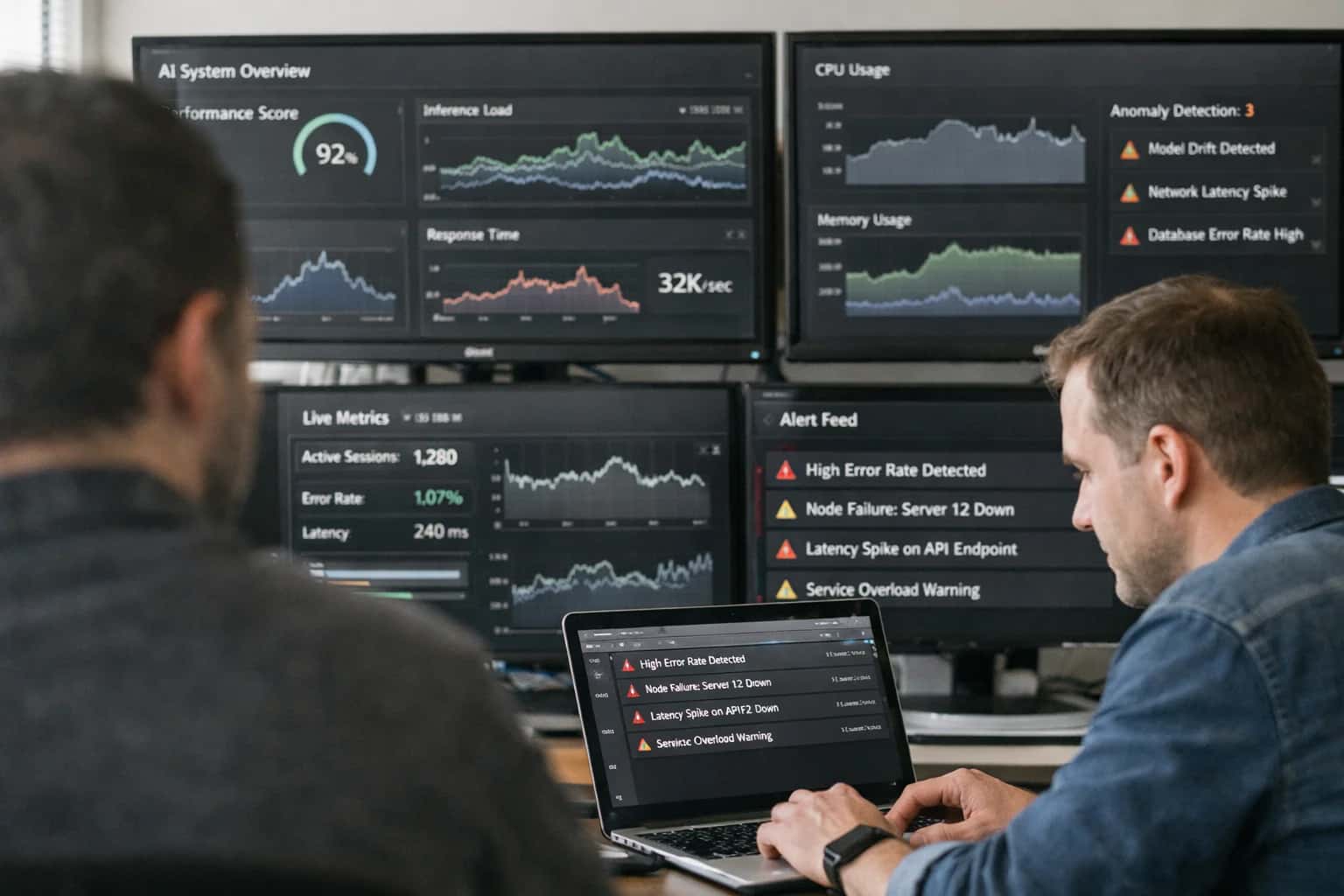
Where AI Fits into Trimble Ag Equipment Monitoring
A technical guide to embedding AI agents into Trimble's telematics data flows for predictive maintenance, operational efficiency, and automated decision support.
Implementation involves deploying lightweight inference agents that subscribe to Trimble's data feeds via webhooks or a message queue (e.g., RabbitMQ, AWS SQS). These agents process the data, running it through pre-trained models for failure prediction and efficiency scoring. High-confidence alerts are then written back to Trimble's platform using its REST API, often populating custom objects or notes fields on the equipment record. For example, an AI agent might flag inefficient PTO usage on a tractor, suggesting an optimal RPM setting and automatically logging the recommendation as a "Efficiency Note" on that machine's profile. This keeps the workflow native to Trimble while adding an intelligent analysis layer.
Rollout should start with a pilot on a single equipment class (e.g., combines) to validate model accuracy against actual downtime events. Governance is critical: all AI recommendations should be logged in an immutable audit trail, and for high-stakes predictions (like a major engine failure), the system should require a human-in-the-loop confirmation before dispatching a service truck. This balances automation with operational risk. Integrating with our related guide on [/integrations/farm-management-platforms/ai-integration-for-trimble-ag-task-management](AI Integration for Trimble Ag Task Management) can create a fully automated pipeline from prediction to repair execution.
Key Trimble Ag Integration Surfaces for AI
Ingesting Real-Time Machine Data
The core of AI-driven equipment monitoring is the telematics data stream. Trimble's APIs provide access to a rich set of machine vitals from connected tractors, harvesters, and implements.
Key data points for AI analysis include:
- Engine Metrics: RPM, load percentage, fuel consumption, and temperature readings to model efficiency and detect anomalies.
- Implement Status: Seed meter performance, sprayer pressure, and planter downforce for real-time quality control.
- Location & Movement: GPS coordinates, speed, and heading to analyze field coverage, idle time, and route efficiency.
- Diagnostic Trouble Codes (DTCs): Standardized codes that serve as direct signals for predictive maintenance models.
AI integration involves subscribing to these data streams, normalizing payloads from different OEMs (e.g., John Deere, Case IH), and feeding them into time-series models for failure prediction and operational scoring.
High-Value AI Use Cases for Equipment Monitoring
Integrate AI directly with Trimble Ag's equipment telematics to move from reactive monitoring to predictive operations. These use cases connect to Trimble's Connected Farm APIs, focusing on the data models for machine status, CAN bus data, and operational logs.
Predictive Maintenance Alerts
AI models analyze real-time CAN bus data, engine hours, and historical failure patterns from Trimble's telematics feed to predict component failures (e.g., hydraulic pumps, transmissions) 7-14 days in advance. Alerts are routed to the maintenance module with recommended parts and labor estimates.
Operator Efficiency Coaching
Processes second-by-second telemetry (RPM, fuel flow, implement status) to generate per-field, per-operator efficiency scores. AI synthesizes a daily briefing with specific behavioral recommendations (e.g., 'reduce idle time by 12%') delivered via the Trimble in-cab display or mobile app.
Dynamic Implement Optimization
Integrates AI with Trimble's implement control APIs (e.g., for planters, sprayers). Models use soil moisture maps, real-time ground speed, and target application rates to autonomously adjust downforce, seeding population, or spray pressure, optimizing for field variability and reducing input waste.
Fuel & Idle Time Analytics
AI performs granular analysis on fuel consumption data, correlating it with field boundaries, task type, and operator behavior. Automatically flags anomalous consumption patterns and generates ranked recommendations (e.g., route optimization, engine tune-ups) within the Trimble fleet reporting dashboard.
Pre-Season Settings Prescription
Leverages historical yield data, soil maps, and past season's machine performance data from Trimble to generate AI-recommended machine settings profiles for the upcoming season. Profiles for planting depth, pressure, and speed are pre-loaded into the machine's control system via the platform.
Cross-Fleet Utilization Planning
AI analyzes telematics from the entire equipment fleet (tractors, combines, sprayers) against the seasonal work plan in Trimble. Recommends optimal machine assignments and schedules to minimize deadhead miles, balance hours, and ensure critical equipment is available for peak windows.
Example AI-Powered Equipment Workflows
These workflows demonstrate how AI agents can be integrated with Trimble's equipment telematics to move from passive monitoring to proactive, automated management. Each flow connects real-time data to a specific action, reducing downtime and optimizing operational efficiency.
Trigger: An AI model continuously analyzes a stream of engine hour data, vibration sensors, and hydraulic pressure readings from a combine harvester.
Context Pulled: The agent retrieves the equipment's maintenance history from Trimble, current operational context (e.g., mid-harvest), and the manufacturer's service thresholds.
Agent Action: The model identifies an anomaly pattern indicative of a failing bearing in the rotor drive, predicting failure within 40-60 engine hours. It generates a plain-language alert: "Combine #203 (John Deere S780) shows early-stage rotor bearing wear. Projected failure window: 3-5 days at current usage. Recommended action: Schedule inspection before next major harvest block."
System Update: The agent automatically creates a draft work order in the connected farm management platform (e.g., Trimble's task module or a linked CMMS like Fiix), pre-populated with:
- The predicted issue
- Relevant telematics graphs
- Recommended parts (from the equipment's BOM)
- Priority: High
Human Review Point: The work order is routed to the fleet manager for approval, scheduling, and parts ordering. The system logs the prediction and eventual outcome for model retraining.
Implementation Architecture: Data Flow & AI Layer
A production-ready blueprint for integrating AI models with Trimble's equipment telematics to create a closed-loop system for predictive maintenance and operational efficiency.
The integration architecture is built on a real-time data pipeline that ingests, enriches, and analyzes telemetry from Trimble's Connected Farm platform. Core data objects include:
- Equipment Status Streams: Engine hours, fuel consumption, hydraulic pressure, GPS location, and implement engagement status.
- Task Context: Field boundaries, crop type, soil conditions, and operator IDs linked to the equipment session.
- Historical Maintenance Logs: Past service records, part replacements, and failure codes from the farm's asset management module.
This raw data flows into a stream processing layer (e.g., Apache Kafka, AWS Kinesis) where it is normalized, tagged with metadata, and prepared for AI inference.
The AI inference layer consists of specialized models deployed as containerized microservices, each addressing a specific operational goal:
- Failure Prediction Model: A time-series anomaly detection model (e.g., LSTM, Prophet) analyzes sensor streams against known failure signatures to predict component breakdowns (e.g., transmission, hydraulic pump) with a lead time of 24-72 hours.
- Efficiency Optimization Agent: A reinforcement learning model evaluates real-time fuel burn, ground speed, and implement settings against the task's agronomic goals (e.g., seeding depth, spray coverage) to recommend optimal gear and RPM settings to the operator via in-cab display or mobile push notification.
- Operator Behavior Scorer: A model classifies operator patterns (e.g., excessive idling, harsh turning) by comparing telematics against benchmark data, generating coaching insights for fleet managers.
Predictions and recommendations are written back to Trimble's platform via its REST APIs, creating new records:
- Predictive Alerts in the maintenance module, auto-generating work orders with suggested parts and priority levels.
- Efficiency Reports in the operational analytics dashboard, linking fuel savings to specific fields and tasks.
- Operator Scorecards in the labor management module for targeted training.
Governance and rollout are critical for trust. The system implements a human-in-the-loop approval step for high-cost maintenance recommendations before work orders are finalized. All AI inferences are logged with a full audit trail—input data, model version, confidence score, and recommended action—for traceability and model performance monitoring. A phased rollout typically starts with a single machine type (e.g., tractors) and one use case (failure prediction), validating model accuracy against actual downtime events before scaling to the full fleet and adding optimization agents. This architecture ensures AI augments, rather than disrupts, existing Trimble workflows, providing a clear path from telematics data to reduced downtime and lower operating costs.
Code & Payload Examples
Streaming Telematics to AI Models
Real-time AI analysis starts with ingesting raw CAN bus and GPS data from Trimble hardware. A typical pipeline involves subscribing to a telematics stream, parsing the JSON payload, and routing it to a real-time inference endpoint for immediate anomaly detection.
Example JSON Payload (Trimble Telematics API):
json{ "asset_id": "TRK-78910", "timestamp": "2024-05-15T14:30:00Z", "location": { "lat": 42.1234, "lng": -93.5678 }, "can_data": { "engine_rpm": 1850, "fuel_rate_l_hr": 22.5, "hydraulic_pressure_psi": 2450, "pto_engaged": true, "implement_status": "PLANTING" }, "fault_codes": ["P0087", "U0100"] }
A Python service consumes this stream, validates the schema, and forwards the can_data object to a pre-trained model that scores each reading for deviation from expected operational baselines.
Realistic Operational Impact & Time Savings
How AI integration transforms equipment monitoring from reactive logging to proactive asset management, directly within Trimble Ag workflows.
| Metric | Before AI | After AI | Notes |
|---|---|---|---|
Critical Failure Detection | Post-failure diagnosis after downtime | Predictive alerts 24-72 hours prior | Uses telematics patterns (vibration, temp, hydraulics) to flag anomalies |
Daily Equipment Health Review | Manual log review, 30-60 mins per machine | Automated summary report in <5 mins | AI synthesizes data from all connected assets into prioritized action list |
Operator Efficiency Coaching | Periodic review, often post-season | Real-time in-cab suggestions via display | Analyzes fuel burn, implement settings, and field patterns for immediate feedback |
Preventive Maintenance Scheduling | Calendar-based or hour-meter intervals | Condition-based and predictive scheduling | Dynamically adjusts service intervals based on actual wear, not just time |
Diagnostic Code Triage | Mechanic researches codes, calls dealer | AI provides probable cause & fix guidance | Contextualizes generic CAN bus codes with machine-specific operational data |
Fuel & Input Optimization | Manual tracking, end-of-season analysis | Per-field, per-operation recommendations | Correlates equipment settings with yield maps and input data to suggest adjustments |
Warranty & Service Documentation | Manual compilation for dealer claims | Automated report generation for incidents | AI bundles relevant telematics snapshots and logs into a submission-ready packet |
Governance, Security & Phased Rollout
A structured approach to deploying AI for equipment monitoring that prioritizes safety, control, and measurable impact.
Integrating AI with Trimble Ag's telematics data requires a governance-first architecture. This means implementing strict access controls via Trimble's APIs (e.g., Trimble Ag SDK, Connected Farm API) to create a read-only data pipeline for initial analysis. All AI inferences—such as predicting hydraulic pump failure from pressure anomalies or identifying inefficient PTO engagement patterns—are written to a separate audit log or a dedicated AI_Insights custom object within your farm management stack, not directly back to core equipment control systems. This creates a clear separation between observation and action, allowing for human review and approval before any operational changes are suggested to the operator or fleet manager.
A phased rollout is critical for trust and adoption. Phase 1 focuses on passive monitoring and alerting. AI models analyze historical and real-time CAN bus data (engine hours, fuel consumption, implement status) to establish baselines and generate low-risk alerts (e.g., "Plan maintenance for Combine #3 within 50 engine hours") within existing Trimble dashboards or via email. Phase 2 introduces prescriptive recommendations, such as optimizing harvester ground speed based on yield monitor and grain quality data, presented as optional guidance to the operator in-cab. Phase 3, contingent on validated accuracy, explores closed-loop suggestions for non-safety-critical settings, like automatically adjusting planter downforce based on AI-interpreted soil moisture maps.
Security is non-negotiable. The integration must adhere to Trimble's data residency and privacy policies. Inference Systems implements AI workloads in your cloud tenant or on-premise infrastructure, ensuring telematics data never passes through unnecessary third parties. We employ model cards and inference traces for every prediction, allowing you to audit why a specific recommendation was made. This governance model turns AI from a black box into a accountable co-pilot, reducing operational risk while converting equipment data into a strategic asset for uptime and efficiency. For related architectural patterns, see our guide on AI Integration for Farm Data Platforms.
Enabling Efficiency, Speed & Accuracy
Intelligent Analysis, Decision & Execution
We build AI systems for teams that need search across company data, workflow automation across tools, or AI features inside products and internal software.
Talk to Us
Search across company data
Give teams answers from docs, tickets, runbooks, and product data with sources and permissions.
Useful when people spend too long searching or get different answers from different systems.

Automate internal workflows
Use AI to route work, draft outputs, trigger actions, and keep approvals and logs in place.
Useful when repetitive work moves across multiple tools and teams.

Add AI to products and internal tools
Build assistants, guided actions, or decision support into the software your team or customers already use.
Useful when AI needs to be part of the product, not a separate tool.
FAQ: Technical & Commercial Questions
Common questions about implementing AI-driven predictive maintenance and operational optimization for Trimble Ag telematics data.
The most valuable data streams for AI-driven equipment monitoring are those that indicate operational state, wear, and efficiency. Key Trimble data points include:
- Engine Parameters: RPM, load percentage, coolant/engine oil temperature, fuel consumption rate.
- Hydraulic System Data: Pressure readings, pump status, implement engagement cycles.
- Transmission & Drivetrain: Gear selection, PTO status, differential lock activity.
- Operational Context: Ground speed, GPS location, implement status (e.g., planter row unit down force, sprayer section control).
- Error Codes & Alerts: CAN bus diagnostic trouble codes (DTCs) and system warnings.
An AI integration typically ingests this high-frequency telemetry via Trimble's APIs (like the Trimble Developer Network APIs for Connected Farm), normalizes it, and creates a time-series feature set for model training and real-time inference.

About the author
Prasad Kumkar
CEO & MD, Inference Systems
Prasad Kumkar is the CEO & MD of Inference Systems and writes about AI systems architecture, LLM infrastructure, model serving, evaluation, and production deployment. Over 5+ years, he has worked across computer vision models, L5 autonomous vehicle systems, and LLM research, with a focus on taking complex AI ideas into real-world engineering systems.
His work and writing cover AI systems, large language models, AI agents, multimodal systems, autonomous systems, inference optimization, RAG, evaluation, and production AI engineering.
Partnered with leading AI, data, and software stack.





How We Work
Custom AI workflows for your Business
One-fit-all AI don't work for modern businesses. At Inferensys, we aim to understand your business & custom requirements; which we use to define most efficient agentic workflows, the data, and the tools for your business.
01
Review the use case
We understand the task, the users, and where AI can actually help.
Read more02
Pick the right approach
We define what needs search, automation, or product integration.
Read more03
Build the first useful version
We implement the part that proves the value first.
Read more04
Improve from there
We add the checks and visibility needed to keep it useful.
Read moreThe first call is a practical review of your use case and the right next step.
Talk to Us