AI integration for Trimble Ag is about augmenting, not replacing, its core data and control layers. The primary connection points are the Trimble Ag Data APIs and the Connected Farm workflow engine. AI models act as a new intelligence layer that consumes real-time streams from field sensors, equipment telematics (via the Trimble Ag SDK), satellite imagery, and manual scouting logs. This processed intelligence is then injected back into the platform as automated tasks, predictive alerts, or optimized prescriptions, directly updating objects like Field Operations, Equipment Work Orders, and Input Recommendations within the existing user workflows.

Integration
AI Integration for Trimble Ag Connected Farm
A technical blueprint for embedding AI agents and generative workflows into the Trimble Connected Farm ecosystem, from equipment data ingestion to automated tasking and closed-loop control.
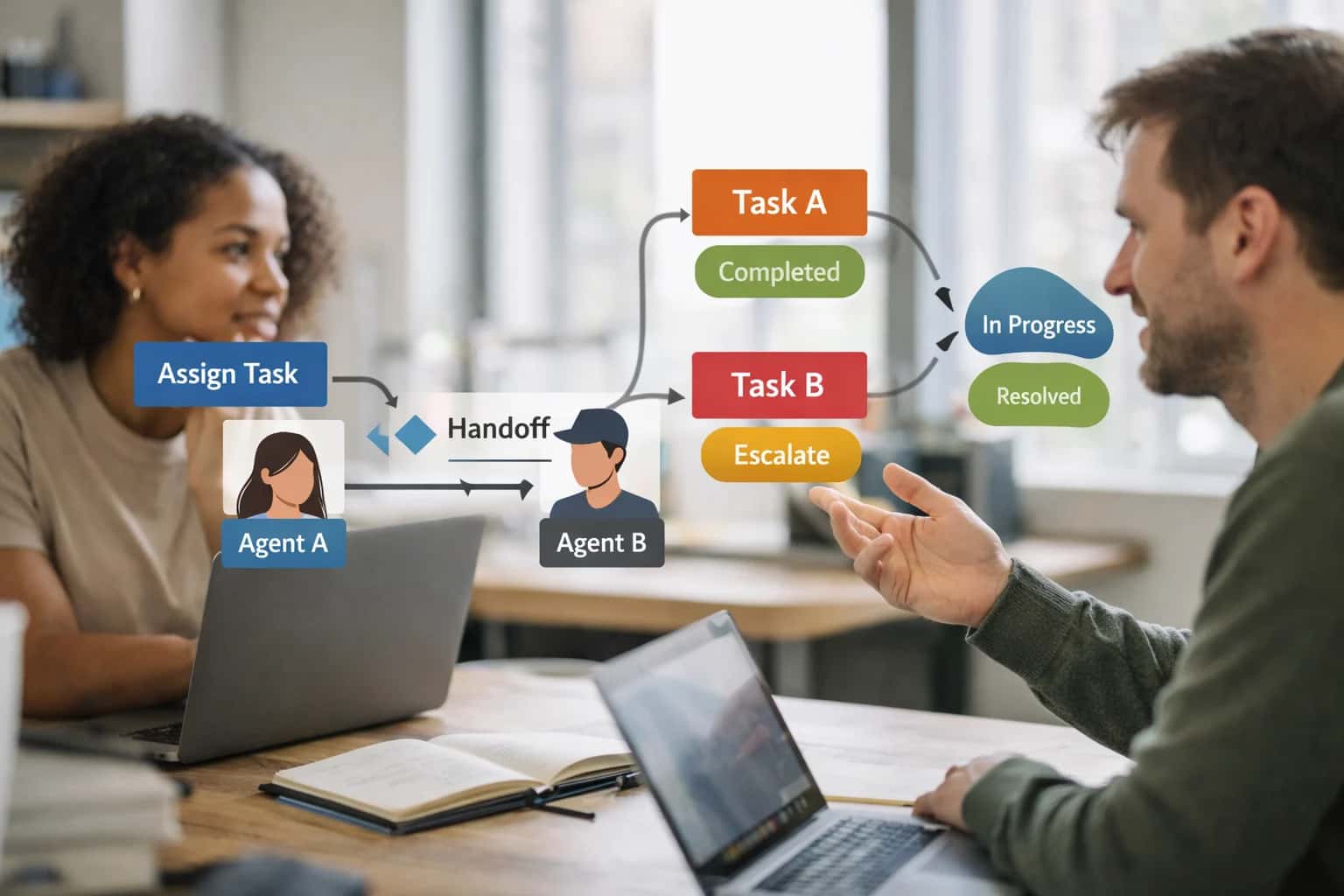
ARCHITECTURE BLUEPRINT
Where AI Fits into the Trimble Ag Stack
A practical guide to embedding AI agents and workflows into the Trimble Connected Farm ecosystem, from data ingestion to closed-loop control.
Implementation follows a hub-and-spoke pattern: a central AI orchestration service (hosted on your infrastructure or cloud) acts as the 'brain.' It subscribes to webhooks from Trimble for events like a completed soil test upload or a weather alert. It processes this data using specialized models (e.g., for yield forecasting or pest identification), then uses Trimble's REST APIs to create a new Scouting Issue, adjust an Irrigation Schedule, or generate a Variable Rate Application file. For closed-loop control, such as autonomous irrigation, the AI service can call Trimble's Control APIs to adjust pivot settings in near real-time, with all actions logged against the field's audit trail for full governance.
Rollout is typically phased, starting with read-only analytics and alerting to build trust, before progressing to write-back automation. A critical governance layer is a human-in-the-loop approval step for any AI-generated task that commits capital (like a fertilizer order) or changes machine settings. This can be configured within Trimble's role-based permissions or handled in the orchestration layer. The goal is to move from reactive monitoring to predictive operations—turning data into same-day decisions without manual triage.
ARCHITECTURAL BLUEPRINTS FOR AI AGENTS
Key Integration Surfaces in Trimble Connected Farm
Ingesting and Harmonizing Machine & Sensor Data
The Field Data Hub is the primary integration point for real-time equipment telematics, sensor streams, and IoT data. AI agents connect here to transform raw data into actionable insights.
Key APIs & Objects:
- Equipment Telematics API: Real-time location, fuel usage, implement status, and diagnostic codes from tractors, combines, and sprayers.
- Sensor Data Streams: Soil moisture, nutrient levels, canopy temperature, and weather station feeds.
- Task Execution Logs: As-applied and as-harvested spatial records (shapefiles, yield maps).
AI Use Cases:
- Predictive maintenance alerts from engine telemetry.
- Real-time anomaly detection in irrigation or spraying operations.
- Automated generation of verified activity records for compliance and reporting.
Integration typically involves subscribing to webhook events or polling REST endpoints, then routing cleansed data to a vector store for agentic retrieval and analysis.
CONNECTED FARM INTEGRATION
High-Value AI Use Cases for Trimble Ag
Practical AI workflows that connect directly to Trimble Ag's data models and automation surfaces, turning field data into autonomous actions and predictive insights.
01
Dynamic Task Generation & Dispatch
AI agents monitor field sensor data, satellite NDVI, and scouting reports from the Connected Farm platform to auto-generate and prioritize work orders. Integrates with Trimble's task management APIs to dispatch crews, assign equipment, and update completion status, moving from scheduled checks to condition-based operations.
Reactive → Proactive
Workflow shift
02
Yield Forecast Agent
A multi-model AI forecasting system that ingests historical yield maps, current season satellite imagery, and soil moisture data from Trimble's data layers. It generates probabilistic yield predictions at the field and sub-field level, surfacing insights directly in the Connected Farm yield module for harvest planning and forward contracting decisions.
Weeks → Days
Forecast cadence
03
Irrigation Prescription Engine
Closed-loop AI integration with Trimble irrigation control systems. Models process real-time soil sensor telemetry, hyper-local weather forecasts, and crop stage data to generate and execute variable rate irrigation prescriptions. Adjusts zones autonomously or provides operator guidance via the Connected Farm mobile interface.
10-20%
Typical water savings
04
Equipment Health & Efficiency Copilot
AI analyzes machine telematics (fuel consumption, engine hours, implement status) streamed from Trimble's fleet management APIs. Predicts maintenance needs, identifies inefficient operator behavior, and recommends optimal machine settings. Findings are pushed as alerts and reports within the Connected Farm equipment dashboard.
Batch → Real-time
Analysis mode
05
Automated Scouting & Issue Logging
Computer vision AI processes field imagery uploaded via the Connected Farm mobile app or from drone/satellite feeds. Automatically identifies weeds, pests, nutrient deficiencies, and stand counts. Creates structured issue records in the platform's scouting log, complete with location pins and severity scores, triggering follow-up tasks.
Hours → Minutes
Scout review time
06
Unified Data Ingestion Pipeline
An AI-powered data workflow that ingests and harmonizes third-party lab reports (soil, tissue), weather station feeds, and legacy farm records. Uses NLP and schema mapping to auto-populate corresponding fields in Trimble's data model, reducing manual entry and creating a single source of truth for downstream AI agents. Connects via Trimble's data import APIs.
80%+
Entry automation
TRIMBLE AG CONNECTED FARM
Example AI-Agent Workflows
These workflows illustrate how AI agents can be embedded into the Trimble Connected Farm ecosystem to automate decision-making, trigger actions, and provide real-time support. Each flow is designed to integrate with specific Trimble Ag APIs, data models, and user surfaces.
Trigger: A new field image is uploaded via the Trimble Ag mobile app or a drone/satellite imagery feed is processed.
Context/Data Pulled: The agent retrieves the image metadata (field ID, GPS coordinates, date) and the recent field history (previous scouting notes, applied inputs, weather data) from the Trimble Ag Field Records API.
Model/Agent Action: A computer vision model (e.g., fine-tuned for crop health, pest, weed, or disease identification) analyzes the image. An LLM-based agent synthesizes the visual finding with the field context to generate a structured scouting note.
System Update: The agent creates a new 'Field Issue' record via the Trimble Ag Tasks API, populating fields like:
issue_type: (e.g., "Weed Pressure", "Nutrient Deficiency")severity: (e.g., "Low", "Medium", "High")recommended_action: (e.g., "Spot spray herbicide X within 7 days")location_polygon: The GPS coordinates from the image.
Human Review Point: The created issue is flagged for review by the farm manager in their Trimble Ag task list. The agent can be configured to auto-assign tasks for low-severity, common issues or escalate high-severity findings via an immediate mobile alert.
CLOSED-LOOP AI FOR PRECISION OPERATIONS
Implementation Architecture: Data Flow & System Design
A production-ready blueprint for wiring AI agents into the Trimble Ag Connected Farm ecosystem, from field data ingestion to automated tasking.
The integration architecture is built around Trimble Ag's core APIs and data model. Key connection points include the Field Data API for ingesting machine telematics, soil sensor readings, and satellite imagery; the Task Management API for creating and assigning work orders; and the Agronomic Records API for reading and writing scouting notes, input applications, and yield data. AI models process this stream of field-centric data, transforming raw observations into structured insights and recommended actions.
A typical closed-loop workflow begins with AI agents monitoring the data stream for anomalies—like a sudden dip in soil moisture or an NDVI signature indicating potential disease. Upon detection, an agent uses the Task Management API to create a scouting work order, automatically assigning it to the appropriate crew based on location and skill set. After the scout uploads photos and notes via the mobile app, a vision and NLP agent analyzes the submission, updates the issue log, and can trigger a follow-on task, such as generating a variable-rate spray prescription via the Application Planning API. This creates a continuous 'sense, analyze, act' cycle.
Rollout is phased, starting with read-only analytics and alerting to build trust in the AI's recommendations before enabling write-back actions like automated task creation. Governance is critical: all AI-generated tasks and prescriptions are logged with a clear audit trail in Trimble's system, and key actions (like large input orders) can be configured to require human approval via Trimble's existing role-based permissions. This architecture ensures AI augments the platform's workflows without disrupting established operational controls.
For teams evaluating this integration, the initial focus should be on a single, high-value data stream—such as integrating yield monitor data with forecasting models—to validate the data pipeline and ROI before expanding to multi-agent, closed-loop automation. Our experience implementing similar architectures for enterprise ag platforms ensures we can navigate the specifics of Trimble's API ecosystem, data governance requirements, and phased rollout strategy.
TRIMBLE AG API INTEGRATION PATTERNS
Code & Payload Examples
Ingesting Telematics & Sensor Data
AI models for predictive maintenance or yield forecasting require a steady stream of equipment and field data. This typically involves subscribing to Trimble's data export APIs or webhooks for near-real-time ingestion.
A common pattern is to set up a listener for FieldOperation events, which contain geospatial paths, implement settings, and material application rates. The payload is then enriched with weather and soil data before being sent to an AI service for analysis. The response can trigger automated tasks or alerts back in Connected Farm.
Example Webhook Payload (Trimble FieldOperation Event):
json{ "eventType": "FieldOperation.Completed", "operationId": "op_abc123", "fieldId": "fld_xyz789", "equipmentId": "eq_456", "startTime": "2024-10-26T08:30:00Z", "endTime": "2024-10-26T17:15:00Z", "operationType": "Tillage", "totalArea": 85.2, "pathData": [ { "lat": 40.7128, "lon": -74.0060, "timestamp": "...", "depth": 8 } ], "materialApplied": [] }
This structured event is the foundation for building AI-driven insights on field efficiency, fuel consumption, or soil compaction risk.
TYPICAL IMPACT FOR A 5,000-ACRE OPERATION
Realistic Operational Impact & Time Savings
This table illustrates the practical, phased impact of integrating AI agents and workflows into Trimble Ag Connected Farm, based on common implementation patterns. Savings are directional and scale with data maturity.
| Workflow / Task | Before AI Integration | After AI Integration | Implementation Notes |
|---|---|---|---|
Daily field anomaly detection | Manual review of satellite/imagery feeds (1-2 hrs) | Automated alerts with prioritized issues (<15 mins) | AI scans NDVI, weather, and sensor data; flags deviations for human review |
Irrigation scheduling | Weekly planning based on static schedules (3-4 hrs) | Dynamic daily prescriptions from soil & forecast models (30 mins) | Integrates with Trimble irrigation control; adjusts for real-time ET and soil moisture |
Scouting report generation | Manual note-taking, photo sorting, data entry (2 hrs/field) | AI summarizes findings, tags images, updates logs (20 mins) | Uses mobile uploads; auto-links issues to field records and task lists |
Yield forecast updates | Monthly spreadsheet modeling (8-10 hrs) | Weekly automated probabilistic forecasts (1 hr review) | AI ingests field data, weather, satellite; generates scenario-based reports in-platform |
Task prioritization & dispatch | Foreman manually reviews lists each morning (1 hr) | AI recommends & assigns tasks based on urgency, location (15 mins) | Considers weather, equipment location, crew skills; integrates with Trimble Task Management |
Equipment maintenance alerts | Reactive repairs or fixed calendar schedules | Predictive alerts based on telematics & usage patterns | Analyzes Trimble equipment data; forecasts failures 7-14 days out |
Regulatory compliance reporting | Quarterly manual data compilation (2-3 days) | Automated draft generation from platform data (2-3 hrs review) | AI maps field ops to regulation (e.g., nitrogen use); produces audit-ready drafts |
Input purchase planning | Seasonal budgeting with manual price checks | AI-driven recommendations with cost/benefit analysis | Analyzes soil tests, crop plans, market prices; suggests optimal orders and timing |
PRODUCTION-READY ARCHITECTURE
Governance, Security & Phased Rollout
A structured approach to deploying AI across Trimble Ag's Connected Farm ecosystem with enterprise-grade controls.
A production AI integration for Trimble Ag must be built on a secure, governed data pipeline. This typically involves a dedicated integration service that pulls data from Trimble's Field IQ, Connected Farm API, and Ag Software modules via OAuth2.0, processes it through a private AI inference layer, and writes recommendations or tasks back as structured payloads to the appropriate Trimble objects (e.g., Work Orders, Scouting Records, Prescription Maps). All data flows are logged, and AI-generated actions can be routed through existing Trimble approval workflows or human-in-the-loop review steps before execution.
Rollout follows a phased, risk-managed model. Phase 1 focuses on read-only analytics and alerting, such as AI-powered anomaly detection on yield maps or satellite imagery, delivering insights to the Trimble dashboard without system writes. Phase 2 introduces assisted automation, like AI-drafted scouting notes or prioritized task lists that require a manager's approval within Trimble before creation. Phase 3 enables closed-loop control for low-risk, high-frequency decisions, such as automated irrigation scheduling adjustments based on AI-interpreted soil sensor data, with full audit trails.
Governance is enforced at the data, model, and user levels. Field and financial data used by AI models is scoped via role-based access controls (RBAC) synced from Trimble. Prompts and model outputs are grounded in Trimble's historical data and tagged with the source records used. A central /integrations/ai-governance dashboard provides visibility into AI-triggered activities, model performance drift, and cost attribution per farm or crop, ensuring the integration remains auditable, explainable, and aligned with operational priorities.
Enabling Efficiency, Speed & Accuracy
Intelligent Analysis, Decision & Execution
We build AI systems for teams that need search across company data, workflow automation across tools, or AI features inside products and internal software.
Talk to Us
Search across company data
Give teams answers from docs, tickets, runbooks, and product data with sources and permissions.
Useful when people spend too long searching or get different answers from different systems.
Enterprise searchRAGPermissions
Read more
Automate internal workflows
Use AI to route work, draft outputs, trigger actions, and keep approvals and logs in place.
Useful when repetitive work moves across multiple tools and teams.
AI agentsWorkflow automationGovernance
Read more
Add AI to products and internal tools
Build assistants, guided actions, or decision support into the software your team or customers already use.
Useful when AI needs to be part of the product, not a separate tool.
AI integrationDecision supportModel routing
Read moreAI INTEGRATION FOR TRIMBLE AG
Frequently Asked Questions
Practical questions and answers for technical teams planning to embed AI agents and generative workflows into the Trimble Ag Connected Farm ecosystem.
Trimble Ag's Connected Farm platform offers several key surfaces for AI integration via its APIs and data models:
Data Ingestion & Enrichment:
- Field Data API: Pull real-time and historical field operations data (planting, spraying, harvesting) and sensor telematics for model training and context.
- Imagery & Boundaries API: Access field boundaries, satellite/NDVI layers, and as-applied maps to ground computer vision and spatial analysis models.
Workflow Automation:
- Tasks API: Create, update, and assign tasks dynamically. AI agents can generate work orders from scouting reports or predictive alerts and push them directly into user task lists.
- Recommendations Engine: Extend or integrate with Trimble's existing recommendation surfaces to serve AI-generated guidance on seeding rates, input timing, or irrigation schedules.
User Interaction:
- Mobile & Webhook Integrations: Push AI-generated alerts, summaries, or questions to the Connected Farm mobile app or dashboard via notification channels.
- Reporting Endpoints: Automate the generation and population of operational or compliance reports by synthesizing data from across the platform.
A typical production architecture uses these APIs to create a middleware layer that orchestrates between Trimble Ag's data and external AI services, ensuring all actions are logged back to the appropriate Trimble records.

About the author
Prasad Kumkar
CEO & MD, Inference Systems
Prasad Kumkar is the CEO & MD of Inference Systems and writes about AI systems architecture, LLM infrastructure, model serving, evaluation, and production deployment. Over 5+ years, he has worked across computer vision models, L5 autonomous vehicle systems, and LLM research, with a focus on taking complex AI ideas into real-world engineering systems.
His work and writing cover AI systems, large language models, AI agents, multimodal systems, autonomous systems, inference optimization, RAG, evaluation, and production AI engineering.
LinkedIn
Limited slotsGet a Free AI Consultation
Partnered with leading AI, data, and software stack.





How We Work
Custom AI workflows for your Business
One-fit-all AI don't work for modern businesses. At Inferensys, we aim to understand your business & custom requirements; which we use to define most efficient agentic workflows, the data, and the tools for your business.
01
Review the use case
We understand the task, the users, and where AI can actually help.
Read more02
Pick the right approach
We define what needs search, automation, or product integration.
Read more03
Build the first useful version
We implement the part that proves the value first.
Read more04
Improve from there
We add the checks and visibility needed to keep it useful.
Read moreThe first call is a practical review of your use case and the right next step.
Talk to Us