AI integration targets the contract ingestion, review, and obligation tracking surfaces within your event management stack. The primary touchpoints are: 1) Cvent's Vendor Management or Event Diagram modules where contract documents are attached to vendor/venue records; 2) e-signature platforms like DocuSign or Adobe Sign used for execution; and 3) shared drives or ECM systems (SharePoint, Box) where final copies are stored. An AI agent acts on this ecosystem by using webhooks from the e-signature platform to trigger when a contract is signed, then extracts the document from storage via API, processes it, and updates the relevant records in Cvent and your financial system.

Integration
Event Contract and Document AI Integration
Blueprint for using AI to review and manage event vendor contracts, integrating DocuSign or Adobe Sign with Cvent's vendor module for clause extraction, obligation tracking, and automated routing.
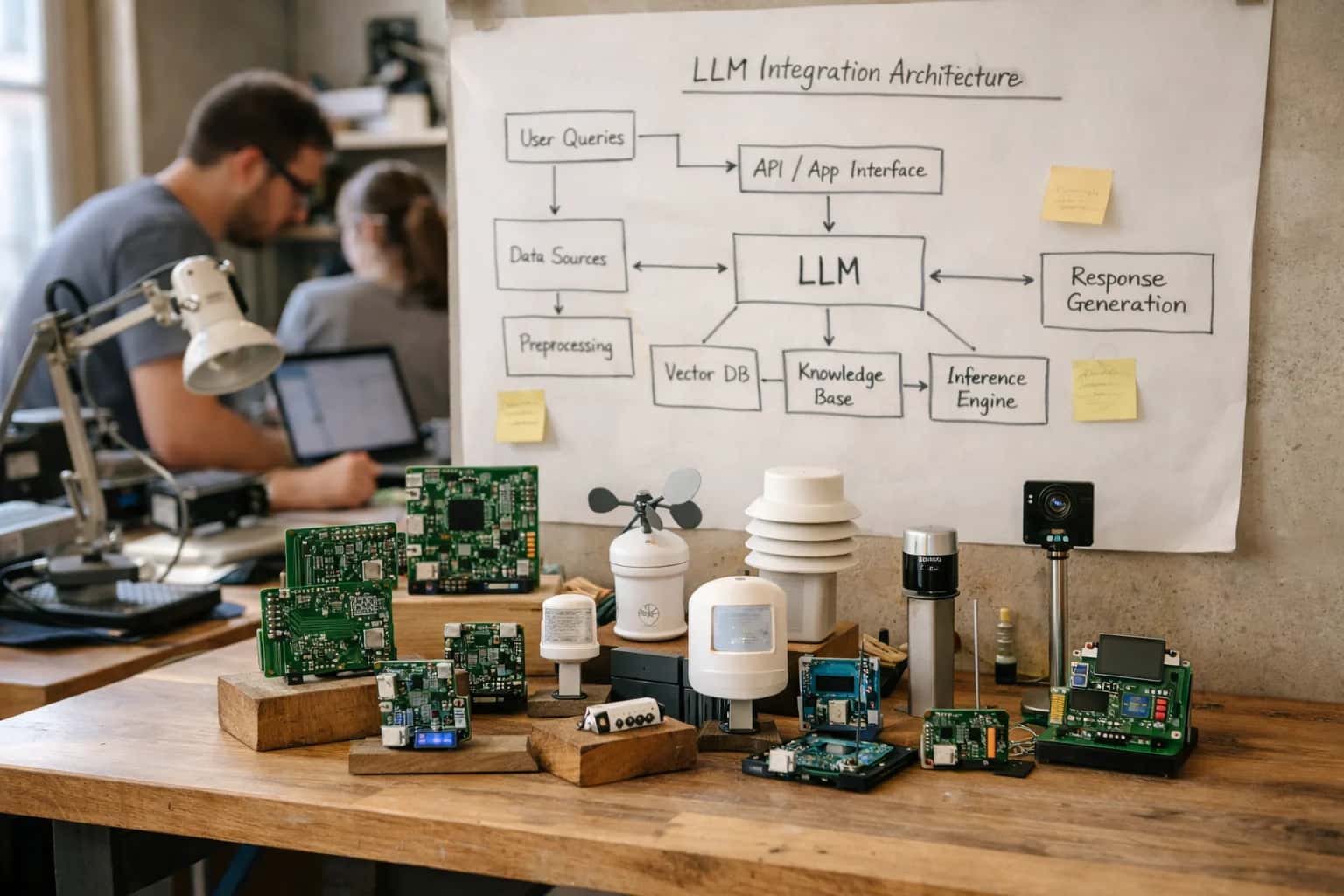
ARCHITECTURE FOR VENDOR AND VENUE OPERATIONS
Where AI Fits into Event Contract Management
A technical blueprint for integrating AI into the contract lifecycle for events, connecting platforms like Cvent's Vendor Management module with DocuSign or Adobe Sign to automate review, tracking, and compliance.
Implementation focuses on three high-value workflows: Clause Extraction & Risk Review, Automated Obligation Calendar Creation, and Exception Routing. For example, when a venue contract is signed, an AI agent can instantly parse the PDF to identify key clauses (cancellation fees, insurance requirements, F&B minimums), flag any deviations from your standard terms, and populate a structured data object in Cvent. It then extracts all date-bound obligations (deposit due dates, final headcount deadlines, certificate of insurance submissions) and creates calendar entries or tasks in a connected project management tool like Asana. Any non-standard clauses are routed via a Slack alert or a ServiceNow ticket to the legal or procurement team for review, with the AI providing a summarized context.
Rollout requires a phased approach, starting with a single contract type (e.g., AV vendor agreements) to tune the extraction models and approval workflows. Governance is critical: all AI-generated extractions and updates should be logged in an audit trail within Cvent or a separate system, with a human-in-the-loop review step mandated for contracts above a certain value or risk threshold. The integration must respect the existing RBAC (Role-Based Access Control) of Cvent, ensuring AI agents only access contracts and vendor data based on user permissions. This architecture turns contract management from a manual, post-event reconciliation burden into a proactive, operational intelligence layer that reduces risk and ensures nothing falls through the cracks.
EVENT CONTRACT AUTOMATION
Integration Touchpoints: Cvent, DocuSign, and Your Vendor Workflow
Core Integration Surface
The Cvent Supplier Network and Vendor Management modules are the primary system of record for event contracts. AI integration focuses on the Supplier object and its related Contract records.
Key API endpoints and workflows to target include:
- Supplier Onboarding: Automate the ingestion and validation of new vendor profiles submitted through web forms.
- Contract Attachments: Monitor the
Documentssub-object for newly uploaded contract PDFs or Word files, triggering the AI review pipeline. - Custom Field Updates: Programmatically populate fields like
Contract Status,Key Dates,Risk Score, orObligation Summarybased on AI analysis. - Approval Workflows: Initiate or progress Cvent's native approval chains for contracts based on AI-generated risk assessments or missing clause flags.
This creates a closed-loop system where contract intelligence feeds directly back into the operational platform.
INTEGRATION BLUEPRINT
High-Value AI Use Cases for Event Contracts
Event vendor contracts are dense, high-volume, and critical to event success and compliance. This blueprint details how to integrate AI with platforms like Cvent's vendor module and DocuSign to automate review, tracking, and management workflows.
01
Automated Clause Extraction & Risk Review
AI agents ingest vendor contracts (PDF/Word) via Cvent's vendor portal or DocuSign webhooks. They extract key clauses (liability, cancellation, force majeure, insurance) and flag deviations from master service agreements against a pre-defined risk library. High-risk items are routed for legal review, while standard terms are auto-accepted.
Hours -> Minutes
Review time
02
Obligation & Milestone Tracker
After execution, AI parses the contract to identify all vendor obligations (e.g., 'deliver AV equipment by 9 AM, day-of') and payment milestones. It creates tracked tasks in Cvent's project module or syncs them to Asana, triggering automated reminders to event managers and vendors as dates approach.
Batch -> Real-time
Tracking
03
Intelligent Contract Routing & Approval
Based on extracted metadata (total value, vendor type, risk score), AI determines the required approval path (e.g., manager, legal, finance). It automatically routes the contract through configured workflows in Cvent or DocuSign CLM, escalating stalled approvals and providing approvers with a concise AI-generated summary.
Same day
Approval cycles
04
Vendor Performance & Compliance Monitoring
AI correlates contract obligations with post-event feedback, incident reports, and invoice data. It generates vendor performance scorecards, highlighting SLA adherence and cost variances. For recurring vendors, this intelligence informs future negotiation strategies and contract renewals within the Cvent ecosystem.
1 sprint
Insight generation
05
Automated Amendment & Renewal Drafting
For contract changes or renewals, AI uses the original agreement and new business terms (from Cvent's RFP module) to generate a first-draft amendment. It suggests updated clauses, dates, and pricing, ensuring consistency. The draft is pushed back to DocuSign for redlining and signature workflows.
Hours -> Minutes
Draft creation
06
Centralized Contract Intelligence Repository
AI indexes all executed contracts, extracting key metadata (parties, dates, values, key terms) into a searchable knowledge graph. This repository, accessible via Cvent or a separate dashboard, allows event teams to instantly query: 'Show all venue contracts with a 50% attrition clause' or 'List all AV vendors used in Q3.'
Batch -> Real-time
Search & discovery
IMPLEMENTATION BLUEPRINTS
Example AI-Powered Contract Workflows
These workflows illustrate how AI agents can automate high-volume, high-friction processes within event vendor contracting, connecting platforms like Cvent, DocuSign, and your ERP. Each flow is designed to reduce manual review from days to hours while maintaining human oversight.
Trigger: A new vendor contract PDF is uploaded to a designated folder in Cvent's Vendor Management module or arrives via email.
Context Pulled: The system retrieves the vendor's existing profile from Cvent and any prior contract history.
AI Agent Action:
- An AI agent with a document parsing tool (e.g., via Azure Document Intelligence or AWS Textract) extracts all text and structured data.
- A multi-step LLM call analyzes the document against a predefined clause library (e.g., liability caps, insurance requirements, cancellation terms, payment terms).
- The agent generates a structured JSON summary:
json
{ "vendor_name": "Global AV Solutions", "contract_value": 50000, "key_risks": [ { "clause_type": "liability", "extracted_text": "Liability is limited to the total contract value.", "assessment": "ACCEPTABLE - Matches standard cap." }, { "clause_type": "cancellation", "extracted_text": "Cancellation within 30 days incurs 100% fee.", "assessment": "FLAGGED - Exceeds standard 50% fee." } ], "key_dates": ["2024-10-15", "2024-10-20"], "obligations": ["Provide 10 staff", "Setup by 7 AM"] }
System Update: This JSON payload is posted to Cvent's API, creating a new contract record linked to the vendor. The payload also triggers a task in the event manager's Asana or Monday.com project, categorizing it as "Review Required - Cancellation Clause."
Human Review Point: The event manager reviews only the flagged clauses within the Cvent interface, with the AI's assessment and the original text side-by-side. They approve, reject, or send for redlining.
CONTRACT INTELLIGENCE WORKFLOW
Implementation Architecture: Data Flow and System Boundaries
A secure, governed architecture for AI-powered contract review that connects your e-signature platform to your event management system's vendor module.
The integration is built around a central event contract processing queue. When a new vendor agreement is signed in DocuSign or Adobe Sign, a webhook payload containing the signed PDF is sent to a secure ingestion endpoint. This payload is enriched with metadata from Cvent's Vendor Management module—such as vendor ID, event ID, and budget category—before being placed in the queue for AI processing. The AI service, operating within your VPC or a secured cloud environment, retrieves the document, extracts key clauses (payment terms, liability, cancellation windows, insurance requirements), and classifies obligations against a pre-defined taxonomy of event vendor contract types.
Processed results are written to two primary locations: a structured obligations table within your data warehouse (e.g., Snowflake, BigQuery) for reporting and analytics, and a summary object attached to the vendor record in Cvent via its REST API. This creates an auditable trail and surfaces actionable insights directly in the event manager's workflow. For example, an AI-highlighted 'force majeure' clause with a 30-day notification requirement can trigger an automated task in Cvent's project plan or a calendar alert for the event lead, ensuring contractual compliance isn't missed amidst operational chaos.
Governance is enforced at each boundary. The AI model's access is scoped via service accounts with least-privilege permissions to the document store and Cvent APIs. All extraction outputs and model inferences are logged to an audit trail for human review, allowing legal or procurement teams to validate AI accuracy and provide feedback that continuously improves the system. The rollout typically starts with a pilot on non-critical vendor contracts (e.g., AV equipment, signage) to establish trust in the AI's clause detection before expanding to high-value categories like venue and catering agreements.
EVENT CONTRACT AI INTEGRATION
Code and Payload Examples
Ingesting Vendor Contracts for AI Review
This workflow begins by pulling pending vendor contracts from Cvent's Vendor Management module or a connected DocuSign envelope. The AI system ingests the PDF, extracts key clauses, and classifies them for risk and obligation tracking.
Example Python payload for sending a contract to an AI processing endpoint:
pythonimport requests import json # Payload to trigger AI contract analysis from a Cvent webhook payload = { "event_id": "EV-2024-001", "vendor_name": "Global AV Solutions", "contract_source": "cvent_vendor_module", "document_url": "https://storage.example.com/contracts/av-agreement.pdf", "metadata": { "cvent_vendor_id": "VEND-78910", "total_value": 50000, "service_category": "Audio-Visual" } } # Call the AI processing service response = requests.post( "https://api.your-ai-service.com/v1/contracts/analyze", json=payload, headers={"Authorization": "Bearer YOUR_API_KEY"} ) # Response includes extracted clauses and initial risk scores analysis_result = response.json() print(f"Clauses extracted: {analysis_result['clause_count']}") print(f"High-risk flags: {analysis_result['high_risk_clauses']}")
The AI service returns a structured JSON of extracted obligations, deadlines, liability caps, and termination terms, ready for integration back into Cvent's custom objects or a CLM system.
EVENT CONTRACT MANAGEMENT
Realistic Time Savings and Operational Impact
How AI integration between event platforms like Cvent and e-signature tools transforms vendor contract workflows.
| Workflow Stage | Manual Process | AI-Assisted Process | Key Impact |
|---|---|---|---|
Contract Intake & Routing | Manual email triage and folder sorting | Automated classification and routing via webhook | Reduces intake lag from hours to minutes |
Key Clause Extraction | Ctrl+F search and manual highlight | AI extracts obligations, dates, and SLAs | Cuts review time by 60-70% per contract |
Risk & Compliance Review | Checklist comparison by legal/ops | AI flags non-standard terms against playbook | Surfaces 95% of deviations for human review |
Approval Workflow Coordination | Email/chat threads to track sign-offs | Status auto-updated in Cvent vendor module | Eliminates follow-up emails; provides audit trail |
Obligation Tracking Setup | Manual entry into spreadsheets or Cvent | AI populates Cvent tasks and calendar events | Turns days of data entry into a same-day process |
Renewal & Amendment Trigger | Calendar reminders and manual checks | AI monitors dates, suggests actions via alert | Proactive management prevents auto-renewal surprises |
Vendor Performance Briefing | Manual compilation of past event data | AI generates summary linking contract terms to outcomes | Prepares for negotiations in hours, not days |
PRODUCTION ARCHITECTURE
Governance, Security, and Phased Rollout
A practical framework for implementing AI-powered contract review within event platforms, balancing automation with control.
The integration architecture connects your event platform's vendor module (e.g., Cvent's Supplier Network or Bizzabo's vendor objects) to a secure AI processing layer. Vendor contracts uploaded to the platform or received via email are routed via webhook to a queue. An AI agent retrieves the document, calls a configured LLM (like GPT-4 or Claude) via a secure gateway, and extracts key clauses, dates, obligations, and red flags into a structured JSON payload. This payload is posted back to a custom object in the event platform, creating a searchable, auditable contract summary linked to the vendor record and the master event.
Security is enforced at every layer: documents are processed in-memory or in a transient, encrypted store; AI API keys are managed via a secrets service; and all agent actions are logged with user, event ID, and timestamp. Access to the AI-generated summaries and the ability to trigger reviews should be controlled by the platform's native RBAC, typically aligning with Event Manager or Procurement roles. For platforms like Cvent integrated with DocuSign, the AI review can be configured as a step in the signature workflow, providing analysis before the contract is sent for signing.
A phased rollout is critical. Start with a pilot on a single event type or vendor category (e.g., all A/V contracts). Configure the AI for high-confidence extraction only—focus on dates, amounts, and termination clauses—and route all outputs for human review in the platform's task queue. In Phase 2, enable automated alerts for specific red-flag language. Only in Phase 3, after validating accuracy and refining prompts, should you consider semi-automated approval workflows for low-risk, low-value contracts. This controlled approach builds trust, surfaces edge cases, and ensures the AI augments—rather than disrupts—existing procurement and legal review processes.
Enabling Efficiency, Speed & Accuracy
Intelligent Analysis, Decision & Execution
We build AI systems for teams that need search across company data, workflow automation across tools, or AI features inside products and internal software.
Talk to Us
Search across company data
Give teams answers from docs, tickets, runbooks, and product data with sources and permissions.
Useful when people spend too long searching or get different answers from different systems.
Enterprise searchRAGPermissions
Read more
Automate internal workflows
Use AI to route work, draft outputs, trigger actions, and keep approvals and logs in place.
Useful when repetitive work moves across multiple tools and teams.
AI agentsWorkflow automationGovernance
Read more
Add AI to products and internal tools
Build assistants, guided actions, or decision support into the software your team or customers already use.
Useful when AI needs to be part of the product, not a separate tool.
AI integrationDecision supportModel routing
Read moreEVENT CONTRACT AI IMPLEMENTATION
Frequently Asked Questions
Practical questions for teams planning to integrate AI into event vendor contract workflows, connecting platforms like Cvent, DocuSign, and Adobe Sign.
The integration is built on a secure middleware layer that orchestrates between systems.
Typical Architecture:
- Trigger: A new vendor contract is uploaded to Cvent's vendor module or sent via DocuSign/Adobe Sign.
- Ingestion: A webhook from Cvent or the e-signature platform sends the document payload (metadata + secure document URL) to the integration service.
- Processing: The service fetches the document, uses an LLM (like GPT-4 or Claude) with a retrieval-augmented generation (RAG) system over your clause library to perform analysis.
- Action: Results (extracted clauses, obligations, risk flags) are written back to:
- A custom object in Cvent's vendor record.
- A dedicated field in DocuSign for reviewer notes.
- A separate audit/logging database.
Key APIs Used:
Cvent Vendor APIfor reading/writing vendor record data.DocuSign eSignature APIorAdobe Sign APIfor document retrieval and status updates.- Internal service APIs for the AI processing engine.

About the author
Prasad Kumkar
CEO & MD, Inference Systems
Prasad Kumkar is the CEO & MD of Inference Systems and writes about AI systems architecture, LLM infrastructure, model serving, evaluation, and production deployment. Over 5+ years, he has worked across computer vision models, L5 autonomous vehicle systems, and LLM research, with a focus on taking complex AI ideas into real-world engineering systems.
His work and writing cover AI systems, large language models, AI agents, multimodal systems, autonomous systems, inference optimization, RAG, evaluation, and production AI engineering.
LinkedIn
Limited slotsGet a Free AI Consultation
Partnered with leading AI, data, and software stack.





How We Work
Custom AI workflows for your Business
One-fit-all AI don't work for modern businesses. At Inferensys, we aim to understand your business & custom requirements; which we use to define most efficient agentic workflows, the data, and the tools for your business.
01
Review the use case
We understand the task, the users, and where AI can actually help.
Read more02
Pick the right approach
We define what needs search, automation, or product integration.
Read more03
Build the first useful version
We implement the part that proves the value first.
Read more04
Improve from there
We add the checks and visibility needed to keep it useful.
Read moreThe first call is a practical review of your use case and the right next step.
Talk to Us