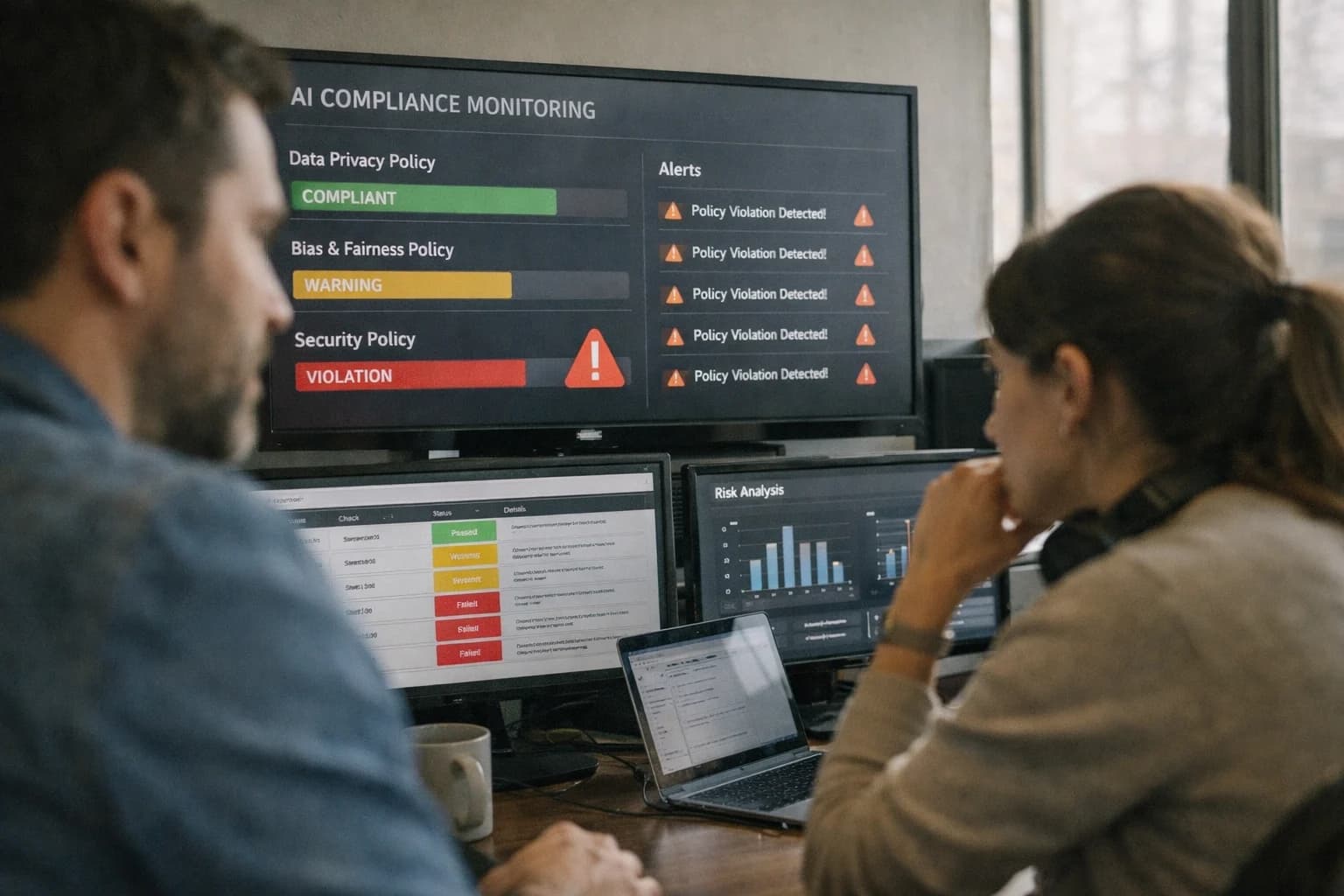
AI Integration for Science Based Targets initiative (SBTi) Tracking
Automate the monitoring of progress against validated SBTi targets, recalculating pathways based on actual performance, and generating submission-ready progress reports with AI agents.
Integrating AI into SBTi tracking transforms a manual, periodic reporting exercise into a dynamic, data-driven management system.
AI connects at three critical layers of the SBTi workflow: data ingestion, pathway calculation, and narrative reporting. For data, AI agents automate the collection and classification of activity data from source systems like ERP (SAP, Oracle), EAM (IBM Maximo), utility portals, and travel platforms, mapping spend or usage to correct Scope 1, 2, and 3 categories and emission factors. Within the calculation engine of platforms like Persefoni or Watershed, AI can dynamically recalculate your remaining carbon budget and forecast future emissions based on actual performance, operational plans, and external variables (e.g., grid decarbonization rates), alerting you to deviations from your validated target pathway.
The implementation centers on a governed orchestration layer—often built with tools like n8n or Microsoft Copilot Studio—that sequences these AI tasks. A typical workflow: 1) A scheduled trigger initiates a data pull from connected systems, 2) An AI validation agent flags outliers in the ingested data for human review, 3) The recalculated pathway and gap analysis is posted back to your SBTi tracking module, and 4) A reporting agent drafts the progress update, pulling from a library of approved narrative fragments and prior submissions. This keeps the core system of record (your carbon accounting or ESG platform) as the source of truth, while AI handles the heavy lifting of data wrangling and initial analysis.
Rollout should be phased, starting with automating the most time-consuming and error-prone data streams (e.g., Scope 3 business travel, purchased goods). Governance is critical: establish clear RBAC for approving AI-generated calculations and narratives, maintain immutable audit logs of all AI-triggered data modifications, and implement a human-in-the-loop review for all external-facing progress reports before submission to SBTi. This controlled approach reduces manual compilation from weeks to days while maintaining the rigor required for third-party assurance.
AI INTEGRATION FOR SCIENCE BASED TARGETS INITIATIVE (SBTI) TRACKING
Integration Surfaces in Your SBTi Stack
Target & Pathway Data
The core of SBTi tracking is the validated target and its underlying decarbonization pathway. AI integrates here to automate progress monitoring and dynamic recalibration.
Key integration surfaces:
Target Registry Data: Pull validated target details (base year, target year, % reduction, scope coverage) via API or from the SBTi target dashboard for a system of record.
Pathway Models: Integrate with internal models (e.g., in Excel, specialized software) or build AI agents that ingest the approved SBTi sectoral pathway (e.g., 1.5°C aligned) to establish annual emission budgets.
Progress Calculation: Automate the comparison of actual annual emissions (from your carbon accounting platform) against the pathway's budget. AI flags deviations, calculates the "gap," and triggers alerts for corrective action.
Recalibration Workflows: When performance deviates (e.g., a major acquisition), AI can simulate new pathway scenarios based on updated business data and draft the rationale for a target revision submission.
AUTOMATE PROGRESS MONITORING AND REPORTING
High-Value AI Use Cases for SBTi Tracking
Tracking progress against validated Science Based Targets requires continuous data synthesis, pathway analysis, and narrative reporting. These AI integration patterns connect your operational systems to SBTi tracking platforms to automate the heavy lifting.
01
Automated Pathway Recalculation
AI agents ingest actual performance data (energy, production, spend) from ERP and EAM systems, compare it to your SBTi-approved reduction pathway, and automatically recalculate future targets. This shifts annual manual modeling to continuous, data-driven adjustment, ensuring targets remain science-based and achievable.
Weeks -> Days
Recalculation cycle
02
Progress Report Generation
Orchestrate AI to pull validated metrics from your carbon accounting platform (e.g., Persefoni, Watershed), draft narrative explanations for variances, populate SBTi progress report templates, and prepare submission-ready drafts. This automates the quarterly or annual reporting sprint into a managed workflow with human review gates.
1 sprint
Typical time saved
03
Anomaly Detection & Data Validation
Implement AI monitors on incoming emissions data streams (utility APIs, fuel logs, travel data). The system flags statistical outliers, suggests corrections based on historical patterns, and maintains a data quality scorecard. This provides continuous audit readiness and reduces the risk of reporting errors that could invalidate progress claims.
04
Scope 3 Spend Categorization
Automate the most labor-intensive part of SBTi tracking. AI classifies procurement spend data from AP systems (Coupa, SAP Ariba) into relevant GHG Protocol categories, applies appropriate emission factors, and posts calculated emissions to your tracking platform. This turns manual, sample-based estimation into a comprehensive, automated process.
Batch -> Continuous
Data processing
05
Decarbonization Action Planning
An AI analyst reviews your performance gap, benchmarks against industry peers via platforms like S&P Global CSA, and scans internal project databases (CapEx software, sustainability platforms) to generate a prioritized list of potential abatement projects. This provides data-driven recommendations for the next planning cycle.
06
Stakeholder Communication Drafting
Generate first-draft communications for investors, board members, and internal teams based on SBTi progress data. AI pulls key metrics, creates plain-language summaries, and drafts content for board decks, investor updates, or internal newsletters, ensuring consistent messaging derived from the single source of truth.
AUTOMATED TARGET MONITORING AND REPORTING
Example AI Agent Workflows for SBTi
These workflows demonstrate how AI agents can automate the continuous, data-driven tracking of progress against validated Science Based Targets initiative (SBTi) commitments, reducing manual effort and improving the accuracy of pathway forecasting and reporting.
Trigger: Scheduled monthly run after financial and operational data closes.
Context/Data Pulled:
ERP/Financial Systems: Actual spend data (fuel, electricity, purchased goods) for Scope 1, 2, and 3 categories.
Facility Management/IoT: Meter readings for energy, water, and waste from connected systems.
SBTi Platform: The company's validated targets, baseline year data, and reduction pathway.
Agent Action:
Ingests raw activity data and maps it to relevant GHG Protocol categories.
Applies the latest emission factors (e.g., from DEFRA, EPA, or custom supplier databases).
Calculates monthly and year-to-date emissions.
Compares actual emissions against the SBTi-defined reduction pathway for the period.
Flags any significant deviation (e.g., >5% variance) and calculates the projected year-end gap.
System Update/Next Step:
Posts calculated metrics and variance analysis to the SBTi tracking module in the sustainability platform (e.g., Workiva, Sweep).
Generates an alert for the sustainability manager with a summary: "June emissions 8% above pathway target; primary driver is increased natural gas consumption at Plant B."
Updates a live dashboard with the new trajectory.
Human Review Point: The sustainability manager reviews the alert and variance analysis to decide on corrective actions.
FROM DATA SOURCES TO VALIDATED SUBMISSIONS
Implementation Architecture: Data Flow & Guardrails
A production-ready architecture for automating SBTi progress tracking, from raw data ingestion to auditable reporting.
The integration connects your operational source systems—ERP, EAM, utility data lakes, and supply chain platforms—to your SBTi tracking module within an ESG platform like Workiva, Novata, or Sweep. AI agents orchestrate the data flow: they listen for new data via API webhooks or scheduled ingestion, map raw activity data (e.g., MWh of electricity, liters of fuel, tons of purchased goods) to the correct Scope 1, 2, or 3 categories, and apply the appropriate emission factors from a governed library. This automated pipeline replaces manual spreadsheet consolidation, ensuring data lands in the correct calculation engine with proper lineage tags for audit.
Core logic resides in a recalculation and pathway analysis agent. This component compares actual, year-to-date emissions against the validated SBTi trajectory. It doesn't just flag a variance; it uses the underlying operational and financial forecast data to re-project the future pathway and quantify the gap. The agent then triggers workflows: it can generate alerts in the ESG platform's task module, draft commentary for the deviation in a report, or even suggest specific abatement actions (like a capital project ID or a supplier engagement initiative) linked from other systems to close the gap.
Governance is enforced through a human-in-the-loop approval layer before any external submission. The AI compiles a submission-ready progress report, populating the required SBTi templates, but flags any data points that fall outside expected ranges or where the recalculated pathway shows significant risk. This draft routes through a configured approval workflow in the ESG platform (e.g., Sustainability Manager → Head of ESG → CFO) with a full audit trail. All AI-generated content, calculations, and recommendations are versioned and stored alongside source data, creating the immutable evidence chain required for assurance and audit.
SBTI TRACKING AUTOMATION
Code & Payload Examples
Automating SBTi Pathway Recalculation
When actual emissions deviate from the planned reduction pathway, AI can automatically recalculate the required annual reduction rate (ARR) to stay on target. This involves fetching the latest aggregated emissions data from your sustainability platform, comparing it against the SBTi-validated baseline and target year, and generating an updated trajectory.
Key steps an AI agent orchestrates:
Query the emissions data store for the most recent annual footprint.
Apply the SBTi's standard linear reduction method to compute the new required ARR.
Post the revised pathway and variance analysis back to the tracking platform.
python
# Example: Recalculate required Annual Reduction Rate (ARR)
def recalculate_sbti_pathway(baseline_year, target_year, baseline_emissions, target_reduction_pct, current_year_emissions):
"""
Calculates the new required ARR to hit the SBTi target given current performance.
Follows SBTi's linear reduction method.
"""
years_remaining = target_year - datetime.now().year
if years_remaining <= 0:
raise ValueError("Target year must be in the future.")
target_emissions = baseline_emissions * (1 - target_reduction_pct/100)
emissions_gap = current_year_emissions - target_emissions
# New required annual reduction (metric tons CO2e/year)
required_arr = emissions_gap / years_remaining
# New required annual reduction rate (%/year from baseline)
required_arr_pct = (required_arr / baseline_emissions) * 100
return {
"current_emissions": current_year_emissions,
"target_emissions": target_emissions,
"emissions_gap": emissions_gap,
"required_annual_reduction": required_arr,
"required_annual_reduction_rate_pct": required_arr_pct,
"recalculation_date": datetime.now().isoformat()
}
SBTI TRACKING WORKFLOWS
Realistic Time Savings & Operational Impact
How AI integration transforms manual, periodic SBTi tracking into a continuous, data-driven process, reducing administrative burden and improving strategic insight.
Metric
Before AI
After AI
Notes
Target Progress Monitoring
Monthly manual data pulls and spreadsheet analysis
Automated weekly dashboard updates with anomaly alerts
Shifts focus from data gathering to interpreting deviations and planning corrective actions.
Enables rapid reassessment following mergers, acquisitions, or significant operational changes.
Progress Report Drafting
Manual compilation over 4-6 weeks for annual submission
Automated generation of submission-ready draft in 2-3 days
Draft includes narrative, data tables, and visualizations, requiring only executive review and finalization.
Data Validation & Gap Analysis
Manual spot-checks and reconciliation, prone to oversight
Continuous automated validation against source systems and prior periods
Flags inconsistencies in activity data or emission factors before they affect the official record.
Stakeholder Update Preparation
Ad-hoc manual creation of board and investor summaries
Automated generation of tailored briefings for different audiences
Pulls the latest validated data and highlights key progress metrics or risks.
Regulatory Alignment Check
Annual manual review against SBTi criteria and updates
Continuous monitoring of SBTi guidance with automated impact assessment
Provides early warning on methodology changes that may affect target compliance or reporting.
CONTROLLED IMPLEMENTATION FOR SBTI TARGETS
Governance, Security & Phased Rollout
A structured approach to integrating AI into SBTi tracking ensures data integrity, audit readiness, and measurable progress.
A production AI integration for SBTi tracking must be built on a governed data pipeline. This typically involves an agent that orchestrates data pulls from source systems (ERP, energy management, supply chain platforms), applies validation rules, and posts calculated metrics to your ESG platform (e.g., Workiva, Novata, Sweep). Security is enforced via API key management, role-based access control (RBAC) to limit write permissions, and full audit logging of every data transformation and calculation step—critical for external assurance under standards like ISAE 3000.
Rollout follows a phased, risk-managed approach. Phase 1 focuses on a single, high-quality data stream (e.g., Scope 2 electricity from a primary facility) to validate the calculation engine and reporting output. Phase 2 expands to automate data collection for all Scope 1 & 2 sources, integrating with platforms like Enablon for compliance evidence. Phase 3 tackles the complexity of Scope 3, starting with spend-based Category 1 (Purchased Goods) using AI to categorize procurement data and select appropriate emission factors, before expanding to other categories.
Governance is maintained through a human-in-the-loop review for the first several reporting cycles. AI-generated progress reports and recalculated decarbonization pathways are presented in a comparison dashboard against the prior baseline, requiring sustainability manager approval before submission to SBTi. This controlled rollout minimizes disruption, builds internal trust in the AI system, and creates a clear lineage from raw activity data to the final validated disclosure.
Enabling Efficiency, Speed & Accuracy
Intelligent Analysis, Decision & Execution
We build AI systems for teams that need search across company data, workflow automation across tools, or AI features inside products and internal software.
SBTI TRACKING INTEGRATION
FAQ: Technical & Commercial Questions
Practical answers for teams implementing AI to automate SBTi progress monitoring, pathway analysis, and report generation within existing ESG platforms.
AI integrates as a middleware layer between your data sources and your SBTi tracking platform (e.g., Workiva, Sweep, a custom dashboard). The typical architecture involves:
Data Ingestion Hooks: AI agents are triggered by:
Scheduled data pipeline completions from your ERP, EAM, or utility data platforms.
New data submissions in your ESG data hub (like Novata).
Manual triggers via a UI or API call from your sustainability team.
Context Assembly: The agent pulls the relevant context:
Validated SBTi targets and base-year emissions from your platform.
Latest actual performance data (e.g., monthly natural gas consumption, fleet mileage).
Pre-defined emission factors and calculation methodologies.
Core AI Actions: The system performs automated analysis:
Progress Calculation: Computes current emissions against the target pathway.
Pathway Reforecasting: Uses statistical models to recalculate the required future reduction curve based on actual performance (e.g., "We are 5% above pathway; to hit the 2030 target, we now need to reduce by 8.2% annually").
Variance Explanation: Attempts to attribute variances to operational factors (e.g., "Q3 overshoot correlates with increased production at Facility B").
System Update: Results are posted back to your tracking platform as structured data, ready for visualization and reporting.
About the author
Prasad Kumkar
CEO & MD, Inference Systems
Prasad Kumkar is the CEO & MD of Inference Systems and writes about AI systems architecture, LLM infrastructure, model serving, evaluation, and production deployment. Over 5+ years, he has worked across computer vision models, L5 autonomous vehicle systems, and LLM research, with a focus on taking complex AI ideas into real-world engineering systems.
His work and writing cover AI systems, large language models, AI agents, multimodal systems, autonomous systems, inference optimization, RAG, evaluation, and production AI engineering.
Partnered with leading AI, data, and software stack.
How We Work
Custom AI workflows for your Business
One-fit-all AI don't work for modern businesses. At Inferensys, we aim to understand your business & custom requirements; which we use to define most efficient agentic workflows, the data, and the tools for your business.
The first call is a practical review of your use case and the right next step.