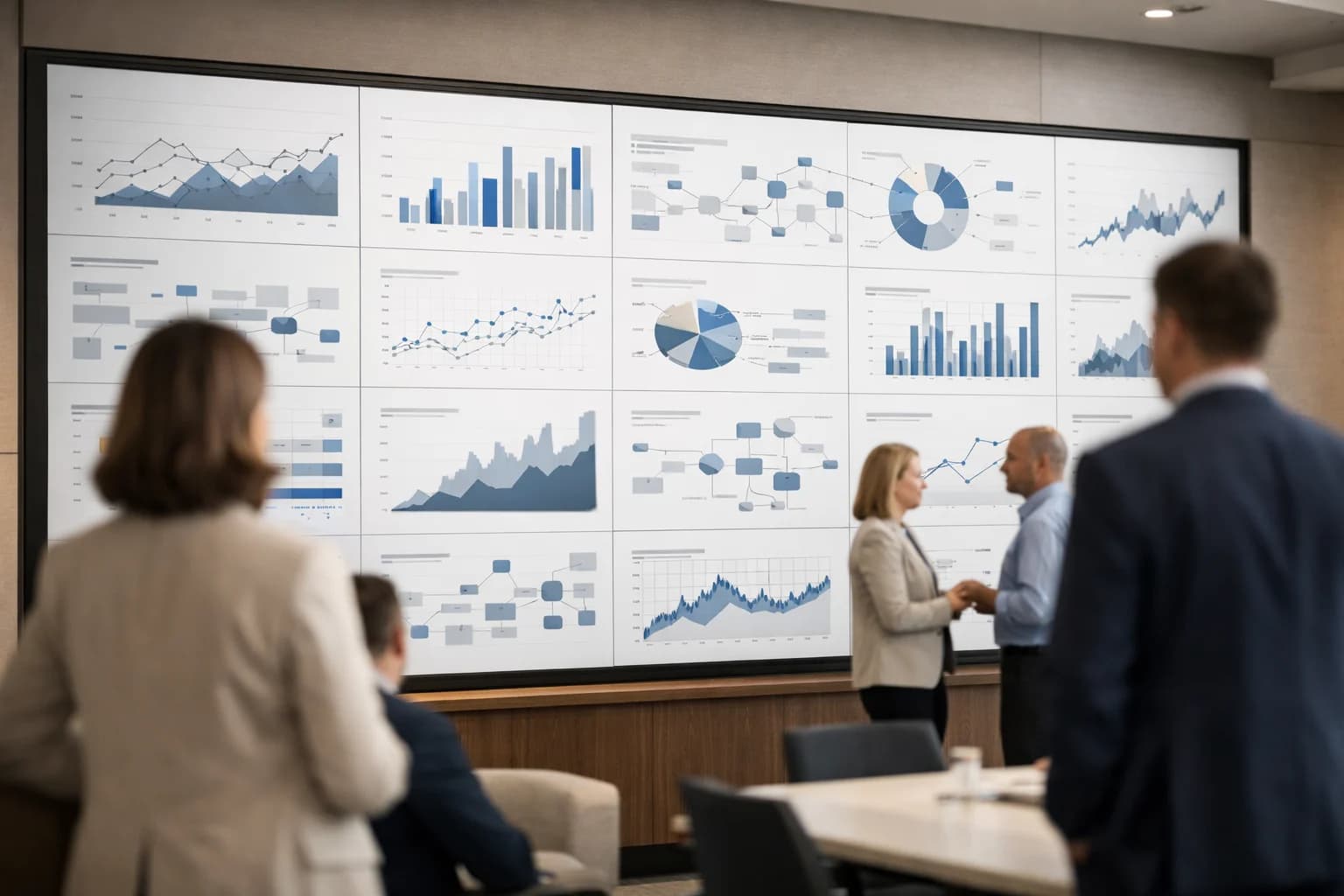
AI connects to ESG visualization layers—like those in Workiva, Novata, or Tableau—through APIs or embedded agents. It acts on the underlying data model, typically a star schema of fact tables (emissions, energy, water) and dimension tables (facilities, suppliers, time periods). The integration surfaces in three key areas: natural language query (NLQ) interfaces for ad-hoc analysis, automated insight generation that flags anomalies or trends in KPI charts, and narrative summarization that drafts explanatory text for board slides or report sections. For example, an AI agent can monitor a real-time dashboard of Scope 1 emissions, detect a 15% spike at a specific plant, and automatically generate a Slack alert with a contextual explanation and a link to the relevant visual.










