AI integration connects directly to the core data objects and workflows within the VelocityEHS Industrial Hygiene module. This typically involves creating an orchestration layer that listens for new exposure monitoring results, employee job titles, task descriptions, and sampling plan records. The AI agent ingests this structured data alongside contextual documents like Safety Data Sheets (SDS) and previous IH reports to perform its analysis. Key integration points are the module's API endpoints for reading monitoring data and writing back recommendations, as well as webhook triggers to initiate AI analysis upon completion of a field sampling event or the upload of new laboratory results.

Integration
AI Integration with VelocityEHS Industrial Hygiene
Add AI to VelocityEHS Industrial Hygiene to automate exposure data analysis, generate intelligent sampling plans, and draft compliance-ready reports, reducing manual effort for industrial hygienists.
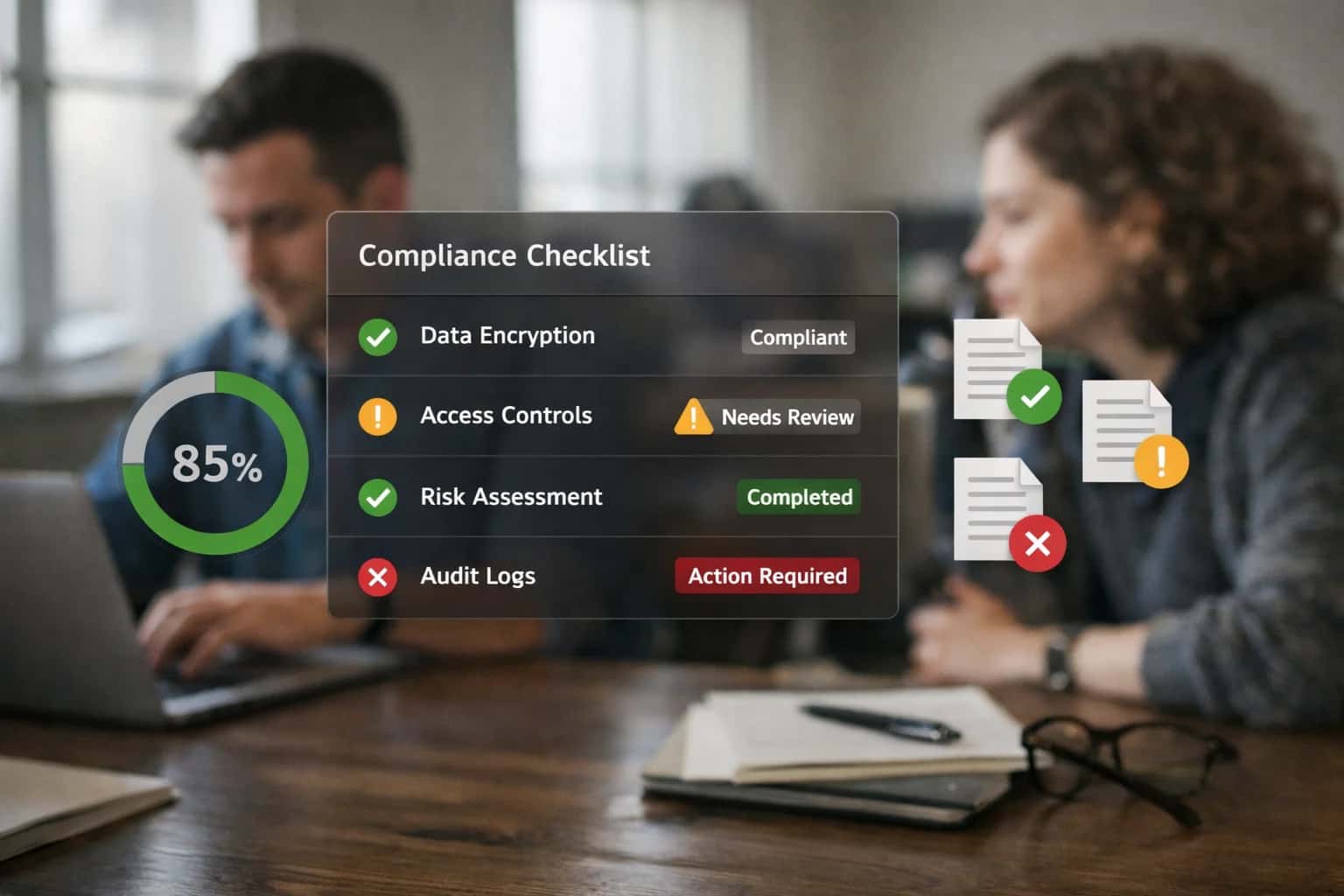
ARCHITECTURE FOR EXPOSURE DATA & SAMPLING AUTOMATION
Where AI Fits into VelocityEHS Industrial Hygiene Workflows
Integrating AI into VelocityEHS Industrial Hygiene transforms manual data analysis and planning into a proactive, intelligence-driven workflow for hygienists and EHS managers.
In practice, the AI operates across three high-value workflows: 1) Automated Exposure Analysis: As new monitoring data (e.g., air sampling for silica, noise dosimetry) is logged, the AI compares results against OSHA PELs, ACGIH TLVs, and internal action levels. It flags exceedances, identifies trends across similar job roles or locations, and drafts initial assessment narratives. 2) Intelligent Sampling Plan Recommendations: For upcoming monitoring campaigns, the AI reviews historical exposure data, workforce demographics, and process changes to recommend which employee groups, contaminants, and sampling strategies should be prioritized, optimizing the hygienist's time. 3) Report Generation Assistance: The agent can auto-populate sections of standard IH reports—such as executive summaries, data tables, and control recommendation sections—by synthesizing findings from across the platform, ensuring consistency and saving hours of manual compilation.
A production rollout follows a phased approach, starting with a pilot on a single contaminant or business unit. Governance is critical: all AI-generated recommendations are written as draft suggestions into a dedicated VelocityEHS custom object or action log, requiring review and approval by the certified Industrial Hygienist before becoming official. This creates a clear audit trail and maintains professional accountability. The architecture ensures the AI acts as a hygienist's copilot, handling data aggregation and preliminary analysis, while the human expert applies judgment, validates the AI's work, and owns the final decision—dramatically accelerating the cycle from data collection to actionable insight without compromising regulatory rigor.
WHERE AI CONNECTS TO EXPOSURE DATA AND WORKFLOWS
Key Integration Surfaces in VelocityEHS Industrial Hygiene
The Core Data Layer for AI Analysis
The Industrial Hygiene (IH) module's exposure monitoring records are the primary integration point for AI. This includes structured data from personal and area sampling (e.g., chemical agents, noise levels, dust concentrations) and unstructured data from field notes and observation logs.
AI integration here focuses on:
- Automated Trend Detection: Continuously analyzing time-series data to identify exposure trends, seasonal patterns, or correlations with operational activities (e.g., specific batches, maintenance events).
- Anomaly Flagging: Using statistical models to flag sampling results that deviate from expected baselines or control limits, prompting immediate review.
- Data Enrichment: Automatically linking sample results to specific job codes, tasks, or pieces of equipment within the VelocityEHS asset hierarchy, creating a richer context for analysis.
This surface enables predictive alerts and forms the evidence base for AI-driven sampling plans and control recommendations.
VELOCITYEHS INDUSTRIAL HYGIENE MODULE
High-Value AI Use Cases for Industrial Hygienists
Integrating AI into the VelocityEHS Industrial Hygiene module transforms exposure data into actionable intelligence, automating routine analysis and elevating the hygienist's role from data processor to strategic advisor. These use cases target the core workflows of sampling, analysis, and reporting.
01
AI-Driven Sampling Plan Optimization
Analyzes historical exposure data, workforce schedules, and process variables to recommend optimal sampling strategies. AI suggests the number of samples, sampling locations, and durations to maximize statistical confidence while minimizing field time and lab costs. Integrates with the IH module's task scheduler.
1 sprint
Plan development
02
Automated Exposure Monitoring Report Generation
Ingests raw lab results and contextual data (employee, task, location) to auto-generate draft exposure assessment reports. AI structures findings, calculates statistics (TWAs, STELs, percentiles), compares results to OELs, and flags exceedances. Outputs populate the VelocityEHS reporting module for final review.
Hours -> Minutes
Report drafting
03
Predictive Exposure Modeling & Scenario Analysis
Uses machine learning on historical IH data to predict exposure levels for new or modified tasks before sampling. Enables hygienists to model 'what-if' scenarios (e.g., increased production rate, new chemical) to prioritize controls and target monitoring. Results feed into the platform's risk assessment records.
Batch -> Real-time
Scenario testing
04
Intelligent SDS & OEL Data Management
AI parses incoming Safety Data Sheets to extract and validate critical hygiene data—OELs, physical properties, health effects. Automatically updates chemical inventories and cross-references with active exposure monitoring data to highlight chemicals lacking adequate sampling. Ensures the IH module's chemical library is current.
Same day
Data ingestion
05
Anomaly Detection in Continuous Monitoring Streams
Connects to IoT sensors and direct-reading instruments, applying AI to detect abnormal exposure patterns in real-time. Identifies spikes, drifts, or equipment malfunctions that might be missed in periodic sampling. Triggers automated alerts within VelocityEHS and can initiate corrective action workflows.
Real-time
Alerting
06
Prioritized Control Recommendation Engine
Analyzes aggregated exposure data, control histories, and incident reports to recommend targeted, cost-effective control measures. AI ranks interventions (engineering, administrative, PPE) by predicted exposure reduction and implementation feasibility. Recommendations link directly to the platform's action tracking system.
Hours -> Minutes
Analysis
INDUSTRIAL HYGIENE OPERATIONS
Example AI-Augmented Workflows
These workflows illustrate how AI agents can be embedded into the daily tasks of industrial hygienists, automating data analysis, generating recommendations, and drafting reports directly within the VelocityEHS platform to reduce manual effort and improve decision consistency.
Trigger: New exposure monitoring results are uploaded or entered into the VelocityEHS Industrial Hygiene module.
Context/Data Pulled: The AI agent retrieves the sample results, associated sampling plan details, occupational exposure limits (OELs), and historical exposure data for the same worker group, agent, and operation.
Model/Agent Action:
- Calculates 8-hour TWAs, STELs, and ceiling values as applicable.
- Compares results against relevant OELs (e.g., OSHA PELs, ACGIH TLVs, internal Action Levels).
- Analyzes trends against historical data to identify statistically significant increases.
- Flags anomalies where results are unexpectedly high or low based on the operation's profile.
System Update/Next Step:
- For results exceeding limits or action levels, the agent automatically creates a non-conformance record or triggers a corrective action workflow in VelocityEHS, assigning it to the responsible IH.
- It generates an alert summary sent via email or platform notification, highlighting the agent, location, exceedance level, and a link to the detailed analysis.
- Results and trend analysis are auto-populated into a pre-formatted exposure assessment report draft.
Human Review Point: The industrial hygienist reviews the automated findings, the triggered actions, and the report draft for accuracy and context before finalizing any assignments or communications.
FROM RAW MONITORING DATA TO ACTIONABLE HYGIENE INTELLIGENCE
Implementation Architecture: Data Flow & Guardrails
A production-ready AI integration for VelocityEHS Industrial Hygiene connects exposure data, sampling plans, and report generation into a governed, auditable workflow.
The integration architecture is anchored on the VelocityEHS Industrial Hygiene module's core objects: Exposure Monitoring Records, Sampling Plans, Agents (chemical, physical, biological), Employees, and Locations. An AI agent acts as a middleware layer, subscribing to webhooks for new monitoring data or triggered sampling plan reviews. It ingests raw time-weighted averages (TWAs), short-term exposure limits (STELs), and employee task data via the VelocityEHS API, then enriches this with contextual metadata from linked Chemical Inventories and Safety Data Sheets (SDS) to understand compound toxicity and health effects.
For each analysis cycle, the agent performs three key functions: 1) Trend & Anomaly Detection across similar exposure groups (SEGs), flagging data points that deviate from historical patterns for hygienist review; 2) Sampling Plan Recommendation, using past exposure results, regulatory limits (e.g., OSHA PELs, ACGIH TLVs), and changes in operational processes to suggest adjustments to sampling frequency, locations, or agents; and 3) Report Drafting, pulling structured data into pre-approved narrative templates for Exposure Assessment Reports and Management Summaries. All AI-generated outputs—recommendations, draft text, data summaries—are written back to designated custom fields or linked documents within the VelocityEHS record, maintaining a complete audit trail.
Critical guardrails are implemented at multiple levels. A human-in-the-loop approval step is required before any AI-suggested sampling plan modification is officially adopted or scheduled. All AI interactions are logged in a dedicated audit object within VelocityEHS, capturing the source data, prompt used, model version, and output. For data privacy, employee identifiers are pseudonymized before processing, and the system is configured to operate within a secure, isolated environment for processing sensitive health information. Rollout typically follows a phased approach: starting with a single site or SEG for validation, comparing AI recommendations against hygienist baselines, then scaling to enterprise-wide deployment with role-based access controls (RBAC) ensuring only authorized personnel can trigger or approve AI-driven changes.
INDUSTRIAL HYGIENE WORKFLOWS
Code & Payload Examples
Analyzing Monitoring Results with AI
Industrial hygienists upload exposure monitoring data (e.g., from noise dosimeters, air sampling pumps) into VelocityEHS. An AI agent can be triggered via webhook to analyze this structured data against Occupational Exposure Limits (OELs) and historical trends.
Example Python payload sent to an inference endpoint for a batch of air sampling results:
python{ "task": "analyze_exposure_samples", "samples": [ { "agent": "Styrene", "twa_8hr": 12.5, # ppm "stel": 45.2, # ppm "oel_twa": 20.0, "oel_stel": 40.0, "location": "Molding Line B", "date": "2024-05-15" } ], "analysis_request": { "flag_exceedances": true, "compare_to_historical": true, "generate_summary_narrative": true } }
The AI returns a structured analysis, flagging the STEL exceedance, calculating the severity, and suggesting a narrative for the IH report, which is posted back to the corresponding VelocityEHS record.
AI FOR INDUSTRIAL HYGIENISTS
Realistic Time Savings & Operational Impact
How AI integration transforms manual, data-intensive industrial hygiene workflows within VelocityEHS, focusing on exposure monitoring and sampling plan management.
| Workflow / Task | Before AI | After AI | Key Notes |
|---|---|---|---|
Exposure Data Analysis & Trend Identification | Manual spreadsheet review, 4-8 hours per report | Automated anomaly detection & summary generation, 30-60 minutes | AI flags exceedances and patterns; hygienist reviews and validates conclusions |
Sampling Plan Draft & Rationale Development | Researching historical data and regulations, 1-2 days | AI-recommended plan based on similar tasks & risk profiles, 2-4 hours | Plan includes suggested locations, agents, frequencies; hygienist adjusts based on professional judgment |
Monitoring Report Draft Generation | Manual compilation of data, narratives, and recommendations, 6-10 hours | Automated report assembly with AI-drafted sections, 1-2 hours | Report structure is auto-populated; hygienist focuses on executive summary and nuanced recommendations |
Task Prioritization & Scheduling | Ad-hoc based on expiration dates or manager requests | Risk-based queue highlighting high-exposure groups & overdue tasks | AI considers exposure levels, control effectiveness, and regulatory deadlines to suggest focus areas |
Regulatory Limit & Guideline Cross-Reference | Manual lookup in external databases or PDFs | Automated context pull of relevant OELs (PELs, TLVs) into analysis view | AI surfaces ACGIH, OSHA, and internal limits; hygienist confirms applicability |
Data Validation & Entry from Field Logs | Manual transcription from paper/PDF forms, prone to errors | Assisted digitization & validation via OCR/LLM extraction | AI parses handwritten notes or instrument outputs into structured fields for review and approval |
Stakeholder Communication Prep | Manual creation of briefing slides or summaries for operations | AI-generated draft communications explaining exposure findings | Drafts are tailored for audience (e.g., frontline workers vs. plant leadership); hygienist personalizes message |
ARCHITECTURE FOR REGULATED DATA
Governance, Security, and Phased Rollout
Integrating AI with VelocityEHS Industrial Hygiene requires a deliberate approach to data security, model governance, and controlled user adoption.
Industrial hygiene data is highly sensitive, often containing personal employee exposure records tied to health outcomes. A production integration must enforce strict access controls, ensuring AI tools only process data for which the authenticated user has appropriate permissions within VelocityEHS. This typically involves a service account with scoped API access to specific modules like Exposure Monitoring, Sampling Plans, and Reports. All AI-generated outputs—such as sampling plan recommendations or report drafts—should be written back as draft records with a clear AI-Generated audit trail, requiring review and approval by a certified Industrial Hygienist before finalization or action.
We recommend a phased rollout to build trust and validate AI accuracy in a controlled setting. Phase 1 focuses on a single, high-volume workflow, such as automating the summarization of exposure monitoring results from lab reports into standardized VelocityEHS data objects. A small pilot group of hygienists uses the AI-assisted workflow, with all outputs undergoing parallel manual review to measure time savings and accuracy. Phase 2 expands to AI-driven sampling plan recommendations, where the system suggests monitoring locations, frequencies, and methods based on historical data, job titles, and control measures. This phase introduces a human-in-the-loop approval step within the VelocityEHS task interface.
Governance is maintained through a centralized prompt registry and output validation rules. For example, prompts that generate narrative summaries for reports are version-controlled and tested to avoid hallucinations or off-topic content. All AI interactions are logged with the associated VelocityEHS record ID, user, timestamp, and model version, creating an immutable audit trail for quality audits or regulatory inquiries. This structured approach ensures the AI integration augments the hygienist's expertise while maintaining the data integrity and compliance rigor the VelocityEHS platform is designed to uphold.
Enabling Efficiency, Speed & Accuracy
Intelligent Analysis, Decision & Execution
We build AI systems for teams that need search across company data, workflow automation across tools, or AI features inside products and internal software.
Talk to Us
Search across company data
Give teams answers from docs, tickets, runbooks, and product data with sources and permissions.
Useful when people spend too long searching or get different answers from different systems.
Enterprise searchRAGPermissions
Read more
Automate internal workflows
Use AI to route work, draft outputs, trigger actions, and keep approvals and logs in place.
Useful when repetitive work moves across multiple tools and teams.
AI agentsWorkflow automationGovernance
Read more
Add AI to products and internal tools
Build assistants, guided actions, or decision support into the software your team or customers already use.
Useful when AI needs to be part of the product, not a separate tool.
AI integrationDecision supportModel routing
Read moreIMPLEMENTATION DETAILS
Frequently Asked Questions
Common technical and operational questions about integrating AI agents and workflows with VelocityEHS Industrial Hygiene modules.
Integration typically occurs via the VelocityEHS API or a secure data export/ingestion pipeline. The AI system does not replace your IH database; it acts as an analytical layer on top of it.
Typical Data Flow:
- Trigger: Scheduled nightly sync or triggered by new monitoring results entry.
- Context Pulled: The AI agent retrieves relevant exposure data (e.g., substance, PEL/TWA, sampling results, employee data, operational context) via API calls to specific VelocityEHS objects like
ExposureRecords,SamplingEvents, andChemicalAgents. - Agent Action: The data is analyzed to:
- Flag exposures exceeding action levels or statistical upper confidence limits.
- Identify trends across similar job titles, tasks, or locations.
- Correlate exposure spikes with specific operational events (e.g., maintenance, batch changes).
- System Update: Findings and recommendations are written back to VelocityEHS as structured notes, linked to the relevant records, or used to auto-generate tasks in the Action Tracking module for follow-up.
- Human Review Point: All AI-generated flags and recommendations are presented to the Industrial Hygienist for review and approval before any automated task assignment or report generation occurs.

About the author
Prasad Kumkar
CEO & MD, Inference Systems
Prasad Kumkar is the CEO & MD of Inference Systems and writes about AI systems architecture, LLM infrastructure, model serving, evaluation, and production deployment. Over 5+ years, he has worked across computer vision models, L5 autonomous vehicle systems, and LLM research, with a focus on taking complex AI ideas into real-world engineering systems.
His work and writing cover AI systems, large language models, AI agents, multimodal systems, autonomous systems, inference optimization, RAG, evaluation, and production AI engineering.
LinkedIn
Limited slotsGet a Free AI Consultation
Partnered with leading AI, data, and software stack.





How We Work
Custom AI workflows for your Business
One-fit-all AI don't work for modern businesses. At Inferensys, we aim to understand your business & custom requirements; which we use to define most efficient agentic workflows, the data, and the tools for your business.
01
Review the use case
We understand the task, the users, and where AI can actually help.
Read more02
Pick the right approach
We define what needs search, automation, or product integration.
Read more03
Build the first useful version
We implement the part that proves the value first.
Read more04
Improve from there
We add the checks and visibility needed to keep it useful.
Read moreThe first call is a practical review of your use case and the right next step.
Talk to Us