AI integration connects to the core data objects and workflows within VelocityEHS Environmental Compliance modules, primarily focusing on Permit Management, Monitoring & Reporting, and Regulatory Intelligence. The integration acts as an intelligent agent layer that sits atop the existing platform, using APIs and webhooks to read from and write to key records like Permits, Monitoring Parameters, Compliance Tasks, and Regulatory Obligations. This allows AI to analyze unstructured documents (e.g., permit PDFs, regulatory text), correlate real-time monitoring data from IoT feeds or manual logs against permit limits, and automate the drafting of mandatory reports like Discharge Monitoring Reports (DMRs) or Tier II submissions.

Integration
AI Integration with VelocityEHS Environmental Compliance Software
Add AI to your VelocityEHS environmental compliance workflows to automate permit matrix management, analyze monitoring data, and generate regulatory reports—reducing manual effort and improving compliance accuracy.
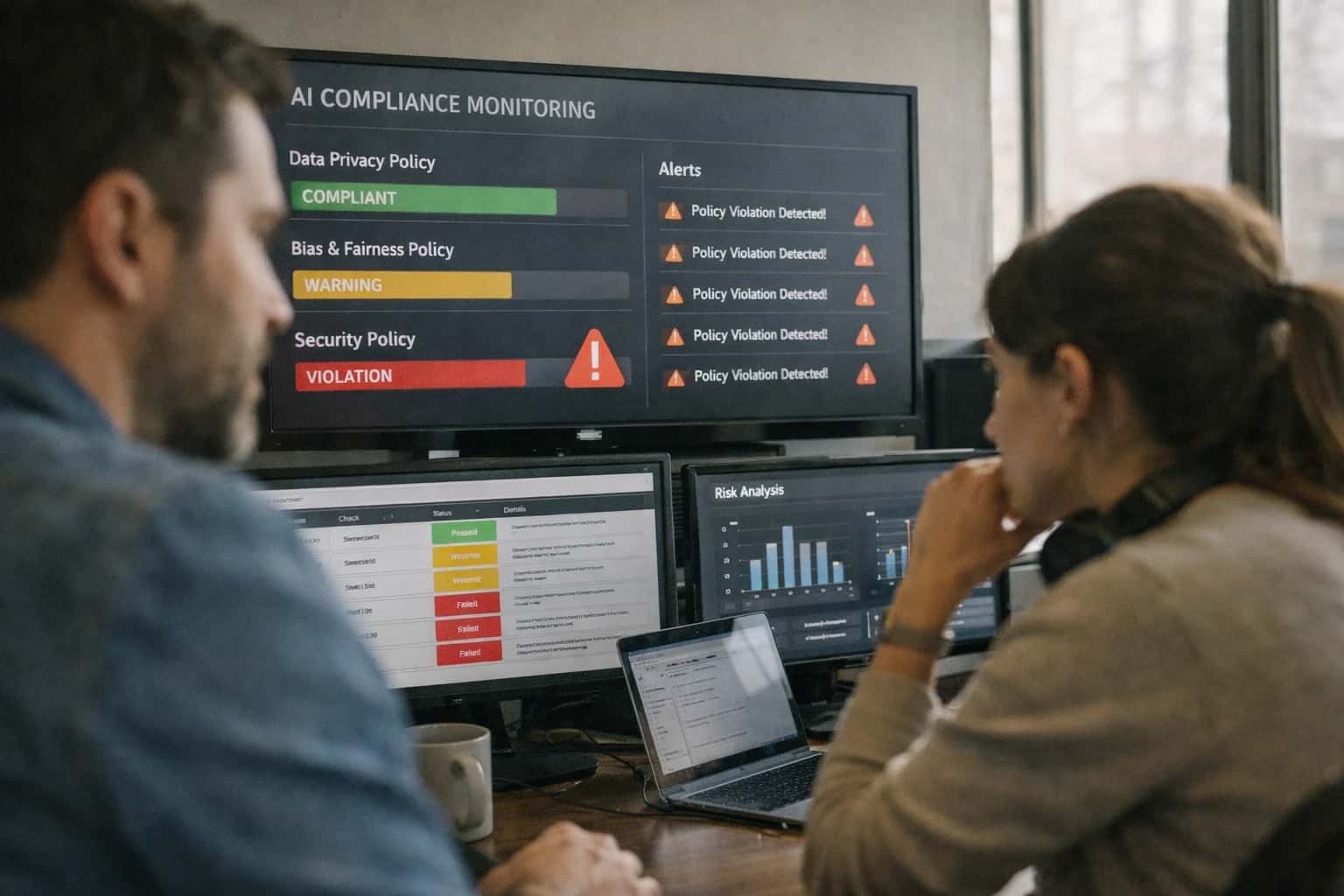
ARCHITECTURE AND IMPLEMENTATION
Where AI Fits into VelocityEHS Environmental Compliance
Integrating AI into VelocityEHS Environmental Compliance transforms manual permit tracking, data analysis, and reporting into an automated, intelligent workflow layer.
Implementation typically involves deploying a secure middleware agent that orchestrates between VelocityEHS, your chosen LLM (e.g., Azure OpenAI, Anthropic), and internal data sources. For example, an AI workflow can be triggered when a new Monitoring Result is logged: the agent retrieves the relevant Permit Condition, analyzes the result against the numeric limit, and if an exceedance is predicted or detected, it can auto-create a Compliance Task for investigation, draft an initial incident narrative, and suggest stakeholders for notification. Another high-value pattern is using Retrieval-Augmented Generation (RAG) on a vector store containing your facility's permit library, enabling natural language Q&A for EHS staff to instantly query complex permit matrices.
Rollout should be phased, starting with a single, high-volume workflow such as automated data validation for routine monitoring reports. Governance is critical: all AI-generated outputs—like draft report narratives or task assignments—should be routed through a human-in-the-loop approval step within VelocityEHS before final submission or action. Audit trails must be maintained, logging the AI's reasoning, source data, and the human reviewer's decision. This controlled approach reduces manual data entry and analysis time from hours to minutes for environmental specialists, while ensuring compliance rigor and maintaining the system of record integrity within VelocityEHS.
ENVIRONMENTAL COMPLIANCE MODULES
Key VelocityEHS Surfaces for AI Integration
Air Quality and Emissions Data Workflows
The Air Management module is a primary surface for AI, handling continuous emissions monitoring system (CEMS) data, stack test results, and permit limits. AI integration here focuses on predictive compliance and automated reporting.
Key integration points include:
- CEMS Data Streams: Ingest real-time telemetry for NOx, SOx, PM, and VOC concentrations. AI models can detect anomalies, predict exceedances, and trigger preemptive operational adjustments.
- Permit Limit Libraries: Cross-reference monitoring data against complex, facility-specific permit matrices stored in VelocityEHS. AI can automate the validation of thousands of data points against hourly, daily, and annual limits.
- Report Automation: Use extracted data and AI-generated narratives to auto-populate regulatory forms like EPA's Electronic Reporting Tool (ERT) submissions, Title V semi-annual reports, and state-specific compliance certifications. This reduces manual compilation from days to hours.
Implementation typically involves a middleware service that polls VelocityEHS APIs for new monitoring records, processes them through a trained model, and writes back compliance status flags and draft report sections.
VELOCITYEHS ENVIRONMENTAL MODULE
High-Value AI Use Cases for Environmental Compliance
Integrate AI directly into the VelocityEHS Environmental Compliance software to automate complex permit tracking, accelerate reporting, and transform monitoring data into actionable insights. These use cases target specific modules and workflows to reduce manual effort and improve compliance posture.
01
Automated Permit Condition Monitoring
AI continuously scans uploaded permit documents and VelocityEHS permit records to extract and track hundreds of individual conditions, monitoring parameters, and reporting deadlines. It cross-references this against monitoring data imports (e.g., stack tests, water samples) to flag potential non-compliance in real-time, moving from monthly manual reviews to continuous oversight.
Monthly -> Continuous
Review cadence
02
Intelligent Regulatory Report Drafting
For reports like DMRs, TRI, or air emissions inventories, AI pulls structured data from VelocityEHS monitoring logs and chemical inventory modules, performs required calculations, and auto-generates a first draft of the report narrative. It flags data gaps or anomalies for review, cutting form preparation from days to hours and ensuring consistency.
Days -> Hours
Draft preparation
03
Predictive Exceedance Alerts
AI analyzes historical environmental monitoring data stored in VelocityEHS to model normal baselines for each parameter (pH, VOC, PM). It applies predictive analytics to real-time or batched data feeds, alerting EHS staff of potential exceedances before they occur, enabling proactive operational adjustments.
Reactive -> Proactive
Compliance posture
04
Automated Regulatory Change Impact Analysis
When a new rule is published (e.g., EPA NPDES update), AI parses the regulatory text and maps its requirements against your facility's VelocityEHS permit matrix, chemical lists, and monitoring plans. It generates a targeted gap analysis, highlighting affected permits, required action items, and estimated effort for compliance officers.
Weeks -> Days
Impact assessment
05
Unified Compliance Calendar & Task Orchestration
AI acts as an intelligent orchestrator for the VelocityEHS compliance calendar. It ingests deadlines from permits, regulations, and internal policies, then automatically generates and assigns related tasks (e.g., 'Collect sample for Permit #X-123') to the appropriate team members via VelocityEHS action tracking, prioritizing based on risk and dependency.
Manual -> Automated
Task assignment
06
AI-Powered Audit Evidence Compilation
In preparation for agency audits, AI queries the VelocityEHS document repository, monitoring records, and training logs to automatically compile a comprehensive evidence package for a specific permit or regulation. It generates an index and summary, ensuring auditors can quickly verify compliance and reducing pre-audit scramble from weeks to days.
Weeks -> Days
Evidence gathering
VELOCITYEHS ENVIRONMENTAL COMPLIANCE
Example AI-Enhanced Workflows
These concrete workflows demonstrate how AI integrates directly into the VelocityEHS Environmental Compliance module, automating complex data management, analysis, and reporting tasks to reduce manual effort and improve accuracy.
Trigger: A new monitoring result (e.g., stack test data, wastewater sample) is logged in VelocityEHS or arrives via an integrated IoT/sensor feed.
AI Action:
- The AI agent retrieves the relevant permit record and its specific numeric limits and reporting conditions.
- It compares the new data against the permit matrix, performing unit conversions if necessary.
- It evaluates not just for exceedances, but for trends approaching limits.
System Update:
- If an exceedance is detected, the system automatically creates a Non-Conformance record in VelocityEHS, pre-populates it with the data, and triggers a workflow to the responsible environmental manager.
- If a trending alert is generated, it creates a task for review in the user's dashboard.
- All actions are logged in the permit's audit trail.
Human Review Point: The environmental manager reviews the AI-generated non-conformance record, adds context, and initiates the formal response procedure. The AI can later suggest corrective actions based on historical similar events.
CONNECTING AI TO PERMITS, MONITORING, AND REPORTING
Implementation Architecture: How the Integration Works
A production-ready integration connects AI agents directly to the VelocityEHS data model and automation layer to manage complex environmental compliance workflows.
The integration connects via the VelocityEHS API to key data objects: Permits, MonitoringParameters, RegulatoryRequirements, and ComplianceTasks. An AI orchestration layer acts on this data to perform three core functions: 1) Parsing and Structuring incoming regulatory text or permit documents to populate the compliance matrix, 2) Continuous Validation of monitoring data (e.g., air emissions, water discharge) against permit limits, triggering alerts for anomalies or predicted exceedances, and 3) Automated Drafting of periodic reports (DMRs, Tier II) by extracting, calculating, and formatting data from linked modules. This is implemented as a secure, event-driven service that listens for new documents, data submissions, or upcoming deadlines.
In practice, a workflow begins when a new permit PDF is uploaded to the VelocityEHS document repository. An AI agent is triggered via webhook, extracts key conditions, monitoring frequencies, and reporting deadlines, and creates corresponding ComplianceTasks and MonitoringParameter records. For ongoing operations, a separate agent runs scheduled checks against live telemetry or lab data entered into VelocityEHS, comparing values to limits. If a threshold is approached, it can auto-create an Action Item for the environmental specialist and draft a preliminary deviation report. The final reporting agent aggregates data from the relevant time period, applies the correct emission factors or formulas stored in the system, and generates a first-draft report in the required format for human review and submission.
Rollout is phased, starting with a single permit type or facility to validate data mappings and agent accuracy. Governance is critical: all AI-generated outputs (extracted conditions, calculated values, report narratives) are logged as system activities with a clear audit trail and require configurable approval steps before updating master records or submitting externally. The integration uses a retrieval-augmented generation (RAG) pattern grounded in your organization's specific permit library and historical data to ensure recommendations are context-aware and compliant. This architecture centralizes intelligence within the system of record, avoiding data silos and enabling environmental managers to scale compliance oversight without linearly increasing manual effort.
VELOCITYEHS ENVIRONMENTAL COMPLIANCE
Code and Payload Examples
AI-Powered Document Parsing for Permit Matrices
Environmental compliance teams manage hundreds of permit documents with complex matrices of monitoring parameters, limits, and reporting frequencies. AI can extract this structured data from PDFs and Word files to auto-populate the VelocityEHS compliance calendar and tracking modules.
A typical integration uses an AI service to process uploaded permit documents, returning a normalized JSON payload that maps directly to VelocityEHS objects like MonitoringRequirement, PermitCondition, and ReportingDeadline. This payload is then posted via the VelocityEHS REST API to create or update records, ensuring the system of record is always current.
json{ "permit_id": "AIR-2024-001", "facility": "Springfield Plant", "requirements": [ { "parameter": "NOx", "limit_value": 25.0, "limit_unit": "ppm", "monitoring_frequency": "Daily", "reporting_deadline": "15th of following month", "velocityehs_object": "MonitoringRequirement", "external_id": "MON-001" } ] }
This automation reduces manual data entry from hours per permit to minutes, improves accuracy, and ensures no condition is missed.
AI-ENHANCED ENVIRONMENTAL COMPLIANCE WORKFLOWS
Realistic Time Savings and Operational Impact
This table illustrates the operational impact of integrating AI into core VelocityEHS environmental compliance workflows, focusing on time savings, process acceleration, and risk reduction for compliance teams.
| Workflow / Metric | Before AI Integration | After AI Integration | Implementation Notes |
|---|---|---|---|
Permit Application Review & Assembly | 4-8 hours manual data collation and form filling | 1-2 hours with AI-assisted data extraction and draft generation | AI cross-references chemical inventories, monitoring plans, and past permits; human final review required |
Regulatory Change Impact Analysis | Next-day manual review of alerts and internal policy mapping | Same-day automated filtering and preliminary gap analysis report | AI screens thousands of regulatory updates against your facility profiles and chemical lists |
Emissions Inventory Calculation & Reporting | 3-5 days per quarter for data aggregation and manual calculations | 1-2 days with automated data pulls and AI-validated calculations | AI integrates with SCADA/EMS data, flags anomalies, and populates report templates (e.g., EPA GHGRP) |
Compliance Calendar & Task Management | Weekly manual updates and email reminders for deadlines | Dynamic, AI-prioritized task lists with automated reminders and escalation | AI parses permit conditions and regulations to auto-populate deadlines; prioritizes based on risk and resource |
Environmental Monitoring Data Review | 2-3 hours daily for data trending and exceedance spotting | 30-60 minutes with AI-driven anomaly alerts and trend summaries | AI analyzes time-series data from sensors/labs, predicts potential exceedances, and generates exception reports |
Audit Finding Categorization & CAPA Initiation | Manual sorting and assignment taking 1-2 days post-audit | Assisted categorization and draft CAPA plans within hours | NLP classifies findings, suggests responsible parties, and retrieves similar past actions from the system |
Tier II / Form R (Section 313) Reporting | 5-7 days annually for data consolidation and threshold checks | 2-3 days with AI-driven chemical inventory analysis and form drafting | AI automates threshold calculations for listed chemicals and generates consistent report narratives |
ARCHITECTING FOR CONTROL AND ADOPTION
Governance, Security, and Phased Rollout
A production AI integration for VelocityEHS Environmental Compliance must be built with data governance, security, and a phased rollout in mind.
Governance starts with defining which data objects and modules the AI can access. For environmental compliance, this typically includes the Permit Management module for permit matrices and conditions, the Environmental Monitoring module for parameter tracking data, and the Regulatory Reporting engine for form templates and submission history. Access is controlled via VelocityEHS's existing role-based permissions (RBAC), ensuring AI agents or workflows only interact with data appropriate for their function—for example, a permit analysis agent should not have write access to finalized emissions reports. All AI-generated outputs, like draft permit summaries or monitoring exception alerts, are logged as system-generated activities within the relevant compliance records, creating a full audit trail.
Security is implemented at the integration layer. AI calls to models like OpenAI or Anthropic are routed through a secure gateway that strips any personally identifiable information (PII) or confidential business data not required for the task. For instance, when analyzing a regulatory text update, the system sends only the public regulation text and the relevant, anonymized internal control IDs for gap analysis. Data in transit is encrypted, and any vector embeddings created for semantic search (e.g., finding similar permit conditions) are stored in a private, cloud-tenant vector database isolated from other clients. The integration acts as a policy-aware orchestrator, enforcing that AI suggestions—like a proposed new monitoring frequency—are always presented as recommendations for a human compliance officer to review and approve within the VelocityEHS workflow before any system record is updated.
A phased rollout is critical for adoption and risk management. We recommend starting with a single, high-value use case in a pilot group, such as AI-assisted Permit Condition Extraction and Tracking. In this phase, the AI parses new permit PDFs to auto-populate the permit matrix in VelocityEHS, flagging key dates and parameters. This is deployed to a small team of environmental specialists who validate outputs and provide feedback. Phase Two expands to Automated Monitoring Data Exception Alerts, where the AI reviews uploaded monitoring data against permit limits, generating preliminary violation alerts for specialist review. Finally, Phase Three introduces Draft Report Generation for routine submissions, like Discharge Monitoring Reports (DMRs), pulling data from the validated monitoring and permit modules. Each phase includes specific success metrics (e.g., time saved on permit setup, reduction in manual data review) and a rollback plan, ensuring the integration delivers tangible value while maintaining the integrity of your compliance operations.
Enabling Efficiency, Speed & Accuracy
Intelligent Analysis, Decision & Execution
We build AI systems for teams that need search across company data, workflow automation across tools, or AI features inside products and internal software.
Talk to Us
Search across company data
Give teams answers from docs, tickets, runbooks, and product data with sources and permissions.
Useful when people spend too long searching or get different answers from different systems.
Enterprise searchRAGPermissions
Read more
Automate internal workflows
Use AI to route work, draft outputs, trigger actions, and keep approvals and logs in place.
Useful when repetitive work moves across multiple tools and teams.
AI agentsWorkflow automationGovernance
Read more
Add AI to products and internal tools
Build assistants, guided actions, or decision support into the software your team or customers already use.
Useful when AI needs to be part of the product, not a separate tool.
AI integrationDecision supportModel routing
Read moreIMPLEMENTATION AND WORKFLOW DETAILS
Frequently Asked Questions
Common technical and operational questions about integrating AI agents and automation into VelocityEHS's environmental compliance modules for permit tracking, monitoring, and reporting.
Integration typically occurs via the VelocityEHS API and webhooks to create a bi-directional data flow. Here's the common pattern:
- Trigger: A scheduled job, a new monitoring record, or a permit deadline approaches in VelocityEHS.
- Data Pull: An integration service calls the VelocityEHS API (e.g.,
GET /api/v1/environmental/monitoring-results) to fetch relevant data—monitoring parameters, permit limits, historical exceedances. - AI Action: This payload is sent to a governed LLM (like GPT-4 or Claude) with a prompt engineered for environmental compliance. The model analyzes trends, flags potential non-compliance, or drafts narrative explanations.
- System Update: The AI's output (a classification, a summary, a draft report section) is posted back to a custom object or comment field in VelocityEHS via
POST /api/v1/actionsor used to trigger a workflow. - Human Review: Critical actions, like draft reports for agency submission, are routed to a compliance manager for review and approval within VelocityEHS before finalization.
This keeps the "system of record" in VelocityEHS while adding an AI intelligence layer.

About the author
Prasad Kumkar
CEO & MD, Inference Systems
Prasad Kumkar is the CEO & MD of Inference Systems and writes about AI systems architecture, LLM infrastructure, model serving, evaluation, and production deployment. Over 5+ years, he has worked across computer vision models, L5 autonomous vehicle systems, and LLM research, with a focus on taking complex AI ideas into real-world engineering systems.
His work and writing cover AI systems, large language models, AI agents, multimodal systems, autonomous systems, inference optimization, RAG, evaluation, and production AI engineering.
LinkedIn
Limited slotsGet a Free AI Consultation
Partnered with leading AI, data, and software stack.





How We Work
Custom AI workflows for your Business
One-fit-all AI don't work for modern businesses. At Inferensys, we aim to understand your business & custom requirements; which we use to define most efficient agentic workflows, the data, and the tools for your business.
01
Review the use case
We understand the task, the users, and where AI can actually help.
Read more02
Pick the right approach
We define what needs search, automation, or product integration.
Read more03
Build the first useful version
We implement the part that proves the value first.
Read more04
Improve from there
We add the checks and visibility needed to keep it useful.
Read moreThe first call is a practical review of your use case and the right next step.
Talk to Us