The integration connects at the Regulatory Intelligence Module, where raw regulatory updates from agencies like OSHA, EPA, and state bodies are ingested. AI acts as a filter and prioritization layer, analyzing each update against your company's specific facility profiles, chemical inventories, operational permits, and historical compliance data stored in VelocityEHS. Instead of a generic feed of thousands of changes, the system surfaces only the updates that materially impact your sites, chemicals, or processes, dramatically reducing alert fatigue.

Integration
AI Integration with VelocityEHS Compliance Alerts
Add AI intelligence to filter thousands of regulatory updates, delivering only the changes relevant to your specific operations, facilities, and chemical inventories within VelocityEHS.
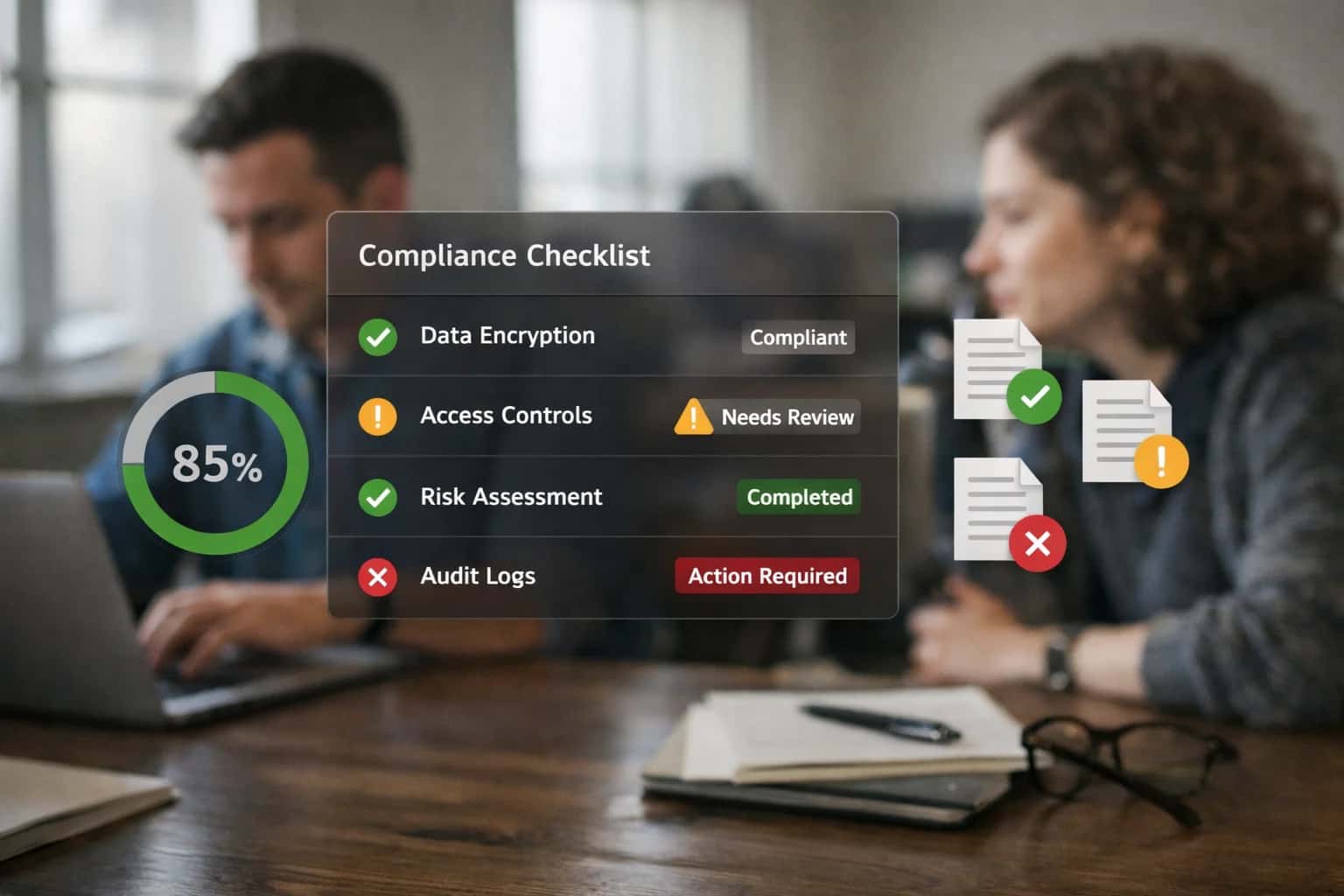
ARCHITECTURE & ROLLOUT
Where AI Fits into VelocityEHS Compliance Alerting
Integrating AI into VelocityEHS transforms static regulatory feeds into a personalized, actionable intelligence system for EHS and compliance teams.
Implementation involves deploying an AI agent that subscribes to the platform's regulatory update API or database. For each new regulation or amendment, the agent performs a semantic similarity search and entity extraction against your master data. Key workflows include:
- Personalized Alert Drafting: AI generates a concise summary explaining the change, its effective date, and which specific facilities, permits (e.g., NPDES, Title V), or SDS-managed chemicals are affected.
- Impact Scoring & Routing: Alerts are automatically scored for urgency and potential business impact, then routed via the VelocityEHS Action Tracking system to the appropriate compliance officer or site manager based on pre-configured rules.
- Gap Analysis Kick-off: For high-impact alerts, the AI can auto-populate a Compliance Task or Management of Change (MOC) record, pre-filled with the regulatory text and linked assets, kicking off the formal review workflow.
Rollout is typically phased, starting with a single jurisdiction or regulatory domain (e.g., federal OSHA) to tune the AI's relevance models before scaling. Governance is critical: a human-in-the-loop review step is maintained for all high-risk alerts before final routing, and the AI's recommendation accuracy is continuously measured against a sample of manually reviewed updates. This architecture doesn't replace the compliance professional's judgment but ensures their time is focused on the changes that truly matter, turning regulatory monitoring from a manual scavenger hunt into a targeted, system-triggered workflow.
COMPLIANCE ALERTS
VelocityEHS Modules and Surfaces for AI Integration
The Central Source for AI Analysis
The Regulatory Content Hub is the primary data source for AI-powered alerting. It ingests and structures thousands of regulatory updates from federal, state, and local agencies. AI integration surfaces here to:
- Parse and Classify Updates: Use NLP to read new regulatory text, identify the affected industry (e.g., manufacturing, chemicals), jurisdiction, and regulated topics (air, water, waste).
- Extract Key Entities: Automatically pull out critical details like chemical names (CAS numbers), new exposure limits (PELs, TLVs), revised reporting thresholds, and upcoming compliance deadlines.
- Create Semantic Index: Build a vectorized knowledge base of all regulatory content, enabling similarity searches to find related rules and historical changes. This forms the retrieval core for personalized filtering.
Integrating AI at this layer transforms a static library into a dynamic, queryable intelligence system.
VELOCITYEHS INTEGRATION
High-Value AI Use Cases for Compliance Alerts
Move beyond simple regulatory tracking. Integrate AI directly into VelocityEHS to filter, prioritize, and act on the thousands of regulatory updates, transforming raw alerts into targeted, operational workflows.
01
AI-Powered Alert Triage & Routing
Automatically analyze incoming regulatory text from VelocityEHS's alerting engine. Use NLP to classify the update by jurisdiction, regulated substance, and affected facility or process unit, then route it to the correct EHS manager or subject matter expert. Reduces manual review from hours to minutes per alert.
Hours -> Minutes
Review time per alert
02
Personalized Impact Summaries
Generate a concise, plain-language summary of each regulatory change, highlighting specific clauses that impact your company's operations, chemicals, or permits on file. The AI cross-references the alert content with your internal VelocityEHS chemical inventories, permit registers, and facility profiles.
Same day
Impact understanding
03
Automated Obligation & Task Creation
Convert a high-priority regulatory alert directly into actionable tasks within VelocityEHS's action tracking system. The AI drafts initial task descriptions, suggests due dates based on the regulation's effective date, and assigns them to the appropriate role (e.g., 'Update SDS library' to the chemical manager).
Batch -> Real-time
Workflow initiation
04
Gap Analysis Against Internal Controls
For major regulatory changes, trigger an automated gap analysis. The AI compares the new requirements against existing policies, procedures, and control documents stored in VelocityEHS, generating a preliminary report highlighting areas needing review or update before the next audit.
1 sprint
Analysis lead time
05
Intelligent Alert Suppression & Deduplication
Reduce alert fatigue by using AI to identify and suppress low-relevance or duplicate updates. The system learns from user feedback and correlates similar alerts from multiple sources (Federal, State, local), presenting a consolidated view and preventing redundant work for the compliance team.
>50%
Noise reduction
06
Proactive Compliance Calendar Updates
Automatically parse final rules for new reporting deadlines, training requirements, or submission dates. The AI then creates or updates corresponding events and reminders in the VelocityEHS Compliance Calendar, ensuring no critical deadline is missed due to an overlooked detail in a lengthy regulatory document.
IMPLEMENTATION PATTERNS
Example AI-Powered Alert Workflows
These workflows illustrate how AI can be integrated into VelocityEHS's compliance alerting system to move from generic notifications to personalized, actionable intelligence. Each pattern connects the platform's regulatory libraries and site data with an AI orchestration layer.
Trigger: A new or updated regulation is published in a jurisdiction tracked by VelocityEHS.
Context/Data Pulled:
- The full text of the regulatory update from the VelocityEHS regulatory library.
- The company's facility profile data (location, NAICS codes, operational processes).
- The chemical inventory and SDS library for all affected sites.
- Existing permits, plans, and procedures linked to the relevant regulatory program.
Model/Agent Action: An AI agent analyzes the regulatory text and cross-references it with the operational context. It performs:
- Entity Extraction: Identifies specific chemicals, exposure limits, reporting thresholds, and required actions.
- Impact Scoring: Determines which sites, processes, or chemicals are affected and scores the impact (High/Medium/Low) based on operational data.
- Gap Analysis: Compares new requirements against existing controls and documentation.
System Update/Next Step: The AI generates a structured, personalized alert in VelocityEHS that includes:
- A plain-language summary of the change.
- A list of affected sites and responsible personnel.
- Specific gaps identified (e.g., "Chemical X usage at Plant A exceeds new reporting threshold").
- Recommended next actions (e.g., "Update Air Permit Application," "Revise SDS Sheet Y").
- The alert is automatically assigned to the relevant EHS manager and creates a task in the Action Tracking module.
Human Review Point: The EHS manager reviews the AI-generated impact assessment and recommended actions, adjusting priority or resource allocation before task assignment.
FROM REGULATORY NOISE TO TARGETED ACTION
Implementation Architecture and Data Flow
A production-ready architecture for filtering thousands of regulatory updates into personalized, actionable alerts within VelocityEHS.
The integration connects to two primary data surfaces within VelocityEHS: the Compliance Obligations Library (or equivalent regulatory tracking module) and the Company Profile & Facility Data. An orchestration agent, typically deployed as a secure microservice, performs a daily sync via the VelocityEHS API to pull new regulatory updates (federal, state, local) and any changes to your company's registered facilities, chemicals (SDS library), NAICS codes, and operational processes. This forms the raw input for personalization.
The core AI workflow executes a multi-step classification and relevance scoring process:
- Regulatory Document Processing: Each new update is chunked, embedded, and stored in a vector database.
- Company Context Vectorization: Your facility attributes, chemical inventory, and operational data are similarly processed into a "company profile" vector.
- Semantic Matching & Scoring: For each regulatory update, a cross-encoder model performs a deep semantic match against your profile, scoring relevance on factors like jurisdiction, regulated substances, industry activity, and facility type. Updates scoring below a configurable threshold are logged and archived without generating an alert.
- Alert Generation & Enrichment: For high-scoring matches, a large language model (LLM) drafts a concise summary highlighting the specific change, its direct applicability to your operations, and potential deadlines. This draft is enriched with links to the full text and tagged to the relevant VelocityEHS compliance tasks or obligations.
The final, personalized alert payload is posted back into VelocityEHS via API, creating a task or notification within the relevant user's workflow. The system maintains a full audit trail of all processed updates, scores, and actions, enabling compliance officers to review the AI's filtering logic and adjust the relevance model. Rollout typically follows a pilot phase with a subset of high-volume regulatory feeds, allowing for threshold calibration and user feedback before enterprise-wide deployment.
IMPLEMENTATION PATTERNS
Code and Payload Examples
Ingesting New Regulatory Updates
When VelocityEHS or an external regulatory feed publishes a new alert, a webhook payload is sent to your AI processing service. This handler validates the payload, extracts the raw regulatory text, and initiates the relevance analysis workflow.
python# Example: Flask webhook endpoint for new VelocityEHS compliance alerts from flask import Flask, request, jsonify import logging from inference_services.regulatory_analyzer import RegulatoryAnalyzer app = Flask(__name__) analyzer = RegulatoryAnalyzer() @app.route('/webhooks/velocityehs/alert', methods=['POST']) def handle_new_alert(): payload = request.get_json() # Validate required fields from VelocityEHS webhook required_fields = ['alert_id', 'published_date', 'regulatory_body', 'raw_text', 'source_url'] if not all(field in payload for field in required_fields): return jsonify({'error': 'Invalid payload structure'}), 400 # Extract core data for AI processing alert_data = { 'id': payload['alert_id'], 'source': payload['regulatory_body'], 'full_text': payload['raw_text'], 'metadata': { 'jurisdiction': payload.get('jurisdiction', ''), 'effective_date': payload.get('effective_date'), 'industry_codes': payload.get('applicable_industries', []) } } # Queue for AI relevance analysis analysis_job = analyzer.queue_relevance_analysis(alert_data) return jsonify({ 'status': 'processing', 'job_id': analysis_job.id, 'message': 'Alert queued for AI relevance scoring' }), 202
This pattern ensures reliable ingestion of new regulatory content while decoupling the AI analysis from the webhook response time.
AI-POWERED REGULATORY ALERTING
Realistic Time Savings and Operational Impact
How AI integration transforms the manual process of tracking and analyzing regulatory changes into a targeted, automated workflow within VelocityEHS.
| Workflow Stage | Before AI | After AI | Notes |
|---|---|---|---|
Regulatory Change Monitoring | Manual review of 1000+ monthly updates | AI filters to 10-20 relevant alerts | Focuses on company-specific operations, facilities, and chemicals |
Impact Analysis & Triage | Hours per alert for compliance staff | Minutes for initial AI-generated summary | AI highlights affected policies, permits, and procedures |
Stakeholder Notification | Manual email drafting and routing | Automated, personalized briefing generation | Tailored for EHS managers, site leads, and legal based on role |
Action Plan Drafting | Days to research and draft compliance tasks | AI suggests initial action items and owners | Human review and approval required; accelerates kickoff |
Evidence Logging & Audit Trail | Manual filing and cross-referencing | Auto-logging of alerts, analyses, and actions | Creates immutable record for compliance audits |
Program-Wide Trend Reporting | Quarterly manual consolidation | Continuous, automated dashboard of regulatory exposure | Provides leadership with real-time risk heat maps |
ARCHITECTURE FOR CONTROLLED DEPLOYMENT
Governance, Security, and Phased Rollout
Integrating AI with VelocityEHS Compliance Alerts requires a secure, governed approach that maintains data integrity and builds user trust.
The integration architecture typically sits as a middleware layer between VelocityEHS and the AI model provider (e.g., OpenAI, Anthropic). A secure API gateway handles all outbound requests, stripping any sensitive Personally Identifiable Information (PII) or proprietary chemical data before sending context to the LLM. The system ingests raw regulatory updates from your configured sources within VelocityEHS, passes the text through a content filtering and redaction service, and uses a carefully engineered prompt to ask the model to evaluate relevance based on your company's specific facility profiles, chemical inventories, and operational SIC/NAICS codes. The filtered, personalized alert is then written back to the VelocityEHS Compliance Obligations or Action Tracking module as a new task, with a full audit trail linking the original regulatory text to the AI's relevance reasoning.
A phased rollout is critical for adoption and risk management. Phase 1 (Pilot) involves connecting the AI to a single, low-risk regulatory source (e.g., federal OSHA updates) for a small group of EHS specialists. This validates the accuracy of relevance filtering and allows for prompt tuning. Phase 2 (Expansion) adds state-level agencies and more complex sources like EPA chemical lists, expanding the user base to regional managers. Phase 3 (Scale) integrates all subscribed sources and enables automated task creation in VelocityEHS, with a human-in-the-loop approval step for all AI-generated alerts before they are assigned. This phased approach lets you measure the reduction in 'alert noise'—often moving from hundreds of irrelevant updates to a handful of prioritized actions—while maintaining strict oversight.
Governance is built around three controls: 1) Data Sovereignty: All prompts, responses, and audit logs are stored within your cloud environment; no VelocityEHS data is used to train external models. 2) Role-Based Access: Permissions in VelocityEHS control who can configure AI sources, view AI-generated reasoning, and approve alerts. 3) Continuous Evaluation: A feedback loop is established where users flag false positives/negatives. This data is used to retune the AI's relevance model monthly, ensuring the system adapts to changes in your operations. This structured approach turns AI from a black box into a governed, auditable component of your compliance workflow.
Enabling Efficiency, Speed & Accuracy
Intelligent Analysis, Decision & Execution
We build AI systems for teams that need search across company data, workflow automation across tools, or AI features inside products and internal software.
Talk to Us
Search across company data
Give teams answers from docs, tickets, runbooks, and product data with sources and permissions.
Useful when people spend too long searching or get different answers from different systems.
Enterprise searchRAGPermissions
Read more
Automate internal workflows
Use AI to route work, draft outputs, trigger actions, and keep approvals and logs in place.
Useful when repetitive work moves across multiple tools and teams.
AI agentsWorkflow automationGovernance
Read more
Add AI to products and internal tools
Build assistants, guided actions, or decision support into the software your team or customers already use.
Useful when AI needs to be part of the product, not a separate tool.
AI integrationDecision supportModel routing
Read moreIMPLEMENTATION AND OPERATIONS
Frequently Asked Questions
Common technical and operational questions about integrating AI with VelocityEHS to automate and personalize compliance alerting workflows.
The integration uses VelocityEHS's REST API and a secure, dedicated service account with appropriate permissions. The AI agent is configured to periodically query key data objects to build a dynamic compliance profile.
Key API calls and data sources:
- Facility & Site Data: Pulls site addresses, SIC/NAICS codes, operational descriptions, and regulatory jurisdictions from the
SiteandFacilityobjects. - Chemical Inventory: Queries the
ChemicalandInventoryobjects to extract a list of substances, their quantities, and Safety Data Sheet (SDS) hazard classifications. - Permit Registry: Reads the
PermitandAuthorizationobjects to understand active environmental (air, water, waste) and safety permits with their conditions and expiration dates. - Compliance Calendar: Checks the
ObligationandTaskobjects for known recurring reporting deadlines.
This profile is stored in a secure vector database, creating a semantic index of your operational footprint. The AI uses this index to filter thousands of incoming regulatory updates from sources like the Federal Register, state bulletins, and OSHA/EPA news feeds, matching them against your specific facilities and materials.

About the author
Prasad Kumkar
CEO & MD, Inference Systems
Prasad Kumkar is the CEO & MD of Inference Systems and writes about AI systems architecture, LLM infrastructure, model serving, evaluation, and production deployment. Over 5+ years, he has worked across computer vision models, L5 autonomous vehicle systems, and LLM research, with a focus on taking complex AI ideas into real-world engineering systems.
His work and writing cover AI systems, large language models, AI agents, multimodal systems, autonomous systems, inference optimization, RAG, evaluation, and production AI engineering.
LinkedIn
Limited slotsGet a Free AI Consultation
Partnered with leading AI, data, and software stack.





How We Work
Custom AI workflows for your Business
One-fit-all AI don't work for modern businesses. At Inferensys, we aim to understand your business & custom requirements; which we use to define most efficient agentic workflows, the data, and the tools for your business.
01
Review the use case
We understand the task, the users, and where AI can actually help.
Read more02
Pick the right approach
We define what needs search, automation, or product integration.
Read more03
Build the first useful version
We implement the part that proves the value first.
Read more04
Improve from there
We add the checks and visibility needed to keep it useful.
Read moreThe first call is a practical review of your use case and the right next step.
Talk to Us