AI integration targets the core audit lifecycle within VelocityEHS Audit Management. This begins with the Audit Schedule, where AI analyzes risk scores, past findings, regulatory change logs, and resource calendars to automatically generate and optimize the annual audit plan. For routine compliance audits—like monthly fire extinguisher checks or weekly PPE inspections—AI agents can autonomously trigger the audit, assign it to the correct site supervisor via the platform's user and role APIs, and dispatch the relevant digital checklist to the VelocityEHS Mobile App.

Integration
AI Integration with VelocityEHS Audit Automation
Automate routine compliance audits in VelocityEHS using AI to schedule, assign, verify completion, and log findings—reducing manual effort from hours to minutes.
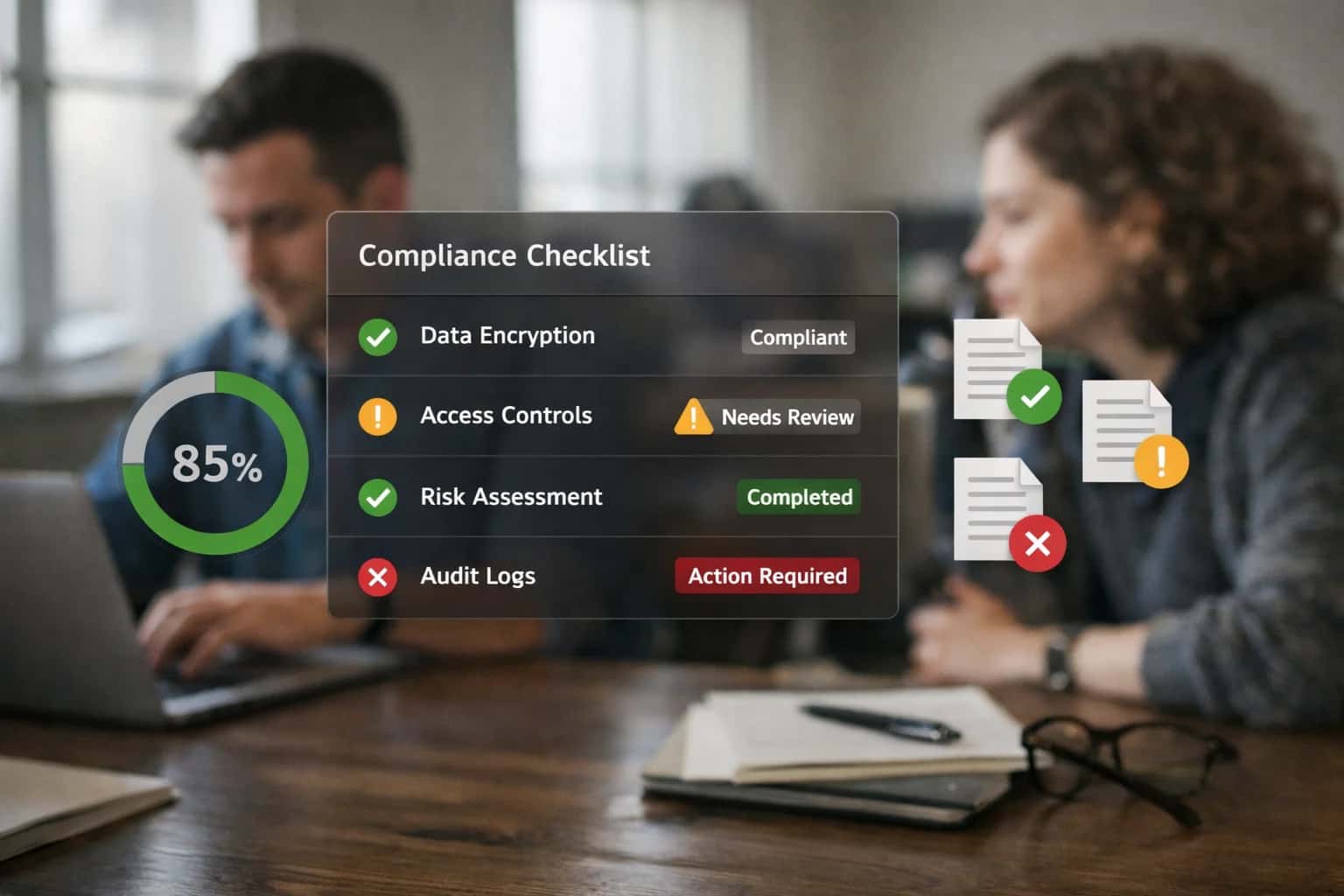
AUTOMATING ROUTINE COMPLIANCE AUDITS
Where AI Fits into VelocityEHS Audit Workflows
Integrating AI into VelocityEHS transforms manual, checklist-driven audits into intelligent, self-orchestrating workflows that ensure compliance and free up EHS personnel.
During audit execution, AI assists in real-time. Field auditors can use voice-to-text via the mobile app to log findings, with AI structuring the free-text into proper Finding records, categorizing them by type (e.g., Major Non-Conformance, Observation), and linking them to the relevant Compliance Obligation or Procedure. For audits involving photo evidence, AI can perform basic image analysis to flag potential violations (e.g., blocked exits, missing labels) for reviewer attention. Upon submission, AI reviews the audit for completeness, checks for contradictory data, and automatically routes it for approval based on configured workflow rules.
Post-audit, AI drives closure and intelligence. It can auto-generate Corrective Actions from findings, suggest assignees based on departmental responsibility matrices, and set realistic due dates. The system continuously monitors the Action Tracking module, sending predictive alerts for tasks at risk of becoming overdue. Most importantly, AI analyzes aggregated audit data across sites and periods to identify systemic issues, predict which facilities are most likely to have future non-conformances, and provide actionable summaries for EHS leadership, turning audit data from a compliance record into a strategic prevention tool.
AUDIT AUTOMATION
VelocityEHS Modules and APIs for AI Integration
Core Audit Workflow Surfaces
The Audit Management module is the primary system of record for compliance-based audits. AI integration surfaces here include:
- Audit Schedules & Calendars: AI can analyze risk scores, compliance history, and resource availability to generate optimized, dynamic audit schedules, moving beyond static annual plans.
- Checklist Generation: AI agents can draft context-aware audit checklists by pulling from regulatory libraries, past findings, and site-specific procedures stored in VelocityEHS.
- Finding Logs & Categorization: As auditors log findings via web or mobile, AI can classify them against a standard taxonomy (e.g.,
Fire Safety,Chemical Storage), assign severity, and suggest relevant regulatory citations. - Corrective Action (CA) Workflows: AI can auto-generate CA tasks from findings, recommend assignees based on role and location, and predict due dates using historical closure data.
Integration typically occurs via the Audit API, which allows for creating/updating audit records, fetching schedules, and pushing structured findings.
VELOCITYEHS
High-Value AI Use Cases for Audit Automation
Transform routine compliance audits from a manual, time-consuming process into an automated, data-driven workflow. These AI integration patterns connect directly to VelocityEHS Audit modules to schedule, execute, and close audits with greater speed and accuracy.
01
AI-Powered Audit Scheduling & Risk-Based Scoping
Automatically generates the annual audit plan by analyzing site risk scores, past findings, regulatory change impact, and resource availability within VelocityEHS. AI recommends which sites, processes, or permits to audit and when, optimizing coverage and compliance posture.
1 sprint
Planning cycle
02
Intelligent Checklist Generation & Dynamic Questioning
Dynamically creates or tailors audit checklists by pulling from a central library of regulatory requirements, internal procedures, and past audit findings. During the audit, AI can suggest follow-up questions based on initial responses to uncover root causes.
Hours -> Minutes
Checklist prep
03
Mobile Audit Copilot for Field Auditors
Enhances the VelocityEHS mobile audit experience with voice-to-text for capturing findings, image analysis to flag potential violations from photos, and offline access to regulatory references. AI acts as a real-time field assistant, improving data quality and auditor efficiency.
Batch -> Real-time
Data capture
04
Automated Finding Categorization & CAPA Drafting
As findings are logged, AI analyzes the free-text description to automatically assign severity, map to relevant regulations (OSHA, EPA), and suggest the appropriate corrective and preventive action (CAPA) type. It can draft initial action plans and assign them to responsible parties, accelerating the closure workflow.
Same day
Action assignment
05
Executive Report Synthesis & Trend Analysis
Automatically synthesizes data from multiple completed audits into executive-ready reports. AI highlights systemic issues, tracks recurrence rates of findings, benchmarks performance across sites, and generates narrative summaries of trends and recommended strategic actions, replacing manual slide deck creation.
Hours -> Minutes
Report generation
06
Predictive Audit Intelligence & Recurrence Prevention
Uses machine learning on historical audit data to predict which sites or operational areas are most likely to have specific types of findings. This allows for proactive interventions before the next audit cycle. AI also correlates audit findings with incident and observation data to identify hidden risk patterns.
IMPLEMENTATION PATTERNS
Example AI Agent Workflows for Routine Audits
These concrete workflows show how AI agents can automate the end-to-end lifecycle of routine compliance audits within VelocityEHS, from scheduling to closure. Each pattern connects to specific platform modules and APIs.
Trigger: A scheduled job runs based on the compliance calendar (e.g., monthly fire extinguisher checks).
Agent Actions:
- Queries the VelocityEHS API for
audit_schedulesandsitedata to identify locations due for an audit. - Checks the
usermodule for qualified auditors based on role, training status, and workload. - Creates a new
auditrecord via API, populating fields for site, scope, and due date. - Assigns the audit to the selected auditor and triggers a notification via VelocityEHS's internal messaging or email.
Human Review Point: The assigned auditor receives the task and can accept, request rescheduling, or escalate based on capacity.
AUTOMATED SCHEDULING, EXECUTION, AND CLOSURE
Implementation Architecture: Data Flow and System Boundaries
A production-ready AI integration for VelocityEHS audit automation connects the platform's core modules to orchestrate end-to-end compliance workflows without manual intervention.
The integration architecture centers on the Audit Management and Action Tracking modules. An AI agent acts as the orchestrator, ingesting the compliance calendar and regulatory obligations to generate an optimized audit schedule. It then uses the VelocityEHS API to create audit records, assign them to site managers or auditors, and attach the relevant digital checklist. Upon audit completion, the agent processes the submitted findings—including text notes and image uploads—to verify completeness, categorize non-conformances, and automatically log them in the Findings Register. Finally, it triggers corrective actions in the Action Tracking system, assigning owners and deadlines based on risk severity extracted from the audit data.
Data flows through a secure middleware layer that handles authentication, queuing, and error handling. The AI service, hosted in your cloud or ours, calls the VelocityEHS REST API for all CRUD operations. For audit verification, unstructured data (auditor notes, photo captions) is sent to a multi-modal LLM for analysis, with the structured results—such as finding_type: "fire_extinguisher_inspection_date_missed" and severity_score: 75—written back to the audit record. This keeps the core VelocityEHS data model intact while enriching it with AI-derived metadata. The system boundary is clear: the AI agent triggers and populates workflows, but all approvals, RBAC, and final record-keeping remain within the native VelocityEHS platform for governance and audit trails.
Rollout is typically phased, starting with a single, high-frequency audit type (e.g., monthly facility safety checks) at a pilot site. Governance is maintained through a human-in-the-loop review step for the first few cycles, after which the AI's categorizations and assignments can be set to auto-approve. This approach reduces the administrative burden of routine compliance audits from hours of manual scheduling, follow-up, and data entry to minutes of oversight, allowing EHS teams to focus on high-risk findings and program improvement. For a deeper look at connecting AI to broader compliance workflows, see our guide on AI Integration with VelocityEHS Compliance Management.
VELOCITYEHS AUDIT AUTOMATION
Code Patterns and API Payload Examples
Automating Recurring Audit Workflows
AI-driven audit automation begins with programmatically scheduling and assigning routine checks. Using VelocityEHS APIs, you can create a service that ingests compliance calendars, assesses risk-based priorities, and automatically generates audit records with assigned auditors.
A common pattern is a scheduled job that queries for upcoming monthly or quarterly obligations (e.g., fire extinguisher inspections, emergency eyewash station checks). The system uses a rules engine—enhanced by an LLM to interpret unstructured regulatory text—to determine the correct checklist template and required site permissions. It then creates the audit task in VelocityEHS and assigns it via the platform's user management APIs, triggering notifications.
python# Example: Create and assign a monthly safety audit import requests # Define the audit payload based on a templated checklist audit_payload = { "auditType": "Monthly Safety Equipment", "siteId": "site_12345", "scheduledDate": "2024-06-15", "assignedUserId": "user_auditor_789", "checklistTemplateId": "template_fire_extinguisher_monthly", "priority": "Medium", "metadata": { "regulatoryReference": "OSHA 1910.157", "automationSource": "AI_Scheduler_v1.0" } } # POST to VelocityEHS Audit API response = requests.post( 'https://api.velocityehs.com/v1/audits', json=audit_payload, headers={'Authorization': 'Bearer YOUR_API_KEY'} )
AI-ASSISTED AUDIT WORKFLOWS
Realistic Time Savings and Operational Impact
How AI integration transforms the execution and management of routine compliance audits in VelocityEHS, focusing on monthly, quarterly, and annual safety and environmental checks.
| Audit Workflow Stage | Before AI | After AI | Notes |
|---|---|---|---|
Audit Scheduling & Assignment | Manual calendar review and email coordination | AI-optimized scheduling based on risk, availability, and compliance deadlines | Reduces planning from hours to minutes; ensures optimal resource use |
Checklist Generation & Preparation | Static templates or manual creation from prior audits | Dynamic, context-aware checklists auto-generated from regulations and site history | Ensures completeness; tailors questions to site-specific operations and past findings |
Field Data Capture & Documentation | Paper forms, manual photo uploads, typed notes post-audit | Voice-to-text findings, automated image analysis for violations, offline-capable mobile assistance | Cuts data entry time by 60-70%; improves accuracy and real-time validation |
Finding Categorization & Severity Scoring | Manual review and classification by lead auditor | AI-assisted categorization and preliminary risk scoring based on regulatory references | Standardizes scoring; provides consistent baseline for human auditor review and approval |
Corrective Action (CAPA) Drafting | Manual write-up after audit debrief | AI-suggested action items and responsible parties based on finding type and organizational hierarchy | Accelerates CAPA initiation; ensures actions are specific, measurable, and assignable |
Report Compilation & Submission | Manual consolidation of notes, photos, and scores into final report | Automated report generation with executive summary, findings summary, and recommended actions | Turns a half-day task into a 30-minute review; ensures consistent formatting and compliance |
Audit Trail & Evidence Management | Manual filing of documents and emails for compliance records | AI-automated linkage of findings to evidence (photos, notes), with full audit trail for regulators | Simplifies audit readiness; provides instant retrieval for internal or external reviews |
ENSURING CONTROLLED, AUDITABLE AI DEPLOYMENT
Governance, Permissions, and Phased Rollout
Integrating AI into regulated audit workflows requires a structured approach to permissions, data governance, and controlled release.
AI agents for VelocityEHS audit automation must operate within the platform's existing role-based access control (RBAC) and data security model. This means the integration should authenticate as a system user with permissions scoped to the specific audit modules, sites, and data objects it needs to access—typically read/write access to the Audit object, Audit Finding records, and related Action Item tables. The agent should never bypass VelocityEHS's native field-level security or data segregation rules, ensuring all automated actions are logged in the system's audit trail with a clear AI System actor for traceability.
A phased rollout is critical for risk management and user adoption. We recommend a three-stage approach: 1) Pilot Phase: Start with a single, low-risk audit type (e.g., monthly facility walkthroughs) at one site. The AI agent acts in an assistive mode, suggesting schedules, draft findings, and assignments, but requires a human auditor's review and approval before any record is created or updated in VelocityEHS. 2) Supervised Automation: Expand to multiple sites and audit types, with the agent automating routine data entry and workflow steps (like creating follow-up actions from a finding), but with a defined human-in-the-loop checkpoint for final verification before closing an audit. 3) Full Automation: For mature, rule-based audits (e.g., weekly fire extinguisher checks), the agent can run end-to-end, from scheduling to closure, with exceptions and anomalies automatically flagged for human review via VelocityEHS notifications.
Governance is maintained through a combination of technical and procedural controls. Technically, the integration should include a prompt management layer to ensure the LLM's instructions for generating findings or summaries are consistent, compliant, and version-controlled. Procedurally, establish a quarterly review cycle where EHS leaders and compliance officers sample AI-generated audit records, compare them against manual benchmarks, and recalibrate the agent's logic as needed. This ensures the automation remains aligned with internal standards and evolving regulatory interpretations, turning a one-time integration into a sustainable, governed capability.
Enabling Efficiency, Speed & Accuracy
Intelligent Analysis, Decision & Execution
We build AI systems for teams that need search across company data, workflow automation across tools, or AI features inside products and internal software.
Talk to Us
Search across company data
Give teams answers from docs, tickets, runbooks, and product data with sources and permissions.
Useful when people spend too long searching or get different answers from different systems.
Enterprise searchRAGPermissions
Read more
Automate internal workflows
Use AI to route work, draft outputs, trigger actions, and keep approvals and logs in place.
Useful when repetitive work moves across multiple tools and teams.
AI agentsWorkflow automationGovernance
Read more
Add AI to products and internal tools
Build assistants, guided actions, or decision support into the software your team or customers already use.
Useful when AI needs to be part of the product, not a separate tool.
AI integrationDecision supportModel routing
Read moreIMPLEMENTING AI FOR ROUTINE AUDITS
Technical and Commercial FAQ
Common technical and commercial questions for teams evaluating AI integration to automate VelocityEHS audit workflows, from scheduling and assignment to verification and logging.
The integration connects at two primary layers:
-
Data & Event Layer: We listen for webhooks or poll the VelocityEHS API for events like:
AuditScheduleCreated(for new recurring audits)AuditInstanceGenerated(for a specific, scheduled audit)AuditAssigned(to an auditor)AuditSubmitted(triggering completion verification)
-
Action Layer: The AI agent uses the VelocityEHS API to perform actions such as:
POST /api/v1/audits/{id}/assignmentsto assign auditors.PATCH /api/v1/audit_findings/{id}to log standardized findings from image or note analysis.POST /api/v1/workflowsto trigger follow-up CAPA workflows for non-conformances.
The AI system maintains a lightweight sync of key reference data (site list, auditor roster, checklist templates) but operates on live system data via API calls to ensure a single source of truth.

About the author
Prasad Kumkar
CEO & MD, Inference Systems
Prasad Kumkar is the CEO & MD of Inference Systems and writes about AI systems architecture, LLM infrastructure, model serving, evaluation, and production deployment. Over 5+ years, he has worked across computer vision models, L5 autonomous vehicle systems, and LLM research, with a focus on taking complex AI ideas into real-world engineering systems.
His work and writing cover AI systems, large language models, AI agents, multimodal systems, autonomous systems, inference optimization, RAG, evaluation, and production AI engineering.
LinkedIn
Limited slotsGet a Free AI Consultation
Partnered with leading AI, data, and software stack.





How We Work
Custom AI workflows for your Business
One-fit-all AI don't work for modern businesses. At Inferensys, we aim to understand your business & custom requirements; which we use to define most efficient agentic workflows, the data, and the tools for your business.
01
Review the use case
We understand the task, the users, and where AI can actually help.
Read more02
Pick the right approach
We define what needs search, automation, or product integration.
Read more03
Build the first useful version
We implement the part that proves the value first.
Read more04
Improve from there
We add the checks and visibility needed to keep it useful.
Read moreThe first call is a practical review of your use case and the right next step.
Talk to Us