AI integration for Intelex compliance audits focuses on three high-friction surfaces: Audit Preparation, Evidence Compilation, and Finding Remediation. During preparation, an AI agent can ingest the audit standard (e.g., ISO 45001 clauses), map requirements to existing Intelex records (policies, procedures, training logs, incident reports), and auto-generate a readiness gap analysis. For evidence compilation, AI can query the Intelex database via its API to pull relevant documents, inspection records, and corrective actions, assembling them into a structured, auditor-ready package. This transforms a manual, multi-day evidence hunt into a same-day process.

Integration
AI Integration for Intelex Compliance Audits
Automate external audit preparation, evidence gathering, and requirement mapping in Intelex using AI. Reduce manual compilation from weeks to days and improve audit readiness for ISO 14001, ISO 45001, and other standards.
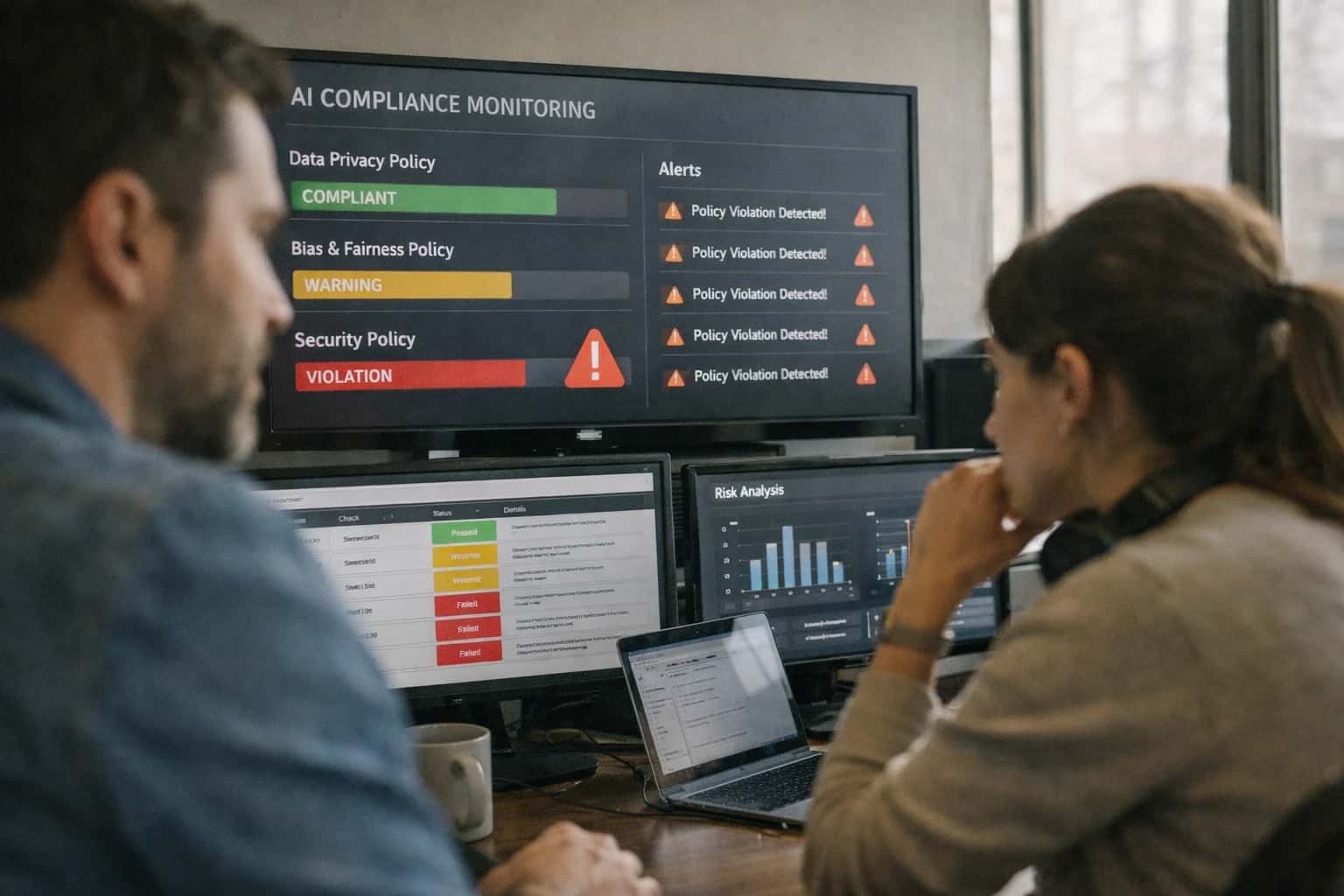
ARCHITECTURE & ROLLOUT
Where AI Fits in the Intelex Audit Workflow
A practical blueprint for integrating AI into the Intelex audit lifecycle to reduce preparation time and improve audit readiness.
The implementation typically involves a middleware layer that sits between Intelex and the LLM. This layer handles authentication via Intelex's REST API, structures queries for its object model (e.g., Audit, Finding, ActionItem, Document), and manages the retrieval of both structured data and document attachments. A vector database indexes key documents and past audit findings, enabling semantic search for evidence retrieval. The AI's role is to orchestrate these calls, synthesize the results, and present them in the audit module's interface or via a connected copilot application, maintaining a full audit trail of all AI-generated queries and compiled materials.
Rollout should be phased, starting with internal audits for a single site or standard. Governance is critical: all AI-suggested evidence mappings and gap analyses require human review and sign-off by the audit lead or compliance manager before submission. This creates a controlled, assistive workflow—AI does the heavy lifting of data gathering and initial analysis, while the human expert provides validation, context, and final judgment. This approach de-risks the integration, ensures compliance with record-keeping policies, and delivers immediate value by cutting the most tedious parts of the audit cycle from days to hours.
COMPLIANCE AUDIT WORKFLOWS
Intelex Modules and Surfaces for AI Integration
Core Audit Objects and AI Touchpoints
The Audit Management module is the central hub for planning, executing, and reporting on compliance audits. AI integration surfaces here are critical for efficiency.
- Audit Schedules & Scopes: AI can analyze historical findings, regulatory change logs, and site risk scores to recommend an optimized, risk-based audit schedule and define high-priority scopes for standards like ISO 45001.
- Checklist Generation: Instead of manual checklist creation, AI can draft context-aware checklists by parsing the specific clauses of a standard (e.g., ISO 14001) and mapping them to existing Intelex controls, procedures, and past evidence.
- Evidence Package Assembly: During audit execution, AI agents can be triggered to automatically compile the required evidence package. This involves querying related records—such as training completions, completed inspections, valid permits, and management review minutes—from across the Intelex platform to populate the audit's evidence log.
INTELEX COMPLIANCE AUDITS
High-Value AI Use Cases for Audit Teams
Transform your external compliance audit preparation and execution within Intelex. These AI integrations automate evidence gathering, map requirements to system records, and simulate auditor questioning to reduce preparation time from weeks to days and improve audit outcomes.
01
Automated Evidence Package Assembly
AI scans the Intelex document repository, training records, incident logs, and corrective action modules to automatically compile and tag evidence against specific ISO 14001 or ISO 45001 clauses. It generates a hyperlinked evidence index, saving auditors days of manual collection and cross-referencing.
Weeks -> Days
Preparation time
02
Requirement-to-Record Mapping
For each audit requirement, AI analyzes the Intelex data model (objects, fields, relationships) to identify which system records—audits, incidents, CAPAs, training completions—demonstrate compliance. It flags gaps where required proof is missing or outdated, creating a targeted pre-audit action list.
Batch -> Real-time
Gap analysis
03
Auditor Question Simulation & Briefing
Using historical audit findings and regulatory text, AI generates a probable question list an auditor might ask for each site or process. It drafts concise, evidence-backed briefing notes for site managers, reducing surprises during the audit interview phase and improving response consistency.
1 sprint
Typical prep cycle
04
Real-Time Document Retrieval During Audit
An AI copilot integrated into the Intelex interface allows auditors or site representatives to ask natural language questions (e.g., 'Show all LOTO procedures updated in the last year'). The AI retrieves and surfaces the exact documents, records, or data points in seconds, demonstrating robust system control.
Minutes -> Seconds
Document retrieval
05
Finding Categorization & Recurrence Analysis
As audit findings are logged in Intelex, AI automatically categorizes them by clause, severity, and root cause. It cross-references against past audits to identify systemic, recurring issues, helping prioritize corrective actions that will have the greatest impact on future audit scores.
06
Post-Audit Corrective Action Drafting
AI analyzes the text of audit findings to auto-generate draft corrective action plans within Intelex's CAPA module. It suggests responsible parties, due dates based on severity, and links to relevant procedures or training materials that need updating, accelerating the close-out process.
Same day
Plan generation
INTELEX COMPLIANCE AUDITS
Example AI-Augmented Audit Workflows
These concrete workflows illustrate how AI agents integrate with Intelex's audit management modules to automate evidence gathering, document review, and preparation tasks for standards like ISO 14001 and ISO 45001. Each flow connects to specific Intelex objects, APIs, and user roles.
Trigger: An audit schedule is created in Intelex with a defined scope (e.g., 'ISO 45001:2018, Clauses 4-10' for Site A).
AI Agent Action:
- Parse Scope: The agent reads the audit scope from the Intelex
Auditobject and maps clauses to a predefined library of evidentiary requirements. - Query Intelex: Using the Intelex API, the agent executes targeted searches across connected modules:
- Pulls
PolicyandProceduredocuments tagged with relevant clauses. - Retrieves completed
Trainingrecords for employees in scope. - Fetches
Incidentinvestigation reports and associatedCorrective Actionsfrom the last audit cycle. - Gathers
Inspectionreports andManagement Reviewmeeting minutes.
- Pulls
- Generate Package: The agent assembles a structured evidence index in a secure, temporary workspace, linking directly to the source Intelex record IDs. It flags any evidentiary gaps where no recent records are found.
System Update: A draft Evidence Index document is attached to the Intelex audit record, and a task is created for the Audit Lead to review and approve the automated assembly.
Human Review Point: The Audit Lead reviews the index, verifies links, and addresses any gaps flagged by the AI before submitting to the auditor.
FROM AUDIT PREP TO EVIDENCE PACKAGE
Implementation Architecture: Data Flow and Integration Points
A practical blueprint for integrating AI into Intelex to automate compliance audit preparation and execution.
The integration connects to Intelex's core data objects and modules to build a complete evidence package. Key touchpoints include the Audit Management module for schedule and scope, the Document Control system for policies and procedures, and the Incident Management, Corrective Action (CAPA), and Observation records for proof of operational compliance. AI agents are triggered via the Intelex API or scheduled workflows to ingest audit criteria (e.g., ISO 14001 clauses) and map each requirement to relevant system records, documents, and data points across these modules.
A Retrieval-Augmented Generation (RAG) pipeline is central to the workflow. It indexes Intelex's document repository, past audit findings, and regulatory libraries into a vector store. When preparing for an audit, an AI agent uses this context to:
- Generate tailored checklists by cross-referencing the audit standard with site-specific operations.
- Draft preliminary responses and compile evidence packets by extracting relevant snippets from procedures, training records, and closed CAPAs.
- Simulate auditor questioning by using past audit reports and regulatory guidance to generate likely follow-up questions for internal dry-runs. Data flows back into Intelex as structured findings, linked evidence, and automated task assignments for any gaps identified, ensuring all activity is logged within the platform's audit trail.
Rollout is typically phased, starting with a single audit standard and site to refine evidence mapping logic. Governance is critical: all AI-generated content should be routed through a human-in-the-loop review step within Intelex's existing approval workflows before final submission. The architecture also includes monitoring for model drift in classification accuracy and regular updates to the RAG knowledge base as new regulations and internal documents are published. This approach turns Intelex from a system of record into an active audit preparation cockpit, reducing preparation time from weeks to days while improving consistency and audit readiness scores.
INTELEX COMPLIANCE AUDIT INTEGRATION
Code and Payload Examples
Automated Evidence Retrieval and Packaging
This workflow uses AI to query Intelex for records matching audit criteria, assemble them into a structured package, and generate a summary index. The AI agent parses the audit standard (e.g., ISO 45001 clause 6.1.2), maps requirements to Intelex object types (Audits, Actions, Documents, Training Records), and executes filtered searches via the Intelex API.
Example Python Payload for Record Search:
python# Query Intelex API for records relevant to a specific audit clause search_payload = { "objectType": "Incident", "filters": [ {"field": "Status", "operator": "equals", "value": "Closed"}, {"field": "DateOccurred", "operator": "greater_than", "value": "2024-01-01"}, {"field": "RelatedRequirementId", "operator": "contains", "value": "ISO45001-6.1.2"} ], "fields": ["Id", "Title", "Description", "RootCause", "CorrectiveActions"], "limit": 50 } # The AI uses this payload to fetch evidence, then structures the response into a coherent narrative linking incidents to the hazard identification process.
The output is a curated evidence set with metadata, ready for auditor review, drastically reducing manual collection time from days to hours.
AI-ASSISTED AUDIT PREPARATION VS. MANUAL PROCESSES
Realistic Time Savings and Operational Impact
This table compares the effort and outcomes for key audit preparation workflows before and after integrating AI with Intelex. The focus is on realistic, measurable improvements in time, consistency, and audit readiness for standards like ISO 14001 and ISO 45001.
| Audit Workflow | Before AI | After AI | Notes |
|---|---|---|---|
Evidence Package Compilation | 2-5 days of manual document search and collation | Same-day generation of indexed evidence packages | AI maps regulatory clauses to relevant records, policies, and past audit findings. |
Requirement-to-Control Gap Analysis | Manual review by specialist (1-2 weeks) | Automated initial gap analysis in hours | Human review focuses on high-risk gaps flagged by AI, not manual line-by-line checks. |
Auditor Question Simulation | Ad-hoc, experience-based team prep sessions | Structured Q&A simulations based on past findings and regulatory text | Prepares site managers for likely lines of questioning, reducing surprise findings. |
Finding Response & CAPA Drafting | 1-3 days per finding for root cause analysis and plan drafting | Initial draft with suggested causes and actions in <1 hour | Ensures consistency and completeness; auditor reviews and finalizes. |
Management Review Report Drafting | 1-2 weeks consolidating data and writing narrative | Automated report draft with trends and insights in 1 day | AI pulls data from across Intelex modules; leadership time shifts from compilation to strategic review. |
Regulatory Change Impact Assessment | Quarterly manual review by compliance team | Continuous monitoring with alerts on relevant changes | AI filters thousands of updates to those impacting your specific permits, chemicals, and operations. |
Audit Schedule Optimization | Annual plan based on fixed cycles or simple risk scores | Dynamic, risk-based scheduling updated quarterly | AI scores sites based on incident history, compliance drift, and operational changes to prioritize audits. |
ARCHITECTING A CONTROLLED IMPLEMENTATION
Governance, Security, and Phased Rollout
Integrating AI into Intelex for compliance audits requires a deliberate approach to data security, change management, and risk mitigation.
A production-ready architecture for Intelex AI integration typically uses a secure middleware layer or a dedicated service account with API access to the Audit, Finding, Document, and Action modules. This layer brokers all AI calls, ensuring data sent to models (e.g., OpenAI, Anthropic, or a private instance) is stripped of PII and logged for audit trails. Governance starts with role-based access controls (RBAC) in Intelex to define which users or groups can trigger AI-assisted functions, such as evidence package generation or simulated auditor Q&A, ensuring only authorized compliance managers and site leads can access these tools.
A phased rollout is critical for managing risk and proving value. Phase 1 (Pilot): Target a single, high-stakes audit (e.g., an ISO 45001 certification audit at a flagship site). Use AI to automate the pre-audit evidence compilation, mapping Requirements in Intelex to Records (inspections, training certificates, incident reports). This proves the workflow and generates a baseline for time savings. Phase 2 (Expansion): Roll out AI-driven audit question simulation to a broader group of site managers, using historical Finding data and regulatory text to train the model. Implement a human-in-the-loop review step where all AI-generated content is approved in Intelex's workflow engine before submission or use.
Security is non-negotiable. All AI interactions should be encrypted in transit, and prompts should be engineered to avoid including sensitive employee or operational data. The integration should write all AI-generated outputs—such as draft evidence summaries or gap analyses—back into Intelex as new Document records or Action items, creating a full audit trail within the system of record. This ensures that the AI acts as a copilot within the governed Intelex environment, not an external, unmonitored tool. Regular reviews of AI performance and output accuracy should be scheduled as part of the existing management review workflows in Intelex, aligning continuous improvement of the AI with the company's compliance management system.
Enabling Efficiency, Speed & Accuracy
Intelligent Analysis, Decision & Execution
We build AI systems for teams that need search across company data, workflow automation across tools, or AI features inside products and internal software.
Talk to Us
Search across company data
Give teams answers from docs, tickets, runbooks, and product data with sources and permissions.
Useful when people spend too long searching or get different answers from different systems.
Enterprise searchRAGPermissions
Read more
Automate internal workflows
Use AI to route work, draft outputs, trigger actions, and keep approvals and logs in place.
Useful when repetitive work moves across multiple tools and teams.
AI agentsWorkflow automationGovernance
Read more
Add AI to products and internal tools
Build assistants, guided actions, or decision support into the software your team or customers already use.
Useful when AI needs to be part of the product, not a separate tool.
AI integrationDecision supportModel routing
Read moreAI INTEGRATION FOR INTELEX COMPLIANCE AUDITS
Frequently Asked Questions for Technical Buyers
Practical questions for teams evaluating AI to automate external audit preparation, evidence compilation, and response workflows within the Intelex platform.
The integration typically uses a combination of Intelex's REST API and direct database connections (where permitted) to pull structured and unstructured data. Key data sources include:
- Audit Management Module: Past audit findings, corrective actions (CAPAs), and closure evidence.
- Document Control: Policies, procedures, certificates, and management system documentation (e.g., ISO 14001 manual).
- Incident Management: Related incident reports and investigations for context on past non-conformities.
- Compliance Obligations: The library of tracked regulatory requirements (ISO 14001, ISO 45001 clauses).
An AI agent or orchestration layer queries these sources based on the audit scope. For example, for an ISO 45001 audit on "worker participation," the system would retrieve:
- Records of health and safety committee meetings from Document Control.
- Employee consultation records from relevant forms or custom objects.
- Related incident reports where worker input was documented.
The AI structures this evidence, maps it to specific requirements, and prepares a preliminary evidence package, flagging any potential gaps where records are missing or outdated.

About the author
Prasad Kumkar
CEO & MD, Inference Systems
Prasad Kumkar is the CEO & MD of Inference Systems and writes about AI systems architecture, LLM infrastructure, model serving, evaluation, and production deployment. Over 5+ years, he has worked across computer vision models, L5 autonomous vehicle systems, and LLM research, with a focus on taking complex AI ideas into real-world engineering systems.
His work and writing cover AI systems, large language models, AI agents, multimodal systems, autonomous systems, inference optimization, RAG, evaluation, and production AI engineering.
LinkedIn
Limited slotsGet a Free AI Consultation
Partnered with leading AI, data, and software stack.





How We Work
Custom AI workflows for your Business
One-fit-all AI don't work for modern businesses. At Inferensys, we aim to understand your business & custom requirements; which we use to define most efficient agentic workflows, the data, and the tools for your business.
01
Review the use case
We understand the task, the users, and where AI can actually help.
Read more02
Pick the right approach
We define what needs search, automation, or product integration.
Read more03
Build the first useful version
We implement the part that proves the value first.
Read more04
Improve from there
We add the checks and visibility needed to keep it useful.
Read moreThe first call is a practical review of your use case and the right next step.
Talk to Us