AI integration for EcoOnline focuses on three primary surfaces: the Compliance Obligations Register, Audit Management workflows, and Document Control modules. The integration acts as an intelligence layer that reads from EcoOnline's data objects—such as RegulatoryRequirements, AuditFindings, CorrectiveActions, and ControlledDocuments—to automate manual reviews, generate compliance evidence, and trigger follow-up tasks. For example, an AI agent can be configured to monitor the Obligations Register, parse newly published regulatory text (e.g., from OSHA or the EPA), and automatically map its requirements to existing controls and procedures within the system, flagging gaps for review.

Integration
AI Integration for EcoOnline Health and Safety Compliance
Add AI to EcoOnline's compliance workflows to automate medical surveillance tracking, exposure limit monitoring, and regulatory incident reporting—reducing manual review from hours to minutes.
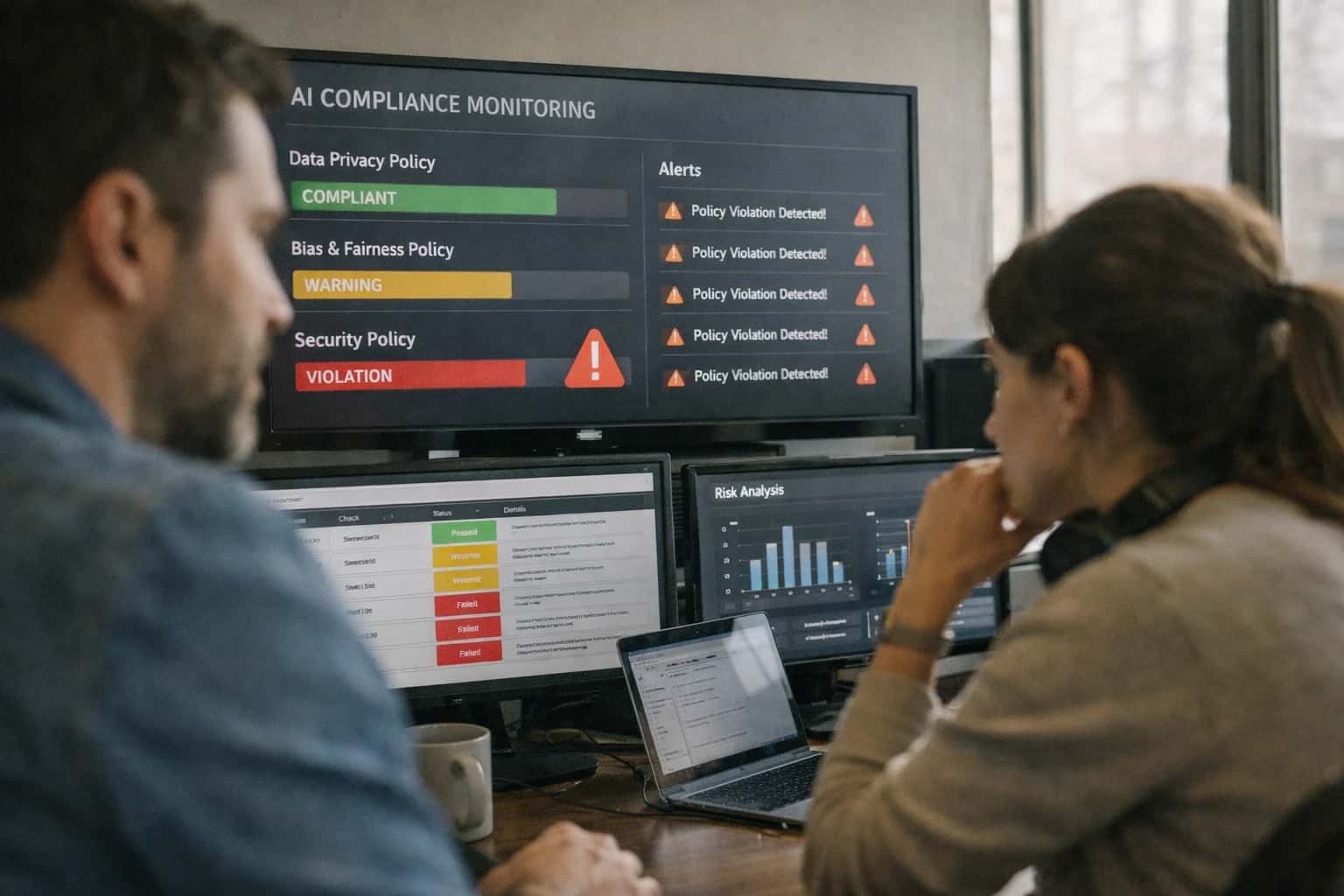
ARCHITECTURE AND IMPLEMENTATION
Where AI Fits into EcoOnline's Compliance Workflows
AI integration connects to EcoOnline's core compliance modules to automate data review, generate evidence, and manage regulatory deadlines.
In practice, this means a compliance officer's workflow shifts from manual tracking to AI-assisted governance. When a new medical surveillance regulation is published, the AI can analyze the text, cross-reference it with existing HealthSurveillanceProgram records and ExposureMonitoring data in EcoOnline, and generate a draft gap analysis. It can then auto-populate a Management of Change (MOC) proposal or a Corrective Action task, assigning it to the appropriate EHS specialist. For audit support, AI can pre-populate checklists based on the site's risk profile and compliance history, and during the audit, it can retrieve relevant documents (SDS files, training records, permits) in real-time using natural language queries.
Rollout is typically phased, starting with a single high-volume workflow like automated regulatory alert triage or audit finding categorization. The AI layer is deployed as a secure, containerized service that connects to EcoOnline via its REST API and webhooks. Governance is critical: all AI-generated outputs—like a draft emissions report or a permit renewal checklist—are routed through EcoOnline's existing approval workflows (Action Tracking) and maintain a full audit trail. This ensures human oversight while reducing the manual data consolidation and initial drafting that often consumes 60-70% of a compliance specialist's time, allowing them to focus on high-risk exceptions and strategic program improvements.
WHERE TO CONNECT AI WORKFLOWS
Key EcoOnline Modules and Data Surfaces for AI Integration
Core Incident Management Objects
The Incident Report is the primary data surface, containing structured fields (type, severity, location) and critical unstructured narratives. AI connects here to automate initial triage, classify incident type (e.g., first aid, recordable, near miss), and extract entities (people, equipment, chemicals) from free-text descriptions.
Key integration points:
- Initial Report Intake: AI can process voice or messy text from frontline workers via mobile app or email, structuring it into a draft incident record.
- Investigation Workflow: During the investigation phase, AI can suggest root cause analysis methods based on incident type, draft investigation report sections by synthesizing interview notes and evidence, and recommend corrective actions from a library of past CAPAs.
- Regulatory Flagging: AI cross-references incident details against reporting thresholds (e.g., OSHA recordability, RIDDOR) to auto-flag mandatory reports.
This turns reactive data entry into a guided, intelligent workflow that accelerates closure and improves data quality for analytics.
INTEGRATION PATTERNS
High-Value AI Use Cases for EcoOnline Compliance
Practical AI integration scenarios that connect directly to EcoOnline's core modules for health, safety, and environmental compliance, automating manual workflows and surfacing actionable insights.
01
Automated Medical Surveillance Case Management
AI analyzes health screening results (e.g., audiometry, spirometry) ingested into EcoOnline's Occupational Health module, flagging abnormal trends, auto-creating case records, and scheduling follow-up appointments. Reduces manual chart review and ensures timely intervention for potential work-related illnesses.
Batch -> Real-time
Case detection
02
Intelligent Chemical Exposure Monitoring
Integrates AI with exposure monitoring data and SDS records. AI correlates air sampling results with work tasks and chemical inventories, predicts potential exceedances, and auto-generates exposure assessment reports for industrial hygienists, ensuring compliance with OELs.
Hours -> Minutes
Report generation
03
Regulatory Obligation Tracking & Gap Analysis
AI continuously parses regulatory updates and maps them to obligations within EcoOnline's Compliance Calendar. Automatically identifies gaps between new requirements and existing controls/procedures, generating prioritized action items for compliance officers.
1 sprint
Analysis cycle
04
AI-Powered Incident Report Enrichment
Frontline workers submit initial reports via voice or simple text. AI structures the narrative within EcoOnline's Incident Management workflow, suggests relevant injury/illness classifications, auto-populates OSHA recordable fields, and routes to the correct investigator.
Same day
Report readiness
05
Automated Environmental Permit Reporting
AI aggregates and validates monitoring data (air, water, waste) from IoT feeds and manual logs within EcoOnline's Environmental modules. Automatically calculates emissions, checks against permit limits, and drafts regulatory report sections (e.g., DMRs), slashing consolidation time.
Days -> Hours
Report drafting
06
Proactive Hazard Identification from Observations
NLP analyzes free-text safety observations and near-miss reports. AI categorizes hazards, assigns risk severity based on historical data, and triggers automated workflows in EcoOnline's Action Tracking system to assign corrective actions to the appropriate supervisor or team.
Batch -> Real-time
Hazard triage
FOR ECOONLINE
Example AI-Automated Compliance Workflows
These are concrete examples of how AI agents can be integrated into EcoOnline's core modules to automate compliance-heavy processes, reduce manual review, and ensure regulatory deadlines are met.
Trigger: A new health surveillance result (e.g., audiometric test, lung function) is entered into EcoOnline's Occupational Health module.
AI Agent Action:
- Context Pull: The agent retrieves the employee's role, exposure history, previous test results, and relevant regulatory thresholds (e.g., OSHA hearing conservation standards).
- Analysis & Classification: An LLM classifies the result as
Normal,Abnormal - Requires Review, orAbnormal - Immediate Action. It drafts a brief clinical note summarizing the change from baseline. - Workflow Update:
- For
Requires Review: The agent creates a task for the occupational health nurse in EcoOnline, attaching the analysis note. - For
Immediate Action: The agent triggers an alert to the nurse and the employee's supervisor, and can auto-schedule a follow-up examination based on calendar availability pulled via EcoOnline's API.
- For
- Human Review Point: The nurse reviews the AI's classification and note, making final adjustments before contacting the employee. The entire audit trail is preserved in the case record.
ENSURING DATA INTEGRITY AND CONTROLLED ACCESS
Implementation Architecture: Data Flow and System Boundaries
A production-ready AI integration for EcoOnline requires a clear separation of duties between the safety platform, the AI processing layer, and your enterprise data sources.
The integration architecture typically involves three core zones: the EcoOnline Platform, the AI Processing & Governance Layer, and your Enterprise Data Sources. Data flows are initiated by events within EcoOnline—such as the submission of a health surveillance record, a new incident report, or a scheduled compliance task. These events, containing structured data and attached documents, are pushed via EcoOnline's REST API or webhooks to a secure middleware queue. This queue acts as a buffer, ensuring EcoOnline's performance is unaffected and providing retry logic for reliable delivery to the AI layer.
Within the AI Processing Layer, incoming payloads are first validated and logged for audit. For use cases like medical surveillance analysis or exposure monitoring report generation, the system retrieves relevant historical data from EcoOnline's API and may enrich it with contextual data from other sources (e.g., HR systems for employee tenure, ERP for job codes). A governed LLM call is then made, using carefully engineered prompts and retrieval-augmented generation (RAG) from a private vector store containing your policies, SDS libraries, and regulatory texts. The AI's output—a summarized risk assessment, a draft compliance memo, or a flagged anomaly—is returned as structured data to the middleware, which posts it back to the appropriate EcoOnline object (e.g., as a comment on a case, a field update, or a linked analysis document), completing the workflow loop.
Critical to this architecture is the enforcement of system boundaries. The AI layer never has direct write access to EcoOnline's core database; all interactions are mediated through its official APIs, respecting the platform's business logic and role-based access controls (RBAC). Similarly, sensitive data like employee health information is never sent to a model without explicit, policy-driven anonymization or aggregation steps. This controlled flow ensures that AI augments the compliance workflow without compromising data governance, audit trails, or the system-of-record integrity that is paramount in regulated EHS environments. Rollout is typically phased, starting with read-heavy analysis use cases before progressing to automated draft generation, with human-in-the-loop approval steps maintained for critical outputs.
ECOONLINE HEALTH AND SAFETY COMPLIANCE
Code and Payload Examples for Common Integrations
AI-Powered Incident Narrative Structuring
When a new incident report is created in EcoOnline via its REST API, an AI agent can be triggered to enrich the initial, often sparse, description. This workflow standardizes data for downstream analysis and regulatory reporting (e.g., OSHA 301). The agent calls an LLM to extract entities, suggest a severity classification, and propose relevant injury/illness codes.
Example JSON Payload to AI Service:
json{ "trigger": "ecoonline_incident_created", "incident_id": "INC-2024-7891", "raw_description": "Worker slipped on wet floor near bay 3, fell onto knee. Complaining of pain, no lost time expected.", "source_module": "Incident Management", "metadata": { "facility_id": "FAC-UK-12", "reported_by": "jsmith" } }
The AI service returns structured fields (primary_cause, body_part, nature_of_injury, suggested_severity) which are then posted back to EcoOnline to update the incident record, ensuring consistency and reducing manual admin.
AI FOR ECOONLINE HEALTH AND SAFETY COMPLIANCE
Realistic Time Savings and Operational Impact
How AI integration transforms manual, reactive compliance tasks into proactive, data-driven workflows within EcoOnline's health and safety modules.
| Compliance Workflow | Before AI | After AI | Key Impact |
|---|---|---|---|
Medical Surveillance Case Review | Manual review of health screening results by an occupational health nurse | AI flags abnormal trends and prioritizes cases for clinical review | Clinician focus shifts from screening to intervention; reduces review time by 60-70% |
Exposure Monitoring Data Analysis | Spreadsheet consolidation and manual comparison to OELs (Occupational Exposure Limits) | Automated ingestion from monitors, real-time OEL comparison, and alert generation | Shifts analysis from monthly/quarterly to continuous; identifies exceedances same-day |
Regulatory Change Impact Assessment | Manual review of regulatory updates against internal procedures by a specialist | AI matches regulatory text to relevant EcoOnline modules and control procedures, highlighting gaps | Reduces initial assessment time from days to hours; ensures no update is missed |
Incident Report Compliance Coding | Supervisor manually determines OSHA recordability and assigns injury/illness codes | AI suggests recordability based on report narrative and auto-populates form fields with codes | Ensures coding consistency and accuracy; cuts form completion time by 50% |
Compliance Calendar & Task Management | Manual entry of deadlines from permits and regulations into a shared calendar | AI parses permit documents to auto-create tasks, deadlines, and reminders in EcoOnline | Eliminates missed deadlines; reduces administrative upkeep by 80% |
Health & Safety Documentation Audit | Periodic manual sampling of documents (e.g., training records, inspection logs) for completeness | AI continuously scans document repositories for missing signatures, expired certificates, and lapses | Transforms audit from a point-in-time event to continuous assurance |
Tier II / Section 313 (Form R) Reporting Prep | Manual aggregation of chemical usage data from multiple sites and complex threshold calculations | AI pulls data from EcoOnline chemical inventory, performs calculations, and pre-fills report drafts | Compresses weeks of annual effort into days; minimizes calculation errors |
ENSURING CONTROLLED, AUDITABLE AI OPERATIONS
Governance, Security, and Phased Rollout
A production AI integration for EcoOnline requires a deliberate approach to data governance, secure architecture, and incremental rollout to manage risk and build trust.
Data Governance and Audit Trails: AI workflows in EcoOnline must operate within the platform's existing RBAC (Role-Based Access Control) and data segregation rules. Every AI-generated recommendation, summary, or classification should be logged as a system event within the relevant Incident, Medical Surveillance, or Exposure Monitoring record. This creates a transparent audit trail, showing the source data, the AI's prompt/instruction, and the output, which is critical for regulatory inquiries and internal quality audits. For example, an AI-suggested OSHA recordability determination for an incident must be stored alongside the human reviewer's final decision.
Secure Architecture Patterns: We implement AI integrations using a zero-trust, API-first model. Sensitive EcoOnline data (e.g., employee health records, incident narratives) is never sent directly to a third-party LLM. Instead, data is processed through secure, dedicated endpoints that can apply data masking (redacting PII) and enforce strict data retention policies. AI calls are brokered through your private cloud or VPC, with all traffic encrypted and logged. This architecture ensures compliance with health data regulations (like HIPAA in relevant contexts) and corporate IT security policies, treating the AI layer as a controlled extension of the EcoOnline platform itself.
Phased Rollout for Risk Management: Start with low-risk, high-volume workflows to demonstrate value and refine governance. A typical first phase automates the categorization and initial triage of safety observations or near-misses, where AI suggests hazard types and severity based on free-text descriptions—a task that reduces administrative burden but requires human confirmation. The second phase might introduce automated draft generation for routine compliance reports (e.g., monthly injury logs), where outputs are clearly marked as drafts and routed for supervisor approval within EcoOnline's workflow engine. This incremental approach allows your team to build confidence, adjust prompts, and establish oversight procedures before expanding to more complex use cases like medical surveillance trend analysis or predictive exposure modeling.
Enabling Efficiency, Speed & Accuracy
Intelligent Analysis, Decision & Execution
We build AI systems for teams that need search across company data, workflow automation across tools, or AI features inside products and internal software.
Talk to Us
Search across company data
Give teams answers from docs, tickets, runbooks, and product data with sources and permissions.
Useful when people spend too long searching or get different answers from different systems.
Enterprise searchRAGPermissions
Read more
Automate internal workflows
Use AI to route work, draft outputs, trigger actions, and keep approvals and logs in place.
Useful when repetitive work moves across multiple tools and teams.
AI agentsWorkflow automationGovernance
Read more
Add AI to products and internal tools
Build assistants, guided actions, or decision support into the software your team or customers already use.
Useful when AI needs to be part of the product, not a separate tool.
AI integrationDecision supportModel routing
Read moreAI INTEGRATION FOR ECOONLINE
Frequently Asked Questions for Technical Buyers
Practical questions for architects and engineering leads planning to add AI into EcoOnline's health and safety compliance workflows.
Integration typically occurs at three layers:
-
Data Ingestion & Context:
- APIs: Use EcoOnline's REST APIs (e.g.,
GET /incidents,GET /surveillance/records) to pull structured data (incident details, exposure readings, surveillance results) for AI processing. - Webhooks: Subscribe to webhooks for events like
incident.createdorsurveillance.updatedto trigger real-time AI workflows. - Document Stores: For unstructured data (attached medical reports, PDFs of regulations), files are retrieved via API, processed externally (e.g., for OCR or text extraction), and the resulting text is sent to the AI model.
- APIs: Use EcoOnline's REST APIs (e.g.,
-
AI Processing Layer:
- A separate service (your AI runtime) receives the context. For compliance tasks, we often use a Retrieval-Augmented Generation (RAG) pattern. This involves:
- Chunking and embedding internal policy documents and relevant regulatory text (e.g., OSHA 29 CFR 1910, local medical surveillance laws).
- Storing embeddings in a vector database (e.g., Pinecone, Weaviate).
- At query time, retrieving the most relevant text chunks to ground the LLM's response.
- A separate service (your AI runtime) receives the context. For compliance tasks, we often use a Retrieval-Augmented Generation (RAG) pattern. This involves:
-
Write-Back & Action:
- Results (e.g., a generated narrative, a compliance gap summary, a recommended action) are posted back to EcoOnline via
POSTorPATCHAPI calls to update records, create tasks, or add notes. - Example payload for adding an AI-generated summary to an incident:
jsonPOST /api/v1/incidents/{id}/notes { "note": "AI-Generated Initial Summary: This incident involving a slip on a wet floor in Warehouse B appears to be related to a missing wet floor sign following a recent cleaning cycle. Immediate corrective action: verify signage protocol. Potential root cause area: contractor communication during cleaning operations.", "source": "AI_Compliance_Agent" } - Results (e.g., a generated narrative, a compliance gap summary, a recommended action) are posted back to EcoOnline via
Key Consideration: API rate limits and authentication (OAuth 2.0) must be managed. The AI service should implement idempotency and retry logic for reliability.

About the author
Prasad Kumkar
CEO & MD, Inference Systems
Prasad Kumkar is the CEO & MD of Inference Systems and writes about AI systems architecture, LLM infrastructure, model serving, evaluation, and production deployment. Over 5+ years, he has worked across computer vision models, L5 autonomous vehicle systems, and LLM research, with a focus on taking complex AI ideas into real-world engineering systems.
His work and writing cover AI systems, large language models, AI agents, multimodal systems, autonomous systems, inference optimization, RAG, evaluation, and production AI engineering.
LinkedIn
Limited slotsGet a Free AI Consultation
Partnered with leading AI, data, and software stack.





How We Work
Custom AI workflows for your Business
One-fit-all AI don't work for modern businesses. At Inferensys, we aim to understand your business & custom requirements; which we use to define most efficient agentic workflows, the data, and the tools for your business.
01
Review the use case
We understand the task, the users, and where AI can actually help.
Read more02
Pick the right approach
We define what needs search, automation, or product integration.
Read more03
Build the first useful version
We implement the part that proves the value first.
Read more04
Improve from there
We add the checks and visibility needed to keep it useful.
Read moreThe first call is a practical review of your use case and the right next step.
Talk to Us