The integration connects at three key surfaces within Cority's data model: the Regulatory Obligation object, the Compliance Task module, and the Calendar Event API. AI agents ingest regulatory text from sources like the Federal Register or internal policy libraries, parse them for actionable requirements and deadlines, and automatically create or update corresponding obligation records. For each obligation, the system can then generate a series of granular tasks—such as "Collect Q2 emissions data" or "Complete annual LOTO procedure review"—and schedule them as calendar items with assigned owners and dependencies. This moves compliance management from a manual, recall-based process to an automated, forward-looking workflow.

Integration
AI Integration for Cority Compliance Calendar
Automate regulatory deadline tracking, task generation, and action prioritization within Cority's Compliance Calendar using AI document parsing and workflow orchestration.
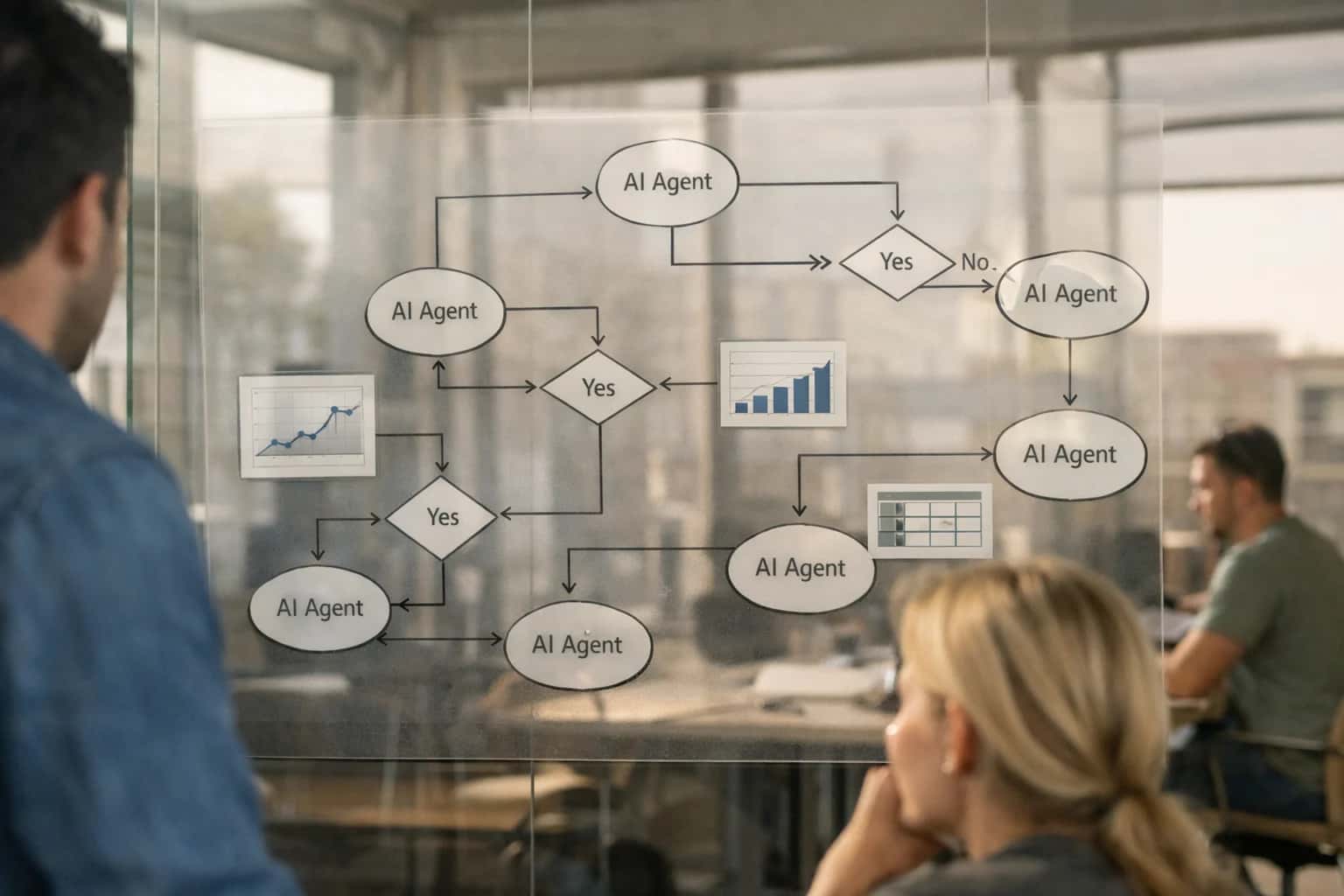
ARCHITECTURE AND ROLLOUT
Where AI Fits in Cority's Compliance Calendar
Integrating AI into Cority's Compliance Calendar transforms a static tracking tool into a dynamic, proactive management system.
Implementation typically involves a middleware layer that orchestrates between Cority's REST API, a document processing pipeline (using models like GPT-4 or Claude for document understanding), and a vector database for semantic search across historical obligations. A high-value pattern is predictive date adjustment: by analyzing past completion times for similar tasks, the AI can suggest buffer periods or auto-reschedule tasks if a prerequisite is delayed, sending alerts through Cority's notification engine. This reduces the risk of missed deadlines that stem from overly optimistic scheduling.
Rollout should be phased, starting with a single regulation type (e.g., air permits) to tune the parsing logic and task templates. Governance is critical; all AI-generated obligations and tasks should be flagged for initial human review and approval within Cority's workflow engine, creating an audit trail. Over time, as confidence grows, the system can shift to a "review-by-exception" model, where only high-risk or novel items require manual sign-off. This approach ensures control while progressively automating up to 70-80% of routine calendar population and maintenance work for EHS coordinators.
COMPLIANCE CALENDAR AUTOMATION
Key Integration Surfaces in Cority
The Core Data Object
The Compliance Obligation record is the primary integration point for AI-driven calendar population. Each obligation links a regulatory requirement (e.g., a permit condition, reporting deadline, training mandate) to specific facilities, equipment, or processes.
AI integration focuses on parsing source documents—regulatory texts, permit PDFs, internal policies—to automatically create or update these records. Key fields for automation include:
- Description & Requirement Text: AI extracts and summarizes the specific mandate.
- Regulatory Citation: Auto-tags the source regulation (e.g., 40 CFR Part 262).
- Applicability Scope: Maps the requirement to the correct sites, departments, or assets based on document context.
- Deadline Logic: Identifies recurring patterns ("quarterly," "within 60 days of event") and calculates initial due dates.
This automation turns static documents into actionable, tracked obligations, forming the foundation for the compliance calendar.
CORITY INTEGRATION PATTERNS
High-Value AI Use Cases for Compliance Calendar
Transform Cority's Compliance Calendar from a static tracker into an intelligent, proactive command center. These AI-driven workflows automate the most manual, error-prone, and time-sensitive tasks for EHS and compliance teams.
01
Automated Regulatory Deadline Extraction
AI parses new regulatory documents (EPA, OSHA, state agencies) and extracts key dates, reporting obligations, and action items, automatically creating or updating tasks in the Cority Compliance Calendar. This eliminates manual review and data entry for compliance analysts.
Hours -> Minutes
Document review time
02
Intelligent Task Prioritization & Risk Scoring
AI analyzes calendar tasks against site risk profiles, past compliance history, and regulatory severity to dynamically assign priority flags and suggested due dates. High-risk, high-penalty items are surfaced automatically for EHS leaders.
Proactive
Risk mitigation
03
Cross-Module Dependency Mapping
AI identifies and links calendar tasks to related records across Cority. A permit renewal date triggers a review of associated training matrices, chemical inventories, and inspection schedules, ensuring preparatory actions are sequenced correctly and assigned.
Batch -> Real-time
Workflow coordination
04
Automated Reminder & Escalation Workflows
Beyond simple date-based alerts, AI generates context-aware, role-specific reminders for task owners. It escalates overdue items based on risk level and suggests re-assignment if primary owners are unavailable, keeping the calendar actionable.
Same day
Action assurance
05
Narrative Generation for Management Reviews
For quarterly or annual compliance reviews, AI synthesizes calendar data, completion rates, and near-misses into executive-ready summaries. It highlights trends, predicts potential deadline conflicts, and recommends resource adjustments.
1 sprint
Report preparation
06
Audit-Ready Evidence Package Assembly
When an audit is scheduled, AI scans the Compliance Calendar for the relevant period, automatically gathers completed task records, supporting documentation, and approval trails from connected modules, and assembles a preliminary evidence package for the auditor.
Days -> Hours
Audit prep time
CORITY COMPLIANCE CALENDAR AUTOMATION
Example AI-Driven Workflows
These workflows demonstrate how AI can transform the manual, reactive process of managing compliance obligations into a proactive, automated system within Cority's Compliance Calendar. Each example outlines a concrete automation flow from trigger to resolution.
Trigger: A new environmental permit (e.g., NPDES, Air Title V) is uploaded to Cority's Document Control module or a permit record is created via API.
Context/Data Pulled: An AI agent is triggered via webhook. It extracts the permit PDF, identifying key sections:
- Permit number and issuing agency
- Effective and expiration dates
- All reporting requirements (e.g., Monthly Discharge Monitoring Reports, Semi-Annual Compliance Certifications)
- Specific submission deadlines (e.g., "30 days after the reporting period")
Model/Agent Action: A language model (LLM) with document parsing capabilities classifies each requirement and calculates the absolute calendar deadlines based on the permit's effective date and the defined reporting periods.
System Update: The agent uses Cority's API to create corresponding tasks and milestones in the Compliance Calendar module:
- Creates a parent milestone for the permit expiration.
- Creates recurring, dated tasks for each reporting requirement.
- Assigns tasks to the responsible Environmental Coordinator based on facility and permit type.
- Attaches the source permit document to each generated task for reference.
Human Review Point: The system flags any ambiguous deadlines (e.g., "as required by the Director") for manual review by the compliance manager before task creation.
HOW AI CONNECTS TO CORITY'S DATA MODEL
Implementation Architecture & Data Flow
A production-ready AI integration for Cority's Compliance Calendar connects to core APIs, ingests regulatory documents, and orchestrates automated task creation.
The integration architecture is anchored on Cority's Compliance Obligations and Action Items data objects. An AI agent, deployed as a secure microservice, is triggered via a scheduled job or a webhook from Cority when a new regulatory document (e.g., a PDF of a new EPA rule) is uploaded to the Document Management module. The agent extracts text, uses an LLM to parse requirements and deadlines, and maps them to relevant Facilities, Processes, and Responsible Persons already defined in Cority. This parsed data is then written back via Cority's REST API to create new Compliance Obligation records with calculated due dates, which automatically populate the Compliance Calendar view.
For each new obligation, a second workflow generates the corresponding Action Items. The AI suggests task descriptions, priority levels (based on regulatory severity and proximity to deadline), and prerequisite steps—such as "Conduct baseline air monitoring" before "Submit initial notification." These are created as linked child records. The system can also be configured to send automated reminder notifications through Cority's native alerting system as deadlines approach, with the AI drafting context-aware reminder messages for assignees.
Governance is built into the data flow. All AI-generated records are flagged with a source: "AI-Assisted" custom field and include an audit trail linking back to the source document. A human-in-the-loop approval step can be inserted for high-risk obligations before tasks are assigned. The entire service runs in your cloud environment, ensuring Cority data never leaves your control, and integrates with your existing vector database for efficient retrieval of similar past obligations during the parsing phase to ensure consistency. Rollout typically starts with a pilot for a single regulation type (e.g., air permits) before expanding to the full compliance spectrum.
IMPLEMENTATION PATTERNS
Code & Payload Examples
Ingest and Parse New Regulations
This workflow uses an AI agent to monitor regulatory sources, download new documents (e.g., EPA rules, OSHA directives), and extract structured obligations and deadlines for the Cority Compliance Calendar.
Key Steps:
- Trigger on new document publication via RSS/webhook.
- Use an LLM with a retrieval-augmented generation (RAG) prompt to analyze the text.
- Extract entities:
regulation_name,affected_facility,deadline_date,required_action,reporting_form. - Map extracted data to the appropriate Cority Compliance Calendar object via API.
python# Example: AI Agent parsing a PDF and creating a calendar task import requests from inference_agent import RegulatoryParserAgent # 1. Fetch new regulatory document pdf_url = "https://agency.gov/new-rule.pdf" raw_text = download_and_extract_text(pdf_url) # 2. Parse with structured output parser_agent = RegulatoryParserAgent() obligations = parser_agent.parse( text=raw_text, company_facilities=["Plant Alpha", "Warehouse Beta"] ) # 3. Create tasks in Cority for obligation in obligations: payload = { "task": { "title": f"Comply with {obligation.regulation_name}", "description": obligation.required_action, "dueDate": obligation.deadline_date, "assignedTo": "EHS Manager", "facility": obligation.affected_facility, "status": "Open", "priority": "High" if "immediate" in obligation.deadline_type else "Medium" } } response = requests.post( "https://your-instance.cority.com/api/v1/compliance/tasks", json=payload, headers={"Authorization": "Bearer <API_KEY>"} )
AI-ENHANCED COMPLIANCE CALENDAR WORKFLOWS
Realistic Time Savings & Operational Impact
How AI integration transforms manual compliance tracking into an automated, proactive system within Cority's calendar module.
| Workflow | Before AI | After AI | Notes |
|---|---|---|---|
Regulatory Deadline Identification | Manual review of agency websites and emails | Automated parsing and ingestion of regulatory text | AI scans for dates, jurisdictions, and applicable rules |
Calendar Entry Creation | Manual data entry for each deadline | Auto-population of calendar with tasks and reminders | Links to source documents and assigns responsible parties |
Task Prioritization | Static or manual priority based on due date | Dynamic risk-based scoring (fine amount, past performance) | Considers business impact and historical compliance gaps |
Action Plan Drafting | Blank slate for each new requirement | AI-generated draft checklist from similar past actions | Human review and customization required; provides 80% draft |
Stakeholder Notification | Manual emails or meeting scheduling | Automated alerts and report distribution via Cority | Integrates with existing Cority notification workflows |
Evidence Collection for Audits | Manual search for proof of completion | AI-suggested linked records (training, inspections, permits) | Reduces prep time for internal and external audits |
Monthly Compliance Review | Days consolidating status from spreadsheets | Automated executive summary with overdue/high-risk items | Provides narrative explanation of trends and hotspots |
IMPLEMENTATION BLUEPRINT FOR PRODUCTION
Governance, Security & Phased Rollout
A practical guide to deploying AI for the Cority Compliance Calendar with enterprise-grade controls and a risk-aware rollout.
A production integration for the Cority Compliance Calendar requires a secure, multi-layered architecture. We typically implement a dedicated service layer that sits between the AI models (e.g., OpenAI, Anthropic, or open-source LLMs) and Cority's APIs. This service layer handles prompt orchestration, data validation, and audit logging before any generated tasks or deadlines are written to Cority's ComplianceCalendar and ActionItem objects. All interactions are scoped with strict role-based access controls (RBAC), ensuring AI-generated entries are tagged with a system user and can be traced back to the source regulatory document and the specific AI inference call.
Security is paramount when parsing sensitive regulatory text. We recommend a data flow where documents are first ingested into a secure, transient processing queue. The AI service extracts obligations and proposed dates without retaining the full document post-processing. All API calls between your infrastructure, the AI service, and Cority are encrypted in transit. For highly confidential data, we can architect the solution to use virtual private cloud endpoints for AI services or deploy private, fine-tuned models to ensure data never leaves your controlled environment.
A phased rollout mitigates risk and builds trust. Phase 1 (Pilot): Run the AI in 'review mode' for a single regulation type (e.g., air permits). It generates draft calendar entries and task reminders in a sandbox ComplianceCalendar, requiring a compliance officer's review and manual promotion to production. Phase 2 (Assisted): After validation, enable auto-population for low-risk, high-volume deadlines (e.g., routine monthly reports) with a mandatory 24-hour human review buffer. Phase 3 (Managed Automation): Expand to complex obligations, using confidence scoring from the AI to route low-confidence suggestions for review while auto-accepting high-confidence items. Each phase includes monitoring dashboards tracking accuracy rates, time saved, and user feedback, ensuring the system delivers value without compromising compliance integrity.
Enabling Efficiency, Speed & Accuracy
Intelligent Analysis, Decision & Execution
We build AI systems for teams that need search across company data, workflow automation across tools, or AI features inside products and internal software.
Talk to Us
Search across company data
Give teams answers from docs, tickets, runbooks, and product data with sources and permissions.
Useful when people spend too long searching or get different answers from different systems.
Enterprise searchRAGPermissions
Read more
Automate internal workflows
Use AI to route work, draft outputs, trigger actions, and keep approvals and logs in place.
Useful when repetitive work moves across multiple tools and teams.
AI agentsWorkflow automationGovernance
Read more
Add AI to products and internal tools
Build assistants, guided actions, or decision support into the software your team or customers already use.
Useful when AI needs to be part of the product, not a separate tool.
AI integrationDecision supportModel routing
Read moreIMPLEMENTATION AND WORKFLOW DETAILS
Frequently Asked Questions
Practical questions for teams planning an AI integration with Cority's Compliance Calendar to automate regulatory tracking and task management.
The integration uses a multi-step workflow to extract and structure obligations from regulatory text.
- Trigger & Ingestion: New or updated regulatory documents (PDFs, web pages, agency alerts) are ingested via a monitored folder, email inbox, or API feed into a secure processing queue.
- Document Intelligence: An AI model performs layout analysis and OCR (if needed), then uses a specialized extraction prompt to identify key entities:
- Regulatory Body: e.g., OSHA, EPA, State DEP
- Rule/Standard: e.g., 29 CFR 1910.1200, Clean Air Act Title V
- Action Type: e.g., Submit report, Renew permit, Conduct training
- Deadline Logic: e.g., "Annually by March 1st," "Within 60 days of event," "Quarterly"
- Data Structuring & Validation: Extracted data is formatted into a structured JSON payload, which can be reviewed by a compliance officer via a simple UI before creation.
- System Update: The validated payload is sent via Cority's REST API to create or update a Compliance Calendar event. The API call populates fields like:
json
{ "title": "OSHA 300A Log Posting", "description": "Annual summary of work-related injuries and illnesses must be posted from Feb 1 to April 30.", "dueDate": "2024-02-01", "completionDate": "2024-04-30", "regulatoryReference": "29 CFR 1904.32", "assignedTo": "site-ehs-manager", "relatedFacility": "Plant-12", "priority": "High" } - Human Review Point: A governance rule can be set to flag all AI-generated calendar entries for a specific jurisdiction or complexity level, requiring manual approval before creation in Cority.

About the author
Prasad Kumkar
CEO & MD, Inference Systems
Prasad Kumkar is the CEO & MD of Inference Systems and writes about AI systems architecture, LLM infrastructure, model serving, evaluation, and production deployment. Over 5+ years, he has worked across computer vision models, L5 autonomous vehicle systems, and LLM research, with a focus on taking complex AI ideas into real-world engineering systems.
His work and writing cover AI systems, large language models, AI agents, multimodal systems, autonomous systems, inference optimization, RAG, evaluation, and production AI engineering.
LinkedIn
Limited slotsGet a Free AI Consultation
Partnered with leading AI, data, and software stack.





How We Work
Custom AI workflows for your Business
One-fit-all AI don't work for modern businesses. At Inferensys, we aim to understand your business & custom requirements; which we use to define most efficient agentic workflows, the data, and the tools for your business.
01
Review the use case
We understand the task, the users, and where AI can actually help.
Read more02
Pick the right approach
We define what needs search, automation, or product integration.
Read more03
Build the first useful version
We implement the part that proves the value first.
Read more04
Improve from there
We add the checks and visibility needed to keep it useful.
Read moreThe first call is a practical review of your use case and the right next step.
Talk to Us