AI connects to Content Composer at three key surfaces: the template design layer, the user interview (questionnaire) runtime, and the final document assembly engine. At the template layer, AI can analyze existing clause libraries and regulatory source documents to suggest new, compliant clauses or flag outdated language. During the user interview, an AI agent can act as a dynamic assistant, interpreting open-ended user inputs to pre-fill questionnaire fields, suggest relevant clauses based on context, and ask clarifying questions to reduce errors. Finally, during assembly, AI can perform a final review of the drafted document, checking for internal consistency, missing required sections, and adherence to defined business rules before the document is finalized for signature or distribution.

Integration
AI Integration with Hyland Content Composer
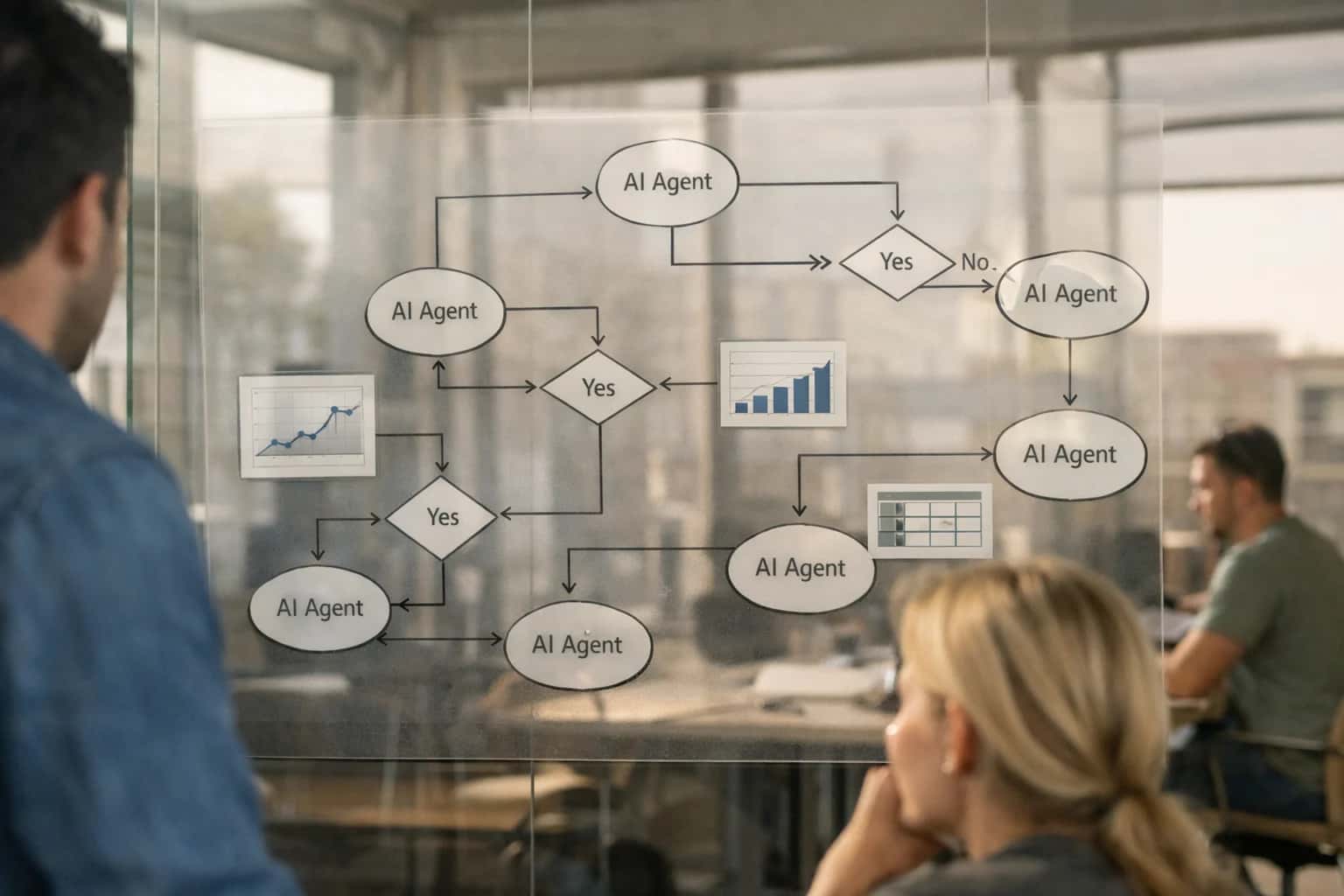
Where AI Fits into Hyland Content Composer
Integrating AI into Hyland Content Composer transforms a document assembly tool into an intelligent drafting copilot, automating compliance checks and accelerating complex document creation.
Implementation typically involves a secure middleware layer that sits between Content Composer and your chosen LLM (e.g., Azure OpenAI, Anthropic Claude). This layer uses the Content Composer API to pull template metadata, push user input, and retrieve assembled drafts. Key integration patterns include:
- Event-Driven Processing: Triggering AI analysis via webhook when a questionnaire is submitted or a draft is assembled.
- Real-Time Assistance: Embedding a chat-like AI copilot within the Content Composer interface using custom widgets or iframes to guide users through complex questionnaires.
- Batch Enrichment: Using scheduled jobs to run AI over your entire clause library to tag clauses by risk, jurisdiction, or applicability, enriching the metadata Content Composer uses for smart assembly. The goal is to move from a rigid 'fill-in-the-blank' process to an adaptive, guidance-driven experience that reduces reliance on expert knowledge for routine document creation.
Rollout should be phased, starting with a non-critical document type to validate accuracy and user adoption. Governance is critical: all AI-suggested clauses or pre-filled data should be visually distinguished for user review, and a full audit trail logging the original user input, AI suggestion, and final user acceptance must be written back to the Content Composer case folder. This ensures compliance and provides a feedback loop for model improvement. Consider integrating with related services like /integrations/enterprise-content-management-platforms/ai-integration-with-hyland-onbase for end-to-end document lifecycle management, or /integrations/contract-lifecycle-management-platforms for downstream obligation tracking once documents are executed.
AI Integration Touchpoints in Hyland Content Composer
AI-Powered Drafting Surfaces
Integrate AI directly into the Content Composer drafting canvas to assist document authors in real-time. Key touchpoints include:
- Clause & Template Suggestions: As a user selects a document type (e.g., NDA, SOW), an AI agent can analyze the metadata and suggest relevant, pre-approved clauses from a connected clause library or past documents.
- Context-Aware Completions: Using the document's existing text and metadata (like
Contract_PartyorEffective_Date), an inline AI can generate coherent next paragraphs, bullet lists, or standard disclaimers. - Regulatory Consistency Checks: Before finalizing, an AI can scan the draft against a configured rules engine (e.g., for GDPR, SOX, or industry-specific regulations) to flag non-compliant language and suggest compliant alternatives.
Implementation typically uses the Content Composer API to inject suggestions into the UI and a secure, governed LLM endpoint for generation, ensuring all outputs are logged for audit.
High-Value AI Use Cases for Content Composer
Integrate AI directly into Hyland Content Composer's drafting workflows to automate clause selection, ensure regulatory compliance, and accelerate the creation of complex, personalized documents.
AI-Assisted Clause Selection & Drafting
An AI agent analyzes the document context (e.g., deal type, jurisdiction, party details) and suggests the most appropriate pre-approved clauses from your library. It can also draft net-new language for unique scenarios, ensuring consistency and reducing manual lookup.
Real-Time Regulatory & Policy Compliance Check
As a document is assembled, an integrated AI model scans each clause and section against a dynamic rules engine (e.g., internal policies, GDPR, SOX). It flags non-compliant language and suggests compliant alternatives, embedding governance directly into the authoring process.
Automated Data Population & Personalization
Connect Content Composer to CRM, ERP, or case management systems via API. An AI workflow extracts relevant entity data (client name, matter ID, product specs) and intelligently maps it to the correct fields and variables within the document template, eliminating copy-paste errors.
Intelligent Document Summarization & Risk Highlighting
For long-form contracts or complex proposals, an AI layer generates an executive summary, extracts key obligations, deadlines, and parties, and highlights potential risk clauses (e.g., unlimited liability, auto-renewal). This summary is attached as a cover sheet for faster review.
Dynamic Questionnaire to First Draft
Replace static templates with an AI-powered interview. The system asks the user context-specific questions, and the AI uses the answers to select templates, populate variables, and structure the entire first draft in Content Composer, ready for refinement.
Version Comparison & Change Analysis
When a document returns from negotiation or review, AI compares the new version against the original. It produces a redline summary explaining substantive changes in plain language, not just formatting, accelerating legal and business review cycles within the Composer environment.
Example AI-Augmented Document Workflows
These workflows demonstrate how to integrate AI agents with Hyland Content Composer's APIs and event model to draft, review, and assemble compliant documents. Each pattern connects a business trigger to a concrete AI action and a system update.
Trigger: A user creates a new document from a 'Master Services Agreement' template in Content Composer.
Context Pulled: The system retrieves the template metadata, the user's profile (department, region), and the counterparty name from the linked CRM record.
AI Agent Action: An agent is called via webhook with the template ID and context. It queries a vector database of approved clause libraries and recent, similar agreements to suggest 2-3 context-appropriate clauses for key sections (e.g., Limitation of Liability, Governing Law). Suggestions include rationale and compliance flags.
System Update: Suggestions are injected into the Content Composer UI as a side panel. The user can accept a suggestion with one click, inserting the formatted text.
Human Review Point: All AI-suggested clauses are visually highlighted in the draft. Final document requires manual review and approval before routing for signature.
Implementation Architecture: Connecting AI to Content Composer
A practical guide to integrating AI agents into Hyland Content Composer workflows for drafting, clause suggestion, and compliance checking.
A production integration connects an AI orchestration layer to Hyland Content Composer's REST API and webhook system. The core pattern is event-driven: when a user initiates a new document or selects a template in Content Composer, a webhook payload is sent to an AI agent service. This payload contains the template ID, user context, and any initial form data. The AI service, built on a framework like CrewAI or n8n, then orchestrates a multi-step process: retrieving relevant clauses from a connected knowledge base (like a vector database), analyzing the request against regulatory rulesets, and generating structured suggestions. These suggestions—formatted as JSON with fields for suggested_text, source_clause_id, and compliance_notes—are returned via API to populate Content Composer's drafting interface.
The integration surfaces AI assistance at key user junctions. For example, during the assembly of a service agreement, the agent can suggest appropriate limitation of liability clauses based on the service type and jurisdiction, pulled from a pre-approved library in a system like iManage or NetDocuments. It can also run a real-time compliance check, flagging if a drafted payment term violates a master services agreement on file. This is not a black-box replacement for legal review but an attended automation that reduces manual lookup and copy-paste errors. The architecture must include a human-in-the-loop approval step, logging all AI-suggested changes to Content Composer's audit trail for governance.
Rollout requires a phased approach, starting with a single, high-volume document type like NDAs or SOWs. Governance is critical: prompts and models must be version-controlled in an LLMOps platform like Arize AI, and all AI-generated content should be watermarked in the document metadata. The final architecture ensures AI acts as a co-pilot within the existing Content Composer security model, using the platform's native RBAC to control which users and roles receive AI suggestions, maintaining compliance and user trust. For related patterns on governing AI outputs in enterprise systems, see our guide on [/integrations/enterprise-content-management-platforms/ai-integration-for-ai-governance-and-llmops-platforms](AI Governance and LLMOps).
Code and Payload Examples
Real-Time Drafting Assistance
Integrate an LLM with Content Composer's API to suggest compliant clauses based on document context and metadata. This pattern listens for user actions (e.g., inserting a new section) and calls an AI service with the document's subject matter, jurisdiction, and previous clauses to generate relevant, on-brand text options.
Typical Payload to AI Service:
json{ "document_context": { "doc_type": "Master Services Agreement", "jurisdiction": "California", "party_names": ["Acme Corp", "Beta LLC"], "existing_clauses": ["Term", "Payment Terms"] }, "user_intent": "Insert a standard Limitation of Liability clause.", "brand_guidelines": { "tone": "formal", "preferred_terms": ["Licensor", "Licensee"] } }
The AI returns 2-3 formatted clause options, which are presented in a side panel for the author to review and insert with one click.
Realistic Time Savings and Operational Impact
How AI integration transforms manual drafting and assembly tasks in Hyland Content Composer, focusing on time savings, error reduction, and compliance confidence.
| Workflow Stage | Before AI | After AI | Key Impact |
|---|---|---|---|
Clause Selection & Insertion | Manual search through precedent libraries | AI suggests relevant clauses based on document context | Reduces drafting time from hours to minutes |
Regulatory Reference Check | Manual review of latest compliance updates | AI cross-references draft against current regulations | Mitigates compliance risk; flags potential issues |
Consistency & Terminology Review | Manual proofreading for brand/legal terms | AI scans for inconsistencies and suggests corrections | Ensures document uniformity; reduces rework |
Data Population from Source Systems | Copy-paste from CRM/ERP into document templates | AI auto-populates fields via API calls to linked systems | Eliminates manual data entry errors |
Initial Draft Assembly | Manual compilation of multiple source documents | AI assembles a first-pass draft from provided inputs | Cuts assembly time from 1-2 days to 2-4 hours |
Stakeholder Review Cycle | Multiple rounds of email markups and consolidation | AI summarizes changes and highlights conflicting edits | Compresses review cycles by 30-50% |
Final Formatting & Compliance Stamp | Manual application of branding and compliance metadata | AI applies final formatting and triggers compliance workflows | Ensures audit-ready outputs automatically |
Governance, Security, and Phased Rollout
A secure, governed approach to integrating AI into Hyland Content Composer ensures adoption without compromising compliance or data integrity.
Integrating AI into a regulated document drafting workflow requires a security-first architecture. We recommend a pattern where the AI service acts as a stateless assistant, never persisting customer data. Draft text, clause suggestions, and regulatory checks are processed via secure API calls from Content Composer's workflow engine or a custom connector. Sensitive document content is sent to the AI model within a private, compliant Azure OpenAI or AWS Bedrock instance, with all inputs and outputs logged to a secure audit trail for review. Access is controlled via Content Composer's existing role-based permissions, ensuring only authorized users can invoke AI features on permitted document types or matter folders.
A phased rollout minimizes risk and builds user confidence. Phase 1 (Pilot): Enable AI-powered clause suggestion for a single, low-risk document type (e.g., standard NDAs) within a controlled user group. Use this to validate accuracy, tune prompts, and establish a human-in-the-loop review pattern. Phase 2 (Expand): Introduce regulatory consistency checks and automated assembly for a broader set of templates, integrating feedback mechanisms directly into the Content Composer UI. Phase 3 (Scale): Roll out AI-assisted drafting across authorized teams, leveraging usage analytics from Content Composer's audit logs to measure impact on draft cycle time and compliance error rates.
Governance is maintained through continuous monitoring and clear ownership. Designate a content steward (often from Legal or Compliance) to manage the library of approved clauses and regulatory rules the AI references. Implement a regular review cycle to evaluate AI suggestions against updated legal standards, using Content Composer's version history to track changes. For high-stakes documents, configure Content Composer workflows to require mandatory human review of all AI-generated sections before finalization, embedding governance into the process itself.
Enabling Efficiency, Speed & Accuracy
Intelligent Analysis, Decision & Execution
We build AI systems for teams that need search across company data, workflow automation across tools, or AI features inside products and internal software.
Talk to Us
Search across company data
Give teams answers from docs, tickets, runbooks, and product data with sources and permissions.
Useful when people spend too long searching or get different answers from different systems.

Automate internal workflows
Use AI to route work, draft outputs, trigger actions, and keep approvals and logs in place.
Useful when repetitive work moves across multiple tools and teams.

Add AI to products and internal tools
Build assistants, guided actions, or decision support into the software your team or customers already use.
Useful when AI needs to be part of the product, not a separate tool.
Frequently Asked Questions
Practical questions for architects and content managers planning AI integration with Hyland Content Composer to automate drafting, ensure compliance, and maintain consistency.
AI integrates via Hyland's REST API and event-driven webhooks. A typical implementation pattern involves:
- Trigger: A user initiates a new document or selects a template within Content Composer.
- Context Pull: The integration layer calls the Content Composer API to fetch the template structure, existing clauses, and any linked matter or case data.
- AI Action: This context is sent to a governed LLM (e.g., Azure OpenAI, Anthropic Claude) with instructions to:
- Suggest relevant clauses from a pre-approved library.
- Draft narrative sections based on case details.
- Flag potential regulatory conflicts based on jurisdiction.
- System Update: The AI's suggestions are returned via API and injected into the Content Composer interface as draft text or sidebar recommendations for the author.
- Human Review: The author reviews, edits, and approves all AI-generated content before final assembly, maintaining a human-in-the-loop for control.

About the author
Prasad Kumkar
CEO & MD, Inference Systems
Prasad Kumkar is the CEO & MD of Inference Systems and writes about AI systems architecture, LLM infrastructure, model serving, evaluation, and production deployment. Over 5+ years, he has worked across computer vision models, L5 autonomous vehicle systems, and LLM research, with a focus on taking complex AI ideas into real-world engineering systems.
His work and writing cover AI systems, large language models, AI agents, multimodal systems, autonomous systems, inference optimization, RAG, evaluation, and production AI engineering.
Partnered with leading AI, data, and software stack.





How We Work
Custom AI workflows for your Business
One-fit-all AI don't work for modern businesses. At Inferensys, we aim to understand your business & custom requirements; which we use to define most efficient agentic workflows, the data, and the tools for your business.
01
Review the use case
We understand the task, the users, and where AI can actually help.
Read more02
Pick the right approach
We define what needs search, automation, or product integration.
Read more03
Build the first useful version
We implement the part that proves the value first.
Read more04
Improve from there
We add the checks and visibility needed to keep it useful.
Read moreThe first call is a practical review of your use case and the right next step.
Talk to Us