AI integration connects to Magellan at three primary surfaces: the Analytics Hub for user-facing Q&A, the data pipeline for automated insight generation, and the reporting layer for narrative augmentation. Instead of replacing Magellan, AI acts as a co-pilot, using its robust data preparation, BI models, and security framework as a trusted source. Key integration points include the Magellan Data Lake via JDBC/ODBC for direct querying, the Analytics REST API for embedding insights into apps, and scheduled report outputs (PDF, Excel) for post-generation analysis and summarization.

Integration
AI Integration for OpenText Magellan
Extend OpenText Magellan analytics with LLM capabilities for natural language reporting, trend explanation, and predictive insights on content usage and process performance.
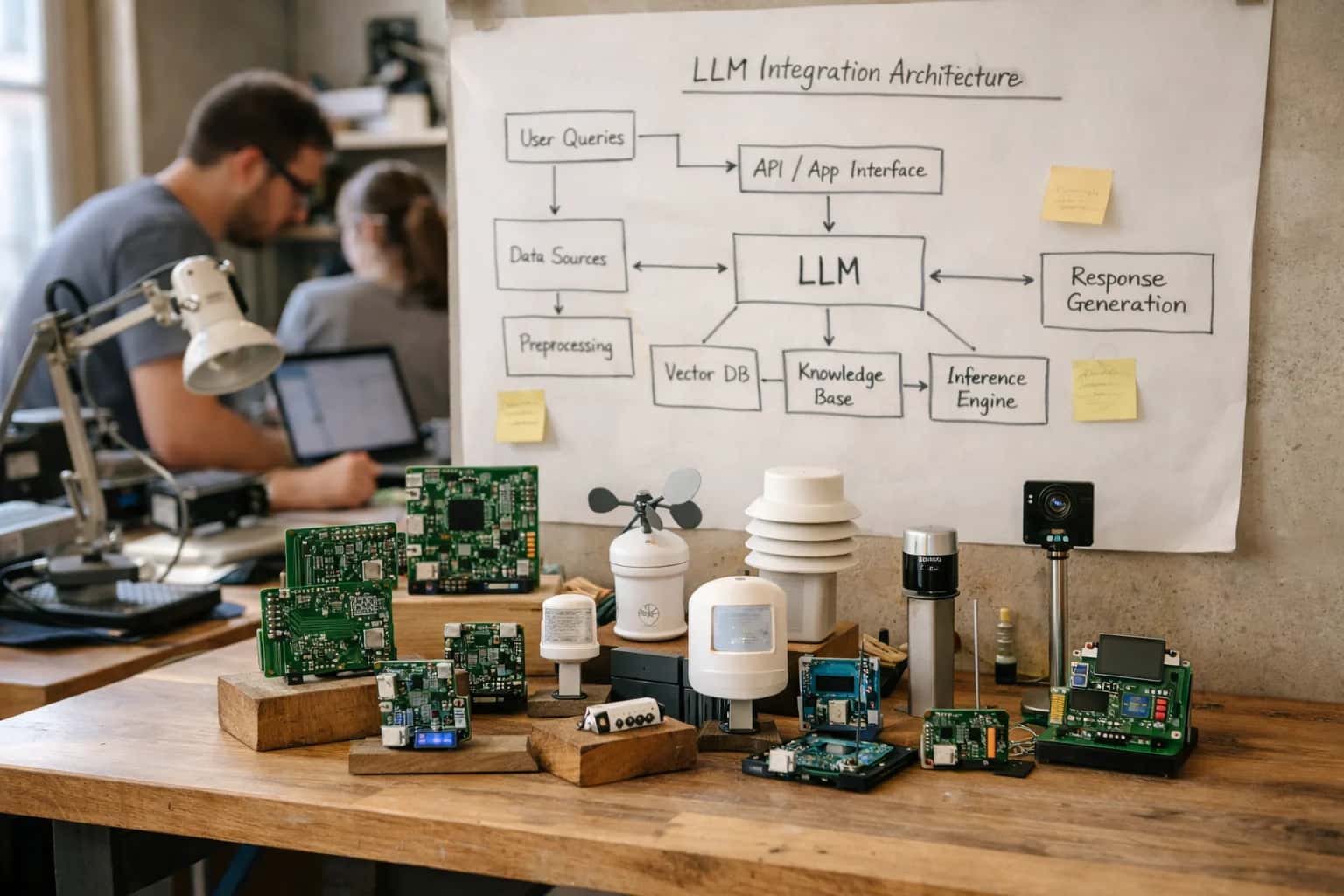
ARCHITECTURE & ROLLOUT
Where AI Fits in OpenText Magellan
Integrating AI with OpenText Magellan transforms analytics from descriptive dashboards into interactive, predictive, and explanatory intelligence.
Implementation typically follows a phased rollout: First, enable natural language querying over certified datasets, allowing business users to ask "Why did Q3 sales drop in the Northeast?" and receive a grounded answer pulling from Magellan's semantic models. Second, inject predictive and explanatory layers into existing dashboards, using LLMs to highlight anomalies, suggest root causes, and recommend next-best actions based on trend analysis. Third, automate narrative reporting by connecting AI to Magellan's report scheduler, transforming weekly performance data into executive summaries, complete with bullet points and visualized trends. Governance is critical; all AI-generated insights must respect Magellan's existing row-level security, data lineage, and audit trails to maintain compliance.
For production, we architect a secure middleware layer (often using Magellan's extensibility framework or a sidecar service) that handles prompt orchestration, context retrieval from Magellan datasets, and response logging. This keeps Magellan's core performance intact while adding AI capabilities. The rollout focuses on high-impact use cases like financial commentary automation, supply chain disruption explanation, and customer churn prediction narratives, where moving from static charts to actionable, language-based insights reduces time-to-insight from hours to minutes.
WHERE AI CONNECTS TO THE ANALYTICS PLATFORM
Key Integration Surfaces in Magellan
Natural Language Interaction Layer
Integrate LLMs directly into Magellan's reporting interfaces to enable conversational analytics. Users can ask questions in plain English about their data, and an AI agent can translate these queries into the appropriate Magellan API calls, data model filters, or SQL queries.
Key surfaces include:
- Report Builder: AI copilots that suggest visualizations, metrics, and filters based on a user's stated goal.
- Dashboard Consumption: Embedded Q&A widgets that allow executives to ask "why did this metric change?" and receive a narrative summary of contributing factors, pulling from underlying datasets and trend analyses.
- Alert Explanations: When a KPI alert triggers, an AI can immediately generate a short diagnostic report, citing recent data shifts or correlated events from connected systems.
This turns static dashboards into interactive, explanatory tools, reducing the need for manual data exploration and report writing.
EXTEND ANALYTICS WITH GENERATIVE INTELLIGENCE
High-Value AI Use Cases for Magellan
OpenText Magellan provides powerful analytics on content usage and process performance. Integrating LLMs transforms these insights from static dashboards into interactive, explanatory, and predictive tools. Below are key integration patterns to operationalize AI within your Magellan environment.
01
Natural Language Reporting & Q&A
Enable business users to ask questions of their Magellan data in plain English. An AI layer interprets queries, translates them to the appropriate Magellan API calls or SQL, and returns a narrative summary instead of just a chart.
Workflow: User asks "Why did contract review time spike last quarter?" → AI queries Magellan for relevant process metrics → LLM synthesizes data into a causal explanation, citing specific bottlenecks.
Self-Service Analytics
Reduces analyst dependency
02
Automated Insight Generation & Alerting
Move from scheduled reports to proactive intelligence. Configure AI agents to continuously monitor Magellan dashboards and data streams for anomalies, trends, or threshold breaches, then generate and route contextual alerts.
Workflow: Magellan detects a 40% drop in document approval velocity for a key department → AI agent is triggered → Agent analyzes related user activity and content metadata → Generates an alert email summarizing the likely cause and impacted records.
Batch → Real-time
Insight delivery
03
Predictive Process Optimization
Augment Magellan's historical analytics with LLM-driven forecasting and simulation. Use AI to predict future content volumes, process bottlenecks, or compliance risks based on trends, and recommend preemptive actions.
Workflow: Feed Magellan data on historical invoice processing times, volumes, and exception rates into an LLM with reasoning capabilities → Generate a forecast for month-end load → Recommend dynamic resource allocation or workflow rule adjustments to the ECM system.
Proactive Operations
Shifts from reactive to predictive
04
Contextual Data Enrichment for Analytics
Magellan analyzes structured metadata. Integrate an LLM to read the actual content of documents (contracts, correspondence, reports) and extract nuanced themes, sentiments, or obligations to create new, richer dimensions for analysis.
Workflow: As documents are ingested into OpenText Content Suite, an AI service extracts key clauses, parties, and dates → This enriched metadata is written back to the object model → Magellan analytics now include dashboards on "contract risk exposure by quarter" or "customer sentiment in support correspondence."
Unlocks Unstructured Data
For BI & reporting
05
Executive & Regulatory Narrative Drafting
Automate the creation of narrative summaries for compliance reports, board materials, or audit responses. AI synthesizes Magellan analytics on content governance, access patterns, and retention compliance into drafted narratives, which are then reviewed and finalized by humans.
Workflow: Triggered quarterly, an AI agent pulls Magellan data on records declared, legal holds applied, and access policy violations → Structures the data into a formatted report with an executive summary, key findings, and supporting evidence → Outputs a draft in Word/PDF for legal review.
Hours → Minutes
Report drafting time
06
Intelligent Agent for ECM Support & Training
Deploy a copilot trained on Magellan's data model and your specific ECM configuration. It can answer user questions about how to find analytics, interpret dashboard metrics, or troubleshoot data discrepancies, reducing IT support load.
Workflow: A new business analyst asks the agent, "How do I see the average storage cost per department?" → The agent queries Magellan's metadata to find the relevant report path and data source → Provides step-by-step guidance and explains the underlying metrics.
Reduces Support Tickets
For common how-to questions
PRACTICAL IMPLEMENTATION PATTERNS
Example AI-Augmented Magellan Workflows
These workflows illustrate how LLMs connect to Magellan's analytics engine and content repositories to automate insight generation, explain trends, and guide users—transforming raw data into actionable intelligence.
Trigger: A scheduled Magellan analytics job completes, generating a new dataset or dashboard snapshot for weekly sales, support, or operational KPIs.
Context Pulled: The workflow retrieves:
- The key metric results (e.g.,
total_revenue,ticket_volume,average_handle_time) and their week-over-week deltas. - The underlying Magellan data model context for each metric.
- The previous week's summary for comparison.
AI Action: An LLM agent is prompted to:
- Identify the top 3 significant changes (positive or negative).
- Generate a natural language explanation for each, referencing known seasonal factors or recent events from a connected knowledge base.
- Draft a concise, 3-paragraph executive summary highlighting key takeaways and suggested focus areas.
System Update: The generated summary is:
- Posted automatically to a designated Microsoft Teams channel or Slack.
- Attached as a narrative note to the Magellan dashboard or report object via API.
- Optionally, used to trigger a follow-up workflow in a connected system like ServiceNow to create a task for investigating a specific anomaly.
Human Review Point: Before broad distribution, the summary can be routed to a data steward or department head for a quick approval/edit via a simple web interface, ensuring accuracy and tone.
ARCHITECTING AI FOR ANALYTICS WORKLOADS
Typical Implementation Architecture
A production-ready AI integration for OpenText Magellan connects LLMs to your analytics data layer, enabling natural language interaction and predictive augmentation without disrupting core BI operations.
The integration is typically deployed as a middleware service that sits between Magellan's analytics engine and end-user applications. This service connects to Magellan's REST API or directly to the underlying data warehouse (e.g., Hadoop, Vertica, or a cloud data lake) to execute queries and retrieve datasets, KPIs, and pre-built report objects. A secure API gateway manages authentication, routing requests from chat interfaces, dashboards, or custom apps to the AI service, which uses a configured LLM (like Azure OpenAI or Anthropic Claude) to interpret natural language questions, generate SQL or MDX, and synthesize narrative explanations from result sets.
For a use case like "explain the 15% drop in North American Q3 sales," the workflow is: 1) A user asks the question via a Copilot-style interface embedded in a dashboard. 2) The AI service parses the query, identifies the relevant Magellan report or data model object (e.g., Sales_Fact table, Region_Dim), and retrieves the underlying data. 3) The LLM analyzes trends, performs causal inference against other datasets (like marketing spend or support tickets), and drafts a summary citing specific figures. 4) The response is returned with citations (e.g., "based on Report ID: SAL-2024-Q3") and can trigger the generation of a new Magellan visualization for deeper exploration. Governance is enforced via RBAC synced from Magellan, ensuring users only query data they are permitted to see, with all prompts and generated outputs logged to an audit trail.
Rollout follows a phased approach: start with a read-only, sandboxed connector to a single data mart for pilot users, focusing on explainability and trend summarization. Once validated, expand to predictive insights—using the LLM to suggest leading indicators or anomaly thresholds that can be fed back into Magellan's predictive modeling modules. The final architecture includes a human-in-the-loop review step for sensitive financial or operational narratives before broad sharing, and a feedback loop where user corrections improve the system's query understanding over time.
INTEGRATING LLMS WITH MAGELLAN ANALYTICS
Code and Payload Examples
Query Translation & Data Retrieval
This pattern uses an LLM to translate a user's natural language question into a structured query for Magellan's underlying data sources (e.g., Hadoop, SQL databases). The AI interprets intent, maps to known metrics, and generates executable code or API calls.
Example Workflow:
- User asks: "Show me content usage trends for Q3, broken down by department."
- LLM parses the request, identifies key dimensions (
time,department), and the metric (content usage). - System maps
content usageto the Magellan data model fielddocument_access_count. - A parameterized query is generated and executed.
python# Pseudocode for query generation from openai import OpenAI import magellan_client client = OpenAI() user_query = "Show me content usage trends for Q3, broken down by department." response = client.chat.completions.create( model="gpt-4", messages=[ {"role": "system", "content": "You translate questions into Magellan Analytics query parameters. Output JSON with 'metric', 'dimensions', 'filters'."}, {"role": "user", "content": user_query} ] ) # Parse LLM output into structured params query_params = json.loads(response.choices[0].message.content) # query_params might be: {"metric": "document_access_count", "dimensions": ["department", "quarter"], "filters": {"quarter": "Q3"}} # Execute query via Magellan API results = magellan_client.execute_query(**query_params)
AI-ENHANCED ANALYTICS WORKFLOWS
Realistic Time Savings and Business Impact
How integrating LLMs with OpenText Magellan transforms analytics from static reporting to interactive insight generation.
| Analytics Workflow | Before AI | After AI | Implementation Notes |
|---|---|---|---|
Ad-hoc report explanation | Analyst manually interprets charts, writes narrative | LLM generates plain-English summary of key trends and outliers | Uses Magellan data model; human analyst reviews for nuance |
Root cause analysis for KPI drift | Manual data slicing, hypothesis testing across multiple dashboards | Natural language query identifies correlated dimensions and suggests drivers | Integrates with Magellan's predictive models; requires clear data lineage |
Executive briefing preparation | Hours spent consolidating slides from multiple reports | AI drafts narrative summary with cited metrics from live Magellan datasets | Governed by pre-approved narrative templates and data access controls |
Anomaly detection and alert triage | Scheduled report reviews or threshold-based alerts | AI monitors Magellan streams, flags unusual patterns with contextual explanation | Reduces false positives; integrates with ITSM platforms like ServiceNow for ticketing |
Predictive insight generation | Data scientist builds and maintains custom models for specific forecasts | LLM suggests predictive questions and interprets model outputs for business users | Augments, does not replace, data science team; focuses on 'what-if' scenario explanation |
User adoption and training support | Static documentation, scheduled training sessions for new report consumers | In-app copilot answers 'how to' questions about Magellan reports and data sources | Built on Magellan's semantic layer; reduces support ticket volume for analytics team |
Compliance and audit reporting | Manual compilation of report usage logs and data access audits | AI summarizes user activity, access patterns, and data lineage for compliance reviews | Leverages Magellan's audit APIs; generates narratives for regulator submissions |
ARCHITECTING CONTROLLED AI FOR ANALYTICS
Governance, Security, and Phased Rollout
Deploying AI within OpenText Magellan requires a strategy that respects data governance, enforces security, and delivers incremental value.
A production integration typically connects via Magellan's REST API or Data Hub, treating the platform as the system of record for analytics metadata and content usage data. AI agents are deployed as a separate, governed layer that queries Magellan datasets, metadata repositories (like otmm for content), and process performance logs. This architecture ensures a clear separation of concerns: Magellan handles data persistence and core analytics, while the AI layer provides natural language interfaces, explanation, and predictive augmentation. All AI-generated insights, such as trend explanations or predictive alerts, should be written back to Magellan as new annotations, dashboard objects, or custom report assets, creating a full audit trail within the platform.
Security is paramount, especially when AI models process sensitive operational data. Implementations should enforce role-based access control (RBAC) inheritance, where the AI layer respects Magellan's existing user permissions and data security labels. Queries from the AI agent must be scoped to the user's authorized datasets and content repositories. For highly regulated data, consider a data minimization pattern, where only aggregated, anonymized, or metadata is sent to external LLM APIs, with sensitive PII or PHI kept entirely within the Magellan and private cloud environment. All AI interactions should be logged to Magellan's audit framework or a dedicated LLMOps platform for traceability.
A phased rollout mitigates risk and builds organizational trust. Start with a read-only pilot focused on natural language querying of non-sensitive, pre-aggregated reports. This demonstrates value without altering core data. Phase two introduces explanatory AI, where the system generates plain-English summaries of complex trend charts or correlation analyses, helping business users understand the 'why' behind the data. The final phase integrates predictive and prescriptive insights, such as forecasting content archive growth or identifying at-risk process workflows, triggering Magellan alerts or automated actions. Each phase should include parallel human review cycles and establish clear metrics for accuracy and user adoption before proceeding.
Governance extends to the AI models themselves. Establish a review board to validate prompts, especially those used for generating executive summaries or predictive statements from Magellan data. Implement drift detection to monitor if the AI's interpretations of data trends remain consistent as underlying Magellan datasets evolve. For a comprehensive approach to managing these AI operations, consider our guide on AI Governance and LLMOps Platforms. This controlled, incremental approach ensures AI augments Magellan's robust analytics foundation without compromising the governance and security it was designed to provide.
Enabling Efficiency, Speed & Accuracy
Intelligent Analysis, Decision & Execution
We build AI systems for teams that need search across company data, workflow automation across tools, or AI features inside products and internal software.
Talk to Us
Search across company data
Give teams answers from docs, tickets, runbooks, and product data with sources and permissions.
Useful when people spend too long searching or get different answers from different systems.
Enterprise searchRAGPermissions
Read more
Automate internal workflows
Use AI to route work, draft outputs, trigger actions, and keep approvals and logs in place.
Useful when repetitive work moves across multiple tools and teams.
AI agentsWorkflow automationGovernance
Read more
Add AI to products and internal tools
Build assistants, guided actions, or decision support into the software your team or customers already use.
Useful when AI needs to be part of the product, not a separate tool.
AI integrationDecision supportModel routing
Read moreAI INTEGRATION FOR OPENTEXT MAGELLAN
Frequently Asked Questions
Common technical and strategic questions about extending OpenText Magellan analytics with LLM capabilities for natural language reporting, trend explanation, and predictive insights.
The integration typically connects at two primary points:
- Data Ingestion & Enrichment: LLMs are used to pre-process and enrich unstructured data (e.g., customer feedback, support tickets, document content) before it's indexed by Magellan. This can involve sentiment analysis, entity extraction, and summarization, creating new structured fields for more nuanced analytics.
- Analytics Output & Interaction: After Magellan generates a report, dashboard, or statistical insight, an LLM agent is triggered via API to:
- Explain the 'why' behind a trend or anomaly in plain language.
- Generate narrative summaries of complex data visualizations.
- Answer follow-up questions about the report using a RAG (Retrieval-Augmented Generation) system grounded in the underlying dataset and metadata.
The connection is made via secure REST APIs. The LLM service calls Magellan APIs to fetch dataset metadata, query results, or model outputs, processes them, and returns the natural language insight, often as an embeddable widget within the existing Magellan interface.

About the author
Prasad Kumkar
CEO & MD, Inference Systems
Prasad Kumkar is the CEO & MD of Inference Systems and writes about AI systems architecture, LLM infrastructure, model serving, evaluation, and production deployment. Over 5+ years, he has worked across computer vision models, L5 autonomous vehicle systems, and LLM research, with a focus on taking complex AI ideas into real-world engineering systems.
His work and writing cover AI systems, large language models, AI agents, multimodal systems, autonomous systems, inference optimization, RAG, evaluation, and production AI engineering.
LinkedIn
Limited slotsGet a Free AI Consultation
Partnered with leading AI, data, and software stack.





How We Work
Custom AI workflows for your Business
One-fit-all AI don't work for modern businesses. At Inferensys, we aim to understand your business & custom requirements; which we use to define most efficient agentic workflows, the data, and the tools for your business.
01
Review the use case
We understand the task, the users, and where AI can actually help.
Read more02
Pick the right approach
We define what needs search, automation, or product integration.
Read more03
Build the first useful version
We implement the part that proves the value first.
Read more04
Improve from there
We add the checks and visibility needed to keep it useful.
Read moreThe first call is a practical review of your use case and the right next step.
Talk to Us