Optimize SAP EAM maintenance schedules with AI that balances asset criticality, resource constraints, and regulatory calendars to reduce downtime and overtime costs.
Integrating AI into SAP EAM transforms static maintenance calendars into dynamic, constraint-aware schedules that balance asset criticality, resource availability, and business impact.
AI scheduling agents connect to SAP EAM via its core APIs for PM Orders, Resources, and Functional Locations. The primary integration surfaces are the Maintenance Planning (IW31/IW32) and Capacity Planning (CM25) transactions, where AI injects optimized proposals. The agent consumes data from EQUI (Equipment), CRHD (Work Center), RESB (Reservation/BOM), and AFVC (Operation) tables to model the scheduling problem, respecting existing business rules and custom user exits (CMOD).
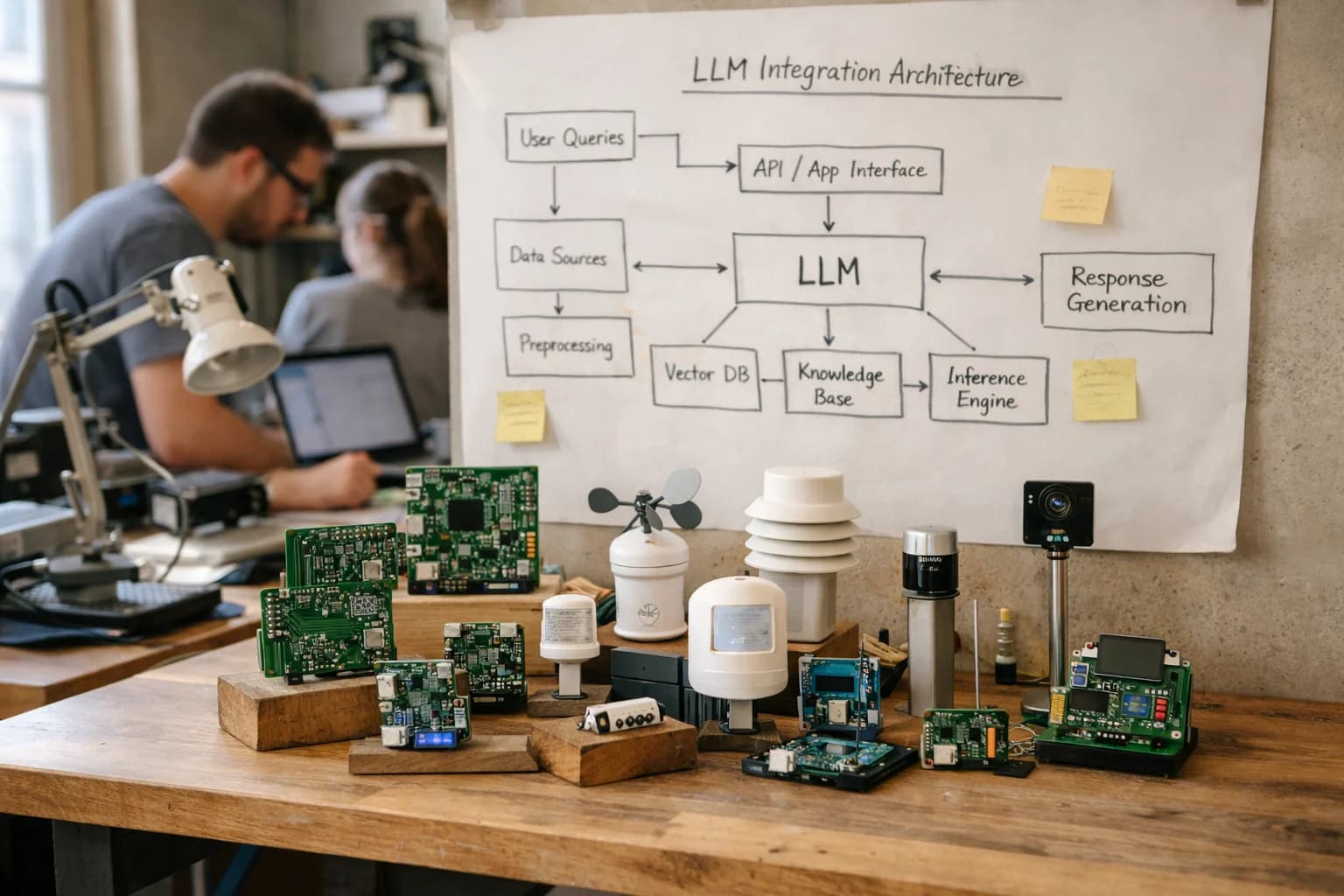
A production implementation typically involves a middleware layer (e.g., SAP BTP, CPI) that hosts the AI scheduler. This service listens for events like a planner releasing a work order package or a resource becoming unavailable. It then calls the AI model—which evaluates thousands of permutations—and returns a ranked list of schedule changes via BAPI (BAPI_ALM_ORDER_MAINTAIN). Planners review and approve changes in the SAP GUI or Fiori launchpad, maintaining human-in-the-loop governance. High-impact use cases include turnaround optimization, where AI sequences thousands of tasks across shared resources to minimize plant downtime, and reactive rescheduling, where AI instantly re-plans the week when a critical technician calls in sick.
Rollout is phased, starting with a pilot asset group or plant. The AI is initially configured in a 'recommendation-only' mode, logging its proposals versus human decisions to tune its cost functions and constraints. Key to governance is maintaining a full audit trail in SAP itself—every AI-suggested change creates a Change Document and can be configured to require a specific approval workflow before the PM Order dates are updated. This ensures compliance and allows for continuous feedback, turning the AI into a co-pilot that learns the unique operational rhythms of your business. For a deeper look at connecting AI models to SAP's operational data, see our guide on AI Integration with SAP S/4HANA EAM.
WHERE AI AGENTS CONNECT TO DRIVE MAINTENANCE SCHEDULING
Key SAP EAM Modules and Surfaces for AI Integration
Core Work Order and Notification Management
The SAP Plant Maintenance (PM) module is the primary surface for AI-driven scheduling. AI agents interact with key objects to automate and optimize the maintenance backlog.
Key Integration Points:
Maintenance Notifications (IW21/IW22): AI can automatically create or enrich notifications by analyzing sensor alerts, technician notes, or external system feeds, classifying priority and suggested damage codes.
Maintenance Orders (IW31/IW32): This is the core scheduling object. AI can analyze order pools to recommend optimal start dates, resource assignments (crafts, work centers), and sequences based on asset criticality, parts availability, and regulatory calendars.
Order Confirmations (IW41/IW42): Post-execution, AI can analyze confirmation data (actual labor, parts used, downtime) to refine future scheduling models and validate predictive maintenance forecasts.
Integrating here allows AI to directly influence the planner's backlog, proposing schedules that balance preventive, corrective, and predictive work while respecting real-world constraints.
PRACTICAL INTEGRATION PATTERNS
High-Value AI Scheduling Use Cases for SAP EAM
AI transforms SAP EAM from a reactive maintenance recorder to a proactive scheduling engine. These use cases show where to connect AI models to SAP PM (Plant Maintenance) data and workflows to balance resources, regulatory calendars, and asset criticality.
01
Dynamic PM Frequency Optimization
Replace static time-based PM plans with AI-driven condition-based schedules. Models analyze SAP PM work order history, meter readings, and IoT sensor streams to predict optimal intervals, reducing unnecessary maintenance by 15-30% while preventing failures.
Weeks -> Real-time
Schedule adjustment
02
Turnaround & Shutdown Sequencing
Optimize complex plant shutdowns by AI-sequencing thousands of SAP PM maintenance orders. Models balance resource constraints, parts availability, and critical path dependencies, simulating scenarios to minimize total downtime duration and labor overtime.
1-2 Sprints
Planning cycle
03
Regulatory Calendar Integration
Automate compliance-driven scheduling. AI agents monitor SAP PM for assets subject to EPA, OSHA, or ISO standards, parse regulation text, and automatically generate and prioritize inspection work orders within the required windows, avoiding compliance gaps.
Manual -> Automated
Audit readiness
04
Skilled Labor Forecasting & Dispatch
Predict craft (e.g., electrician, welder) demand using SAP PM backlog and preventive maintenance plans. AI forecasts weekly needs, identifies shortages, and optimally dispatches available technicians and contractors, improving workforce utilization by ~20%.
Hours -> Minutes
Resource planning
05
Spare Parts-Aware Scheduling
Eliminate scheduled work stoppages. AI cross-references SAP PM work orders with SAP EWM/MM inventory levels and vendor lead times. It reschedules or kits jobs based on parts availability, or triggers automated procurement via SAP Ariba integration.
Batch -> Real-time
Parts validation
06
Emergency Work Integration & Re-planning
Handle break-in work intelligently. When a high-priority notification is created in SAP PM, AI evaluates its impact on the existing schedule, dynamically reassigns resources from lower-criticality tasks, and recalculates downstream dates, minimizing total disruption.
Same Day
Schedule recovery
SAP EAM INTEGRATION PATTERNS
Example AI-Augmented Scheduling Workflows
These workflows demonstrate how AI agents can be integrated into SAP EAM's Plant Maintenance (PM) and Enterprise Asset Management (EAM) modules to automate and optimize maintenance scheduling. Each pattern connects to specific SAP objects, such as `IW33` (Work Order), `IP30` (Maintenance Plan), and `IL01` (Notification), to drive tangible reductions in downtime and overtime.
Trigger: SAP EAM's IP30 maintenance plan generates a standard time-based work order (IW33).
Context Pulled: An AI agent queries the SAP AFKO (Order Header) and AFVC (Operation) tables for the planned order, then cross-references:
Real-time production schedule from SAP PP/DS or MES integration.
Current resource availability from CRHD (Work Center) and PLPO (Resource Planning).
Open backlog of corrective orders from AUFK (Order Master).
Agent Action: A lightweight model evaluates the cost of downtime vs. the risk of deferral. It proposes an optimal start date and time, shifting the order within a predefined compliance window.
System Update: The agent calls the BAPI BAPI_ALM_ORDER_MAINTAIN to adjust the IW33 basic dates and AFVC operation dates. It also creates a QM01 notification to document the reason for rescheduling.
Human Review Point: The maintenance planner receives an alert in SAP Business Workplace. The revised schedule is highlighted in the IW38 (Order List) for final approval before the planner releases the order.
A PRODUCTION BLUEPRINT
Implementation Architecture: Connecting AI to SAP EAM
A practical guide to architecting AI agents that integrate directly with SAP EAM's Plant Maintenance (PM) and Enterprise Asset Management (EAM) modules for intelligent maintenance scheduling.
A production-ready AI integration for SAP EAM is built on a secure, event-driven middleware layer that connects the SAP system to external AI services. The core pattern involves using SAP's Plant Maintenance (PM) Notification and Order APIs (like BAPI and OData services) as the primary integration points. AI agents are triggered by events such as a new sensor alert, a completed inspection, or a scheduled planning run. These agents consume structured data from SAP PM objects—like EQUI (Equipment), IFLO (Functional Location), and AUFK (Order)—alongside unstructured data from LONGTEXT fields or attached documents. The agents then call external AI models (e.g., for failure prediction or resource optimization) and write actionable recommendations back into SAP as new maintenance notifications, updated order schedules, or modified preventive maintenance plans.
For maintenance scheduling, the AI workflow typically follows: 1) Data Ingestion: Pull historical work orders, resource calendars (CRHD), material availability (MARC), and asset criticality from SAP. 2) Model Execution: Run optimization models that balance constraints like technician skills, parts lead times, regulatory compliance windows, and production schedules. 3) Action Generation: The AI outputs a proposed schedule, which is formatted into SAP-compliant transactions. 4) Human-in-the-Loop: Proposed schedules are often routed through SAP's workflow (SWF) for planner approval before the system automatically creates or reschedules PM Orders. This keeps planners in control while automating the heavy computational lift, turning multi-day planning exercises into same-day operations.
Governance and rollout require careful planning. Implement a phased deployment, starting with a pilot asset class or plant. Use SAP's authorization objects (e.g., I_TOOL) to control which AI agents can create or change orders. All AI-generated actions should write to a custom user exit or Business Add-In (BAdI) for auditability, logging the source, confidence score, and rationale. For scalability, deploy the integration middleware (e.g., using SAP Cloud Integration or a custom service on Azure/AWS) to handle queueing, retries, and API rate limits. This architecture ensures the AI augments the existing SAP EAM investment without disrupting validated core processes, providing a clear path from pilot to plant-wide optimization. For related architectural patterns, see our guide on AI Integration with SAP S/4HANA EAM.
INTEGRATION PATTERNS FOR SAP EAM
Code and Payload Examples
Automating Work Order Creation
When AI identifies a maintenance need—like a predicted failure or a condition-based trigger—it must create a corresponding work order in SAP. The standard approach is to call the BAPI_ALM_ORDER_MAINTAIN function module. This BAPI handles the complex business logic for order types, status management, and object linkages.
A typical payload includes the order header (type, priority, planner group), operations (with durations and work centers), and component reservations. The AI system should pre-populate the SHORT_TEXT with a clear, machine-generated description and reference the triggering asset via the EQUIPMENT or FUNCTIONAL_LOCATION fields. The response includes the created order number (ORDERID) for tracking.
abap
" Example BAPI call structure (pseudocode)
DATA: lt_order_header TYPE TABLE OF bapi_alm_order_header,
lt_order_operations TYPE TABLE OF bapi_alm_order_operation,
lt_return TYPE TABLE OF bapiret2.
lt_order_header = VALUE #( (
order_type = 'PM01' " Preventive Maintenance
planner_group = 'MECH' " Planner Group
priority = '2' " High
short_text = lv_ai_generated_description
) ).
lt_order_operations = VALUE #( (
operation = '0010'
work_cntr = 'WORKCENTER_EAST'
description = 'Inspect and replace bearing'
duration_normal = 4 " Hours
) ).
CALL FUNCTION 'BAPI_ALM_ORDER_MAINTAIN'
EXPORTING
i_order_header = lt_order_header
i_order_operations = lt_order_operations
IMPORTING
e_orderid = lv_order_number
TABLES
et_return = lt_return.
" Commit the transaction if return messages are successful
CALL FUNCTION 'BAPI_TRANSACTION_COMMIT'.
AI-Enhanced Scheduling in SAP EAM
Realistic Time Savings and Operational Impact
This table illustrates the operational impact of integrating AI into SAP EAM's maintenance scheduling workflows, focusing on tangible time savings and process improvements for planners and reliability engineers.
Metric
Before AI
After AI
Notes
Weekly Schedule Generation
4–8 hours manual planning
1–2 hours with AI-assisted optimization
AI balances asset criticality, resource calendars, and parts availability
Emergency Work Order Integration
Manual reprioritization, next-day impact
Dynamic rescheduling, same-day absorption
AI re-sequences backlog to accommodate urgent tasks
Resource Conflict Resolution
Reactive discovery during dispatch
Proactive detection during planning
AI flags skill, tool, or location conflicts before schedule lock
Preventive Maintenance (PM) Optimization
Fixed time-based intervals
Condition & usage-based interval adjustments
AI analyzes sensor and work history to right-size PM frequency
Regulatory Calendar Compliance
Manual tracking of inspection due dates
Automated alignment with scheduling constraints
AI ensures critical inspections are scheduled within compliance windows
Overtime Forecast & Justification
Reactive analysis post-overtime
Proactive forecast based on backlog & capacity
AI provides data-driven insights for labor budget planning
Shutdown/Turnaround Scenario Planning
Weeks of manual sequencing and simulation
Days with AI-powered scenario modeling
AI evaluates thousands of task sequences to minimize total downtime
ARCHITECTING FOR CONTROL AND SCALE
Governance, Security, and Phased Rollout
A production AI integration for SAP EAM requires a governance-first approach, ensuring data security, process integrity, and controlled adoption.
A secure integration architecture typically involves a dedicated middleware layer that sits between your SAP EAM instance and the AI models. This layer handles authentication via SAP's OAuth or certificate-based RFC connections, manages prompt and data payloads, and enforces role-based access control (RBAC) by validating user permissions against SAP USR02 and AGR_USERS tables before any AI action. All data exchanges should be logged to a secure audit trail, linking AI-generated schedule suggestions back to the originating IW33 (Order) or IP30 (Plan) records for full traceability.
We recommend a phased rollout to de-risk implementation and build organizational trust. Phase 1 could target non-critical, repetitive preventive maintenance (PM01) orders for a single plant or work center (CRHD), using AI to suggest timing adjustments based on resource calendars (CRCA) and parts availability (MARD). Phase 2 expands to include condition-based triggers from SAP Predictive Maintenance and Service or external IoT platforms, automatically creating IW21 notifications. Phase 3 introduces multi-asset, site-wide optimization, balancing regulatory calendar constraints (TQ01) and asset criticality rankings to generate a proposed weekly schedule for planner review and approval in IP10.
Governance is maintained through a human-in-the-loop approval step before any AI-suggested schedule is committed to SAP. Planners review, adjust, and formally release the optimized plan. This creates a feedback loop where planner overrides are captured to continuously refine the AI's logic. For sensitive industries, the entire pipeline—from data extraction to model inference—can be deployed within your private cloud or VPC, ensuring that asset performance data and maintenance strategies never leave your controlled environment.
Enabling Efficiency, Speed & Accuracy
Intelligent Analysis, Decision & Execution
We build AI systems for teams that need search across company data, workflow automation across tools, or AI features inside products and internal software.
IMPLEMENTATION DETAILS
Frequently Asked Questions
Common technical and operational questions about integrating AI into SAP EAM for intelligent maintenance scheduling.
The integration uses a secure middleware layer, typically built with an API gateway (like MuleSoft or Apigee), to orchestrate communication.
Typical Data Flow:
Trigger: A scheduled job, webhook from a condition monitoring system, or a user action in a custom Fiori app initiates the process.
Data Retrieval: The AI agent calls SAP EAM's OData APIs (e.g., /sap/opu/odata/sap/API_MAINTENANCEORDER) to pull relevant context:
Open work orders and their priorities
Resource availability (technicians, skills, calendars from API_MAINTENANCERESOURCE)
Spare parts stock levels
Asset criticality and operational calendars
Processing: The agent uses this context with an LLM (like GPT-4 or Claude) and/or optimization algorithms to generate a proposed schedule.
Update: The agent calls the API_MAINTENANCEORDER API to update the ScheduledStart and ScheduledEnd dates, or creates a change document for planner review.
Security: All access is governed by SAP roles (PFCG) and uses service accounts with minimal required permissions. The middleware logs all requests for a full audit trail.
About the author
Prasad Kumkar
CEO & MD, Inference Systems
Prasad Kumkar is the CEO & MD of Inference Systems and writes about AI systems architecture, LLM infrastructure, model serving, evaluation, and production deployment. Over 5+ years, he has worked across computer vision models, L5 autonomous vehicle systems, and LLM research, with a focus on taking complex AI ideas into real-world engineering systems.
His work and writing cover AI systems, large language models, AI agents, multimodal systems, autonomous systems, inference optimization, RAG, evaluation, and production AI engineering.
Partnered with leading AI, data, and software stack.
How We Work
Custom AI workflows for your Business
One-fit-all AI don't work for modern businesses. At Inferensys, we aim to understand your business & custom requirements; which we use to define most efficient agentic workflows, the data, and the tools for your business.
The first call is a practical review of your use case and the right next step.