The integration layer is the critical bridge between your EAM system (IBM Maximo, SAP EAM, Infor EAM, Asset Panda) and AI services. It must handle real-time events like new sensor alerts or completed inspections, batch processes for historical data analysis, and secure, governed API calls. This involves setting up an API gateway to manage authentication and routing, an event streaming pipeline (using Kafka, AWS Kinesis, or Azure Event Hubs) to ingest IoT data and system events, and a workflow orchestrator (like n8n, Apache Airflow, or a cloud-native service) to sequence multi-step AI tasks, such as fetching asset history, calling a prediction model, and creating a work order.

Integration
AI for EAM System Integration with AI
A technical blueprint for building robust, scalable integration middleware to connect Enterprise Asset Management (EAM) systems like IBM Maximo, SAP EAM, and Infor EAM with external AI/ML platforms for predictive maintenance, automated workflows, and intelligent asset operations.
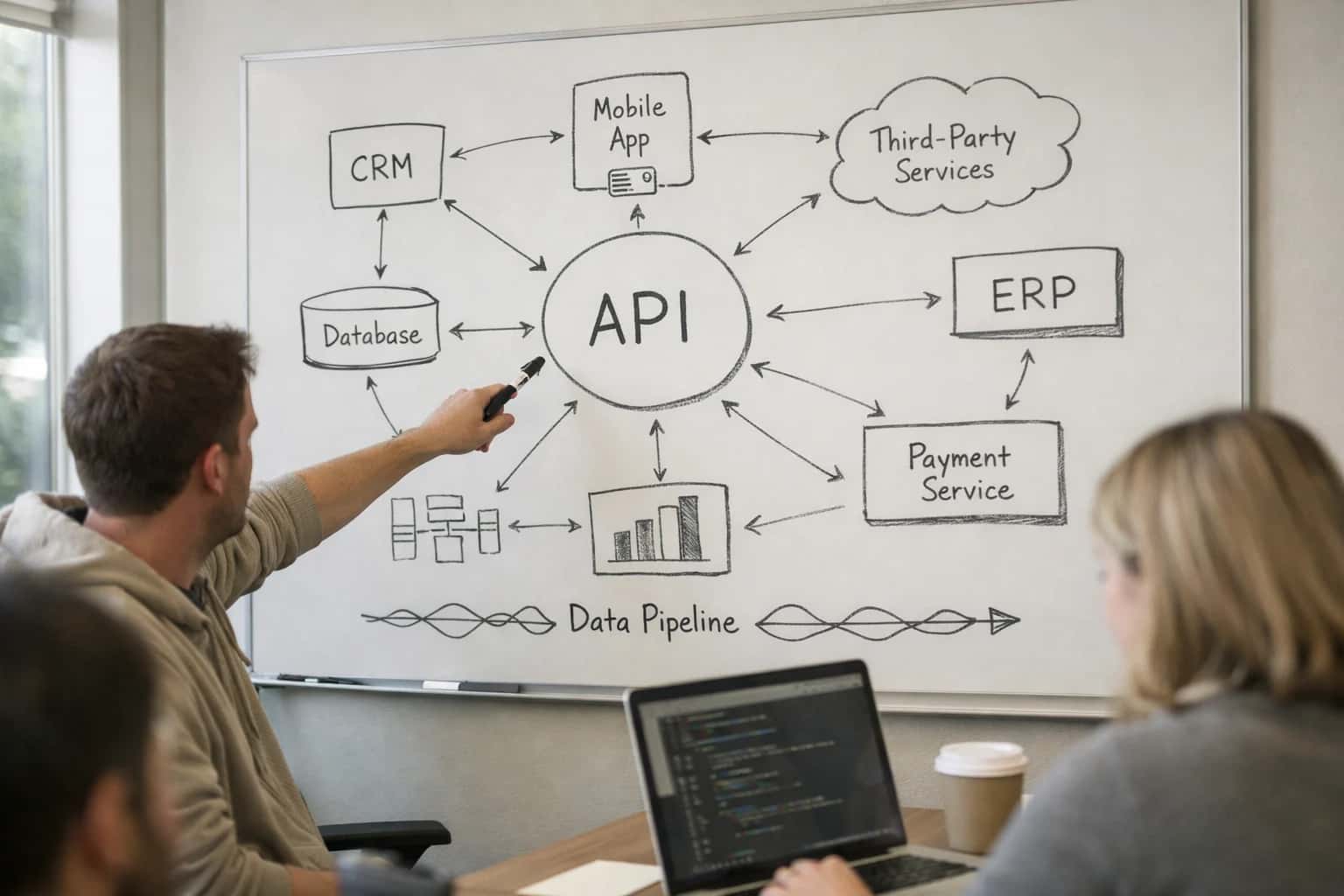
ARCHITECTURE BLUEPRINT
Building the Integration Layer for AI-Enabled EAM
A technical guide to designing the middleware that connects AI models to your EAM's operational workflows.
For production, the architecture must ensure idempotency (to prevent duplicate work orders from the same alert), graceful degradation (falling back to rule-based logic if the AI service is unavailable), and full audit trails. A typical pattern is to use the EAM's native webhooks or a scheduled poller to detect new NOTIFICATION records in SAP PM or WORKORDER status changes in Maximo. These events trigger an AI agent that retrieves related ASSET history and FAILURECODE data via the EAM's REST API, passes it to a hosted model for analysis, and then uses the EAM's API to update an ASSETHEALTHSCORE or create a PREDICTIVEWO with a recommended priority and task list.
Rollout should be phased, starting with a single asset class or failure mode. Governance is key: establish a human-in-the-loop approval step for the first 100 AI-generated work orders, log all model inputs/outputs for traceability, and implement RBAC so AI suggestions are only actionable by authorized planners. This controlled approach de-risks the integration, builds trust with maintenance teams, and creates a clear path to scale. For a deeper look at connecting specific data sources, see our guide on AI Integration for IBM Maximo IoT Data.
ARCHITECTURE PATTERNS
Integration Touchpoints Across Leading EAM Platforms
The Core Automation Surface
Work order and notification APIs are the primary integration point for AI-driven maintenance automation. This is where AI agents read incoming alerts and create, update, or prioritize corrective actions.
Key Integration Patterns:
- Event Ingestion: Consume notifications from SAP PM (
/sap/opu/odata/sap/API_MAINTNOTIFICATION), IBM Maximo'sMXWONOTIFobject, or Infor EAM's event webhooks to trigger AI triage. - Intelligent Creation: Use AI to analyze failure descriptions, sensor readings, or technician photos, then automatically generate detailed work orders with suggested tasks, required skills, and linked procedures via the platform's REST API.
- Dynamic Prioritization: Call the EAM API to re-prioritize the work order backlog in real-time based on AI-calculated asset criticality, predicted downtime cost, or parts availability.
This layer turns AI insights into executable maintenance operations, reducing mean time to repair (MTTR) and manual planning overhead.
EAM INTEGRATION PATTERNS
High-Value AI Use Cases Powered by Robust Integration
A resilient integration layer is the foundation for scalable AI in asset management. These patterns show how to connect AI models to core EAM workflows, turning data into automated, intelligent action.
01
Event-Driven Work Order Automation
Stream IoT sensor alerts, inspection photos, or manual reports into a central queue. An AI agent analyzes the event, classifies the issue, and uses the EAM API to create a pre-populated work order with suggested priority, craft, and parts. This moves from batch review to real-time response.
Batch -> Real-time
Response mode
02
Predictive Maintenance Alert Integration
Operationalize external ML platform outputs (e.g., AWS SageMaker, Azure ML) by building a pipeline that ingests failure prediction scores. The integration middleware creates notifications or condition-based PMs in the EAM, linking predictions to the asset record and triggering predefined mitigation workflows for planners.
Proactive Alerts
Output
03
Intelligent Spare Parts Synchronization
Connect AI-driven inventory optimization models to the EAM's parts & stores modules. The integration syncs recommended reorder points, kitting suggestions, and criticality flags back into the EAM, ensuring the system-of-record reflects AI-calculated min/max levels and supports just-in-time maintenance.
Reduce Stockouts
Primary goal
04
Unified Asset Health Scoring
Build a composite asset health index by aggregating data from the EAM (work history, costs), IoT platforms, and external sources. The integration service calculates and writes a live health score to a custom EAM object or field, enabling prioritized dashboards and automated work queue generation for reliability engineers.
Single Source of Truth
Result
05
Compliance Workflow Orchestration
Use AI to monitor EAM data against regulatory rules (e.g., environmental permits, safety intervals). The integration layer triggers compliance tasks, generates audit-ready documentation, and updates statuses within the EAM's workflow engine, ensuring closed-loop tracking and reducing manual oversight.
Automated Audits
Workflow output
06
Mobile-First Field Data Enrichment
Augment EAM mobile inspection data capture. As technicians submit photos or notes via mobile, the integration calls vision or NLP APIs to analyze images for defects or extract structured data from text. Results are appended to the work order in near real-time, reducing backend review time.
Enriched Field Data
Outcome
ARCHITECTURE PATTERNS
End-to-End AI Integration Workflow Examples
These workflows illustrate how to build robust, scalable middleware between your EAM system and AI platforms, covering event streaming, API orchestration, and error handling for production reliability.
This pattern processes real-time sensor data to create actionable maintenance records in the EAM.
- Trigger: An IoT platform (e.g., PTC ThingWorx, Siemens MindSphere) publishes a telemetry event to a message queue (e.g., Apache Kafka, AWS Kinesis) when an asset's vibration reading exceeds a dynamic threshold.
- Context/Data Pulled: The integration service consumes the event, which includes the asset tag and sensor payload. It calls the EAM's REST API (e.g.,
GET /maximo/oslc/os/mxasset?...) to fetch the asset's hierarchy, warranty status, and current open work orders. - Model/Agent Action: A pre-trained vibration analysis model (hosted on SageMaker or Azure ML) classifies the fault (e.g.,
imbalance,bearing_wear). An agent uses this classification, plus the asset context, to draft a work order description, determine priority, and suggest a required craft. - System Update: The service calls the EAM API (e.g.,
POST /maximo/oslc/os/mxwodetail) to create a work order with the AI-generated details, linking it to the asset. It logs the prediction, input data, and resulting work order ID to a traceability database. - Human Review Point: The work order is created in a
WAITAPPROVALstatus, routed to a planner's queue in the EAM. The planner reviews the AI's recommendation before releasing it to the schedule.
BUILDING RESILIENT MIDDLEWARE FOR EAM-AI WORKFLOWS
Core Integration Architecture: Event Streaming, API Gateway, and State Management
A practical blueprint for connecting AI agents to EAM systems using scalable, fault-tolerant integration patterns.
Production AI integrations for EAM platforms like IBM Maximo, SAP EAM, or Infor EAM require a middleware layer that handles three core concerns: event ingestion, secure API orchestration, and stateful workflow management. This architecture typically involves:
- Event Streaming: Capturing changes from EAM modules (e.g., new work orders in Maximo's
WOTRACKtable, sensor alerts in SAP PM notifications) via database CDC, platform webhooks, or message queues like Kafka. - API Gateway: A centralized service (using Kong, Apigee, or a custom service) that manages authentication, rate limiting, and routing between AI agents and the EAM's REST/SOAP APIs (e.g., Maximo's MBO API, SAP's OData services).
- State Management: A persistent store (often a database like PostgreSQL) that tracks the execution state of multi-step AI workflows—such as a predictive maintenance alert that triggers a parts check, creates a work order, and awaits planner approval—ensuring idempotency and recovery from failures.
For example, an AI agent analyzing vibration data to predict pump failure would follow this flow:
- An IoT platform publishes an anomaly event to a
workorder-requestsstream. - The integration gateway consumes the event, enriches it with asset context from the EAM's
ASSETAPI, and calls a predictive model endpoint. - The AI service returns a confidence score and recommended action (e.g.,
"Create Priority 2 Work Order"). - The gateway uses the EAM's
WOSERVICEAPI to create the work order, linking the prediction metadata to theWONUMrecord. - A state record is updated to track this workflow, enabling future steps like checking for spare parts via the
INVENTORYmodule or escalating if the work order is not assigned within a SLA. This pattern keeps the core EAM system agnostic to the AI complexity while ensuring all actions are auditable and reversible.
Governance and rollout require careful planning:
- Error Handling: Implement dead-letter queues for failed API calls to the EAM (e.g., during scheduled downtime) with automatic retry logic.
- Audit Trails: Log all AI-originated transactions (event ID, EAM record ID, user context) to a separate audit database for compliance and model feedback loops.
- Phased Activation: Start with read-only AI agents for analytics and recommendation (e.g., asset health scoring) before progressing to agents that write back to the EAM (e.g., auto-creating inspections). Use feature flags in the gateway to control agent permissions by environment or asset class.
- For teams managing this complexity, our service for [/integrations/enterprise-asset-management-platforms/ai-integration-for-eam-platforms-in-manufacturing](integrating AI with manufacturing EAM) provides a proven framework. Similarly, understanding the [/integrations/api-management-and-gateway-platforms](API gateway patterns) is critical for securing and scaling these integrations.
ARCHITECTURE PATTERNS
Integration Code & Payload Examples
Streaming Work Order & Sensor Data
EAM systems generate critical events via webhooks or message queues. A robust integration listens for these events, enriches them with external context, and routes them to AI services for real-time analysis.
Common Triggers:
workorder.status.changedmeterreading.createdfailure.reportedinspection.completed
Integration Flow:
- EAM webhook posts JSON payload to your API gateway.
- Gateway validates, enriches with asset history from a vector store.
- Payload is queued for AI processing (e.g., anomaly detection, priority scoring).
- AI service returns a recommendation, triggering a callback to update the EAM record.
This pattern keeps the EAM as the system of record while enabling low-latency, AI-augmented decision-making.
EAM WORKFLOW TRANSFORMATION
Realistic Operational Impact of a Robust AI Integration Layer
How a well-architected integration layer between your EAM system and AI platforms changes daily operations for maintenance planners, reliability engineers, and technicians.
| Workflow / Metric | Before AI Integration | After AI Integration | Implementation Notes |
|---|---|---|---|
Work Order Prioritization | Manual review of backlog based on due date or severity | AI-assisted scoring based on asset criticality, failure probability, and downtime cost | Human planner makes final decision; AI provides ranked list with reasoning |
Preventive Maintenance Schedule Adjustment | Calendar-based intervals, manually updated after failures | Dynamic intervals suggested by AI analyzing sensor trends and work history | PM master data in EAM is updated via API; requires change control |
Spare Parts Reorder Trigger | Manual stock checks or static min/max levels | AI forecasts demand based on upcoming work orders and lead times, suggests POs | Integration creates purchase requisitions in EAM or ERP; buyer approval required |
Inspection Data Review | Technician manually logs readings; engineer reviews later for anomalies | Real-time AI analysis of mobile inspection data flags anomalies, auto-creates corrective work orders | Webhook from mobile app to AI service, then API call back to EAM to generate record |
Root Cause Analysis for Recurring Failures | Manual compilation of work history, spreadsheets, tribal knowledge | AI clusters similar failures, suggests common causes and mitigation actions from manuals | RAG system queries EAM history and OEM documentation; outputs to RCA module |
Regulatory Compliance Reporting | Manual data extraction, spreadsheet consolidation, multi-day process | AI agents query EAM for inspection results, auto-generate draft reports for review | Report generation triggered on schedule; human reviewer validates before submission |
Capital Planning Input | Annual exercise based on age and replacement budget | AI models forecast remaining useful life and TCO, recommend optimal replacement timing | Outputs feed EAM's capital project module; financial and operational rules applied |
ARCHITECTING FOR PRODUCTION
Governance, Security, and Phased Rollout Strategy
A practical blueprint for deploying AI in EAM systems with control, security, and measurable impact.
Integrating AI into core asset management workflows requires a governance-first approach. This means establishing clear data access policies for AI models, ensuring all AI-generated actions (like recommended work orders or part requests) are logged to the EAM's audit trail, and implementing role-based access control (RBAC) so AI suggestions are only visible to authorized planners, technicians, or reliability engineers. For platforms like IBM Maximo or SAP EAM, this often involves creating dedicated service accounts for the AI middleware, securing API keys in a vault, and using the platform's native approval workflows to gate high-risk or high-cost AI recommendations before they become system records.
A phased rollout is critical for managing risk and proving value. Start with a read-only analysis phase, where AI processes historical work order data, sensor feeds, and failure codes to generate insights dashboards without writing back to the EAM. Next, move to a human-in-the-loop pilot, where AI creates draft notifications in Infor EAM or suggests PM optimizations in SAP, but a planner must review and approve each action. Finally, scale to controlled automation for specific, high-confidence workflows—like automatically generating inspection work orders from AI-analyzed mobile photos or adjusting spare parts reorder points in Asset Panda based on predicted demand—while maintaining oversight logs and the ability to roll back specific agents.
Security extends to the integration layer itself. Use an API gateway to manage all calls between your EAM and AI services, enforcing rate limits, monitoring for anomalous data egress, and masking sensitive fields like asset cost or employee details before sending data to external LLMs. For hybrid environments, keep vector embeddings of maintenance manuals and historical repair notes within your own VPC or private cloud. This staged, governed approach minimizes operational disruption, builds organizational trust, and ensures your AI integration directly supports—rather than complicates—your core reliability and compliance objectives.
Enabling Efficiency, Speed & Accuracy
Intelligent Analysis, Decision & Execution
We build AI systems for teams that need search across company data, workflow automation across tools, or AI features inside products and internal software.
Talk to Us
Search across company data
Give teams answers from docs, tickets, runbooks, and product data with sources and permissions.
Useful when people spend too long searching or get different answers from different systems.
Enterprise searchRAGPermissions
Read more
Automate internal workflows
Use AI to route work, draft outputs, trigger actions, and keep approvals and logs in place.
Useful when repetitive work moves across multiple tools and teams.
AI agentsWorkflow automationGovernance
Read more
Add AI to products and internal tools
Build assistants, guided actions, or decision support into the software your team or customers already use.
Useful when AI needs to be part of the product, not a separate tool.
AI integrationDecision supportModel routing
Read moreIMPLEMENTATION QUESTIONS
FAQs: AI Integration for EAM Systems
Practical answers to common technical and strategic questions about connecting AI agents and models to Enterprise Asset Management platforms like IBM Maximo, SAP EAM, and Infor EAM.
Security is paramount. The standard pattern involves building an integration layer that acts as a controlled gateway, not giving AI models direct database access.
Typical Architecture:
- API Gateway: Use a dedicated service (e.g., Kong, Apigee) to manage authentication, rate limiting, and logging for all calls between your AI runtime and the EAM's REST/SOAP APIs.
- Role-Based Context: The integration layer should enforce the EAM system's user permissions. An AI agent querying work orders should inherit the permissions of the service account or user context it's acting on behalf of, ensuring data isolation.
- Data Minimization: Design prompts and queries to pull only the necessary fields (e.g.,
asset_id,status,description) for the task, avoiding full record dumps. For RAG, chunk and vectorize only relevant document text. - Audit Trail: Log all AI-initiated API calls—including the prompt/query that triggered them and the data retrieved—back to a dedicated audit object or log in the EAM system itself.
Example Secure Payload for a Work Order Lookup:
json{ "api_operation": "GET", "endpoint": "/api/workorder", "query_params": { "status": "APPR", "siteid": "BOSTON", "$select": "wonum,description,assetnum" }, "user_context": "svc_ai_planner", "request_id": "ai_req_abc123" }
This approach keeps your EAM's core security model intact while enabling AI access.

About the author
Prasad Kumkar
CEO & MD, Inference Systems
Prasad Kumkar is the CEO & MD of Inference Systems and writes about AI systems architecture, LLM infrastructure, model serving, evaluation, and production deployment. Over 5+ years, he has worked across computer vision models, L5 autonomous vehicle systems, and LLM research, with a focus on taking complex AI ideas into real-world engineering systems.
His work and writing cover AI systems, large language models, AI agents, multimodal systems, autonomous systems, inference optimization, RAG, evaluation, and production AI engineering.
LinkedIn
Limited slotsGet a Free AI Consultation
Partnered with leading AI, data, and software stack.





How We Work
Custom AI workflows for your Business
One-fit-all AI don't work for modern businesses. At Inferensys, we aim to understand your business & custom requirements; which we use to define most efficient agentic workflows, the data, and the tools for your business.
01
Review the use case
We understand the task, the users, and where AI can actually help.
Read more02
Pick the right approach
We define what needs search, automation, or product integration.
Read more03
Build the first useful version
We implement the part that proves the value first.
Read more04
Improve from there
We add the checks and visibility needed to keep it useful.
Read moreThe first call is a practical review of your use case and the right next step.
Talk to Us