AI integrates with Trellix ePolicy Orchestrator (ePO) primarily through its REST API and database layer, focusing on three core surfaces: the Policy Catalog, Compliance Reporting module, and System Tree for endpoint grouping. The integration targets the automation of repetitive, high-volume tasks where human review is a bottleneck. Key data objects include policy assignments, client task results, detection events, and asset properties. AI can be triggered via scheduled ePO tasks, webhooks from the Event Receiver, or direct API calls to analyze drift, suggest updates, and generate audit narratives.

Integration
AI Integration for Trellix ePolicy Orchestrator
A technical guide to automating policy management, compliance reporting, and configuration analysis in Trellix ePO using AI agents. Reduce manual review, accelerate audit readiness, and maintain policy consistency.
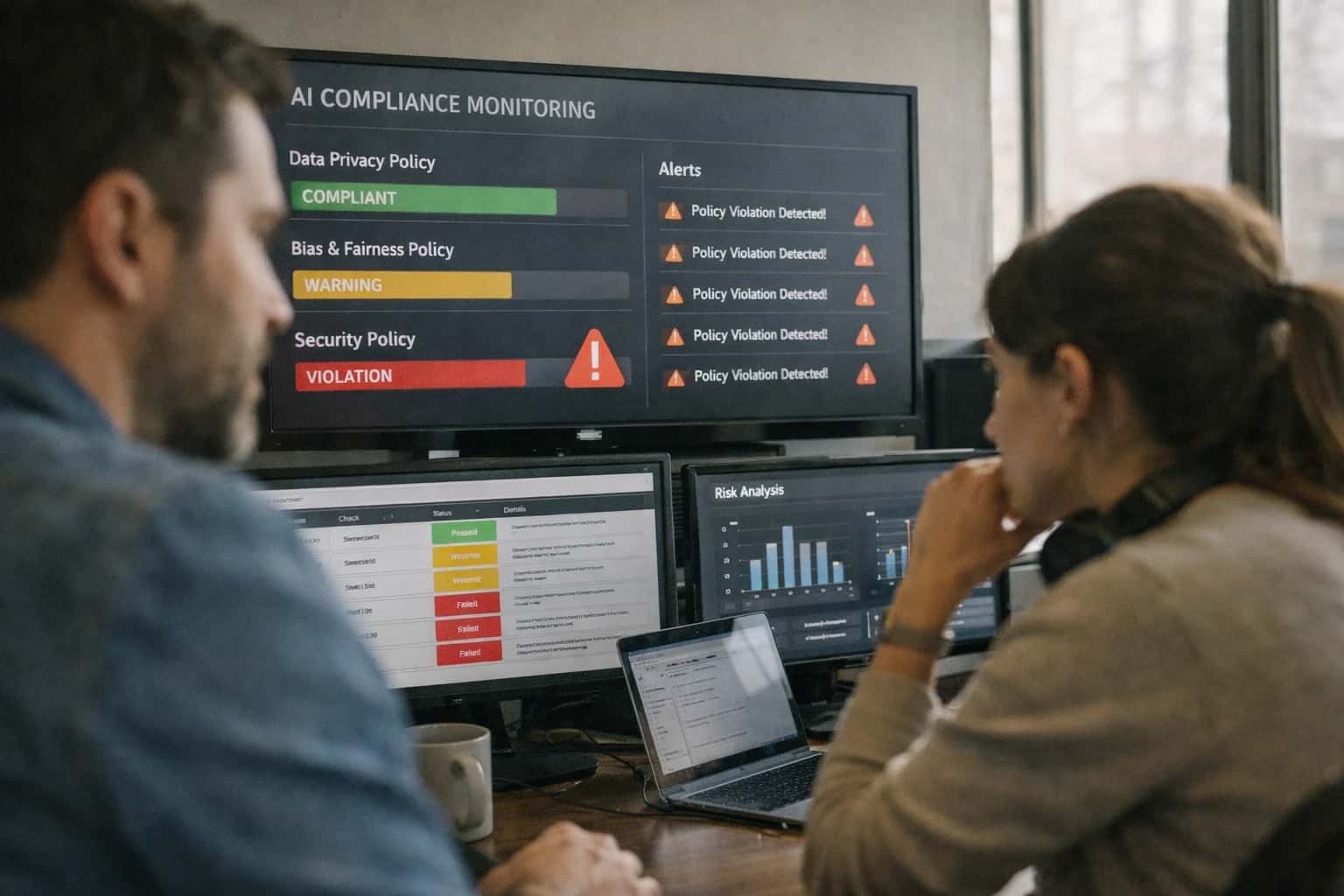
ARCHITECTURE AND ROLLOUT
Where AI Fits into Trellix ePolicy Orchestrator
A practical blueprint for integrating AI to automate policy management, compliance reporting, and configuration analysis within the Trellix ePO console.
A typical implementation wires an AI service as a middleware layer that polls ePO for policy compliance data and configuration check results. For example, an AI agent can:
- Analyze thousands of endpoint configuration reports to identify drift patterns and suggest targeted policy adjustments.
- Review detection exclusions and false positives to recommend tuning for NGAV and DLP policies.
- Generate plain-language summaries of compliance posture for specific regulations (e.g., PCI-DSS, HIPAA) by synthesizing data from the Compliance Auditor module.
- Automate the creation and assignment of remediation client tasks based on AI-prioritized findings. Impact is operational: turning manual policy review cycles from weeks to days and enabling same-day updates to security posture based on emerging threats.
Rollout should be phased, starting with read-only analysis and report generation before progressing to policy draft suggestions that require analyst approval via ePO's approval workflows. Governance is critical; all AI-suggested policy changes must be logged in ePO's audit trail and tied to a change ticket. The AI layer should have its own RBAC mirroring ePO permissions to ensure policy writers, reviewers, and readers have appropriate access. For production reliability, implement retry logic for ePO API calls and queue systems to handle bulk analysis jobs without impacting console performance. This approach ensures AI augments the ePO administrator's workflow without introducing unmanaged risk.
AI-POLICY AUTOMATION
Key Integration Surfaces in ePO
Policy Creation and Tuning
The ePO Policy Management Console is the primary surface for AI-driven automation. Here, AI can analyze historical policy enforcement logs, configuration drift reports, and threat detection events to recommend policy adjustments.
Key AI workflows include:
- Drift Analysis: AI scans endpoint configurations against master policies, identifying non-compliant systems and suggesting targeted remediation scripts.
- Exception Review: Automatically reviews and summarizes requests for policy exceptions, correlating them with the user's role, threat landscape, and past violations to provide risk-scored recommendations.
- Policy Optimization: Uses telemetry on false positives and missed detections to propose refined detection logic or updated exclusion lists for DAT, ENS, or Adaptive Threat Protection modules.
Integration is achieved via the ePO REST API to fetch policy catalogs, deployment statuses, and audit logs for AI analysis, then push approved updates.
TRELLIX EPOLICY ORCHESTRATOR
High-Value AI Use Cases for ePO
Integrate AI directly into Trellix ePolicy Orchestrator to automate policy lifecycle management, accelerate compliance reporting, and enhance analyst workflows. These patterns connect to ePO's core APIs, database, and console to drive operational efficiency.
01
Automated Policy Drift Analysis & Remediation
AI continuously monitors endpoint configurations against ePO policy baselines. It identifies drift, classifies severity, and can trigger automated remediation tasks or generate Jira tickets for IT teams via ePO's task system. Reduces manual audit cycles from weeks to daily checks.
Weeks -> Daily
Compliance Cadence
02
Intelligent Policy Exception Review & Routing
Analyzes policy exception requests submitted through ePO. An AI agent reviews the justification, endpoint context, and risk profile, then recommends approval/denial or routes it to the correct security owner. Cuts down manual ticket triage and ensures consistent policy enforcement.
Hours -> Minutes
Review Time
03
Natural Language Compliance Reporting
Analysts use a chat interface within the ePO console to ask questions like "Show me endpoints out of compliance with our disk encryption policy last quarter." AI translates this into ePO database queries, executes them, and returns a formatted narrative or chart, bypassing complex report building.
1 Sprint
Report Development
04
Predictive Policy Tuning & False Positive Reduction
AI analyzes historical ePO alert data, policy violations, and exception logs to identify overly broad or noisy policies. It suggests specific tuning adjustments (e.g., modifying file path exclusions, threshold changes) to reduce alert fatigue without compromising security posture.
Batch -> Proactive
Tuning Approach
05
Audit Narrative & Evidence Package Generation
For internal or external audits, AI automatically compiles evidence from ePO. It pulls relevant policy definitions, compliance state snapshots, exception logs, and remediation histories, then generates a coherent audit narrative document. Integrates with GRC platforms like ServiceNow or Workiva.
Days -> Same Day
Evidence Compilation
06
Agent Health & Deployment Copilot
An AI assistant helps administrators manage the ePO agent fleet. It answers questions about agent deployment status, failure reasons, and version distribution. It can suggest corrective actions (like pushing a specific hotfix) and generate deployment scripts based on natural language commands.
Self-Service
Admin Support
AUTOMATED POLICY AND COMPLIANCE OPERATIONS
Example AI-Driven Workflows for ePO
These workflows illustrate how AI agents can be integrated with Trellix ePolicy Orchestrator to automate policy management, compliance reporting, and operational tasks, reducing manual overhead and configuration drift.
Trigger: A scheduled daily job or a webhook from ePO's System Tree indicating a new endpoint check-in.
Context/Data Pulled:
- The AI agent queries the ePO REST API for the latest
Policy AssignmentandEndpoint Compliancestatus reports for a specific policy group. - It retrieves the raw
Policy ObjectXML/JSON definition for the target policy (e.g., a Data Loss Prevention rule set).
Model or Agent Action:
- The agent compares the defined policy against the aggregated compliance status of endpoints.
- Using an LLM, it analyzes the drift: e.g., "15% of endpoints in the Finance OU are missing the required USB blocking rule."
- It generates a natural language summary and a recommended remediation action, such as: "Push policy update
DLP-USB-FIN-001to the non-compliant systems via ePO task."
System Update or Next Step:
- The agent calls the ePO API to create and deploy a client task to the non-compliant systems.
- It updates a CMDB or ticket in ServiceNow via webhook, logging the action.
Human Review Point: The agent flags any policy drift exceeding a configurable threshold (e.g., >30%) for manual review by the security architect before automated remediation is executed.
CONNECTING AI TO THE ePO DATA MODEL
Implementation Architecture: Data Flow & APIs
A practical technical blueprint for integrating AI agents with Trellix ePolicy Orchestrator's core APIs to automate policy analysis and compliance workflows.
The integration connects to Trellix ePolicy Orchestrator's REST API and database to read critical objects for AI analysis. The primary data flows include:
- Policy and Task Objects: Ingesting current policy configurations, assigned tasks, and execution results to detect configuration drift.
- System Tree and Asset Data: Mapping endpoint groupings, tags, and properties to understand the scope of policy deviations.
- Event and Log Streams: Consuming audit logs and ePO events related to policy enforcement failures or manual overrides.
- Compliance Report Data: Pulling historical report outputs to establish baselines and identify trends.
This data is processed, often via a queuing system like Apache Kafka or AWS SQS, to create a structured feed for the AI layer, which performs analysis without impacting ePO server performance.
The AI layer, typically deployed as a containerized service, uses this data to execute specific workflows:
- Drift Detection & Explanation: Compares current endpoint configurations against defined policy baselines. The AI identifies the what (e.g., "Antivirus DAT file is 3 days old on 12% of servers") and suggests the why (e.g., failed update task, network blockage).
- Policy Update Recommendations: Analyzes patterns of exceptions and failures to propose refined policy rules or new task schedules, formatted as JSON payloads ready for API submission to ePO.
- Audit Narrative Generation: Synthesizes data from multiple ePO objects (events, tasks, assets) to auto-generate plain-language summaries for compliance reports, linking technical details to control frameworks.
These workflows call back into ePO's API to create tickets in the built-in issue manager, update task parameters, or tag non-compliant assets for manual review.
Rollout follows a phased approach, starting with a read-only analysis of a single policy module (e.g., antivirus updates) to validate accuracy before enabling any write-back actions. Governance is critical: all AI-suggested policy changes should route through an approval workflow, logging the rationale in ePO's audit trail. The architecture is designed to be fault-tolerant, ensuring the AI service's failure does not disrupt core ePO operations. For teams using Trellix MVISION Endpoint, this pattern extends naturally to the cloud console, enabling centralized AI-driven policy management across distributed environments.
AI INTEGRATION PATTERNS FOR TRELLIX EPO
Code & Payload Examples
Analyzing Policy Compliance with AI
This integration uses AI to analyze ePO's policy object data, comparing deployed configurations against defined baselines to identify drift and suggest updates.
Typical Workflow:
- Query ePO's REST API for current policy assignments and settings for a target system tree.
- Fetch the defined gold-standard policy template.
- Use an LLM to compare the two JSON/XML payloads, highlighting non-compliant settings, missing updates, or deprecated rules.
- Generate a natural-language summary of findings and recommended remediation steps.
Example Python Pseudocode (Policy Fetch & Comparison):
pythonimport requests # Fetch current policy state for a server group ePO_BASE = "https://epo.company.com:8443" response = requests.get( f"{ePO_BASE}/api/v1/policies/assignments", params={"groupId": "Server_Assets"}, auth=(API_USER, API_KEY), verify=False ) current_policy_data = response.json() # Fetch the defined baseline policy golden_policy = get_golden_policy_from_repo() # Prepare prompt for LLM analysis analysis_prompt = f""" Compare these two security policy configurations. Current State: {current_policy_data} Baseline: {golden_policy} List any setting drifts, missing updates, or configuration errors. For each finding, suggest the specific ePO API call to remediate. """ # Call LLM (e.g., via OpenAI, Anthropic, or a local model) findings = call_llm(analysis_prompt) # findings now contains actionable drift analysis
AI-ASSISTED POLICY MANAGEMENT
Realistic Time Savings & Operational Impact
How AI integration transforms manual ePO policy review, compliance reporting, and configuration drift management into automated, analyst-guided workflows.
| Workflow | Before AI | After AI | Implementation Notes |
|---|---|---|---|
Policy compliance audit report generation | Manual data pull, spreadsheet analysis, narrative drafting (2-3 days) | Automated data aggregation, AI-generated narrative draft (2-3 hours) | Human analyst reviews and finalizes AI draft; integrates with ePO reporting API |
Configuration drift analysis across endpoints | Manual comparison of policy vs. actual settings via queries (4-8 hours) | AI-driven anomaly detection and prioritized drift report (30-60 minutes) | AI flags high-risk deviations; analyst approves remediation actions sent via ePO tasks |
New policy creation and exception review | Manual research of existing policies, risk assessment, stakeholder review (1-2 weeks) | AI suggests policy language based on templates & past exceptions, drafts risk rationale (2-3 days) | Policy owner uses AI copilot for drafting; exception workflow includes AI-powered impact analysis |
Security update (DAT/engine) deployment planning | Manual analysis of endpoint compatibility, testing schedules, impact assessment (1-2 days) | AI analyzes endpoint telemetry, predicts failure risk, recommends deployment groups (2-4 hours) | AI output feeds ePO deployment wizard; final go/no-go remains with administrator |
Agent health and deployment failure troubleshooting | Manual log review, correlation with system events, trial-and-error remediation (3-6 hours per incident) | AI correlates logs and system state, suggests root cause and remediation script (30-90 minutes) | AI provides guided steps within ePO console; technician executes approved scripts |
Audit narrative for regulatory compliance (e.g., PCI DSS) | Manual evidence collection, control mapping, narrative writing (5-7 days per audit cycle) | AI maps ePO data to control framework, auto-generates evidence summaries and narratives (1-2 days) | Compliance officer reviews and edits AI output; audit trail maintained in ePO |
CONTROLLED DEPLOYMENT FOR POLICY & COMPLIANCE SYSTEMS
Governance, Security & Phased Rollout
Integrating AI into Trellix ePolicy Orchestrator (ePO) requires a controlled approach that prioritizes policy integrity, auditability, and incremental value delivery.
Start with a read-only, advisory phase. Initial AI agents should be configured with API credentials scoped to ePO.ReadOnly permissions, analyzing PolicyCatalog objects, ComplianceEvent logs, and SystemTree data to identify configuration drift, suggest policy updates, and draft audit narratives—without making any changes. This builds trust and establishes a baseline for AI-generated recommendations against actual administrator actions. All AI interactions should be logged as AuditLog entries within ePO itself, tagged with the service principal used by the integration.
Phase two introduces gated write-backs. After validating recommendation accuracy, you can enable AI to draft PolicyAssignment changes or ComplianceException requests. These should never auto-commit. Instead, implement an approval workflow where proposed changes are surfaced in a dedicated ePO dashboard or routed via webhook to a ticketing system like ServiceNow for human review. The AI should provide a clear rationale, citing the specific ConfigurationParameter drift or SecurityStandard (e.g., CIS Benchmark) that triggered the suggestion. This maintains the separation of duties critical in regulated environments.
Governance hinges on traceability and fallback. Every AI-suggested action must be reversible. Use ePO's built-in PolicyHistory and snapshot capabilities to allow quick rollback. For generative tasks like audit report drafting, implement a human-in-the-loop review step before final submission, storing both the AI-generated draft and the human-edited version as related DocumentObject records. This creates a clear lineage for compliance auditors. Finally, establish regular review cycles to evaluate the AI's suggestion hit-rate and false-positive rate, using this data to iteratively refine the prompts and logic governing the integration.
Enabling Efficiency, Speed & Accuracy
Intelligent Analysis, Decision & Execution
We build AI systems for teams that need search across company data, workflow automation across tools, or AI features inside products and internal software.
Talk to Us
Search across company data
Give teams answers from docs, tickets, runbooks, and product data with sources and permissions.
Useful when people spend too long searching or get different answers from different systems.
Enterprise searchRAGPermissions
Read more
Automate internal workflows
Use AI to route work, draft outputs, trigger actions, and keep approvals and logs in place.
Useful when repetitive work moves across multiple tools and teams.
AI agentsWorkflow automationGovernance
Read more
Add AI to products and internal tools
Build assistants, guided actions, or decision support into the software your team or customers already use.
Useful when AI needs to be part of the product, not a separate tool.
AI integrationDecision supportModel routing
Read moreIMPLEMENTATION AND OPERATIONS
Frequently Asked Questions
Common questions about integrating AI agents with Trellix ePolicy Orchestrator to automate policy management, compliance reporting, and configuration analysis.
Integration is achieved through a combination of ePO's REST API and direct database queries (where API coverage is limited).
Primary Connection Points:
- ePO REST API: Used for operational commands like:
- Fetching system tree details and asset groups (
GET /api/v1/system/tree) - Retrieving and updating policy assignments (
GET/POST /api/v1/policies) - Triggering tasks and wake-up calls (
POST /api/v1/tasks)
- Fetching system tree details and asset groups (
- Database Connector: A secure service account with read-only access to the ePO SQL database is used for complex analytical queries that the API cannot support efficiently, such as:
- Historical configuration drift analysis across thousands of endpoints
- Correlating policy exceptions with threat events over time
Security Model: The AI service runs with a dedicated ePO service account adhering to the principle of least privilege. All queries and updates are logged for a full audit trail within ePO and the AI platform's logs.

About the author
Prasad Kumkar
CEO & MD, Inference Systems
Prasad Kumkar is the CEO & MD of Inference Systems and writes about AI systems architecture, LLM infrastructure, model serving, evaluation, and production deployment. Over 5+ years, he has worked across computer vision models, L5 autonomous vehicle systems, and LLM research, with a focus on taking complex AI ideas into real-world engineering systems.
His work and writing cover AI systems, large language models, AI agents, multimodal systems, autonomous systems, inference optimization, RAG, evaluation, and production AI engineering.
LinkedIn
Limited slotsGet a Free AI Consultation
Partnered with leading AI, data, and software stack.





How We Work
Custom AI workflows for your Business
One-fit-all AI don't work for modern businesses. At Inferensys, we aim to understand your business & custom requirements; which we use to define most efficient agentic workflows, the data, and the tools for your business.
01
Review the use case
We understand the task, the users, and where AI can actually help.
Read more02
Pick the right approach
We define what needs search, automation, or product integration.
Read more03
Build the first useful version
We implement the part that proves the value first.
Read more04
Improve from there
We add the checks and visibility needed to keep it useful.
Read moreThe first call is a practical review of your use case and the right next step.
Talk to Us