AI integration for Sophos XDR focuses on the Synchronized Security Heartbeat—the real-time data exchange between Sophos Central-managed endpoints (Intercept X), firewalls (XGS Series), and cloud security (Cloud Optix). The primary integration surfaces are the Sophos Central API for alert ingestion and command execution, and the Live Response API for forensic data collection and containment actions. AI agents consume this cross-domain telemetry to reconstruct attack narratives that a single product alert might miss, such as correlating a firewall block attempt with a suspicious process on an endpoint.

Integration
AI Integration for Sophos XDR
A technical guide to embedding AI agents within Sophos XDR for automated attack chain correlation, guided investigation, and Synchronized Security response orchestration.
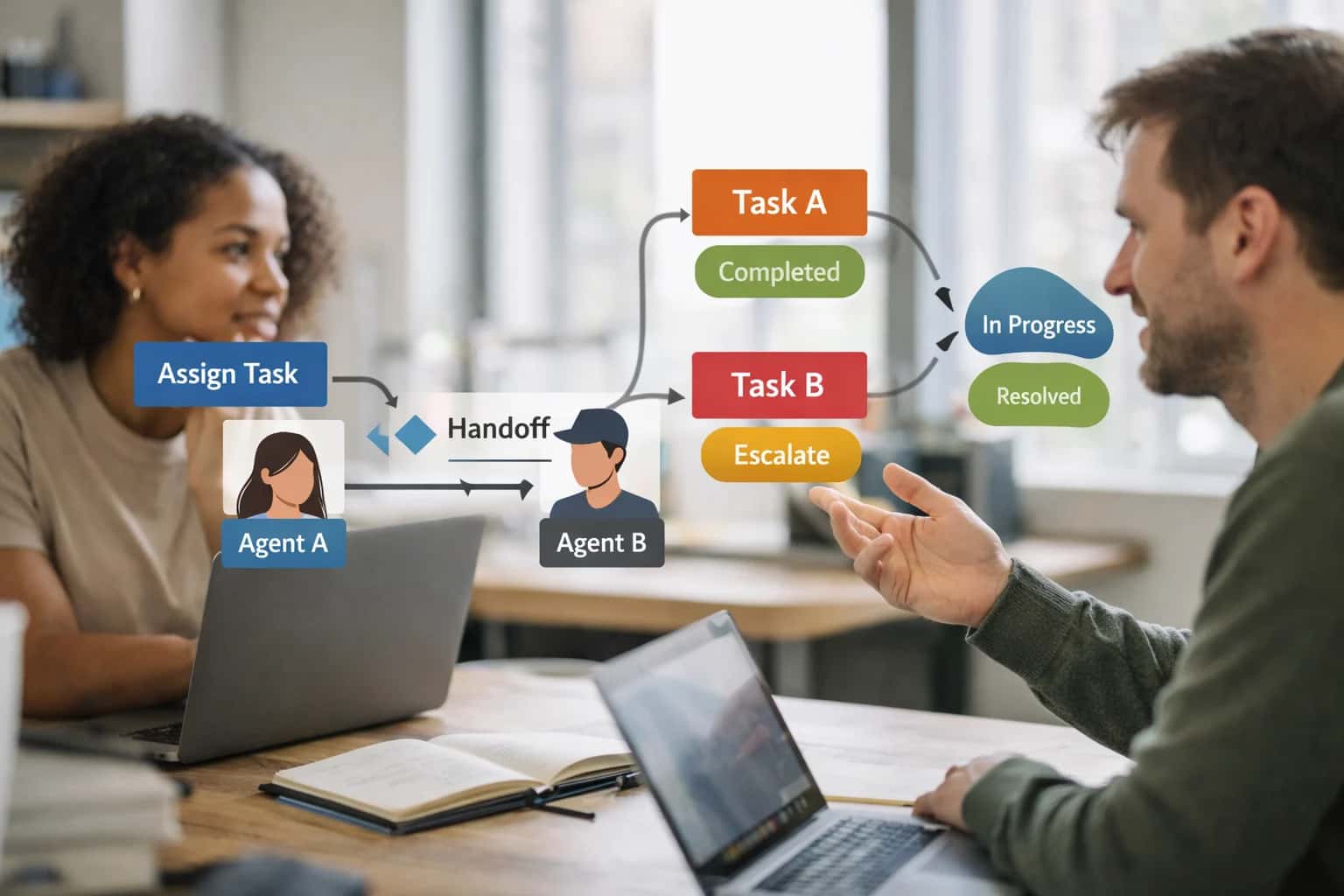
ARCHITECTURE BLUEPRINT
Where AI Fits into the Sophos XDR Stack
A technical guide to embedding AI agents within Sophos Synchronized Security for automated attack chain analysis and response.
Implementation typically involves an AI middleware layer that subscribes to Sophos Central event webhooks. This layer uses the event context (e.g., a malware detected alert from Intercept X) to trigger a multi-step investigation: querying the firewall for related traffic logs, checking Cloud Optix for suspicious IAM activity, and using Live Response to pull running processes and network connections from the affected endpoint. The AI synthesizes this data into a single attack chain summary and, based on pre-defined playbooks, can execute automated responses like isolating the endpoint, blocking an IP on the firewall, or revoking a cloud API key.
Rollout requires careful governance, as automated response actions carry operational risk. We recommend starting with a human-in-the-loop model where the AI agent drafts investigation summaries and recommends actions within a Sophos Central dashboard widget or a separate SOC portal. Actions are queued for analyst approval via a simple approve/deny interface that logs back to the Central audit trail. Over time, as confidence grows, organizations can shift to conditional autonomy for high-confidence, low-risk containment steps, like quarantining a file with a known bad hash. This phased approach ensures safety while delivering the operational speed benefit—reducing investigation time from hours to minutes.
For teams managing complex environments, this AI layer also serves as a unified copilot, allowing analysts to ask natural language questions (e.g., "Show me all endpoints that communicated with IP X in the last 24 hours") which the agent translates into a series of API calls across the Sophos stack. This pattern turns the Synchronized Security ecosystem into a queryable knowledge graph, accelerating threat hunting and compliance reporting. Explore our related guide on AI Integration for Sophos Containment Workflows for deeper technical details on automating Live Response actions.
AI INTEGRATION FOR SOPHOS XDR
Key Integration Surfaces in Sophos Central
Alert Triage and Incident Enrichment
The Alerts and Incidents modules in Sophos Central are the primary surfaces for AI integration. This is where raw detections from Intercept X, firewall, and cloud security converge. An AI agent can consume these alerts via the Sophos Central API to perform automated triage.
Key AI workflows include:
- Prioritization: Using AI to score alert severity by correlating endpoint telemetry with firewall block events and cloud security findings.
- Summarization: Generating a concise, plain-language summary of the attack chain for the SOC ticket.
- Enrichment: Automatically fetching related events, processes, and registry changes from the Threat Analysis Center to build context.
This reduces manual alert review from minutes to seconds, allowing analysts to focus on confirmed threats.
SYNCHRONIZED SECURITY AUTOMATION
High-Value AI Use Cases for Sophos XDR
Integrating AI with Sophos XDR enables automated analysis across the Synchronized Security ecosystem—Central, Intercept X, and firewall data—to accelerate threat detection, investigation, and autonomous response.
01
Automated Attack Chain Synthesis
AI correlates alerts from Sophos Central, Intercept X endpoint telemetry, and firewall logs to reconstruct multi-stage attacks. It identifies the root cause, maps the kill chain, and generates a unified incident timeline, replacing manual pivot between consoles.
Hours -> Minutes
Investigation time
02
AI-Guided Live Response Sessions
When a high-severity alert triggers, an AI agent can automatically initiate a Sophos Live Response session. It analyzes the endpoint context, suggests specific shell commands to run (e.g., Get-Process, netstat), interprets the output, and recommends containment steps like process termination or file quarantine.
Batch -> Real-time
Response initiation
03
Security Heartbeat Enrichment & Action
AI monitors the real-time Security Heartbeat signals between Sophos endpoint and firewall. It interprets synchronization events (e.g., a compromised endpoint communicating with a malicious IP) to automatically recommend or execute firewall rule updates, endpoint isolation, or script execution via Central policies.
Same day
Policy enforcement
04
MTR Analyst Copilot
Augments Sophos Managed Threat Response workflows. An AI copilot pre-processes incoming alerts, collects relevant evidence (process trees, registry changes, network connections), drafts the initial case summary for human analysts, and suggests customer communication language, scaling the MTR team's capacity.
1 sprint
Implementation timeline
05
Dynamic Risk Scoring for Assets
AI consumes continuous telemetry from Sophos Central (detections, vulnerabilities from Intercept X, firewall blocks) to calculate a live risk score for every endpoint. This drives automated prioritization in the console, triggering workflows for high-risk assets like immediate vulnerability scans or stricter policy application.
Real-time
Scoring updates
06
Automated ITSM Ticket Orchestration
For incidents requiring IT action (e.g., malware cleanup, software patching), AI analyzes the Sophos XDR alert, determines the required remediation task, and uses APIs to automatically create, enrich, and assign a ticket in tools like ServiceNow or Jira. It attaches relevant IoCs and suggested resolution steps.
Manual -> Automated
Ticket creation
SYNCHRONIZED SECURITY AUTOMATION
Example AI-Driven Workflows for Sophos
These workflows illustrate how AI agents can interpret data across Sophos Central, Intercept X, Firewall, and Cloud Optix to automate detection, investigation, and containment. Each pattern is designed to reduce manual analyst steps and accelerate mean time to respond (MTTR).
Trigger: A high-severity Intercept X endpoint alert (e.g., 'Malicious Behavior Blocked').
Workflow:
- Context Enrichment: The AI agent immediately queries the Sophos Central API for related events from the same endpoint over the last 24 hours. It also checks the synchronized Security Heartbeat status with the local Sophos Firewall for any correlated network blocks.
- Cross-Product Correlation: The agent pulls Cloud Optix findings for the same asset or cloud workload to identify misconfigurations that may have been exploited.
- Narrative Generation: Using the enriched timeline, the AI constructs a concise attack narrative: "Endpoint
WS-102blocked ransomware behavior. Preceding events show suspicious PowerShell execution and outbound C2 attempts tomalicious-domain[.]com, which was concurrently blocked by Sophos XG Firewall policyDefault-Outbound. Cloud Optix shows the associated AWS EC2 instance has a publicly exposed S3 bucket." - Triage & Routing: Based on the narrative and confidence score, the AI agent automatically creates a high-priority incident in the connected SOAR or ITSM platform (e.g., ServiceNow), pre-populating the description, assigning it to the 'Endpoint Threat' queue, and attaching relevant IOC hashes.
- Human Review Point: The agent presents the narrative and recommended assignment to a Tier 1 analyst for a 30-second review/override before the ticket is created.
FROM ALERT TO ACTION
Implementation Architecture: Data Flow & Guardrails
A practical architecture for integrating AI with Sophos XDR, focusing on data synthesis, automated analysis, and secure response orchestration.
The integration connects to Sophos Central APIs to ingest raw alerts and telemetry from Sophos Intercept X Endpoint, Sophos Firewall, and Sophos Cloud Optix. An AI agent first normalizes this data, mapping entities (hostnames, IPs, users) across the Synchronized Security ecosystem. Using a Retrieval-Augmented Generation (RAG) pattern, the agent queries a vector store of internal threat intelligence, past incidents, and MITRE ATT&CK context to enrich each alert. The core AI logic then performs cross-component attack chain analysis, stitching together endpoint process execution, firewall traffic blocks, and cloud misconfigurations into a single narrative.
For high-confidence threats, the system can initiate automated response workflows via the Sophos Live Response API. Actions like isolating a host, terminating a malicious process, or deploying a custom script are parameterized by the AI's analysis. Crucially, every proposed action is logged with a justification chain (which alerts, entities, and intelligence led to the decision) and can be routed through a human-in-the-loop approval queue in tools like ServiceNow or Jira before execution. This creates an audit trail and allows for policy-based guardrails, such as requiring manual approval for isolation actions on critical servers.
Rollout is typically phased, starting with AI-assisted triage and summarization in the SOC console to build trust. The AI generates plain-language incident summaries and suggests next investigative steps. Phase two introduces semi-automated response, where analysts review and approve AI-recommended containment actions. The final phase enables conditional full automation for clear-cut, high-severity cases like ransomware precursor activity, defined by explicit playbooks. This architecture ensures AI augments the Sophos security heartbeat without bypassing existing operational controls, scaling analyst capacity while maintaining security governance.
SOPHOS XDR API INTEGRATION PATTERNS
Code & Payload Examples
Automating Initial Alert Analysis
When Sophos Central generates a new XDR alert, your AI agent can ingest the raw JSON payload, synthesize data across the Synchronized Security components, and produce a concise summary for SOC analysts. This pattern uses the Sophos Central API to fetch alert details and related events.
Example Payload & Processing:
python# Fetch alert details from Sophos Central API alert_response = requests.get( f"https://api.central.sophos.com/alerts/v1/alerts/{alert_id}", headers={"Authorization": f"Bearer {api_token}"} ).json() # AI prompt to generate a summary prompt = f""" Analyze this Sophos XDR alert for a SOC analyst. Alert: {alert_response['type']} Severity: {alert_response['severity']} Endpoint: {alert_response['endpoint']['hostname']} Description: {alert_response['description']} Provide a 3-bullet summary: 1. Likely attack stage (initial access, execution, persistence, etc.) 2. Key indicators (process, file, registry, network) 3. Recommended first investigative step. """ summary = call_llm(prompt) # Output is then posted to a Slack channel or SOC ticketing system.
This reduces manual alert review from minutes to seconds, allowing analysts to focus on confirmed threats.
AI INTEGRATION FOR SOPHOS XDR
Realistic Time Savings & Operational Impact
This table illustrates how AI integration with Sophos Synchronized Security components (Central, Intercept X, Firewall) changes key SOC workflows, focusing on measurable efficiency gains and operational shifts.
| Workflow / Metric | Before AI Integration | After AI Integration | Implementation Notes |
|---|---|---|---|
Initial Alert Triage | Manual review of raw alerts in Sophos Central | AI pre-filters & scores alerts by severity & context | AI reduces noise by 40-60%, allowing focus on high-fidelity threats |
Attack Chain Analysis | Analyst manually correlates events across endpoint, firewall, cloud logs | AI automatically synthesizes data into a unified attack narrative | Analysis time drops from 30-60 minutes to under 5 minutes for review |
Containment Action Decision | Manual evaluation of host criticality & business impact | AI recommends isolation, process kill, or script execution via Live Response | Human approval remains for critical assets; AI handles standard endpoints |
Incident Summary Drafting | Analyst writes summary for handoff or MTR ticket | AI generates draft summary with timeline, IOCs, and actions taken | Saves 15-20 minutes per major incident for analyst review/edit |
Security Heartbeat Interpretation | Manual check of synchronization status between products | AI monitors Heartbeat for breakdowns and suggests policy syncs | Proactively maintains coordinated security posture across stack |
Remediation Guidance | Analyst researches appropriate steps for novel threats | AI suggests next-step commands & scripts based on similar past incidents | Provides guided workflows, especially useful for junior analysts |
Executive Reporting | Manual data aggregation for weekly/monthly reports | AI auto-generates posture summaries & trend analysis from Central data | Turns a half-day monthly task into a 30-minute review cycle |
PRODUCTION ARCHITECTURE FOR SOPHOS XDR
Governance, Security, and Phased Rollout
A practical framework for deploying AI in Sophos Central with security-first controls and iterative value delivery.
A production AI integration for Sophos XDR must be built on a secure, event-driven architecture that respects the platform's data model and operational boundaries. This typically involves a dedicated middleware layer that subscribes to Sophos Central's Alert Webhooks and Event APIs, processes data through a private AI service (e.g., Azure OpenAI, Anthropic on AWS), and returns structured commands back to the platform via the Live Response API or Policy APIs. Critical data objects like alerts, endpoints, isolations, and scripts must be mapped to the AI's context window, with strict RBAC ensuring the AI agent only has the permissions of a designated, least-privileged service account. All AI-driven actions should generate immutable audit logs within Sophos Central and your SIEM, detailing the source alert, AI reasoning, and the exact API call executed.
Rollout follows a phased, risk-aware model. Phase 1 (Read-Only Analysis) deploys AI agents to triage and summarize alerts, generating internal recommendations without taking action. This builds trust and tunes prompt logic against your specific environment. Phase 2 (Human-in-the-Loop Actions) introduces approval workflows, where the AI suggests containment steps (like endpoint isolation via isolation API) that require a SOC analyst's approval in the Sophos console or a connected SOAR platform before execution. Phase 3 (Conditional Autonomy) grants the AI authority to execute low-risk, high-confidence actions autonomously—such as terminating a malicious process tree identified by Intercept X—based on pre-defined, organizationally-approved policy rules and confidence thresholds.
Governance is anchored in continuous evaluation and containment. Implement a feedback loop where analysts can flag AI recommendations as good or bad, using this data to retune prompts and decision logic. Establish a clear rollback protocol to immediately disable autonomous actions if the AI's behavior drifts or causes operational disruption. For organizations using Sophos Managed Threat Response (MTR), the AI integration should be designed to augment, not interfere with, human analyst workflows, providing them with pre-processed evidence and draft customer communications to accelerate resolution. This structured approach ensures the AI acts as a force multiplier for your security team, reducing mean time to respond while maintaining stringent oversight over your Synchronized Security ecosystem.
Enabling Efficiency, Speed & Accuracy
Intelligent Analysis, Decision & Execution
We build AI systems for teams that need search across company data, workflow automation across tools, or AI features inside products and internal software.
Talk to Us
Search across company data
Give teams answers from docs, tickets, runbooks, and product data with sources and permissions.
Useful when people spend too long searching or get different answers from different systems.
Enterprise searchRAGPermissions
Read more
Automate internal workflows
Use AI to route work, draft outputs, trigger actions, and keep approvals and logs in place.
Useful when repetitive work moves across multiple tools and teams.
AI agentsWorkflow automationGovernance
Read more
Add AI to products and internal tools
Build assistants, guided actions, or decision support into the software your team or customers already use.
Useful when AI needs to be part of the product, not a separate tool.
AI integrationDecision supportModel routing
Read moreAI INTEGRATION FOR SOPHOS XDR
Frequently Asked Questions
Practical answers for security leaders and architects planning to embed AI into Sophos XDR workflows for automated attack chain analysis and response orchestration.
AI connects to Sophos Central via its REST API, which provides access to the core Synchronized Security data model. Key integration points include:
- Alert & Event Ingestion: Pulling
alerts,events, anddetectionsfrom the/siem/v2/alertsand/siem/v2/eventsendpoints for real-time analysis. - Endpoint Context: Enriching analysis with endpoint details (
/endpoint/v1/endpoints), including installed software, user info, and network adapters. - Live Response Control: For automated investigation and containment, the
/endpoint/v1/endpoints/{id}/live-responsesessions allow AI to execute commands, retrieve files, and kill processes. - Threat Intelligence Cross-reference: Correlating internal detections with SophosLabs Intel via the
/threat-intelligence/v1/threatsendpoint.
The AI layer acts as a middleware processor, consuming this API stream, applying reasoning (e.g., LLM analysis, correlation logic), and then triggering actions back through the same APIs or via webhooks to connected systems like firewalls (Sophos XG) or your SOAR platform.

About the author
Prasad Kumkar
CEO & MD, Inference Systems
Prasad Kumkar is the CEO & MD of Inference Systems and writes about AI systems architecture, LLM infrastructure, model serving, evaluation, and production deployment. Over 5+ years, he has worked across computer vision models, L5 autonomous vehicle systems, and LLM research, with a focus on taking complex AI ideas into real-world engineering systems.
His work and writing cover AI systems, large language models, AI agents, multimodal systems, autonomous systems, inference optimization, RAG, evaluation, and production AI engineering.
LinkedIn
Limited slotsGet a Free AI Consultation
Partnered with leading AI, data, and software stack.





How We Work
Custom AI workflows for your Business
One-fit-all AI don't work for modern businesses. At Inferensys, we aim to understand your business & custom requirements; which we use to define most efficient agentic workflows, the data, and the tools for your business.
01
Review the use case
We understand the task, the users, and where AI can actually help.
Read more02
Pick the right approach
We define what needs search, automation, or product integration.
Read more03
Build the first useful version
We implement the part that proves the value first.
Read more04
Improve from there
We add the checks and visibility needed to keep it useful.
Read moreThe first call is a practical review of your use case and the right next step.
Talk to Us