AI assistants for SOC analysts are not standalone chatbots; they are embedded copilots that integrate directly with the EDR console's alert queue, investigation panels, and response action menus. Their primary function is to reduce cognitive load and manual toil at key friction points: alert triage, where they summarize and prioritize incoming detections; threat investigation, where they correlate events and draft timelines from Deep Visibility or Storyline data; and containment workflows, where they suggest or execute isolation, process termination, or script actions via APIs like CrowdStrike's Real Time Response or Sophos Live Response. The assistant surfaces contextually within the analyst's existing tool, pulling from the same data lake they are already viewing.

Integration
AI Integration for SOC Analyst AI Assistants
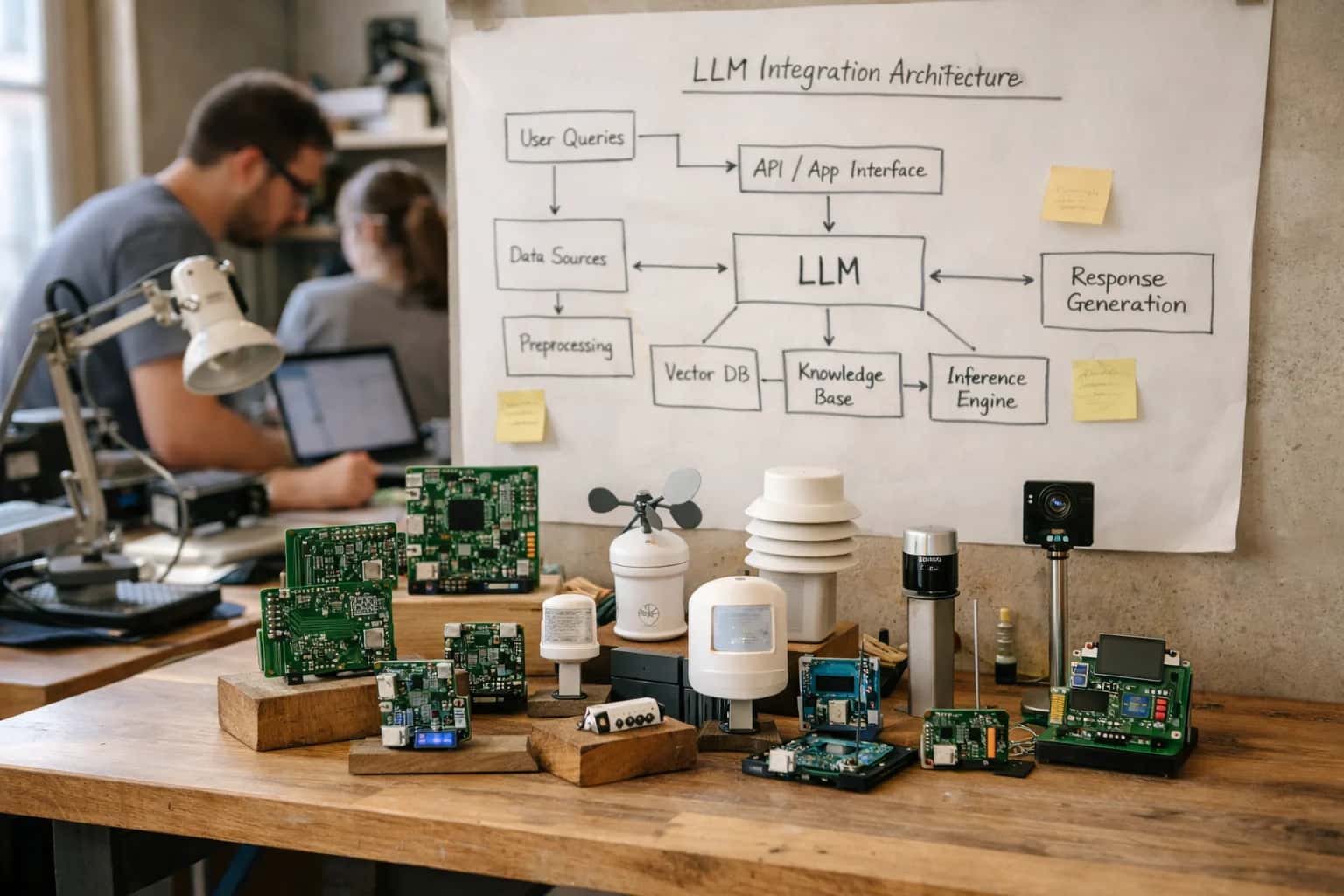
Where AI Assistants Fit in the SOC Analyst Workflow
A practical blueprint for embedding AI copilots directly into the daily workflows of SOC analysts using CrowdStrike, SentinelOne, Sophos, and Trellix consoles.
Implementation requires a secure, policy-aware layer that sits between the analyst and the EDR platform's APIs. This layer handles the natural language translation of analyst queries into platform-specific queries (e.g., FQL for CrowdStrike), executes retrieval-augmented generation (RAG) over internal playbooks and threat intelligence, and manages approval workflows for high-risk actions like endpoint isolation. For example, an analyst can ask, "Show me similar activity on the network last week," and the assistant automatically queries the EDR's telemetry, returns a summarized result, and offers to create a detection rule. The architecture must maintain a full audit trail of all AI-suggested actions and analyst approvals, integrating with the SOC's existing SIEM or SOAR for compliance.
Successful rollout starts with a focused pilot on Tier 1 alert triage, where impact is immediate and measurable (e.g., reducing mean time to triage from minutes to seconds). Governance is critical: define clear confidence thresholds for autonomous action versus human-in-the-loop review, and establish a feedback loop where analyst overrides continuously train the AI's recommendations. The goal is not to replace the analyst but to amplify their judgment, allowing them to handle more alerts, conduct deeper investigations, and execute coordinated responses with greater speed and consistency across all major EDR platforms in your environment.
Integration Surfaces Across Leading EDR Consoles
Alert & Incident Queues
This is the primary surface for Tier 1 triage. AI assistants integrate here to consume raw detection events, perform initial enrichment, and suggest routing or prioritization.
Key Integration Points:
- CrowdStrike Falcon: The
DetectionsAPI provides real-time stream of Falcon Prevent, OverWatch, and Spotlight alerts. AI can fetch, summarize, and update detection statuses. - SentinelOne Singularity: The
ThreatsandIncidentsendpoints in the Singularity API. AI can pull threats, analyze the Storyline, and update incident severity or assign to analysts. - Sophos Central: The
AlertsandEventsAPIs. AI can process Intercept X detections, Live Response triggers, and firewall synchronization events. - Trellix MVISION: The
Alerts V2andIncidentsAPIs. AI can ingest ePO and ENS alerts, correlate them into incidents, and set investigation status.
AI Workflow: An agent listens via webhook or polls the API, enriches each alert with threat intelligence and internal context, generates a plain-language summary, and suggests a priority score (e.g., P1-P4) and assignment group.
High-Value Use Cases for SOC Analyst AI Assistants
AI assistants integrated directly into CrowdStrike, SentinelOne, Sophos, and Trellix consoles can transform manual, repetitive tasks into guided, automated workflows. These use cases focus on augmenting the analyst's judgment, not replacing it.
Automated Alert Triage & Summarization
AI consumes raw EDR alerts (e.g., CrowdStrike Falcon Detection, SentinelOne Deep Visibility) to prioritize severity, summarize the threat in plain language, and suggest initial containment steps. Integrates with platform APIs to pre-fill investigation notes and route to the correct queue.
Natural Language Threat Investigation
Analysts ask questions like "Show me all processes spawned by this binary" or "What changed on this host last night?" The AI translates this into platform-specific queries (FQL, Storyline search) and returns synthesized results, eliminating complex query syntax.
Guided Containment Workflow Execution
Upon analyst approval, the AI assistant executes containment actions via platform Live Response APIs (isolate host, kill process, quarantine file). It provides a step-by-step audit trail and can suggest next-step forensics commands based on the threat type.
Incident Report & Handoff Drafting
AI synthesizes alert data, investigation notes, and executed actions to auto-generate a structured incident summary. This includes IOCs, timeline, affected assets, and response actions, ready for handoff to Tier 3 or input into a SIEM/SOAR case.
Proactive Hunting Hypothesis Assistant
AI analyzes recent threat intelligence and internal telemetry to suggest proactive hunting queries. For example, "Look for LOLBIN usage following suspicious PowerShell execution." It helps translate the hypothesis into executable hunts across the EDR platform.
Policy & Exception Management Copilot
Assists with the tedious work of analyzing false positives and tuning detection policies. Reviews alert outcomes to suggest new exclusions or policy adjustments for platforms like Trellix ePO or CrowdStrike Falcon, maintaining an audit log of changes.
Example AI Assistant Workflows for SOC Analysts
These workflows illustrate how an AI assistant integrates directly into the SOC analyst's console and daily tasks, pulling context from the EDR platform, executing actions via API, and escalating when needed. Each pattern is designed to reduce manual effort and accelerate mean time to respond (MTTR).
Trigger: A new medium or high severity alert is created in the EDR console (e.g., CrowdStrike Falcon Detection, SentinelOne Deep Visibility Threat).
Workflow:
- Context Pull: The AI agent retrieves the raw alert JSON via the platform's API, including endpoint hostname, user, process details, file hashes, and MITRE ATT&CK mapping.
- Enrichment: The agent cross-references the hash with VirusTotal (via API), checks the endpoint's historical alert volume from the past 24 hours, and pulls the asset's criticality tag from the CMDB.
- Analysis & Scoring: Using a configured prompt, the LLM analyzes the enriched data to produce a plain-language summary and a confidence-scored priority (e.g.,
Critical - 95%,Benign - 70%). - System Update: The agent updates the alert in the EDR platform with:
- A formatted summary in the comments/notes field.
- A custom
AI_Priorityfield with the score. - Recommended next steps (e.g., "Initiate Live Response session," "Check for lateral movement").
- Human Review Point: For alerts scored
Criticalwith >90% confidence, the agent can automatically assign the alert to theIncident Responsequeue. All other alerts remain in the general queue for analyst review.
Implementation Architecture: Connecting AI to EDR Platforms
A practical blueprint for embedding AI assistants directly into the SOC analyst console experience across CrowdStrike Falcon, SentinelOne Singularity, Sophos Central, and Trellix MVISION.
The core architectural pattern involves deploying a secure AI service layer that sits adjacent to the EDR platform, connected via its public APIs and webhooks. For CrowdStrike Falcon, this means integrating with the Detections API and Real Time Response API. For SentinelOne, it's the Threats API and Deep Visibility Query API. The AI service subscribes to alert streams, ingests contextual telemetry on-demand, and surfaces insights back into the analyst's workflow through a custom UI component embedded in the console or a dedicated Slack/Microsoft Teams channel for the SOC. This creates a copilot experience where the AI acts on the same data plane as the human analyst, without requiring a disruptive platform migration.
Key implementation details focus on the user interaction loop. When an analyst selects an alert, the AI service is called with the alert ID and relevant context (endpoint hostname, process tree, file hashes). The service then executes a series of orchestrated steps: 1) Enrichment by fetching related events via the platform's query language (FQL for CrowdStrike, Deep Visibility for SentinelOne), 2) Summarization using an LLM to produce a plain-English narrative of the threat, 3) Action Recommendation suggesting next steps like Isolate Host, Run Live Response Script, or Search for IOCs, and 4) Query Generation allowing the analyst to ask natural language questions (e.g., "Show me similar activity last week") which are translated into precise API calls. This loop is stateless per session, with all actions logged to the EDR's audit trail for compliance.
Rollout and governance require a phased approach. Start with a read-only pilot where the AI provides summaries and investigations but cannot execute actions, integrated into a single EDR console. Use this phase to tune prompts, establish confidence thresholds for recommendations, and build analyst trust. Phase two introduces approval workflows, where the AI can draft a containment script (e.g., a CrowdStrike RTR command) but requires analyst approval before execution via a button in the UI. Governance is enforced at the API key level, using scoped roles (e.g., Falcon Responder vs. Admin) and a secondary policy engine within the AI service to block high-risk actions during business hours. The final architecture should treat the AI as a force multiplier for Tier 1/2 analysts, handling initial triage and documentation to free experts for complex hunting and response.
Code Patterns for EDR Platform Integration
Automating the First Five Minutes
This pattern focuses on ingesting raw EDR alerts via webhook or API, using an AI agent to triage, summarize, and route them. The goal is to reduce the time a Tier 1 analyst spends parsing alert details.
Key Integration Points:
- CrowdStrike Falcon:
/alerts/entities/alerts/v2endpoint for alert retrieval and/alerts/entities/alerts/v1for status updates. - SentinelOne:
webhooks/v2for alert ingestion and thethreatsAPI for enrichment. - Sophos Central:
alertsendpoint via Partner API. - Trellix ePO:
alertsdata source or MVISION EDR event API.
Example Python Pseudocode:
python# Pseudo-function to process an incoming alert webhook def process_edr_alert(alert_json): # 1. Extract key entities: hostname, username, process, file path, severity alert_context = extract_entities(alert_json) # 2. Call LLM with a structured prompt to generate a summary & priority score analyst_summary = llm_client.chat_completion( messages=[ {"role": "system", "content": "You are a SOC analyst. Summarize this EDR alert for a colleague."}, {"role": "user", "content": f"Alert details: {alert_context}"} ] ) # 3. Based on LLM output and severity, route to correct queue (e.g., Slack, ITSM ticket) if "credential theft" in analyst_summary.lower(): route_to_incident_response_team(alert_json, analyst_summary) else: create_soc_ticket(alert_json, analyst_summary)
The AI agent acts as a force multiplier, handling initial classification so human analysts focus on confirmed threats.
Realistic Time Savings and Operational Impact
How AI integration for SOC analyst assistants changes daily workflows across CrowdStrike, SentinelOne, Sophos, and Trellix consoles. Metrics are based on typical Tier 1/2 analyst tasks before and after deploying an AI copilot.
| Metric | Before AI | After AI | Notes |
|---|---|---|---|
Initial Alert Triage | Manual review of 50-100+ alerts/shift | AI pre-scores & summarizes top 10-20 | Analyst reviews AI-ranked list; low-confidence alerts auto-routed for deeper review |
Threat Investigation Summary | 30-60 minutes to compile timeline from console | AI drafts narrative in 2-5 minutes using Deep Visibility/Storyline | Analyst validates and edits; report is 80% complete at handoff |
Containment Action Execution | Manual search for endpoint, navigate to isolate/quarantine | AI suggests 1-click action via Live Response/Fusion API | Human approval required for critical assets; standard hosts auto-contained |
Natural Language Platform Query | Write complex FQL/KQL or navigate multiple dashboards | Type question in chat, AI translates to query & runs it | Reduces time to answer 'what happened on host X?' from 10 minutes to <1 |
Incident Documentation | Manual copy/paste from consoles to ticket/SNOW | AI auto-populates ticket fields with IOCs, timeline, actions | SOC lead reviews & submits; cuts documentation time by ~70% |
Policy/Exception Review | Manually compare endpoint policies to compliance baselines | AI highlights drifts & suggests rule updates in ePO/Central | Analyst approves batch changes; review cycle drops from weekly to daily |
Handoff Communication | Draft shift summary or escalation email for 15-20 minutes | AI generates templated summary with key metrics & open cases | Senior analyst reviews & sends; ensures consistent messaging |
Governance, Security, and Phased Rollout
Deploying AI assistants in a Security Operations Center requires a structured approach to risk management, data security, and operational change.
A production-ready AI assistant for CrowdStrike, SentinelOne, Sophos, or Trellix must operate within the SOC's existing RBAC, audit, and data governance frameworks. This means the AI agent should be a credentialed service account with scoped API permissions—read-only for investigation, write-access only for approved containment actions like process termination or network isolation. All AI-initiated actions must be logged to the platform's native audit trail (e.g., CrowdStrike's Audit Logs, SentinelOne's Activity Log) and optionally to a SIEM like Splunk for a unified record. The assistant's knowledge retrieval from vector stores should be grounded in indexed, approved sources like past incident reports and threat intelligence feeds, never raw, uncleared forensic data.
A phased rollout is critical for adoption and risk mitigation. Phase 1 typically deploys a read-only copilot embedded in the analyst console, answering natural language questions about alerts and endpoints without taking action. This builds trust and validates the assistant's accuracy. Phase 2 introduces assisted response, where the AI suggests containment steps (e.g., 'Isolate host ABC-123') but requires explicit analyst approval via a click in the UI or a Slack/Teams notification. Phase 3 enables conditional automation for high-confidence, low-risk scenarios, such as automatically quarantining a file with a 99.9% malicious verdict from multiple sandboxes, governed by a pre-defined policy engine.
Security of the AI system itself is paramount. The inference endpoint and any vector databases must be deployed within the SOC's VPC or cloud tenancy. All prompts and context sent to foundational models (like GPT-4 or Claude) should be scrubbed of sensitive PII, internal hostnames, and exact IPs via a pre-processing layer. For maximum control, consider a hybrid architecture where retrieval and orchestration logic runs on your infrastructure, calling smaller, fine-tuned open-source models (via Ollama or vLLM) for specific tasks, reserving powerful general models for complex analysis only. Regular red-team exercises should test the assistant for prompt injection, data leakage, and logic bypasses, with findings fed back into prompt hardening and guardrail tuning.
Finally, measure success with operational metrics aligned to SOC goals: reduction in Mean Time to Acknowledge (MTTA) for alerts, increase in Tier 1 resolution rate, and analyst satisfaction scores. Start with a pilot group of 5-10 analysts, gather feedback on response relevance and UI integration, and iterate on workflows before organization-wide deployment. This crawl-walk-run approach, coupled with strong governance, ensures the AI assistant scales as a force multiplier, not a new source of risk.
Enabling Efficiency, Speed & Accuracy
Intelligent Analysis, Decision & Execution
We build AI systems for teams that need search across company data, workflow automation across tools, or AI features inside products and internal software.
Talk to Us
Search across company data
Give teams answers from docs, tickets, runbooks, and product data with sources and permissions.
Useful when people spend too long searching or get different answers from different systems.

Automate internal workflows
Use AI to route work, draft outputs, trigger actions, and keep approvals and logs in place.
Useful when repetitive work moves across multiple tools and teams.

Add AI to products and internal tools
Build assistants, guided actions, or decision support into the software your team or customers already use.
Useful when AI needs to be part of the product, not a separate tool.
FAQ: Technical and Operational Questions
Common questions about implementing, securing, and scaling AI assistants for Tier 1/2 analysts within CrowdStrike, SentinelOne, Sophos, and Trellix consoles.
Secure API integration is foundational. The standard pattern involves:
- Service Account & Least Privilege: Create a dedicated, non-human service account within the EDR platform (e.g., a Falcon Service Account, SentinelOne API key, Sophos Partner API client). Assign only the specific permissions needed for the assistant's functions (e.g.,
Alerts:Read,Hosts:Read,Response:Executefor containment). - Credential Management: Store API keys and secrets in a secure vault (e.g., HashiCorp Vault, AWS Secrets Manager). The AI agent runtime retrieves them at execution time; they are never hard-coded.
- Network Security: The AI agent backend should run in a trusted network segment. Outbound calls to the EDR API should be via dedicated egress IPs, which can be allow-listed in the EDR platform's console for an extra layer of control.
- Audit Trail: All API calls made by the AI agent must be logged with the service account identity, enabling full auditability of every automated action taken.
This approach ensures the AI assistant operates as a traceable, least-privileged system actor within your security ecosystem.

About the author
Prasad Kumkar
CEO & MD, Inference Systems
Prasad Kumkar is the CEO & MD of Inference Systems and writes about AI systems architecture, LLM infrastructure, model serving, evaluation, and production deployment. Over 5+ years, he has worked across computer vision models, L5 autonomous vehicle systems, and LLM research, with a focus on taking complex AI ideas into real-world engineering systems.
His work and writing cover AI systems, large language models, AI agents, multimodal systems, autonomous systems, inference optimization, RAG, evaluation, and production AI engineering.
Partnered with leading AI, data, and software stack.





How We Work
Custom AI workflows for your Business
One-fit-all AI don't work for modern businesses. At Inferensys, we aim to understand your business & custom requirements; which we use to define most efficient agentic workflows, the data, and the tools for your business.
01
Review the use case
We understand the task, the users, and where AI can actually help.
Read more02
Pick the right approach
We define what needs search, automation, or product integration.
Read more03
Build the first useful version
We implement the part that proves the value first.
Read more04
Improve from there
We add the checks and visibility needed to keep it useful.
Read moreThe first call is a practical review of your use case and the right next step.
Talk to Us