AI fits into the SOC workflow after initial detection and before analyst handoff or case escalation. The integration point is typically a webhook or queue that receives enriched alerts from your EDR platform (CrowdStrike Falcon, SentinelOne Singularity, Sophos Central, Trellix ePO). An AI agent consumes this raw data—including process trees, file hashes, network connections, and any initial analyst notes—and synthesizes it into a concise, structured summary. This happens in the investigation phase, transforming a list of 50+ low-level events from the EDR console into a coherent narrative of "what happened, what was impacted, and what we did."

Integration
AI Integration for AI-Based Incident Summarization for SOC
A technical blueprint for building AI agents that automatically generate concise, actionable incident summaries from raw EDR alert data and investigation notes, accelerating SOC handoff and reducing analyst fatigue.
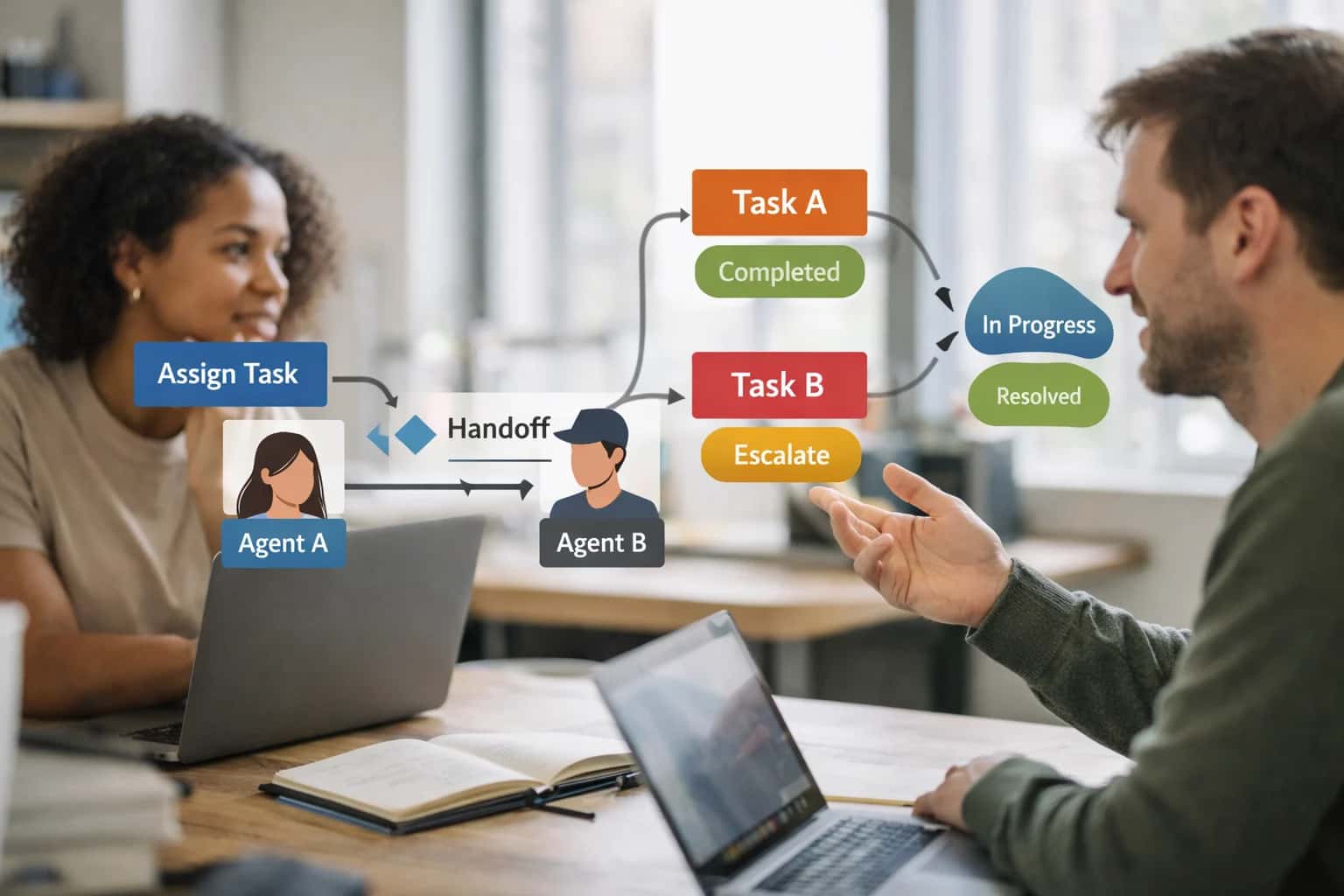
ARCHITECTURE AND ROLLOUT
Where AI Fits in SOC Incident Summarization
A practical blueprint for integrating AI to automatically generate actionable incident summaries from raw EDR alerts and investigation notes.
The implementation requires connecting to the EDR platform's REST APIs (e.g., CrowdStrike's Detection Details API, SentinelOne's Threat API) to pull forensic context. The AI model is prompted with a structured template that includes fields for Threat Actor TTPs, Impacted Assets, Timeline of Key Events, Containment Actions Taken, and Confidence-Level Recommendations. This summary is then posted back to the EDR case, appended to the corresponding ServiceNow or Jira ticket, or sent to a Slack/Teams channel for the next shift. The goal is to reduce manual summarization from 15-20 minutes per incident to near-zero, ensuring critical context isn't lost during shift changes.
Rollout should start with a human-in-the-loop approval step, where the AI-generated summary is presented to a Tier 2 analyst for review and edit before being committed to the case record. Governance is critical: maintain an audit log of all AI-generated summaries and their subsequent edits to track accuracy and refine prompts. Plan for a phased deployment, beginning with low-severity alerts to build trust, before applying to critical incidents. The final architecture should treat the AI summarization agent as a stateless microservice that can be scaled independently and fails gracefully, ensuring the core EDR workflow remains uninterrupted if the AI service is unavailable.
ARCHITECTURAL BLUEPRINTS FOR AI INCIDENT SUMMARIZATION
Key Integration Surfaces in EDR Platforms
The Primary Data Source for Summarization
EDR platforms expose rich APIs for retrieving alert data, which forms the core input for AI summarization. For CrowdStrike Falcon, this is the Detections API (/detects/entities/summaries/GET/v1). SentinelOne provides the Threats API (/web/api/v2.1/threats). These endpoints return structured data including:
- Alert metadata: Severity, timestamp, detection name, MITRE ATT&CK mapping.
- Endpoint context: Hostname, IP, user, tags.
- Process/File details: Parent/child process trees, file hashes, registry keys.
An AI agent polls or receives webhooks from these APIs, ingesting the raw JSON payload. The first summarization step involves extracting key entities (host, user, process) and the detection's narrative intent (e.g., 'ransomware behavior detected on finance-server-01'). This structured extraction provides the factual backbone for the narrative summary.
SOC INCIDENT HANDOFF
High-Value Use Cases for AI-Powered Summarization
AI-generated incident summaries transform raw EDR alert data and investigation notes into concise, actionable narratives. This accelerates SOC handoffs, improves shift transitions, and ensures consistent communication to stakeholders.
01
Tier 1 to Tier 2 Handoff Summaries
AI automatically generates a structured summary from initial CrowdStrike or SentinelOne alerts, including affected host, triggered detection rule, timeline of key events, and initial containment status. This reduces handoff calls and gives Tier 2 analysts a running start.
Minutes
Handoff prep time
02
Shift-Change Executive Briefings
At the end of a shift, an AI agent synthesizes all investigated incidents from Sophos Central or Trellix ePO into a single briefing. It highlights critical incidents, ongoing investigations, and pending actions for the incoming lead analyst.
Batch → Real-time
Reporting cadence
03
Stakeholder & Management Communications
AI drafts plain-language updates for non-technical stakeholders by translating technical EDR findings (IOCs, process trees, containment actions) into business-impact narratives. Integrates with email or ticketing systems for automated distribution.
Same day
Notification speed
04
SOAR Playbook Initiation Summaries
Before triggering an automated response playbook in CrowdStrike Falcon Fusion or a SOAR platform, AI creates a summary justifying the action. This includes confidence scoring, impacted assets, and recommended steps, providing an audit trail for autonomous operations.
Audit-ready
Action justification
05
MDR Service Ticket Enrichment
For teams using CrowdStrike OverWatch or SentinelOne Vigilance, AI pre-processes local evidence and drafts a summary for the managed service ticket. This ensures critical context is captured upfront, reducing back-and-forth and accelerating expert engagement.
Hours -> Minutes
Evidence packaging
06
Post-Incident Report Drafting
AI aggregates data from the full incident lifecycle—initial alert, Live Response session outputs, containment actions, and analyst notes—to generate a first draft of the post-mortem report. This provides a structured foundation for final review and knowledge base entry.
1 sprint
Report timeline reduction
SOC INCIDENT HANDOFF
Example AI Summarization Workflows
These workflows illustrate how AI agents can automatically generate structured, actionable incident summaries by synthesizing raw EDR telemetry, investigation notes, and threat intelligence. Each flow is designed to reduce manual report drafting and accelerate SOC handoffs from Tier 1 to Tier 2 or to managed service providers.
Trigger: A high-severity alert is created in the EDR platform (e.g., CrowdStrike Falcon Detection event, SentinelOne Threat).
Context/Data Pulled:
- The raw alert JSON from the EDR API, including process tree, file hashes, and MITRE ATT&CK tags.
- Related events from the same host in the last 24 hours (e.g., process executions, network connections).
- Enrichment from internal threat intelligence (e.g., previous sightings of the hash, associated campaign).
Model/Agent Action: An LLM-based agent is prompted with a structured template to generate a summary containing:
- Executive Summary: One-line plain English description.
- Impact Assessment: Likely intent (e.g., data theft, ransomware prep) and affected asset criticality.
- Key Evidence: Timeline of the 3-5 most critical events.
- Confidence & Rationale: Why this is likely malicious vs. a false positive.
- Recommended Next Steps: Immediate containment (e.g., isolate host) and investigation actions (e.g., collect memory dump).
System Update/Next Step:
The generated summary is posted as a note to the alert in the EDR console and sent via webhook to the SOC's case management system (e.g., ServiceNow SecOps, Jira). The alert is automatically assigned to the Tier 2 Investigation queue.
Human Review Point: A senior analyst reviews the AI-generated summary and the underlying evidence before approving any automated containment action.
FROM RAW ALERTS TO ACTIONABLE SUMMARIES
Implementation Architecture: Data Flow & AI Layer
A practical blueprint for connecting AI to your EDR platform to automate incident summarization, reducing SOC handoff time from hours to minutes.
The integration architecture connects your EDR platform's alert stream and investigation data to a dedicated AI layer. This typically involves:
- Ingestion: A secure service (e.g., a webhook listener or API poller) consumes raw alert JSON from the EDR platform's event API (like CrowdStrike's
alerts/entities/alerts/v2or SentinelOne's/web/api/v2.1/threats). - Enrichment: The service fetches related context—process trees, user details, file hashes, network connections—from the platform's investigation APIs (e.g., CrowdStrike's Falcon Intelligence or SentinelOne's Deep Visibility).
- Orchestration: This enriched payload is queued (e.g., in Redis or Amazon SQS) for processing by an AI agent workflow, ensuring reliability and auditability.
The core AI agent, built with frameworks like LangChain or CrewAI, executes a multi-step reasoning chain:
- Structured Extraction: A primary LLM call (e.g., GPT-4, Claude 3) parses the enriched alert data to identify key entities: affected endpoint, malicious process, parent process chain, file paths, registry keys, and network indicators.
- Narrative Synthesis: A secondary prompt instructs the model to synthesize these facts into a concise, chronological narrative, highlighting the attack sequence and critical IOCs.
- Action & Severity: A final reasoning step assesses the likely MITRE ATT&CK technique, suggests immediate containment actions (e.g.,
isolate host,kill process), and assigns a confidence-scored severity (Critical/High/Medium). The output is a structured JSON summary, ready for injection into your SOC ticketing system (ServiceNow, Jira), SOAR platform, or analyst dashboard.
For production rollout, the architecture must include governance controls:
- Human-in-the-Loop Gates: Critical actions (like host isolation) can be configured to require analyst approval via a Slack/Teams message with an "Approve" button before the AI triggers the EDR's containment API.
- Audit Trail: Every AI-generated summary and recommended action is logged with the original alert ID, timestamp, and model version to a secure datastore for compliance and model evaluation.
- Phased Deployment: Start with a pilot group of low-severity alerts, routing AI summaries to a dedicated Slack channel for analyst review and feedback, tuning prompts and confidence thresholds before full automation.
IMPLEMENTATION PATTERNS
Code & Payload Examples
Ingesting Raw EDR Alerts
The first step is to fetch raw alert data from the EDR platform's API. This payload typically contains dozens of fields—process trees, file hashes, user contexts, and MITRE ATT&CK mappings—that are too dense for quick analyst review. An AI agent enriches this data by extracting key entities and summarizing the threat narrative.
Example Python function to fetch and prepare CrowdStrike Falcon alerts for summarization:
pythonimport requests def fetch_falcon_alerts(api_client, minutes_back=30): """Fetches recent CrowdStrike Falcon detection alerts via API.""" url = "https://api.crowdstrike.com/alerts/queries/detections/v1" params = { "filter": f"created_timestamp:>'{minutes_back} minutes ago'", "limit": 50 } headers = {"Authorization": f"Bearer {api_client.token}"} response = requests.get(url, headers=headers, params=params) alert_ids = response.json().get('resources', []) # Fetch detailed alert data details_url = "https://api.crowdstrike.com/alerts/entities/detections/v1" details_response = requests.post(details_url, headers=headers, json={'ids': alert_ids}) return details_response.json().get('resources', []) # The raw alert JSON is then passed to an LLM with a structured prompt for summarization.
AI-BASED INCIDENT SUMMARIZATION
Realistic Time Savings & Operational Impact
How AI agents that generate structured summaries from raw EDR alerts and analyst notes change SOC workflows, measured in time saved and operational lift.
| Workflow Stage | Before AI | After AI | Implementation Notes |
|---|---|---|---|
Initial Alert Triage | Analyst manually reviews 5-10 raw alerts per incident | AI pre-processes and groups related alerts into a single narrative | Reduces cognitive load for Tier 1; human reviews AI output |
Incident Summary Drafting | Analyst spends 15-45 minutes writing a handoff summary | AI generates a draft summary in <60 seconds for analyst edit | Analyst focuses on validation and critical details, not composition |
Stakeholder Communication | Lead analyst manually extracts key details for email/chat update | AI auto-generates a plain-language executive brief from the summary | Enables same-shift updates to management instead of next-day reports |
Case Documentation in SIEM/SOAR | Manual copy-paste of findings into case management tools | AI formats and pushes structured data (IOCs, timeline, actions) via API | Ensures consistency and audit trail; reduces manual data entry errors |
Shift Handoff Preparation | Senior analyst reviews multiple tickets to prepare briefing | AI provides a consolidated roll-up of all summarized incidents from the shift | Cuts handoff meeting prep from 30 minutes to 5-10 minutes |
Post-Incident Report Foundation | Days spent collating notes and timelines for final report | AI-maintained incident narrative serves as 80% complete first draft | Accelerates lessons-learned and compliance reporting cycles |
PRODUCTION ARCHITECTURE
Governance, Security, and Phased Rollout
Implementing AI for SOC incident summaries requires a secure, governed approach that integrates with existing EDR workflows and approval chains.
A production integration is built on a secure middleware layer that sits between your EDR platform (like CrowdStrike Falcon or SentinelOne Singularity) and the LLM. This layer handles authentication via the EDR's API keys (scoped to read-only or specific response actions), fetches raw alert data and investigation notes, and constructs a context-rich prompt. The summary generation is triggered by webhooks from the EDR's alert creation or incident status change events, ensuring real-time processing. All prompts, raw data inputs, and generated summaries are logged to a dedicated audit trail, keyed by the EDR's internal incident ID for full traceability.
Rollout follows a phased, risk-managed approach. Phase 1 (Shadow Mode): The AI generates summaries in parallel with human analysts for a subset of low/medium severity alerts, with outputs visible only to a pilot SOC team for quality review. Phase 2 (Assist Mode): Approved summaries are appended as private notes or comments within the EDR incident console (e.g., CrowdStrike's Incident Details or SentinelOne's Storyline) for analyst review and editing before finalization. Phase 3 (Automated Handoff): For well-defined, high-volume alert types (e.g., commodity malware), the system automatically posts the finalized summary to the associated ticket in your SOAR or ITSM platform (like ServiceNow), reducing manual toil.
Governance is critical. Implement a human-in-the-loop approval step for summaries before any external communication or ticket closure. Use role-based access controls (RBAC) to ensure only authorized SOC leads can promote the AI from shadow to assist mode for specific alert classifications. Regularly evaluate summary accuracy, bias, and actionability, using the audit logs to refine prompts and data sources. This controlled, incremental rollout de-risks the integration, builds analyst trust, and delivers immediate value in Phase 1 by reducing manual documentation time, allowing analysts to focus on investigation and response.
Enabling Efficiency, Speed & Accuracy
Intelligent Analysis, Decision & Execution
We build AI systems for teams that need search across company data, workflow automation across tools, or AI features inside products and internal software.
Talk to Us
Search across company data
Give teams answers from docs, tickets, runbooks, and product data with sources and permissions.
Useful when people spend too long searching or get different answers from different systems.
Enterprise searchRAGPermissions
Read more
Automate internal workflows
Use AI to route work, draft outputs, trigger actions, and keep approvals and logs in place.
Useful when repetitive work moves across multiple tools and teams.
AI agentsWorkflow automationGovernance
Read more
Add AI to products and internal tools
Build assistants, guided actions, or decision support into the software your team or customers already use.
Useful when AI needs to be part of the product, not a separate tool.
AI integrationDecision supportModel routing
Read moreIMPLEMENTATION DETAILS
Frequently Asked Questions
Common technical and operational questions about deploying AI agents to automatically generate SOC incident summaries from EDR data.
The AI agent requires structured access to both raw alert data and contextual investigation notes. A robust implementation typically ingests:
- Primary EDR Data: Raw alert JSON from platforms like CrowdStrike Falcon, SentinelOne Singularity, or Sophos Central, containing fields for hostname, process tree, file hashes, IP addresses, and detection rules.
- Enrichment Data: Internal context from CMDB (asset owner, criticality), threat intelligence feeds (malicious IP/domain reputation), and identity systems (user role).
- Investigation Context: Notes added by Tier 1/2 analysts in the SIEM (e.g., Splunk) or SOAR (e.g., ServiceNow SecOps) case, including manual observations and initial hypotheses.
The agent uses a RAG (Retrieval-Augmented Generation) pattern, querying a vector store populated with past similar incidents and your organization's playbooks to ensure summaries are grounded in your specific environment and response history.

About the author
Prasad Kumkar
CEO & MD, Inference Systems
Prasad Kumkar is the CEO & MD of Inference Systems and writes about AI systems architecture, LLM infrastructure, model serving, evaluation, and production deployment. Over 5+ years, he has worked across computer vision models, L5 autonomous vehicle systems, and LLM research, with a focus on taking complex AI ideas into real-world engineering systems.
His work and writing cover AI systems, large language models, AI agents, multimodal systems, autonomous systems, inference optimization, RAG, evaluation, and production AI engineering.
LinkedIn
Limited slotsGet a Free AI Consultation
Partnered with leading AI, data, and software stack.





How We Work
Custom AI workflows for your Business
One-fit-all AI don't work for modern businesses. At Inferensys, we aim to understand your business & custom requirements; which we use to define most efficient agentic workflows, the data, and the tools for your business.
01
Review the use case
We understand the task, the users, and where AI can actually help.
Read more02
Pick the right approach
We define what needs search, automation, or product integration.
Read more03
Build the first useful version
We implement the part that proves the value first.
Read more04
Improve from there
We add the checks and visibility needed to keep it useful.
Read moreThe first call is a practical review of your use case and the right next step.
Talk to Us