For rural health and community health centers (CHCs), AI integration is less about cutting-edge experimentation and more about operational survival. The goal is to apply AI to the highest-friction, highest-volume workflows in your EHR to reduce administrative burnout and capture lost revenue. This means focusing on two core surfaces: clinical documentation (e.g., SOAP notes in Epic Hyperspace, athenaClinicals) and revenue cycle management (e.g., claim scrubbing in athenaCollector, coding assistance in eClinicalWorks PRISMA). The architecture must be lightweight, often starting with a single cloud-based AI service that connects via the EHR's existing APIs (FHIR, proprietary) or a middleware layer to avoid deep, costly platform modifications.

Integration
AI Integration for EHRs in Rural Health and Community Health Centers
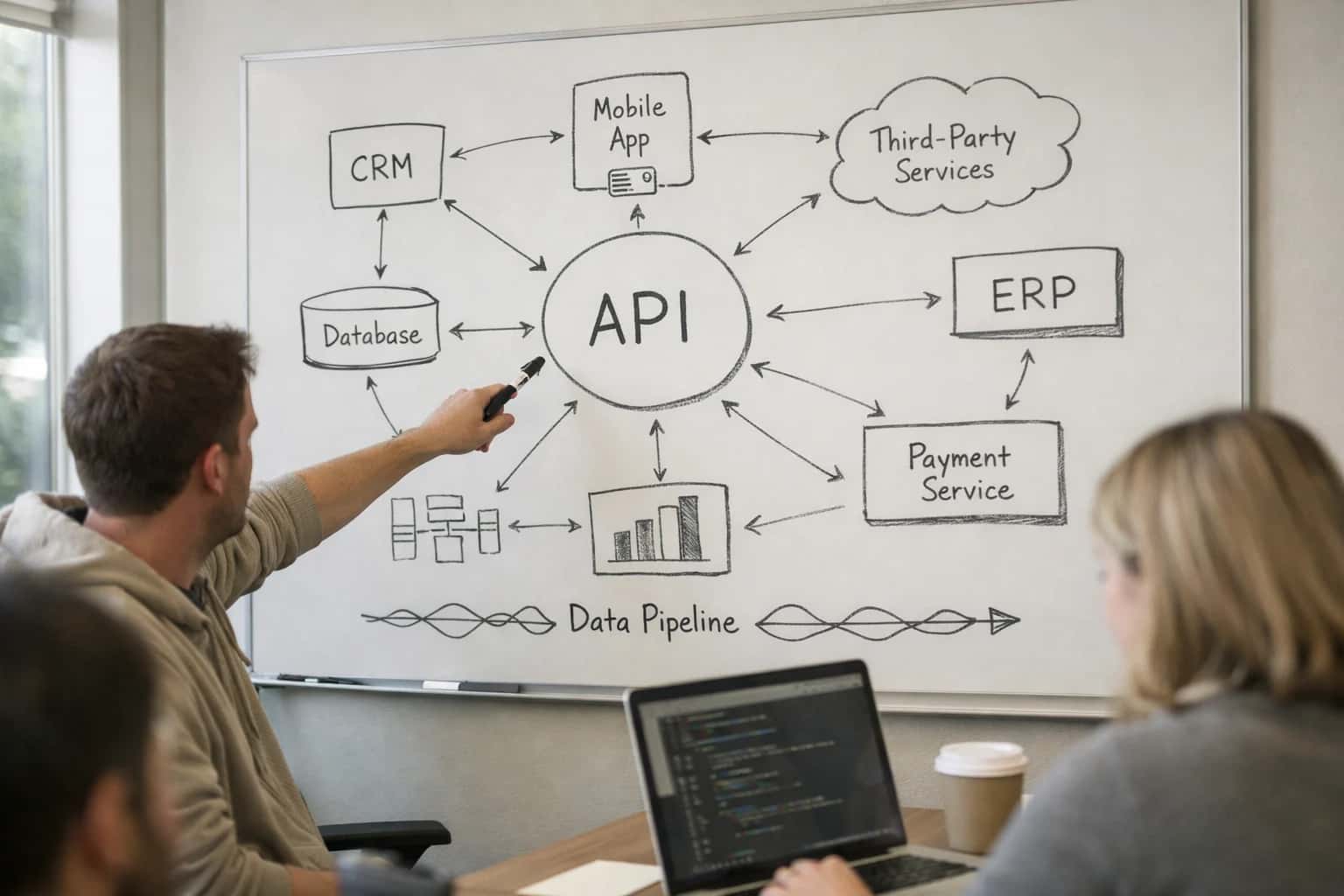
AI for Rural and Community Health: Doing More with Less
A technical guide to deploying AI in Epic, athenahealth, Oracle Health, and eClinicalWorks for community health centers and rural hospitals with limited IT staff.
A practical first implementation is an AI documentation agent triggered from within the clinician's workflow. For example, in Epic Hyperspace, a SmartData element or a custom button can send a visit summary, past notes, and problem list via a secure API to a summarization service. The returned draft note is injected back into the note editor for review and sign-off, saving 2-3 minutes per encounter. For RCM, an automated claim review agent can monitor the ERA/EOB feed in your practice management module (e.g., Oracle Health Soarian, eClinicalWorks RCM), use NLP to classify denial reasons, and either auto-generate an appeal letter or create a task for a billing specialist—turning a 48-hour manual process into a same-day workflow.
Rollout must respect limited IT bandwidth. Start with a single clinic or provider group, using the EHR's built-in role-based access controls to pilot the AI features. Governance is critical: all AI outputs should be logged with an audit trail linking to the patient record and user, and a human-in-the-loop review step must be mandatory for clinical documentation. For CHCs using Epic Community Connect or Oracle Health CommunityWorks, leverage the shared infrastructure and governance models of your host organization. The ROI isn't in futuristic predictions but in concrete gains: reducing time-to-complete charts by 15-20%, increasing clean claim rates by 5-8%, and allowing your small team to focus on patient care instead of administrative backlog.
Where AI Plugs into Your EHR Platform
Automate Note Drafting to Reduce Burnout
For resource-constrained clinics, AI can integrate directly into the provider's note-writing workflow within Hyperspace (Epic), athenaClinicals, or the charting module of CommunityWorks. The goal is to pre-populate visit notes by analyzing past encounters, current vitals, and chief complaint.
Key Integration Points:
- SOAP Note Templates: Inject AI-generated narrative into the Subjective, Objective, Assessment, and Plan sections, pulling from structured data (allergies, medications, problems) and prior notes.
- SmartText/Phrases: Create dynamic SmartPhrases (e.g.,
**.airos**for ROS summary) that call an AI service to generate a review of systems based on the patient's problem list and history. - Workflow: Trigger on note open → call AI API with patient context → return draft → clinician edits/signs. This cuts documentation time from 15+ minutes to 2-3 minutes per encounter, a critical efficiency for small teams.
Highest-Impact Use Cases for Resource-Constrained Settings
For rural health clinics and community health centers with limited IT bandwidth, AI integration must deliver immediate operational relief with minimal overhead. Focus on workflows that reduce administrative burden, accelerate revenue, and support overextended clinical staff.
Automated Clinical Note Drafting
Integrate an AI agent with the EHR's note API (e.g., Epic's Note.Write or athenahealth's clinicals endpoint) to generate visit-specific SOAP note drafts. The agent pulls structured data (vitals, meds, problems) and visit context to create a first draft, which the clinician reviews and signs in Hyperspace or athenaClinicals. Workflow: Post-visit, the system triggers a draft via webhook; clinician edits/signs in 2-3 minutes instead of 8-10.
Prior Auth Document Assembly
Use AI to extract clinical indications from the EHR and populate payer-specific forms or generate narrative letters. The integration connects to the prior auth module or work queue, pulling relevant history, imaging reports, and failed medication trials. Workflow: Staff selects a pending auth, AI drafts the clinical justification and attaches supporting data, staff submits. Reduces manual chart digging and writing from 30+ minutes to a 5-minute review.
Patient Intake & Messaging Triage
Deploy an AI copilot within the patient portal (MyChart, healow) to handle routine patient messages and intake form processing. The agent classifies inbound messages (refill request, symptom question, appointment change), suggests responses or standard workflows, and can auto-pend tasks in the EHR inbox. Workflow: Patient sends a message; AI suggests a reply or creates a task for staff, cutting manual triage volume by 40-60%.
Batch Claim Scrub & Denial Prediction
Integrate AI with the RCM module (Epic Resolute, athenaCollector) to run nightly batch reviews on unbilled claims or recently denied claims. The agent checks for common errors (missing modifiers, mismatched ICD-10/CPT) and flags high-risk claims for manual review before submission or appeal. Workflow: Automated job runs post-close; generates a worklist for the billing team, preventing denials and speeding up rework.
Chronic Care Management (CCM) Workflow Support
Automate monthly CCM touchpoint documentation and billing eligibility. An AI agent reviews the past 30 days of EHR data (encounters, messages, remote monitoring data), drafts a summary of care coordination, and suggests applicable billing codes (99490, 99491). Workflow: Nurse reviews and edits the AI-generated monthly note, ensuring compliant documentation in minutes instead of manually compiling data.
Discharge & Referral Summarization
For clinics coordinating with regional hospitals, use AI to automatically generate concise patient summaries from incoming continuity of care documents (CCDs) via EHR interoperability channels (Care Everywhere, FHIR). The agent extracts key problems, meds, and follow-up needs, populating a summary in the chart for the PCP. Workflow: CCD received → AI parses and creates summary in referral work queue → clinician reviews. Turns a 15-minute chart review into a 2-minute verification.
Example AI Automation Workflows for Rural Clinics
For clinics with limited IT staff and tight budgets, AI should target workflows that reduce administrative burden, accelerate revenue, and improve care coordination without requiring major system overhauls. These examples prioritize EHR-native triggers and minimal new infrastructure.
Trigger: A patient completes a digital check-in via the EHR patient portal (e.g., MyChart, healow) before an appointment.
Context Pulled: The AI agent retrieves the submitted intake form data and the patient's recent history (last 2 visits, active problems, medications, allergies) via FHIR API or a dedicated EHR reporting endpoint.
Agent Action: A structured prompt instructs an LLM to generate a preliminary SOAP note. It focuses on the Subjective and Objective sections, pulling chief complaint and vitals from the intake form and summarizing relevant history.
System Update: The draft note is inserted into the provider's note queue or directly into an open encounter in a "draft" status, clearly marked as AI-generated.
Human Review Point: The provider reviews, edits, and signs the note during or immediately after the visit. This cuts charting time from 5-7 minutes to 1-2 minutes of review.
Implementation Architecture: Lightweight and Secure
A pragmatic, API-first approach to embedding AI into your EHR without heavy infrastructure or complex deployments.
For rural and community health centers, the integration must be non-invasive and maintainable by a small team. We design around the EHR's existing APIs—typically FHIR, SMART on FHIR, or proprietary web services from Epic, athenahealth, or eClinicalWorks—to create a secure middleware layer. This layer acts as a gateway, handling authentication, data de-identification for processing, and prompt orchestration. AI tasks like SOAP note drafting or prior auth form population are triggered by specific events in the EHR (e.g., a provider opening a chart, a claim hitting a certain status) via webhooks or scheduled batch jobs, ensuring the core system remains untouched and operational.
The architecture prioritizes security and data minimization. Patient data is never persistently stored in the AI layer; it's retrieved in real-time, processed, and the AI's output (like a draft note) is posted back to the EHR via API, leaving an audit trail in the native system. For sensitive workflows, we implement human-in-the-loop approvals, where AI-generated content is placed in a draft or review queue (like an In Basket message) for clinician sign-off before becoming part of the legal record. This keeps governance simple and familiar, using the EHR's own role-based access controls and audit logs.
Rollout is phased, starting with a single, high-impact workflow like automated visit summarization for chronic care management or batch prior auth document preparation. We deploy using containerized services that can run on your existing cloud instance (AWS, Azure) or a managed platform, requiring minimal ongoing infrastructure management. The focus is on delivering measurable time savings for clinical and billing staff within weeks, not months, proving value before scaling to other use cases like patient message triage or denial prediction.
Code and Payload Examples
SOAP Note Generation via FHIR
For rural clinics, AI can draft visit notes by synthesizing structured data (vitals, medications) from the EHR with dictated or templated chief complaints. The pattern involves a secure API call to an LLM, returning a structured note for clinician review and sign-off within the EHR workspace.
Example Payload (FHIR-based):
json{ "patient_id": "12345", "encounter_date": "2024-05-15", "clinical_context": { "vitals": {"bp": "120/80", "hr": 72}, "active_medications": ["Lisinopril 10mg"], "chief_complaint": "Patient presents with fatigue and mild headache for 3 days.", "allergies": ["Penicillin"] }, "instruction": "Generate a concise SOAP note focusing on assessment and plan." }
The AI service returns a draft with Subjective, Objective, Assessment, and Plan sections, which can be posted back to the EHR's documentation API or presented in a side-panel for copy-paste.
Realistic Time Savings and Operational Impact
This table illustrates the tangible, practical impact of integrating AI into core EHR workflows for resource-constrained settings. It focuses on time savings and operational lift, not hypothetical revenue.
| Workflow / Task | Before AI (Manual Process) | After AI (AI-Assisted Process) | Implementation & Impact Notes |
|---|---|---|---|
Clinical Documentation (SOAP Notes) | 15-25 minutes per patient, often completed after hours | 5-10 minutes with AI draft + clinician review | Reduces burnout, improves same-day chart completion; integrates with Epic Hyperspace or athenaClinicals. |
Prior Authorization Submission | 20-45 minutes per case, manual form filling and criteria lookup | 5-15 minutes for AI-drafted submission with supporting data | AI extracts from chart, populates payer forms; human reviews for accuracy. Critical for specialty referrals. |
Patient Inbox / Message Triage | 60-90 minutes daily for clinical staff | 20-30 minutes with AI-assisted routing and draft responses | AI categorizes messages (refill, clinical question, admin), suggests replies; staff approves all outgoing messages. |
Chronic Care Management (CCM) Monthly Touchpoints | 30+ minutes per patient for documentation and outreach | 10-15 minutes with automated outreach log and note draft | AI generates activity summary from EHR data; staff personalizes and finalizes. Enables scaling CCM programs. |
Charge Capture & Coding Review | Next-day batch review, high risk of missed charges | Same-day, real-time AI suggestions during visit wrap-up | AI reviews documentation, suggests CPT/ICD codes; billing staff reviews. Improves cash flow with limited staff. |
Discharge Summary / Referral Letter Drafting | 30-45 minutes to compile data and write | 10 minutes to review and edit AI-generated summary | AI pulls key data from entire encounter; clinician ensures accuracy. Speeds up care transitions. |
Preventive Care / Care Gap Outreach | Manual report running, sporadic phone calls | Automated, personalized message campaigns triggered by EHR data | AI identifies patients due for mammograms, vaccines, etc., and triggers patient portal messages or texts via healow or MyChart. |
Governance and Phased Rollout for Limited IT
A phased, low-risk approach to deploying AI in community health centers with small IT teams.
Start with a single, high-impact workflow that touches a limited data scope and user group. For rural health centers, this is often clinical documentation support for primary care visits. Target a specific note type, like a follow-up visit for a chronic condition (e.g., diabetes, hypertension), and integrate an AI copilot that drafts a SOAP note from the encounter data already in your EHR (Epic, athenahealth, etc.). This limits the initial integration surface to a few data objects (problem list, medications, vitals, past notes) and a single API or webhook for sending context and receiving a draft. Keep the first pilot to 2-3 trusted providers who can give structured feedback.
Governance in this phase is manual but clear. Every AI-generated draft requires clinician review and sign-off before signing or saving to the patient chart. Implement a simple audit log that tracks which notes used AI assistance, the provider who edited them, and the final version. This creates a human-in-the-loop safety net without complex automated controls. For IT, the initial technical footprint is minimal: a secure API connection from the EHR to the AI service, managed through a single service account with read/write permissions scoped only to the pilot providers and note types.
Phase two expands the workflow, not the technology. After 30-60 days of successful use, add a second high-value use case like automated prior authorization support. This uses the same core integration architecture but applies AI to a different data set and module—extracting clinical indications from a note to populate a payer form. The governance model evolves to include a weekly review of AI-suggested codes or clinical summaries by your billing or clinical lead before submission. This phased, workflow-by-workflow rollout allows your limited IT staff to manage change control, user training, and performance monitoring in digestible increments, building institutional confidence without overwhelming operational capacity.
Enabling Efficiency, Speed & Accuracy
Intelligent Analysis, Decision & Execution
We build AI systems for teams that need search across company data, workflow automation across tools, or AI features inside products and internal software.
Talk to Us
Search across company data
Give teams answers from docs, tickets, runbooks, and product data with sources and permissions.
Useful when people spend too long searching or get different answers from different systems.

Automate internal workflows
Use AI to route work, draft outputs, trigger actions, and keep approvals and logs in place.
Useful when repetitive work moves across multiple tools and teams.

Add AI to products and internal tools
Build assistants, guided actions, or decision support into the software your team or customers already use.
Useful when AI needs to be part of the product, not a separate tool.
FAQ: AI Integration for Rural Health EHRs
Common questions for rural health centers, FQHCs, and critical access hospitals evaluating AI integration with Epic, athenahealth, or eClinicalWorks to maximize clinical and financial impact with limited IT staff.
Start with a single, high-impact workflow that reduces manual burden for your busiest staff. The best candidates are often:
-
Clinical Documentation Support: AI-assisted SOAP note drafting within the EHR's note editor. This targets provider burnout directly and has a clear ROI in time saved per visit.
- Trigger: Provider opens a progress note.
- Action: AI reviews the patient's problem list, recent vitals, labs, and last note to draft an Assessment & Plan section.
- Human Review: Provider edits, approves, and signs the AI-generated text.
- EHR Update: Draft is inserted directly into the note field via API.
-
Prior Authorization (PA) Triage: Automating the initial data gathering for PAs.
- Trigger: A referral or order requiring PA is placed.
- Action: AI extracts relevant clinical data (diagnosis, past treatments, notes) and payer-specific criteria to pre-fill a PA form or summary.
- Human Review: A billing or clinical staff member reviews, completes, and submits.
Key: Choose a use case with a simple, stateless integration pattern that doesn't require building complex, always-on agents. Use the EHR's existing webhooks or scheduled batch jobs to keep architecture simple.

About the author
Prasad Kumkar
CEO & MD, Inference Systems
Prasad Kumkar is the CEO & MD of Inference Systems and writes about AI systems architecture, LLM infrastructure, model serving, evaluation, and production deployment. Over 5+ years, he has worked across computer vision models, L5 autonomous vehicle systems, and LLM research, with a focus on taking complex AI ideas into real-world engineering systems.
His work and writing cover AI systems, large language models, AI agents, multimodal systems, autonomous systems, inference optimization, RAG, evaluation, and production AI engineering.
Partnered with leading AI, data, and software stack.





How We Work
Custom AI workflows for your Business
One-fit-all AI don't work for modern businesses. At Inferensys, we aim to understand your business & custom requirements; which we use to define most efficient agentic workflows, the data, and the tools for your business.
01
Review the use case
We understand the task, the users, and where AI can actually help.
Read more02
Pick the right approach
We define what needs search, automation, or product integration.
Read more03
Build the first useful version
We implement the part that proves the value first.
Read more04
Improve from there
We add the checks and visibility needed to keep it useful.
Read moreThe first call is a practical review of your use case and the right next step.
Talk to Us