Effective AI integration for care transitions targets specific EHR data objects and workflow surfaces. For discharge summaries, the AI agent ingests data from the problem list, medications, lab results, vital signs, and procedure notes to draft a narrative summary. For referral letters, it pulls from the referral order, relevant clinical notes, and patient demographics. The integration typically connects via the EHR's FHIR API (e.g., Patient, Encounter, Condition, MedicationStatement resources) or proprietary clinical data endpoints. The AI's role is to pre-populate structured sections and generate a coherent narrative draft, which is then routed to the clinician for review and sign-off within their normal workflow—be it in Epic Hyperspace, athenaClinicals, or Oracle Health's Physician Desktop.

Integration
AI Integration for EHR Chart Summarization and Handoff
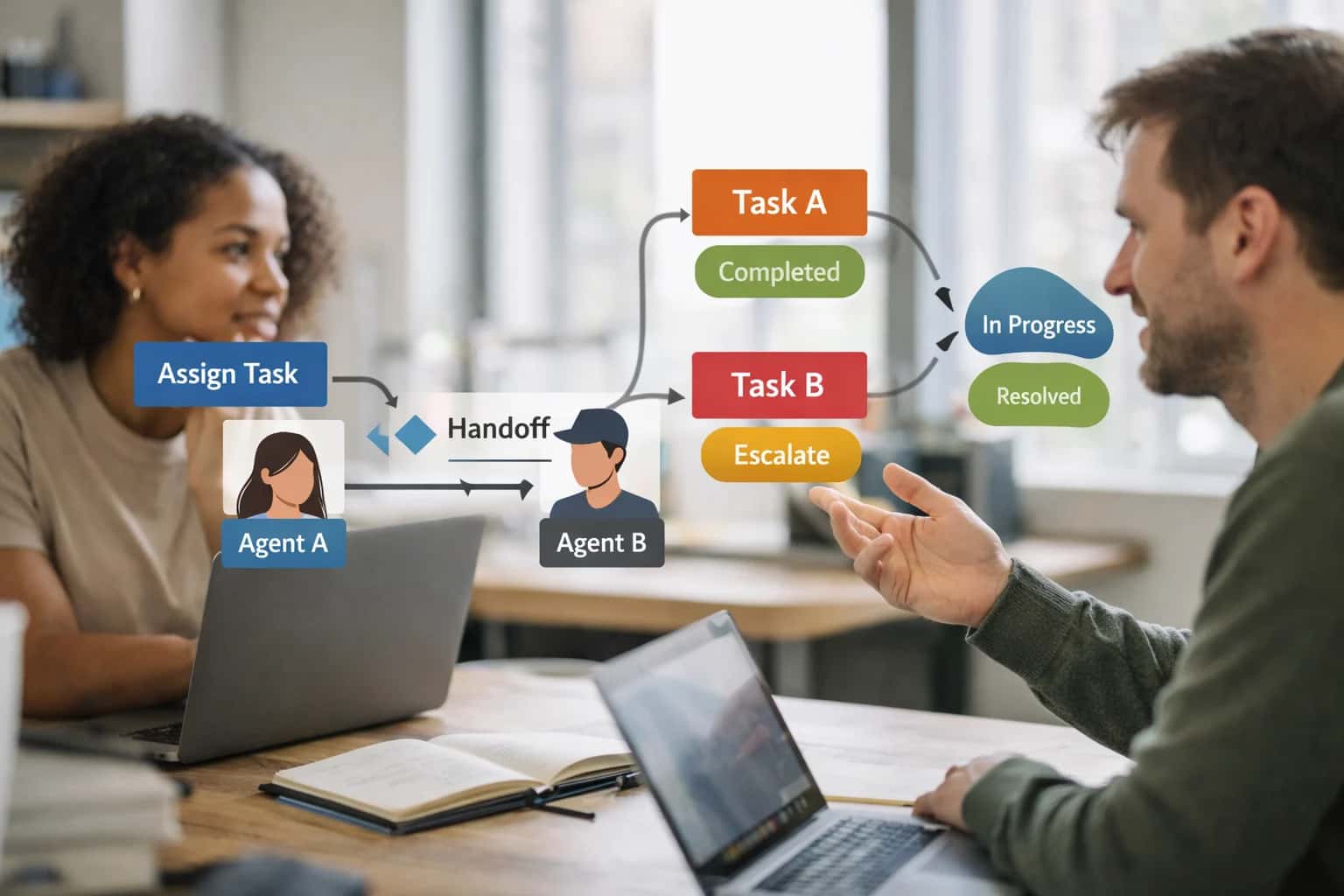
Where AI Fits into EHR Care Transition Workflows
A practical guide to integrating AI for chart summarization and handoff within Epic, athenahealth, Oracle Health, and eClinicalWorks.
Implementation requires a clear data orchestration layer that queries the EHR, structures the input for the LLM, and posts the draft back to the correct note or document object. A common pattern uses a queue-based system triggered by a status change (e.g., Discharge Ordered or Referral Signed). The AI service fetches the required context, runs a prompt chain optimized for clinical summarization, and attaches the draft to the patient's chart. Critical governance steps include mandatory clinician review before signing, maintaining a full audit trail of AI-generated content, and configurable prompts to align with specialty-specific formats (e.g., cardiology vs. primary care referrals).
Rollout should be phased, starting with low-risk, high-volume transitions like discharge summaries for straightforward medical admissions or referral letters to in-network specialists. Pilot metrics should track time-to-complete documentation and clinician edit rates rather than claiming guaranteed time savings. A successful implementation reduces the manual composition burden from 30-45 minutes to a 5-minute review cycle, allowing clinicians to focus on care coordination instead of documentation. For a deeper technical dive on connecting to specific platforms, see our guides on AI Integration for Epic Hyperspace and AI Integration for EHR Workflow Automation.
EHR Modules and Surfaces for Summarization Integration
Core Clinical Documentation Surfaces
AI summarization integrates directly into the clinician's primary documentation workflow. Key surfaces include:
- Progress Notes & H&Ps: Integrate with note editors (e.g., Epic's NoteWriter, athenahealth's Note) to generate draft summaries from prior visit data, current assessments, and plan sections. The AI can pull from problem lists, medications, and recent results.
- Discharge Summaries: Connect to discharge workflow modules (e.g., Epic's Discharge Summary activity, Oracle Health's Discharge Navigator). The AI synthesizes the hospital course, procedures, discharge medications, and follow-up instructions from discrete data and free-text notes.
- Referral & Consultation Notes: Embed within referral generation modules to automatically create a concise patient summary for the receiving specialist, including relevant history, current issues, and key data points.
Implementation typically uses EHR APIs to retrieve patient context and inject draft summaries into the appropriate note template, followed by clinician review and sign-off.
High-Value Chart Summarization Use Cases
AI-driven chart summarization transforms unstructured clinical notes into actionable, structured summaries for care transitions. These workflows reduce clinician burnout, improve handoff accuracy, and accelerate patient throughput by automating documentation tasks within the EHR.
Discharge Summary Generation
Automatically drafts a comprehensive discharge summary by synthesizing the hospital course, final diagnoses, procedures, discharge medications, and follow-up instructions from the patient's EHR record. Integration typically pulls from: problem lists, medication administration records (MAR), procedure notes, and lab results. The draft is routed to the attending physician for review and sign-off in Hyperspace or athenaClinicals.
Referral Letter Drafting
Generates a specialist referral letter by extracting the relevant clinical history, current medications, allergies, and specific reason for referral from the primary care encounter note. The AI agent integrates with the EHR's referral module (e.g., Epic Referrals, athenahealth Referral Management) to auto-populate the letter, attach pertinent labs/imaging, and route for PCP approval before sending via Direct Secure Messaging or the EHR's network.
Hospitalist-to-PCP Handoff
Creates a concise handoff summary for the patient's primary care provider at the moment of discharge. The workflow triggers from the discharge order, summarizing key events, pending test results, reconciled medication changes, and recommended post-discharge monitoring. The summary is posted to the PCP's EHR inbox (e.g., MyChart for providers, athenahealth Communicator) or appended to the patient's chart for the next ambulatory visit.
ED to Inpatient Transfer Summary
Accelerates admission workflows by generating an ED course summary for the accepting hospitalist or specialty team. The AI parses ED provider notes, triage vitals, imaging reports, and medications given to create a structured transfer note. This auto-populates the admission history in the inpatient chart (e.g., in Epic's ASAP to Hyperspace handoff or Oracle Health Millennium), reducing duplicate documentation and ensuring critical information is communicated.
Chronic Care Management (CCM) Monthly Summary
Automates the monthly summary documentation required for CCM billing. The agent reviews the last 30 days of clinical data, patient-reported outcomes, and RPM device readings to draft a summary of care coordination activities, medication adherence, and changes in condition. It integrates with the EHR's CCM module or billing worksheet, ensuring documentation supports CPT code 99490/99439 and is ready for clinician review and signature.
Pre-Visit Chart Summarization
Prepares clinicians for patient visits by generating a one-page summary of the patient's chart before an appointment. For follow-up visits, it highlights changes since the last encounter: new diagnoses, medication adjustments, abnormal results, and open care gaps. The summary is surfaced within the provider's schedule (e.g., Epic's Storyboard, athenahealth's Pre-Charting) or as a sidebar widget in the clinical workspace, enabling more efficient, informed visits.
Example AI Summarization Workflows
These workflows illustrate how AI can automate the creation of concise, structured summaries for care transitions, directly integrating with EHR data models and clinician review queues to reduce documentation burden and improve information transfer.
Trigger: Discharge order is signed in the EHR (e.g., Epic Hyperspace, Oracle Health Millennium).
Context/Data Pulled: The AI agent, via FHIR API or direct database query (governed by RBAC), retrieves:
- Patient demographics and problem list.
- Hospital course notes (progress notes, consult notes).
- Medication reconciliation list.
- Lab and imaging results from the encounter.
- Discharge instructions and follow-up appointments.
Model/Agent Action: A configured LLM (e.g., GPT-4, Claude 3) with a specialized prompt template processes the data to generate a structured discharge summary containing:
- Brief Hospital Course: A chronological narrative synthesized from daily notes.
- Discharge Diagnoses: Extracted and formatted from the final problem list.
- Discharge Medications: A clear, patient-friendly list derived from the reconciled med list.
- Follow-up Plan: Summarized from discharge instructions and scheduled appointments.
- Pending Results & Tasks: Highlighted from open orders or unresolved issues.
System Update/Next Step: The draft summary is posted as a Draft Note in the discharging physician's documentation queue (e.g., Epic's NoteWriter) or into a designated review basket in the PCP's inbox, tagged for completion.
Human Review Point: The discharging physician or designee reviews, edits if necessary, and signs the note, which then becomes part of the permanent legal record and is automatically transmitted to the PCP's EHR via integrated delivery (e.g., Care Everywhere, Direct secure message).
Implementation Architecture: Data Flow, APIs, and Guardrails
A secure, clinician-in-the-loop architecture for generating and routing AI-assisted summaries within your EHR's native workflows.
A production-ready integration for chart summarization connects to your EHR's data layer—typically via FHIR APIs (for patient, encounter, and observation data) and proprietary APIs (for detailed clinical notes and orders). The core flow extracts a patient's longitudinal record, processes it through a secure LLM with a structured prompt for the specific handoff type (e.g., discharge, referral), and returns a draft summary. This draft is then posted back to a designated location in the EHR, such as a progress note template, a discharge summary module, or a referral work queue, where it awaits clinician review, edit, and sign-off. For platforms like Epic, this often involves writing to a specific note stamp; in athenahealth, it may populate a draft in the Clinicals inbox.
Guardrails are non-negotiable. The system must operate under a strict human-in-the-loop model where AI-generated content is never auto-committed to the legal medical record. Implementation includes audit logging for every generation (who, when, what source data), source citation within the draft (e.g., "Based on encounter on 04/15..."), and configurable confidence thresholds that can flag summaries for mandatory review. Role-based access controls (RBAC) ensure only authorized providers can trigger or approve summaries. For sensitive workflows, the architecture can be extended to include a pre-review queue for nurse or case manager verification before the summary reaches the attending physician.
Rollout follows a phased, specialty-specific approach. Start with a single, high-volume handoff scenario like hospitalist-to-PCP discharge summaries or primary care-to-specialist referral letters. Pilot with a small group of providers, instrumenting the workflow to track time saved, draft acceptance rate, and edit patterns. This data refines the prompts and integration points before scaling to other departments like ED handoffs or surgical consults. The goal is not to replace clinician judgment but to shift their effort from document assembly to clinical review and refinement, turning a 30-minute documentation task into a 5-minute verification.
Code and Payload Examples
Retrieve Patient Context for Summarization
Before generating a summary, an AI service must retrieve the relevant patient data from the EHR via FHIR APIs. This typically involves fetching the most recent encounter, along with associated problems, medications, and results.
pythonimport requests # Example: Fetch data for a specific encounter to summarize patient_id = "example-patient-123" encounter_id = "encounter-456" # Headers for EHR FHIR endpoint (Epic, athenahealth, etc.) headers = { "Authorization": "Bearer <access_token>", "Accept": "application/fhir+json" } # Get the specific encounter encounter_url = f"{fhir_base_url}/Encounter/{encounter_id}" encounter_data = requests.get(encounter_url, headers=headers).json() # Get associated conditions (problems) conditions_url = f"{fhir_base_url}/Condition?patient={patient_id}&encounter={encounter_id}" conditions_data = requests.get(conditions_url, headers=headers).json() # Get active medications meds_url = f"{fhir_base_url}/MedicationRequest?patient={patient_id}&status=active" meds_data = requests.get(meds_url, headers=headers).json() # Get relevant observations (labs, vitals) obs_url = f"{fhir_base_url}/Observation?patient={patient_id}&encounter={encounter_id}&category=laboratory,vital-signs" obs_data = requests.get(obs_url, headers=headers).json() # Structure the context for the LLM prompt context_for_llm = { "encounter_type": encounter_data.get('type', [{}])[0].get('text', ''), "conditions": [c['code']['text'] for c in conditions_data.get('entry', [])], "medications": [m['medicationCodeableConcept']['text'] for m in meds_data.get('entry', [])], "key_results": [ f"{obs['code']['text']}: {obs['valueQuantity']['value']} {obs['valueQuantity']['unit']}" for obs in obs_data.get('entry', []) ] }
Realistic Time Savings and Operational Impact
This table illustrates the tangible workflow improvements and time savings achievable by integrating AI for chart summarization and handoff within EHR platforms like Epic, athenahealth, Oracle Health, and eClinicalWorks.
| Workflow Stage | Before AI Integration | After AI Integration | Key Considerations |
|---|---|---|---|
Discharge Summary Drafting | 30-60 minutes manual composition | 5-10 minute AI-assisted draft with clinician review | Requires structured data extraction from labs, meds, and notes; final sign-off remains with attending. |
Referral Letter Generation | 20-40 minutes per specialist referral | AI generates patient-specific draft in <5 minutes | Integrates with referral management module; ensures key clinical context (reason, history) is included. |
Care Transition Handoff Note | 15-25 minutes to compile data from multiple encounters | AI synthesizes last 3 encounters into a structured summary in 2-3 minutes | Focuses on active problems, recent changes, and pending tasks for the receiving team. |
Chronic Care Management (CCM) Monthly Note | 20-30 minutes to document 20+ minutes of non-face-to-face time | AI drafts note from call logs & device data in <5 minutes | Must align with specific CCM billing requirements and timestamp evidence for compliance. |
Pre-Visit Chart Review | 10-15 minutes to skim prior notes and updates | AI provides 1-2 paragraph "since last visit" summary in 1 minute | Summarizes new results, ED visits, and specialist notes since last appointment. |
Post-Operative Note from Pre-Op Data | Manual transfer of pre-op H&P and consents into post-op template | AI auto-populates post-op note sections with relevant pre-op data | Reduces copy-paste errors and ensures consistency between pre-op and post-op documentation. |
Multi-Specialty Consult Summary | Manual compilation of inputs from cardiology, endocrinology, etc. | AI synthesizes key findings and recommendations from all consult notes into one summary | Critical for complex patients; requires mapping of specialty-specific terminology. |
Governance, Compliance, and Phased Rollout
A practical framework for deploying AI chart summarization with clinician oversight, audit trails, and incremental workflow adoption.
Production implementations begin with a human-in-the-loop architecture. AI-generated summaries are never written directly to the patient's permanent chart. Instead, they are routed to a secure, versioned draft queue within the EHR's workflow engine (e.g., Epic's In Basket, athenahealth's Clinical Inbox). This queue enforces a mandatory clinician review and sign-off step, maintaining the legal responsibility of the attending provider. All drafts, edits, and finalizations are logged with a full audit trail—capturing the AI's source prompts, the clinician reviewer, timestamps, and any modifications—to satisfy compliance requirements for JCAHO, HIPAA, and malpractice liability.
A phased rollout minimizes disruption and builds trust. Phase 1 targets a single, high-volume workflow like discharge summaries for a specific service line (e.g., General Surgery). AI is configured to pull structured data (labs, meds, procedures) and unstructured notes from the last 72 hours of the encounter. A small pilot group of clinicians receives drafts, and their feedback refines the prompts and output structure. Phase 2 expands to referral letters and care transition summaries, integrating data from problem lists and past encounters. Phase 3 introduces more complex, longitudinal summaries for chronic care management patients, synthesizing data across multiple visits.
Governance is managed through a clinical steering committee that owns the prompt library, output quality standards, and expansion criteria. This committee reviews performance metrics like clinician edit rates, time-to-sign-off, and user satisfaction scores. Technical safeguards include role-based access controls (RBAC) to ensure only authorized providers can trigger summaries, and data minimization protocols that limit the AI's context window to only the records necessary for the specific summary task, reducing privacy risk. For a deeper technical dive on architecting these secure data flows, see our guide on [/integrations/electronic-health-record-platforms/ai-integration-for-ehr-interoperability-and-data-exchange](EHR Interoperability and Data Exchange).
Enabling Efficiency, Speed & Accuracy
Intelligent Analysis, Decision & Execution
We build AI systems for teams that need search across company data, workflow automation across tools, or AI features inside products and internal software.
Talk to Us
Search across company data
Give teams answers from docs, tickets, runbooks, and product data with sources and permissions.
Useful when people spend too long searching or get different answers from different systems.

Automate internal workflows
Use AI to route work, draft outputs, trigger actions, and keep approvals and logs in place.
Useful when repetitive work moves across multiple tools and teams.

Add AI to products and internal tools
Build assistants, guided actions, or decision support into the software your team or customers already use.
Useful when AI needs to be part of the product, not a separate tool.
Frequently Asked Questions
Practical questions for technical teams planning AI-driven chart summarization and handoff workflows within EHR platforms like Epic, athenahealth, Oracle Health, and eClinicalWorks.
The trigger is typically a discrete event in the EHR workflow, such as a status change on an encounter or a specific user action. Implementation involves listening for this event via API or webhook.
Common Triggers:
- Encounter status changes to "Ready for Discharge" or "Pending Referral".
- A clinician clicking a custom button in the EHR workspace (e.g., "Generate Handoff Summary").
- A scheduled batch job for end-of-day care transitions.
Implementation Flow:
- Event Detection: Your integration service polls the EHR's API (e.g., Epic's FHIR
Encounterendpoint) or receives a webhook from a configured EHR BPA (Best Practice Advisory). - Context Assembly: The service retrieves the relevant patient context—demographics, active problems, medications, allergies, recent notes, labs, and vital signs—using FHIR resources or proprietary APIs.
- Payload to AI: This structured context is sent to your orchestration layer, which formats it into a prompt for an LLM (like GPT-4 or Claude 3), instructing it to generate a summary for a specific handoff scenario (e.g., "discharge to primary care").
- Review & Sign-off: The generated draft is posted back to a dedicated review queue within the EHR (e.g., as a draft note in the clinician's inbox) or a separate clinician-facing UI. The attending physician reviews, edits if necessary, and signs the note, which then becomes part of the official record.
Key Consideration: Ensure the trigger logic respects role-based access controls (RBAC) and only fires for appropriate users and encounter types to avoid alert fatigue.

About the author
Prasad Kumkar
CEO & MD, Inference Systems
Prasad Kumkar is the CEO & MD of Inference Systems and writes about AI systems architecture, LLM infrastructure, model serving, evaluation, and production deployment. Over 5+ years, he has worked across computer vision models, L5 autonomous vehicle systems, and LLM research, with a focus on taking complex AI ideas into real-world engineering systems.
His work and writing cover AI systems, large language models, AI agents, multimodal systems, autonomous systems, inference optimization, RAG, evaluation, and production AI engineering.
Partnered with leading AI, data, and software stack.





How We Work
Custom AI workflows for your Business
One-fit-all AI don't work for modern businesses. At Inferensys, we aim to understand your business & custom requirements; which we use to define most efficient agentic workflows, the data, and the tools for your business.
01
Review the use case
We understand the task, the users, and where AI can actually help.
Read more02
Pick the right approach
We define what needs search, automation, or product integration.
Read more03
Build the first useful version
We implement the part that proves the value first.
Read more04
Improve from there
We add the checks and visibility needed to keep it useful.
Read moreThe first call is a practical review of your use case and the right next step.
Talk to Us