AI integration for athenahealth focuses on three primary surfaces: the clinical inbox, the note editor, and the patient communication layer. Within athenaClinicals, AI can connect via API to patient chart data, active problems, medications, and lab results to draft context-aware SOAP notes, auto-fill structured data fields, and generate visit summaries. For athenaCommunicator, AI agents can triage incoming patient portal messages, draft templated responses for common inquiries (e.g., medication refills, lab results), and flag urgent communications for immediate clinician review. The integration typically uses athenahealth's RESTful APIs and webhooks to listen for events like a new chart opened, a message received, or a note signed, triggering AI workflows that return structured suggestions directly into the clinician's workflow.

Integration
AI Integration for athenahealth Clinicals and Communicator
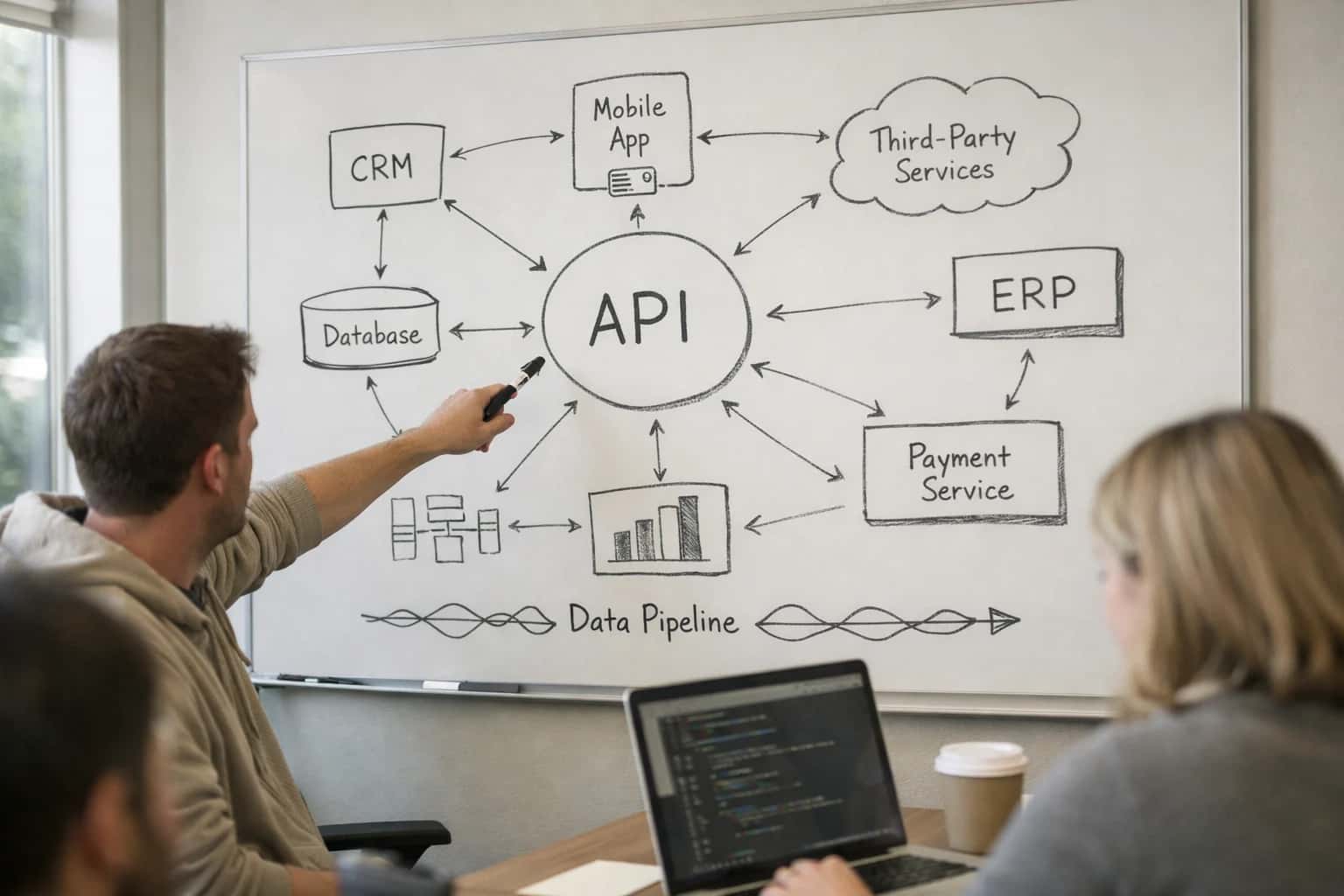
Where AI Fits into athenahealth Clinical Workflows
A technical blueprint for embedding AI assistants and automation into athenahealth's athenaClinicals and athenaCommunicator modules.
Implementation follows a phased, role-based rollout. Start with ambulatory providers for AI-assisted note drafting, where the model uses the last 24 hours of chart data (vitals, labs, past notes) to propose an Assessment & Plan. Next, deploy to medical assistants and nurses for inbox management, using AI to categorize messages ("Refill", "Symptom", "Billing") and suggest next actions. Finally, enable care coordinators with AI-driven summarization for referral letters and transition-of-care documents. Each phase requires configuring specific FHIR resources (Condition, Observation, MedicationRequest) and mapping AI outputs back to athenahealth's data model, ensuring suggestions appear as clickable text blocks or auto-complete options within the native UI to minimize disruption.
Governance is critical. All AI-generated content must route through a human-in-the-loop review before being committed to the patient record. Audit trails must log the original prompt, the AI-generated draft, and any clinician edits. Implement role-based access controls (RBAC) so that AI suggestions are only enabled for users with appropriate permissions. For patient-facing communications via athenaCommunicator, establish clear escalation protocols where low-confidence AI responses are automatically routed to a human staff member. Regular model evaluation against a gold-set of clinician-authored notes and messages ensures quality and prevents drift, aligning AI outputs with your practice's documentation standards and communication tone.
Key Integration Surfaces in athenaClinicals and Communicator
Clinical Documentation
AI integrates directly into the note-drafting workflow within athenaClinicals. The primary surfaces are the Progress Note editor and Encounter Summary generation. An AI agent can be triggered post-visit or during charting to draft a SOAP note by synthesizing structured data (vitals, allergies, medications, problems) with dictated or typed free-text from the provider. The integration typically uses the encounter and clinicaldocument API endpoints to retrieve context and post a draft note for clinician review and sign-off.
High-value use cases include:
- Auto-filling Review of Systems (ROS) and Physical Exam (PE) from visit notes.
- Generating Assessment & Plan (A/P) based on problem list and documented interventions.
- Summarizing lengthy specialist consult notes into a concise summary for the primary chart.
Implementation requires mapping to athena's clinical data model (problems, medications, allergies) and handling draft statuses to maintain an audit trail before final sign-off.
High-Value AI Use Cases for Clinical Teams
Integrating AI directly into athenahealth's clinical surfaces can automate high-volume tasks, reduce documentation burden, and improve care coordination. These use cases leverage the athenaClinicals and athenaCommunicator APIs to embed intelligence where clinicians and staff already work.
Inbox Triage & Patient Message Drafting
AI reviews incoming patient messages in athenaCommunicator, categorizes urgency (routine, follow-up, acute), and drafts templated responses for clinical staff review. Integrates via the communications API to read messages and post draft replies, reducing manual sorting time.
SOAP Note Drafting from Encounter Data
Post-visit, an AI agent consumes the encounter's structured data (vitals, assessment, plan) and unstructured free-text from athenaClinicals via the encounters endpoint. It generates a draft SOAP note in the correct template format, ready for clinician sign-off, cutting documentation time significantly.
Automated Care Gap & Outreach Coordination
AI monitors patient records against quality measures (e.g., mammogram due, A1c check). When a gap is identified, it automatically creates a task in athenaClinicals and drafts a personalized outreach message in athenaCommunicator for staff to send, closing the loop on preventive care.
Referral Summary & Handoff Document Generation
When a referral order is placed, AI compiles a concise patient summary from the chart—including problem list, recent notes, meds, and allergies—and formats it as a referral letter. This document is attached to the referral record in athenaClinicals and can be faxed/printed, ensuring specialists have complete context.
Chronic Care Management (CCM) Touchpoint Logging
For patients enrolled in CCM, AI assists with monthly requirement documentation. It reviews call summaries or patient messages, extracts relevant clinical data, and suggests log entries for the CCM tracker in athenaClinicals, streamlining billing compliance and reducing manual data entry.
Clinical Inbox Task Prioritization & Routing
AI analyzes the content and context of tasks, results, and documents landing in the clinical inbox. It suggests priority levels and can auto-route items (e.g., normal lab results to an MA, abnormal results to the ordering provider) based on configurable rules, helping teams manage workload efficiently.
Example AI-Augmented Workflows
These concrete workflows illustrate how AI agents can integrate directly with athenahealth's clinical and communication surfaces to reduce administrative burden and improve care coordination. Each flow is designed to trigger from athenahealth events, enrich with AI, and write back actionable results.
Trigger: A new patient message arrives in the athenaCommunicator inbox.
Context Pulled: The AI agent uses the athenahealth API to retrieve:
- The full message thread.
- Relevant patient demographics and recent encounters from athenaClinicals.
- Problem list and active medications.
AI Action: A clinical LLM analyzes the message intent (e.g., medication refill request, symptom question, follow-up inquiry). It then:
- Classifies urgency and suggested routing (e.g., "Nurse Triage," "Pharmacist," "Routine").
- Drafts a context-aware, compliant response for clinician review.
- For refills, it checks last fill date and suggests approval or flags for provider review.
System Update: The draft response and classification are posted as a note on the message thread. For low-risk refills, the system can automatically generate and send the approved response via athenahealth, logging the action in the audit trail.
Human Review Point: All drafted responses are presented to a clinician or nurse for final review and sign-off within the athenaCommunicator interface before sending. High-urgency or complex clinical questions are flagged for immediate attention.
Implementation Architecture and Data Flow
A production AI integration for athenahealth connects to specific data endpoints, orchestrates workflows, and embeds outputs where clinicians already work.
The integration architecture typically follows a secure middleware pattern, where an external AI service layer interacts with athenahealth's APIs and webhooks. For athenaClinicals, the primary touchpoints are the Clinical Document API (for retrieving and posting notes) and Patient API (for context). In athenaCommunicator, the Communications API and webhooks for the Provider Inbox are key. AI processes are triggered by events like a note being opened, a message arriving, or a scheduled batch job for chart summarization. Data flows are encrypted in transit, and PHI is never persisted in the AI layer beyond the session without explicit governance controls.
A practical workflow for inbox management illustrates the data flow: 1) A new patient message arrives in the Provider Inbox. 2) A webhook alerts our integration service. 3) The service calls the Communications API to fetch the message thread and relevant patient context from the Clinical API. 4) This data is sent to a configured LLM (e.g., GPT-4, Claude 3) with a prompt to draft a clinically appropriate, tone-matched reply. 5) The draft is returned and presented to the clinician within the athenaCommunicator interface via an embedded widget or a dedicated panel, requiring a review and sign-off before sending. This creates a high-assistance, zero-autonomy model that fits clinical governance.
For note drafting in athenaClinicals, the integration attaches to the note editor. When a clinician opens a progress note, the service pulls the patient's recent encounters, vitals, meds, and labs via API. An AI agent synthesizes a SOAP-style draft into the appropriate note template fields. The clinician then edits, amplifies, or corrects the draft directly in the native athena interface. All AI-generated content is watermarked in the audit trail. Rollout is phased by department, with initial use cases focused on high-volume, lower-acuity visits (e.g., follow-ups, wellness exams) to build trust and refine prompts before expanding to complex cases.
Governance is critical. We implement role-based access controls (RBAC) to determine which user roles can trigger AI assistance. Every AI interaction is logged with the user ID, patient ID, prompt fingerprint, and output for compliance and model evaluation. A human-in-the-loop approval step is mandatory for any AI-generated content before it becomes part of the permanent medical record or is communicated to a patient. This architecture ensures the integration augments clinician workflow without bypassing professional judgment or disrupting existing athenahealth security and compliance postures.
Code and Payload Examples
SOAP Note Generation via athenaClinicals API
This example shows a Python service that calls an LLM to draft a SOAP note, then posts it to the athenaClinicals API as a draft for provider review. The workflow is triggered by a webhook from athenahealth when a patient encounter is closed.
Key Integration Points:
POST /v1/{practiceid}/chart/encounter/{encounterid}/clinicalnotesto create a draft note.GET /v1/{practiceid}/chart/encounter/{encounterid}/summaryto retrieve structured encounter data (chief complaint, vitals, assessment).- A custom webhook endpoint you host to receive the encounter closure event.
python# Example payload sent to LLM for note generation encounter_context = { "patient": "John Doe, 58M", "chief_complaint": "Follow-up for hypertension management", "vitals": "BP 132/84, HR 72", "assessment": "Essential hypertension, well-controlled", "plan": "Continue lisinopril 10mg daily, return in 6 months" } # LLM prompt (simplified) prompt = f"""Based on this encounter, draft a concise SOAP note. Patient: {encounter_context['patient']} CC: {encounter_context['chief_complaint']} Vitals: {encounter_context['vitals']} Assessment: {encounter_context['assessment']} Plan: {encounter_context['plan']} """
The generated note is posted back to athenaClinicals as a draft, tagged with source: "AI Draft" for clear attribution.
Realistic Time Savings and Operational Impact
Estimated impact of integrating AI into core athenahealth Clinicals and Communicator workflows, based on typical pilot implementations. Savings are directional and assume proper integration, clinician training, and human-in-the-loop review.
| Workflow / Task | Before AI | After AI | Implementation Notes |
|---|---|---|---|
SOAP Note Draft Generation | 8-12 minutes manual entry | 2-3 minute review & edit | AI drafts from encounter data & prior notes; clinician finalizes. |
Inbox Message Triage (Clinical) | Manual sorting, 15-20 min/day | Priority-ranked batch, 5-7 min/day | AI categorizes refills, results, questions; flags urgent items. |
Patient Response Drafting (Communicator) | 5-7 minutes per complex response | 1-2 minute review of AI draft | AI generates context-aware replies to common clinical & admin questions. |
Chronic Care Management (CCM) Monthly Note | 12-15 minutes per patient | 4-6 minutes for review & sign-off | AI composes note from RPM data, last visit, and outreach logs. |
Referral Letter / Summary Drafting | 10-15 minutes gathering data & writing | 3-5 minutes to personalize AI draft | AI pulls relevant problem list, meds, history into structured letter. |
Pre-Visit Planning / Chart Prep | Manual review, 5+ minutes per patient | AI-generated 1-page summary, 1-2 min review | Summarizes recent events, overdue preventive care, and pending orders. |
Clinical Task Follow-up & Routing | Manual tracking in notes & tasks | AI suggests next steps & auto-creates tasks | Parses note conclusions to create orders, referrals, or follow-up tasks. |
Governance, Security, and Phased Rollout
Integrating AI into athenahealth Clinicals and Communicator requires a framework that prioritizes patient safety, data integrity, and clinician trust.
A production architecture for athenahealth typically layers AI agents behind a secure gateway that mediates all calls to the athenahealth API. This gateway enforces role-based access control (RBAC), ensuring AI suggestions are only generated for and presented to authorized users within their appropriate clinical context. All AI interactions—such as a draft note generated from an encounter or a suggested patient message—are logged to an immutable audit trail, linking the AI's output to the specific user, patient, and data context that triggered it. This is critical for compliance and for building a feedback loop where clinicians can flag inaccuracies, continuously improving the system.
We recommend a phased rollout, starting with non-critical, high-volume workflows to demonstrate value and build confidence. A common first phase targets the athenahealth Inbox within Communicator, using AI to triage and draft responses to routine patient messages (e.g., medication refill requests, appointment questions). This reduces clerical burden without direct patient risk, as every AI-drafted message requires clinician review and sign-off before sending. The second phase often extends into athenaClinicals for documentation support, such as generating visit note drafts based on structured data (vitals, allergies, problem list) and free-text chief complaint. Here, AI acts as a scribe, populating note templates in the background for the provider to efficiently review, edit, and finalize.
Governance is maintained through a human-in-the-loop design. For clinical documentation, AI suggestions are clearly marked as drafts and cannot auto-save to the patient chart. For patient communications, AI cannot autonomously send messages. This controlled integration, coupled with a robust evaluation framework that tracks suggestion acceptance rates and edits, ensures the AI augments rather than replaces clinical judgment. The final phase involves more complex, multi-step workflows like care coordination or prior authorization support, which are introduced only after establishing reliability and trust in the core use cases.
Enabling Efficiency, Speed & Accuracy
Intelligent Analysis, Decision & Execution
We build AI systems for teams that need search across company data, workflow automation across tools, or AI features inside products and internal software.
Talk to Us
Search across company data
Give teams answers from docs, tickets, runbooks, and product data with sources and permissions.
Useful when people spend too long searching or get different answers from different systems.

Automate internal workflows
Use AI to route work, draft outputs, trigger actions, and keep approvals and logs in place.
Useful when repetitive work moves across multiple tools and teams.

Add AI to products and internal tools
Build assistants, guided actions, or decision support into the software your team or customers already use.
Useful when AI needs to be part of the product, not a separate tool.
Frequently Asked Questions
Practical questions about embedding AI into athenahealth's clinical documentation and provider-patient communication modules, covering architecture, security, and rollout.
AI integrations connect to athenahealth via its RESTful API, which is OAuth 2.0 protected and fully HIPAA-compliant. Access is scoped using the principle of least privilege.
Typical data flow:
- An event triggers the workflow (e.g., a visit is signed, a new message arrives in the inbox).
- A secure serverless function or containerized service, acting as the integration layer, calls the athenahealth API using a service account token.
- The API call requests only the specific data needed for the context (e.g.,
GET /patients/{patientid}/documentsfor a recent note,GET /patients/{patientid}/chart/medicationsfor a medication list). - This structured data is sent to the AI model endpoint (e.g., Azure OpenAI, Anthropic) over a private, encrypted connection. Patient data is never used to train foundational models.
- The AI-generated output (e.g., a draft note) is posted back to athenahealth via the API (e.g.,
POST /patients/{patientid}/documents) or presented to the clinician for review in a custom UI layer.
All access is logged for audit trails, and data residency is maintained within your chosen cloud region. See our guide on EHR API Security Patterns for more detail.

About the author
Prasad Kumkar
CEO & MD, Inference Systems
Prasad Kumkar is the CEO & MD of Inference Systems and writes about AI systems architecture, LLM infrastructure, model serving, evaluation, and production deployment. Over 5+ years, he has worked across computer vision models, L5 autonomous vehicle systems, and LLM research, with a focus on taking complex AI ideas into real-world engineering systems.
His work and writing cover AI systems, large language models, AI agents, multimodal systems, autonomous systems, inference optimization, RAG, evaluation, and production AI engineering.
Partnered with leading AI, data, and software stack.





How We Work
Custom AI workflows for your Business
One-fit-all AI don't work for modern businesses. At Inferensys, we aim to understand your business & custom requirements; which we use to define most efficient agentic workflows, the data, and the tools for your business.
01
Review the use case
We understand the task, the users, and where AI can actually help.
Read more02
Pick the right approach
We define what needs search, automation, or product integration.
Read more03
Build the first useful version
We implement the part that proves the value first.
Read more04
Improve from there
We add the checks and visibility needed to keep it useful.
Read moreThe first call is a practical review of your use case and the right next step.
Talk to Us