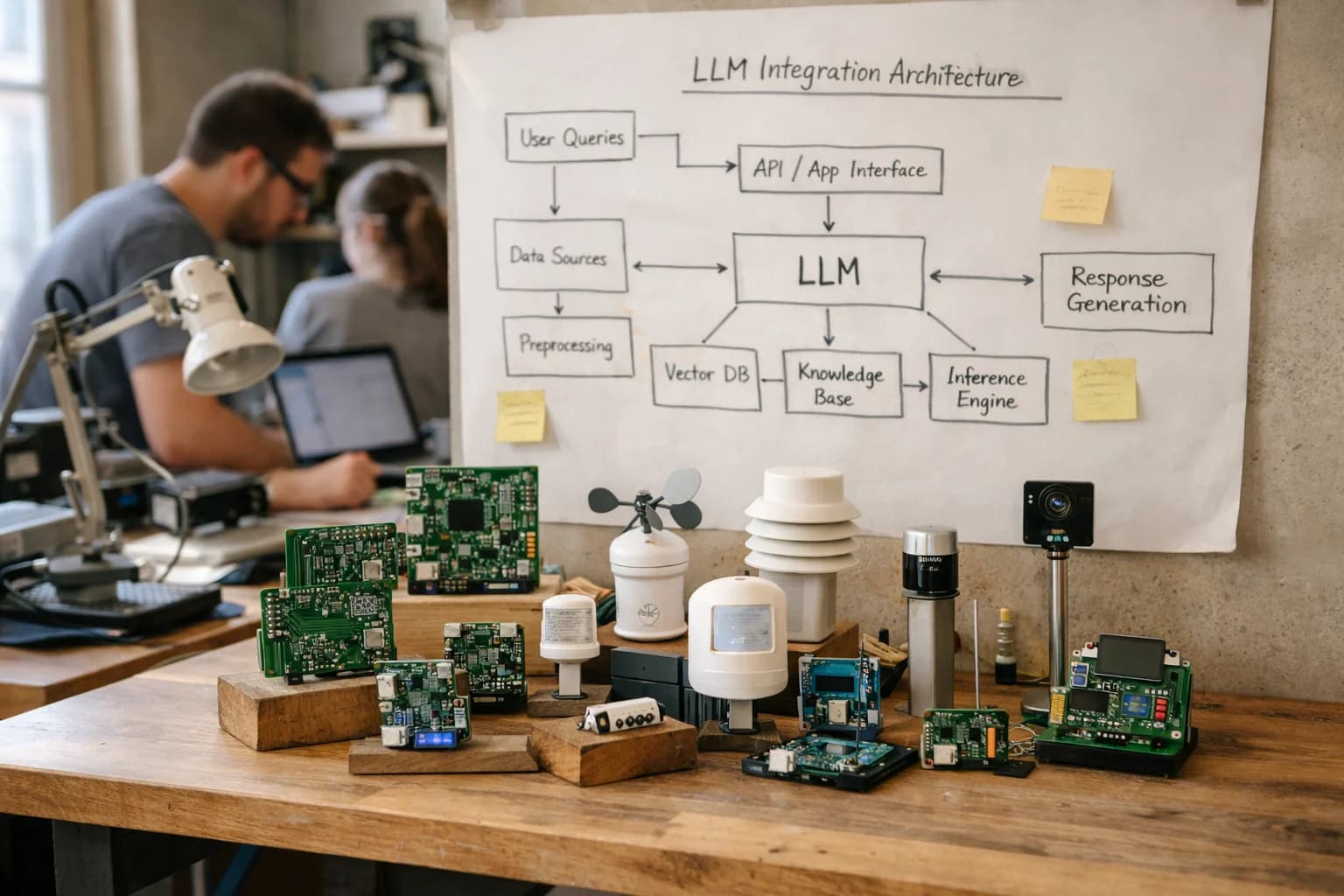
A practical guide to integrating AI-driven dynamic pricing into your existing eCommerce platform without disrupting core operations.
AI dynamic pricing connects at three key layers of your eCommerce stack: the Product Catalog API (Shopify Product API, BigCommerce Catalog API), the Order Management System, and your external data pipelines for competitive intelligence and demand signals. The integration acts as a middleware service that periodically ingests platform data (current prices, inventory levels, sales velocity) and external market data, runs pricing logic through an AI model or rules engine, and posts approved adjustments back to the platform via batch API calls or real-time webhooks. This keeps the core platform stable while enabling intelligent, data-driven price changes.
A production rollout typically follows a phased approach: 1) Shadow Mode, where the AI generates price recommendations logged to an audit table but no platform writes occur. 2) Approval Workflow, where price changes are surfaced in a merchant-facing dashboard (or via Slack/Teams) for manual review and one-click application. 3) Limited Automation, starting with low-risk categories or clearance items, using guardrails like maximum change percentages and margin floors defined in a configuration file. Governance is critical—every recommended and applied price change should be logged with a full context payload (model version, input signals, user ID) for traceability and model retraining.
The operational impact is not about constant, wild price swings, but automating the tedious analysis that pricing analysts perform manually. It shifts their role from data gathering and spreadsheet modeling to overseeing strategy, setting business rules (e.g., 'never be 10% above Competitor X', 'protect a 40% margin on flagship products'), and handling exceptions. For most teams, the win is moving from weekly or monthly price reviews to daily or intra-day adjustments for key SKUs, reacting to competitor moves or inventory shifts in hours instead of days, all while maintaining a consistent audit trail for finance and compliance.
AI DYNAMIC PRICING
Platform-Specific Integration Surfaces
Core Price Management Layer
The Product API is the primary surface for dynamic pricing. AI agents call GET /products to fetch current prices, SKUs, and inventory levels, then execute PUT /products/{id} with updated price or compare_at_price fields. For platforms like Shopify, this is the ProductResource; for BigCommerce, it's the Catalog API. Implementations typically:
Poll or webhook-driven: Run batch jobs on a schedule (e.g., hourly) or trigger updates via webhooks from competitive data feeds.
Atomic updates: Update only the price field to avoid overwriting other product attributes.
Versioning & audit: Log every price change with the AI model's reasoning (e.g., reason: competitor_price_drop_5percent) for governance.
Move beyond static rules and manual spreadsheets. Integrate AI models directly with your eCommerce platform's pricing APIs to automate competitive, margin-aware, and demand-driven price adjustments at scale.
01
Competitive Price Monitoring & Adjustment
AI agents continuously scrape or ingest competitor pricing data via feeds, then analyze your product catalog's position. The system automatically generates and executes price update requests to your platform's Product API (e.g., Shopify Product API, BigCommerce Catalog API) to maintain target positioning, respecting your minimum margin rules.
Daily -> Real-time
Adjustment Cadence
02
Demand-Based Price Optimization
Integrate AI forecasting models with your platform's order history and web analytics data. The model predicts demand elasticity for SKUs based on seasonality, trends, and inventory levels, then recommends optimal prices. Approved changes are pushed via API, often through a scheduled job or webhook-triggered workflow.
Batch -> Automated
Forecast Workflow
03
Personalized & Segmented Pricing
Deploy an AI service that analyzes customer lifetime value, purchase history, and real-time behavior. It segments customers and calculates personalized price offers or discounts. These are applied at checkout via platform discount code APIs or custom pricing extensions, ensuring rules are logged for audit.
Static -> Dynamic
Segment Targeting
04
Promotional & Flash Sale Pricing
Automate the entire promotional pricing lifecycle. An AI agent ingests campaign goals and inventory targets, generates time-bound price rules, and deploys them via API. It monitors performance in real-time against platform analytics, allowing for mid-campaign price adjustments to maximize sell-through or revenue.
Hours -> Minutes
Campaign Setup
05
Channel-Specific Price Synchronization
For brands selling on multiple channels (DTC, Amazon, Walmart), an AI orchestration layer manages a unified price strategy. It considers channel-specific fees, competitive norms, and brand positioning. The agent makes calculated adjustments and syncs prices bidirectionally between your primary eCommerce platform and marketplace APIs.
Manual -> Governed
Cross-Channel Control
06
B2B Tiered & Contract Pricing Automation
For B2B stores (Adobe Commerce B2B, BigCommerce B2B), AI agents integrate with customer group APIs and quote systems. They automatically apply pre-negotiated contract pricing, manage complex tiered discount structures based on order volume, and handle approval workflows for custom quotes, reducing manual configuration errors.
1 Sprint
Rule Implementation
PRACTICAL AUTOMATIONS
Example AI Pricing Workflows
These workflows demonstrate how to connect AI models for competitive intelligence, demand forecasting, and margin analysis directly to your eCommerce platform's pricing APIs (like Shopify's Product API or BigCommerce's Catalog API). Each flow is designed to be triggered by data events, execute a specific pricing logic, and update the system with minimal manual intervention.
Trigger: Scheduled daily cron job or webhook from a competitive data aggregator (e.g., Price2Spy, Competitor Monitor).
Context/Data Pulled:
Current product prices and SKUs from the platform's Product API.
Real-time competitor prices for matched SKUs from the data aggregator's API.
Internal rules (minimum margin %, brand positioning flags) from a configuration store.
Model/Agent Action:
An AI agent evaluates the competitive landscape:
Identifies products where your price is >X% above the market average for your tier.
Calculates a suggested new price using a rule set (e.g., match the lowest competitor + $0.99, but never below cost + margin floor).
Flags products for human review if the suggested adjustment violates a brand rule or would trigger a large price drop.
System Update/Next Step:
For auto-approved items, the agent calls the platform's PUT /admin/api/products/{id}.json (Shopify) or PUT /catalog/products/{id} (BigCommerce) endpoint with the updated price and compare_at_price fields. A log entry is created in the pricing audit table.
Human Review Point: All flagged items are sent to a Slack channel or a dashboard queue for a pricing manager's approval before any API call is made.
FROM DATA TO DECISION TO ACTION
Implementation Architecture & Data Flow
A production-ready AI dynamic pricing system connects external intelligence to your platform's pricing APIs through a governed, event-driven pipeline.
The core architecture involves three integrated layers: Data Ingestion, AI Decision Engine, and Platform Execution. The Data Ingestion layer continuously pulls real-time signals—such as competitor prices via scraping APIs, internal demand forecasts from your analytics warehouse, current inventory levels from your WMS or ERP, and margin rules from your finance system—into a unified feature store. This creates a live pricing context for every SKU.
The AI Decision Engine is a microservice that consumes this context. It runs your configured pricing models (rule-based, optimization, or ML-driven) to generate price change recommendations. For example, a model might recommend a 5% increase for a high-demand, low-competition item, while flagging a competitor-matched price for a high-velocity commodity SKU. Each recommendation includes a confidence score, expected margin impact, and the business rule that triggered it. These are queued for review in a dedicated dashboard, where pricing analysts can approve, reject, or adjust batches of changes.
Upon approval, the Platform Execution layer takes over. It translates recommendations into precise API calls to your eCommerce platform's Product API—such as PUT /admin/api/2024-04/products/{product_id}.json for Shopify or the Price Lists API for BigCommerce. Changes are applied with idempotent logic to avoid conflicts. The entire flow is logged for a full audit trail, linking the final price to the source data, AI model, and human approver. Rollout is typically phased, starting with a pilot category, with A/B testing capabilities built into the workflow to measure the impact of AI-driven prices versus a control group.
AI DYNAMIC PRICING INTEGRATION PATTERNS
Code & Payload Examples
Core Pricing Logic & API Integration
The price rule engine sits between your AI model and the eCommerce platform's Product API. It evaluates AI-generated price suggestions against your business guardrails (minimum margin, price ceilings) before applying updates.
python
# Example: Shopify Product API Price Update with Guardrails
def apply_ai_pricing_to_product(shopify_product_id, ai_suggested_price, min_margin_percent=0.30):
"""Fetches current cost, validates AI suggestion, and updates Shopify."""
# 1. Fetch current product data including cost
product_data = shopify_api.get(f'/admin/api/2024-04/products/{shopify_product_id}.json')
current_price = float(product_data['product']['variants'][0]['price'])
product_cost = float(product_data['product']['variants'][0].get('cost', 0))
# 2. Apply margin guardrail
min_price = product_cost * (1 + min_margin_percent)
final_price = max(ai_suggested_price, min_price)
# 3. Prepare and send update payload
update_payload = {
"product": {
"variants": [{
"id": product_data['product']['variants'][0]['id'],
"price": str(final_price),
"compare_at_price": str(current_price) # Optional: show original
}]
}
}
response = shopify_api.put(f'/admin/api/2024-04/products/{shopify_product_id}.json', json=update_payload)
return response.status_code == 200
This pattern ensures AI-driven changes respect your profitability floor, with the compare_at_price field optionally showing the previous price for strikethrough display.
AI-DRIVEN PRICING OPERATIONS
Realistic Time Savings & Business Impact
How AI integration shifts pricing workflows from manual, reactive tasks to automated, strategic operations.
Pricing Workflow
Before AI
After AI
Implementation Notes
Competitive price monitoring
Manual web scraping & spreadsheet updates (4-8 hours/week)
Automated data ingestion & alerting (30 minutes/week)
AI agent calls competitor APIs/feeds, parses data, and flags significant deviations.
Price change execution
Manual updates via admin UI or CSV upload (2-4 hours per batch)
API-driven updates triggered by rules (15 minutes per batch)
Integration with platform Product API (e.g., Shopify REST API) for bulk updates with approval gates.
Promotion & discount planning
Historical analysis & gut-feel decisions (1-2 days quarterly)
Scenario modeling with forecasted margin impact (2-4 hours quarterly)
AI model ingests sales velocity, seasonality, and inventory levels to simulate outcomes.
Real-time alerts on low-margin SKUs or pricing errors (Same-day correction)
Webhook-triggered analysis of cost data feeds vs. live prices.
Seasonal price strategy
Static calendar-based adjustments set months in advance
Dynamic adjustments based on real-time demand signals
AI consumes web traffic, conversion rate, and competitor data to suggest incremental changes.
Customer segment pricing
Manual tier management for 2-3 key segments
Automated rules for dozens of dynamic segments (e.g., VIP, at-risk)
Leverages CRM/CDP data via customer API to apply personalized price groups.
Price testing & optimization
Limited A/B tests run manually over weeks
Continuous, automated multi-armed bandit tests
AI orchestrates price variants, measures conversion lift, and rolls out winners via API.
ARCHITECTING FOR CONFIDENCE AND CONTROL
Governance, Controls & Phased Rollout
A dynamic pricing engine must be reliable, transparent, and controllable to be trusted in production.
A production AI pricing system is not a single model but an orchestrated workflow with multiple control points. The core architecture typically involves: a data ingestion layer pulling from your eCommerce platform's Product API, competitive intelligence feeds, and internal margin rules; a pricing logic service where AI models generate price suggestions; and an approval & execution layer that posts approved changes back to the platform (e.g., Shopify's Product API or BigCommerce's Catalog API). Critical governance is enforced via rule-based guardrails that override AI suggestions violating minimum margin or MAP policies, and all suggestions are logged with a full audit trail of inputs, model version, and the responsible user or system.
Rollout should be phased, starting with a low-risk pilot segment. Phase 1 often targets a single product category or a specific sales channel for shadow testing, where AI-generated prices are logged but not applied. Phase 2 introduces human-in-the-loop approval, where price changes for the pilot segment are queued in a dashboard (or integrated into your existing PIM or merchandising tool) for a pricing analyst's review before API execution. Phase 3 expands to automated execution with high-confidence rules, using predefined confidence thresholds and business rules to auto-apply a subset of changes while flagging exceptions. This phased approach builds operational trust and surfaces edge cases in your specific catalog and competitive landscape.
Key Control: Implement a circuit breaker that automatically disables automated price updates if key metrics (like margin erosion or error rate) exceed thresholds, reverting to a fallback pricing strategy. This is typically a webhook-driven process monitored by your operations team.
Final governance requires continuous monitoring beyond the initial rollout. This includes tracking not just revenue and margin impact, but also model performance metrics like suggestion acceptance rates and drift detection on input data distributions. Establish a regular review cadence where pricing analysts can audit logs, adjust business rules, and recalibrate models based on seasonal shifts or new competitor entry.
Enabling Efficiency, Speed & Accuracy
Intelligent Analysis, Decision & Execution
We build AI systems for teams that need search across company data, workflow automation across tools, or AI features inside products and internal software.
IMPLEMENTATION QUESTIONS
AI Dynamic Pricing FAQ
Practical answers for pricing analysts and developers integrating AI-driven pricing with eCommerce platforms like Shopify, BigCommerce, and Adobe Commerce.
The core integration pattern involves a scheduled job or event-driven workflow that:
Triggers a pricing review (e.g., daily cron job, webhook from a competitor price feed).
Queries your platform's Product API (e.g., GET /admin/api/2024-01/products.json for Shopify) to fetch current SKUs, prices, and inventory levels.
Enriches this data with external signals (competitive prices, demand forecasts, margin rules from your ERP) in your AI service.
Executes the AI model or rule engine to calculate a recommended price for each eligible product.
Posts the update back via the platform's Product Update API (e.g., PUT /admin/api/2024-01/products/{id}.json).
Key Implementation Detail: Use API rate limits and batch operations to avoid throttling. For platforms like Shopify, implement the update using a GraphQL Bulk Operation for large catalogs. Always include an audit_log field in the product metafields to record the reason for the change (e.g., "ai_pricing_trigger": "competitor_match", "recommended_by": "model_v2.1").
About the author
Prasad Kumkar
CEO & MD, Inference Systems
Prasad Kumkar is the CEO & MD of Inference Systems and writes about AI systems architecture, LLM infrastructure, model serving, evaluation, and production deployment. Over 5+ years, he has worked across computer vision models, L5 autonomous vehicle systems, and LLM research, with a focus on taking complex AI ideas into real-world engineering systems.
His work and writing cover AI systems, large language models, AI agents, multimodal systems, autonomous systems, inference optimization, RAG, evaluation, and production AI engineering.
Partnered with leading AI, data, and software stack.
How We Work
Custom AI workflows for your Business
One-fit-all AI don't work for modern businesses. At Inferensys, we aim to understand your business & custom requirements; which we use to define most efficient agentic workflows, the data, and the tools for your business.
The first call is a practical review of your use case and the right next step.