
Inferensys

Integration

AI Integration for Everlaw

A technical blueprint for augmenting Everlaw's native review platform with custom AI agents and LLMs. This guide covers API integration patterns, high-value use cases, and implementation architecture for automating document analysis, enhancing search, and accelerating case strategy.
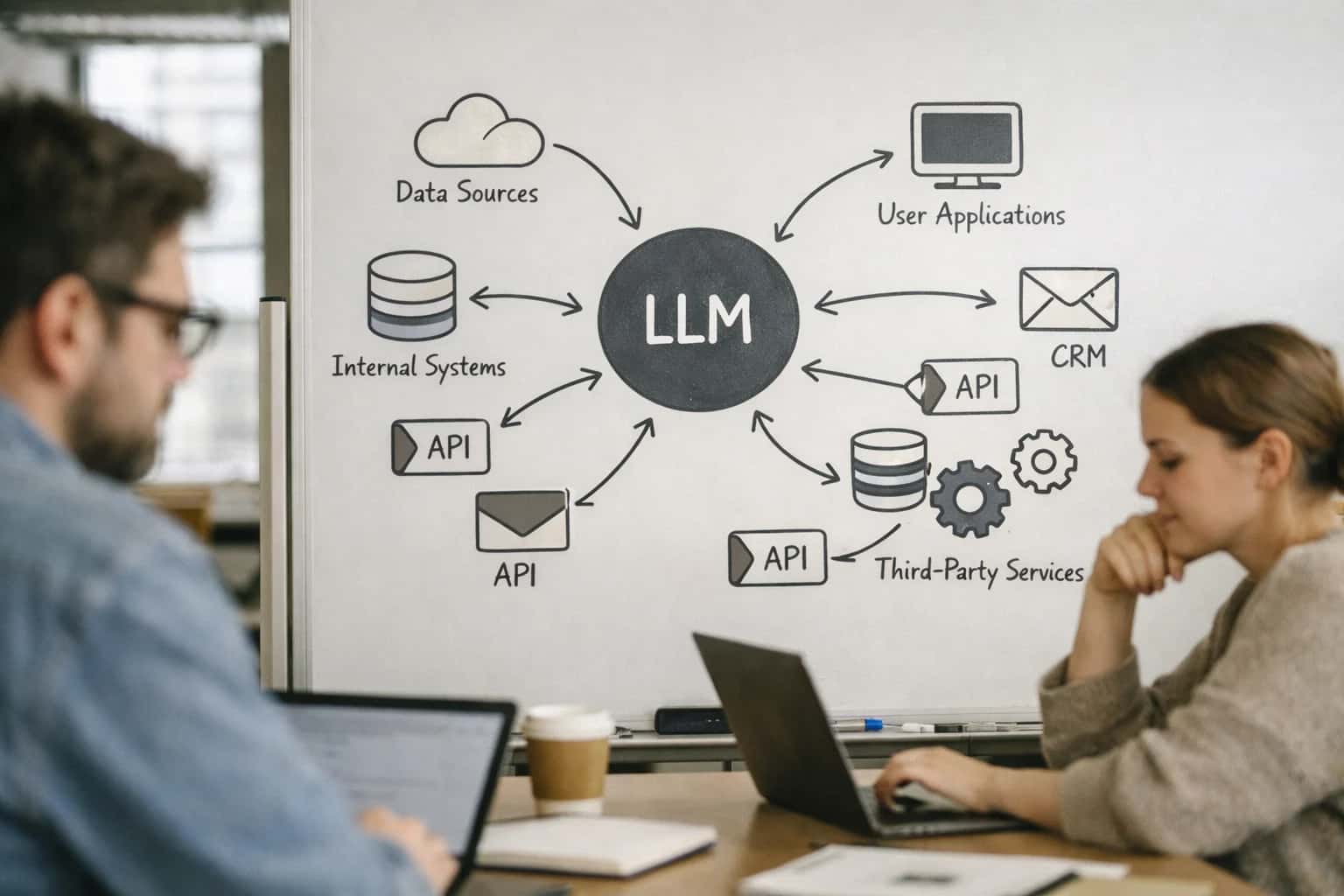
Architect reviewing LLM integration architecture on laptop, system diagrams visible, modern technical office setup.
ARCHITECTURE AND ROLLOUT

Where AI Fits into the Everlaw Workflow

A practical guide to connecting generative AI to Everlaw's case analysis surfaces, review queues, and collaborative tools.

AI integration for Everlaw is not about replacing the platform but extending its native intelligence. The connection points are its REST API, webhook system, and custom object model. The primary surfaces for AI enhancement are:

  • Smart Tags & Custom Fields: Automatically apply tags for privilege, responsiveness, issue codes, or custom concepts based on document content.
  • Concept Search & Clustering: Augment keyword searches with semantic understanding to find conceptually related documents across a case.
  • Case Timelines & Chronologies: Extract dates, events, and entities from documents to auto-populate and link evidence in Everlaw's timeline view.
  • Batch Review Queues: Prioritize documents for review based on AI-scored relevance or predicted issue coding, directly within reviewer workflows.
  • Transcript Analysis: Summarize depositions, identify key testimony, and generate Q&A indexes for faster witness preparation.


A typical production implementation uses Everlaw's API to listen for new document batches via webhooks. An external AI service processes the documents, returning structured JSON payloads with predictions (e.g., {"privilege_confidence": 0.92, "key_issue": "contract_breach"}). These results are written back to Everlaw as custom field values or used to apply native Smart Tags. For reviewer-facing copilots, a secure iframe or custom panel can be embedded to provide on-demand summarization or clause extraction without leaving the review interface. The architecture must respect Everlaw's RBAC and audit trails, ensuring all AI-applied tags are attributable and reversible.

Rollout should be phased, starting with a single, high-volume workflow like privilege log generation or deposition summarization. Governance is critical: establish a human-in-the-loop review stage for AI outputs, especially for privilege or responsiveness calls. Use Everlaw's reporting and dashboard features to track AI performance—comparing AI-predicted tags against final reviewer decisions to measure accuracy and refine prompts. The goal is to move manual effort from hours to minutes on repetitive tasks, allowing legal teams to focus on strategy and high-judgment review, while maintaining the collaborative, defensible workflow Everlaw is designed for.

ARCHITECTURAL BLUEPOINT

Key Everlaw Surfaces for AI Integration

Automating Document Categorization

Everlaw's Smart Tags and custom fields are the primary surfaces for AI-driven classification. Integrations can use the Everlaw API to batch-apply tags based on AI analysis of document content, metadata, or extracted entities. This enables workflows like:

  • Auto-tagging for privilege, responsiveness, or issue codes (e.g., privilege_log_review, key_communication).
  • Populating custom fields with AI-extracted dates, parties, or contract clauses.
  • Triggering downstream review workflows or report generation based on tag application.

A typical integration pattern involves processing documents through an external AI service, then using the POST /api/v1/documents/{id}/tags endpoint to apply the results. This keeps the review database synchronized and allows reviewers to filter and batch on AI-generated insights immediately.

INTEGRATION BLUEPRINTS

High-Value AI Use Cases for Everlaw

Practical AI workflows that connect directly to Everlaw's case analysis surfaces, review queues, and API to accelerate legal teams. These patterns are designed for integration, not replacement.

01

Smart Tag Automation

Deploy custom AI models via Everlaw's API to analyze incoming documents and automatically apply Smart Tags for issues, privileges, or PII/PHI. Models can be trained on past case data to tag for specific litigation themes (e.g., 'antitrust discussion', 'regulatory breach'). Tags populate instantly in the review grid, creating immediate reviewer queues.

Batch -> Real-time
Tagging workflow
02

Concept Search & Clustering

Augment Everlaw's keyword search with semantic AI models. Ingest document embeddings into a vector store, then surface conceptually related documents via a custom sidebar or integrated search endpoint. Enables reviewers to find 'documents about financial risk' without relying on specific terms, dynamically clustering case data beyond native features.

1 sprint
Initial integration
03

Deposition & Transcript Q&A

Integrate an LLM-powered agent with Everlaw's transcript management. After loading a deposition transcript, the agent can answer natural language questions (e.g., 'What did the witness say about the merger date?') and generate a summary by topic or speaker. Outputs can be saved as case notes or linked to relevant documents.

Hours -> Minutes
Summary generation
04

Privilege Log Generation

Automate the creation of privilege logs by connecting an AI analysis layer to Everlaw's review workflow. The system scans documents tagged as privileged, extracts key metadata (date, author, recipients), and drafts a privilege description using context from the document. Outputs a formatted CSV or spreadsheet ready for legal team review and production.

Same day
Log draft ready
05

Timeline & Chronology Builder

Use AI to extract dates, events, and key entities from reviewed documents and populate Everlaw's timeline or custom object features. The integration listens for new document coding via webhook, processes the text, and suggests timeline entries with citations. Reduces manual chronology work for case strategy meetings.

Batch -> Real-time
Event extraction
06

Quality Control & Reviewer Analytics

Implement an AI agent that monitors review consistency and speed by analyzing Everlaw's audit trail and coding data. Flags potential inconsistencies in issue coding across reviewers or batches, and provides dashboards to the review manager. Integrates via reporting APIs to support QC workflows without manual spot-checking.

Hours -> Minutes
Anomaly detection
EVERLAW INTEGRATION PATTERNS

Example AI-Powered Workflows

These concrete workflows illustrate how generative AI connects to Everlaw's API and review surfaces to automate high-effort tasks, accelerate analysis, and enhance collaborative review. Each pattern details the trigger, data flow, AI action, and system update.

This workflow uses AI to pre-apply Everlaw Smart Tags, reducing manual first-pass review time for common issues.

  1. Trigger: A batch of documents completes processing and is placed into a designated review folder.
  2. Context Pulled: The integration calls the Everlaw API to retrieve the document text, metadata (custodian, date), and the defined Smart Tag schema (e.g., Privileged, Responsive, Hot Document, Confidential).
  3. AI Agent Action: A configured LLM (like GPT-4 or Claude) analyzes each document with a specialized prompt:
    code
    Analyze the legal document. Apply these tags only if supported by evidence:
    - 'Privileged': Contains attorney-client communication or work product.
    - 'Hot Document': Directly supports a key claim or defense.
    - 'Confidential': Contains sensitive business information (PII, trade secrets).
    Return a JSON object: {"tags": ["tag_name"], "confidence": 0.95, "rationale": "brief explanation"}
  4. System Update: The integration uses the Everlaw API's batch-tag endpoint to apply the high-confidence tags to the documents. Tags applied by AI are marked with a source (e.g., AI-Assisted: v1.2) in the tag description for auditability.
  5. Human Review Point: Documents tagged as Privileged or Hot are automatically promoted to a senior reviewer's queue for validation. The AI's rationale is stored in a custom field for reviewer context.
FROM PLATFORM API TO AI-ENHANCED REVIEW

Implementation Architecture & Data Flow

A production-ready blueprint for connecting generative AI to Everlaw's case analysis surfaces, processing engine, and collaborative workflows.

The integration connects to Everlaw's REST API, which provides programmatic access to cases, documents, batches, tags, and review data. The core data flow begins by listening for webhooks on events like document.processed or batch.created, or by scheduling batch jobs via the API to process newly ingested documents. For each document, the system extracts text and metadata (like family_id, custodian, file_type) and sends it to an orchestration layer. This layer decides which AI models to apply—such as a summarization LLM for deposition transcripts or a custom NER model for identifying key entities in contracts—and manages the API calls, prompt templating, and cost tracking.

AI-generated outputs—such as smart tag suggestions, concept clusters, timeline events, or document summaries—are written back to Everlaw as native objects. This is done by creating or updating Smart Tags via the /tags endpoint, populating Custom Fields on document records, or adding notes to the Communications log. For example, an AI agent analyzing email threads can create a Smart Tag for "Key Negotiation Point" and apply it to the pivotal email in a thread, while also adding a summary of the thread's outcome to a Summary custom field. This keeps all AI-derived insights searchable, reportable, and within Everlaw's permission and audit trail systems.

Governance and rollout are managed through a middleware control plane. This system handles authentication (using Everlaw API keys with scoped permissions), rate limiting, fallback logic for AI service failures, and an approval workflow for certain AI actions—like applying privilege tags—before they are committed to the case. For phased rollouts, the integration can be configured to process specific batches or custodians first, allowing legal teams to validate AI output quality in a controlled subset before scaling to the full dataset. All AI interactions are logged with inputs, prompts, model versions, and outputs for reproducibility and compliance, creating a transparent chain of custody from original document to AI-enhanced insight.

EVERLAW API INTEGRATION PATTERNS

Code & Payload Examples

Automating Tag Application with AI

Use Everlaw's POST /api/tags and POST /api/tag-application endpoints to apply AI-generated tags in bulk. A common pattern is to process documents through an AI service, then map predictions to existing Everlaw tag structures. The system should handle batch sizes, error recovery, and audit logging.

Example Workflow:

  1. Query Everlaw for documents needing review via GET /api/documents with filter parameters.
  2. Send document text/metadata to your AI model for classification (e.g., privilege, relevance, issue code).
  3. Map AI predictions to Everlaw tag IDs.
  4. Apply tags via batch API, including a reason field noting "AI-Assisted Review".
python
# Example: Apply privilege tags based on AI analysis
def apply_privilege_tags(document_ids, predictions, tag_id, api_client):
    """Batch apply privilege tag to documents predicted as privileged."""
    application_data = {
        "tagId": tag_id,
        "documentIds": [
            doc_id for doc_id, pred in zip(document_ids, predictions) if pred == "privileged"
        ],
        "reason": "AI Privilege Classifier v2.1",
        "applyToFamilies": True
    }
    response = api_client.post("/api/tag-application", json=application_data)
    return response.json()
EVERLAW INTEGRATION

Realistic Time Savings & Operational Impact

How AI integration for Everlaw accelerates case analysis and review workflows, based on typical implementation patterns for corporate legal and law firm teams.

Workflow / TaskBefore AI IntegrationAfter AI IntegrationImplementation Notes

Smart Tag Application

Manual reviewer tagging, 2-4 hours per batch

AI pre-tags with human review, 15-30 minutes per batch

Uses Everlaw API to apply tags; reviewer confirms/edits

Concept Search & Clustering

Keyword iteration, manual grouping, 1-2 days

Semantic search & dynamic clustering, same-day results

Augments native search via API; clusters appear as saved searches

Deposition Summarization

Manual review & summary drafting, 8-12 hours per transcript

AI-generated summary with key Q&A, 1-2 hours review time

Processes transcript load files; outputs to case chronology

Privilege Log Generation

Manual document review & spreadsheet entry, 20-30 hours per case

AI identifies potential privilege, generates draft log, 5-8 hours QC

Tags privileged docs in Everlaw; exports formatted log for final review

Early Case Assessment

Sampling & manual spot review, 3-5 days for initial scope

AI rapid summarization & custodian ranking, 1-2 days for forecast

Analyzes initial data set; outputs to custom dashboard or report

Email Thread Analysis

Manual threading review to find key messages

AI highlights pivotal emails & sentiment shifts

Adds custom fields to Everlaw grid for reviewer prioritization

Production Set QC

Manual Bates validation & family checks, 6-10 hours

AI agent flags inconsistencies, 1-2 hours final review

Runs pre-export via API; flags potential errors in UI

Foreign Language Document Triage

External translation, then review, adds 2-3 days

AI translation & issue spotting integrated in review, same-day triage

Batch processes non-English docs; adds translated text as extracted text

ENSURING CONTROLLED, AUDITABLE DEPLOYMENT

Governance, Security, and Phased Rollout

A secure AI integration for Everlaw requires a governance-first architecture and a phased rollout to manage risk and build user trust.

Implementing AI in a legal environment demands strict controls. We architect integrations that treat Everlaw's API as the system of record, ensuring all AI-generated outputs—like Smart Tag suggestions or deposition summaries—are written back as proposed metadata or notes, never as direct edits. This creates a clear audit trail within Everlaw's native change logs. Access is governed by Everlaw's existing Role-Based Access Control (RBAC), and AI agents are configured with service accounts that have scoped, least-privilege permissions to specific workspaces or case objects, preventing unauthorized data access.

A typical phased rollout starts with a pilot on a single, well-defined workflow, such as automating the tagging of Privileged documents or generating first-pass summaries for deposition transcripts. This allows the legal team to evaluate accuracy and utility in a controlled setting. The AI operates in a "human-in-the-loop" mode, where its suggestions are presented in a side panel or a custom dashboard for reviewer approval before being committed to the case. This builds confidence and provides a feedback loop to fine-tune prompts and models.

For production scale, the integration moves to batch and real-time processing. Batch jobs can run overnight to pre-analyze new document populations, while real-time webhooks from Everlaw can trigger AI analysis as documents are uploaded or coded. All AI activity is logged to a separate security information and event management (SIEM) system, capturing prompts, model versions, and data identifiers for compliance. This layered approach—leveraging Everlaw's security model, implementing staged approvals, and maintaining comprehensive logs—ensures the AI augments the review process without compromising the chain of custody or defensibility of the workflow.

EVERLAW AI INTEGRATION

Frequently Asked Questions

Common technical and operational questions about connecting generative AI to Everlaw's case analysis, review workflows, and API surfaces.

AI integration augments Everlaw's native features through its API. The typical pattern is:

  1. Trigger: A new batch of documents is processed and ready in a specific Everlaw folder, or a reviewer applies a manual "AI Review" tag.
  2. Context Pull: An external service (your AI agent) uses the Everlaw API to fetch document text, metadata, and existing tag schema for the target document set.
  3. AI Action: The agent processes documents using an LLM (e.g., for issue spotting, summarization) or a custom model (e.g., for specific clause detection). It determines the appropriate Everlaw Smart Tag(s) to apply based on the analysis.
  4. System Update: The agent uses the Everlaw API's tags or batches/tags endpoints to apply the determined tags in bulk, logging the action.
  5. Human Review Point: Tagged documents appear in the reviewer's queue filtered by the new AI-applied tag (e.g., "AI-Flagged: Potential Privilege") for final validation.

This keeps the workflow inside Everlaw's familiar interface while automating the initial tagging burden.

Prasad Kumkar

About the author

Prasad Kumkar

CEO & MD, Inference Systems

Prasad Kumkar is the CEO & MD of Inference Systems and writes about AI systems architecture, LLM infrastructure, model serving, evaluation, and production deployment. Over 5+ years, he has worked across computer vision models, L5 autonomous vehicle systems, and LLM research, with a focus on taking complex AI ideas into real-world engineering systems.

His work and writing cover AI systems, large language models, AI agents, multimodal systems, autonomous systems, inference optimization, RAG, evaluation, and production AI engineering.


