
Inferensys

Integration

AI for Regulatory Response and Compliance Review

A practical guide to integrating AI into e-discovery platforms like Relativity, Everlaw, DISCO, and Nuix to accelerate responses to regulatory subpoenas and audits, reducing manual review from weeks to days.
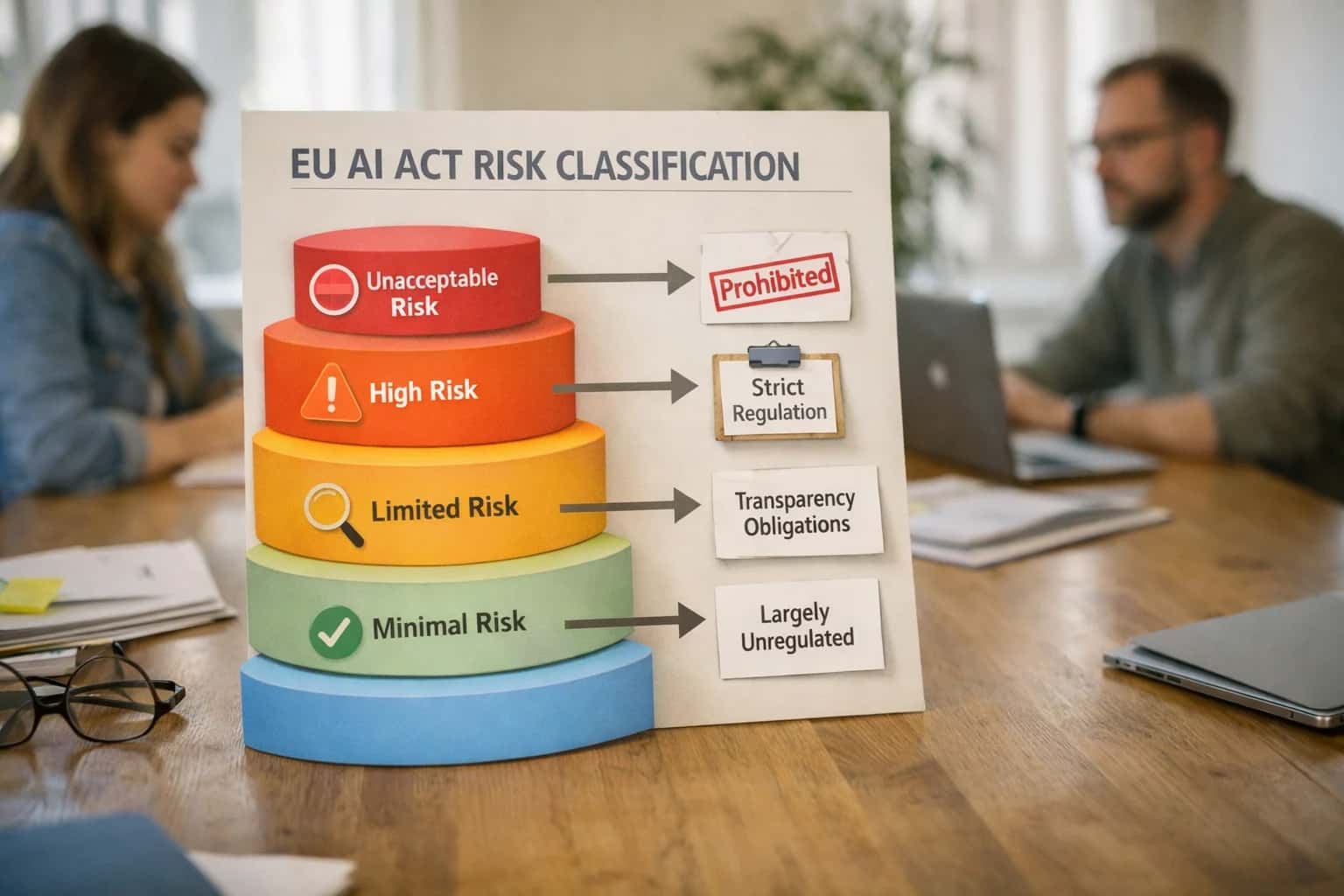
Legal team reviewing EU AI Act compliance documents on laptop in modern office, coffee cups and papers on table, casual meeting.
ARCHITECTURE AND ROLLOUT

Where AI Fits in Regulatory Response Workflows

A blueprint for integrating AI into the high-pressure workflows of responding to regulatory subpoenas, audits, and investigations.

AI integration targets specific pressure points within the regulatory response lifecycle, connecting to platform APIs and data objects to accelerate manual bottlenecks. Key integration surfaces include:

  • Custodian & Data Source Identification: AI analyzes initial legal hold notices and past matters to recommend custodians and data repositories (e.g., Microsoft 365 tenants, file shares) by profiling roles and communication patterns.
  • Rapid Data Triage & Prioritization: During processing in Relativity or Everlaw, AI agents pre-analyze ingested documents for privileged content (attorney-client communications), PII/PHI, and key regulatory concepts, applying platform-native tags (e.g., Relativity Fields, Everlaw Smart Tags) to create immediate review queues.
  • Privilege Log Automation: AI extracts and summarizes privileged content, populating a draft privilege log spreadsheet linked back to source documents, reducing a multi-week manual process to days.


Implementation follows a phased, governed rollout to manage risk and demonstrate value. A typical architecture uses:

  1. Event-Driven Processing: Webhooks from the e-discovery platform (e.g., on document ingestion completion) trigger serverless functions that call AI services for batch analysis.
  2. Enrichment via API: Results are written back as custom metadata or tags using the platform's REST API (Relativity REST API, Everlaw API).
  3. Human-in-the-Loop Review: AI-generated tags and summaries are surfaced in the review interface with clear indicators (e.g., "AI-Suggested Privilege") for final attorney approval, maintaining chain of custody and audit trails.
  4. Feedback Loops: Reviewer approvals and overrides are logged to continuously improve model accuracy for the specific matter or regulatory domain.

Governance is critical. The integration must be designed with:

  • Role-Based Access Control (RBAC): Ensuring only authorized reviewers can see AI outputs and overrides.
  • Audit Logging: Every AI action—document analyzed, tag applied, suggestion overridden—is logged within the platform and linked to the user and matter for defensibility.
  • Explainability: For high-stakes privilege calls, the system can surface the sentence or passage that triggered the AI suggestion. Rollout typically starts with lower-risk use cases like document categorization before advancing to privilege screening, allowing teams to build confidence in the AI's precision and recall within their specific data environment.
WHERE AI CONNECTS TO ACCELERATE REGULATORY RESPONSE

Integration Touchpoints in Your E-Discovery Platform

Automating First-Pass Analysis

AI integration begins at the point of data ingestion. For regulatory subpoenas, AI agents can be triggered via platform APIs (like Relativity's Event Handler or DISCO's webhooks) when new data enters a workspace. The agent performs immediate, parallel analysis to:

  • Identify and tag documents by regulatory domain (e.g., SEC, FINRA, HIPAA, GDPR).
  • Extract key entities such as names, dates, financial figures, and product codes mentioned in the subpoena.
  • Apply preliminary privilege flags based on sender/recipient patterns (e.g., communications with in-house counsel) and content markers.

This pre-processing creates a structured, prioritized dataset before human review begins, turning a multi-day manual sort into a same-day automated workflow. Results are written back to the platform as custom fields or tags, ready for the next review stage.

E-DISCOVERY PLATFORMS

High-Value AI Use Cases for Regulatory Response

Integrate AI directly into your e-discovery platform to accelerate responses to regulatory subpoenas, audits, and investigations. These use cases focus on automating high-effort, deadline-sensitive tasks within Relativity, Everlaw, DISCO, and Nuix.

01

Rapid Data Identification & Custodian Ranking

AI analyzes communication patterns, content relevance, and metadata across initial data sets to identify and prioritize key custodians and data sources. Integrates with platform custodian management modules to focus collection efforts, reducing the time to define scope from weeks to days.

Weeks -> Days
Scope definition
02

Automated Privilege Screening & Log Drafting

LLMs review document content and metadata to flag potential attorney-client privileged communications. The AI generates a structured, draft privilege log with rationale, which integrates directly into the platform's tagging system and export workflows for attorney review.

Manual to Assisted
Log generation
03

Regulatory Issue Categorization & Tagging

Custom AI models trained on prior regulatory matters automatically apply issue codes and responsive tags to documents as they enter the review platform. This pre-sorts data into relevant buckets (e.g., 'Pricing Discussions', 'Compliance Lapse'), allowing reviewers to start with prioritized, organized queues.

Batch -> Real-time
Document categorization
04

Subpoena-Driven Timeline & Chronology Generation

AI extracts dates, entities, and key events from documents to auto-populate a factual timeline aligned with the regulatory inquiry's scope. This integrates with the platform's custom object or fact management features, providing a dynamic chronology for case strategy and response drafting.

Hours -> Minutes
Initial timeline build
05

Production Set QC & Error Flagging

Before final export, an AI agent performs a final quality check on the production set. It validates Bates numbering consistency, checks for family relationships, and flags potential privileged material that may have been missed, integrating findings directly into the platform's QC dashboard.

Reduce Risk
Pre-production review
06

Executive Summary & Reporting Automation

At matter milestones, AI synthesizes review metrics, key document findings, and custodian data to generate narrative executive summaries and status reports. These can be pushed into platform dashboards or exported, keeping internal stakeholders and regulators informed without manual report drafting.

Same Day
Stakeholder updates
IMPLEMENTATION PATTERNS

Example AI-Powered Regulatory Response Workflows

These concrete workflows show how AI agents integrate with e-discovery platforms to accelerate responses to regulatory subpoenas, audits, and investigations. Each pattern connects to platform APIs, automates manual steps, and maintains necessary human oversight.

Trigger: A new regulatory matter is created in the e-discovery platform (e.g., Relativity workspace, Everlaw case).

AI Agent Actions:

  1. Ingests the regulatory request document via platform API, using an LLM to extract key entities: relevant timeframes, regulatory bodies (SEC, DOJ, FTC), product names, and key allegation terms.
  2. Queries the connected HR system (Workday, SAP) and Active Directory to generate an initial custodian list based on department, role, and project membership during the relevant period.
  3. Cross-references the custodian list against communication archives (M365, Google Vault) using the e-discovery platform's collection API. Ranks custodians by volume of potentially relevant communications and centrality in communication networks.

System Update: The agent creates a prioritized custodian list in the platform as a custom object or spreadsheet, tagged with AI-generated confidence scores and rationale. It automatically initiates legal hold notifications for Tier 1 custodians via integrated email workflow.

Human Review Point: A senior attorney or paralegal reviews the AI-generated custodian list, adds/removes names based on institutional knowledge, and approves the final hold list before full-scale collection begins.

A PRODUCTION-READY BLUEPLINT FOR REGULATORY RESPONSE

Implementation Architecture: Data Flow and System Design

A secure, auditable architecture for integrating AI into e-discovery workflows to meet tight regulatory deadlines.

The integration architecture connects your e-discovery platform (Relativity, Everlaw, DISCO, or Nuix) to AI services via a secure middleware layer. The core data flow begins when a new regulatory matter is created. A webhook or scheduled job triggers the AI pipeline, which first pulls the initial data set—typically emails, documents, and communications from specified custodians—via the platform's native API (e.g., Relativity REST API, Everlaw Query API). This data is streamed through a secure processing service where sensitive PII/PHI can be optionally redacted or tokenized before AI analysis. The AI services, which can include a combination of hosted LLMs (OpenAI, Anthropic) and custom fine-tuned models for legal domains, perform parallel tasks: rapid data identification (clustering by topic, relevance scoring), privilege screening (flagging attorney-client communications, work product), and document categorization (responsive vs. non-responsive, issue tagging).

Results are written back to the e-discovery platform as structured metadata. For example, in Relativity, AI-generated scores and tags are pushed into custom fields or choice lists, enabling immediate integration into saved searches, review batches, and dashboards. Privilege flags can create dynamic objects for log generation. The system design includes a governance queue where all AI-suggested privilege calls or high-risk categorizations are routed for attorney review before final tagging, ensuring human-in-the-loop control. All data movements, API calls, and model inferences are logged to a separate audit database with full traceability for compliance reporting.

Rollout is phased, starting with a pilot matter. The middleware is deployed in your cloud (AWS, Azure, GCP) or on-premises, with strict RBAC ensuring only authorized case teams can trigger AI workflows. The architecture is designed for scale, using message queues (e.g., RabbitMQ, AWS SQS) to handle large document volumes without overloading the e-discovery platform's API limits. For ongoing compliance, the system supports continuous active learning; reviewer decisions on AI suggestions are fed back to retrain and improve models for subsequent productions, creating a closed-loop system that gets faster and more accurate with each regulatory response.

IMPLEMENTATION PATTERNS

Code and Payload Examples for Key Tasks

Querying for Responsive Documents

This pattern uses the platform's search API to identify potentially responsive documents based on regulatory keywords, date ranges, and custodian lists. The AI agent constructs a complex Boolean query, executes it, and returns a prioritized list of document IDs for immediate review.

python
# Example: Construct and execute a targeted search via Relativity REST API
import requests

headers = {
    'X-CSRF-Header': '-',
    'Authorization': 'Bearer YOUR_TOKEN'
}

# AI-generated search query based on subpoena parameters
search_payload = {
    "condition": "AND",
    "rules": [
        {"field": "Custodian", "operator": "in", "value": ["jsmith", "bjones"]},
        {"field": "Date", "operator": "between", "value": {"start": "2023-01-01", "end": "2023-06-30"}},
        {"condition": "OR", "rules": [
            {"field": "Text", "operator": "contains", "value": "confidential settlement"},
            {"field": "Text", "operator": "contains", "value": "regulatory inquiry"}
        ]}
    ]
}

response = requests.post(
    'https://your-instance.relativity.com/Relativity.REST/api/search/documents',
    headers=headers,
    json=search_payload
)
# Returns list of document Artifact IDs for immediate workflow routing

The results feed directly into a privilege screening or categorization workflow, dramatically reducing the manual search time from days to hours.

AI FOR REGULATORY RESPONSE AND COMPLIANCE REVIEW

Realistic Time Savings and Operational Impact

How AI integration transforms the workflow for responding to regulatory subpoenas, audits, and investigations within e-discovery platforms, focusing on measurable efficiency gains and risk reduction.

Workflow StageBefore AIAfter AIKey Impact

Initial Data Identification & Collection

Manual custodian interviews and broad collection sweeps (Days)

AI-prioritized custodian ranking and targeted collection (Hours)

Reduces data volume by 30-50%, focusing review on high-risk communications.

Privilege & Confidentiality Screening

Linear, manual document-by-document review for privilege (Weeks)

AI-assisted first-pass privilege tagging with human QC (Days)

Accelerates privilege log creation; reviewers focus on nuanced calls.

Responsiveness & Issue Categorization

Keyword searches and manual issue coding (Days to weeks)

Conceptual AI clustering and predictive coding for responsiveness (Hours to days)

Identifies key themes and hot documents faster, improving review consistency.

Key Document Summarization

Manual extraction for chronologies and witness prep (Days)

AI-generated summaries of key emails, reports, and transcripts (Hours)

Enables legal teams to grasp case facts and prepare for testimony 70% faster.

Production Set Quality Control

Sampling and manual checks for errors (Days)

AI-driven anomaly detection in Bates numbers, families, and metadata (Hours)

Reduces risk of production errors and re-work, ensuring compliance with orders.

Audit Trail & Reporting for Regulators

Manual compilation of process documentation (Days)

Automated generation of workflow audit logs and defensibility reports (Hours)

Provides immediate, detailed reporting to demonstrate a thorough, consistent process.

Overall Matter Timeline

Typical 6-8 week response cycle under pressure

Compressed 2-3 week cycle with AI-assisted workflows

Meets tight regulatory deadlines, reduces outside counsel spend, and lowers business disruption.

IMPLEMENTING CONTROLLED AI FOR REGULATORY RESPONSE

Governance, Security, and Phased Rollout

A secure, phased approach to integrating AI into high-stakes regulatory and compliance review workflows within your e-discovery platform.

A production AI integration for regulatory response must be built on a foundation of auditability, data isolation, and human oversight. This means architecting workflows where AI acts as an assistant, not an autonomous agent, within the platform's existing security model. Key implementation patterns include:

  • Secure API Gateways & RBAC: All AI calls should be routed through a secure gateway that enforces your e-discovery platform's existing role-based access controls (RBAC), ensuring AI only processes data the authenticated user is permitted to see.
  • Immutable Audit Trails: Every AI action—document summarization, privilege suggestion, categorization—must generate an immutable log entry within the platform's native audit system, recording the prompt, model used, timestamp, and user, creating a defensible chain of custody.
  • Data Minimization & In-Platform Processing: To minimize data exposure, leverage the platform's APIs to process documents in-place where possible, streaming only necessary text chunks to the AI service rather than exporting bulk datasets.

A successful rollout follows a phased, risk-aware approach, starting with non-privileged, high-volume workflows to build trust and refine prompts before moving to sensitive analysis.

Phase 1: Triage & Scope Acceleration

  • Target: Initial data set review for subpoena response.
  • Workflow: AI generates summaries of custodian email threads and clusters documents by potential issue (e.g., marketing claims, data handling).
  • Governance: Outputs are written to custom object fields in Relativity or as Smart Tags in Everlaw for reviewer verification before any action is taken. This phase focuses on reducing the manual data-to-review time from days to hours.

Phase 2: Privilege & Sensitivity Screening

  • Target: First-pass privilege and PII/PHI detection.
  • Workflow: AI scans documents, suggesting privilege tags (e.g., Attorney-Client) and redacting potential PII patterns. These are presented to a senior reviewer in a dedicated QC queue within the platform for approval or override.
  • Governance: Implement a human-in-the-loop (HITL) approval step for all privilege log entries. The AI's confidence score and the reviewer's decision are logged for model performance tracking and compliance reporting.

Phase 3: Integrated Chronology & Response Drafting

  • Target: Final response preparation.
  • Workflow: AI extracts key dates and entities to auto-populate case timelines and drafts factual summaries of document clusters, which legal counsel uses as a starting point for formal response letters.
  • Governance: All AI-generated narrative content is watermarked as AI-Assisted Draft within the platform and is subject to the same version control and ethical wall protections as any other work product.

Security is paramount. The integration architecture should assume a zero-trust model between the e-discovery platform and AI services:

  • Encryption: All data in transit (TLS 1.3+) and sensitive prompts/logs at rest.
  • Model Governance: Use dedicated, fine-tuned models or isolated instances for sensitive matters, avoiding shared public LLM endpoints for privileged data. Services like Azure OpenAI with private endpoints are a common pattern.
  • Prompt & Output Safeguarding: Implement pre-prompt grounding to prevent model hallucinations and post-output regex filters to strip any unexpected sensitive data from AI responses before display.

By treating AI as a governed extension of the platform—not a black-box replacement—legal and compliance teams can achieve the speed required for regulatory deadlines while maintaining the defensible process mandated by law and internal policy. For a deeper technical dive on connecting these workflows, see our guide on AI Integration with Relativity APIs and Scripts.

AI FOR REGULATORY RESPONSE AND COMPLIANCE REVIEW

Frequently Asked Questions for Technical and Legal Buyers

Practical questions and answers for teams evaluating AI to accelerate regulatory subpoena responses, audits, and compliance reviews within e-discovery platforms like Relativity, Everlaw, DISCO, and Nuix.

The integration is API-first and non-invasive, treating your e-discovery platform as the system of record.

Typical Architecture:

  1. Trigger: A new regulatory matter is created in your platform (Relativity workspace, Everlaw case, DISCO project). A webhook or scheduled job notifies the AI service.
  2. Context Pull: The AI service authenticates via the platform's API (OAuth2 or API key) and pulls the initial data set metadata—custodian list, date ranges, data sources.
  3. AI Action: Using this context, AI agents execute parallel workflows:
    • Rapid Identification: A semantic search agent scans the corpus for terms related to the regulatory request (e.g., "data privacy incident," "quality control deviation").
    • Privilege Screening: A classifier reviews documents against your firm's privilege criteria, tagging likely privileged items for attorney review.
    • Categorization: Documents are tagged into responsive, non-responsive, and hot document categories based on the regulatory issue.
  4. System Update: Results are pushed back into the platform as:
    • Custom Fields: AI_Responsive_Score, AI_Privilege_Flag, AI_Regulatory_Topic.
    • Saved Searches: Pre-configured searches for reviewer queues (e.g., "High-Responsive, Low-Privilege").
    • Batch Tags: Applied to documents for workflow routing.
  5. Human Review Point: All AI-generated tags are designed as recommendations. Your legal team reviews the prioritized queue within the familiar platform interface, accepting or overriding tags. The system learns from these overrides.

This keeps the e-discovery platform as the central hub for chain of custody, review, and production.

Prasad Kumkar

About the author

Prasad Kumkar

CEO & MD, Inference Systems

Prasad Kumkar is the CEO & MD of Inference Systems and writes about AI systems architecture, LLM infrastructure, model serving, evaluation, and production deployment. Over 5+ years, he has worked across computer vision models, L5 autonomous vehicle systems, and LLM research, with a focus on taking complex AI ideas into real-world engineering systems.

His work and writing cover AI systems, large language models, AI agents, multimodal systems, autonomous systems, inference optimization, RAG, evaluation, and production AI engineering.


