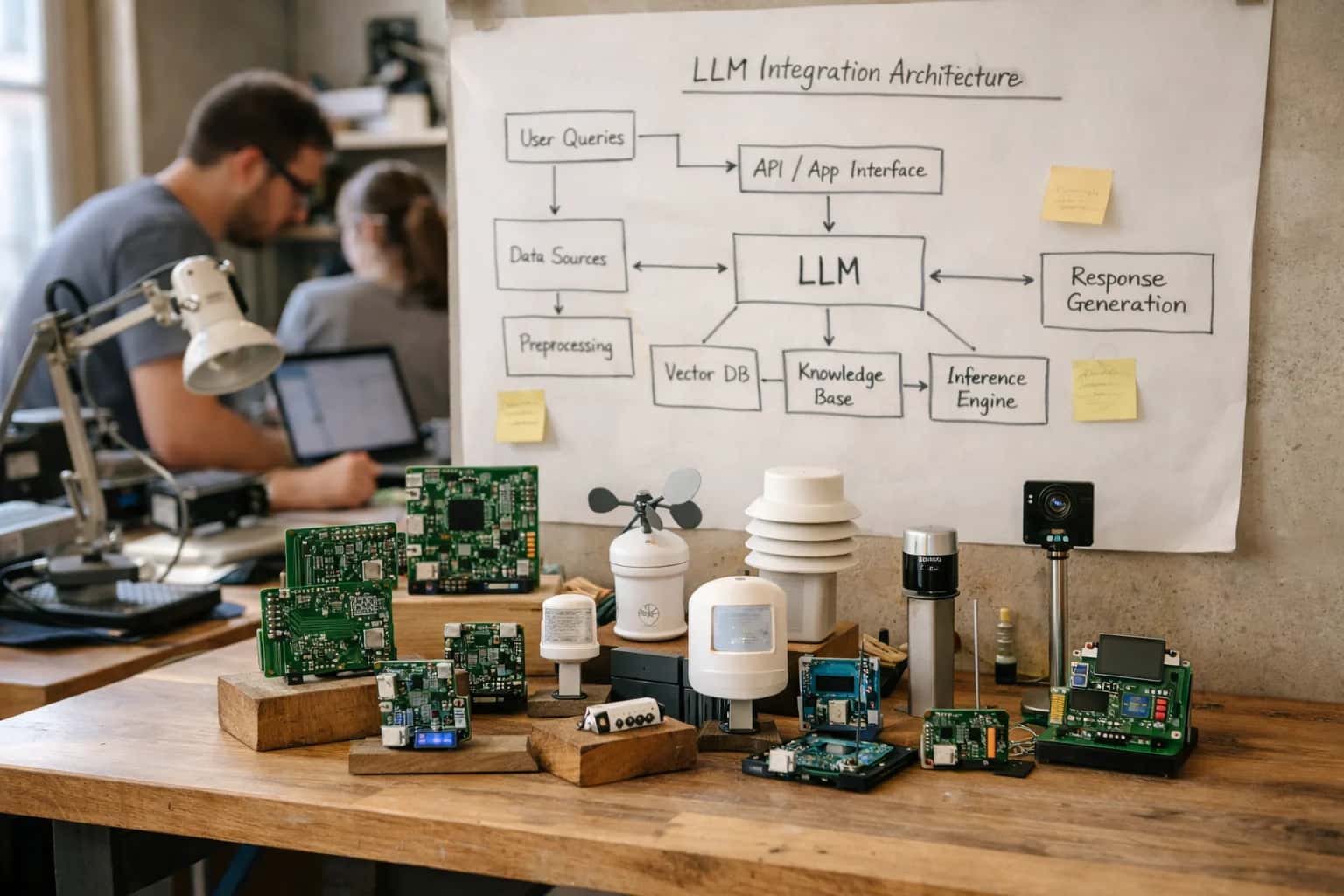
AI integration targets three primary surfaces in the e-discovery platform: the transcript load file processor, the native document viewer, and the case chronology or fact management tool. When a .ptx or .txt transcript load file is ingested, an AI service intercepts the file via platform API or a processing-stage webhook. It performs speaker diarization, extracts Q&A blocks, and generates a structured JSON payload containing a hierarchical summary (overall, by witness, by topic), key quotes, and a list of factual assertions. This payload is attached to the transcript document as a custom object or embedded metadata, making it instantly searchable and filterable within the platform's review workspace.

Integration
AI for Deposition and Transcript Summarization
A technical blueprint for integrating LLM-powered summarization, Q&A, and chronology tools into deposition transcripts within e-discovery platforms like Relativity, Everlaw, DISCO, and Nuix.
ARCHITECTURE & ROLLOUT
Where AI Fits into Deposition Transcript Workflows
A technical blueprint for integrating LLM-powered summarization and Q&A directly into deposition transcript review within platforms like Relativity, Everlaw, DISCO, and Nuix.
For reviewers, the integration surfaces AI insights directly in the workflow. Within the document viewer, a side panel displays the summary, key moments, and a natural-language Q&A interface. A reviewer can ask, "What did the witness say about the merger timeline?" and the AI, using the transcript as its RAG context, returns precise answers with citations to page and line numbers. High-impact sections—like admissions, contradictions, or mentions of key individuals—can be automatically tagged with platform-native Smart Tags (Everlaw) or custom fields (Relativity), allowing for rapid bulk coding and inclusion in timeline tools. This shifts analysis from hours of manual reading to minutes of targeted review.
Governance is critical. A production rollout should implement a human-in-the-loop approval step for AI-generated summaries before they are broadly shared, especially in sensitive matters. All AI interactions must be logged in the platform's audit trail, recording the prompt, model used, and output for defensibility. The system should be designed to handle multi-deposition matter workflows, where AI can compare testimonies across witnesses to identify inconsistencies, automatically populating a cross-reference matrix in a custom dashboard. Start with a pilot on a single matter, using a clearly defined scope of AI assistance (e.g., summary generation only), and expand to Q&A and automated tagging once the workflow and accuracy are validated by the review team.
PLATFORM-SPECIFIC ARCHITECTURE
Integration Touchpoints by E-Discovery Platform
Native API & Custom Object Integration
Integrate AI summarization agents directly into Relativity's review workflow using its REST API and Event Handler system. Key touchpoints include:
- Transcript Load Files: Ingest deposition transcripts as native files or via a custom Relativity Script that processes
.ptxor.txtload files, enriching each transcript record with speaker-attributed summaries stored in a custom object. - Workspace Integration: Surface AI-generated summaries and Q&A in a layout or dashboard within the relevant workspace. Use Relativity's Object Model to link summary objects to the original transcript document and related case chronology entries.
- Automation: Trigger summarization via an Event Handler on document ingestion or through a Relativity Script for batch processing. Output structured JSON to a holding field for reviewer approval before finalizing.
This architecture keeps AI outputs within Relativity's governance, audit, and security model, enabling seamless reviewer workflows.
E-DISCOVERY PLATFORM INTEGRATIONS
High-Value AI Use Cases for Deposition Transcripts
Deposition transcripts are dense, time-consuming to analyze, and critical for case strategy. Integrating LLMs directly into your e-discovery platform (Relativity, Everlaw, DISCO, Nuix) transforms these static documents into interactive assets. Below are key integration patterns that connect AI analysis to platform workflows, tags, and custom objects.
01
Automated Chronology & Timeline Generation
AI extracts key dates, events, people, and organizations from deposition transcripts, then creates or populates timeline objects within the e-discovery platform. Integrates with case chronology tools to auto-generate a visual timeline, linking entries back to source transcript pages for verification.
Days -> Hours
Timeline assembly
02
Real-Time Q&A & Issue Spotting
Deploy a RAG-powered chat interface within the review workspace. Reviewers can ask natural language questions (e.g., "What did the witness say about the merger date?") and get direct quotes with page citations. AI can also proactively flag testimony related to key issues defined in the case playbook.
Batch -> Real-time
Knowledge retrieval
03
Speaker-Specific Summary & Analysis
AI diarization attributes text to specific speakers (witness, attorneys). The system then generates individual summaries for each speaker, highlighting their key positions, concessions, and evasions. These summaries are saved as custom platform objects or mark-up files, enabling rapid side-by-side comparison.
Hours -> Minutes
Per-speaker analysis
04
Contradiction & Inconsistency Detection
AI cross-references testimony within a single deposition or across multiple depositions to identify potential contradictions in facts, timelines, or stated knowledge. Flagged segments are pushed to the platform as prioritized review items or tags (e.g., Potential_Contradiction), streamlining attorney preparation for cross-examination.
05
Integration with Transcript Load Files
A pre-processing agent works on .lfp or .ptx load files before platform ingestion. It enriches the metadata with AI-generated fields: issue tags, key quote excerpts, and a preliminary summary. This allows the transcript to be searchable and filterable by these AI attributes from the moment it hits the review database.
Pre-Ingestion
Value added
06
Witness Preparation & Examination Roadmaps
For defending counsel, AI analyzes opposing witness depositions to generate suggested lines of questioning and identify vulnerabilities. Outputs are structured documents or mind maps that can be linked to the source transcript matter in the platform, creating a centralized prep hub for trial teams.
IMPLEMENTATION PATTERNS
Example AI-Powered Deposition Workflows
These concrete workflows illustrate how generative AI can be integrated into the deposition transcript lifecycle within platforms like Relativity, Everlaw, DISCO, or Nuix. Each pattern connects to specific platform APIs, custom objects, and review surfaces to reduce manual effort from days to hours.
Trigger: A new transcript load file (.ptx, .txt with metadata) is ingested into the platform's processing queue or a designated workspace.
Context Pulled: The system extracts the raw transcript text and associated metadata (case number, deponent name, date, attorney names) from the load file or platform fields.
AI Action: A summarization agent processes the full transcript:
- Generates a one-page executive summary highlighting key testimony, admissions, and contradictions.
- Creates a detailed section-by-section breakdown with page/line references.
- Identifies and tags key topics (e.g., 'Non-Compete Clause', 'Product Launch Timeline') for platform tagging.
System Update: The AI outputs are written back to the platform:
- Summary text is populated into a custom
Transcript Summarylong-text field. - Section breakdown is attached as a PDF or HTML
Summary Document. - Key topics are applied as platform-native tags or saved to a custom object for faceted search.
Human Review Point: The summary is flagged in the reviewer queue for a senior attorney or paralegal to validate accuracy before distribution to the case team.
FROM TRANSCRIPT LOAD FILE TO ACTIONABLE SUMMARY
Implementation Architecture: Data Flow and APIs
A production-ready architecture for injecting AI-powered summarization and Q&A directly into deposition transcript workflows within platforms like Relativity and Everlaw.
The integration typically begins when a transcript load file (.lfp, .ptx, or .txt with metadata) lands in a designated staging folder or is posted via the platform's Processing API. An event handler or webhook triggers an AI service, which ingests the raw text and speaker attribution metadata. The core AI pipeline performs speaker normalization, extracts key topics, and generates a structured JSON output containing: a chronological summary, a thematic issue summary, a list of key quotes with timestamps, and a set of pre-computed Q&A pairs based on the transcript content.
This enriched data is then pushed back into the e-discovery platform via its REST API. In Relativity, this might create a custom object (e.g., Deposition Summary) linked to the original transcript document, populating fields for easy filtering and reporting. In Everlaw, the summary and Q&A can be appended as native Comments or Smart Tags, making them immediately accessible to reviewers within the transcript viewer. For real-time Q&A, a separate endpoint can be exposed, allowing reviewers to ask natural language questions against the transcript's vector embedding, with answers grounded in specific lines and speakers.
Governance is critical. The architecture should include an audit log for all AI-generated content, tracing the source transcript, model version, and prompt used. For sensitive matters, a human-in-the-loop approval step can be inserted before the summary is committed to the case file. Rollout is often phased, starting with a pilot matter where AI summaries are generated in parallel with manual ones for quality benchmarking, before enabling automated summarization for all new transcripts in a case or across the entire platform instance.
IMPLEMENTATION PATTERNS
Code and Payload Examples
Ingesting Transcripts into the Platform
Deposition transcripts typically arrive as load files (.DAT, .OPT) with accompanying .txt or .pdf files. The integration must parse these files, extract speaker turns, timestamps, and text, then create structured documents within the e-discovery platform.
A common pattern is to use a cloud function or containerized service that monitors a designated storage bucket (e.g., an S3 folder synced from a court reporting service). When new transcript files are detected, the service processes them and uses the platform's API to create new documents or custom objects.
Key steps:
- Parse the load file to map page/line numbers to the text file.
- Use a lightweight NLP library or regex to segment text by speaker (
Q:,A:,BY MR. SMITH:). - Create a parent
Transcriptrecord in the platform with metadata (case name, deponent, date). - Ingest each speaker turn as a child
Transcript Segmentdocument, enabling granular search and tagging later.
This structure allows reviewers to jump to specific Q&A exchanges and apply issue codes at the segment level, directly within the native review interface.
AI-Powered Deposition Analysis
Realistic Time Savings and Operational Impact
This table illustrates the practical impact of integrating LLM-powered summarization and Q&A for deposition transcripts into e-discovery platforms like Relativity, Everlaw, DISCO, and Nuix. It compares manual workflows against AI-assisted processes, focusing on time savings and operational improvements for legal teams.
| Workflow Stage | Before AI Integration | After AI Integration | Implementation Notes |
|---|---|---|---|
Transcript Summarization | Manual review: 4-8 hours per deposition | AI-generated summary: 2-5 minutes | Human review of AI summary required for accuracy; integrates via transcript load file API. |
Key Issue Identification | Associate manually flags relevant testimony | AI highlights testimony related to case themes | AI tags are applied as platform-native fields (e.g., Relativity layout, Everlaw Smart Tag) for filtering. |
Witness Q&A Preparation | Team manually searches transcripts for specific topics | Natural language search & AI-generated Q&A from full transcript | Enables rapid retrieval of all statements on a topic; outputs to case chronology tools. |
Speaker Attribution & Organization | Manual tagging of speakers in lengthy transcripts | AI auto-identifies and tags speakers, creates speaker-specific excerpts | Reduces clerical prep time; feeds into platform's custom object or fact management structures. |
Chronology & Timeline Population | Paralegal extracts dates and events over days | AI extracts key dates, events, and entities for timeline draft | AI output populates timeline tools; legal team reviews and refines for accuracy. |
Cross-Examination Strategy | Senior associate reviews multiple transcripts to find inconsistencies | AI compares witness statements across depositions for contradictions | Flags potential inconsistencies for attorney review; integrates with case analysis dashboards. |
Production Set Preparation | Manual redaction and privilege review of cited transcript sections | AI pre-screens for PII/PHI and suggests privilege-related passages | Assists in creating cleaner production sets; human final review remains critical for privilege. |
ENSURING CONTROLLED, AUDITABLE AI FOR SENSITIVE LEGAL WORKFLOWS
Governance, Security, and Phased Rollout
A production-ready AI integration for deposition transcripts requires a security-first architecture and a phased rollout to manage risk and build trust.
Governance starts with data isolation and access control. Transcript load files and the resulting AI-generated summaries must reside within the same secure environment as your e-discovery platform—be it Relativity, Everlaw, DISCO, or Nuix. AI processing should be invoked via secure API calls from within the platform, ensuring all data movement is logged and that access is gated by the platform's existing RBAC (Role-Based Access Control). Summaries and extracted entities (speakers, key dates, issues) are written back as custom objects or structured fields, creating a full audit trail of AI-generated content linked to the source transcript.
A phased rollout is critical for adoption and risk management. Start with a pilot matter in a non-critical case. Phase 1 focuses on batch summarization: processing a closed set of historical transcripts to generate chronology inputs and demonstrate value. Phase 2 introduces on-demand summarization for new transcripts as they are ingested, with outputs available in a dedicated workspace or dashboard. The final phase integrates AI Q&A and speaker-specific analysis directly into reviewer workflows, allowing attorneys to query a transcript corpus from within their review pane. Each phase should include parallel human review of AI outputs to establish baseline accuracy metrics and refine prompts.
Security extends to the AI models themselves. For highly sensitive matters, you may opt for a private, fine-tuned model deployed in your VPC instead of a generic cloud LLM, ensuring data never leaves your control. Regardless of model choice, implement input and output filtering to strip any residual PII/PHI before processing and to sanitize AI responses. All API calls, processing jobs, and user interactions with the AI features should be logged to the platform's audit system, enabling full traceability for compliance and potential discovery on the AI process itself.
Enabling Efficiency, Speed & Accuracy
Intelligent Analysis, Decision & Execution
We build AI systems for teams that need search across company data, workflow automation across tools, or AI features inside products and internal software.
Talk to Us
Search across company data
Give teams answers from docs, tickets, runbooks, and product data with sources and permissions.
Useful when people spend too long searching or get different answers from different systems.
Enterprise searchRAGPermissions
Read more
Automate internal workflows
Use AI to route work, draft outputs, trigger actions, and keep approvals and logs in place.
Useful when repetitive work moves across multiple tools and teams.
AI agentsWorkflow automationGovernance
Read more
Add AI to products and internal tools
Build assistants, guided actions, or decision support into the software your team or customers already use.
Useful when AI needs to be part of the product, not a separate tool.
AI integrationDecision supportModel routing
Read moreAI FOR DEPOSITION SUMMARIZATION
Frequently Asked Questions (FAQ)
Practical questions for legal teams and technical architects planning to integrate AI summarization and Q&A into deposition transcript workflows within Relativity, Everlaw, DISCO, or Nuix.
Integration typically occurs at two points in the e-discovery workflow:
-
Post-Ingestion Processing Hook: After transcripts are loaded into the platform (usually via a
.lfor.datload file with accompanying.txtor.ptxfiles), an automation triggers. This can be a platform-native event (e.g., a Relativity Event Handler, an Everlaw webhook for new productions) or a scheduled job. The automation extracts the raw transcript text and metadata (case ID, deponent, date, page numbers). -
API Call to AI Service: The extracted text is sent via a secure API call to your chosen LLM service (OpenAI, Anthropic, Azure OpenAI, or a private model). The payload includes the transcript and a structured prompt for summarization and Q&A. The response—containing the summary, key points, and a Q&A index—is returned.
-
Write-Back to Platform: The AI output is written back to the platform. Common patterns include:
- Creating a new custom object (e.g.,
AI_Transcript_Summary) linked to the original transcript document. - Populating existing fields on the transcript document record (e.g., a
Summary_LongTextfield). - Adding tags or Smart Tags for quick filtering (e.g., "Key Admission," "Contradiction Identified").
- Creating a new custom object (e.g.,
This architecture keeps the source transcript pristine while layering AI-generated insights as searchable, reportable metadata.

About the author
Prasad Kumkar
CEO & MD, Inference Systems
Prasad Kumkar is the CEO & MD of Inference Systems and writes about AI systems architecture, LLM infrastructure, model serving, evaluation, and production deployment. Over 5+ years, he has worked across computer vision models, L5 autonomous vehicle systems, and LLM research, with a focus on taking complex AI ideas into real-world engineering systems.
His work and writing cover AI systems, large language models, AI agents, multimodal systems, autonomous systems, inference optimization, RAG, evaluation, and production AI engineering.
LinkedIn
Limited slotsGet a Free AI Consultation
Partnered with leading AI, data, and software stack.





How We Work
Custom AI workflows for your Business
One-fit-all AI don't work for modern businesses. At Inferensys, we aim to understand your business & custom requirements; which we use to define most efficient agentic workflows, the data, and the tools for your business.
01
Review the use case
We understand the task, the users, and where AI can actually help.
Read more02
Pick the right approach
We define what needs search, automation, or product integration.
Read more03
Build the first useful version
We implement the part that proves the value first.
Read more04
Improve from there
We add the checks and visibility needed to keep it useful.
Read moreThe first call is a practical review of your use case and the right next step.
Talk to Us