The post-donation workflow in platforms like Bloomerang, Salesforce NPSP, Donorbox, and Bonterra is a sequence of timed, rule-based tasks: logging the gift, generating a receipt, updating a donor's giving history, and perhaps adding them to a segment for a future appeal. AI integration inserts intelligence into this sequence by analyzing the donor record, gift context, and communication history to trigger personalized, multi-channel stewardship. Instead of a generic receipt, the system can draft a unique acknowledgment that references the donor's past support, the specific campaign they gave to, and suggests a relevant next step—like watching a video impact story or registering for a volunteer event—all logged as an activity in the CRM.

Integration
Automated Donor Acknowledgment and Stewardship with AI
A practical integration blueprint for adding AI to nonprofit CRM platforms to automate personalized donor receipts, generate next-step engagement suggestions, and orchestrate stewardship touchpoints based on gift size and donor type.
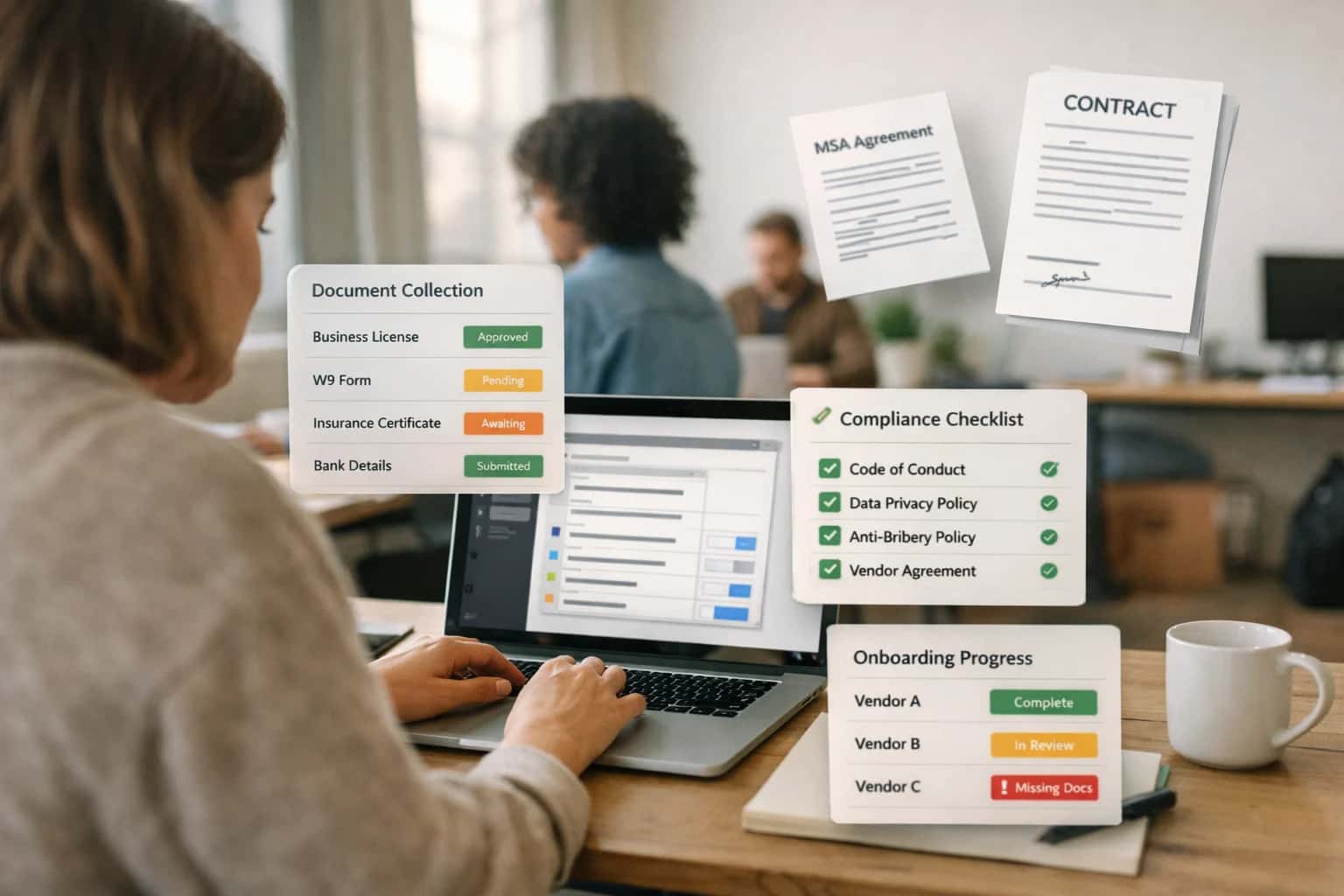
AUTOMATED STEWARDSHIP
Where AI Fits in the Post-Donation Workflow
A technical blueprint for embedding AI into the critical moments after a gift is processed to transform acknowledgment from a transaction into a relationship-building touchpoint.
Implementation typically involves a serverless function or middleware layer that listens for a Donation Created webhook from the donation platform. This payload—containing donor ID, amount, campaign, and payment method—triggers an AI agent. The agent first enriches the context by fetching the donor's full profile, recent interactions, and any notes from the CRM via its REST API. Using a governed prompt template, it generates a personalized message, which can be routed for optional human review via a simple approval queue before being sent via the platform's native email/SMS API or a connected system like Twilio or SendGrid. The entire interaction, including the generated message and its sentiment score, is written back to the donor's record as a note or custom object for full auditability.
Rollout should be phased, starting with high-value donor segments (e.g., major gifts, new sustainers) to manage risk and gather feedback. Governance is critical: prompts must be engineered to avoid hallucination of facts, all AI-generated content should be watermarked, and a human-in-the-loop approval step is recommended for large gifts. The impact is operational efficiency—turning hours of manual thank-you calls into minutes of review—and relationship depth, using the ‘golden hour’ post-donation to reinforce donor identity and connection to the cause, which is proven to boost retention. For a deeper look at securing this data flow, see our guide on Secure AI Integration Architecture for Nonprofit Data.
AUTOMATED DONOR ACKNOWLEDGMENT AND STEWARDSHIP
Integration Touchpoints by Platform
Core Trigger Points for AI Acknowledgment
AI integration begins at the point of donation capture. For platforms like Donorbox and Bloomerang, this means connecting to webhooks or APIs that fire upon a successful transaction. The AI system ingests the payload—containing gift amount, donor ID, campaign, and payment method—to generate a personalized receipt in real-time.
Key surfaces include:
- Donation Form Completion Webhooks: Trigger immediate, personalized thank-you emails.
- Recurring Gift Setup Records: Initiate a distinct welcome series for new sustainers.
- Offline Donation Entry Interfaces: When staff log a check or wire transfer, AI can draft a tailored acknowledgment for review.
Implementation typically involves a serverless function that calls an LLM with donor history and gift context, then uses the platform's transactional email API to send. This moves acknowledgments from generic templates to context-aware messages that reference past support or specific campaign impact.
POST-DONATION WORKFLOWS
High-Value AI Use Cases for Donor Stewardship
Transform manual, time-intensive stewardship tasks into automated, personalized workflows. These AI integration patterns connect directly to your donor CRM's data model and APIs to trigger intelligent actions after a gift is received.
01
Personalized Receipt & Acknowledgment Generation
Trigger an LLM via webhook upon donation entry in Donorbox, Bloomerang, or Salesforce NPSP. The AI generates a unique, warm acknowledgment message by synthesizing gift amount, campaign, donor history, and any notes from their record. Output is queued for human review or sent automatically via the platform's email engine.
Batch -> Real-time
Acknowledgment speed
02
Next-Step Engagement Recommendation Engine
An AI agent analyzes the new gift in context of the donor's full history (past gifts, event attendance, communication opens) to recommend the optimal next stewardship step. Suggestions like 'Invite to VIP webinar' or 'Send impact report on education' are surfaced directly within the donor's CRM profile for the gift officer.
1 sprint
Typical implementation
03
Automated Stewardship Touchpoint Scheduling
For mid-level and major gifts, an AI workflow uses gift size, donor type (new, recurring, lapsed), and predefined stewardship plans to schedule a sequence of future touchpoints. It creates tasks, drafts email reminders for the officer, or populates a marketing automation journey in Bloomerang or Bonterra.
Hours -> Minutes
Plan creation
04
Donor Upgrade & Sustainment Signal Detection
AI models monitor post-donation engagement (email opens, survey responses, event registrations) from the CRM to score donors for upgrade potential to monthly giving or a major gift. High-potential signals create alerts and populate a smart list in Salesforce NPSP for the development team.
05
Tax Receipt & Documentation Support Agent
A RAG-powered chatbot integrated into the nonprofit's website or portal answers donor questions about tax receipts, gift dates, and documentation by querying the live Donorbox or CRM database. It pulls accurate data via API and generates plain-language answers, reducing staff support tickets.
Same day
Donor query resolution
06
Stewardship Report Automation for Officers
For portfolio managers, an AI agent runs weekly to synthesize new gifts, donor interactions, and pending tasks from the CRM. It generates a concise, narrative stewardship update for each major donor, highlighting action items and sentiment trends, saving hours of manual review.
Hours -> Minutes
Report preparation
CONCRETE IMPLEMENTATION PATTERNS
Example AI-Stewardship Workflows
These workflows illustrate how AI agents can be integrated into your donor CRM's post-donation automation layer to deliver timely, personalized stewardship at scale. Each pattern connects to specific platform APIs and data objects.
Trigger: A new Donation record is created in the CRM (e.g., Donorbox webhook, Bloomerang API event, Salesforce NPSP trigger).
Context Gathered: The AI agent retrieves:
- Donor's name, salutation, and giving history (total giving, last gift date).
- Campaign or fund designation from the gift.
- Any recent
Interactionnotes (e.g., "Met at gala last week").
Agent Action: An LLM generates a personalized acknowledgment using a structured prompt:
json{ "system_prompt": "You are a grateful development officer. Write a warm, concise thank-you email. Reference the donor's history and the specific campaign if provided.", "donor_context": { "first_name": "Sarah", "last_gift_amount": 250, "campaign_name": "Annual Scholarship Fund", "recent_note": "Board member, attended virtual tour on 10/5." } }
System Update: The generated email is queued in the CRM's email system (e.g., Bloomerang Communications, Salesforce Marketing Cloud Account Engagement). A Task is created for a staff member to review high-value gifts (>$1,000) before sending. A log of the generation is attached to the donor's record.
Human Review Point: All gifts above a configurable threshold are held for human approval. The review interface shows the AI-generated draft alongside the donor's profile for quick edits and sending.
SECURE, CONTROLLED AUTOMATION
Implementation Architecture: Data Flow and Guardrails
A production-ready architecture for AI-driven donor stewardship connects securely to your CRM's data layer and operates within strict governance guardrails.
The integration is anchored on your donor CRM's core objects—Donations, Contacts/Constituents, Households, and Activities. Upon a new donation event (via webhook from Donorbox or API trigger from Bloomerang/Bonterra/Salesforce NPSP), a serverless workflow is initiated. This workflow first enriches the donor record by fetching related data: past giving history, communication preferences, event attendance, and any unstructured notes from the donor's activity timeline. This consolidated context is then passed, with PII optionally masked or hashed, to a configured LLM (e.g., GPT-4, Claude 3) via a secure, private API endpoint. The prompt instructs the model to generate a personalized acknowledgment message, referencing specific details like gift designation, cumulative giving, or a recent interaction.
Generated content never goes directly to the donor. All outputs are queued in a human-in-the-loop review system, typically a simple internal dashboard or a dedicated object within the CRM (like a Stewardship_Review__c custom object in NPSP). Here, development staff or volunteers can approve, lightly edit, or reject messages. Approved messages are then dispatched via the CRM's native email engine (e.g., Bloomerang's communications module, Salesforce Marketing Cloud Account Engagement) or SMS gateway, with the sent activity logged back to the donor's record. This creates a closed-loop system where all AI-touched interactions are fully auditable.
Critical guardrails are implemented at multiple layers: Data Access is controlled via the CRM's existing role-based permissions, ensuring AI workflows only see data permissible for the integration service account. Content Safety uses a secondary LLM call to screen outputs for inappropriate tone or factual inaccuracies before review. Rate Limiting and cost controls are applied at the API gateway to prevent runaway usage. Finally, a feedback loop allows staff to flag unsatisfactory outputs, which are used to fine-tune the prompt templates and improve future performance. This architecture ensures stewardship is scaled, not outsourced, keeping your team firmly in control of the donor relationship.
IMPLEMENTATION PATTERNS
Code and Payload Examples
Triggering Personalized Receipts
When a donation is recorded in your CRM (e.g., Donorbox, Bloomerang), a webhook can fire to an AI service. This handler receives the donation payload, enriches it with donor history, and calls an LLM to generate a personalized acknowledgment.
Key Fields in the Webhook Payload:
json{ "event": "donation.received", "donation_id": "DON_78910", "donor_id": "DONOR_12345", "amount": 250.00, "campaign": "Annual Fund 2025", "donor_first_name": "Alex", "donor_email": "[email protected]", "recurring": false, "timestamp": "2025-04-10T14:30:00Z" }
The handler retrieves the donor's last gift date, total giving, and preferred name from the CRM API, then constructs a prompt for the LLM to draft a context-aware thank-you message. The final receipt is sent via the CRM's communication API and logged as an activity.
See our guide on Secure AI Integration Architecture for Nonprofit Data for patterns on handling PII.
AUTOMATED DONOR ACKNOWLEDGMENT AND STEWARDSHIP
Realistic Time Savings and Operational Impact
How AI integration transforms manual, time-intensive post-donation workflows into proactive, personalized stewardship touchpoints across Donorbox, Bloomerang, Bonterra, and Salesforce NPSP.
| Workflow Stage | Before AI | After AI | Implementation Notes |
|---|---|---|---|
Receipt & Thank-You Generation | Manual drafting or template selection; 5-15 minutes per batch | Triggered, personalized draft in <1 minute; human final review | Integrates with CRM donation object; uses donor history, gift context |
Stewardship Step Suggestion | Manual review of donor profile to plan next touch; 10-20 minutes per major donor | AI suggests next step (call, report, invite) based on gift size/type; <30 seconds | Pulls from interaction history, wealth indicators, and giving patterns |
Donor Segment Assignment | Rule-based filters updated weekly; prone to missing behavioral shifts | Dynamic scoring updates donor affinity/retention segment in real-time | Model runs on new engagement data; writes segment field back to CRM |
Acknowledgment for Recurring Gifts | Generic, system-generated email for each payment | Personalized message referencing tenure and cumulative impact; triggered per payment | Leverages subscription object and aggregate giving history from CRM |
High-Touch Donor Flagging | Manual analysis of gift logs for sudden increases; done monthly | Automated alert for gift spikes or new major donors within 1 hour of transaction | Webhook from donation platform triggers analysis; creates task for officer |
Stewardship Campaign Enrollment | Manual addition to email nurture streams based on static lists | Automatic enrollment in tailored 90-day stewardship journey post-donation | Journey steps orchestrated via CRM automation builder + AI content |
Impact Reporting & Communication | Quarterly manual compilation of stories for top donors | AI drafts personalized impact snippets using program data; ready for review in minutes | RAG system queries internal reports; cites specific projects aligned with donor interest |
SECURE, CONTROLLED IMPLEMENTATION
Governance, Permissions, and Phased Rollout
A practical guide to deploying AI for donor acknowledgment with appropriate controls, role-based access, and a low-risk rollout strategy.
AI-generated acknowledgments should be treated as a controlled extension of your development team, not a black-box replacement. In platforms like Salesforce NPSP or Bloomerang, this means integrating at the automation rule or workflow level, where AI acts as a service called via a secure API. The core pattern is: a new donation record triggers a platform workflow, which calls an external AI service with a payload containing donor ID, gift amount, and campaign context. The generated draft is then written to a custom object field (e.g., Acknowledgment_Draft__c) or a staging table, not sent directly. This creates a mandatory human-in-the-loop checkpoint where a development associate or manager can review, edit, and approve the message before it's merged and dispatched via the platform's native email engine, with a full audit trail.
Governance starts with role-based permissions (RBAC). Limit who can configure the AI prompts, adjust tone guidelines, or bypass the review step. In Bonterra or Salesforce NPSP, this can be managed through existing profile and permission set controls. All AI-generated content and edits should be logged, associating the final output with the reviewing staff member. For data security, ensure the integration uses tokenized donor IDs and never sends full Personally Identifiable Information (PII) like addresses or full giving histories to external models unless absolutely necessary and through a data-masking proxy. Consider implementing a content moderation layer to scan outputs for policy violations before they reach the reviewer.
A phased rollout mitigates risk and builds trust. Phase 1 (Pilot): Enable AI for a single, low-volume campaign or for recurring donors only. Route all outputs to a dedicated review queue and measure time saved versus manual drafting. Phase 2 (Expansion): Expand to major gift acknowledgments (e.g., gifts over $1,000) but implement a two-person approval rule within the CRM's workflow. Use this phase to refine prompts for different donor segments (e.g., first-time vs. legacy donors). Phase 3 (Scale): Activate for broad-based giving, potentially allowing auto-send for low-value, recurring gifts while maintaining holds for major donors and memorial gifts. Continuously monitor sentiment and feedback, using the CRM to tag donors who respond, creating a feedback loop to retrain and improve the system. This crawl-walk-run approach ensures the AI augments your stewardship ethos without compromising donor relationships.
Enabling Efficiency, Speed & Accuracy
Intelligent Analysis, Decision & Execution
We build AI systems for teams that need search across company data, workflow automation across tools, or AI features inside products and internal software.
Talk to Us
Search across company data
Give teams answers from docs, tickets, runbooks, and product data with sources and permissions.
Useful when people spend too long searching or get different answers from different systems.
Enterprise searchRAGPermissions
Read more
Automate internal workflows
Use AI to route work, draft outputs, trigger actions, and keep approvals and logs in place.
Useful when repetitive work moves across multiple tools and teams.
AI agentsWorkflow automationGovernance
Read more
Add AI to products and internal tools
Build assistants, guided actions, or decision support into the software your team or customers already use.
Useful when AI needs to be part of the product, not a separate tool.
AI integrationDecision supportModel routing
Read moreIMPLEMENTATION AND WORKFLOW DETAILS
Frequently Asked Questions
Practical questions for development and operations teams planning AI-driven donor acknowledgment and stewardship.
The workflow is triggered by a webhook from your CRM (e.g., Donorbox, Bloomerang, Salesforce NPSP) upon a donation event. The system ingests a payload containing:
- Donor Record: Contact ID, name, email, giving history, last gift date, total lifetime giving.
- Gift Context: Amount, campaign/fund designation, payment method, recurring status.
- Interaction History: Recent notes, email opens, event attendance (if available via API).
- Segment Tags: Any existing CRM segment (e.g., "Major Donor," "New Sustainer").
The AI agent uses this as context to personalize the acknowledgment and determine the appropriate stewardship next step, ensuring the message is grounded in the donor's specific relationship with your organization.

About the author
Prasad Kumkar
CEO & MD, Inference Systems
Prasad Kumkar is the CEO & MD of Inference Systems and writes about AI systems architecture, LLM infrastructure, model serving, evaluation, and production deployment. Over 5+ years, he has worked across computer vision models, L5 autonomous vehicle systems, and LLM research, with a focus on taking complex AI ideas into real-world engineering systems.
His work and writing cover AI systems, large language models, AI agents, multimodal systems, autonomous systems, inference optimization, RAG, evaluation, and production AI engineering.
LinkedIn
Limited slotsGet a Free AI Consultation
Partnered with leading AI, data, and software stack.





How We Work
Custom AI workflows for your Business
One-fit-all AI don't work for modern businesses. At Inferensys, we aim to understand your business & custom requirements; which we use to define most efficient agentic workflows, the data, and the tools for your business.
01
Review the use case
We understand the task, the users, and where AI can actually help.
Read more02
Pick the right approach
We define what needs search, automation, or product integration.
Read more03
Build the first useful version
We implement the part that proves the value first.
Read more04
Improve from there
We add the checks and visibility needed to keep it useful.
Read moreThe first call is a practical review of your use case and the right next step.
Talk to Us