Traditional segmentation in platforms like Salesforce NPSP, Bloomerang, or Bonterra relies on static rules: IF Last_Donation_Date > 365 days THEN "Lapsed". This creates rigid, often outdated cohorts. A predictive model, by contrast, continuously analyzes dozens of signals—donation frequency, event attendance, email opens, wealth indicators, and even sentiment from staff notes—to calculate a dynamic propensity score (e.g., likelihood to give in the next 90 days) and affinity clusters (e.g., "environmental advocates," "education donors"). The integration architecture typically involves: a nightly batch job that extracts anonymized donor profiles from the CRM via its API, runs them through a hosted model (like scikit-learn or XGBoost), and writes the new scores and cluster labels back to custom fields (AI_Propensity_Score__c, AI_Affinity_Cluster__c). This keeps the core CRM data intact while adding an intelligent layer.

Integration
AI-Powered Donor Segmentation for Nonprofit CRMs
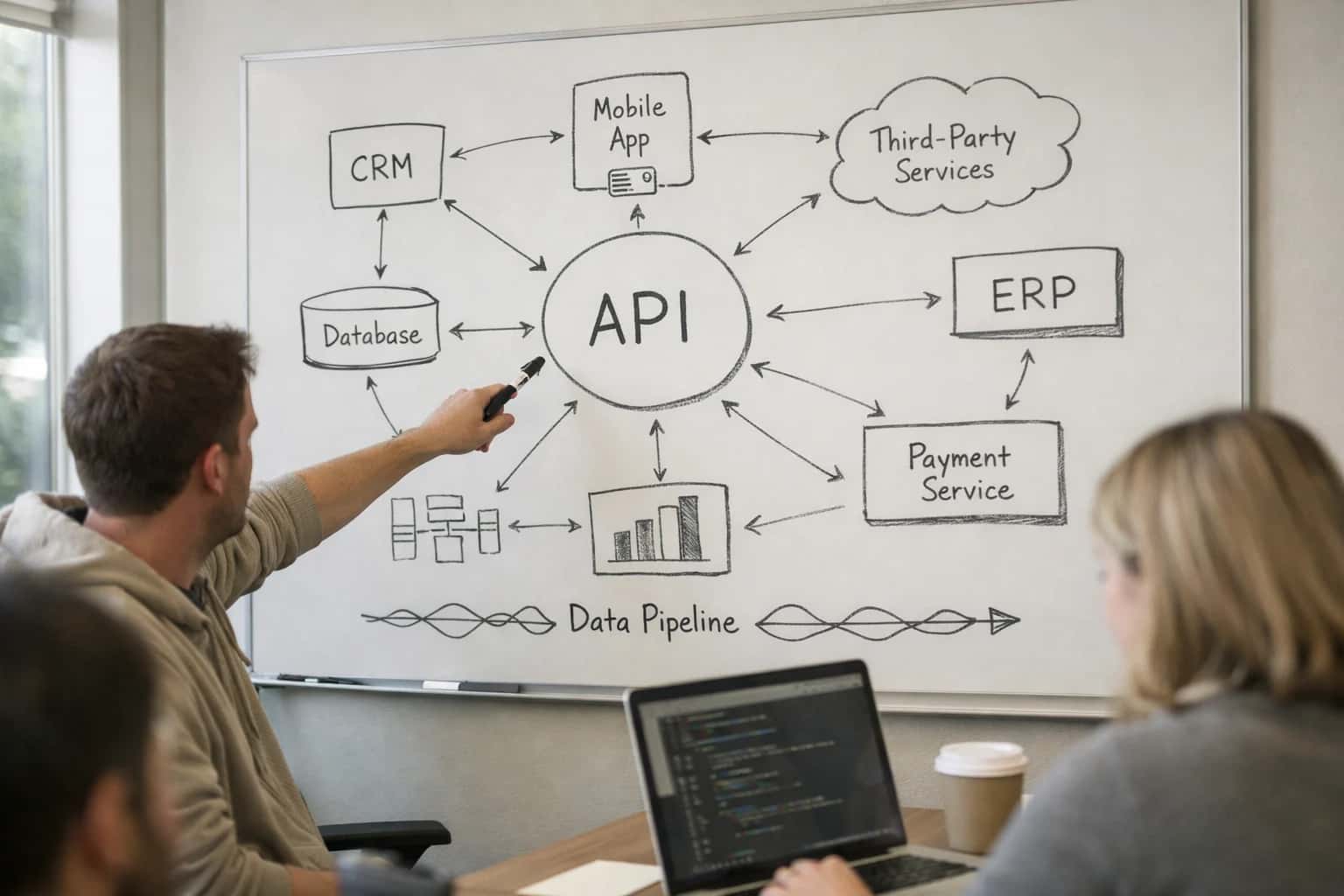
From Rule-Based to Predictive Segmentation
A practical guide to implementing predictive AI models on top of your nonprofit CRM's donor data.
Rollout should be phased. Start with a pilot cohort—perhaps your mid-level donors—and use the scores to power a simple workflow: an automation that adds donors with a high propensity score to a "Touchpoint This Week" list in Bloomerang or a Salesforce NPSP campaign. Measure lift in response rates versus the old rule-based list. Governance is critical: establish a quarterly model review with your development team to audit for drift (e.g., post-holiday giving patterns change the model's accuracy) and retrain on fresh data. Ensure all AI-generated tags have an audit trail and can be overridden by gift officers.
The operational impact is moving from reactive list-pulls to proactive, dynamic engagement. A major gifts officer in Salesforce NPSP can now prioritize their portfolio not just by gift size, but by an AI-calculated "cultivation readiness" score. A communications manager in Donorbox or Bloomerang can automatically tailor newsletter content based on a donor's predicted affinity cluster, moving beyond simple "donor/non-donor" splits. This turns segmentation from a quarterly administrative task into a continuous, insight-driven operation.
Where AI Segmentation Connects in Your Nonprofit CRM
The Core Data Layer
AI segmentation begins by analyzing the unified donor profile. This includes structured fields like gift history, campaign source, and demographics, as well as unstructured data such as staff notes, email interactions, and survey responses. An integration here uses batch or real-time APIs to:
- Append predictive scores (e.g., upgrade propensity, lapse risk) as custom fields.
- Enrich records with inferred affinities (e.g., environmental causes, youth programs) derived from behavioral patterns.
- Trigger updates when new gifts or engagements are logged, ensuring segments are dynamic.
This creates a continuously updated intelligence layer atop your existing donor objects in Salesforce NPSP, Bloomerang, or Bonterra.
High-Value AI Segmentation Use Cases
Move from static, demographic-based lists to dynamic, behavior-driven donor clusters. These AI-powered segments are predictive, update in real-time, and directly trigger personalized workflows within your CRM.
Predictive Major Gift Propensity
AI models analyze donation history, engagement frequency, wealth indicators, and event attendance to score each donor's likelihood of making a major gift. High-propensity donors are automatically flagged and routed to a major gift officer's portfolio in Salesforce NPSP or Bloomerang, with suggested ask amounts and cultivation notes.
Dynamic Recurring Donor Health
Continuously monitor payment success rates, engagement drops, and communication responsiveness to segment recurring donors into At-Risk, Stable, and Upgrade-Ready cohorts. Automate tailored email sequences or task creation for development staff to intervene before a cancellation.
Campaign-Specific Affinity Clustering
For a capital campaign or program-specific ask, AI segments donors based on past giving to similar causes, expressed interests (from survey data), and digital content consumption. Creates hyper-targeted lists in Bonterra or Donorbox for personalized outreach that resonates with specific donor motivations.
Lapsed Donor Reactivation Priority
Instead of treating all lapsed donors equally, AI ranks them by reactivation potential using historical gift size, tenure, and reason for lapse (if known). Prioritizes outreach to the most likely-to-return segment, optimizing staff time and marketing spend within your CRM's automation tools.
Volunteer-to-Donor Conversion Scoring
Uncover hidden major gift potential by analyzing volunteer hours, skills, event participation, and informal connections from your CRM's volunteer module. AI identifies and scores volunteers with high donor conversion likelihood, enabling tailored stewardship pathways.
Cross-Channel Engagement Segments
Integrates data from email opens, website visits, social interactions, and event registrations to create a unified engagement score. Segments donors into Passive, Active-Multichannel, and Digital-Only groups to guide channel strategy and prevent over-solicitation.
Example AI Segmentation Workflows
These workflows illustrate how predictive models and LLM-based agents connect to donor CRM data, moving beyond static rules to create dynamic, behavior-driven segments. Each pattern can be implemented via API calls, scheduled jobs, or real-time webhooks into platforms like Salesforce NPSP, Bloomerang, or Bonterra.
This workflow continuously evaluates donor records to identify and prioritize major gift prospects.
- Trigger: Scheduled nightly batch job, or a real-time webhook fired when a significant new donation, interaction, or data point is logged in the CRM.
- Context/Data Pulled: The agent queries the CRM API for a donor cohort, pulling:
- Lifetime giving history and recency
- Engagement data (event attendance, email opens, volunteer hours)
- Wealth indicators and employer data (from appended enrichment)
- Notes from gift officers (via text fields)
- Model/Agent Action: A predictive model (e.g., XGBoost) calculates a propensity score (0-100). An LLM agent then analyzes officer notes and engagement patterns to generate a brief, natural-language "cultivation insight" (e.g., "Expressed interest in education initiatives during last call. Good candidate for a site visit invitation.").
- System Update: The CRM donor record is updated via PATCH request with:
- A new custom field:
AI_Major_Gift_Score - A text field:
AI_Cultivation_Insight - A picklist field:
AI_Segmentset to"High-Value Prospect"
- A new custom field:
- Human Review Point: Scores above a defined threshold automatically add the donor to a "Major Gift Review" dashboard or queue in the CRM for a gift officer's weekly review.
Typical Implementation Architecture
A production-ready AI segmentation system integrates as a secure, automated layer atop your nonprofit CRM's data model.
The core architecture connects to your CRM's donor, gift, engagement, and campaign objects via its native REST or SOAP APIs. For platforms like Salesforce NPSP, this means querying Contact, Opportunity, npe03__Recurring_Donation__c, and custom engagement objects. For Bloomerang or Donorbox, it involves their specific donor transaction and activity endpoints. A scheduled job (e.g., nightly or weekly) extracts anonymized donor profiles—stripping PII like names and addresses but retaining behavioral fingerprints such as gift amounts, frequencies, channels, campaign responses, and event attendance—and pushes them to a secure cloud environment for model processing.
In the processing layer, a pipeline of feature engineering and clustering models (e.g., propensity for upgrade, affinity for specific mission areas, risk of lapse) runs against this historical data. The output isn't a static list but a set of dynamic donor cluster labels and scores (e.g., high_affinity_environmental, at_risk_lapsing_monthly). These scores are written back to the CRM via API, typically to a custom object (like AI_Donor_Profile__c in Salesforce) or a set of custom fields on the donor record, creating a live, queryable segmentation dimension. This enables fundraisers to build lists using these AI-driven attributes directly within the CRM's native reporting or marketing module.
Governance and rollout are critical. We implement this as a phased pilot, often starting with a single high-value model like major gift propensity, applied to a subset of donor records. All model scores include a confidence threshold and are surfaced in the CRM with clear disclaimers. A human-in-the-loop review step is initially maintained, where a development officer can approve or override AI-suggested segments before they trigger automated communications. Audit logs track every data movement and score update, ensuring full transparency for compliance and allowing for continuous model retraining based on real-world fundraising outcomes.
Code and Payload Examples
Scoring Donors with a Python Model
This pattern uses a CRM's API to fetch donor features, runs a predictive model, and writes scores back as a custom field. The model typically uses features like recency, frequency, monetary value (RFM), engagement history, and demographic data.
pythonimport requests import pandas as pd from your_ai_client import InferenceClient # 1. Fetch donor batch from CRM API crm_response = requests.get( 'https://api.yourcrm.com/v1/donors', headers={'Authorization': 'Bearer YOUR_TOKEN'}, params={'fields': 'id,last_gift_date,gift_count,total_given,email_opens'} ).json() # 2. Prepare features for AI model donor_df = pd.DataFrame(crm_response['data']) donor_df['recency_days'] = (pd.Timestamp.now() - pd.to_datetime(donor_df['last_gift_date'])).dt.days features = donor_df[['recency_days', 'gift_count', 'total_given', 'email_opens']].fillna(0) # 3. Call Inference Systems' scoring endpoint client = InferenceClient(api_key='YOUR_INFERENCE_KEY') scores = client.predict( model='donor_propensity_v2', features=features.to_dict('records') ) # 4. Write scores back to CRM for donor, score in zip(crm_response['data'], scores['predictions']): requests.patch( f'https://api.yourcrm.com/v1/donors/{donor["id"]}', json={'custom_fields': {'ai_propensity_score': score}}, headers={'Authorization': 'Bearer YOUR_TOKEN'} )
This batch job can be scheduled nightly to keep scores current for segmentation workflows.
Realistic Time Savings and Operational Impact
This table compares the operational impact of moving from static, rule-based donor segments to dynamic, AI-powered segmentation within platforms like Bloomerang, Salesforce NPSP, Donorbox, and Bonterra.
| Workflow / Metric | Before AI (Manual / Rules) | After AI (Dynamic / Predictive) | Notes & Implementation Context |
|---|---|---|---|
Segment Creation & Refresh | Hours per campaign; manual query building | Minutes; automated nightly refresh | AI models run on CRM data, updating propensity scores and affinity clusters daily. |
Major Gift Prospect Identification | Quarterly portfolio reviews; manual scoring | Continuous scoring; weekly priority lists | AI analyzes giving history, engagement, and wealth indicators, surfacing top 10 prospects for officer review. |
Lapsed Donor Reactivation Targeting | Broad-blast emails to all lapsed donors | Prioritized outreach to 'high-propensity' lapse group | Model predicts which lapsed donors are most likely to re-engage, increasing campaign efficiency. |
Personalized Ask Amount Recommendation | Fixed tiers (e.g., $50, $100, $250) | Dynamic, donor-specific suggested amounts | AI suggests amounts based on past gift size, frequency, and predicted capacity, shown on donation forms or during calls. |
Campaign Performance Forecasting | Manual spreadsheet based on last year's results | Model-driven forecasts with confidence intervals | AI incorporates current donor segment health, economic signals, and campaign attributes for more accurate predictions. |
Donor Survey & Note Analysis | Manual reading of a sample of notes | Automated sentiment & theme extraction for all notes | LLM processes open-text fields in CRM, tagging donors with sentiments (e.g., 'enthusiastic', 'concerned') for segmenting. |
Cross-Channel Journey Orchestration | Sequential, one-size-fits-all email series | Dynamic journey based on real-time segment movement | If a donor's predicted upgrade score increases, AI can trigger a personalized mid-level donor cultivation workflow automatically. |
Governance, Security, and Phased Rollout
A secure, governed approach to deploying AI donor segmentation that protects sensitive data and builds organizational trust.
A production AI segmentation model connects to your donor CRM's core objects—Contact, Donation, Engagement Score, and Household records in Salesforce NPSP; or the equivalent donors, gifts, and interactions in Bloomerang or Bonterra. The integration architecture typically uses a secure, dedicated service account with scoped API permissions (e.g., read on donation history, read/write on custom propensity score fields) and executes via scheduled jobs or webhook-triggered workflows. All data exchanged with the AI model is logged for audit, and personally identifiable information (PII) like names or emails is often masked or hashed before processing for propensity modeling, with only anonymized donor IDs used for scoring.
Rollout follows a phased, trust-building path:
- Pilot on a Static Snapshot: Run the model on a one-time, historical data export for a controlled donor segment (e.g., lapsed donors from the previous fiscal year). Review the AI-generated propensity clusters (e.g., "High Affinity, Low Recency") alongside your team's intuition to validate logic and calibrate confidence.
- Shadow Mode in Production: Connect the model to live CRM APIs but run in "shadow mode"—writing AI-generated scores and segments to a sandbox object or custom field not used by active workflows. For 4-6 weeks, compare AI-driven segment recommendations against staff-created segments for campaigns, measuring alignment and identifying edge cases.
- Guided Automation: Activate the integration for a single, low-risk workflow, such as automating the tagging of donors for a specific newsletter variant in your email tool. Implement a human-in-the-loop approval step where a development associate reviews the AI's segment assignment before the campaign is launched.
- Full Integration with Oversight: Fully embed the AI scores into core workflows like major gift officer portfolio prioritization in Salesforce NPSP or re-engagement campaign audience selection in Bloomerang. Establish a quarterly review cadence where the fundraising team and data analyst assess model drift, review misclassifications, and refine the prompt logic or feature weights.
Governance is non-negotiable with donor data. Establish a clear AI Steering Committee with representatives from development, IT, data privacy, and leadership. This group approves use cases, reviews audit logs of data access, and defines the protocol for handling donor opt-out requests related to AI profiling. All AI-generated insights should be explainable; the system must be able to surface the top factors (e.g., "gift frequency, event attendance, survey response sentiment") influencing a donor's predicted segment. Finally, maintain a fallback to rule-based segmentation to ensure fundraising operations continue uninterrupted during model retraining or API outages.
Enabling Efficiency, Speed & Accuracy
Intelligent Analysis, Decision & Execution
We build AI systems for teams that need search across company data, workflow automation across tools, or AI features inside products and internal software.
Talk to Us
Search across company data
Give teams answers from docs, tickets, runbooks, and product data with sources and permissions.
Useful when people spend too long searching or get different answers from different systems.

Automate internal workflows
Use AI to route work, draft outputs, trigger actions, and keep approvals and logs in place.
Useful when repetitive work moves across multiple tools and teams.

Add AI to products and internal tools
Build assistants, guided actions, or decision support into the software your team or customers already use.
Useful when AI needs to be part of the product, not a separate tool.
Frequently Asked Questions
Practical questions for development, IT, and operations teams planning AI-powered donor segmentation.
The integration connects via the CRM's API to read donor records and write segmentation scores or tags. A typical architecture involves:
- Data Extraction: A scheduled job (e.g., nightly) pulls a snapshot of key donor objects and related tables (Gifts, Interactions, Campaigns, Notes).
- Feature Engineering: The AI pipeline transforms raw CRM data into predictive features (e.g.,
days_since_last_gift,total_lifetime_value,engagement_scorefrom email opens). - Model Inference: The trained model scores each donor for target outcomes (e.g.,
propensity_to_give,risk_of_lapsing,affinity_for_cause_X). - System Update: Scores and segment assignments are written back to the CRM using:
- Custom Objects: Creating a
Donor_AI_Scoreobject related to the Contact/Donor. - Custom Fields: Adding fields like
AI_Propensity_Score__c(Salesforce NPSP) or custom properties in Bloomerang/Donorbox. - Tags/Lists: Applying dynamic tags or adding donors to smart lists based on score thresholds.
- Custom Objects: Creating a
This keeps the segmentation dynamic and actionable within existing workflows.

About the author
Prasad Kumkar
CEO & MD, Inference Systems
Prasad Kumkar is the CEO & MD of Inference Systems and writes about AI systems architecture, LLM infrastructure, model serving, evaluation, and production deployment. Over 5+ years, he has worked across computer vision models, L5 autonomous vehicle systems, and LLM research, with a focus on taking complex AI ideas into real-world engineering systems.
His work and writing cover AI systems, large language models, AI agents, multimodal systems, autonomous systems, inference optimization, RAG, evaluation, and production AI engineering.
Partnered with leading AI, data, and software stack.





How We Work
Custom AI workflows for your Business
One-fit-all AI don't work for modern businesses. At Inferensys, we aim to understand your business & custom requirements; which we use to define most efficient agentic workflows, the data, and the tools for your business.
01
Review the use case
We understand the task, the users, and where AI can actually help.
Read more02
Pick the right approach
We define what needs search, automation, or product integration.
Read more03
Build the first useful version
We implement the part that proves the value first.
Read more04
Improve from there
We add the checks and visibility needed to keep it useful.
Read moreThe first call is a practical review of your use case and the right next step.
Talk to Us