AI integration for grant management targets specific functional surfaces within your platform's data model and automation layer. In Bonterra Grants Management or Salesforce NPSP with grant custom objects, this typically means connecting AI to the Application Intake, Review & Scoring, Award Management, and Impact Reporting modules. The integration acts as a middleware layer, using platform APIs (like Salesforce's REST API or Bonterra's Connector API) to read from and write to records such as Grant Application, Reviewer Score, Payment Schedule, and Final Report. AI agents are triggered by platform events—like a new application submission or report upload—via webhooks, process the attached documents and record data, and return structured insights or draft content back to the system for human approval.

Integration
AI Integration for Grant Management Workflows
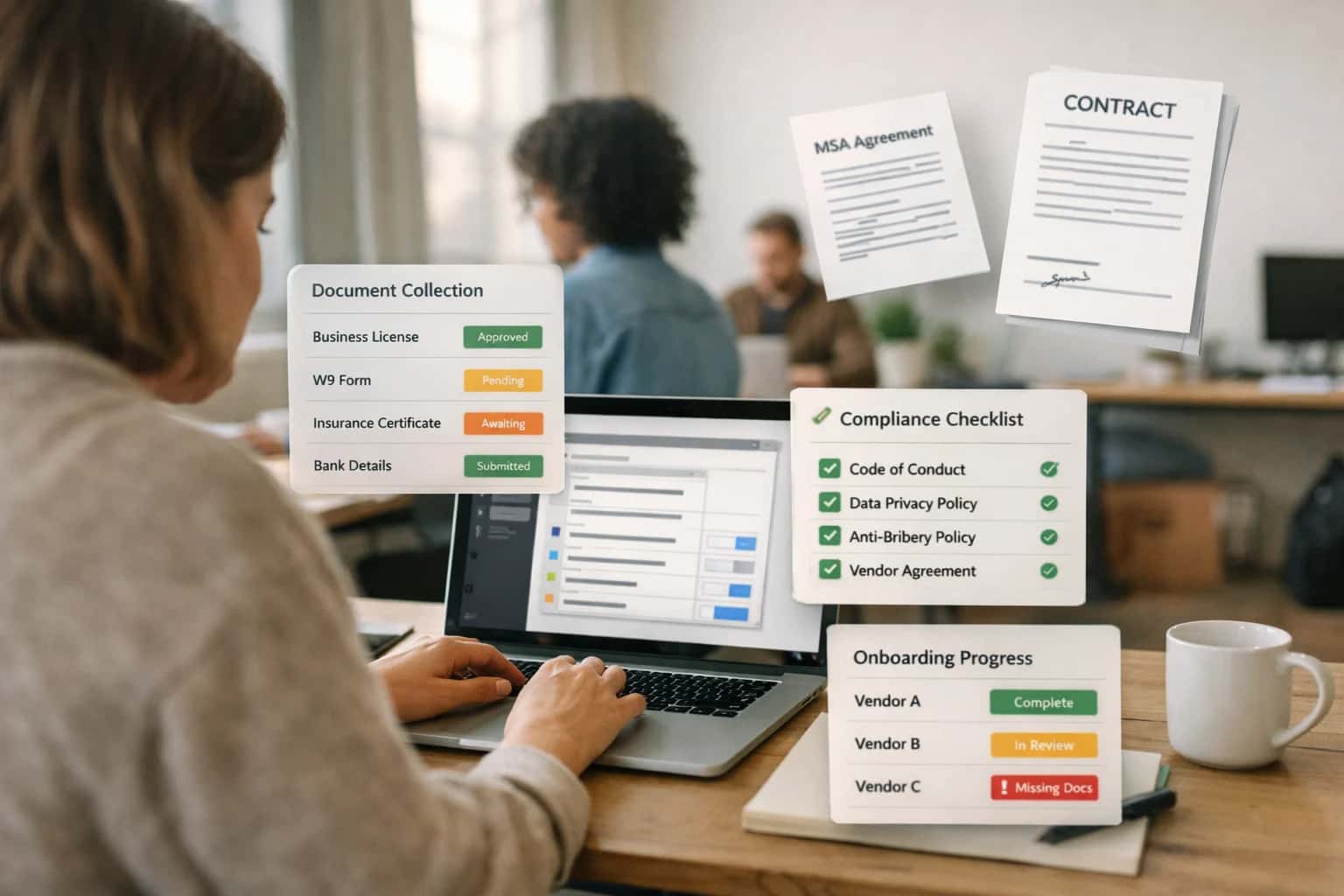
Where AI Fits in the Grant Management Stack
A practical guide to embedding AI agents and copilots into grantmaking workflows without disrupting your core Bonterra, Salesforce NPSP, or Fluxx operations.
High-value use cases follow the grant lifecycle: an AI Application Triage Agent can perform an initial compliance check against RFP guidelines, summarize key sections, and flag incomplete submissions before routing to program officers. During review, an AI Scoring Assistant can analyze reviewer comments for consensus, draft a synthesis, and suggest scores based on historical patterns. Post-award, an AI Report Analyzer can extract quantitative outcomes and qualitative narratives from grantee submissions, comparing them to proposed metrics and auto-generating sections for funder-facing impact reports. This shifts manual, repetitive analysis from hours to minutes, allowing staff to focus on high-judgment tasks like relationship building and strategic decision-making.
A production rollout requires a phased, governance-first approach. Start with a low-risk, high-volume workflow like application intake summarization. Implement a human-in-the-loop pattern where all AI-generated summaries or scores are presented as draft recommendations within the platform's UI (e.g., a custom Lightning component or Bonterra page extension) requiring a staff member's approval and audit log entry. Architect for security: use role-based access control (RBAC) to ensure AI tools only see data permitted for the triggering user, and employ data masking for sensitive PII before external LLM calls. A successful pilot demonstrates clear time savings and quality consistency, building the case to expand AI to monitoring and reporting workflows, ultimately creating a connected intelligence layer across the entire grant management stack.
Primary Integration Surfaces in Grant Management Platforms
Automating Initial Grant Review
AI connects to the application portal and submission objects (e.g., Grant_Application__c in Salesforce NPSP, Application in Bonterra) to perform first-pass screening. This surface is ideal for high-volume grantmakers.
Typical Integration Points:
- Webhook Listeners: Capture new application submissions.
- Document Parsers: Extract text from uploaded PDF proposals and budgets.
- Scoring Workflows: Use LLMs to evaluate applications against published criteria, generating a consistency score and a summary of alignment/misalignment.
Example Workflow:
- A new application lands in
FluxxorSmartSimple. - An AI agent is triggered via platform webhook.
- The agent retrieves the application PDF via API, extracts text, and scores it against the RFP stored in a knowledge base.
- A summary and recommended priority flag are written back to a custom field on the application record for staff review.
This reduces manual triage from hours to minutes, allowing program officers to focus on the most promising applications.
High-Value AI Use Cases for Grant Operations
Integrating AI into grant management platforms like Bonterra and Salesforce NPSP automates high-friction workflows, reduces administrative burden, and surfaces critical insights from unstructured data. These cards outline specific, implementable patterns that connect LLMs to your grant modules, objects, and workflows.
Automated Grant Application Pre-Screening
Use an LLM agent to perform initial triage on incoming LOIs or full proposals. The agent extracts key data (budget, timeline, alignment) from uploaded PDFs/forms, scores them against published criteria, and flags inconsistencies or missing sections for program officers. Results are written back to the Grant Application object in Bonterra or a custom object in NPSP.
Intelligent Grant Agreement & Report Analysis
Deploy a RAG system over executed grant agreements and past final reports. Staff can ask natural language questions (e.g., "What were the key outcomes for past environmental grants?") to surface relevant clauses, past outcomes, and compliance requirements. This turns your document repository into a queryable knowledge base for faster decision-making and monitoring.
AI-Powered Impact Report Synthesis
Automate the synthesis of narrative impact reports from grantees' quantitative data and qualitative updates. An AI workflow ingests data from connected Outcome records and narrative fields, then generates a first-draft report highlighting key achievements, quotes, and metrics. This reduces the manual compilation time for program officers before sharing with donors or boards.
Proactive Compliance & Deadline Monitoring
Build an AI agent that continuously monitors Grant records for upcoming reporting deadlines, payment schedules, and conditional milestones. The agent analyzes past submission patterns and automatically generates reminder emails to grantees via the platform's communication tools, and flags high-risk grants for officer review based on late or incomplete history.
Dynamic Funder & Prospect Matching
Connect an LLM to internal program descriptions and external funder databases (via API). For a new program idea, the AI analyzes alignment and suggests potential funders, pulling relevant RFPs and past award histories. Matched prospects are created as Organization or Account records in the CRM with notes on fit and next steps.
Grantee Support & FAQ Automation
Implement a RAG-powered chatbot for grantee portals (or integrate with your support ticket system). The chatbot is grounded in your grant manuals, FAQs, and policy documents, allowing grantees to ask questions in plain language about eligibility, reporting, or payment processes. Complex queries are escalated to human staff with full conversation context.
Example AI-Automated Grant Workflows
These concrete workflows show how AI agents can be embedded into grant management platforms to automate high-effort, repetitive tasks. Each pattern connects to specific modules, objects, and APIs within systems like Bonterra's Grants Management or Salesforce NPSP's custom grant objects.
Trigger: A new grant application is submitted via a portal (e.g., Bonterra Grantmaking Module) or a custom object record is created in Salesforce NPSP.
Workflow:
- Context Pull: The AI agent is triggered via a platform webhook or an internal automation tool (like n8n). It retrieves the full application payload, including narrative responses, budgets, and attachments (PDFs, DOCs).
- Agent Action: The agent uses a Retrieval-Augmented Generation (RAG) system grounded in your specific grant guidelines, past funded projects, and eligibility criteria. It performs:
- Eligibility Check: Confirms the applicant's nonprofit status, geographic focus, and alignment with funding priorities.
- Narrative Summary & Scoring: Extracts key project goals, methodologies, and expected outcomes. Scores the narrative against predefined rubrics (clarity, innovation, community need).
- Budget Review: Flags line items that are typically non-allowable or seem disproportionate.
- System Update: The agent writes a structured summary and a preliminary recommendation (
Strong Fit,Needs Review,Not Eligible) to a dedicated field on the Grant Application object. It can also create a childReview Noterecord with its analysis. - Human Review Point: The program officer's dashboard is filtered to show applications flagged as
Needs Reviewor where the AI's confidence score is below a set threshold, allowing them to prioritize their deep-dive work.
Typical Implementation Architecture
A production-ready AI integration for grant management connects to your system-of-record's data layer, automates high-volume tasks, and keeps human oversight in the loop.
A standard architecture connects to your grant management platform—like Bonterra Grants Management or Salesforce NPSP with a grants module—via its secure REST APIs and webhooks. The integration typically establishes a middleware layer (often a cloud function or containerized service) that listens for events like New_Application_Submitted or Report_Due_Date_Approaching. This layer orchestrates AI tasks: it retrieves the relevant application PDFs, supporting documents, and historical grant data, then calls a configured LLM (like GPT-4 or Claude) via a secure, private endpoint. For retrieval-augmented generation (RAG) use cases, such as answering policy questions, a separate vector database indexes your internal guidelines and past decisions, providing grounded context to the AI.
Workflow automation is key. For example, an initial screening agent can be triggered on each new application. It extracts key fields, summarizes the proposal against published criteria, and scores it for completeness, logging a structured assessment back to a custom object like AI_Review__c. High-scoring applications route automatically to a program officer's queue; borderline ones are flagged for committee review. Similarly, a compliance and reporting agent can monitor awarded grants, analyze submitted narrative reports, and cross-check promised outcomes versus reported metrics, flagging discrepancies. All AI actions are written back as timeline entries or notes, maintaining a clear audit trail within the primary system.
Rollout is phased, starting with a single, high-volume workflow like application intake summarization. Governance is enforced through human-in-the-loop checkpoints; for instance, all AI-generated summaries require a program officer's approval before being finalized. Access is controlled via the platform's native RBAC, ensuring only authorized staff trigger or view AI outputs. Data privacy is maintained by never sending PII or sensitive grantee information to a public LLM endpoint; all calls are routed through a private API with data masking. This architecture ensures the AI augments—rather than replaces—existing processes, providing scalable support while keeping your team in control. For a deeper look at secure patterns, see our guide on Secure AI Integration Architecture for Nonprofit Data.
Code and Payload Examples
Automating Initial Grant Application Screening
Integrate AI at the point of submission (e.g., via Bonterra's API or a webhook from Submittable) to perform an initial triage. The workflow extracts key data from uploaded PDFs or form entries, checks for completeness against a rubric, and generates a summary for program officers.
Example Python payload for processing a new submission:
pythonimport requests # Webhook payload from grant platform submission_payload = { "grant_id": "GR-2024-0456", "applicant_name": "Community Health Initiative", "document_url": "https://storage.example.com/proposals/proposal_0456.pdf", "submitted_fields": { "project_title": "Mobile Clinic Expansion", "requested_amount": 50000 } } # Call AI service for analysis analysis_response = requests.post( 'https://api.inferencesystems.com/v1/analyze/grant-application', json={ "document_url": submission_payload["document_url"], "criteria": ["budget_alignment", "need_statement", "measurable_outcomes"] } ) # Result to post back to grant record triage_result = { "grant_id": submission_payload["grant_id"], "compliance_score": analysis_response.json()["score"], "summary": analysis_response.json()["executive_summary"], "missing_elements": analysis_response.json()["missing_elements"], "recommended_next_step": "Schedule for committee review" } # Update grant record in Bonterra/Salesforce requests.patch( f"https://api.bonterra.com/grants/{submission_payload['grant_id']}", json={"ai_triage_data": triage_result} )
Realistic Time Savings and Operational Impact
A comparison of manual versus AI-enhanced workflows for grant discovery, application, and reporting within platforms like Bonterra and Salesforce NPSP. These are directional estimates based on typical grant management operations.
| Workflow Stage | Manual Process | AI-Assisted Process | Key Impact Notes |
|---|---|---|---|
Grant Opportunity Discovery | Hours of manual database and foundation website searches | Automated daily alerts with relevance scoring | Reduces search time by 60-80%, surfaces hidden opportunities |
Initial Eligibility Screening | Manual review of 10+ page RFPs against internal criteria | Automated RFP analysis with compliance checklist | Cuts review time from 1-2 hours to 10-15 minutes per RFP |
Proposal Drafting & Boilerplate | Copy-pasting from previous grants and manual tailoring | LLM-generated first drafts from approved templates and past wins | Reduces drafting time by 30-50%, ensures consistency |
Budget Narrative & Justification | Manual alignment of line items to program activities | AI-assisted mapping of budget lines to proposal goals | Ensures alignment, reduces errors, saves 1-2 hours per proposal |
Impact Data & Outcome Synthesis | Manual compilation of data from spreadsheets and reports | Automated aggregation and narrative summary of outcome metrics | Turns a half-day task into a 1-hour review and edit session |
Post-Award Report Drafting | Gathering data from multiple sources, writing from scratch | AI-generated report draft from structured deliverables and data | Cuts report preparation from days to hours, ensures timely submission |
Compliance & Deadline Tracking | Manual calendar entries and spreadsheet tracking | Automated deadline alerts with task dependencies and owner assignment | Eliminates missed deadlines, provides proactive visibility |
Governance, Security, and Phased Rollout
Integrating AI into grant management requires a controlled approach that prioritizes data security, auditability, and incremental value delivery.
In platforms like Bonterra Grants Management or Salesforce NPSP with grant modules, AI should interact with sensitive objects—Grant_Application__c, Review_Score__c, Compliance_Checklist__c, Funder__c—through secured API endpoints. All AI-generated content (e.g., proposal summaries, compliance flags) must be written to a dedicated AI_Annotation__c custom object with immutable audit trails, linking to the source record, model version, prompt hash, and generating user. This creates a transparent lineage for every AI-assisted decision, which is critical for internal audits and funder reporting.
A phased rollout mitigates risk and builds organizational trust. Start with a read-only pilot in a low-risk area: use an AI agent to analyze submitted Final_Report__c documents in a staging environment, extracting key outcomes and metrics into a structured summary for program officers. This provides immediate utility without altering live data. Phase two introduces assistive writing: embed a copilot in the grant application draft screen that suggests narrative improvements or aligns language with the RFP, requiring explicit user approval for each suggestion. The final phase enables automated triage: an AI workflow that performs initial scoring of incoming Grant_Application__c records against public scoring rubrics, routing only the top-tier and borderline applications to human reviewers, dramatically reducing manual screening time.
Governance is enforced through role-based access control (RBAC) and human-in-the-loop checkpoints. For instance, any AI-generated compliance recommendation over Required_Documentation__c should trigger a mandatory approval step for a grants manager before the status field is updated. All external LLM calls (e.g., to OpenAI or Anthropic) should be routed through a secure proxy that strips PII, logs usage for cost attribution, and enforces data retention policies. This architecture ensures AI augments the grant lifecycle—from discovery and drafting to review and reporting—while keeping human oversight firmly in control of final decisions and fiduciary responsibility.
Enabling Efficiency, Speed & Accuracy
Intelligent Analysis, Decision & Execution
We build AI systems for teams that need search across company data, workflow automation across tools, or AI features inside products and internal software.
Talk to Us
Search across company data
Give teams answers from docs, tickets, runbooks, and product data with sources and permissions.
Useful when people spend too long searching or get different answers from different systems.

Automate internal workflows
Use AI to route work, draft outputs, trigger actions, and keep approvals and logs in place.
Useful when repetitive work moves across multiple tools and teams.

Add AI to products and internal tools
Build assistants, guided actions, or decision support into the software your team or customers already use.
Useful when AI needs to be part of the product, not a separate tool.
FAQ: AI Integration for Grant Management
Practical answers for grantmaking teams evaluating AI integration into platforms like Bonterra, Fluxx, and Salesforce NPSP. Focused on security, workflow design, and measurable impact.
Security is paramount. A production integration should follow these patterns:
- API-First, No Direct Data Uploads: AI models are called via secure APIs (e.g., OpenAI, Azure OpenAI) from your controlled backend, never by sending data directly from the browser to an external service.
- Data Minimization & Masking: Before sending text for analysis, scripts should redact or hash personally identifiable information (PII) like Social Security Numbers, specific financials, or home addresses not required for the analysis.
- Private Endpoints & VPCs: Use the cloud provider's private endpoints for AI services, keeping all traffic within your virtual private cloud (VPC) and off the public internet.
- Audit Logging: Every AI call should be logged with a timestamp, user ID, grant record ID, and a hash of the input/output for compliance and traceability.
- Data Retention Policies: Configure the AI service to not use your data for model training (opt-out) and ensure outputs are stored only within your grant management platform's audit trail.
Example secure payload structure:
json{ "grant_application_id": "APP-2024-789", "user_id": "program_officer_123", "sanitized_text": "The proposed project in [CITY] aims to serve approximately 150 low-income youth through after-school STEM activities...", "evaluation_criteria": ["community_need", "project_design", "sustainability"] }

About the author
Prasad Kumkar
CEO & MD, Inference Systems
Prasad Kumkar is the CEO & MD of Inference Systems and writes about AI systems architecture, LLM infrastructure, model serving, evaluation, and production deployment. Over 5+ years, he has worked across computer vision models, L5 autonomous vehicle systems, and LLM research, with a focus on taking complex AI ideas into real-world engineering systems.
His work and writing cover AI systems, large language models, AI agents, multimodal systems, autonomous systems, inference optimization, RAG, evaluation, and production AI engineering.
Partnered with leading AI, data, and software stack.





How We Work
Custom AI workflows for your Business
One-fit-all AI don't work for modern businesses. At Inferensys, we aim to understand your business & custom requirements; which we use to define most efficient agentic workflows, the data, and the tools for your business.
01
Review the use case
We understand the task, the users, and where AI can actually help.
Read more02
Pick the right approach
We define what needs search, automation, or product integration.
Read more03
Build the first useful version
We implement the part that proves the value first.
Read more04
Improve from there
We add the checks and visibility needed to keep it useful.
Read moreThe first call is a practical review of your use case and the right next step.
Talk to Us