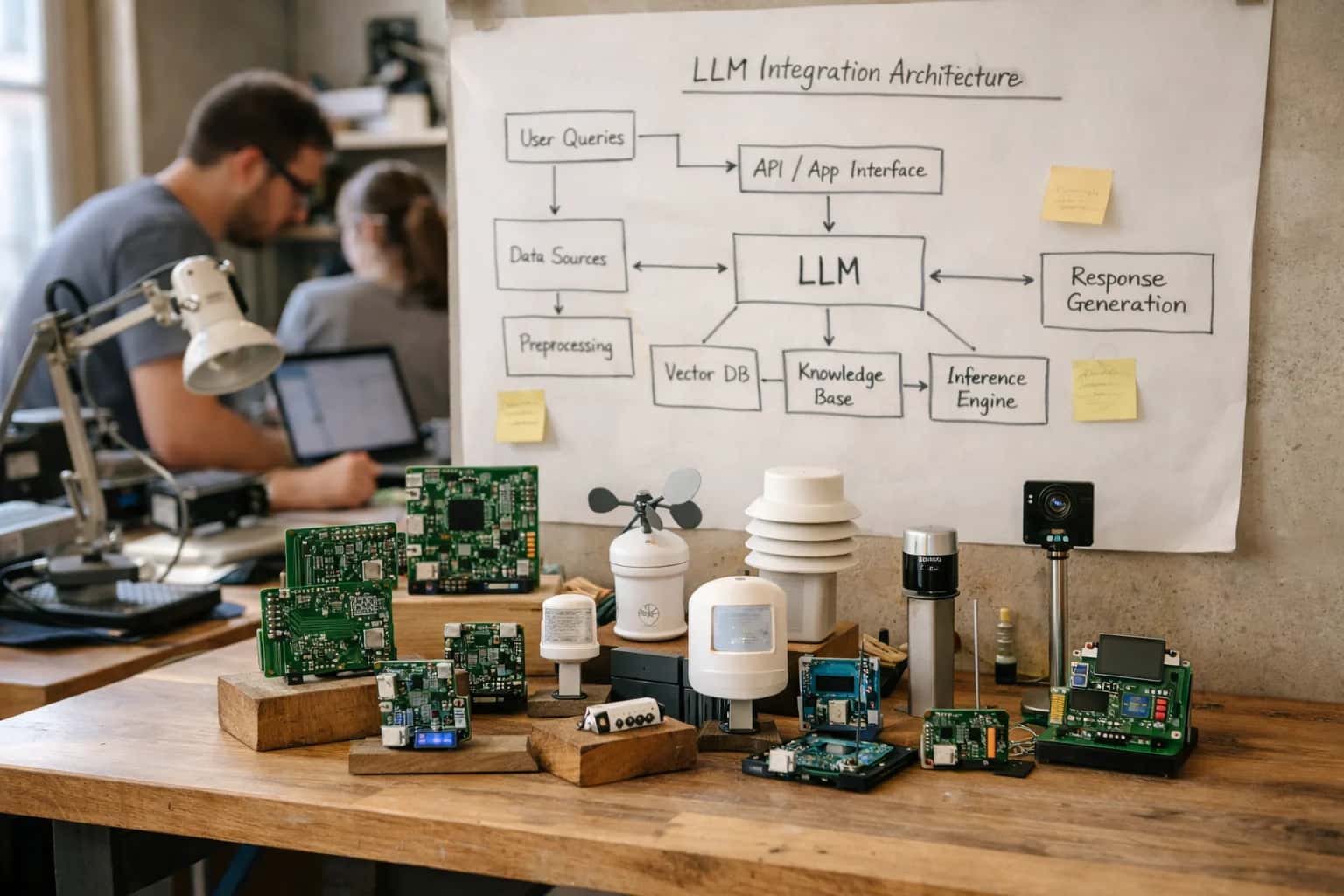
AI integration connects at three primary surfaces within platforms like Bloomerang, Bonterra, and Salesforce NPSP: the segmentation engine, the content/comms module, and the campaign analytics dashboard. Instead of replacing your CRM, AI acts as a copilot layer that uses CRM APIs to read donor records, engagement history, and gift data, then writes back personalized content, dynamic segments, and predictive insights. For example, an AI agent can be triggered by a new donation webhook from Donorbox, analyze the donor's full history in the CRM, and within seconds generate a hyper-personalized thank-you email draft—complete with references to past involvement—ready for staff review and sending.

Integration
AI for Nonprofit Marketing and Email Campaign Personalization
A technical guide for integrating AI content engines with the email and marketing modules of nonprofit CRMs like Donorbox, Bloomerang, Bonterra, and Salesforce NPSP to automate hyper-personalized campaign creation, subject line generation, and send-time optimization.
ARCHITECTURE AND ROLLOUT
Where AI Fits into Nonprofit Marketing Workflows
A practical guide to embedding AI agents and content engines into the email, segmentation, and campaign surfaces of your nonprofit CRM.
Implementation typically involves a middleware service or agent orchestration platform (like n8n or a custom service) that sits between your AI model and the CRM. This service handles secure API calls, manages prompt templates tailored to different donor personas and campaign types, and enforces approval workflows before any AI-generated content is published. Key data objects include Contact/Donor, Donation, Engagement Score, Campaign Member, and Email Send. The AI uses this data to perform tasks like:
- Dynamic subject line generation based on donor's last interaction.
- Send-time optimization predictions for open rates.
- A/B test variant creation for appeal letters.
- Next-best-message recommendations within a drip campaign.
Rollout should start with a single, high-volume workflow—such as monthly newsletter personalization—where impact is easy to measure and risks are low. Govern this with a human-in-the-loop step, where a comms manager reviews and edits all AI drafts before sending. Log all AI actions (prompts used, data accessed, outputs generated) back to a custom object in the CRM for audit trails. This phased approach builds internal trust, refines your prompts with real data, and demonstrates ROI before expanding to more sensitive workflows like major donor cultivation. For a deeper look at connecting these AI workflows to donor data, see our guide on building a unified nonprofit data lake for AI analytics.
AI FOR NONPROFIT MARKETING AND EMAIL CAMPAIGN PERSONALIZATION
CRM Marketing Modules and Integration Surfaces
Where AI Injects Intelligence into Donor Lists
AI integration surfaces here are the audience builders, segmentation rules, and list management modules within platforms like Bloomerang, Salesforce NPSP, and Bonterra. Instead of static rules (e.g., "donated in last 12 months"), AI models analyze hundreds of behavioral signals—email opens, event attendance, website visits, gift patterns—to predict donor affinity and next-best-action in real-time.
Integration Points:
- API Hooks to Segmentation Engines: Push AI-generated propensity scores (e.g.,
major_gift_affinity: 0.87) as custom fields on donor records. - Dynamic List Refresh: Trigger nightly batch jobs that call your AI service to re-score donors and automatically update smart lists for upcoming campaigns.
- Real-time Tagging: Use platform webhooks (like a new donation in Donorbox) to immediately call an AI model, evaluate the donor's journey, and apply relevant tags for hyper-segmentation.
This moves segmentation from a manual, retrospective task to a predictive, automated layer driving campaign relevance.
CRM-INTEGRATED WORKFLOWS
High-Value AI Use Cases for Nonprofit Campaigns
Integrating generative AI directly into your nonprofit CRM's marketing modules transforms how you create, personalize, and optimize donor communications. These patterns connect AI to the data and workflows in Donorbox, Bloomerang, Bonterra, and Salesforce NPSP.
01
Dynamic Email Content Generation
Use LLMs connected via CRM API to generate personalized email body copy, subject lines, and calls-to-action for segmented campaigns. The AI pulls from the donor's giving history, interests, and recent engagements stored in the CRM to craft unique variants, moving from batch templates to 1:1 relevance.
Batch -> 1:1
Personalization scale
02
Automated Campaign A/B Testing
Deploy an AI agent that uses the CRM's email send logs and donation conversion events to automatically analyze A/B test results for subject lines, imagery, and send times. The system recommends winning variants and can trigger the next campaign iteration, reducing manual analysis.
1 sprint
Optimization cycle
03
Donor Journey Orchestration
Build multi-step AI workflows that react to real-time donor engagement signals (email opens, link clicks, form visits). Using CRM automation builders or webhooks, the AI decides the next best touchpoint—a personalized follow-up email, a retargeting ad audience update, or a task for a gift officer—creating a cohesive journey.
Days -> Hours
Journey latency
04
Sentiment-Driven Stewardship
Integrate AI to analyze open-text survey responses, email replies, and donor note fields in the CRM. The model extracts sentiment and key themes, automatically tagging the donor record and triggering appropriate stewardship workflows (e.g., a warm thank-you for positive feedback, a check-in call for concerns).
Real-time
Insight activation
05
Predictive Send-Time Optimization
Go beyond basic time-of-day rules. Connect an AI model to historical CRM engagement data to predict the optimal send window for each donor segment based on their unique open and click patterns. Automatically schedule campaign deployments within the CRM's marketing module for maximum impact.
Hours -> Minutes
Scheduling work
06
Campaign Performance Narratives
After a campaign concludes, an AI agent can synthesize results from the CRM, donation platform, and web analytics into a concise, narrative report. It highlights what worked, identifies donor segments that over/under-performed, and suggests data-backed hypotheses for the next campaign, automating post-mortem analysis.
Same day
Report turnaround
IMPLEMENTATION PATTERNS
Example AI-Automated Campaign Workflows
These workflows illustrate how AI agents can be integrated into the email and marketing modules of platforms like Bloomerang, Salesforce NPSP, and Bonterra to automate personalization at scale. Each pattern connects to CRM data via API, executes a specific AI task, and logs the result back to the donor record.
Trigger: A new donor record is created in the CRM after a first-time gift via Donorbox.
Workflow:
- A webhook from the CRM triggers an AI orchestration job.
- The agent pulls the donor's:
- Gift amount and designation
- Source/UTM parameters from the donation form
- Any available demographic data (if provided)
- An LLM (e.g., GPT-4) generates a personalized welcome email series (3 parts) using a structured prompt:
code
You are a nonprofit development officer. Draft a 3-email welcome series for a new donor. Donor: {donor_name} First Gift: ${amount} to {campaign_name} Donor Source: {source} Tone: Warm, grateful, and informative. Include a specific reference to their gift's impact. - The generated subject lines and body copy are posted via the CRM's Email API (e.g., Bloomerang Communications API) to schedule the series.
- The generated content and schedule are logged to a custom
AI_Communications__cobject in Salesforce NPSP for audit and optimization.
Human Review Point: For major donor-level gifts (e.g., >$5,000), the draft series can be routed to a major gift officer's approval queue in the CRM before sending.
CONNECTING LLMS TO NONPROFIT CRM MARKETING ENGINES
Implementation Architecture: Data Flow and System Design
A practical blueprint for integrating generative AI into your nonprofit CRM's email and campaign modules to automate personalization at scale.
The core integration pattern connects an AI content engine—hosted securely in your cloud—to the marketing automation APIs of platforms like Bloomerang, Salesforce NPSP, or Bonterra. The typical data flow begins with a scheduled campaign job in your CRM that exports a segment of donor records (including fields like last_gift_amount, campaign_interests, communication_preference, and unstructured notes). This payload is sent via a secure webhook to your AI service layer, which enriches it with contextual data from a connected donor data lake before generating personalized content.
For each donor, the AI engine executes a multi-step workflow: it first analyzes the donor's history and profile to determine a personalization strategy, then uses a tuned LLM prompt to generate a unique email body, subject line, and suggested send time. The generated content, along with a confidence score and the rationale for personalization choices, is returned to the CRM via its REST API and attached to the individual donor's record or a dedicated AI_Generated_Content__c custom object. The CRM's native send engine then dispatches the emails, with all actions logged for audit and optimization. This architecture keeps sensitive PII within your controlled environment, using the CRM solely as the execution and audit layer.
Rollout should be phased, starting with a human-in-the-loop approval step where generated content is reviewed by a staff member before sending. Governance is critical: implement RBAC controls in the AI layer to restrict which team members can trigger generation, and maintain a full audit trail linking each generated message back to the source donor data and the LLM prompt version used. Over time, as confidence grows, you can move to a fully automated workflow for high-volume, lower-risk communications like newsletter personalization, while reserving manual review for major gift cultivation emails.
AI FOR NONPROFIT MARKETING AND EMAIL CAMPAIGN PERSONALIZATION
Code and Payload Examples
Generating Personalized Email Body Copy
Integrate an LLM API call directly into your CRM's email send workflow. Use donor data from the CRM record as context to generate unique, relevant content for each recipient. This pattern moves beyond simple mail-merge fields to create narrative-driven messages.
Example Python API call using a donor's giving history:
pythonimport requests def generate_personalized_email_body(donor_record): prompt = f""" Write a personalized thank-you email for a nonprofit donor. Donor Name: {donor_record['first_name']} Last Gift Amount: ${donor_record['last_gift_amount']} Last Gift Designation: {donor_record['last_gift_program']} Total Years Giving: {donor_record['years_giving']} Tone: Warm, appreciative, and impact-focused. Length: 3-4 short paragraphs. Include a specific example of how their last gift made a difference. """ payload = { "model": "gpt-4o-mini", "messages": [{"role": "user", "content": prompt}], "temperature": 0.7 } response = requests.post( "https://api.openai.com/v1/chat/completions", headers={"Authorization": f"Bearer {API_KEY}"}, json=payload ) return response.json()['choices'][0]['message']['content']
The generated text can be passed directly into the body_html field of an email send payload for Bloomerang, Salesforce NPSP, or other CRM marketing modules.
AI-PERSONALIZED NONPROFIT MARKETING
Realistic Time Savings and Campaign Impact
How AI integration for email and campaign modules in Donorbox, Bloomerang, Bonterra, and Salesforce NPSP changes the workflow for development and marketing teams.
| Marketing Task | Manual / Rule-Based Process | AI-Augmented Process | Operational Impact |
|---|---|---|---|
Donor segment creation | Hours of query building and list exports | Dynamic clusters based on predictive behavior | Segments update with new donor activity |
Campaign email drafting | Writer's block, generic templates | First drafts generated with donor-specific references | Focus shifts from writing to editing and strategy |
Subject line A/B testing | Manual brainstorming, limited variants | 10-20 AI-generated options scored for predicted open rate | Higher open rates with less creative effort |
Send-time optimization | Fixed schedule or basic timezone rules | Personalized send windows predicted per donor | Incremental lift in engagement without manual analysis |
Post-campaign analysis | Days to compile data and write summaries | Automated performance narrative with donor sentiment highlights | Insights available same-day for strategy adjustment |
Multi-channel journey orchestration | Fragmented manual triggers across email, social, direct mail | AI agent coordinates touches based on real-time CRM engagement | Cohesive donor experience with reduced cross-team sync |
Lapsed donor re-engagement | Batch-and-blast reactivation emails | Personalized message based on original giving reason and lapse timing | Higher reactivation rates with tailored appeals |
SECURE, CONTROLLED IMPLEMENTATION
Governance, Security, and Phased Rollout
A practical approach to deploying AI for marketing personalization while protecting donor data and managing organizational change.
Integrating AI into your Donorbox, Bloomerang, or Salesforce NPSP email workflows requires a security-first architecture. This typically involves a middleware layer (like an API gateway or secure cloud function) that sits between your CRM and the AI model. This layer handles authentication, strips unnecessary personally identifiable information (PII) from prompts, logs all generative activity for audit trails, and enforces role-based access controls (RBAC) to ensure only authorized staff can trigger or approve AI-generated content. Sensitive fields like donation amounts or personal notes are masked or tokenized before being sent to external LLM APIs.
A phased rollout is critical for adoption and risk management. Start with a pilot workflow that has high impact and low risk, such as using AI to generate multiple subject line variants for a single, scheduled campaign. This allows your team to evaluate output quality and establish a human-in-the-loop review process within your CRM's native approval workflows. Phase two might expand to personalized email body generation for segmented donor lists, where the AI drafts content based on donor attributes like giving tier, last gift date, and campaign interests stored in Bloomerang or Bonterra fields. The final phase introduces fully automated, trigger-based personalization for transactional emails (e.g., post-donation thank-yous) after confidence in the system is high.
Governance is built into the workflow. Every AI-generated email draft should be logged back to the donor record as a note or activity, tagging it as 'AI-generated' and storing the source prompt. Establish clear guidelines for staff on when AI drafts can be sent without edits versus when they require manager approval, based on content type and donor segment. Regularly audit a sample of outputs for brand voice alignment and personalization accuracy, using this feedback to iteratively refine your prompts and data integration points. This controlled, measurable approach ensures the AI acts as a scalable assistant that augments your team's expertise, not an unpredictable automation that risks donor relationships.
Enabling Efficiency, Speed & Accuracy
Intelligent Analysis, Decision & Execution
We build AI systems for teams that need search across company data, workflow automation across tools, or AI features inside products and internal software.
Talk to Us
Search across company data
Give teams answers from docs, tickets, runbooks, and product data with sources and permissions.
Useful when people spend too long searching or get different answers from different systems.
Enterprise searchRAGPermissions
Read more
Automate internal workflows
Use AI to route work, draft outputs, trigger actions, and keep approvals and logs in place.
Useful when repetitive work moves across multiple tools and teams.
AI agentsWorkflow automationGovernance
Read more
Add AI to products and internal tools
Build assistants, guided actions, or decision support into the software your team or customers already use.
Useful when AI needs to be part of the product, not a separate tool.
AI integrationDecision supportModel routing
Read moreIMPLEMENTATION AND WORKFLOW DETAILS
Frequently Asked Questions
Practical questions for development, marketing, and operations teams planning to integrate AI into nonprofit CRM email and marketing modules.
This is typically a webhook-driven workflow:
- Trigger: A donor event occurs in your CRM (e.g.,
donation_received,event_registered,survey_submitted). Your CRM's automation engine (like Salesforce Flow or Bloomerang's workflows) fires a webhook. - Context Enrichment: The webhook payload, containing the donor ID and event type, is sent to your integration layer. This layer calls the CRM's REST API to fetch the full donor record, recent interactions, and campaign context.
- AI Action: This enriched context is formatted into a prompt for an LLM (like GPT-4 or Claude). The prompt instructs the model to generate personalized content (e.g., a thank-you email body, a follow-up ask) based on donor history, gift size, and stated interests.
- System Update & Delivery: The generated content is returned. Your integration can either:
- Post the content directly back to the CRM's email module as a drafted message for human review.
- Pass the content and donor ID to your ESP (like Mailchimp or Klaviyo) via its API for immediate or scheduled sending.
- Audit Trail: The prompt, generated content, donor ID, and timestamp are logged to a secure audit table for compliance and optimization.
Key API Touchpoints: CRM REST API (GET donor), AI Provider API (POST completion), Email Service Provider API (POST campaign/send).

About the author
Prasad Kumkar
CEO & MD, Inference Systems
Prasad Kumkar is the CEO & MD of Inference Systems and writes about AI systems architecture, LLM infrastructure, model serving, evaluation, and production deployment. Over 5+ years, he has worked across computer vision models, L5 autonomous vehicle systems, and LLM research, with a focus on taking complex AI ideas into real-world engineering systems.
His work and writing cover AI systems, large language models, AI agents, multimodal systems, autonomous systems, inference optimization, RAG, evaluation, and production AI engineering.
LinkedIn
Limited slotsGet a Free AI Consultation
Partnered with leading AI, data, and software stack.





How We Work
Custom AI workflows for your Business
One-fit-all AI don't work for modern businesses. At Inferensys, we aim to understand your business & custom requirements; which we use to define most efficient agentic workflows, the data, and the tools for your business.
01
Review the use case
We understand the task, the users, and where AI can actually help.
Read more02
Pick the right approach
We define what needs search, automation, or product integration.
Read more03
Build the first useful version
We implement the part that proves the value first.
Read more04
Improve from there
We add the checks and visibility needed to keep it useful.
Read moreThe first call is a practical review of your use case and the right next step.
Talk to Us