AI integration connects directly to the core objects and workflows of your grant management system. The primary surfaces are the Application Intake queue and the Final Report module. For each incoming application or report, an AI agent is triggered via a platform webhook or scheduled job. It retrieves the full submission—including narrative responses, budgets, and attachments—and evaluates it against a configurable set of criteria you define, such as alignment with funding priorities, completeness, and past performance indicators.

Integration
AI for Grant Application and Report Review
A technical blueprint for integrating LLMs into nonprofit grant workflows to perform initial screening, summarize key points, flag inconsistencies, and reduce manual review time from hours to minutes.
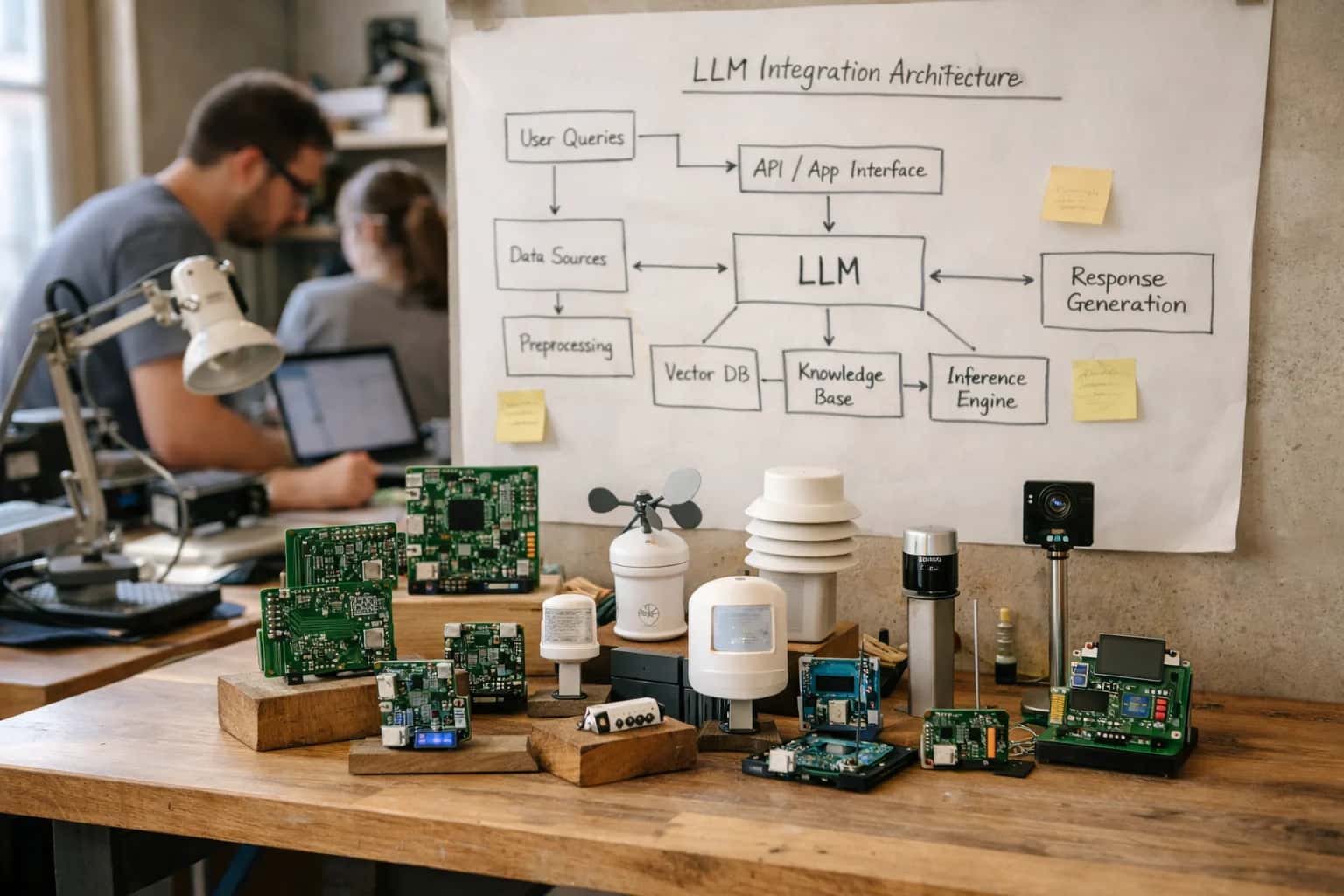
A PRACTICAL ARCHITECTURE FOR NONPROFIT GRANTMAKERS
Where AI Fits into the Grant Review Workflow
Integrating LLMs into grant management platforms like Bonterra, Fluxx, or Salesforce NPSP transforms manual screening into a scalable, consistent, and auditable process.
The agent performs three key functions: initial scoring based on rubric alignment, narrative summarization that extracts key proposals and risks for reviewers, and inconsistency flagging (e.g., budget totals that don't match narrative descriptions). These outputs are written back to custom fields on the grant record—AI_Score, AI_Summary, AI_Flags—allowing reviewers to sort, filter, and prioritize their queue directly within the familiar platform interface. This reduces first-pass review time from hours to minutes and ensures all submissions are assessed against the same baseline.
A successful rollout involves a phased, human-in-the-loop approach. Start with a parallel review pilot, where AI scores and human scores are compared for a sample of applications to calibrate the model and build trust. Governance is critical: all AI actions must be logged to an audit trail field, and any automated decisions (like auto-rejecting incomplete applications) should require supervisor approval workflows. This architecture ensures AI augments—rather than replaces—program officer expertise, freeing them to focus on high-value deliberation and applicant engagement.
WHERE LLMS CONNECT TO THE GRANT LIFECYCLE
Integration Touchpoints in Common Grant Platforms
Automating Initial Eligibility and Completeness Checks
AI connects at the point of submission, typically via platform webhooks (e.g., application.created) or by polling submission APIs. An LLM agent reviews the unstructured text of proposals against a structured set of funder criteria defined in the platform's guidelines or custom fields.
Key Integration Points:
- Submission APIs: Fetch full application text, attachments (PDFs), and metadata from platforms like Fluxx, Foundant, or Submittable.
- Criteria Mapping: Link platform
custom_fieldsfor eligibility (e.g.,geographic_focus,organization_type) to the LLM's evaluation prompt. - Workflow Triggers: Use the platform's native automation or API to update application
status(e.g.,Move to Review), add areviewer_score, or post an internal comment summarizing the AI's initial screening notes.
Example Workflow:
- Webhook from SmartSimple triggers a serverless function.
- Function retrieves application PDF via
GET /submissions/{id}/documents. - LLM extracts answers, checks for required sections, and scores alignment with RFP.
- Results are posted back via
PATCH /submissions/{id}to set apre_screen_scoreand flag missing data.
INTEGRATION PATTERNS
High-Value AI Use Cases for Grant Operations
For grantmaking teams using platforms like Bonterra, Fluxx, or Salesforce NPSP, AI integration transforms manual review into a scalable, consistent workflow. These patterns connect LLMs directly to your grant management data and surfaces.
01
Automated Initial Eligibility Screening
An AI agent ingests submitted applications via platform webhooks, checks them against published criteria (geography, focus area, budget range), and provides a pass/fail recommendation with reasoning. Integrates with the application queue to auto-tag and route for next steps.
Batch -> Real-time
Screening speed
02
Narrative Summarization & Consistency Flagging
For applications that pass initial screening, an LLM generates a concise, structured summary of the proposal narrative, budget justification, and impact metrics. It cross-references sections to flag inconsistencies (e.g., budget totals not matching line items) for human review.
1 sprint
Typical implementation
03
Multi-Reviewer Synthesis & Scoring
After panel review, an AI model ingests qualitative comments and scores from multiple reviewers (pulled via the grant platform's API). It synthesizes common themes, highlights outlier opinions, and proposes a consensus score, reducing manual compilation time before committee meetings.
Hours -> Minutes
Report generation
04
Grant Report Compliance & Outcome Extraction
For final reports, an AI workflow parses narrative and financial attachments. It extracts promised outcomes, compares them to reported results, checks for required data points, and flags any missing compliance elements. Logs findings back to the grantee record for follow-up.
Same day
Review turnaround
05
Proactive Risk & Duplication Detection
An AI model screens new applications against a vector database of past awarded grants (from your platform's data). It surfaces potential duplication of funding, overlaps with existing grantees, or alignment with previously identified high-risk areas, providing context to program officers.
06
Grantees & Grantee Support Agent
A RAG-powered chatbot, embedded in your grant portal or internal staff dashboard, answers FAQs by retrieving from policy manuals, past decisions, and award documents. It reduces support ticket volume and logs interactions to the relevant grant record for full context.
24/7
Support availability
IMPLEMENTATION PATTERNS
Example AI-Powered Grant Workflows
These workflows illustrate how LLM agents integrate with grant management modules in platforms like Bonterra, Fluxx, or Salesforce NPSP Grants Management. Each pattern connects to specific objects, automations, and review queues to reduce manual screening time from hours to minutes.
Trigger: A new grant application is submitted via a webform or portal and creates a Grant_Application__c record.
Context Pulled: The agent retrieves:
- The full application text and attachments (PDF, DOCX) from the
Application_Document__crelated list. - The
Funding_Opportunity__crecord containing the official eligibility criteria, geographic restrictions, and required documents. - The applicant's
Accountrecord for past grant history and basic demographics.
Agent Action: The LLM is prompted to:
- Extract answers to key eligibility questions from the narrative.
- Check for the presence of all required attachments (budget, bios, IRS letter).
- Flag any obvious mismatches (e.g., applicant location vs. geographic focus).
- Generate a structured JSON summary.
System Update: The agent updates the Grant_Application__c record with:
- A new
AI_Initial_Review__crich text field containing the summary and a Pass/Review/Flag status. - A
Review_Checklist__cmulti-select picklist populated with missing items (e.g., "BUDGET_MISSING"). - The record is automatically routed to a "Ready for Human Review" queue if status is "Pass," or to a "Completeness Issues" queue if "Flag."
Human Review Point: A program officer reviews the AI summary and checklist before the application enters the formal scoring phase, correcting any extraction errors.
GRANT REVIEW AUTOMATION
Typical Implementation Architecture
A secure, phased architecture for integrating LLMs into grant management platforms to automate initial screening and report analysis.
The integration connects to your grant management platform—such as Bonterra, Fluxx, or a custom Salesforce NPSP grant module—via its REST APIs or webhooks. When a new application or final report is submitted, the system extracts the narrative text, budget attachments, and key metadata (e.g., grant ID, criteria tags). This payload is queued, and an AI agent is triggered to perform the initial review. The agent uses a structured prompt that includes the specific grant criteria, scoring rubric, and any organizational priorities to evaluate the submission.
The core AI workflow involves three parallel tasks: a criteria compliance check against required elements, a key point summarization for reviewer convenience, and an inconsistency flagger that cross-references budget narratives with attached figures or prior reports. Results are formatted into a structured JSON object containing a summary, a compliance score, flagged sections for human review, and confidence metrics. This output is posted back to the grant platform, creating a new Review Note object or populating custom fields on the grant record, thus pre-populating the human reviewer's dashboard.
Rollout is typically phased, starting with a pilot for a single grant program. Governance is critical: all AI-generated notes are watermarked and stored with a full audit trail of the source submission and prompt version. A human-in-the-loop approval step is mandatory before any automated score influences a final decision. The system is designed to operate in a zero-retention mode for sensitive applicant data, processing payloads without persisting them in the AI provider's environment, aligning with nonprofit data stewardship principles.
GRANT REVIEW WORKFLOWS
Code and Payload Examples
Webhook for Application Intake
When a new grant application is submitted in your Grant Management Platform (e.g., Bonterra, Fluxx), a webhook can trigger an initial AI screening. This handler receives the application payload, extracts key sections, and calls an LLM to score it against predefined criteria.
Typical Payload Sent to AI Service:
json{ "application_id": "GR-2024-0456", "criteria": ["alignment_with_mission", "clarity_of_outcomes", "budget_realism"], "sections": { "narrative": "The applicant proposes a 3-year after-school program...", "budget_summary": "Total request: $150,000 over 3 years...", "evaluation_plan": "Outcomes will be measured via pre/post surveys..." }, "metadata": { "funding_program": "Youth Development Initiative", "max_award_amount": 200000 } }
The AI service returns a structured analysis, flagging sections that need human review for inconsistencies or missing data, which is then posted back to a custom object in the CRM.
GRANT APPLICATION AND REPORT REVIEW
Realistic Time Savings and Operational Impact
This table illustrates the operational impact of integrating an AI copilot into grant management workflows for initial screening, summarization, and consistency checking. Metrics are based on typical workflows within platforms like Bonterra, Fluxx, or Salesforce NPSP grant modules.
| Workflow Stage | Manual Process (Before AI) | AI-Assisted Process (After AI) | Key Notes & Assumptions |
|---|---|---|---|
Initial Application Triage | Staff reviews 100% of submissions for basic eligibility | AI screens 100%, flags 20-30% for human review on criteria mismatch | Human reviewer validates all AI flags; final eligibility decision remains with staff |
Narrative Summary Generation | Officer reads full proposal (avg. 15-20 pages) to extract key points | AI generates a structured 1-page summary in <2 minutes per application | Summary includes alignment score, key objectives, budget highlights, and potential risks for officer review |
Budget & Narrative Consistency Check | Manual cross-reference between budget table and narrative text | AI extracts budget figures and narrative mentions, flags discrepancies for review | Catches transposition errors, mismatched totals, or unsupported narrative claims |
Final Report Compliance Review | Officer compares report against original grant agreement line-by-line | AI compares report text and data to stored agreement terms, highlights deviations | Focuses human effort on substantive variances rather than routine verification |
Batch Processing & Prioritization | Applications/reports reviewed in received order; urgent items may be delayed | AI scores and ranks queue by alignment, risk, or deadline; suggests review order | Enables staff to address high-priority or high-risk submissions first |
Internal Note & Debrief Drafting | Officer manually writes review notes and debrief points post-meeting | AI drafts preliminary review notes based on analysis; officer edits and finalizes | Reduces administrative writing time, ensures consistent note format |
Rollout & Learning Curve | Pilot: 4-6 weeks for integration, testing, and user training | Pilot: 2-3 weeks for integration; AI model tunes on feedback over 1-2 cycles | Impact grows as the AI learns from reviewer corrections and organizational criteria |
IMPLEMENTING AI IN GRANT WORKFLOWS
Governance, Security, and Phased Rollout
A secure, controlled approach to integrating AI into sensitive grant review processes within platforms like Bonterra, Fluxx, or Salesforce NPSP.
Integrating LLMs into grant review requires a governance-first architecture. This typically involves a secure middleware layer (like an API gateway) that sits between your grant management platform (e.g., Bonterra's Program Manager module, Fluxx's application portal) and the AI model. This layer handles critical functions: it masks or redacts personally identifiable information (PII) from application PDFs and narratives before sending data to the model, enforces role-based access controls (RBAC) by checking user permissions in the CRM before processing, and maintains a full audit log of every AI-assisted review—recording which user triggered the analysis, which application ID was reviewed, and the model's output. This ensures all AI activity is traceable back to your system's native audit trails.
A phased rollout is essential for user adoption and risk management. Start with a 'Copilot' phase where the AI acts as an assistant in a side panel. For example, when a grants officer opens an application in SmartSimple or Foundant, an AI agent can be triggered via a platform webhook to provide a neutral summary and criteria checklist, but the final scoring and decision remain entirely manual. This builds trust. Phase two introduces automated triage and flagging. Here, the system uses the AI to perform an initial, high-volume screening of incoming LOIs or reports, routing them into 'Needs Human Review,' 'Meets Basic Criteria,' or 'Contains Inconsistencies' queues within the platform's workflow engine. The final phase enables predictive scoring and recommendation, where the AI suggests priority scores based on historical grant data, but always requires a human-in-the-loop for final approval before any status field in the CRM is updated.
Security is paramount when handling applicant data. Implement zero-data retention policies with your AI provider, ensuring all processed data is ephemeral. For on-premise or air-gapped environments common in foundations, we architect containerized AI models (like Llama 3 or a fine-tuned open-source model) that run within your own VPC, ensuring data never leaves your network. Furthermore, integrate the AI's outputs directly into the grant platform's native comment fields or custom objects (e.g., creating an AI_Review__c object in Salesforce NPSP that relates to the Grant_Application__c), rather than in a separate silo. This keeps the context, the human discussion, and the AI's analysis together in one governed record, simplifying compliance and review.
Enabling Efficiency, Speed & Accuracy
Intelligent Analysis, Decision & Execution
We build AI systems for teams that need search across company data, workflow automation across tools, or AI features inside products and internal software.
Talk to Us
Search across company data
Give teams answers from docs, tickets, runbooks, and product data with sources and permissions.
Useful when people spend too long searching or get different answers from different systems.
Enterprise searchRAGPermissions
Read more
Automate internal workflows
Use AI to route work, draft outputs, trigger actions, and keep approvals and logs in place.
Useful when repetitive work moves across multiple tools and teams.
AI agentsWorkflow automationGovernance
Read more
Add AI to products and internal tools
Build assistants, guided actions, or decision support into the software your team or customers already use.
Useful when AI needs to be part of the product, not a separate tool.
AI integrationDecision supportModel routing
Read moreIMPLEMENTATION BLUEPRINT
Frequently Asked Questions
Practical questions for grantmaking teams evaluating AI to automate the review of applications and final reports. Focused on workflow integration, data security, and rollout strategy for platforms like Bonterra, Fluxx, Foundant, and Salesforce NPSP.
The integration uses the platform's APIs to pull application data into a secure processing queue. A typical workflow involves:
- Trigger: A new grant application is submitted and marked
Ready for Reviewin the platform (e.g., Bonterra, SmartSimple). - Context Pulled: The integration API fetches the application PDF/text, attached documents, and key metadata (grant ID, program criteria, applicant history).
- Agent Action: An AI agent, using a Retrieval-Augmented Generation (RAG) system over your grant guidelines, performs:
- Criteria Matching: Extracts and scores responses against each published requirement.
- Summary Generation: Creates a concise, structured summary for reviewers.
- Inconsistency Flagging: Highlights contradictions within the application or against past submissions.
- System Update: The analysis is posted back to the platform as a note on the grant record, or updates a custom
AI_Review_Scorefield, moving the record to aPre-Screenedqueue. - Human Review Point: The AI output is presented as a first-pass assistant; a program officer makes the final eligibility determination.

About the author
Prasad Kumkar
CEO & MD, Inference Systems
Prasad Kumkar is the CEO & MD of Inference Systems and writes about AI systems architecture, LLM infrastructure, model serving, evaluation, and production deployment. Over 5+ years, he has worked across computer vision models, L5 autonomous vehicle systems, and LLM research, with a focus on taking complex AI ideas into real-world engineering systems.
His work and writing cover AI systems, large language models, AI agents, multimodal systems, autonomous systems, inference optimization, RAG, evaluation, and production AI engineering.
LinkedIn
Limited slotsGet a Free AI Consultation
Partnered with leading AI, data, and software stack.





How We Work
Custom AI workflows for your Business
One-fit-all AI don't work for modern businesses. At Inferensys, we aim to understand your business & custom requirements; which we use to define most efficient agentic workflows, the data, and the tools for your business.
01
Review the use case
We understand the task, the users, and where AI can actually help.
Read more02
Pick the right approach
We define what needs search, automation, or product integration.
Read more03
Build the first useful version
We implement the part that proves the value first.
Read more04
Improve from there
We add the checks and visibility needed to keep it useful.
Read moreThe first call is a practical review of your use case and the right next step.
Talk to Us