Dental practice management systems (PMS) like Dentrix, Eaglesoft, Open Dental, and Curve Dental are clinical and financial hubs, but they often operate in a data silo. An AI interoperability layer acts as a secure, intelligent bridge between your PMS and external systems—such as medical EHRs, Health Information Exchanges (HIEs), lab systems, or pharmacy platforms—using standards like HL7 and FHIR. This layer doesn't replace your PMS; it listens for events (e.g., a new patient registration, a completed procedure) via API or database hooks, translates dental-specific data into a shared clinical vocabulary, and routes actionable information to the appropriate external system, and vice-versa.

Integration
AI Integration for Dental Practice Management Interoperability
A technical guide to using AI as a smart interoperability layer between dental PMS (Dentrix, Eaglesoft, Open Dental, Curve) and external health IT systems like medical EHRs, HIEs, and labs for coordinated, whole-person care.
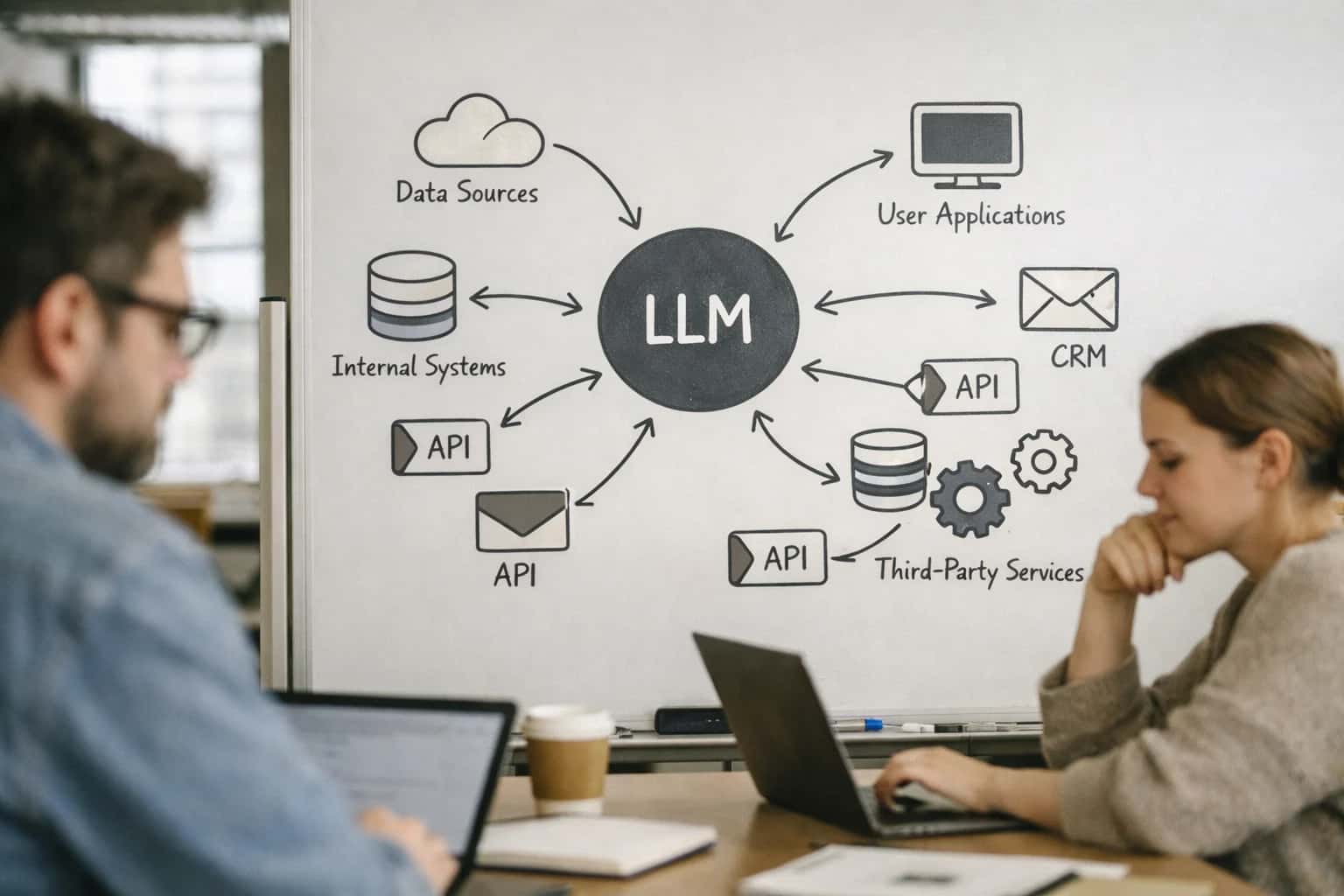
ARCHITECTURE FOR COORDINATED CARE
AI as the Intelligent Interoperability Layer for Dental Data
A practical blueprint for using AI to translate and route data between your dental PMS and other health IT systems.
Implementation focuses on high-value, bidirectional workflows. For example, when a diabetic patient schedules a hygiene appointment, the AI layer can query the connected medical EHR via FHIR for the latest HbA1c results and surface a flag in the PMS chart. Conversely, after an oral surgery procedure, the layer can automatically generate and send a structured clinical summary to the patient's primary care physician via an HIE, ensuring coordinated post-op care. The architecture typically involves a cloud-based orchestration service that handles authentication, data mapping, audit logging, and fallback logic for when external systems are unavailable, ensuring reliability without impacting PMS performance.
Rollout and governance are critical. Start with a single, well-defined interoperability use case, such as automated medical history reconciliation. Implement strict role-based access controls (RBAC) so only authorized data leaves the PMS, and maintain a complete audit trail of all cross-system data exchanges for compliance. Use the AI layer to continuously monitor data quality, flagging mismatched patient identifiers or incomplete transfers. This approach turns your dental PMS from an endpoint into a connected node in a patient's broader healthcare ecosystem, enabling better care coordination while keeping implementation risk-managed and incremental.
DENTAL PRACTICE MANAGEMENT INTEROPERABILITY
Where AI Connects: PMS APIs and External System Gateways
The Interoperability Bridge
Dental PMS platforms like Dentrix and Eaglesoft often expose data via HL7 v2.x interfaces or, increasingly, FHIR APIs for modern health IT exchange. AI acts as a translation and routing layer at this gateway.
Key Integration Points:
- ADT (Admit, Discharge, Transfer) Feeds: Ingest patient demographic and visit data from a medical EHR to populate the dental chart with critical medical history (e.g., diabetes status, anticoagulant use).
- ORU (Observation Result) Messages: Receive and parse lab results (e.g., HbA1c, INR) from external systems, using AI to flag abnormal values that impact dental treatment planning.
- FHIR Patient & Condition Resources: Query a community Health Information Exchange (HIE) for a consolidated patient profile, using NLP to summarize relevant medical conditions for the dentist.
AI models standardize terminology (SNOMED CT to CDT), extract key clinical facts from unstructured notes, and trigger alerts within the PMS for coordinated care.
AI AS AN INTEROPERABILITY LAYER
High-Value Interoperability Use Cases Enabled by AI
AI can act as a critical bridge between your dental practice management system (PMS) and other health IT platforms, translating data formats, routing information, and triggering coordinated workflows. These use cases focus on secure, standards-based (HL7/FHIR) interoperability that improves patient care and operational efficiency.
01
Medical-Dental Data Reconciliation for Whole-Person Care
AI continuously monitors and reconciles patient records between the dental PMS and a connected medical EHR (like Epic or athenahealth). It flags critical medical alerts (e.g., anticoagulant use before extractions, bisphosphonate history for implant planning) and ensures the dental chart reflects updated medications and diagnoses, reducing clinical risk.
Batch -> Real-time
Alert Syncing
02
Automated Prior Authorization & Eligibility Routing
When a complex treatment plan is created in the PMS, the AI layer automatically determines if a prior auth is required by the patient's medical or dental insurer. It extracts clinical notes and radiographic codes, formats the request per payer specifications (often via an HIE or clearinghouse), and submits it, tracking status and updating the PMS.
1 sprint
Implementation timeline
03
Chronic Condition Management Coordination
For patients with diabetes, cardiovascular disease, or other conditions impacting oral health, the AI system establishes a bidirectional data flow with the managing physician's system. It can send automated hygiene visit summaries and periodontal status updates and receive latest HbA1c results, enabling proactive, coordinated care plans documented in both systems.
Same day
Care Team Updates
04
Referral & Consultation Workflow Orchestration
AI manages the end-to-end referral process from the PMS to specialist EHRs (oral surgery, periodontics). It drafts the referral note using PMS clinical data, routes it via Direct Secure Messaging or FHIR, schedules the consult, and returns the specialist's findings and treatment plan, auto-filing them in the patient's dental chart.
Hours -> Minutes
Referral Loop
05
Public Health & Quality Reporting Automation
The AI agent listens for specific clinical events in the PMS (e.g., oral cancer screenings, fluoride varnish applications for pediatric patients). It aggregates, de-identifies, and formats this data according to public health (CDC) or value-based care program (Medicaid) requirements, submitting reports automatically to designated Health Information Exchanges (HIEs) or registries.
Batch -> Automated
Compliance Reporting
06
Emergency Department (ED) Dental Triage Coordination
When a patient presents at an ED with dental pain, the ED's system can query, via the AI interoperability layer, the patient's dental PMS for recent visit history, active prescriptions, and allergy information. The AI translates the query/response between systems, providing crucial context to avoid opioid overprescription and guide appropriate follow-up.
HL7/FHIR DATA BRIDGE
Example AI-Orchestrated Interoperability Workflows
These workflows illustrate how an AI orchestration layer can act as a secure, intelligent translator and router between your dental PMS and external health IT systems, enabling coordinated care without replacing core software.
Trigger: A new patient completes a digital health history form in the dental patient portal.
AI Orchestration Flow:
- The AI agent receives the structured form data and the patient's basic demographics from the PMS (e.g., Dentrix, Open Dental).
- Using the patient's name, DOB, and last 4 of SSN, it queries a connected Health Information Exchange (HIE) or medical EHR (like Epic or athenahealth) via a FHIR API for a consolidated clinical summary (CCD).
- An LLM analyzes the retrieved CCD, extracting and summarizing relevant medical alerts for dental care: anticoagulant medications, prosthetic joints, diabetes status, allergies (e.g., latex, antibiotics), and pregnancy status.
- The agent creates a structured summary and injects it as a clinical note or updates specific medical alert fields in the dental PMS patient chart.
- Human Review Point: The summary is flagged for the dentist or hygienist to review and confirm before the patient's first appointment, ensuring accuracy.
HL7/FHIR TRANSLATION AND ROUTING
Implementation Architecture: The AI Interoperability Hub
A practical blueprint for using AI as a secure data translation and routing layer between your dental PMS and external health IT systems.
An effective interoperability hub connects your core Dentrix, Eaglesoft, Open Dental, or Curve Dental database to external systems like hospital EHRs (Epic, Cerner), Health Information Exchanges (HIEs), or medical labs. The AI layer sits as a middleware service, listening for HL7 ADT (Admit, Discharge, Transfer) or FHIR API events from your PMS. It translates dental-specific clinical data (e.g., periodontal status, planned extractions) into standardized medical terminology and structured formats that external systems can consume, and vice-versa. This enables coordinated care workflows, such as automatically sending a pre-operative medical clearance request to a patient's primary care physician's EHR when a complex oral surgery is scheduled.
Implementation requires mapping your PMS's internal data model—patient demographics, problem lists, medication allergies, and procedure codes (CDT)—to FHIR resources (Patient, Condition, AllergyIntolerance, Procedure). The AI agent handles the complex translation: for instance, converting a dental "SRP - Quadrant" note into a FHIR Procedure resource with a SNOMED CT code. It also manages secure routing, using API keys and OAuth 2.0 for systems like CommonWell Health Alliance or Carequality. The hub can be deployed as a cloud container (e.g., on AWS/Azure) with a secure tunnel back to your on-premise PMS, or as a sidecar service for cloud-native platforms like Curve Dental.
Governance is critical. The hub must maintain a full audit log of all data translations and transmissions for HIPAA compliance. It should implement configurable business rules—for example, only routing data for patients who have signed a specific consent form, which can be checked against a flag in the PMS patient record. Rollout starts with a single, high-value use case like medication reconciliation before a surgical procedure, ensuring the dentist has an up-to-date medication list from the patient's medical EHR. This phased approach de-risks the integration and demonstrates clear ROI from reduced manual phone calls and faxes, turning inter-provider communication from a multi-day process into a same-day automated workflow.
HL7/FHIR INTEROPERABILITY PATTERNS
Code & Payload Examples: Translation in Action
Inbound Patient Registration from Medical EHR
When a patient's primary care record is updated in a medical EHR (e.g., Epic, athenahealth), an HL7 ADT^A08 (Update Patient Information) message is sent. An AI agent intercepts this message, translates relevant medical history into dental-relevant fields, and updates the dental PMS via its API.
Key Translation Logic:
- Maps medical
PID-5(Patient Name) to dental patient name fields. - Extracts critical medical alerts from
AL1(Allergy) segments for the dental health history. - Filters and normalizes medication lists from
RXAsegments, flagging bisphosphonates, anticoagulants, or other dental contraindications. - The agent decides if an update is necessary (e.g., new allergy) or if the data is out-of-scope for dental care, preventing unnecessary PMS API calls.
json// Example AI-processed payload to Dental PMS API { "patient_id": "DENT-789", "update_source": "HL7_ADT_from_Medical_EHR", "fields": { "medical_alerts": ["Penicillin Allergy", "Warfarin (last INR 2.1)"], "current_medications": ["Alendronate 70mg weekly", "Lisinopril 10mg daily"], "last_medical_update": "2023-11-15T14:30:00Z" } }
INTEROPERABILITY WORKFLOWS
Realistic Operational Impact & Time Savings
How AI-driven data translation and routing between dental PMS and external health IT systems changes operational timelines and manual effort.
| Workflow / Metric | Before AI Interoperability | After AI Interoperability | Key Notes |
|---|---|---|---|
Medical History Reconciliation | Manual chart review (15-30 min/patient) | Automated flagging of relevant conditions (2-5 min review) | AI parses incoming CCDA from medical EHR, highlights drug interactions & systemic risks for dentist. |
Referral Coordination to Specialist | Phone/fax follow-up, next-day updates | Automated status tracking & patient notifications, same-day updates | AI monitors HL7 ADT messages from specialist's system, updates PMS referral record. |
Prior Authorization Data Gathering | Staff manually collects records from multiple portals (45-60 min) | AI aggregates relevant clinical notes & radiographs from connected systems (10 min prep) | Focus shifts from data collection to submission strategy and follow-up. |
Public Health / HIE Reporting | Manual extraction & CSV upload monthly (4-8 hours) | Automated FHIR submission triggered by PMS events (30 min validation) | AI ensures required data elements (e.g., cancer screenings) are included and formatted. |
Care Gap Identification (Medicare Advantage) | Quarterly manual chart audits for quality measures | Continuous AI surveillance of PMS data against measure criteria | Generates patient lists for preventive visits, improving STAR ratings and shared savings. |
Post-Hospitalization Care Plan Sync | Discharge summary mailed/faxed, filed manually | AI translates hospital discharge summary, creates follow-up task in PMS | Ensures continuity of care for patients with complex medical histories. |
Lab Result Integration (e.g., HbA1c) | Paper report filed, no alert for abnormal values | AI parses LOINC-coded results, creates alert & suggests consult note | Enables proactive co-management of patients with diabetes. |
ARCHITECTING A SECURE INTEROPERABILITY LAYER
Governance, Security, and Phased Rollout
Implementing AI for dental interoperability requires a security-first architecture and a controlled rollout to manage risk and ensure clinical utility.
A production AI interoperability layer acts as a secure middleware, not a data sink. It connects to source systems like Dentrix or Eaglesoft via their APIs or HL7 interfaces, ingests only the necessary patient data for a specific transaction (e.g., a referral summary), processes it using LLMs to translate between dental and medical terminologies (CDT to CPT, SNODENT to SNOMED CT), and routes the structured output to the target system—such as a primary care EHR or a Health Information Exchange (HIE). All data is transient; no PHI is persisted in the AI service beyond the session. Access is governed by role-based controls tied to the originating PMS user, and every data movement is logged to a tamper-evident audit trail for compliance with HIPAA and state regulations.
Rollout follows a phased, risk-managed approach. Phase 1 begins with non-clinical, administrative data flows, such as automating the population of patient demographic and insurance information from a medical EHR into the PMS for new patient intake. This builds trust in the data pipeline. Phase 2 introduces clinical summary generation, starting with structured data like problem lists and medications, where an LLM synthesizes a FHIR-compliant Continuity of Care Document (CCD) from disparate PMS chart entries. Phase 3 expands to complex, unstructured data translation, such as converting a detailed periodontal charting note into a summary for a cardiologist managing a patient's pre-surgical clearance. Each phase includes a human-in-the-loop review step before transmission, which is gradually automated as confidence in the AI's accuracy is validated.
Governance is critical for clinical reliability. We establish a Clinical Oversight Committee with dentists, hygienists, and IT staff to review AI-generated outputs for accuracy and appropriateness before they are sent. A feedback loop is built into the integration: any corrections made by a receiving provider are logged and used to fine-tune the translation models. Technical governance includes prompt versioning, output validation schemas against FHIR standards, and automated drift detection to monitor for degradation in translation quality. This structured approach ensures the AI augments care coordination without introducing clinical risk or compliance gaps.
Enabling Efficiency, Speed & Accuracy
Intelligent Analysis, Decision & Execution
We build AI systems for teams that need search across company data, workflow automation across tools, or AI features inside products and internal software.
Talk to Us
Search across company data
Give teams answers from docs, tickets, runbooks, and product data with sources and permissions.
Useful when people spend too long searching or get different answers from different systems.
Enterprise searchRAGPermissions
Read more
Automate internal workflows
Use AI to route work, draft outputs, trigger actions, and keep approvals and logs in place.
Useful when repetitive work moves across multiple tools and teams.
AI agentsWorkflow automationGovernance
Read more
Add AI to products and internal tools
Build assistants, guided actions, or decision support into the software your team or customers already use.
Useful when AI needs to be part of the product, not a separate tool.
AI integrationDecision supportModel routing
Read moreIMPLEMENTATION BLUEPRINT
FAQ: AI for Dental Interoperability
AI can act as a secure, intelligent translation layer between your dental PMS and other health IT systems. This FAQ covers the practical steps, data flows, and governance required to enable coordinated care using standards like HL7 and FHIR.
AI agents act as middleware, performing three key functions:
- Data Extraction & Normalization: The agent connects to the dental PMS API (e.g., Dentrix, Open Dental) and extracts relevant patient data—medications, allergies, problem lists, recent procedures. It normalizes this data from proprietary dental codes (CDT) to standard clinical terminologies (SNOMED CT, LOINC).
- Contextual Translation & Enrichment: Using an LLM with a clinical knowledge base, the agent translates dental findings into medically relevant context. For example, it can flag a patient with severe periodontitis and diabetes as "high risk for poor glycemic control and wound healing" for a primary care physician's EHR.
- Standards-Based Packaging: The enriched and translated data is packaged into a standard HL7 FHIR resource (e.g., a
Conditionresource for periodontitis, aMedicationStatementfor pre-procedure antibiotics) and securely transmitted via an API to the target medical EHR or Health Information Exchange (HIE).
Example Payload Snippet (FHIR):
json{ "resourceType": "Condition", "clinicalStatus": { "coding": [{ "system": "http://terminology.hl7.org/CodeSystem/condition-clinical", "code": "active" }] }, "code": { "coding": [{ "system": "http://snomed.info/sct", "code": "8098001", "display": "Severe chronic periodontitis (disorder)" }] }, "subject": { "reference": "Patient/12345" }, "note": [{ "text": "Patient is also a diagnosed Type 2 Diabetic (HbA1c 8.2). Coordinated care advised for glycemic monitoring." }] }

About the author
Prasad Kumkar
CEO & MD, Inference Systems
Prasad Kumkar is the CEO & MD of Inference Systems and writes about AI systems architecture, LLM infrastructure, model serving, evaluation, and production deployment. Over 5+ years, he has worked across computer vision models, L5 autonomous vehicle systems, and LLM research, with a focus on taking complex AI ideas into real-world engineering systems.
His work and writing cover AI systems, large language models, AI agents, multimodal systems, autonomous systems, inference optimization, RAG, evaluation, and production AI engineering.
LinkedIn
Limited slotsGet a Free AI Consultation
Partnered with leading AI, data, and software stack.





How We Work
Custom AI workflows for your Business
One-fit-all AI don't work for modern businesses. At Inferensys, we aim to understand your business & custom requirements; which we use to define most efficient agentic workflows, the data, and the tools for your business.
01
Review the use case
We understand the task, the users, and where AI can actually help.
Read more02
Pick the right approach
We define what needs search, automation, or product integration.
Read more03
Build the first useful version
We implement the part that proves the value first.
Read more04
Improve from there
We add the checks and visibility needed to keep it useful.
Read moreThe first call is a practical review of your use case and the right next step.
Talk to Us