AI integration for dental patient charting focuses on augmenting the clinical modules within your practice management system (PMS)—Dentrix, Eaglesoft, Open Dental, or Curve Dental. The primary surfaces are the periodontal charting interface, clinical notes/SOAP note editor, and treatment plan documentation. Instead of replacing the EHR, AI acts as a copilot, listening to voice dictation during exams to auto-populate charting fields, suggesting standardized clinical language for notes, and flagging potential inconsistencies between documented findings and planned procedures. This integration typically connects via the PMS's REST API or direct database connection (where supported) to read and write structured clinical data objects like patient_procedures, clinical_notes, and periodontal_chart records.

Integration
AI Integration for Dental Patient Charting
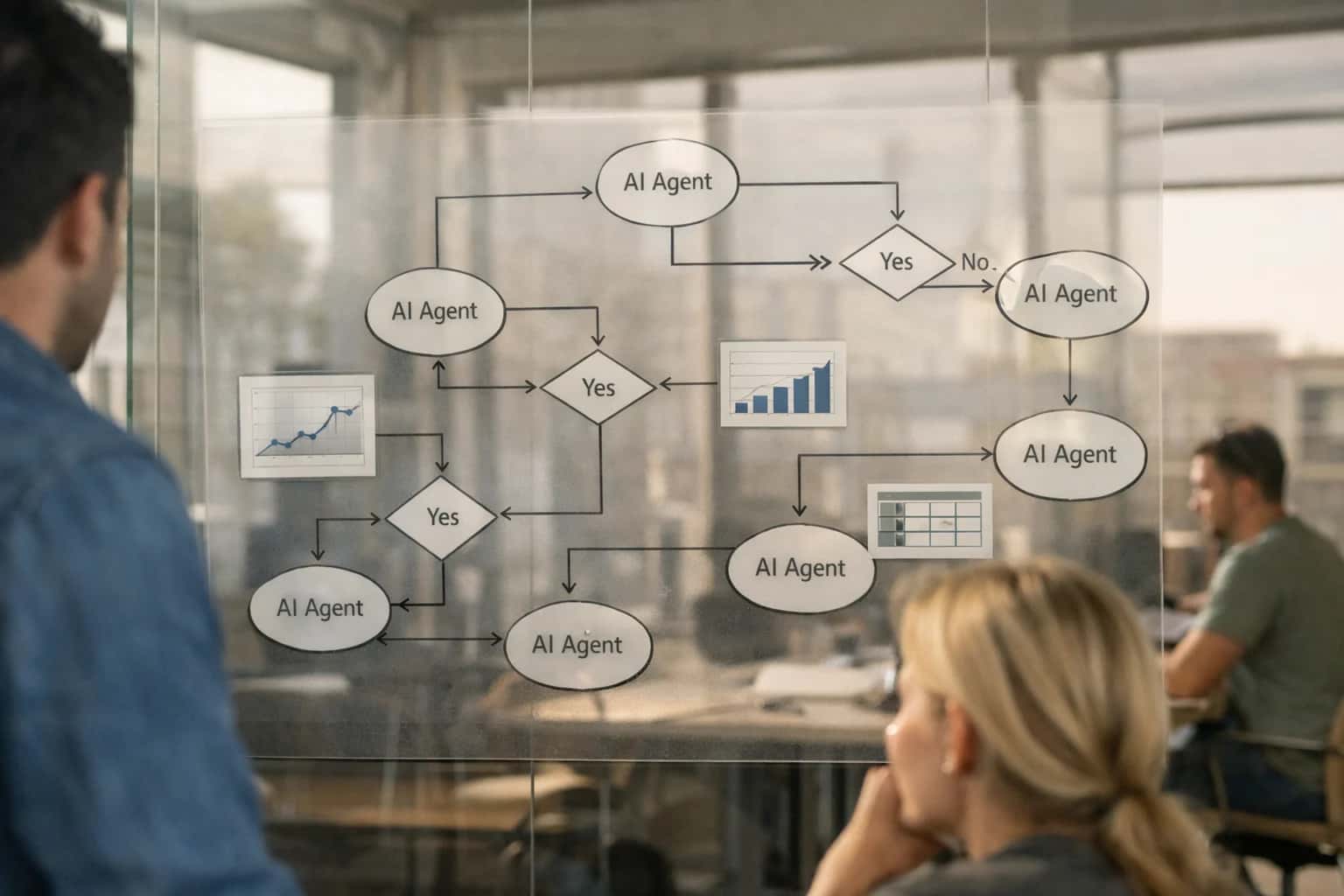
Where AI Fits in Dental Clinical Charting
A practical blueprint for integrating AI into the core clinical documentation workflows of dental EHRs.
The implementation centers on event-driven workflows. For example, when a hygienist completes a periodontal exam and clicks 'save', an AI service can be triggered via a webhook to analyze the entered pocket depths and bleeding points against historical baselines, automatically generating a narrative summary for the patient chart and suggesting a recall interval. For clinical notes, a voice-to-text agent running on a secure, local device can transcribe the dentist's observations in real-time, using a fine-tuned model to map spoken terms to correct CDT codes and structured data fields, reducing charting time from minutes to seconds per patient. These services run in a governed orchestration layer that logs all AI-generated suggestions and requires clinician review and sign-off before permanent entry into the patient record, maintaining an audit trail.
Rollout should be phased, starting with non-diagnostic, administrative augmentation like note summarization or auto-coding for preventive services, where the impact on clinical workflow is high and risk is low. A pilot with one provider or hygienist allows for tuning the AI's prompts and integration points before scaling. Governance is critical: the AI must be configured to operate within a closed-loop feedback system where corrections by clinicians are used to retrain and improve the models, and all access to PHI must be compliant with HIPAA and your PMS's security model. The result is not an autonomous charting system, but an intelligent assistant that cuts documentation time, improves coding accuracy, and lets clinical staff focus more on patient care than data entry.
Charting Module Touchpoints for AI Integration
Automating Periodontal Data Capture
The periodontal charting module is a prime surface for AI augmentation. It records pocket depths, bleeding points, recession, furcation involvement, and mobility. Manual entry is time-consuming and prone to transcription errors.
An AI integration can listen to a hygienist's voice narration during the exam (e.g., "four, three, two, bleeding") and auto-populate the charting grid in real-time. This requires a secure, low-latency connection to the PMS's clinical API to write structured data. Alternatively, AI can analyze a partially completed chart, predict likely values for missing sextants based on historical patient data and contralateral readings, and suggest completions for review.
Key integration points are the probing_depth and bleeding_on_probing data objects. The workflow must include a clear review-and-approval step before finalizing the chart, ensuring clinical oversight. This reduces charting time by 50-70% and improves data consistency for longitudinal tracking of periodontal health.
High-Value AI Use Cases for Clinical Charting
Integrating AI directly into the clinical charting modules of your dental PMS (Dentrix, Eaglesoft, Open Dental, Curve) can transform documentation from a time-consuming task into a source of clinical intelligence. These are the most impactful patterns for augmenting periodontal exams, SOAP notes, and treatment documentation.
Voice-to-Text SOAP Note Generation
Dentists and hygienists dictate exam findings in real-time. AI transcribes, structures the narrative into Subjective, Objective, Assessment, Plan (SOAP) format, and pushes the structured note directly into the patient's clinical record. Reduces post-visit charting time and improves note completeness.
AI-Assisted Periodontal Charting
During probing, the AI suggests pocket depths and bleeding points based on historical charting patterns and adjacent tooth data. The clinician confirms or corrects, speeding up the hygiene exam and creating a more consistent, auditable record. Integrates with the periodontal module's data grid.
Automated Diagnostic Code (CDT) Suggestions
As clinical notes and radiographic findings are documented, the AI analyzes the text and images to recommend appropriate CDT codes for procedures performed or planned. This reduces coding errors, ensures billing accuracy, and supports faster claim submission from the billing module.
Radiographic Anomaly Flagging & Chart Linkage
AI reviews newly uploaded X-rays (bitewings, PAs) against prior studies to flag potential caries, bone loss, or periapical lesions. Findings are summarized and attached as a structured note to the patient's chart, creating an alert for the dentist's review within the imaging tab.
Treatment Plan Narrative Generation
Based on clinical findings, patient history, and insurance benefits data from the PMS, the AI drafts a personalized treatment plan narrative. This includes procedure explanations, benefits, and alternatives, ready for the dentist to review and present, improving case acceptance and patient understanding.
Compliance-Aware Clinical Documentation Audit
An AI agent continuously audits completed clinical notes against payer guidelines and internal protocols, flagging missing elements (e.g., missing perio chart for scaling), narrative inconsistencies, or documentation that could trigger a denial. Provides pre-claim submission corrections.
Example AI-Augmented Charting Workflows
These workflows demonstrate how AI agents can integrate with the clinical charting modules of platforms like Dentrix, Eaglesoft, and Open Dental to reduce manual data entry, improve documentation accuracy, and surface clinical insights. Each flow is triggered by a system event, leverages patient data, and updates the patient record.
Trigger: Hygienist clicks 'Start Exam' in the clinical module.
Context Pulled: AI agent retrieves the patient's medical history, allergies, previous periodontal charting, and today's scheduled procedures from the PMS.
Agent Action:
- Activates a secure, HIPAA-compliant voice listener in the operatory.
- The hygienist narrates findings (e.g., "Bleeding on probing in quadrants 3 and 4, generalized 4-5mm pockets, no mobility on #19").
- The AI transcribes the audio, extracts clinical entities (tooth numbers, conditions, measurements), and structures them into a draft SOAP note.
- The draft is populated into the Subjective, Objective, and Assessment sections of the note template.
System Update: The structured draft note is presented to the hygienist within the PMS charting interface for review, editing, and final sign-off. Approved notes are saved as a progress note attached to the patient's chart.
Human Review Point: The clinician must review and sign the AI-generated note before it becomes part of the legal record. The system logs all edits for auditability.
Implementation Architecture: Data Flow & APIs
A production-ready AI integration for dental charting connects to the PMS clinical module via secure APIs, orchestrates data flows, and injects intelligence directly into the provider's workflow.
The integration architecture typically connects to the dental PMS via its REST API or direct database connection (where permitted) to access the clinical data model. Key objects include the PatientChart, ClinicalNote, PerioChart, TreatmentPlan, and associated Radiograph records. An event-driven layer uses webhooks or scheduled syncs to detect new or updated chart entries, triggering AI processing jobs. For real-time assistance during exams, a lightweight companion application can run alongside the PMS, using the API to fetch patient context and post back structured findings.
Data flows through a secure orchestration service that handles: 1) De-identification for model processing, 2) Context enrichment by pulling related patient history and insurance data, 3) AI inference calls to specialized models (e.g., for perio chart suggestion or note summarization), and 4) Structuring outputs into the PMS's expected format. For example, a voice-to-text service transcribes the dentist's dictation, an NLP model extracts SOAP note components and CDT codes, and the result is formatted as a draft clinical note with coded procedures, ready for review and signing in the PMS. All data flows are logged for audit trails and HIPAA compliance.
Rollout follows a phased approach: start with non-diagnostic support like note summarization for hygiene visits, then layer in clinical decision support such as perio charting aids. Governance is critical; all AI-generated content is flagged as a draft requiring provider review and attestation before becoming part of the legal record. The system is designed for continuous feedback, allowing dentists to correct suggestions, which improves model accuracy over time. For practices using multiple systems, this architecture can serve as an intelligence hub, connecting to imaging software and lab systems. Explore our related guide on Dental EHR integration for deeper technical patterns on clinical data interoperability.
Code & Payload Examples
Real-Time Dictation to Structured SOAP
Integrate a speech-to-text service with your dental PMS's clinical API to transform operator dictation into a draft SOAP note. The AI parses the audio stream, identifies key entities (tooth numbers, conditions, procedures), and structures them into the Subjective, Objective, Assessment, and Plan sections.
A common pattern is to capture audio via a headset in the operatory, stream it to a secure endpoint, and return a JSON payload ready for review and submission to the patient's chart. This reduces charting time from minutes to seconds post-procedure.
python# Example: Processing dictation for a perio charting note import requests # Audio file from operatory recording audio_data = open("perio_exam.wav", "rb").read() # Send to speech-to-text + clinical NLP service response = requests.post( "https://api.your-ai-service.com/clinical/transcribe", files={"audio": audio_data}, headers={"X-Patient-ID": "PAT12345", "X-API-Key": "your_key"} ) # Response contains structured clinical findings structured_note = response.json() print(structured_note["assessment"]) # e.g., "Generalized Stage II periodontitis" print(structured_note["plan"]) # e.g., ["SRP in quadrants 1 & 4", "3-month recall"]
The resulting JSON can be mapped directly to the clinical note object in Dentrix, Eaglesoft, or Open Dental via their respective REST or SOAP APIs.
Realistic Time Savings & Operational Impact
This table illustrates the practical impact of integrating AI into the patient charting workflow within your dental practice management system. It compares manual processes to AI-assisted workflows, focusing on time savings, accuracy improvements, and operational changes.
| Workflow | Before AI | After AI | Notes |
|---|---|---|---|
Periodontal Charting Entry | Manual entry of 6+ measurements per tooth | Voice-to-text dictation with auto-population | Reduces data entry errors and hygienist charting time by ~50% |
Clinical Note Drafting (SOAP) | Typed or handwritten notes post-procedure | Real-time voice capture with structured template fill | Notes are drafted during the procedure, saving 3-5 minutes per patient |
Diagnostic Code (CDT) Assignment | Manual lookup and entry post-appointment | AI suggests codes based on note narrative and radiograph findings | Improves coding accuracy and reduces claim denials; final dentist approval required |
Treatment Plan Documentation | Manual compilation of notes, images, and estimates | AI auto-generates draft plan from clinical data and insurance benefits | Creates a consistent, comprehensive base for case presentation; dentist reviews and personalizes |
Radiograph Note & Finding Entry | Manual description of anomalies in text fields | AI analyzes images and pre-populates finding descriptions | Flags potential areas of interest for review, standardizing documentation |
Medication & Allergy Reconciliation | Verbal review with patient, manual entry/update | AI cross-references notes with history, flags discrepancies for confirmation | Enhances patient safety and ensures record accuracy |
Post-Op Note & Follow-up Instructions | Generic templates manually adjusted per patient | AI generates personalized instructions based on procedure and patient history | Improves patient comprehension and adherence; sent automatically via patient portal |
Governance, Compliance & Phased Rollout
A structured approach to deploying AI in dental charting that prioritizes patient safety, data integrity, and clinical oversight.
Integrating AI into clinical workflows like periodontal charting and SOAP note generation requires a governance-first architecture. This means building on top of the dental PMS's existing audit trail and role-based access controls (RBAC). AI suggestions for pocket depths or auto-coded procedures should be written to a temporary staging table or a dedicated AI_Suggestions object within the EHR module, not directly to the live patient chart. This creates a mandatory review step where the dentist or hygienist must explicitly accept, modify, or reject each AI-generated entry, with every action logged against their user ID for full traceability.
A phased rollout is critical for clinical adoption and risk management. Start with a non-clinical pilot focused on administrative automation, such as AI-driven insurance verification or patient intake form processing. This builds trust in the system's reliability. Phase two introduces assistive clinical AI in a single, controlled operatory—for example, an AI co-pilot that listens to voice dictation during an exam and drafts a SOAP note in the background for the provider to review and sign-off on within the PMS. The final phase rolls out diagnostic support tools, like radiographic analysis for caries detection, which should always be configured as a second reader, presenting findings as an overlay in the imaging software with a clear audit trail back to the patient's chart in systems like Dentrix or Open Dental.
Compliance is not a feature but a foundational layer. The integration must be designed to enforce HIPAA's Minimum Necessary Standard by using field-level data masking when calling external AI models. For instance, when sending a radiograph for analysis, the payload should contain only a de-identified image hash and a session token, not the patient's name or MRN. All AI model outputs must be validated against the practice's configured Clinical Decision Support (CDS) intervention tiers, ensuring alerts are appropriate and non-disruptive. A formal Model Governance Committee—including the lead dentist, compliance officer, and office manager—should review AI performance metrics (e.g., suggestion acceptance rate, false-positive rates on caries detection) quarterly, using dashboards built from PMS audit logs, to ensure the system remains a safe, effective adjunct to clinical judgment.
Enabling Efficiency, Speed & Accuracy
Intelligent Analysis, Decision & Execution
We build AI systems for teams that need search across company data, workflow automation across tools, or AI features inside products and internal software.
Talk to Us
Search across company data
Give teams answers from docs, tickets, runbooks, and product data with sources and permissions.
Useful when people spend too long searching or get different answers from different systems.

Automate internal workflows
Use AI to route work, draft outputs, trigger actions, and keep approvals and logs in place.
Useful when repetitive work moves across multiple tools and teams.

Add AI to products and internal tools
Build assistants, guided actions, or decision support into the software your team or customers already use.
Useful when AI needs to be part of the product, not a separate tool.
Frequently Asked Questions
Practical questions about augmenting patient charting workflows in Dentrix, Eaglesoft, Open Dental, and Curve Dental with AI for voice-to-text, auto-coding, and diagnostic support.
AI integrates at the data layer and user interface layer of your dental PMS to augment, not replace, the existing charting workflow.
Typical Integration Points:
- Voice Capture: A secure, HIPAA-compliant audio stream from the operatory microphone is sent to a speech-to-text service (e.g., Azure Speech, Google Speech-to-Text).
- Clinical NLP: The transcribed text is processed by a clinical language model trained on dental terminology. It extracts structured data:
- Tooth numbers (e.g.,
#3,#14-15) - Surfaces (e.g.,
MOD,O) - Procedures (e.g.,
D2391,D4346) - Conditions (e.g.,
recurrent decay,bleeding on probing) - Medications (e.g.,
lidocaine 2%,amoxicillin 500mg)
- Tooth numbers (e.g.,
- PMS API Call: The structured data is formatted into a payload and sent via the PMS's REST or SOAP API (e.g., Dentrix Connect API, Eaglesoft API) to pre-populate fields in the clinical note, periodontal chart, or treatment plan module.
- Dentist/Hygienist Review: The clinician reviews the AI-suggested entries in the familiar PMS interface, makes any corrections, and signs off.
Key Consideration: The integration must respect the PMS's existing save/submit logic and audit trail requirements.

About the author
Prasad Kumkar
CEO & MD, Inference Systems
Prasad Kumkar is the CEO & MD of Inference Systems and writes about AI systems architecture, LLM infrastructure, model serving, evaluation, and production deployment. Over 5+ years, he has worked across computer vision models, L5 autonomous vehicle systems, and LLM research, with a focus on taking complex AI ideas into real-world engineering systems.
His work and writing cover AI systems, large language models, AI agents, multimodal systems, autonomous systems, inference optimization, RAG, evaluation, and production AI engineering.
Partnered with leading AI, data, and software stack.





How We Work
Custom AI workflows for your Business
One-fit-all AI don't work for modern businesses. At Inferensys, we aim to understand your business & custom requirements; which we use to define most efficient agentic workflows, the data, and the tools for your business.
01
Review the use case
We understand the task, the users, and where AI can actually help.
Read more02
Pick the right approach
We define what needs search, automation, or product integration.
Read more03
Build the first useful version
We implement the part that proves the value first.
Read more04
Improve from there
We add the checks and visibility needed to keep it useful.
Read moreThe first call is a practical review of your use case and the right next step.
Talk to Us