The office manager's core workflow revolves around four data-intensive surfaces within the PMS: the appointment book, patient account records, supply/inventory modules, and reporting dashboards. AI integration targets the manual, repetitive tasks that consume hours each week: manually filling hygiene columns based on provider availability and patient recall status, reconciling daily payment batches against claims, monitoring compliance logs for audit readiness, and generating practice performance reports from raw data exports. By connecting an AI orchestration layer to the PMS via its API (or database for on-premise systems like Dentrix or Eaglesoft), these workflows can be triggered, assisted, or fully automated.

Integration
AI Integration for Dental Office Manager Tools
A practical blueprint for augmenting dental office manager workflows with AI. Automate staff scheduling, compliance monitoring, supply ordering, and performance reporting by connecting intelligence to your existing Dentrix, Eaglesoft, Open Dental, or Curve Dental data.
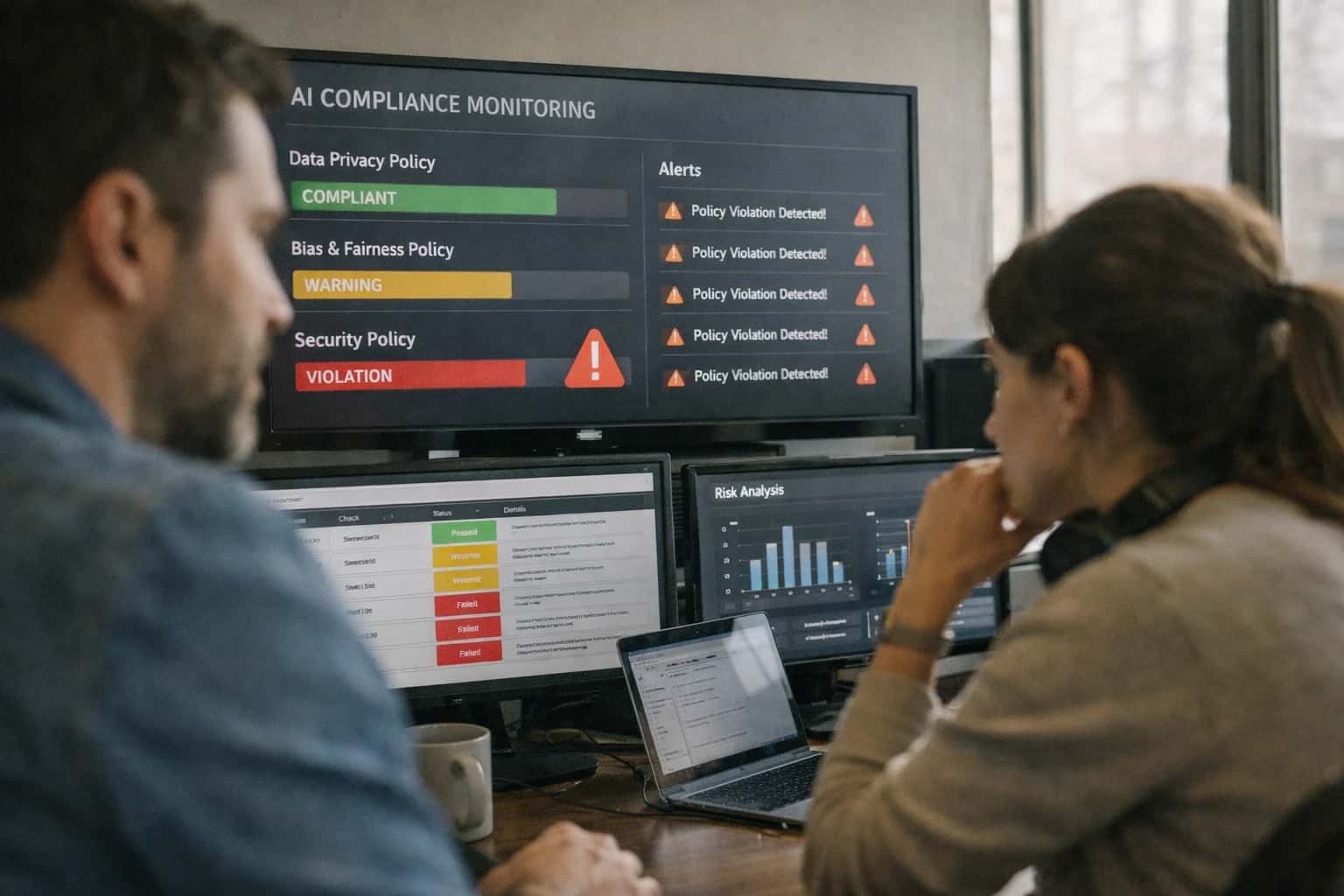
AUTOMATION FOR ADMINISTRATIVE OVERLOAD
Where AI Fits in the Dental Office Manager's Workflow
A practical blueprint for integrating AI into the daily operations of a dental office manager, connecting intelligence to the PMS data layer to automate scheduling, compliance, supply, and reporting tasks.
Implementation typically involves a secure middleware service that listens for PMS events—like a checked-out appointment or a new inventory low-stock alert—and executes predefined AI agents. For example, an AI scheduling optimizer can analyze the next week's book, predict no-shows based on historical attendance, and automatically send personalized confirmation messages via the PMS's patient communication module. A compliance monitoring agent can continuously scan audit trails and clinical note timestamps, flagging potential HIPAA gaps for manager review. For supply ordering, an AI can predict consumable usage (e.g., bibs, prophy paste) based on the scheduled procedures and automatically generate purchase orders, sending them for manager approval before submission.
Rollout focuses on low-risk, high-ROI workflows first, such as automated patient recall reminders or payment posting reconciliation, where the AI acts as a copilot requiring final human sign-off. Governance is critical; all AI actions should write an audit log back to a custom PMS note or external system, and sensitive automations like financial adjustments should have a manager-in-the-loop approval step. The impact is measured in hours saved per week—reducing manual column management from 2 hours to 15 minutes, cutting supply inventory time in half, and enabling same-day instead of end-of-month financial reporting—directly increasing the office manager's capacity for patient service and practice growth initiatives.
For a deeper technical look at connecting to specific platforms, see our guides for AI Integration for Dentrix and AI Integration for Curve Dental. To understand the overarching architecture, review AI Integration for Dental Practice Management Systems.
AI FOR OFFICE MANAGER TOOLS
Key Integration Surfaces in Dental PMS
Staff & Schedule Hub
The schedule is the operational heartbeat of the practice. AI integration here focuses on augmenting the office manager's ability to optimize human resources and appointment flow. Key surfaces include the provider schedule, hygiene columns, and staff roster.
AI agents can analyze historical no-show rates, seasonal demand, and provider production goals to suggest optimal template designs and shift assignments. By connecting to the PMS's scheduling API, an AI system can automate time-off requests, flag potential double-bookings, and generate predictive staffing recommendations for peak days. This moves scheduling from a reactive task to a proactive, data-driven operation, reducing overtime and increasing practice utilization without manual analysis.
DENTAL PRACTICE MANAGEMENT
High-Value AI Use Cases for Office Managers
Practical AI automation for dental office managers, connecting directly to Dentrix, Eaglesoft, Open Dental, or Curve Dental to reduce manual work in scheduling, compliance, supply ordering, and performance reporting.
01
Intelligent Hygiene Schedule Optimization
AI analyzes the provider schedule, patient periodontal status, and historical no-show data to optimize the hygiene column. It suggests appointment sequencing, flags patients overdue for SRP, and recommends recall timing to maximize productivity and care continuity.
Hours -> Minutes
Weekly planning
02
Automated Supply & Lab Order Management
Monitors PMS data for procedure schedules and inventory levels to predict consumable usage (e.g., composites, gloves) and lab case needs. Automatically generates purchase orders and lab prescriptions, reducing stockouts and last-minute rushes.
Batch -> Real-time
Replenishment
03
Compliance & Audit Trail Monitoring
Continuously scans PMS audit logs, clinical notes, and billing records for anomalies. Flags potential HIPAA violations, irregular access patterns, or coding discrepancies for review, automating a critical but manual oversight task.
Same day
Issue detection
04
Performance Reporting with Natural Language
An AI copilot for the office manager's dashboard. Instead of running static reports, ask questions like "Show me production by provider last month versus goal" or "Which insurance plans have the highest denial rate?" Get instant, actionable insights from PMS data.
1 sprint
Report build time
05
Front Desk Call Triage & Intake Automation
An AI agent integrated with the PMS front-desk interface handles inbound call routing and initial patient intake. It verifies insurance eligibility in real-time, pre-fills forms in the patient record, and schedules appointments based on provider availability and procedure rules.
Hours -> Minutes
Call handling
06
Centralized Workflow Orchestration
An AI orchestration layer coordinates multi-step processes across PMS modules and external systems. For example, it can manage the entire lab case workflow: from prescription validation in the chart, to tracking with the lab, to updating the schedule upon delivery, all with automated status alerts.
Batch -> Real-time
Process coordination
OFFICE MANAGER AUTOMATION
Example AI-Powered Workflows
These workflows demonstrate how AI can augment the core responsibilities of a dental office manager by integrating directly with your practice management system's data and APIs. Each flow is triggered by PMS events and designed to reduce manual oversight, improve compliance, and optimize daily operations.
Trigger: A provider requests time off or a last-minute schedule change is entered into the PMS.
Context Pulled: The AI agent queries the PMS for:
- Upcoming booked appointments for the affected provider(s)
- Credentials and availability of other providers/hygienists
- Patient historical preferences and clinical needs (e.g., periodontal maintenance requiring a hygienist with specific certifications)
- Operatory and equipment requirements for scheduled procedures
Agent Action: The AI evaluates multiple rescheduling scenarios. It generates a ranked list of options, such as:
- Reassigning appointments to an available provider with matching credentials.
- Proposing a sequence of shorter appointment shifts to cover the schedule.
- Identifying low-acuity appointments that could be moved to another day with minimal impact.
System Update: The agent presents the recommendations within the office manager's dashboard. Upon approval, it executes the changes via the PMS API:
- Updates the appointment book.
- Triggers personalized patient notification messages (SMS/email) through the PMS communication module.
- Logs the change reason for audit.
Human Review Point: The office manager reviews and approves the proposed schedule before any patient communications are sent.
DENTAL OFFICE MANAGER TOOLS
Implementation Architecture: Connecting AI to Your PMS
A blueprint for injecting AI into your practice management system to automate administrative oversight and reporting.
The core of this integration is a secure, event-driven middleware layer that sits between your PMS (Dentrix, Eaglesoft, Open Dental, or Curve Dental) and our AI services. This layer listens for key events via webhooks or polls the PMS API for changes in critical data objects: Appointment statuses, Provider schedules, Patient balances, InventoryItem levels, and Claim submission batches. By focusing on these entities, the AI can monitor operational health without disrupting the core PMS workflow.
For each monitored event, a specific AI agent is triggered. For example, a drop in InventoryItem quantity for a high-use consumable triggers a supply ordering agent that checks vendor catalogs, considers lead times, and drafts a purchase order. Similarly, a Claim batch submission triggers a compliance monitoring agent that scans for coding anomalies against recent payer behavior, flagging potential denials before they are sent. These agents execute defined workflows—data retrieval, analysis, decision, and action—often writing recommendations or status updates back to custom fields or notes within the PMS patient or operational records.
Rollout is phased, starting with read-only monitoring and alerting to build trust. Governance is managed through a central dashboard where office managers can review AI-suggested actions (e.g., approve a supply order, acknowledge a scheduling conflict) before they are executed. All AI activity is logged to a separate audit trail linked to the PMS user, ensuring accountability. This architecture ensures the AI augments the office manager's role, turning reactive data review into proactive, intelligent operations support.
AI OFFICE MANAGER DASHBOARD
Code and Payload Examples
Automated Shift & Coverage Planning
This AI agent analyzes historical PMS data—appointment volume, procedure types, provider productivity—to generate optimal staff schedules. It integrates with the office manager's dashboard to propose schedules that minimize overtime while ensuring coverage for peak hours and complex procedures.
Typical Integration Points:
- Pull
ProviderandStaffrecords with credentials and availability. - Read the
Schedulemodule for future appointments and block-out times. - Write suggested
Shiftassignments back to the PMS for manager review.
Example Payload (API Call to PMS):
jsonPOST /api/v1/staff/schedule/proposal { "practice_id": "DENT_001", "week_start": "2024-10-28", "constraints": { "max_hours_per_employee": 40, "required_credentials": { "morning_hygiene": ["RDH"], "surgical_assist": ["DA", "RDA"] } }, "forecasted_demand": [ { "day": "2024-10-28", "appointment_count": 42, "avg_procedure_complexity": 2.1 } ] }
The AI returns a schedule matrix with assigned roles, which the dashboard presents for one-click approval and publishing to the team calendar.
AI FOR DENTAL OFFICE MANAGERS
Realistic Time Savings and Operational Impact
This table shows how AI integration for dental office manager tools can transform administrative workflows by connecting to practice management system (PMS) data from Dentrix, Eaglesoft, Open Dental, or Curve Dental. Impact is measured in time saved, process improvement, and operational control.
| Workflow | Before AI | After AI | Key Impact & Notes |
|---|---|---|---|
Staff Schedule Creation & Optimization | Manual, 2-3 hours weekly | AI-assisted draft in 15-20 minutes | Considers provider credentials, patient preferences, and historical no-show rates. Manager reviews and finalizes. |
Compliance Audit Preparation | Ad-hoc manual checks, 4-6 hours monthly | Continuous monitoring with weekly summary report | AI scans PMS audit logs and clinical notes for potential HIPAA/OSHA flags, reducing pre-audit scramble. |
Supply Inventory & Reordering | Weekly manual counts & guesswork | Predictive alerts & automated POs for low stock | Uses schedule data to forecast consumable usage (e.g., gloves, bibs). Integrates with vendor portals. |
Performance & Production Reporting | Manual report building, 1-2 hours daily | Automated daily digest & natural language Q&A | AI aggregates PMS data into executive dashboards. Ask "Why was hygiene production down last week?" |
Patient Recall & Reactivation Campaigns | Batch lists, generic messaging, low response | Segmented, personalized outreach sequences | AI scores patient lapse risk and preferred channel (text/email), boosting reactivation rates. |
Front Desk Call Triage & Routing | Manual answering, hold times, missed details | AI call assistant provides summary & intent to staff | Transcribes calls, extracts key details (e.g., 'pain', 'broken crown'), and suggests next actions in PMS. |
Monthly Financial Close & Reconciliation | Manual payment posting, 8-10 hours monthly | AI matches 80-90% of payments automatically | AI reconciles bank deposits with PMS A/R, flags discrepancies for human review, accelerating close. |
PRACTICAL IMPLEMENTATION
Governance, Security, and Phased Rollout
A controlled, secure approach to deploying AI for dental office managers, ensuring compliance and maximizing adoption.
AI integration for dental office manager tools requires a data-first governance model. This means mapping which data objects from the PMS—like Appointment, Provider, Patient, InsuranceClaim, and InventoryItem—are accessible to AI agents. Access is controlled via role-based permissions, ensuring front-desk staff, clinical managers, and the practice owner have appropriate visibility. All AI-generated actions, such as a suggested schedule change or a flagged compliance gap, are logged in an immutable audit trail linked to the PMS user session for full traceability.
Security is architected at the API layer. The integration acts as a middleware service, never storing raw PMS data. It uses short-lived tokens to query the PMS API (Dentrix Connect, Eaglesoft API, Open Dental REST API, or Curve Dental webhooks) and processes data in memory. PHI is anonymized or pseudonymized before being sent to external AI models for analysis, with results re-identified within the secure practice network. This keeps sensitive patient and financial data within the practice's existing HIPAA-compliant infrastructure.
A phased rollout minimizes disruption. Phase 1 typically automates high-volume, low-risk tasks like generating daily Staff Schedule conflict reports or Supply Order suggestions based on the upcoming appointment book. Phase 2 introduces interactive copilots, such as an AI assistant that helps the office manager analyze Production vs. Collection reports using natural language. Phase 3 expands to predictive functions, like forecasting no-shows to optimize the Hygiene Column. Each phase includes a feedback loop where managers can approve, reject, or correct AI suggestions, continuously improving the system's accuracy and building team trust.
Enabling Efficiency, Speed & Accuracy
Intelligent Analysis, Decision & Execution
We build AI systems for teams that need search across company data, workflow automation across tools, or AI features inside products and internal software.
Talk to Us
Search across company data
Give teams answers from docs, tickets, runbooks, and product data with sources and permissions.
Useful when people spend too long searching or get different answers from different systems.
Enterprise searchRAGPermissions
Read more
Automate internal workflows
Use AI to route work, draft outputs, trigger actions, and keep approvals and logs in place.
Useful when repetitive work moves across multiple tools and teams.
AI agentsWorkflow automationGovernance
Read more
Add AI to products and internal tools
Build assistants, guided actions, or decision support into the software your team or customers already use.
Useful when AI needs to be part of the product, not a separate tool.
AI integrationDecision supportModel routing
Read moreIMPLEMENTATION BLUEPRINT
Frequently Asked Questions
Practical questions for dental office managers evaluating AI integration with Dentrix, Eaglesoft, Open Dental, or Curve Dental to automate administrative workflows and unlock operational intelligence.
AI integrates via secure, read-first APIs and webhooks that already exist in modern PMS platforms. The typical architecture involves:
- API-Based Data Sync: A secure cloud service (the AI layer) uses the PMS's REST or SOAP API with appropriate OAuth scopes to pull data on a scheduled basis (e.g., nightly syncs) or in real-time via webhooks for events like new appointments or updated patient records.
- Non-Intrusive Design: The AI system operates as a parallel layer. It reads data from the PMS (schedules, patient demographics, insurance details, clinical notes) but does not write back directly without configurable approval gates. Initial workflows often generate insights or draft communications in a separate dashboard for manager review before any PMS update occurs.
- Phased Rollout: Implementation starts with a single, high-impact workflow like automated recall campaign generation. This uses existing patient data to create personalized message lists, which are then reviewed and approved by staff before being sent via the PMS's existing communication module. This proves value without risk.
Key Technical Point: We never require direct database access. All integration uses the vendor's published APIs, ensuring stability and maintaining your support agreement.

About the author
Prasad Kumkar
CEO & MD, Inference Systems
Prasad Kumkar is the CEO & MD of Inference Systems and writes about AI systems architecture, LLM infrastructure, model serving, evaluation, and production deployment. Over 5+ years, he has worked across computer vision models, L5 autonomous vehicle systems, and LLM research, with a focus on taking complex AI ideas into real-world engineering systems.
His work and writing cover AI systems, large language models, AI agents, multimodal systems, autonomous systems, inference optimization, RAG, evaluation, and production AI engineering.
LinkedIn
Limited slotsGet a Free AI Consultation
Partnered with leading AI, data, and software stack.





How We Work
Custom AI workflows for your Business
One-fit-all AI don't work for modern businesses. At Inferensys, we aim to understand your business & custom requirements; which we use to define most efficient agentic workflows, the data, and the tools for your business.
01
Review the use case
We understand the task, the users, and where AI can actually help.
Read more02
Pick the right approach
We define what needs search, automation, or product integration.
Read more03
Build the first useful version
We implement the part that proves the value first.
Read more04
Improve from there
We add the checks and visibility needed to keep it useful.
Read moreThe first call is a practical review of your use case and the right next step.
Talk to Us