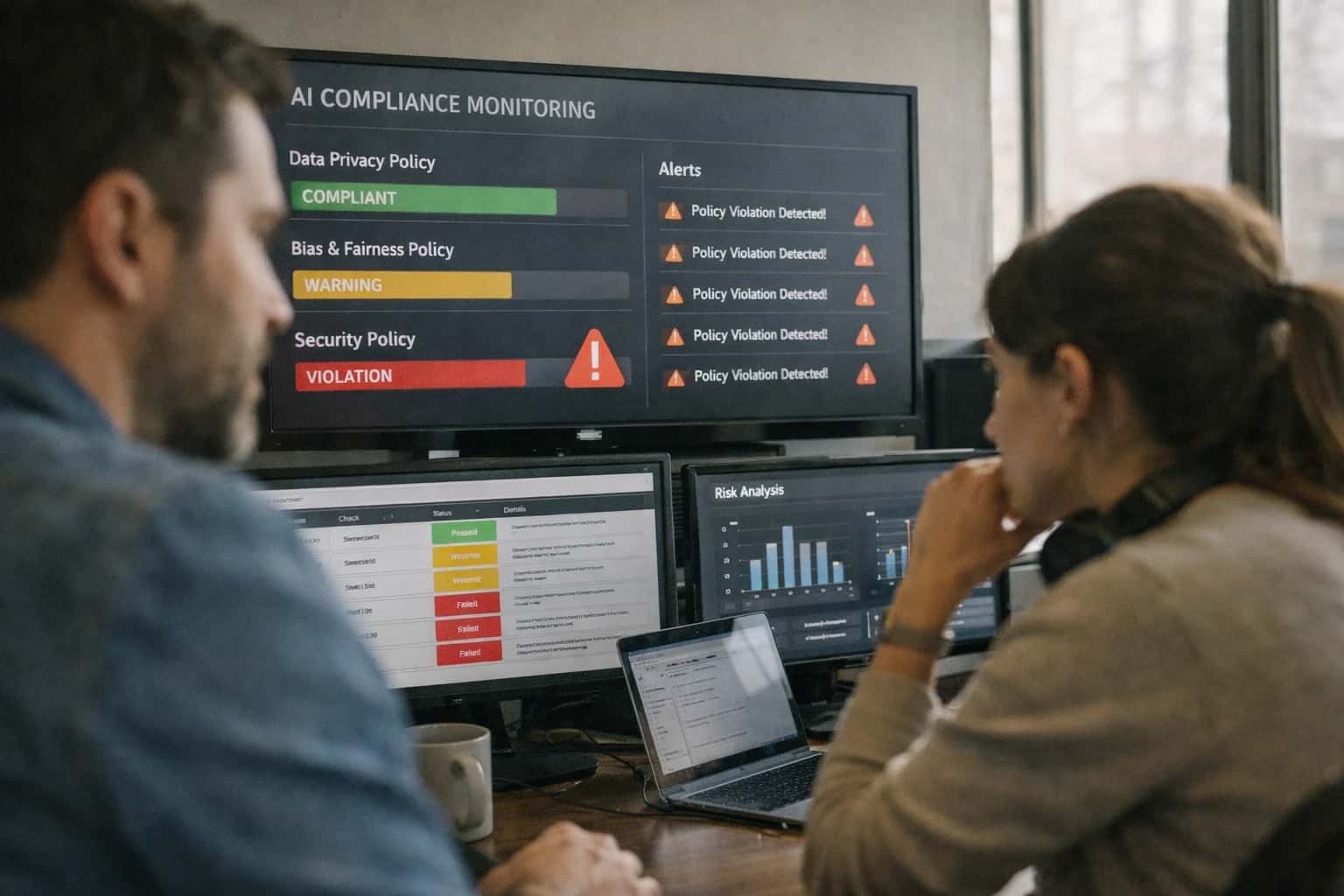
A compliance watchdog AI integrates directly with your Dentrix, Eaglesoft, Open Dental, or Curve Dental database and activity logs. It operates as a background service, continuously scanning for patterns that indicate potential violations. This includes monitoring audit trails for unauthorized PHI access, analyzing clinical notes for missing required elements (like informed consent), scanning billing records for inconsistent CDT code application, and reviewing employee records for expired OSHA certifications. Instead of a quarterly manual audit, the system provides a daily risk dashboard.

Integration
AI Integration for Dental Compliance Monitoring
Implement a continuous AI compliance watchdog for your dental practice management system. Automate the auditing of activity logs, clinical documentation, and billing records for HIPAA, OSHA, and coding regulation adherence.
HIPAA, OSHA, & CODING AUDIT
AI as a Continuous Compliance Watchdog for Dental Practices
Automated, continuous monitoring of your dental practice management system to detect compliance risks in real-time.
Implementation connects via the PMS's API or a secure database bridge to pull logs, documents, and transactional data. The AI applies rules-based logic for known regulations (e.g., "two identifiers on a lab script") and uses NLP to infer risks from unstructured text (e.g., a clinical note mentioning a procedure without a signed financial estimate). High-confidence violations can trigger automated workflows within the PMS, like creating a task for the Office Manager or quarantining a record. Lower-confidence findings are queued for human-in-the-loop review in a dedicated compliance console, creating an audit trail of all reviewed items.
Rollout starts with a read-only analysis phase to baseline your practice's risk profile without making changes. Governance is critical: the system's alerts and automated actions must align with your practice's existing compliance officer review processes. The AI doesn't replace your compliance officer; it becomes their force multiplier, turning a reactive, sample-based audit into a proactive, 100% coverage monitoring system. This shifts compliance from a periodic cost center to an embedded, continuous component of daily operations.
DENTAL COMPLIANCE MONITORING
Where AI Connects: Key Compliance Surfaces in Your PMS
Continuous Surveillance of System Access
Every action within your PMS—from viewing a patient record to editing a treatment plan—generates an audit trail. An AI compliance agent ingests these logs in real-time, establishing a behavioral baseline for each user role (front desk, hygienist, dentist, office manager).
It flags anomalies such as:
- After-hours access to patient charts without a clinical reason.
- Excessive data exports or printing of records, which could indicate data exfiltration.
- Access patterns that deviate from a user's typical role, like a front-desk user browsing detailed clinical notes.
The AI correlates these events with schedule data and patient visit context, reducing false positives. Alerts are routed to a compliance dashboard or directly into your incident management workflow, creating an automated, proactive audit trail review that satisfies HIPAA Security Rule requirements for activity monitoring.
CONTINUOUS AUDIT & AUTOMATED GOVERNANCE
High-Value AI Compliance Use Cases for Dental Practices
AI-powered compliance monitoring transforms a reactive, manual audit process into a proactive, automated system. By continuously analyzing activity logs, clinical notes, and billing records within your PMS, AI identifies and surfaces potential HIPAA, OSHA, and coding violations before they become costly fines or breaches.
01
Real-Time PHI Access Monitoring
Continuously audits Dentrix/Eaglesoft user activity logs to detect anomalous access to patient records. Flags instances like after-hours chart access by non-clinical staff or rapid browsing of multiple patient files, generating alerts for immediate review. Workflow: AI agent ingests audit trail → applies behavioral baselines → sends Slack/email alert to privacy officer with context.
Batch -> Real-time
Violation detection
02
Clinical Note & Billing Code Alignment
Automatically cross-references CDT codes on claims with the corresponding clinical notes and radiographic documentation in Open Dental/Curve. Identities mismatches (e.g., billing for a crown prep when notes only describe an exam) or insufficient documentation to support the billed procedure. Workflow: Nightly batch runs compare notes and codes → produces a reconciliation report for the billing manager.
1-2 Hours Saved
Per audit cycle
03
Automated OSHA Checklist & Training Compliance
Monitors PMS data streams (sterilization logs, staff schedules, incident reports) and external sensors to ensure OSHA compliance. Automatically flags expired MSDS sheets, missed sterilization cycles, or overdue staff training, creating tasks in the PMS ticketing module. Workflow: AI correlates PMS data with compliance calendar → generates and assigns follow-up tasks to the office manager.
Same Day
Issue resolution
04
Intelligent Patient Communication Scrub
Scans outbound patient communications (recall reminders, treatment plan emails) generated by the PMS for accidental PHI disclosure or non-compliant content. Reviews message body and attachments before sending, redacting sensitive information or flagging messages that should be sent via secure portal instead of SMS/email. Workflow: AI acts as a pre-send gateway for the PMS comms module → holds non-compliant messages for staff review.
Pre-emptive
Breach prevention
05
RAG-Powered Policy Q&A for Staff
Deploys a secure, internal chatbot trained on the practice's specific HIPAA/OSHA manuals, payer policies, and state dental board regulations. Staff can ask natural language questions (e.g., "Can I text a patient about their dentures?") and get a grounded, cited answer, reducing compliance guesswork. Workflow: Integrates with PMS login for RBAC → provides answers with references to source documents.
Minutes
To get an answer
06
Proactive Audit Trail Analysis & Reporting
Moves beyond simple logging to predictive analysis of the PMS audit trail. Identifies patterns indicative of systemic risk, such as frequent overrides by a single user or gaps in record access logs that could indicate tampering. Automatically generates quarterly compliance readiness reports for board review. Workflow: AI analyzes months of audit data → produces narrative report highlighting trends and recommended controls.
Days -> Hours
Report preparation
CONTINUOUS AUDIT AUTOMATION
Example AI Compliance Workflows in Action
These workflows illustrate how AI agents can be integrated with your dental PMS to automate the monitoring of HIPAA, OSHA, and coding regulations, transforming manual audits into continuous, proactive compliance.
Trigger: A user session ends or a scheduled batch job runs (e.g., nightly).
Context/Data Pulled: The AI agent queries the PMS audit log API for the period, extracting records of user logins, patient record accesses, and document views.
Model/Agent Action:
- Baseline Establishment: The agent learns typical access patterns per role (e.g., hygienist vs. front desk).
- Anomaly Scoring: It flags events like:
- Access to patient records outside of scheduled appointment times.
- A user accessing an unusually high volume of records in a short period.
- Logins from unfamiliar IP addresses or outside business hours.
- Context Enrichment: It cross-references flagged accesses with the schedule module to see if a clinical justification exists.
System Update/Next Step: The agent generates a prioritized incident report in a secure dashboard (e.g., /integrations/dental-practice-management-platforms/ai-integration-for-dental-audit-trail-analysis) and can create a ticket in your IT service management system for high-risk anomalies.
Human Review Point: A designated privacy officer reviews the daily report, confirming false positives and initiating investigations for true positives.
A PRACTICAL BLUEPRINT FOR CONTINUOUS AUDITING
Implementation Architecture: How the AI Watchdog is Wired
A secure, event-driven architecture that continuously monitors your practice management system for compliance risks without disrupting clinical workflows.
The AI watchdog is deployed as a cloud-based microservice that connects to your PMS (Dentrix, Eaglesoft, Open Dental, or Curve) via its native API or a secure database bridge. It operates on a read-only principle, continuously ingesting audit logs, clinical notes, billing records, and document metadata. Key data streams include:
- Activity Logs: User logins, record access, and data exports for HIPAA access monitoring.
- Clinical Documentation: SOAP notes, periodontal charting, and treatment plans for OSHA and clinical guideline adherence.
- Billing & Claims: CDT codes, claim submissions, and payment postings for coding compliance (e.g., upcoding, unbundling).
- Patient Communications: SMS and portal message logs for consent and disclosure tracking.
An event-driven pipeline processes this data. As new records are created or updated in the PMS, webhooks or a change-data-capture (CDC) agent trigger the AI service. Each record is analyzed by specialized models:
- NLP Classifiers scan clinical notes for missing required elements (e.g., medical history review) or inappropriate language.
- Rule Engines cross-reference billing codes with clinical documentation to flag potential mismatches.
- Anomaly Detection models identify unusual patterns in access logs or after-hours data exports. Findings are not written directly back to the PMS. Instead, they are routed to a secure compliance dashboard and, for critical issues, generate alerts via email or Slack to designated practice administrators or compliance officers. This creates a parallel audit trail separate from the operational system.
Rollout is phased, starting with read-only monitoring of a single high-risk area (e.g., PHI access logs) to establish baseline behavior and tune alert thresholds. Governance is managed through a configurable policy engine where practice leadership defines which rules are active and sets risk severity levels. All AI inferences are logged with source data references, creating an immutable audit trail for any external review or dispute resolution. This architecture ensures the AI augments—rather than replaces—human oversight, acting as a force multiplier for your compliance team.
AI WATCHDOG FOR DENTAL PRACTICE COMPLIANCE
Code & Payload Examples for Key Compliance Checks
Real-Time Audit Trail Analysis
Continuously monitor PMS audit logs for unauthorized PHI access. An AI agent ingests log events, identifies anomalous patterns (e.g., after-hours access from unusual IPs, bulk record exports), and triggers alerts to the privacy officer.
Example Python pseudocode for log ingestion and scoring:
python# Pseudocode for HIPAA log monitoring agent def analyze_audit_logs(log_entries): """Process PMS audit log entries for suspicious access.""" alerts = [] for entry in log_entries: # Feature extraction risk_score = model.predict([ entry['user_role'], entry['access_time'], entry['records_accessed'], entry['client_ip'] ]) if risk_score > THRESHOLD: alert = { 'user': entry['user'], 'timestamp': entry['timestamp'], 'risk_reason': 'Unusual access pattern detected', 'pms_record_id': entry['patient_id'] } alerts.append(alert) # Optional: Auto-lock user via PMS admin API # pms_api.disable_user(entry['user_id']) return alerts
This pattern connects to the PMS's reporting database or syslog to provide continuous, automated oversight, reducing manual review from weekly to real-time.
AI-Powered Audit vs. Manual Review
Realistic Time Savings & Compliance Impact
This table compares the effort and outcomes of manual compliance monitoring versus an AI-integrated system for a typical multi-provider dental practice.
| Compliance Workflow | Before AI (Manual) | After AI (Assisted) | Operational & Risk Notes |
|---|---|---|---|
HIPAA Access Log Review | Monthly sampling, 4-6 hours | Continuous audit, 30-min weekly review | Shifts from periodic check to real-time anomaly detection |
OSHA Documentation Audit | Quarterly manual checklist, 8 hours | Automated daily scan, exceptions flagged in 15 mins | Ensures training records, MSDS, and incident logs are always current |
Coding (CDT) & Billing Compliance | Pre-claim manual scrub, 2 hours daily | Real-time claim review during entry, <5 min per claim | Reduces claim denials and audit exposure; human final sign-off remains |
Clinical Note Completeness Check | Random chart audits, 3-5 hours weekly | Automated post-visit analysis, exceptions highlighted | Improves documentation quality for care continuity and legal defense |
Patient Consent & Form Tracking | Manual filing & expiry tracking, 2 hours weekly | AI classifies & tracks documents, alerts for renewals | Eliminates risk of treatment with lapsed consent forms |
Security Risk Assessment (SRA) | Annual manual report, 20+ hours | Ongoing analysis with quarterly summary auto-generated | Provides continuous evidence for HIPAA compliance reporting |
Insurance EOB & Payment Posting Review | Manual reconciliation, 5-7 hours weekly | AI matches EOBs to claims, flags discrepancies for review | Accelerates cash flow and identifies underpayments/patterns |
A PRACTICAL BLUEPRINT FOR COMPLIANCE-AWARE AI
Governance, Security, and Phased Rollout
Implementing an AI watchdog for dental compliance requires a security-first architecture and a controlled rollout to mitigate risk.
A production AI compliance monitor must integrate with your PMS at the audit log, clinical documentation, and billing record levels. For platforms like Dentrix or Open Dental, this typically involves:
- Secure API connections using OAuth 2.0 or service accounts with principle of least privilege.
- Event-driven ingestion of PMS activity logs via webhooks or scheduled polling.
- Isolated processing where PHI is never stored in the AI service's long-term memory; analysis occurs in a transient, encrypted context.
- Audit trail generation where every AI-generated finding (e.g., "potential HIPAA disclosure in note field") is logged back to the PMS as a non-editable note with a timestamp and triggering user/event ID.
Rollout should follow a phased, risk-adjusted approach:
- Phase 1: Read-Only Monitoring (Weeks 1-4)
- Deploy AI agents in passive observation mode, analyzing historical data and real-time logs.
- Generate daily compliance summary reports for the Office Manager, highlighting potential issues without taking action.
- Validate accuracy and false-positive rates against known audit findings.
- Phase 2: Assisted Review (Weeks 5-8)
- Integrate findings into a review queue within the PMS or a companion dashboard.
- Require human-in-the-loop approval for any automated communication (e.g., flagged OSHA training expiry alerts).
- Begin monitoring specific high-risk workflows like new patient record creation or claim submission batches.
- Phase 3: Controlled Automation (Ongoing)
- Enable automated, low-risk actions, such as tagging records for annual HIPAA training or generating draft incident reports for review.
- Implement RBAC-gated actions so only authorized roles (e.g., Compliance Officer) can approve system-initiated corrections.
- Continuously tune models based on feedback from dental staff and periodic compliance audits.
Governance is critical. Establish a cross-functional oversight committee (Office Manager, Lead Dentist, IT) to review AI findings weekly. Use the system not as a punitive tool but for continuous improvement—correlating AI alerts with manual audit results to refine rules. Ensure your AI vendor, like Inference Systems, provides full transparency into model logic for specific regulations (e.g., which CDT code patterns trigger a billing review) and supports data residency requirements, keeping all processing within your preferred cloud region or on-premises environment. This layered approach turns AI from a black box into a accountable, operational partner in your compliance program.
Enabling Efficiency, Speed & Accuracy
Intelligent Analysis, Decision & Execution
We build AI systems for teams that need search across company data, workflow automation across tools, or AI features inside products and internal software.
Talk to Us
Search across company data
Give teams answers from docs, tickets, runbooks, and product data with sources and permissions.
Useful when people spend too long searching or get different answers from different systems.
Enterprise searchRAGPermissions
Read more
Automate internal workflows
Use AI to route work, draft outputs, trigger actions, and keep approvals and logs in place.
Useful when repetitive work moves across multiple tools and teams.
AI agentsWorkflow automationGovernance
Read more
Add AI to products and internal tools
Build assistants, guided actions, or decision support into the software your team or customers already use.
Useful when AI needs to be part of the product, not a separate tool.
AI integrationDecision supportModel routing
Read moreIMPLEMENTATION & OPERATIONS
AI Dental Compliance Integration: Frequently Asked Questions
Practical questions for dental practice owners, office managers, and IT teams planning to integrate AI for HIPAA, OSHA, and coding compliance monitoring with their practice management software.
The integration uses a zero-trust, API-first architecture designed for healthcare data security.
- Secure Connection: AI services connect to your PMS (Dentrix, Eaglesoft, Open Dental, Curve) via a dedicated, encrypted API connection or a secure database tunnel, never storing credentials.
- Least-Privilege Access: The system requests read-only access to specific data objects needed for compliance audits: activity logs, clinical notes, billing ledgers, and user access records.
- Data Minimization & Tokenization: PHI is processed in memory and not persisted in the AI system's long-term storage. Where necessary, data is tokenized before analysis.
- Audit Trail: Every data access event by the AI system is logged back to the PMS audit trail, creating a clear chain of custody.
Example Payload for a Secure Log Query:
json{ "request_id": "comp_audit_2024_05_01", "target_object": "audit_log", "filters": { "date_range": {"start": "2024-04-01", "end": "2024-04-30"}, "user_role": ["front_desk", "hygienist", "assistant"] }, "purpose": "hipaa_access_review" }
This approach ensures the AI acts as a monitored, compliant extension of your existing PMS security model.

About the author
Prasad Kumkar
CEO & MD, Inference Systems
Prasad Kumkar is the CEO & MD of Inference Systems and writes about AI systems architecture, LLM infrastructure, model serving, evaluation, and production deployment. Over 5+ years, he has worked across computer vision models, L5 autonomous vehicle systems, and LLM research, with a focus on taking complex AI ideas into real-world engineering systems.
His work and writing cover AI systems, large language models, AI agents, multimodal systems, autonomous systems, inference optimization, RAG, evaluation, and production AI engineering.
LinkedIn
Limited slotsGet a Free AI Consultation
Partnered with leading AI, data, and software stack.





How We Work
Custom AI workflows for your Business
One-fit-all AI don't work for modern businesses. At Inferensys, we aim to understand your business & custom requirements; which we use to define most efficient agentic workflows, the data, and the tools for your business.
01
Review the use case
We understand the task, the users, and where AI can actually help.
Read more02
Pick the right approach
We define what needs search, automation, or product integration.
Read more03
Build the first useful version
We implement the part that proves the value first.
Read more04
Improve from there
We add the checks and visibility needed to keep it useful.
Read moreThe first call is a practical review of your use case and the right next step.
Talk to Us