AI integration transforms Fivetran from a passive sync engine into an intelligent orchestration layer. Instead of static schedules, AI agents can analyze downstream dependency graphs (like dbt model runs or Looker dashboard refreshes), business SLAs, and cloud cost constraints to dynamically prioritize and queue connector syncs. This means a sync for a mission-critical Salesforce pipeline can be prioritized over a low-priority marketing database, and compute-intensive full refreshes can be scheduled during off-peak warehouse hours to manage spend.

Integration
AI Integration for Fivetran Batch Processing
A technical guide for data engineers on augmenting Fivetran's batch workflows with AI for intelligent scheduling, priority-based orchestration, and predictive monitoring to meet business SLAs and control costs.
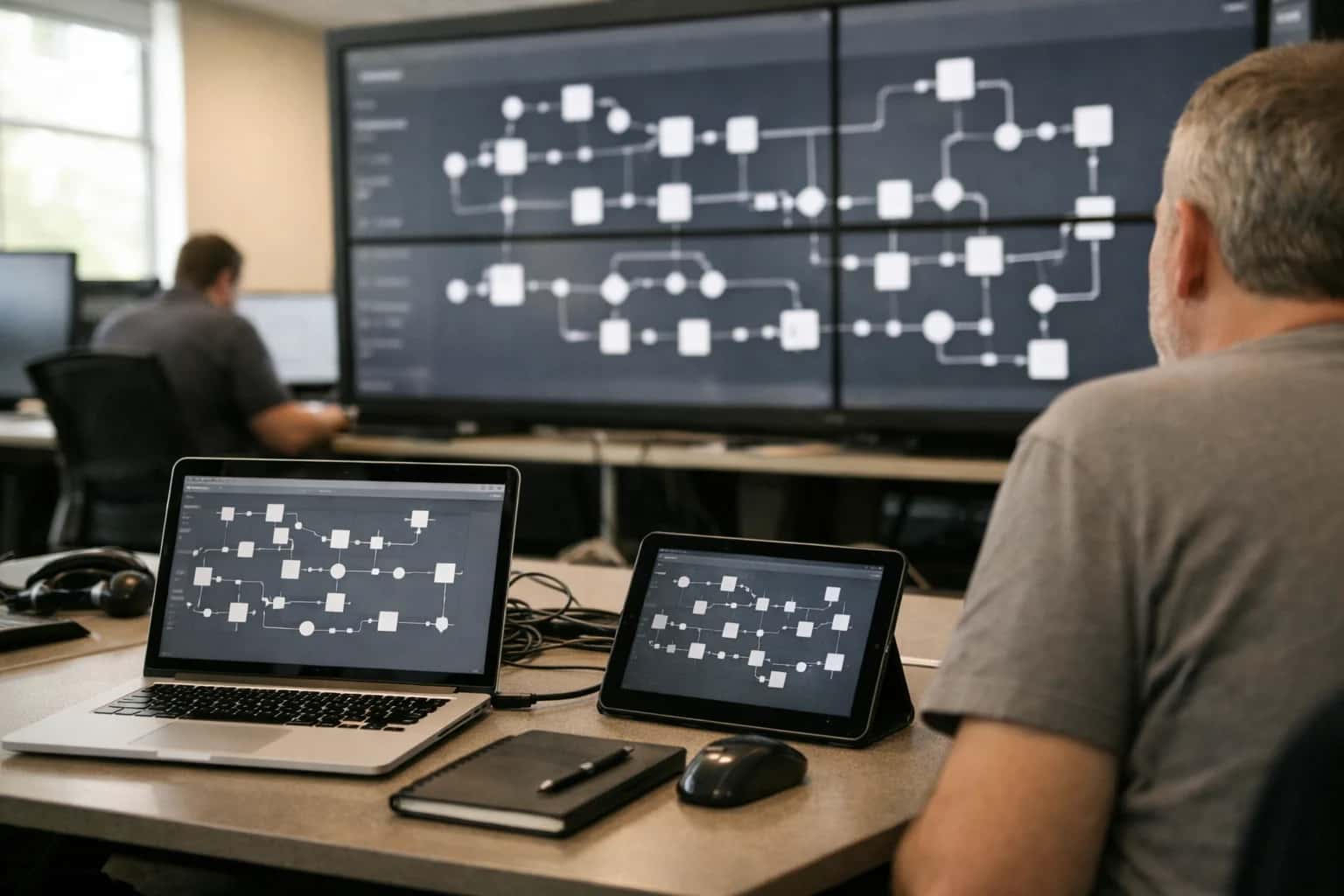
ARCHITECTURE GUIDE
Where AI Fits into Fivetran's Batch Orchestration
A technical blueprint for using AI to intelligently schedule, monitor, and recover high-volume batch syncs in Fivetran.
Implementation centers on Fivetran's API and webhook ecosystem. An AI agent, deployed as a cloud function, continuously ingests Fivetran's sync logs, destination warehouse query logs, and business calendar data. It uses this context to programmatically adjust sync frequencies via the API, pause/resume connectors, or trigger targeted re-syncs for failed tables. For pipeline recovery, the agent can analyze error patterns (e.g., SCHEMA_CHANGE, API_LIMIT) and execute predefined remediation scripts or route detailed root-cause summaries to a Slack channel for engineering teams.
Rollout requires a phased approach: start with non-critical connectors to build trust in the AI scheduler's decisions. Governance is critical; all AI-driven actions should be logged to an audit trail and, for major changes like schedule overrides, can be routed through a human-in-the-loop approval step in tools like Jira or ServiceNow. This ensures reliability while automating the 80% of routine orchestration decisions that currently consume data engineering cycles. For related patterns on monitoring and quality, see our guide on AI Integration for Fivetran Pipeline Recovery.
OPTIMIZATION GUIDE FOR DATA ENGINEERS
AI Integration Touchpoints in Fivetran's Batch Workflow
Dynamic Scheduling Based on Business SLAs
Fivetran's default sync schedules are static, but batch processing often has variable priority. AI can analyze downstream dependency graphs, business calendars, and data freshness SLAs to dynamically adjust sync windows.
Example Workflow:
- An AI agent monitors the completion of upstream source systems (e.g., a nightly ERP close).
- It analyzes the dependency tree: ERP data must sync before CRM data can be joined for a morning executive dashboard.
- The agent programmatically calls Fivetran's API to trigger the ERP connector sync immediately upon source readiness, then queues the CRM sync, ensuring the dashboard is populated by 6 AM.
This moves from fixed cron schedules to event-driven, SLA-aware orchestration, reducing data latency for critical reports without overloading source systems during peak hours.
OPTIMIZATION GUIDE
High-Value AI Use Cases for Fivetran Batch Processing
For data engineers managing high-volume batch syncs, AI can transform static schedules into intelligent, business-aware workflows. This guide outlines practical patterns to prioritize, monitor, and optimize Fivetran batch processing based on downstream dependencies, cost constraints, and data freshness SLAs.
01
Intelligent Sync Scheduling
Replace fixed cron schedules with AI that analyzes downstream dependency graphs and source system load. Dynamically prioritize syncs for critical dashboards or ML training jobs, delaying non-urgent workloads during peak hours or when source API limits are near.
Batch -> Real-time
Priority Awareness
02
Cost-Aware Pipeline Orchestration
Integrate AI to monitor and forecast cloud data warehouse costs (Snowflake credits, BigQuery slots). Automatically adjust Fivetran sync frequency and volume or trigger downscaling of destination warehouses post-load to align with budget thresholds and FinOps policies.
1 sprint
ROI Visibility
03
Predictive Failure & Auto-Remediation
Deploy AI agents that analyze Fivetran log streams and historical patterns to predict sync failures before they occur—like source schema drift or credential expiration. Automatically execute remediation scripts, rotate API keys, or pause problematic connectors to maintain pipeline health.
Hours -> Minutes
MTTR Reduction
04
Schema Drift Detection & Mapping
Use LLMs to monitor Fivetran's detected schema changes against your data contracts. Automatically suggest mapping adjustments, validate compatibility with downstream dbt models, and generate alerts for breaking changes—reducing manual review for hundreds of tables.
Same day
Change Review
05
Data Freshness SLAs & Alerting
Implement AI-driven monitors that track end-to-end data latency from source update to destination table readiness. Correlate Fivetran sync status with business KPIs; automatically page engineers or fall back to cached data when SLAs for revenue or inventory reporting are at risk.
Batch -> Real-time
SLA Monitoring
06
Load Performance Optimization
Augment Fivetran's sync configuration with AI recommendations for optimal batch sizes, parallel threads, and CDC settings** based on source database telemetry and network latency. Continuously tune parameters to maximize throughput and minimize source system impact.
Hours -> Minutes
Load Duration
FIVETRAN BATCH OPTIMIZATION
Example AI-Augmented Batch Workflows
These workflows illustrate how AI agents can be embedded into Fivetran's batch processing lifecycle to move from reactive monitoring to intelligent, predictive orchestration. Each example focuses on a concrete operational pain point for data engineering teams.
Trigger: A scheduled check (e.g., every hour) against the metadata of downstream BI dashboards, scheduled reports, and ML training jobs.
Context/Data Pulled:
- Fivetran sync logs and statuses from the
_fivetran_logschema. - Dependency graph from a metadata tool (e.g., dbt lineage, DataHub) or a manually maintained configuration file.
- Upcoming business calendar events (e.g., board meeting, end-of-quarter).
Model or Agent Action:
- An LLM-based agent parses the dependency graph to identify critical path pipelines.
- It evaluates the freshness of source data (e.g., checking source API rate limits or database load) via lightweight probes.
- The agent predicts the runtime of pending syncs and simulates schedules.
System Update or Next Step: The agent programmatically calls the Fivetran API to:
- Reschedule low-priority syncs to off-peak hours.
- Prioritize and start syncs for data feeding into a high-priority executive dashboard due in 2 hours.
- Send a Slack alert to the data team if a critical path sync is predicted to miss its SLA, suggesting a manual intervention.
Human Review Point: The agent proposes schedule changes in a daily digest email. An engineer can approve, modify, or reject the plan for the next 24 hours.
INTELLIGENT BATCH ORCHESTRATION
Implementation Architecture: Data Flow and System Design
A practical architecture for using AI to dynamically schedule, prioritize, and monitor Fivetran batch syncs based on business context.
The core integration pattern involves an AI Orchestrator Agent that sits between your business systems and Fivetran's sync scheduler. This agent ingests signals from multiple sources: downstream dependency graphs (e.g., a Tableau dashboard refresh, a nightly financial report), business calendars, source system load metrics from APIs, and Fivetran's own consumption credits usage. Using a lightweight LLM or rules engine, it evaluates these signals to make scheduling decisions—postponing a low-priority marketing data sync in favor of accelerating a sales pipeline update before a quarterly review, for example. The agent interacts with Fivetran via its REST API to pause, resume, or trigger syncs, and logs all decisions for auditability.
Data flow is designed for resilience. The orchestrator writes its schedule decisions and reasoning to a control table in your data warehouse (e.g., fivetran_sync_ai_logs). Fivetran syncs proceed as configured, but their start times and order are now variable. A separate Monitoring Agent consumes Fivetran's sync logs and API metrics, using anomaly detection to flag syncs that are running unusually long, consuming excessive credits, or failing repeatedly. It can trigger automated remediation—like switching a sync from incremental to a targeted historical reload—or create high-priority tickets in your engineering team's ITSM platform. This creates a closed-loop system where operational data feeds back into the orchestrator's future decision-making.
Rollout should be phased. Start with a shadow mode, where the AI Orchestrator analyzes signals and recommends schedule changes but does not execute them, allowing teams to validate logic. Next, implement co-pilot mode for non-critical pipelines, where changes require a human-in-the-loop approval via a Slack alert or a simple dashboard. Finally, graduate to full automation for well-understood, high-volume syncs where the business rules are stable. Governance is critical: maintain a clear, version-controlled policy document that defines the AI's decision-making hierarchy (e.g., 'data freshness SLAs override cost optimization') and ensure all overrides and manual interventions are logged to the control table for model retraining and compliance reviews.
AI-ENHANCED BATCH OPERATIONS
Code and Payload Examples
Dynamic Scheduling with Python
Instead of static cron jobs, use an AI agent to evaluate downstream dependencies, source system load, and business SLAs to dynamically schedule Fivetran batch syncs. The agent consumes metadata from your data catalog and orchestration tool to make scheduling decisions.
python# Example: AI Agent for Dynamic Fivetran Sync Scheduling import requests from datetime import datetime, timedelta from your_ai_agent import evaluate_sla_priority, predict_source_load # 1. Get pending syncs and downstream dependencies from metadata syncs = get_pending_syncs_from_catalog() for sync in syncs: # 2. AI evaluates business impact and SLA priority_score = evaluate_sla_priority( sync['destination_tables'], sync['consumer_teams'], sync['reporting_deadline'] ) # 3. Predict optimal start time based on source system telemetry optimal_window = predict_source_load(sync['connector_id']) # 4. Conditionally trigger or reschedule the Fivetran sync if priority_score > 0.7 and optimal_window['load'] < 0.6: payload = { "force": False, "schedule_type": "manual" } response = requests.post( f"https://api.fivetran.com/v1/connectors/{sync['connector_id']}/force", headers={"Authorization": "Bearer YOUR_API_KEY"}, json=payload ) log_decision(sync['connector_id'], 'triggered', priority_score)
AI-ASSISTED BATCH PROCESSING
Realistic Operational Impact and Time Savings
How AI integration transforms the management of Fivetran batch syncs, shifting from reactive monitoring to proactive, SLA-driven orchestration.
| Process | Before AI | After AI | Implementation Notes |
|---|---|---|---|
Sync Scheduling & Prioritization | Manual calendar-based scheduling | Dynamic, SLA-aware queue management | AI evaluates downstream report deadlines and source system load to prioritize jobs. |
Failure Triage & Root Cause | Manual log review; 30-60 minutes per incident | Automated classification & suggested fixes in <5 mins | LLM analyzes logs, suggests common fixes (e.g., credential refresh, schema change). |
Pipeline Performance Tuning | Periodic manual review; reactive optimization | Continuous monitoring with rightsizing recommendations | AI monitors sync duration/cost, suggests connector parallelism and warehouse sizing. |
Schema Drift Detection | Manual comparison during break-fix | Proactive alerts with mapping suggestions | AI compares source/target schemas, flags new/removed columns, proposes mapping SQL. |
Data Freshness SLA Monitoring | Dashboard checks for delayed syncs | Predictive alerts before SLA breach | AI models sync duration, alerts on likely delays based on historical patterns and volume. |
Cost Anomaly Detection | Monthly bill review; post-facto discovery | Real-time spend alerts per connector/warehouse | AI establishes baselines, flags unusual compute or volume spikes for investigation. |
Batch Dependency Management | Static, manually documented job chains | Dynamic graph-based orchestration | AI infers dependencies from metadata, reorders jobs if upstream data is delayed. |
PRODUCTION ARCHITECTURE
Governance, Security, and Phased Rollout
A secure, governed approach to integrating AI with Fivetran's batch processing engine.
Integrating AI into Fivetran batch workflows requires a clear separation of concerns to maintain security and auditability. We recommend a sidecar architecture where an AI orchestration layer (e.g., a lightweight service or serverless function) subscribes to Fivetran's webhook events for sync completion and failures. This layer calls your chosen LLM API (OpenAI, Anthropic, Azure OpenAI) using dedicated service accounts, never exposing raw API keys within Fivetran's UI. All prompts, context data (like sync metrics or schema diffs), and AI-generated outputs (e.g., priority scores, recovery scripts) should be logged to a secure audit trail, separate from Fivetran's logs, for compliance and model evaluation.
A phased rollout is critical for operational safety. Start with a monitoring-only phase: use AI to analyze Fivetran sync logs and generate human-readable summaries and failure root cause hypotheses, but take no automated action. Next, move to a recommendation phase: allow the AI to suggest specific actions—like adjusting a sync schedule or modifying a transformation—which a data engineer must approve via a ticketing system like Jira before execution. Finally, in a controlled automation phase, implement automated remediation for a narrow, well-understood class of failures (e.g., re-syncing a single failed table) with strict circuit breakers and rollback procedures.
Govern this integration by treating AI outputs as untrusted inputs. Any AI-generated SQL for dbt transformations or API calls for rescheduling must be validated by a sandboxed execution environment or peer-reviewed via a pull request. Implement role-based access control (RBAC) so that only authorized data platform engineers can modify the AI agent's logic or prompt templates. This layered approach ensures you gain the efficiency of intelligent automation—reducing manual triage from hours to minutes—while keeping your core Fivetran data pipelines reliable and under human oversight. For related patterns on governing AI across data platforms, see our guide on AI Integration for Data Governance Platforms.
Enabling Efficiency, Speed & Accuracy
Intelligent Analysis, Decision & Execution
We build AI systems for teams that need search across company data, workflow automation across tools, or AI features inside products and internal software.
Talk to Us
Search across company data
Give teams answers from docs, tickets, runbooks, and product data with sources and permissions.
Useful when people spend too long searching or get different answers from different systems.
Enterprise searchRAGPermissions
Read more
Automate internal workflows
Use AI to route work, draft outputs, trigger actions, and keep approvals and logs in place.
Useful when repetitive work moves across multiple tools and teams.
AI agentsWorkflow automationGovernance
Read more
Add AI to products and internal tools
Build assistants, guided actions, or decision support into the software your team or customers already use.
Useful when AI needs to be part of the product, not a separate tool.
AI integrationDecision supportModel routing
Read moreAI INTEGRATION FOR FIVETRAN BATCH PROCESSING
Frequently Asked Questions for Technical Buyers
Practical answers to common technical and operational questions about augmenting Fivetran batch syncs with AI for intelligent scheduling, monitoring, and optimization.
Fivetran's native scheduling is time-based (e.g., every 6 hours). AI-driven scheduling introduces business-aware prioritization.
- Trigger: A scheduling agent evaluates multiple signals before initiating a sync.
- Context/Data Pulled:
- Downstream SLA requirements from BI tools (e.g., Tableau dashboard refresh deadlines).
- Source system load metrics (e.g., Salesforce API limits, database CPU).
- Cost constraints (e.g., cloud data warehouse compute credits).
- Data freshness scores from the last successful sync.
- Model/Agent Action: A lightweight model scores the priority of each connector and recommends an optimal execution window, potentially delaying low-priority syncs or bringing forward high-priority ones.
- System Update: The agent calls the Fivetran API to
PATCHthe connector's schedule or triggers a manual sync via thePOST /connectors/{id}/syncendpoint. - Human Review Point: Major schedule overrides (e.g., pausing a business-critical connector) can be routed to a Slack channel for a data engineer's approval.

About the author
Prasad Kumkar
CEO & MD, Inference Systems
Prasad Kumkar is the CEO & MD of Inference Systems and writes about AI systems architecture, LLM infrastructure, model serving, evaluation, and production deployment. Over 5+ years, he has worked across computer vision models, L5 autonomous vehicle systems, and LLM research, with a focus on taking complex AI ideas into real-world engineering systems.
His work and writing cover AI systems, large language models, AI agents, multimodal systems, autonomous systems, inference optimization, RAG, evaluation, and production AI engineering.
LinkedIn
Limited slotsGet a Free AI Consultation
Partnered with leading AI, data, and software stack.





How We Work
Custom AI workflows for your Business
One-fit-all AI don't work for modern businesses. At Inferensys, we aim to understand your business & custom requirements; which we use to define most efficient agentic workflows, the data, and the tools for your business.
01
Review the use case
We understand the task, the users, and where AI can actually help.
Read more02
Pick the right approach
We define what needs search, automation, or product integration.
Read more03
Build the first useful version
We implement the part that proves the value first.
Read more04
Improve from there
We add the checks and visibility needed to keep it useful.
Read moreThe first call is a practical review of your use case and the right next step.
Talk to Us