Airbyte's core challenge is mapping unpredictable source schemas—like nested JSON from REST APIs, NoSQL collections, or SaaS platforms with custom fields—to structured tables in a warehouse or lake. Manual YAML configuration for each new table or field is slow and error-prone. AI fits directly into the connector configuration workflow, acting as a co-pilot during setup and a validator during syncs. An LLM can analyze sample payloads from a source's discovery mode or test sync, infer data types (e.g., distinguishing a string timestamp from a datetime), suggest optimal column names, and generate the initial spec.yaml and configured_catalog.

Integration
AI Integration for Airbyte for Schema Mapping
A practical guide for data engineers on using LLMs to automate Airbyte connector configuration, validation, and schema inference, cutting manual YAML work from hours to minutes.
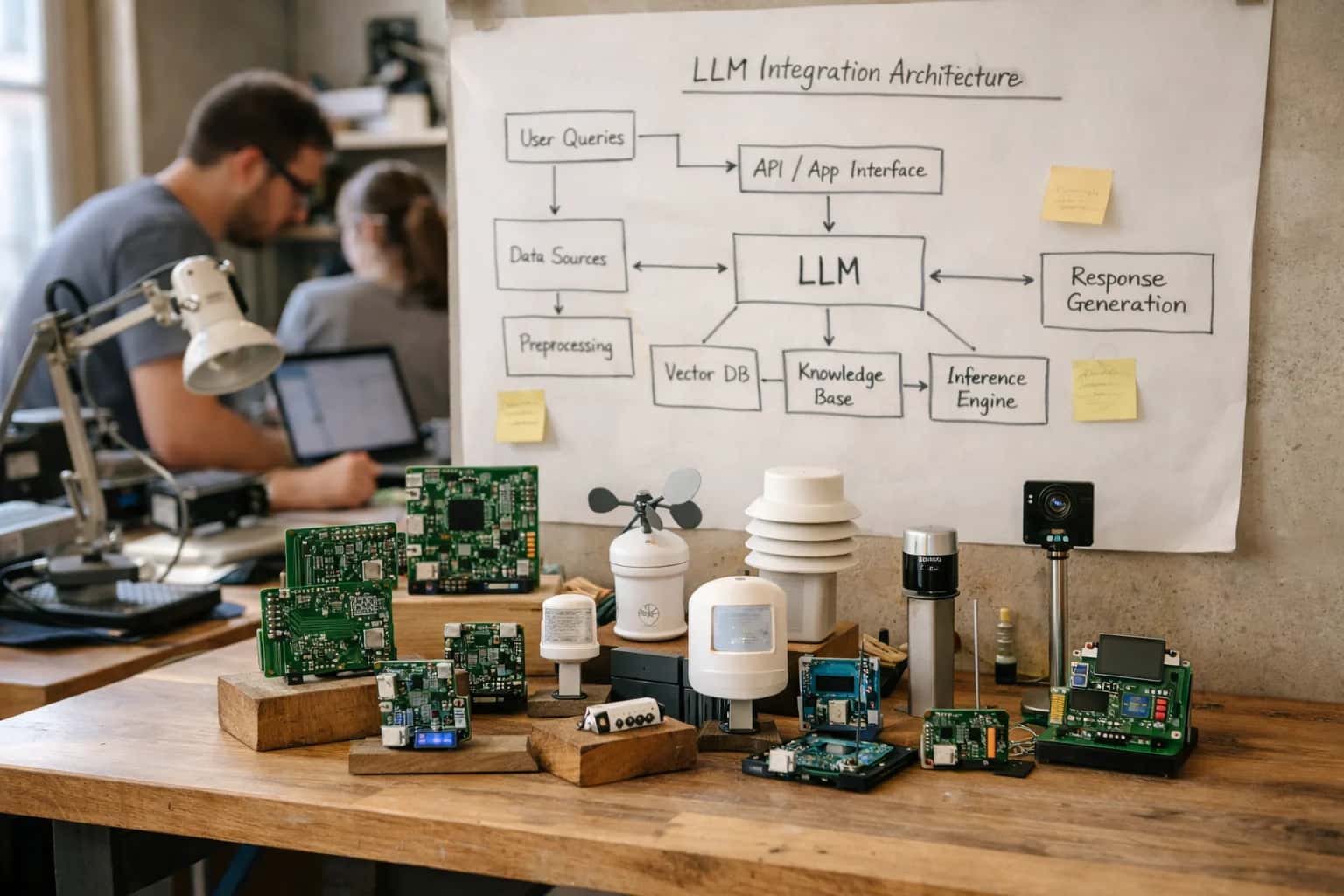
AUTOMATING CONNECTOR CONFIGURATION
Where AI Fits into Airbyte's Schema Mapping Workflow
A technical blueprint for using LLMs to automate the configuration and validation of Airbyte connectors, reducing manual YAML work for semi-structured APIs and dynamic databases.
In practice, this integration is often implemented as a pre-sync service that intercepts the schema discovery API call. The service passes raw JSON schema samples to an LLM with instructions to output a validated Airbyte catalog. For ongoing operations, the same AI agent can monitor sync logs for new fields or type coercion errors (e.g., "123" → integer failures), automatically proposing schema updates. This turns a manual, days-long configuration process for a complex API into a review-and-approve task taking hours. The key is grounding the LLM in Airbyte's catalog structure and using a validation layer to ensure output compatibility before applying changes.
Rollout requires a staged approach: start with read-only schema suggestion for engineer review, then progress to automated patching for non-breaking changes (new nullable fields). Governance is critical—all AI-proposed schema modifications should be logged in an audit trail, and a human-in-the-loop approval can be enforced for production connectors. This pattern reduces the operational burden of maintaining dozens of connectors, especially when source systems evolve independently, ensuring your data pipelines remain AI-ready without constant manual intervention.
CONNECTOR CONFIGURATION
Airbyte Touchpoints for AI-Powered Schema Mapping
Automating YAML and JSON Spec Generation
Airbyte connectors are defined by a spec.yaml file and a JSON configuration schema. LLMs can dramatically reduce the manual effort of creating and validating these for semi-structured APIs or databases with dynamic fields.
Key AI Touchpoints:
- Schema Inference: Analyze API documentation, sample JSON responses, or database
DESCRIBEoutputs to infer the structure and generate the initialspec.yaml. - Field Mapping Suggestions: Propose mappings between source fields and destination table columns, handling nested objects and arrays.
- Validation & Linting: Check generated specs for common errors, Airbyte best practices, and compatibility with the Singer or Airbyte protocol.
Example Workflow: An LLM parses a Swagger/OpenAPI spec, identifies the core data entities and their properties, and outputs a valid Airbyte connector spec with appropriate airbyte_type annotations (e.g., string, integer, array).
SCHEMA INTELLIGENCE
High-Value Use Cases for AI in Airbyte Schema Management
Manual connector configuration is a major bottleneck in data integration. These AI-augmented workflows use LLMs to interpret, map, and validate schemas, turning days of YAML editing into automated, reliable processes.
01
Automated Connector Configuration for Semi-Structured APIs
Parse complex API documentation (OpenAPI/Swagger) or sample JSON payloads to auto-generate the source_spec.yaml for a custom Airbyte connector. The LLM infers data types, handles nested objects, and suggests optimal sync modes, reducing initial setup from hours to minutes.
Hours -> Minutes
Setup time
02
Dynamic Schema Drift Detection & Mapping Repair
Continuously monitor sync logs for schema change errors (e.g., new column, type change). An AI agent analyzes the source's new structure, proposes an updated catalog, and can auto-apply non-breaking changes after validation, preventing pipeline failures.
Batch -> Real-time
Detection
03
Intelligent Source-to-Warehouse Field Mapping
For sources with hundreds of opaque fields (e.g., SaaS platform export), use an LLM to analyze column names, sample values, and metadata to suggest semantic mappings to your warehouse schema. This creates a first-draft normalization specification, cutting mapping work by 70-80%.
1 sprint
Time saved
04
Natural Language Connector Troubleshooting
When a sync fails with a cryptic schema error, an AI copilot ingests the Airbyte log, connector config, and source schema to diagnose the root cause. It provides plain-English explanations and specific YAML fixes, turning debugging from a specialist task into a self-service operation.
Same day
Resolution
05
AI-Assisted Data Quality Gate at Ingestion
Embed validation logic within the sync. An LLM reviews a sample of records against defined data contracts or inferred patterns to flag anomalies (e.g., invalid enum values, unexpected formats) before data lands in the warehouse, quarantining bad records automatically.
06
Generative Documentation for Data Lineage
Automatically generate human-readable documentation for each configured connector. The LLM analyzes the source, destination, and transformation logic to produce a summary of the data flow, including column purposes and business context, populating your data catalog.
PRACTICAL IMPLEMENTATION PATTERNS
Example AI-Augmented Schema Mapping Workflows
These workflows demonstrate how LLMs can automate and validate the most complex, manual steps in Airbyte connector configuration, specifically for semi-structured APIs and databases with dynamic schemas. Each pattern is designed to be triggered via Airbyte's API, webhooks, or orchestration tools.
Trigger: A data engineer initiates a new Airbyte source connector setup for a REST API with undocumented or variable JSON responses.
Workflow:
- Context Pull: The system fetches sample API responses (e.g., via a test call configured with base URL/auth).
- Agent Action: An LLM-based agent analyzes the JSON payloads to:
- Infer the schema (field names, nested structures, data types).
- Identify primary keys, cursor fields for incremental syncs, and potential replication keys.
- Generate a validated
spec.jsonandconfigured_catalog.jsonfor the custom Airbyte connector.
- System Update: The generated configuration is posted back to the Airbyte API to create and test the source.
- Human Review Point: The proposed schema and sync mode are presented to the engineer for approval or adjustment before the first sync runs.
Technical Note: This pattern uses Airbyte's Connector Builder or Custom Connector framework, with the AI agent acting as a co-pilot for the YAML/JSON configuration.
FROM MANUAL YAML TO AUTOMATED CONFIGURATION
Implementation Architecture: Wiring AI into Your Airbyte Stack
A practical blueprint for augmenting Airbyte's core ingestion engine with AI to automate and validate connector configuration, especially for dynamic APIs and databases.
The integration architecture typically injects an AI agent layer between your source systems and Airbyte's connector configuration UI or API. This layer uses an LLM to analyze source API documentation, sample payloads, or live database schemas. For a REST API connector, the agent can ingest OpenAPI specs or sample JSON responses to infer the optimal spec.json and configured_catalog. For database sources with frequent schema changes, the agent monitors INFORMATION_SCHEMA and programmatically adjusts the Airbyte stream configuration to handle new columns or modified data types, reducing manual YAML updates.
In production, this is often implemented as a lightweight service (e.g., a Python FastAPI app) that listens for events—like a new source registration in Airbyte Cloud or a sync failure due to a schema mismatch. The service calls an LLM (like GPT-4 or Claude) with a structured prompt containing the source metadata and the current Airbyte config. The LLM's output is parsed into a valid configuration patch, which is then applied via Airbyte's API. This workflow can be queued using Redis or Pub/Sub, with human-in-the-loop approval steps in a tool like Slack or Jira before changes are committed, ensuring governance.
Rollout should start with a non-critical, high-variability source—such as a third-party marketing API with frequent field additions—to validate the AI's mapping accuracy. Implement detailed audit logging of all suggested changes, the prompts used, and the final configurations. This creates a feedback loop to fine-tune the prompts and improve reliability. The end goal is a self-healing pipeline where routine schema evolution is handled automatically, allowing data engineers to focus on complex logic and performance tuning, not manual connector upkeep.
AI-AUGMENTED CONFIGURATION
Code & Payload Examples
Automating Connector Configuration
LLMs can parse API documentation or sample JSON responses to generate the core spec.yaml and configured_catalog.json files for a new Airbyte connector. This is especially valuable for semi-structured SaaS APIs where schemas are dynamic. The AI analyzes the source's authentication method, endpoint structure, and data types to produce a valid, boilerplate configuration.
yaml# AI-Generated spec.yaml snippet for a hypothetical CRM API connectorSpecification: documentationUrl: https://api.example-crm.com/docs connectionSpecification: $schema: "http://json-schema.org/draft-07/schema#" title: "Example CRM Spec" type: object required: - api_token - start_date properties: api_token: type: string title: "API Token" airbyte_secret: true start_date: type: string title: "Start Date for Incremental Sync" pattern: "^[0-9]{4}-[0-9]{2}-[0-9]{2}$" description: "Date in YYYY-MM-DD format." supported_destination_sync_modes: - append
This reduces manual research and trial-and-error, accelerating the development of custom connectors.
AI-AUGMENTED SCHEMA MAPPING
Realistic Time Savings & Operational Impact
How LLM-assisted configuration reduces manual effort and risk in Airbyte connector setup, especially for semi-structured APIs and databases with dynamic schemas.
| Workflow | Before AI | After AI | Implementation Notes |
|---|---|---|---|
Initial Connector Configuration | Hours of manual YAML/UI mapping for nested JSON/XML | Minutes with AI-generated mapping suggestions | AI suggests field mappings and data types; engineer reviews and approves. |
Schema Drift Detection & Handling | Manual comparison during sync failures or ad-hoc audits | Automated alerts with suggested normalization paths | AI monitors source API changes, flags new/removed fields, and proposes schema updates. |
Data Type Validation & Casting | Post-load debugging of type mismatches (e.g., string vs. integer) | Pre-sync validation with automatic casting logic generation | AI analyzes sample payloads to infer correct types and generates transformation code. |
Complex Nested Structure Flattening | Manual, iterative design of normalization rules | Assisted flattening with preview of target table structure | AI proposes flattening strategies; engineer selects the optimal balance of simplicity and fidelity. |
Connector Configuration Documentation | Manual notes or tribal knowledge | Auto-generated setup guide and data dictionary | LLM creates runbooks from the final configuration, detailing source-to-target mapping logic. |
Pilot Project Timeline | 2-4 weeks for first complex API connector | 3-5 days for initial proof-of-concept | Acceleration comes from AI reducing the trial-and-error phase of mapping discovery. |
Ongoing Connector Maintenance | Reactive, manual updates triggered by broken syncs | Proactive change recommendations and impact analysis | AI reviews sync logs and source changelogs to recommend preventative updates. |
ARCHITECTING FOR PRODUCTION
Governance, Security, and Phased Rollout
A practical approach to deploying AI-assisted schema mapping in Airbyte with control and confidence.
Governance starts with the YAML. AI-generated connector configurations must be treated as code: versioned in Git, peer-reviewed via pull requests, and validated against a library of approved patterns before promotion to staging or production. This ensures changes to source API schemas or target table definitions are captured in an audit trail. For security, sensitive source credentials and API keys are never exposed to the LLM; the AI operates on schema metadata and sample data payloads only, with all runtime connections managed by Airbyte's secure credential store.
A phased rollout mitigates risk. Start with a non-critical development source, like an internal API, to validate the AI's mapping logic and accuracy. Next, expand to staging environments for core SaaS applications (e.g., Salesforce, HubSpot), using the AI to handle new custom fields or nested objects. Finally, implement in production with a canary approach: run the AI-generated sync in parallel with the existing manual sync for a subset of tables, comparing output for data consistency before cutting over. This builds operational trust and surfaces any edge cases in complex JSON structures.
Continuous monitoring is essential. Integrate Airbyte logs and sync status with an observability platform, using simple rules to flag anomalies in row counts or sync durations that might indicate a faulty AI-generated mapping. For long-term governance, establish a lightweight review board—typically a data engineer and a domain expert—to periodically audit and retrain the mapping models based on new data patterns, ensuring the system adapts without accruing technical debt. This controlled, iterative path turns an experimental AI feature into a reliable component of your data infrastructure.
Enabling Efficiency, Speed & Accuracy
Intelligent Analysis, Decision & Execution
We build AI systems for teams that need search across company data, workflow automation across tools, or AI features inside products and internal software.
Talk to Us
Search across company data
Give teams answers from docs, tickets, runbooks, and product data with sources and permissions.
Useful when people spend too long searching or get different answers from different systems.
Enterprise searchRAGPermissions
Read more
Automate internal workflows
Use AI to route work, draft outputs, trigger actions, and keep approvals and logs in place.
Useful when repetitive work moves across multiple tools and teams.
AI agentsWorkflow automationGovernance
Read more
Add AI to products and internal tools
Build assistants, guided actions, or decision support into the software your team or customers already use.
Useful when AI needs to be part of the product, not a separate tool.
AI integrationDecision supportModel routing
Read moreAI-ASSISTED SCHEMA MAPPING
Frequently Asked Questions
Practical questions for data engineers and platform teams evaluating AI to automate Airbyte connector configuration and validation.
Airbyte connectors for REST APIs, NoSQL databases, or legacy systems often output nested JSON with dynamic fields. Manual YAML configuration for these is time-consuming and brittle.
An AI-assisted workflow typically involves:
- Trigger: A new source connection is configured in Airbyte, or an existing connector's schema drifts.
- Context Pulled: The AI agent samples the raw API response or database records (e.g., 100-1000 rows).
- Model Action: An LLM analyzes the sample to:
- Infer a normalized, typed schema (e.g., identify
customer.name.firstas aSTRING). - Suggest optimal stream and field names based on content.
- Flag potential PII or unstructured text fields that may need special handling.
- Infer a normalized, typed schema (e.g., identify
- System Update: The proposed schema is presented in the Airbyte UI for review, or automatically applied to the connector configuration YAML.
- Human Review Point: Engineers approve or edit the AI-generated schema before the sync is activated, ensuring governance.

About the author
Prasad Kumkar
CEO & MD, Inference Systems
Prasad Kumkar is the CEO & MD of Inference Systems and writes about AI systems architecture, LLM infrastructure, model serving, evaluation, and production deployment. Over 5+ years, he has worked across computer vision models, L5 autonomous vehicle systems, and LLM research, with a focus on taking complex AI ideas into real-world engineering systems.
His work and writing cover AI systems, large language models, AI agents, multimodal systems, autonomous systems, inference optimization, RAG, evaluation, and production AI engineering.
LinkedIn
Limited slotsGet a Free AI Consultation
Partnered with leading AI, data, and software stack.





How We Work
Custom AI workflows for your Business
One-fit-all AI don't work for modern businesses. At Inferensys, we aim to understand your business & custom requirements; which we use to define most efficient agentic workflows, the data, and the tools for your business.
01
Review the use case
We understand the task, the users, and where AI can actually help.
Read more02
Pick the right approach
We define what needs search, automation, or product integration.
Read more03
Build the first useful version
We implement the part that proves the value first.
Read more04
Improve from there
We add the checks and visibility needed to keep it useful.
Read moreThe first call is a practical review of your use case and the right next step.
Talk to Us