AI connects to privacy platforms through their REST APIs and workflow engines, acting on three key data objects: Records of Processing Activities (ROPAs), Data Subject Access Requests (DSARs), and Data Protection Impact Assessments (DPIAs). For example, an AI agent can be triggered by a new DSAR ticket in OneTrust, use natural language processing to interpret the request, query connected systems via pre-built connectors, and draft a compliant response with extracted personal data—all before a human reviewer logs in. This integration surface focuses on the Privacy Operations, Consent Management, and Vendor Risk modules where manual review creates the biggest bottlenecks.

Integration
AI Integration with Privacy Platforms for GDPR Compliance
A technical guide for privacy teams and architects on integrating AI with platforms like OneTrust and TrustArc to automate Article 30 ROPA generation, draft DPIAs, monitor regulatory updates, and reduce manual compliance workload by 60-80%.
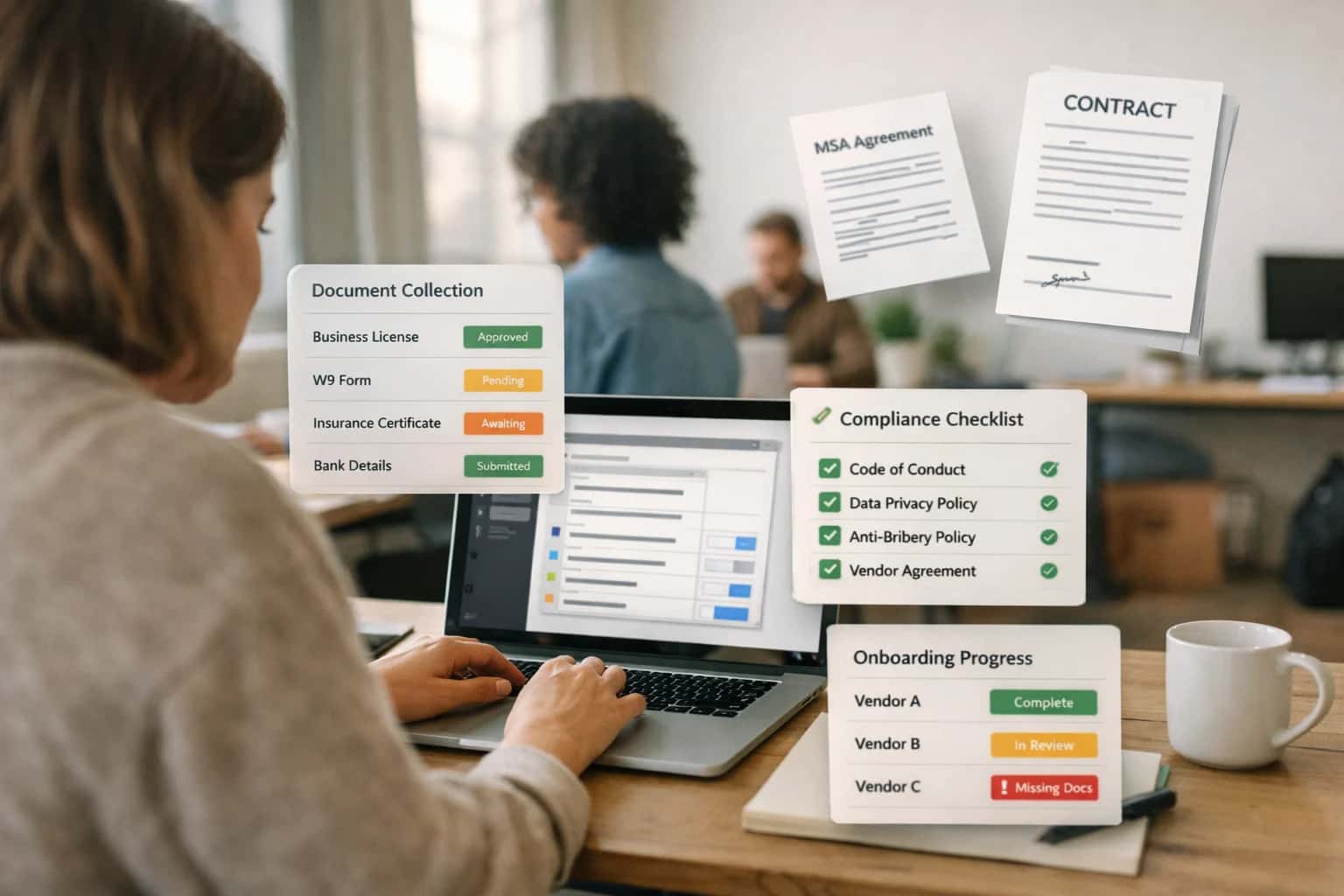
ARCHITECTURE AND ROLLOUT
Where AI Fits into GDPR Privacy Operations
Integrating AI with platforms like OneTrust and TrustArc automates high-volume, manual GDPR tasks, shifting privacy teams from reactive data processors to proactive risk managers.
The implementation follows a human-in-the-loop pattern. An AI workflow might: 1) Ingest a new regulatory update via an RSS feed into TrustArc, 2) Use an LLM to summarize changes and map them to existing controls and processing activities in the platform, 3) Generate a draft action plan and assign it to the relevant privacy officer for review and approval. The impact is operational: reducing the time to generate an Article 30 ROPA from days to hours, or enabling a small team to handle a 300% increase in DSAR volume without adding headcount. The architecture ensures all AI actions are logged in the platform's audit trail, maintaining the chain of custody for compliance evidence.
Rollout is phased, starting with a single, high-volume use case like DSAR response drafting. Governance is critical: outputs are always reviewed before submission, and prompts are rigorously tested to avoid hallucinations of personal data. Inference Systems builds these integrations with a focus on explainability—every AI-generated summary or draft includes citations to source data within the privacy platform, so officers can defend the process to regulators. This turns the privacy platform from a system of record into an intelligent control center.
GDPR COMPLIANCE AUTOMATION
AI Touchpoints Within Leading Privacy Platforms
Automating ROPA Generation and Maintenance
Privacy platforms like OneTrust and TrustArc maintain centralized Records of Processing Activities (ROPAs). AI integration can automate the population and updating of these critical compliance artifacts.
Key AI Touchpoints:
- System Discovery APIs: Use AI to analyze system inventories, data flow diagrams, and vendor contracts ingested via platform APIs to automatically identify processing activities, data categories, and legal bases.
- Natural Language Processing: Draft and update ROPA descriptions by summarizing technical documentation and contract clauses.
- Change Detection: Monitor integrated systems (e.g., CRM, ERP) for new data fields or processes, triggering ROPA review workflows.
Implementation Pattern: An AI agent listens to webhooks from discovery tools or CMDBs, extracts entity details, calls the privacy platform's POST /api/v1/processing-activities endpoint with a structured payload, and flags records requiring human verification.
PRIVACY PLATFORM INTEGRATIONS
High-Value AI Use Cases for GDPR Compliance
Integrating AI with platforms like OneTrust, TrustArc, and BigID automates high-effort, high-risk GDPR compliance tasks. These use cases focus on augmenting privacy operations with intelligent automation, reducing manual review time and improving accuracy.
01
Automated ROPA Record Generation
AI analyzes data processing workflows, vendor contracts, and system logs to automatically draft and populate Records of Processing Activities (Article 30) in platforms like OneTrust. It maps data flows, identifies legal bases, and suggests data retention periods, turning a quarterly manual audit into a continuously updated system of record.
Quarterly -> Continuous
Update cadence
02
Intelligent DSAR Response Drafting
When a Data Subject Access Request (DSAR) is logged, AI queries connected systems (CRM, HRIS, support platforms) via the privacy platform's API, collates relevant personal data, and generates a compliant, plain-language response draft. This reduces the risk of missing data sources and standardizes communication.
Hours -> Minutes
Initial draft time
03
Regulatory Change Monitoring & Impact Analysis
AI monitors official GDPR guidance, regulatory news, and court rulings. It cross-references new requirements with your organization's registered processing activities in the privacy platform to generate targeted impact summaries and action items for the DPO, ensuring proactive compliance.
Manual -> Automated
Monitoring
04
Privacy Impact Assessment (PIA) Questionnaire Support
For new projects or vendors, AI uses the platform's PIA template to conduct an initial interview with project stakeholders via a chat interface. It analyzes responses to flag high-risk processing, suggest mitigating controls, and pre-fill the PIA form in tools like TrustArc, accelerating the security-by-design review.
1 sprint
Accelerated review
05
Consent Preference Trend Analysis & Audit
AI analyzes consent logs from websites, apps, and CRM systems integrated with the privacy platform. It identifies trends in user preferences, detects anomalies in consent capture workflows, and generates audit-ready reports demonstrating compliance with consent requirements (Article 7) across marketing channels.
Batch -> Real-time
Insight generation
06
Vendor Risk Assessment Summarization
AI processes lengthy vendor security questionnaires, SOC 2 reports, and contract clauses ingested into the privacy platform's third-party risk module. It extracts key data points, compares them against internal policies, and generates a concise risk summary with a recommended rating, enabling faster, more consistent vendor onboarding decisions.
AI-ENHANCED PRIVACY OPERATIONS
Example Automated Workflows: Trigger to Completion
These concrete workflows illustrate how AI agents integrate with platforms like OneTrust and TrustArc to automate high-effort, high-volume GDPR compliance tasks. Each flow connects a specific trigger to a completed system-of-record update, with clear human review checkpoints.
Trigger: A new data processing activity is registered in the privacy platform's inventory, or a quarterly ROPA refresh cycle begins.
Workflow:
- Context Pull: An AI agent queries the privacy platform's API for the new or updated processing activity details (purpose, data categories, data subjects, recipients, retention periods). It also fetches linked vendor records and system metadata.
- AI Action: The agent uses a structured prompt with the retrieved data to draft a compliant ROPA entry. It cross-references the activity against the GDPR's lawful bases for processing and suggests the most appropriate one (e.g., Legitimate Interest, Contractual Necessity), citing relevant platform-stored justifications.
- System Update: The drafted ROPA entry, with suggested lawful basis, is posted back to the privacy platform as a draft record in the appropriate module (e.g., OneTrust's
Processing Activities). - Human Review: The workflow creates a task for the Data Protection Officer (DPO) or privacy analyst in the platform, linking directly to the draft. The agent includes a brief summary of its reasoning for the lawful basis suggestion.
- Completion: After human review and approval/edits, the ROPA record is published, and the platform's compliance reporting dashboard is automatically updated.
BUILDING A POLICY-AWARE AI PIPELINE
Implementation Architecture: Data Flow and Guardrails
A production-ready AI integration for GDPR compliance requires a layered architecture that keeps sensitive data within the privacy platform's control while enabling intelligent automation.
The core pattern is a policy-first data flow: AI models are invoked through the privacy platform's APIs, not given direct database access. For example, when automating an Article 30 Record of Processing Activity (ROPA), the workflow begins in OneTrust or TrustArc, which queries its own inventory and vendor databases via its internal connectors. The platform then sends a structured, de-identified summary payload (e.g., process purpose categories, data types, involved departments) to a secure inference endpoint. The LLM drafts the ROPA narrative based on this context, returning plain text that the platform inserts into its native template, maintaining a full audit trail within the system of record. This ensures the AI never ingests raw PII or has persistent access to the data graph.
Key guardrails are implemented at the orchestration layer:
- Consent and Legal Basis Checks: Before any AI processing, the workflow engine validates the legal basis (e.g., legitimate interest, contractual necessity) for the data use, referencing the platform's consent records.
- Input/Output Scanners: All prompts and completions pass through a secondary classifier model (or a tool like Microsoft Presidio) running in the same secure environment to redact any residual PII before logging.
- Human-in-the-Loop Gates: For high-risk outputs like Data Protection Impact Assessment (DPIA) drafts, the platform routes the AI-generated content to a defined privacy officer for review and approval within its task management module before publication or sharing.
- Model Attribution Logs: Every generated artifact is stamped with the model version, prompt template ID, and source data identifiers, enabling traceability for Article 5(2) accountability requirements.
Rollout follows a phased, risk-based approach. We typically start with low-risk, high-volume automation such as drafting vendor assessment summaries or categorizing regulatory update alerts, which builds trust and refines the guardrails. Subsequent phases tackle more complex workflows like DPIA automation, where the AI suggests risk mitigations based on historical assessments. The entire architecture is monitored via the privacy platform's existing dashboard, with AI-specific metrics (e.g., approval rates, redaction events) fed back as custom objects. This approach ensures the integration enhances compliance velocity without creating new shadow IT or data sovereignty issues, keeping governance centralized and verifiable.
GDPR COMPLIANCE AUTOMATION
Code and Payload Examples
Automating Article 30 Records of Processing
A core GDPR requirement is maintaining a Record of Processing Activities (ROPA). AI can ingest system inventories, data flow diagrams, and vendor contracts from platforms like OneTrust to draft and populate ROPA entries.
Typical Workflow:
- AI parses a new vendor contract uploaded to the privacy platform.
- It extracts data processing purposes, categories of data, and third-party details.
- Using a structured prompt, it generates a JSON payload for a new ROPA record.
- This payload is posted via the platform's REST API to create or update the central register.
Example Payload for API Call:
json{ "process_name": "Customer Support Ticketing", "data_controller": "Your Company Inc.", "processing_purpose": "Resolution of customer inquiries", "data_categories": ["contact_details", "communication_content"], "recipient_categories": ["cloud_service_provider"], "third_country_transfers": true, "transfer_safeguard": "EU Standard Contractual Clauses", "retention_period": "24 months", "source_document": "Vendor_Contract_XYZ_v2.pdf" }
This automates a manual, error-prone process, ensuring the ROPA stays current with new processing activities.
GDPR COMPLIANCE WORKFLOWS
Realistic Time Savings and Operational Impact
How AI integration with platforms like OneTrust and TrustArc accelerates key privacy operations while maintaining human oversight and auditability.
| Privacy Workflow | Manual Process | AI-Assisted Process | Implementation Notes |
|---|---|---|---|
Article 30 ROPA Record Generation | Weeks of interviews and spreadsheet updates | Draft generated in hours from system scans | AI suggests mappings; legal team reviews and approves final records |
Data Protection Impact Assessment (DPIA) Drafting | 5-10 business days per assessment | Initial draft and risk summary in 1-2 days | AI populates standard sections; privacy officer focuses on high-risk analysis |
Regulatory Change Monitoring & Relevance | Manual review of alerts and legal texts | Automated summaries with applicability scoring | AI filters noise, highlights changes impacting specific data processing activities |
Data Subject Access Request (DSAR) Response Draft | Hours per request to collate data | Consolidated data report draft in minutes | AI assembles data from linked systems; privacy analyst verifies and redacts |
Vendor Risk Assessment Summary | Days to review lengthy questionnaires | Key risk excerpts and gap analysis in hours | AI extracts and compares vendor responses against policy benchmarks |
Consent Preference Trend Analysis | Quarterly manual spreadsheet analysis | Real-time dashboard with anomaly detection | AI identifies shifting consent patterns to inform marketing and retention strategies |
Privacy Policy Update Communication Draft | Days to draft stakeholder comms | Targeted draft memos generated in hours | AI tailors messaging based on change impact and recipient role (e.g., legal vs. engineering) |
ARCHITECTING FOR COMPLIANCE
Governance, Security, and Phased Rollout
Integrating AI with privacy platforms requires a governance-first architecture to ensure automated workflows remain compliant, auditable, and secure.
A production integration connects your AI inference layer to the privacy platform's REST API and workflow engine. For example, an AI agent can be triggered by a new Data Subject Access Request (DSAR) ticket in OneTrust, automatically querying connected systems via pre-approved connectors to draft a comprehensive response. All AI-generated content—such as draft Records of Processing Activities (ROPAs) or Privacy Impact Assessment (PIA) summaries—should be written to a dedicated audit log object within the privacy platform, tagged with the model version, prompt seeds, and a human-in-the-loop approval status before final submission.
Security is managed through a policy-aware agent layer. The AI system should only access data scoped by the privacy platform's own data discovery and classification results—for instance, only processing datasets that BigID has tagged as relevant to a specific GDPR article. API calls between systems use service accounts with role-based access control (RBAC) scoped to specific modules like ConsentManagement or RiskAssessment. Sensitive data is never persisted in the AI provider's logs; prompts are dynamically constructed from de-identified record IDs and retrieved via secure, ephemeral sessions.
Rollout follows a phased, risk-gated approach. Phase 1 might automate the generation of ROPA narrative sections for low-risk processing activities, with outputs routed to a Legal Review queue in TrustArc. Phase 2 expands to drafting initial DPIA questionnaires based on data flow diagrams from Collibra. Each phase includes parallel runs where AI drafts and human drafts are compared for accuracy, with metrics tracked in the platform's reporting module. This controlled rollout ensures the AI augments—rather than replaces—the judgment of Data Protection Officers, keeping human oversight firmly in the loop for high-risk decisions.
Enabling Efficiency, Speed & Accuracy
Intelligent Analysis, Decision & Execution
We build AI systems for teams that need search across company data, workflow automation across tools, or AI features inside products and internal software.
Talk to Us
Search across company data
Give teams answers from docs, tickets, runbooks, and product data with sources and permissions.
Useful when people spend too long searching or get different answers from different systems.
Enterprise searchRAGPermissions
Read more
Automate internal workflows
Use AI to route work, draft outputs, trigger actions, and keep approvals and logs in place.
Useful when repetitive work moves across multiple tools and teams.
AI agentsWorkflow automationGovernance
Read more
Add AI to products and internal tools
Build assistants, guided actions, or decision support into the software your team or customers already use.
Useful when AI needs to be part of the product, not a separate tool.
AI integrationDecision supportModel routing
Read moreAI INTEGRATION WITH PRIVACY PLATFORMS FOR GDPR COMPLIANCE
Frequently Asked Questions for Technical Buyers
Practical questions for architects and privacy engineers evaluating how to augment platforms like OneTrust, TrustArc, and BigID with AI to automate GDPR compliance tasks.
The core pattern is to use the privacy platform as the secure gateway and policy enforcement layer. The LLM should never directly access your production databases.
Typical Secure Integration Architecture:
- Trigger & Context Pull: A workflow in OneTrust (e.g., a new DSAR request) triggers via its API or webhook.
- Policy-Aware Data Fetch: Your integration service calls OneTrust's APIs to fetch the already-redacted or masked data records relevant to the request. The privacy platform's native masking rules are applied first.
- Contextual Prompt Assembly: The integration service assembles a prompt with the sanitized data, relevant GDPR article context, and your organization's response templates.
- LLM Call: The prompt is sent to your chosen LLM (e.g., Azure OpenAI with data residency guarantees).
- Human-in-the-Loop Review: The generated draft (e.g., a ROPA entry or DSAR response) is posted back to a review queue within the privacy platform, where a privacy officer must approve it before any external action is taken.
- Audit Trail: All actions—data fetch, prompt hash, LLM call, draft creation—are logged as activities within the privacy platform's native audit trail.
This keeps sensitive data within the governed platform and ensures all actions are attributable and reviewable.

About the author
Prasad Kumkar
CEO & MD, Inference Systems
Prasad Kumkar is the CEO & MD of Inference Systems and writes about AI systems architecture, LLM infrastructure, model serving, evaluation, and production deployment. Over 5+ years, he has worked across computer vision models, L5 autonomous vehicle systems, and LLM research, with a focus on taking complex AI ideas into real-world engineering systems.
His work and writing cover AI systems, large language models, AI agents, multimodal systems, autonomous systems, inference optimization, RAG, evaluation, and production AI engineering.
LinkedIn
Limited slotsGet a Free AI Consultation
Partnered with leading AI, data, and software stack.





How We Work
Custom AI workflows for your Business
One-fit-all AI don't work for modern businesses. At Inferensys, we aim to understand your business & custom requirements; which we use to define most efficient agentic workflows, the data, and the tools for your business.
01
Review the use case
We understand the task, the users, and where AI can actually help.
Read more02
Pick the right approach
We define what needs search, automation, or product integration.
Read more03
Build the first useful version
We implement the part that proves the value first.
Read more04
Improve from there
We add the checks and visibility needed to keep it useful.
Read moreThe first call is a practical review of your use case and the right next step.
Talk to Us