The integration connects to platforms like Collibra, OneTrust, Alation, or Microsoft Purview via their REST APIs and workflow engines. AI agents are deployed to perform three core inventory functions: 1) Automated Source Discovery & Classification – scanning connected data lakes, ERPs (like SAP), and operational systems to identify ESG-relevant data (e.g., energy logs, supply chain databases, HR records) and tag them with frameworks like SASB, GRI, or TCFD. 2) Data Mapping & Lineage Creation – using NLP to read data dictionaries and ETL job logs to automatically map raw source fields to specific disclosure metrics (e.g., linking natural gas invoices to Scope 1 emissions), building a visual lineage inside the governance platform. 3) Gap Analysis & Stewardship Tasking – comparing the inventoried data against your target reporting requirements to generate a prioritized list of missing data points, automatically creating and assigning remediation tickets to data owners in the platform's stewardship module.

Integration
AI Integration for Data Inventory for ESG Reporting
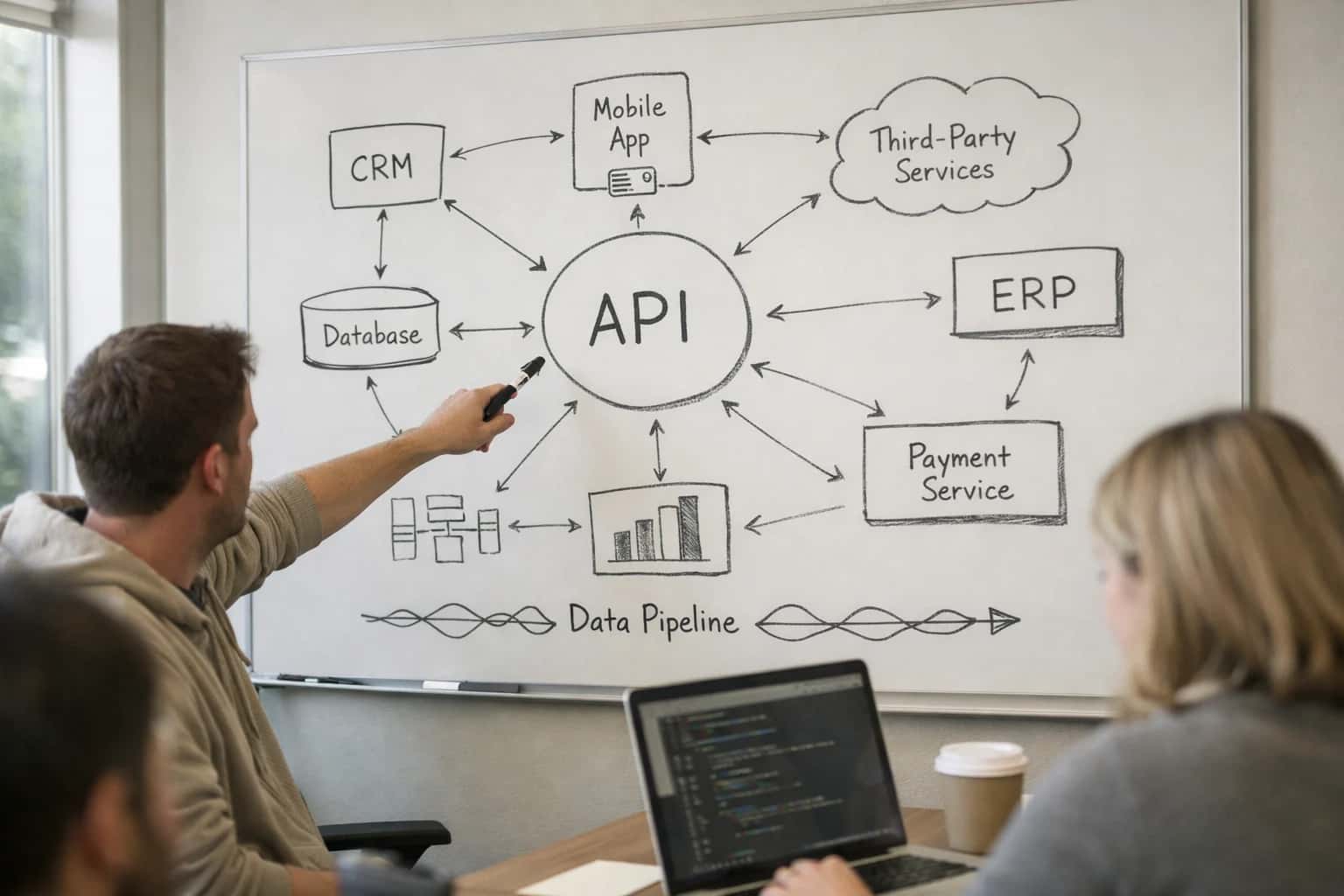
Where AI Fits into ESG Data Inventory
Integrating AI with data governance platforms automates the heavy lifting of ESG data inventory, turning a manual, error-prone process into a continuous, auditable workflow.
Implementation typically involves a vector-enabled middleware layer that sits between the AI model (like GPT-4 or Claude) and the governance platform. This layer uses RAG to ground the AI in your specific ESG taxonomy, internal data schemas, and past disclosure reports. For example, when classifying a new data source, the system retrieves similar, previously classified assets from the governance catalog to ensure consistency. The AI's outputs—new asset metadata, proposed lineage edges, gap findings—are written back to the governance platform via API, triggering approval workflows where required. This creates a closed-loop system: the governance platform becomes the system of record for the AI's inventory work, providing the audit trail, role-based access control (RBAC), and version history that ESG auditors and compliance teams require.
Rollout should be phased, starting with a single disclosure framework (e.g., GHG Protocol) and a bounded set of source systems. Governance is critical: the AI's classification and mapping suggestions should be routed for human-in-the-loop review by subject matter experts before being promoted to production in the catalog. Over time, as confidence grows, the system can auto-approve high-confidence matches. This integration doesn't replace your data governance platform; it supercharges its ingestion and analysis capabilities, turning what was a quarterly scramble into a maintained, living inventory. The result is that sustainability teams spend less time hunting for data and more time analyzing it, with a clear, governed record of what data supports each public disclosure. For related patterns on governing this AI-generated metadata, see our guide on AI Integration for Data Governance in Healthcare, which shares similar audit and control requirements.
AI Integration Points by Governance Platform
Automating ESG Asset Registration and Lineage
Integrate AI with Collibra's Data Catalog and Lineage modules to automate the discovery and registration of ESG-relevant data assets. AI agents can scan connected source systems (ERP, EHS, supply chain platforms) to identify tables, reports, and files containing emissions, energy, water, waste, and social metrics. For each discovered asset, the AI can:
- Generate a business-friendly asset description summarizing the ESG data purpose and scope.
- Propose business glossary terms (e.g., "Scope 1 Emissions," "Supplier Diversity %") and link them to the technical assets.
- Initiate automated lineage workflows to map the data flow from source systems to ESG reports, highlighting transformation logic and gaps.
This integration surfaces through Collibra's Workflow Engine and REST API, allowing stewards to review and approve AI-suggested metadata, dramatically accelerating the initial data inventory phase from months to weeks.
High-Value AI Use Cases for ESG Data
ESG reporting requires a complete, accurate inventory of data sources across operations, supply chains, and corporate functions. AI integration with data governance platforms like Collibra, OneTrust, and Alation automates the discovery, classification, and mapping of ESG data, turning a manual, months-long process into a governed, repeatable workflow.
Automated ESG Data Source Discovery
AI scans connected data lakes, ERP systems (SAP, Oracle), and operational databases to identify and catalog potential ESG data sources. It uses natural language understanding to recognize tables, columns, and documents related to emissions (Scope 1-3), energy, waste, water, diversity metrics, and governance policies, automatically registering them in the governance platform's inventory.
Framework-Aware Data Mapping
For each discovered data asset, AI maps it to relevant disclosure frameworks like SASB, GRI, TCFD, and CSRD. It analyzes data context and lineage to suggest the correct metrics and calculation methodologies, automatically creating and maintaining the mapping within the governance catalog. This ensures reporting alignment from the data source up.
Intelligent Gap Analysis & Prioritization
AI compares the inventoried data against target disclosure requirements to generate a prioritized gap analysis. It identifies missing data points, poor-quality sources, and coverage weaknesses, suggesting specific systems or business units to engage. This turns a static inventory into an actionable roadmap for data collection.
Plain-Language Data Lineage for Auditors
When auditors question a reported figure, AI generates a plain-English explanation of its data lineage. It traces the metric from the final disclosure back through transformations, calculations, and source systems documented in the governance platform, automating evidence collection and building trust in reported data.
Stakeholder-Specific Inventory Reporting
AI drafts tailored inventory reports for different stakeholders—from the sustainability team needing technical details to the CFO requiring a high-level assurance summary. It pulls from the governed catalog, highlighting coverage, data quality scores, and open risks, ensuring consistent communication.
Automated Data Quality Rule Suggestion
AI analyzes the semantic context of ESG data fields (e.g., metric_tons_co2e, female_percentage) to recommend data quality rules and thresholds. It proposes validation checks for plausibility, completeness, and temporal consistency within the governance platform, helping to enforce reliability before data reaches reports.
Example AI-Augmented ESG Inventory Workflows
These workflows detail how AI agents integrate with platforms like Collibra, OneTrust, and BigID to automate the manual, error-prone tasks of building and maintaining an ESG data inventory. Each flow connects discovery, classification, mapping, and analysis into a governed, auditable process.
Trigger: Scheduled scan or new data source registration in the governance platform (e.g., a new database connection is added to Collibra).
Context/Data Pulled: The AI agent reviews the new source's metadata (schema, sample records, file names) and queries existing governance policies for ESG-related terms (e.g., "scope 1," "water usage," "diversity").
Model/Agent Action: A classification model analyzes column names, data patterns, and sample content to propose initial sensitivity tags (e.g., ESG-Emissions, ESG-Social, Non-ESG) and confidence scores. It cross-references findings with the business glossary.
System Update/Next Step: Proposed classifications and a summary are posted as a stewardship task in the governance platform for a data owner's review and approval. The agent logs all actions with the source data snapshot for audit.
Human Review Point: Data steward approves, rejects, or refines the AI-proposed classifications before they become active policy.
Typical Implementation Architecture
A production-ready architecture for integrating AI with data governance platforms to automate the inventory, mapping, and gap analysis required for ESG disclosures.
The integration connects your data governance platform (e.g., Collibra, OneTrust, Alation) to an AI orchestration layer via its native REST API and workflow engine. The AI layer performs three core functions: 1) Automated Source Scanning to crawl connected data lakes, ERPs (like SAP), and sustainability platforms (like Workiva) for ESG-relevant data; 2) Framework Mapping to tag discovered assets against standards like SASB, GRI, or TCFD using a fine-tuned classification model; and 3) Gap Analysis to compare your inventoried data against disclosure requirements and generate prioritized action tickets. This is not a batch process—it's a continuous workflow where new data sources trigger automatic classification and lineage updates in the governance catalog.
Implementation typically involves a vector-enabled pipeline where document content (PDF reports, spreadsheets, database schemas) is chunked, embedded, and matched against a curated library of ESG framework concepts. The AI suggests confidence-scored mappings to specific disclosure metrics (e.g., GRI 302-1: Energy consumption within the organization). These suggestions are routed as tasks within the governance platform's stewardship module for human review and approval, creating an audit trail. The system can also generate plain-language summaries of data coverage for each framework, highlighting high-risk gaps for Scope 3 emissions or social governance data that resides in unstructured HR systems.
Rollout follows a phased approach: start with a single framework (e.g., SASB for your industry) and a pilot data domain (e.g., energy usage from facility management systems). Governance is critical; we implement RBAC controls so only authorized stewards can approve AI-suggested mappings, and all AI actions are logged alongside platform-native audit trails. The final output is a continuously updated, AI-assisted ESG data inventory within your existing governance platform, reducing the manual effort of annual disclosure preparation from months to weeks and providing a defensible, traceable record for auditors. For related patterns on governing the AI models themselves, see our guide on AI Governance and LLMOps Platforms.
Code and Payload Examples
Triggering AI-Powered Discovery Scans
Integrate AI with your data governance platform's API to initiate automated scans for ESG-relevant data. The AI agent analyzes metadata and sample content from connected systems (ERP, IoT, supply chain DB) to identify potential ESG data sources like energy consumption logs, waste management records, or supplier sustainability surveys.
A typical workflow uses a scheduled job or a webhook from a new data source registration to trigger the AI classification service. The payload sent to the AI model includes the data source's technical metadata and a sample for contextual analysis.
python# Example: Trigger AI classification for a new data source in Collibra import requests # Payload to AI service for ESG relevance scoring esg_classification_payload = { "source_id": "connector_789", "source_name": "Plant_12_Energy_Meters", "platform_metadata": { "object_type": "Physical Data Asset", "connection_type": "JDBC", "sample_query": "SELECT meter_id, timestamp, kwh FROM energy_log LIMIT 50" }, "classification_framework": "SASB_Energy", "request_id": "esg_scan_2024_04_15_001" } # Call AI service endpoint response = requests.post( 'https://api.inferencesystems.ai/v1/esg/classify-source', json=esg_classification_payload, headers={'Authorization': 'Bearer YOUR_API_KEY'} ) # AI returns relevance score and suggested ESG categories esg_result = response.json() # {"source_id": "connector_789", "esg_relevance_score": 0.92, "primary_category": "Energy Management", "suggested_framework_mappings": ["SASB: EM-EP-110a.1", "GRI: 302-1"]}
This result is then posted back to the governance platform to automatically tag the asset and update the ESG data inventory.
Realistic Time Savings and Operational Impact
This table illustrates the operational impact of integrating AI with a data governance platform (like Collibra, OneTrust, or Alation) to automate the manual, time-intensive tasks involved in building and maintaining an ESG data inventory for reporting.
| Workflow Stage | Manual Process (Before AI) | AI-Augmented Process (After AI) | Key Notes & Impact |
|---|---|---|---|
Data Source Discovery & Mapping | Weeks of stakeholder interviews and manual spreadsheet mapping | Days of automated scanning and AI-assisted source classification | AI suggests relevant sources and maps to frameworks (e.g., SASB, GRI), reducing discovery time by 60-70%. |
Data Point Identification & Tagging | Manual review of 1000s of fields; inconsistent tagging | Bulk classification via NLP; stewards review AI suggestions | Reduces manual tagging effort from hours per source to minutes, ensuring consistent application of ESG taxonomy. |
Gap Analysis for Disclosures | Manual cross-reference of data against framework requirements | Automated gap report generation with prioritized recommendations | Shifts analysis from a quarterly manual audit to a continuous, on-demand process, identifying coverage gaps instantly. |
Data Lineage Documentation | Manual tracing of ESG metrics from report back to source systems | AI infers and proposes lineage paths for steward validation | Cuts lineage documentation time from days to hours, crucial for audit readiness and data credibility. |
Stakeholder Data Request Fulfillment | Days spent searching, compiling, and validating data for auditors/investors | Self-service Q&A and automated report generation from the catalog | Enables same-day response to data inquiries instead of next-week, freeing up sustainability team capacity. |
Control & Policy Monitoring | Periodic manual checks for data quality and policy adherence | Continuous AI-driven anomaly detection and policy drift alerts | Transforms compliance from a reactive, point-in-time exercise to a proactive, monitored control environment. |
Report Narrative & Context Drafting | Manual drafting of methodology notes and data context for reports | AI-assisted generation of draft narratives based on catalog metadata | Accelerates the most tedious part of report preparation, allowing teams to focus on strategic analysis and storytelling. |
Governance, Security, and Phased Rollout
A production-ready AI integration for ESG data inventory must be built with auditability, security, and controlled adoption at its core.
In a platform like Collibra or OneTrust, the AI integration should act as a governed service within the existing workflow engine. This means the AI's suggestions—such as tagging a data source as relevant to the EU Taxonomy or suggesting a mapping to a SASB metric—are treated as proposals that require review and approval by a designated data steward or ESG analyst before being committed to the official inventory. The integration should log every AI-suggested action, the source data reviewed, the prompting logic used, and the final human decision, creating a complete audit trail for internal controls and external assurance providers.
Security is paramount, especially when handling sensitive operational or financial data for Scope 3 calculations. The integration architecture should ensure data never leaves your controlled environment for model processing unless explicitly configured. For on-premise or VPC-deployed governance platforms, this means using self-hosted or private cloud LLM endpoints (e.g., Azure OpenAI Service with private networking). API calls between the governance platform and the AI service must be authenticated and encrypted, with access scoped to specific service accounts. The AI service itself should have no persistent storage of the ESG data it processes, operating in a stateless, ephemeral manner to minimize data footprint.
A successful rollout follows a phased, risk-based approach. Phase 1 focuses on a single, high-value data domain—like utility data for Scope 2 reporting—within a sandbox environment. This allows the sustainability and data governance teams to validate the AI's classification accuracy, refine prompts, and establish the stewardship review workflow. Phase 2 expands to automate the inventory of supplier data for Scope 3, integrating with the platform's API to pull from source systems like SAP Ariba or Coupa. Phase 3 introduces more complex use cases, such as using the AI to generate a narrative gap analysis against frameworks like GRI, directly within the platform's reporting modules. Each phase includes defined success metrics (e.g., reduction in manual tagging hours, increase in inventory coverage) and gates for governance team approval before proceeding.
Enabling Efficiency, Speed & Accuracy
Intelligent Analysis, Decision & Execution
We build AI systems for teams that need search across company data, workflow automation across tools, or AI features inside products and internal software.
Talk to Us
Search across company data
Give teams answers from docs, tickets, runbooks, and product data with sources and permissions.
Useful when people spend too long searching or get different answers from different systems.

Automate internal workflows
Use AI to route work, draft outputs, trigger actions, and keep approvals and logs in place.
Useful when repetitive work moves across multiple tools and teams.

Add AI to products and internal tools
Build assistants, guided actions, or decision support into the software your team or customers already use.
Useful when AI needs to be part of the product, not a separate tool.
Frequently Asked Questions
Practical questions for sustainability, data, and compliance teams planning to use AI to automate ESG data inventory and reporting workflows within platforms like Collibra, OneTrust, and Alation.
AI integrates via the platform's REST API and workflow engine. A typical implementation involves:
- Trigger & Ingestion: An automated scan or manual trigger initiates the AI workflow. The system pulls metadata about data sources (e.g., database tables, cloud storage paths, application objects) and, where possible, sample data.
- AI Classification: A language model analyzes the metadata and sample content to:
- Identify ESG-related data (e.g.,
energy_consumption,waste_tonnage,employee_demographics). - Map data points to relevant reporting frameworks (e.g., SASB, GRI, TCFD).
- Suggest appropriate business glossary terms and data quality rules.
- Identify ESG-related data (e.g.,
- Platform Update: The AI agent calls the platform's API to:
- Create or tag assets in the data catalog.
- Populate lineage links between source systems and ESG metrics.
- Log classification confidence scores and rationale for steward review.
This creates a continuously updated, AI-assisted inventory that feeds directly into your existing governance workflows.

About the author
Prasad Kumkar
CEO & MD, Inference Systems
Prasad Kumkar is the CEO & MD of Inference Systems and writes about AI systems architecture, LLM infrastructure, model serving, evaluation, and production deployment. Over 5+ years, he has worked across computer vision models, L5 autonomous vehicle systems, and LLM research, with a focus on taking complex AI ideas into real-world engineering systems.
His work and writing cover AI systems, large language models, AI agents, multimodal systems, autonomous systems, inference optimization, RAG, evaluation, and production AI engineering.
Partnered with leading AI, data, and software stack.





How We Work
Custom AI workflows for your Business
One-fit-all AI don't work for modern businesses. At Inferensys, we aim to understand your business & custom requirements; which we use to define most efficient agentic workflows, the data, and the tools for your business.
01
Review the use case
We understand the task, the users, and where AI can actually help.
Read more02
Pick the right approach
We define what needs search, automation, or product integration.
Read more03
Build the first useful version
We implement the part that proves the value first.
Read more04
Improve from there
We add the checks and visibility needed to keep it useful.
Read moreThe first call is a practical review of your use case and the right next step.
Talk to Us