
Inferensys

Integration

AI Integration for Data Governance in Healthcare

A practical guide for technical leaders on integrating AI with healthcare data governance platforms to automate PHI classification, streamline HIPAA compliance workflows, and enhance clinical data lineage for audit and research readiness.
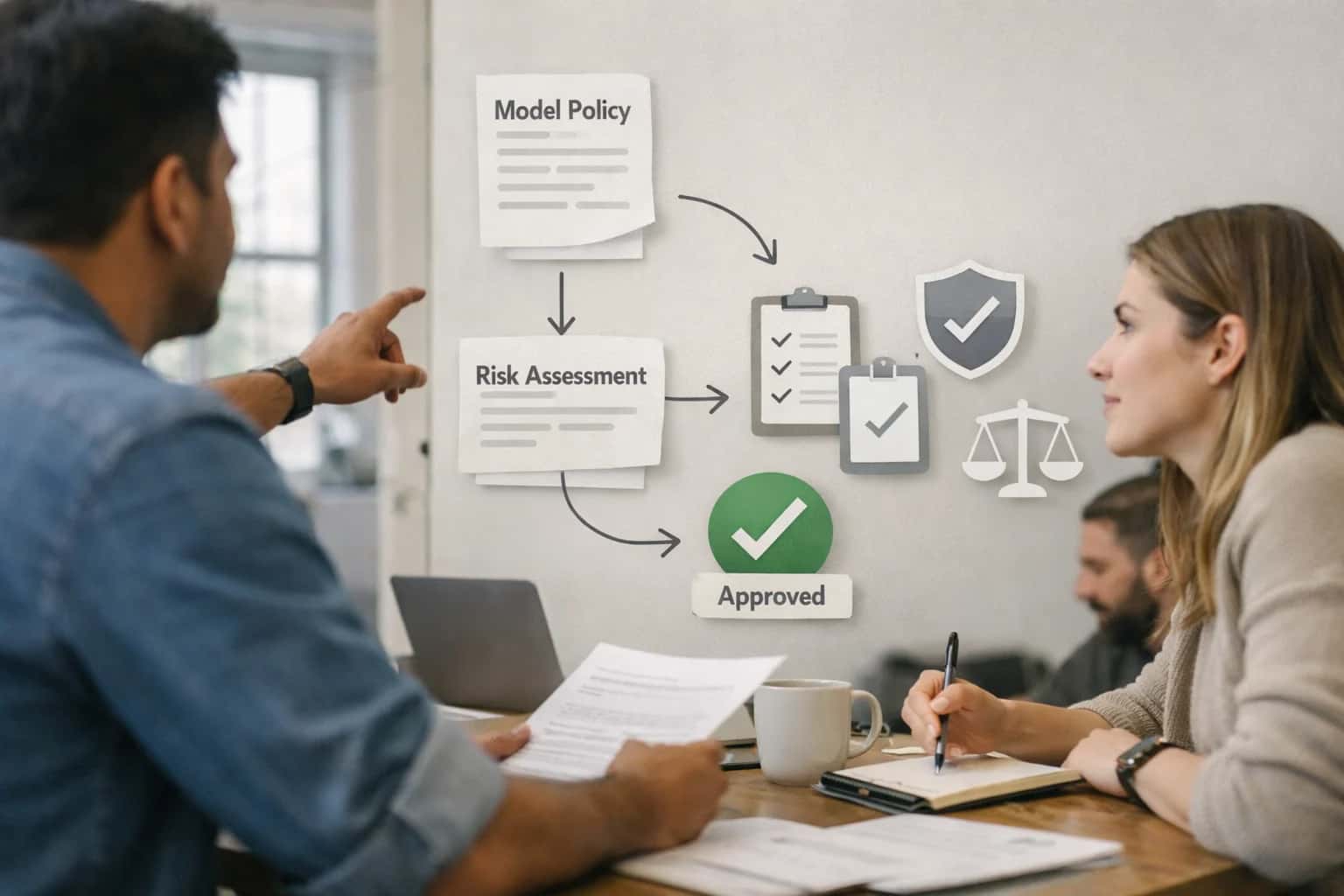
Governance lead reviewing model governance framework on laptop, policy documents visible, executive office setup.
AUTOMATING COMPLIANCE, ACCELERATING STEWARDSHIP

Where AI Fits in Healthcare Data Governance

Integrating AI with platforms like Collibra, Microsoft Purview, and OneTrust automates the classification, protection, and lineage tracking of Protected Health Information (PHI) to meet HIPAA, 21st Century Cures Act, and other regulatory demands.

AI integration targets specific surfaces within healthcare data governance platforms to automate high-volume, manual tasks. Key workflows include:

  • PHI/ePHI Classification: Using AI models to scan unstructured clinical notes, imaging reports, and patient communications within data catalogs (e.g., Collibra, Alation) to auto-tag data with sensitivity labels (e.g., phi-patient, phi-financial, phi-treatment).
  • Consent and Authorization Workflow Support: Integrating with privacy platforms like OneTrust to analyze and route Data Subject Access Requests (DSARs), draft authorization summaries for IRB or privacy boards, and monitor consent expiry across research datasets.
  • Clinical Data Lineage Gap Detection: Augmenting lineage tools (e.g., MANTA, Purview Lineage) with AI to identify and explain broken links between source EHR systems (like Epic or Cerner), data lakes, and downstream analytics or research environments, which is critical for audit trails.


Implementation typically involves deploying secure inference endpoints (often within the healthcare organization's VPC) that connect to the governance platform's REST APIs and workflow engines. For example, a pipeline might:

  1. Subscribe to new asset registration events from Collibra's workflow engine.
  2. Pass document samples to a hosted LLM or specialized NLP model (e.g., for clinical entity recognition) via a secure POST call.
  3. Return structured tags and confidence scores to update the asset's metadata and trigger a steward review queue if confidence is low.
  4. Log all actions with user, model version, and timestamp to an immutable audit trail for compliance demonstrations. Governance is maintained by keeping the AI as a recommendation engine within human-led workflows, especially for high-risk classifications.

Rollout should prioritize bounded, high-impact use cases to demonstrate value and manage risk. Start with automating the classification of known, structured PHI fields (e.g., from HL7 feeds) before moving to unstructured clinical text. A second phase often focuses on generating plain-language summaries of data lineage for compliance officers, explaining how patient data flows from a registration system to a billing report. The final architecture must account for model drift—regularly evaluating classification accuracy against newly labeled data—and policy updates, ensuring the AI's tagging logic can be quickly adjusted when internal data handling policies or external regulations change.

WHERE AI CONNECTS TO PLATFORMS LIKE COLLIBRA AND PURVIEW

AI Integration Touchpoints for Healthcare Data Governance

Automating Sensitive Data Identification

AI integration targets the data discovery and scanning engines within platforms like Microsoft Purview, Collibra, and BigID. The primary workflow involves using fine-tuned models to analyze unstructured clinical notes, imaging reports, and HL7 messages to automatically detect and tag Protected Health Information (PHI) and electronic PHI (ePHI).

This goes beyond simple pattern matching. AI can infer context—for instance, distinguishing between a patient's name in a treatment plan versus a staff member's name in a meeting note—to apply more accurate sensitivity labels like HIPAA-CF (Covered Entity) or research identifiers. The integration typically connects via the platform's REST API to ingest scan results, apply AI-generated classifications and confidence scores, and write enriched metadata back to the governance catalog. This automation turns manual, error-prone reviews into a continuous, policy-driven process.

FOCUSED ON PHI, HIPAA, AND CLINICAL DATA

High-Value AI Use Cases for Healthcare Governance

Integrating AI with platforms like Collibra, Microsoft Purview, and OneTrust automates the governance of Protected Health Information (PHI), accelerates compliance workflows, and unlocks clinical data for safe, intelligent use. These patterns connect directly to healthcare data models, privacy rules, and operational systems.

01

Automated PHI Classification in Data Lakes

Use AI to scan and tag unstructured clinical notes, imaging reports, and patient communications in data lakes (e.g., Azure Data Lake, Amazon S3) for PHI/ePHI. Integrates with Purview or BigID to auto-populate sensitivity labels, trigger encryption policies, and generate data residency reports for cloud migration or research readiness.

Weeks -> Days
Classification timeline
02

HIPAA-Compliant Data Subject Request Fulfillment

Automate patient rights workflows (Access, Deletion) under HIPAA and state laws. AI integrated with OneTrust or TrustArc drafts response letters, identifies PHI across EHR, billing, and ancillary systems, and generates implementation tickets in ServiceNow for IT to execute deletions in source systems like Epic or Cerner.

Batch -> Real-time
Request triage
03

Clinical Data Lineage for Research & Audits

Enhance Collibra or Alation Lineage with AI to map PHI flow from source EHR (Epic) through de-identification pipelines to research datasets. Automatically generates plain-English impact reports for IRB submissions, explains data provenance for audit questions, and detects gaps in masking or tokenization logic.

1 sprint
Audit prep time
04

Intelligent Policy Binding for Role-Based Access

Connect AI classification engines to Immuta or Privacera to dynamically bind data access policies in analytics platforms (Snowflake, Databricks). For example, automatically restricts oncologists to oncology patient cohorts while masking full SSN, based on user role in Epic and data sensitivity—enforcing least privilege at query runtime.

Manual -> Automated
Policy enforcement
05

Automated Business Glossary for Clinical Terms

Use LLMs to analyze Epic Clarity reports, HL7 FHIR resources, and clinical documentation to suggest and define business terms (e.g., "HbA1c Result," "Inpatient Stay") in Collibra or Informatica Axon. Accelerates data literacy for analysts and ensures consistent terminology across quality reporting and operational dashboards.

Hours -> Minutes
Term generation
06

AI-Stewarded Data Quality for Regulatory Reporting

Integrate AI with data quality tools (Great Expectations, Anomalo) and the governance catalog to monitor key clinical and financial metrics for CMS or Joint Commission reporting. AI prioritizes anomalies (e.g., outlier readmission rates), suggests root causes via lineage, and auto-creates Jira tickets for data stewards in the health system.

Same day
Issue detection
HEALTHCARE DATA GOVERNANCE

Example AI-Augmented Governance Workflows

These workflows illustrate how AI agents can be integrated with platforms like Collibra or Microsoft Purview to automate high-friction, compliance-critical processes in healthcare data environments. Each flow connects governance actions directly to clinical and operational systems.

Trigger: A new document (e.g., referral PDF, scanned chart note, imaging report) is ingested into a DICOM server, SharePoint site, or EHR-connected document repository.

AI Agent Action:

  1. An agent is triggered via webhook or scheduled scan. It retrieves the document and its metadata.
  2. The document is processed through a multi-modal LLM (e.g., GPT-4V for scanned forms) configured with healthcare-specific entity recognition.
  3. The agent identifies and classifies PHI/ePHI elements: Patient Name, MRN, Date of Service, Diagnosis Codes (ICD-10), Procedure Codes (CPT), and Provider NPI.
  4. It assesses the document's sensitivity level based on content (e.g., HIGH for psychotherapy notes, MODERATE for standard progress notes).

System Update:

  • The agent calls the governance platform's (e.g., Collibra) REST API to create or update a data asset record.
  • It populates the asset's custom attributes: PHI_Classification, Retention_Policy_Trigger, Data_Steward (assigned based on department), and Applicable_Regulations (HIPAA, 42 CFR Part 2).
  • The asset is linked via lineage to the source system and relevant patient domain.

Human Review Point: Classification confidence scores below 85% flag the asset for steward review in the governance platform's workflow queue.

AUTOMATING PHI CLASSIFICATION AND HIPAA WORKFLOWS

Implementation Architecture & Data Flow

A practical blueprint for integrating AI with healthcare data governance platforms like Collibra or Microsoft Purview to automate PHI detection, streamline compliance, and enhance clinical data lineage.

The integration connects to the governance platform's core APIs—typically the Collibra REST API or Microsoft Purview Atlas API—to intercept and process metadata from source systems like Epic, Cerner, or enterprise data lakes. An AI service, deployed within your healthcare cloud (e.g., Azure, AWS with BAA), acts as a classification engine. It scans object metadata, file names, and, where policy permits, samples structured data fields (e.g., patient_demographics) and unstructured clinical notes to identify Protected Health Information (PHI) and other sensitive data classes (e.g., diagnosis_code, treatment_plan). Results—confidence-scored tags like phi_name, phi_mrn, phi_date—are written back to the governance platform's asset catalog, populating custom attributes or triggering automated workflow tasks for steward review.

This automated classification fuels several high-value workflows: 1) Policy Binding & Masking: Newly classified assets in Purview or Collibra can automatically trigger data policies in tools like Immuta or Privacera to enforce dynamic masking for non-clinical analysts. 2) Breach Risk Assessment: When a potential data exposure incident is logged in the governance platform's incident module, the AI service can analyze the involved data assets to generate a preliminary risk summary, estimating PHI volume and types exposed to accelerate response. 3) Lineage Enrichment: For clinical data pipelines (e.g., HL7 feeds to a research lakehouse), AI can analyze transformation logic to suggest and annotate lineage edges, highlighting where PHI is tokenized or aggregated, creating an audit-ready map for data provenance.

Rollout requires a phased, data-domain-first approach. Start with a pilot on a single, well-understood data domain like patient billing records from your revenue cycle system. Implement a human-in-the-loop approval step where the platform's workflow engine routes AI-suggested classifications to a designated data steward in the Privacy Office for validation before policy enforcement. Governance is critical: all AI inferences must be logged with the source data hash, model version, and timestamp to the governance platform's audit trail, ensuring a defensible record for compliance audits. This architecture doesn't replace stewards but shifts their role from manual scanning to managing exceptions and refining AI rules, turning weeks-long classification projects into same-day operations.

HEALTHCARE DATA GOVERNANCE INTEGRATION PATTERNS

Code & Payload Examples

Automating PHI Detection in Clinical Notes

Integrate AI with platforms like Microsoft Purview or Collibra to scan unstructured text (clinical notes, PDF reports) and automatically apply sensitivity tags (e.g., PHI, ePHI_HIPAA) and business glossary terms. The AI model identifies entities like patient names, MRNs, dates, and procedures, then calls the governance platform's API to create or update asset metadata. This enables automated policy binding for access control and retention.

Example Payload to Governance API:

json
POST /api/v2/assets/{assetId}/classifications
{
  "classificationNames": [
    "PHI",
    "ePHI_HIPAA_SecurityRule"
  ],
  "businessTerms": [
    {"termName": "Medical Record Number", "confidence": 0.97},
    {"termName": "Clinical Procedure Note", "confidence": 0.89}
  ],
  "source": "AI_Classifier_v1.2",
  "trigger": "automated_scan"
}

This payload updates the governed asset record, triggering downstream workflows for policy enforcement and audit logging.

AI-ENHANCED DATA GOVERNANCE FOR HEALTHCARE

Realistic Time Savings & Operational Impact

How AI integration with platforms like Collibra, Microsoft Purview, and OneTrust transforms manual, high-risk healthcare data governance workflows. Metrics are based on typical pilot implementations for health systems managing PHI/ePHI.

Governance WorkflowBefore AI IntegrationAfter AI IntegrationImplementation Notes

PHI/ePHI Data Classification

Manual sampling & rule-based scanning (weeks per data source)

AI-assisted context-aware classification (days per source)

AI suggests sensitivity tags (e.g., PHI, treatment, payment) with human steward review; reduces false positives in unstructured clinical notes.

Data Subject Access Request (DSAR) Triage & Drafting

Manual search across EHR, billing, and other systems (4-6 hours per request)

AI aggregates potential records & drafts initial response (1-2 hours per request)

AI pulls from governed data inventory, redacts non-relevant info; privacy officer reviews and finalizes. Critical for HIPAA/CCPA.

Clinical Data Lineage Gap Analysis

Manual interviews and spreadsheet mapping for critical reports (1-2 months)

AI analyzes metadata to suggest lineage paths & flag gaps (2-3 weeks)

Accelerates migration and compliance projects (e.g., moving to a new EHR). AI highlights broken links between source systems and quality metrics.

Policy & Consent Management Monitoring

Periodic manual audits of consent logs vs. marketing/CRM systems

AI continuously monitors for policy drift & generates exception reports

Alerts when data use deviates from patient consent preferences. Supports automated reporting for HIPAA Accounting of Disclosures.

Data Quality Issue Root Cause Analysis

Stewards manually trace errors through systems to find source (days)

AI reviews lineage and suggests most likely source of anomaly (hours)

Provides plain-English explanation for clinical or operational data discrepancies, speeding up remediation.

Regulatory Change Impact Assessment

Manual review of new rules (e.g., HIPAA updates) against data map

AI scans regulatory text & flags affected data assets/workflows

Generates initial impact summary for compliance team, prioritizing review areas for new state privacy laws or CMS regulations.

Audit Evidence Package Generation

Manual collection of screenshots, logs, and policy documents (weeks)

AI-assisted compilation from connected systems with narrative summary

Automates evidence gathering for HIPAA Security Rule audits or SOC 2 reports, with human legal review before submission.

HIPAA-ALIGNED AI INTEGRATION

Governance, Security, and Phased Rollout

A practical approach to integrating AI with healthcare data governance platforms while managing risk and ensuring compliance.

Integrating AI with platforms like Collibra or Microsoft Purview for healthcare data requires a policy-first architecture. This means mapping AI workflows—such as automated PHI classification or clinical data lineage enrichment—directly to existing governance objects: data domains, business glossaries, stewardship workflows, and retention policies. The integration layer must enforce role-based access control (RBAC) at the API level, ensuring AI agents and prompts only interact with data assets and metadata for which they have explicit, logged permissions. All AI-generated classifications, tags, or lineage suggestions should be treated as proposals that route through existing Collibra workflow tasks or Purview approval processes for steward validation before being committed to the catalog, creating a clear human-in-the-loop audit trail.

Security is non-negotiable. The implementation must ensure data minimization by design: AI models should process metadata and sample content, not full PHI/ePHI records, whenever possible. For tasks requiring record-level analysis (e.g., prior authorization document review), the integration should leverage the platform's native masking and tokenization capabilities via its APIs. All AI service calls (e.g., to OpenAI, Anthropic, or a private model endpoint) must be logged with the user context, asset ID, prompt fingerprint, and timestamp back to the governance platform's audit log. This creates a unified chain of custody, critical for HIPAA Security Rule compliance and breach notification procedures.

A phased rollout mitigates risk and builds trust. Start with a non-clinical, low-risk domain like research administration or supplier data to validate the classification accuracy and workflow integration. Next, expand to clinical operations support areas, such as automating the tagging of imaging study metadata for lineage. Finally, target patient-facing and compliance-critical workflows, like DSAR response drafting or consent preference analysis, only after rigorous validation and with mandatory human review gates. Each phase should include parallel runs, comparing AI-assisted outputs against manual baselines, and updating prompt templates and classification rules within the governance platform's workflow engine based on performance feedback.

IMPLEMENTATION AND WORKFLOW PATTERNS

FAQ: AI for Healthcare Data Governance

Practical questions and workflow blueprints for integrating AI with healthcare data governance platforms like Collibra, Microsoft Purview, and OneTrust to automate PHI handling, support HIPAA compliance, and enhance clinical data operations.

This workflow uses an AI agent to scan and tag incoming documents, integrating with your governance platform's policy engine.

  1. Trigger: A new document (clinical note, PDF, image) is ingested into a designated storage area (e.g., Azure Blob Storage, Amazon S3).
  2. Context Pulled: A webhook notifies the AI orchestration layer, which retrieves the document's metadata (source system, uploader) from the governance platform's API (e.g., Collibra's REST API).
  3. AI Agent Action: The document is processed by a multi-modal LLM (e.g., GPT-4 Vision, Claude 3) configured with a healthcare-specific prompt:
    code
    Analyze the provided document. Identify all instances of Protected Health Information (PHI) as defined by HIPAA, including:
    - Patient Names
    - Dates (except year)
    - Geographic identifiers
    - Medical Record Numbers
    - Account Numbers
    - Biometric identifiers
    
    Return a structured JSON payload with:
    - confidence_score
    - phi_type
    - text_snippet
    - suggested_sensitivity_tag (e.g., "Restricted - PHI", "Confidential - ePHI")
  4. System Update: The JSON payload is sent via the governance platform's API to:
    • Create a data asset record for the document.
    • Apply the suggested sensitivity tags and classifications.
    • Populate a custom "PHI Inventory" attribute with the extracted details.
  5. Human Review Point: Documents with a confidence_score below a configured threshold (e.g., 0.85) are routed to a stewardship queue in the governance platform for manual validation by a privacy officer.
Prasad Kumkar

About the author

Prasad Kumkar

CEO & MD, Inference Systems

Prasad Kumkar is the CEO & MD of Inference Systems and writes about AI systems architecture, LLM infrastructure, model serving, evaluation, and production deployment. Over 5+ years, he has worked across computer vision models, L5 autonomous vehicle systems, and LLM research, with a focus on taking complex AI ideas into real-world engineering systems.

His work and writing cover AI systems, large language models, AI agents, multimodal systems, autonomous systems, inference optimization, RAG, evaluation, and production AI engineering.


