AI integrates directly into the content management and delivery workflows of platforms like Docebo, Cornerstone, and Absorb LMS. The primary surfaces are the asset library for uploaded materials (PDFs, videos, images) and the content authoring tools where new courses are built. AI agents can be triggered via platform webhooks on asset upload or through scheduled batch jobs to process existing libraries, applying models for alt-text generation, video captioning, and language simplification. This transforms a manual, post-production compliance task into an automated, inline step in the content lifecycle.

Integration
AI Integration for Accessibility in Corporate Learning
A technical implementation guide for using AI to automatically generate alt-text for images, create captions for videos, and simplify complex language in learning materials, making corporate LMS content more accessible and compliant.
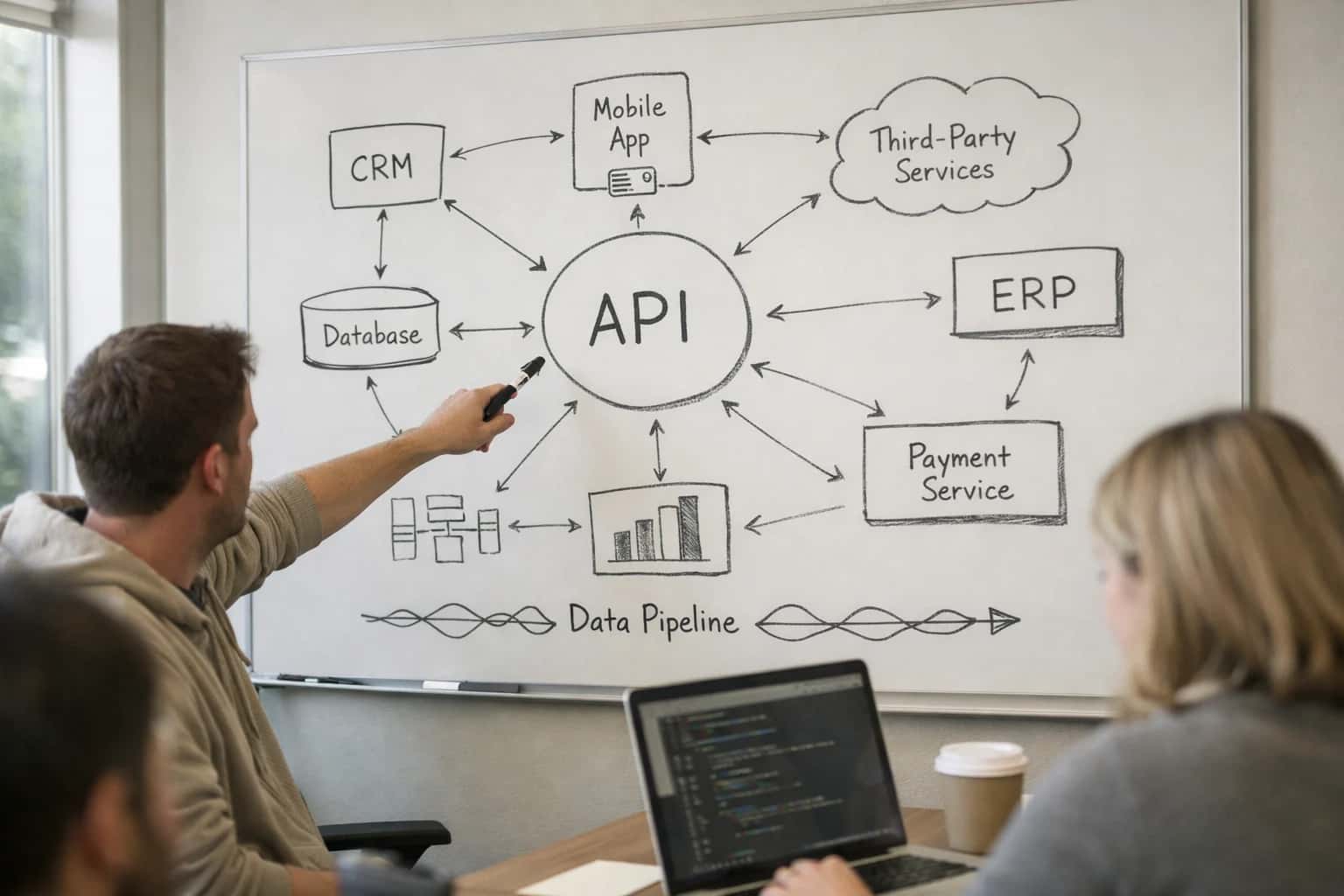
AUTOMATED COMPLIANCE & INCLUSIVE DESIGN
Where AI Fits into Accessibility for Corporate Learning
Integrating AI into corporate learning platforms to automate accessibility workflows, ensuring compliance and inclusive learning experiences at scale.
The implementation typically involves a middleware service that listens for LMS events, calls specialized AI services (e.g., vision models for image description, speech-to-text for captions, LLMs for text simplification), and posts the results back via the LMS REST API to update asset metadata or create sidecar files (like VTT for captions). For language simplification, the AI can analyze course text, suggest plain-language alternatives for complex jargon, and even generate multiple reading-level versions of the same content, which can be tagged and served based on learner profiles. This directly impacts time-to-compliance and learner engagement, reducing the manual effort for L&D teams from days to hours and making materials usable for a broader audience immediately.
Rollout requires a phased governance approach. Start with a pilot content library or a specific high-risk course category. Implement human-in-the-loop review steps initially, where AI-generated accessibility outputs are queued for administrator approval within the LMS before publication. Audit logs should track which assets were processed, by which model, and when, to maintain a clear record for compliance audits. Crucially, this integration isn't about replacing human judgment but augmenting capacity—freeing up instructional designers to focus on pedagogical quality while AI handles the repetitive, technical aspects of accessibility compliance. For a deeper look at automating content operations, see our guide on AI-Enhanced Training Operations for Corporate LMS.
AI FOR ACCESSIBILITY
Integration Points in Major Corporate LMS Platforms
Automating Alt-Text and Caption Generation
The core integration surface for accessibility is the LMS's content management system (CMS) or asset library where images, videos, and documents are stored. AI services can be connected via API webhooks triggered on new uploads or during batch remediation projects.
Key Integration Points:
- Asset Upload Webhooks: Listen for
asset.createdorfile.uploadedevents from Docebo, Cornerstone, or Absorb LMS. - Metadata API: Use the platform's metadata API (e.g.,
PATCH /api/v1/assets/{id}) to write generated alt-text, transcripts, and language complexity scores back to the asset record. - Batch Processing Endpoints: For legacy content, leverage bulk asset retrieval endpoints to process thousands of files in a scheduled job, updating accessibility metadata in batches to avoid rate limits.
Implementation Flow:
- Webhook payload containing asset ID and download URL is sent to your AI processing service.
- Service calls vision or speech-to-text APIs (e.g., Azure Computer Vision, OpenAI Whisper).
- Generated descriptions and transcripts are posted back to the LMS asset metadata.
- Updated metadata powers search, screen readers, and learner filtering.
AUTOMATED COMPLIANCE & INCLUSIVE DESIGN
High-Value AI Accessibility Use Cases
Integrate AI directly into your corporate LMS to automate WCAG and Section 508 compliance workflows, transform static content into accessible learning experiences, and reduce the manual burden on instructional design and operations teams.
01
Automated Alt-Text for Learning Images
Use vision-language models via LMS APIs to analyze uploaded images, diagrams, and infographics, generating accurate, descriptive alt-text. Workflow: Image upload triggers a webhook to an AI service, which returns alt-text to populate the asset's metadata field. Value: Ensures visual content is accessible to screen reader users without manual description work from course authors.
Batch -> Real-time
Description workflow
02
AI-Generated Video Captions & Transcripts
Integrate speech-to-text and LLM services to automatically caption training videos and produce searchable transcripts. Workflow: Connect AI transcription APIs to the LMS's media hosting module (e.g., Docebo Shape, Cornerstone Studio). Captions are embedded, and transcripts are stored as a searchable asset. Value: Drastically reduces the cost and time of manual captioning while improving content discoverability and comprehension.
Hours -> Minutes
Caption generation
03
Content Simplification & Readability Scoring
Deploy LLMs to analyze and simplify complex language in training materials, policies, and instructions. Integration: Use LMS content API endpoints to send text blocks for processing; receive simplified versions and readability scores. Value: Makes learning materials more accessible for non-native speakers and those with cognitive disabilities, supporting broader comprehension.
1 sprint
Initial integration
04
Dynamic Navigation & Interface Personalization
Build AI agents that learn individual user interaction patterns (e.g., preferred input methods, navigation speed) and dynamically adjust the LMS interface. Pattern: Integrate with front-end frameworks via JavaScript widgets and user activity APIs to personalize UI elements, font sizes, and contrast settings. Value: Creates a more inclusive and efficient learning environment tailored to individual needs and abilities.
Same day
Pilot deployment
05
Automated Accessibility Audit Reports
Orchestrate AI agents to routinely scan courses, pages, and assets within the LMS, generating compliance reports against WCAG criteria. Workflow: Scheduled agents use LMS APIs to fetch content, run automated checks (color contrast, heading structure, etc.), and post findings to a dashboard or ticketing system like Jira. Value: Shifts accessibility compliance from a reactive, manual audit to a proactive, automated governance process.
06
Conversational Support for Accessibility Tools
Implement a RAG-based copilot trained on your organization's accessibility guidelines and LMS help documentation. Architecture: The agent uses the LMS's search API and a vector store of policy documents to answer learner and admin questions in real-time about using built-in accessibility features. Value: Reduces support tickets and empowers users to leverage available tools independently. Learn more about RAG for Corporate Learning Management Platforms.
IMPLEMENTATION PATTERNS
Example Accessibility Automation Workflows
These workflows demonstrate how to connect AI models to your LMS's content management and delivery systems to automate accessibility tasks. Each pattern uses webhooks, APIs, and batch processing to integrate with platforms like Docebo, Cornerstone, Absorb, and TalentLMS.
Trigger: A new image file (.jpg, .png, .gif) is uploaded to an LMS course module or asset library.
Workflow:
- LMS webhook fires a
content.createdorasset.uploadedevent to your integration middleware. - Middleware validates the file is an image, extracts the temporary URL, and fetches the binary data.
- Image is sent to a vision model (e.g., GPT-4V, Claude 3) via API with a system prompt:
"Describe this image concisely for a screen reader user. Focus on key informational elements, text, and context relevant to a corporate learning environment. Output plain text only." - Generated alt-text is validated for length and safety (no hallucinations).
- Integration calls the LMS's metadata API (e.g.,
PATCH /api/v1/courses/{id}/assets/{assetId}) to update thealtordescriptionfield. - Audit log entry is created in your middleware, recording the asset ID, timestamp, and generated text.
Human Review Point: A governance dashboard flags images where the AI's confidence score is low or where generated text exceeds a character limit, queuing them for manual review by a learning designer.
BUILDING ACCESSIBLE LEARNING AT SCALE
Implementation Architecture & Data Flow
A technical blueprint for automating accessibility workflows within your corporate LMS using AI agents and APIs.
The integration connects AI services to your LMS's content management and delivery layers. For platforms like Docebo, Cornerstone, or Absorb LMS, this typically involves:
- Asset Ingestion Webhooks: Triggering an AI processing pipeline when new images, videos, or documents are uploaded to the LMS library.
- REST API Calls: Using the LMS API (e.g.,
POST /api/v1/courses/{id}/assets) to write generated alt-text, captions, or simplified summaries back as metadata. - Event-Driven Queues: Managing asynchronous processing for large video files or bulk content migrations via a message queue (e.g., RabbitMQ, AWS SQS) to avoid UI timeouts.
A production data flow follows three core steps:
- Extract & Dispatch: An LMS webhook sends asset details (URL, MIME type, course ID) to an integration middleware. The middleware validates the payload and places a job in a processing queue.
- AI Processing & Enrichment: A dedicated AI agent picks up the job, calls the appropriate model service (e.g., OpenAI's Vision API for image description, Whisper for transcription, GPT-4 for text simplification), and applies business rules for quality and compliance.
- Writeback & Audit: The enriched metadata is posted back to the LMS via its API. All actions are logged to an audit trail, linking the source asset, the AI model used, the generated content, and the user who initiated the upload for governance review.
Rollout should be phased, starting with a pilot course library. Governance is critical: implement a human-in-the-loop review step for initial batches to validate AI output quality. Use the LMS's built-in versioning to stage updated assets before publishing. This architecture reduces manual remediation from hours per course to minutes, ensures consistent WCAG compliance, and makes learning content discoverable for all employees from day one.
ACCESSIBILITY WORKFLOWS
Code & Payload Examples
Automating Image Descriptions
Integrate an AI service to analyze uploaded images and generate descriptive alt-text, storing it in the LMS asset metadata. This typically involves a webhook from the LMS triggered on asset upload, which posts the image URL to a vision model API (e.g., GPT-4V, Google Vertex AI). The returned description is then written back via the LMS's asset management API.
Example Webhook Payload to AI Service:
json{ "lms_event": "asset.created", "asset_id": "course_123_image_456", "asset_type": "image", "url": "https://cdn.lms.com/uploads/course123/image456.png", "course_id": "course_123", "callback_url": "https://your-service.com/lms/callback" }
The AI service processes the image and returns a structured description, which your integration layer posts back to the LMS to update the asset's alt_text field.
ACCESSIBILITY WORKFLOW AUTOMATION
Realistic Time Savings & Operational Impact
This table illustrates the operational impact of integrating AI to automate accessibility tasks within a corporate LMS, comparing manual processes to AI-assisted workflows. It focuses on realistic time savings and quality improvements for L&D and compliance teams.
| Accessibility Task | Manual Process | AI-Assisted Process | Implementation Notes |
|---|---|---|---|
Generate Alt-Text for Images | Hours per course (copywriter) | Minutes per course (batch API) | Human QA review recommended for final approval |
Caption & Subtitle Video Content | Days for vendor turnaround | Same-day draft generation | AI provides time-coded .srt file; editor reviews for accuracy |
Simplify Complex Course Language | Manual review by instructional designer | AI-powered readability scoring & suggestions | Designer approves or edits AI-suggested simplifications |
Audit Course for WCAG Compliance | Weeks for manual sampling & checklist | Automated scan with prioritized issue report | AI flags probable violations; human validates and plans remediation |
Create Audio Descriptions for Key Visuals | Specialist contractor required | AI-generated descriptive narration drafts | Significant cost/time reduction; subject matter expert reviews for technical accuracy |
Update Legacy Content for Accessibility | Project-based, high-cost resourcing | Systematic, AI-prioritized backlog triage | AI identifies highest-impact content (by usage/compliance risk) for update sequencing |
Respond to Learner Accessibility Requests | Manual ticket routing & research | Triage & initial resource suggestion by support agent | AI agent surfaces relevant LMS policies & alternative formats; escalates complex cases |
ARCHITECTING FOR SCALE AND COMPLIANCE
Governance, Security, and Phased Rollout
A responsible AI integration for accessibility requires a secure, governed approach that aligns with enterprise IT policies and learning compliance mandates.
Implementation begins by mapping the data flow and access model. AI services for alt-text and captioning typically operate as a secure middleware layer, calling dedicated APIs (e.g., Azure AI Vision, OpenAI Whisper) to process assets. The integration architecture should ensure that learning content (images, videos, documents) is streamed from the LMS's secure asset storage (like an S3 bucket or the platform's CDN) to the AI service without persisting raw files in third-party systems. All processed metadata—generated alt-text, captions, simplified language versions—is written back to the corresponding LMS course or asset object via its REST API, maintaining a complete audit trail of modifications within the primary system of record.
A human-in-the-loop approval workflow is critical for quality and compliance, especially in regulated industries. For example, before AI-generated alt-text for a complex technical diagram is published in Cornerstone, the system can route it to a designated instructional designer or subject matter expert for review via a simple task in the LMS or a connected workflow platform. This governance step ensures accuracy before learners encounter the content. Similarly, for video captioning, the initial AI-generated transcript can be placed into a review queue within Docebo's content management interface, allowing for corrections before it becomes the official track.
A phased rollout mitigates risk and demonstrates value. Phase 1 often targets a single content type—such as all new uploaded images in the 'Safety Compliance' course catalog within Absorb LMS—applying alt-text generation in a pilot group. Phase 2 expands to legacy video libraries, using batch processing during off-peak hours to generate and attach caption files. Phase 3 introduces language simplification for dense policy documents, targeting specific learner segments (e.g., new hires). Each phase includes monitoring for processing accuracy, system performance, and user feedback, with rollback procedures defined. This controlled approach allows L&D and IT teams to validate the integration's impact on platform performance, support ticket reduction, and, ultimately, learner engagement before scaling enterprise-wide.
Enabling Efficiency, Speed & Accuracy
Intelligent Analysis, Decision & Execution
We build AI systems for teams that need search across company data, workflow automation across tools, or AI features inside products and internal software.
Talk to Us
Search across company data
Give teams answers from docs, tickets, runbooks, and product data with sources and permissions.
Useful when people spend too long searching or get different answers from different systems.
Enterprise searchRAGPermissions
Read more
Automate internal workflows
Use AI to route work, draft outputs, trigger actions, and keep approvals and logs in place.
Useful when repetitive work moves across multiple tools and teams.
AI agentsWorkflow automationGovernance
Read more
Add AI to products and internal tools
Build assistants, guided actions, or decision support into the software your team or customers already use.
Useful when AI needs to be part of the product, not a separate tool.
AI integrationDecision supportModel routing
Read moreACCESSIBILITY IMPLEMENTATION
Frequently Asked Questions (Technical & Commercial)
Practical questions for technical leaders and L&D administrators planning AI-powered accessibility integrations for Docebo, Cornerstone, Absorb LMS, or TalentLMS.
The standard pattern is an asynchronous, event-driven architecture to avoid impacting learner experience.
- Trigger: Configure LMS webhooks (or scheduled exports) to fire when new content (images, videos, documents) is uploaded to a specific catalog or course.
- Context/Data Pulled: The webhook payload, containing the new asset's URL and metadata, is sent to a secure middleware queue (e.g., AWS SQS, Google Pub/Sub).
- Model Action: A processing service retrieves the asset, calls the appropriate AI service (e.g., Azure Computer Vision for alt-text, OpenAI Whisper for captions, a fine-tuned LLM for language simplification), and stores the generated accessibility metadata in a separate database.
- System Update: The service then uses the LMS's REST API (e.g.,
PATCH /api/v2/assets/{id}) to write the generated alt-text or transcript link back to the asset's metadata fields. For language simplification, it may create a new, simplified version of the document as a separate asset. - Key Considerations:
- API Rate Limits: Batch processing or queue prioritization is required to respect LMS API limits.
- Security: All calls must use service accounts with least-privilege permissions (e.g.,
asset:writeonly). Content must never be sent to unapproved or public AI endpoints. - Fallback: Implement a dead-letter queue for failed processing and alerts for manual review.

About the author
Prasad Kumkar
CEO & MD, Inference Systems
Prasad Kumkar is the CEO & MD of Inference Systems and writes about AI systems architecture, LLM infrastructure, model serving, evaluation, and production deployment. Over 5+ years, he has worked across computer vision models, L5 autonomous vehicle systems, and LLM research, with a focus on taking complex AI ideas into real-world engineering systems.
His work and writing cover AI systems, large language models, AI agents, multimodal systems, autonomous systems, inference optimization, RAG, evaluation, and production AI engineering.
LinkedIn
Limited slotsGet a Free AI Consultation
Partnered with leading AI, data, and software stack.





How We Work
Custom AI workflows for your Business
One-fit-all AI don't work for modern businesses. At Inferensys, we aim to understand your business & custom requirements; which we use to define most efficient agentic workflows, the data, and the tools for your business.
01
Review the use case
We understand the task, the users, and where AI can actually help.
Read more02
Pick the right approach
We define what needs search, automation, or product integration.
Read more03
Build the first useful version
We implement the part that proves the value first.
Read more04
Improve from there
We add the checks and visibility needed to keep it useful.
Read moreThe first call is a practical review of your use case and the right next step.
Talk to Us