AI integration for technical training focuses on three core surfaces within platforms like Docebo, Cornerstone, and Absorb LMS: the assessment engine, the content catalog, and the external system APIs. Instead of generic learning paths, AI models analyze code submissions in a sandbox, parse cloud console screenshots, or evaluate security lab logs to infer a learner's actual proficiency. This data populates custom user fields or a separate skills inventory, moving beyond self-reported competency. The integration typically uses the LMS's REST API and webhook ecosystem to trigger assessments after course completion, update skill profiles, and feed recommendations back into the learner's dashboard.

Integration
AI for Technical and IT Skills Training
A practical integration guide for IT L&D leaders on using AI to automate technical skills assessment, recommend hands-on labs, and connect LMS progress with certification platforms like AWS, Microsoft, and Cisco.
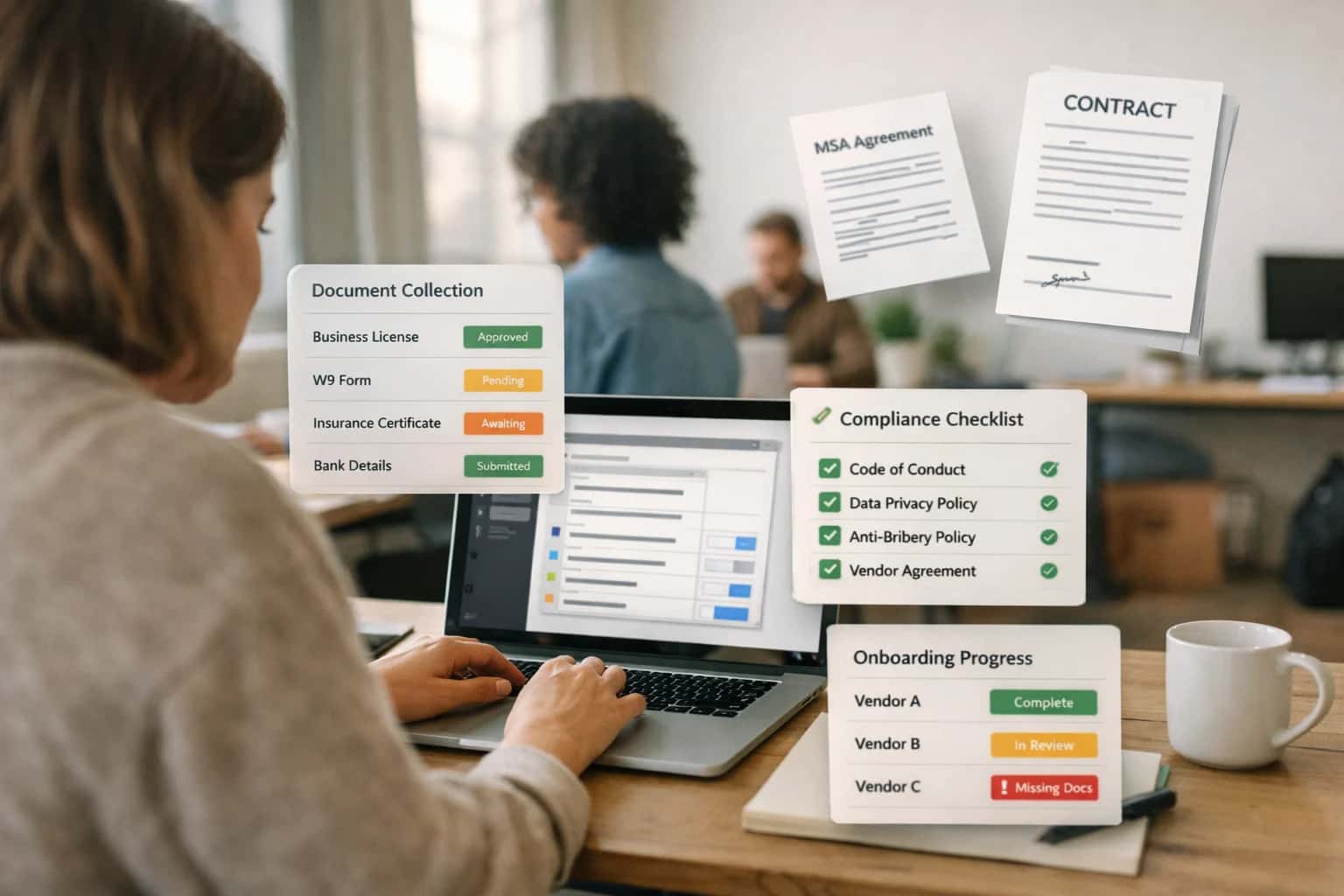
ARCHITECTURE AND IMPLEMENTATION
Where AI Fits in Technical Skills Development
A technical blueprint for integrating AI into corporate LMS platforms to automate skills assessment, personalize hands-on training, and connect learning progress with certification systems.
For implementation, a common pattern is a middleware service that orchestrates between the LMS, AI model endpoints (like OpenAI for text analysis or specialized coding models), and hands-on lab platforms (e.g., AWS Skill Builder, A Cloud Guru). When a learner completes a foundational cloud course, the service can call an AI agent to generate a personalized lab recommendation based on their assessed gaps, then use the LMS's enrollment API to automatically add the lab to their plan. For certification tracking, the service syncs completion data via the LMS's reporting API to platforms like Credly or internal HRIS, closing the loop between learning activity and verified credentialing.
Rollout requires careful governance. Start with a pilot for a single, high-value technical domain (e.g., cloud security). Implement RBAC in your middleware to control which AI-generated recommendations are auto-enrolled versus suggested. Build an audit trail logging all AI inferences and actions taken on the LMS for explainability. Use the LMS's native compliance tracking features to ensure AI-assisted assignments for regulated skills (like SOC2 training) still produce immutable completion records. The goal is not to replace the LMS but to make it a more intelligent orchestrator, reducing the manual effort for L&D managers from hours of manual skills mapping to minutes of AI-curated, evidence-based development plans.
AI FOR TECHNICAL AND IT SKILLS TRAINING
Key Integration Surfaces in Your LMS
Connecting to the Skills Data Model
This is the core integration surface for technical training. Your LMS stores user profiles, course enrollments, and completion records. An AI integration connects here to infer and map technical skills (e.g., Python, AWS Security, Terraform) from:
- Course metadata and objectives from the catalog.
- Assessment results from quizzes, labs, and practical exams.
- External certification data via API from platforms like Credly, AWS Training, or Microsoft Learn.
The AI model builds a live skills inventory, identifying gaps against target role profiles (e.g., Cloud Engineer L2). This powers dynamic learning path generation and provides analytics for IT L&D managers on organizational skill health. Implementation typically uses the LMS's REST API to read user/activity data and write back inferred skill tags or gap scores.
AI INTEGRATION PATTERNS
High-Value Use Cases for IT L&D
For IT L&D managers, AI integration transforms static course catalogs into dynamic, skills-based development engines. These patterns connect your LMS (Docebo, Cornerstone, Absorb, TalentLMS) with technical assessment tools, hands-on labs, and certification platforms to automate proficiency tracking and personalized upskilling.
01
Automated Skills Gap Analysis & Path Generation
AI analyzes job architecture data, performance reviews, and project participation from your HRIS and project tools to infer current proficiencies. It then maps these against target role requirements in the LMS, automatically generating and assigning personalized learning paths that blend internal courses, recommended external labs (like A Cloud Guru or Pluralsight), and certification tracks.
1 sprint
Path creation time
02
Code Assessment & Hands-On Lab Integration
Integrate AI-powered coding assessment platforms (like CoderPad or HackerRank) with the LMS via webhooks. Upon course completion in cloud security or Python, the system automatically triggers a graded hands-on lab or coding challenge. Results are written back to the learner's LMS profile, creating a verified skills record that ties theoretical knowledge to practical application.
Batch -> Real-time
Skill verification
03
Certification Tracking & Renewal Workflows
AI monitors completion data for courses tied to certifications (AWS, Cisco, CISSP). It connects to certification body APIs or parses email receipts to track expiration dates and automatically queue renewal training in the LMS. Workflows notify learners and managers, assign refresher courses, and update compliance dashboards, preventing lapses in critical credentials.
Same day
Renewal trigger
04
Context-Aware Learning in the Flow of Work
Deploy a browser extension or Teams/Slack copilot that analyzes activity in developer tools (GitHub, Jira, AWS Console) to surface micro-learning. If a developer is working on a new CI/CD pipeline, the agent recommends a 5-minute LMS video on GitHub Actions best practices. Completion is logged back to the central LMS, linking learning directly to job tasks.
Just-in-time
Recommendation timing
05
Simulation-Based Assessment for IT Ops
For incident response or network training, integrate AI to power dynamic simulations. Using a RAG architecture on past incident reports and runbooks, the AI generates a realistic scenario in a sandboxed environment. The learner's actions are evaluated, and a personalized debrief with links to specific LMS modules for improvement is generated, closing the loop between training and performance.
Hours -> Minutes
Scenario generation
06
Technical Content Intelligence & Curation
AI continuously scans and classifies internal documentation (Confluence, SharePoint) and approved external sources (vendor docs, Stack Overflow threads). It tags this content with relevant skills metadata and injects it as 'recommended resources' within related LMS courses. This keeps course materials current without manual L&D admin overhead, creating a living technical knowledge base.
Continuous
Content refresh
TECHNICAL AND IT SKILLS TRAINING
Example AI-Powered Workflows
These workflows demonstrate how AI can be integrated into your corporate LMS to automate assessment, personalize learning, and connect technical skill development with operational systems like certification trackers and IT service desks.
Trigger: A new hire is provisioned in the LMS via HRIS sync, tagged with a role like "Cloud Engineer" or "Security Analyst."
Workflow:
- An AI agent calls the LMS API to fetch the user's profile and any pre-existing skill attestations.
- It retrieves the target skill framework (e.g., AWS Well-Architected pillars, NIST CSF) mapped to the role from a connected skills taxonomy platform.
- The agent uses an LLM to analyze the user's resume/CV (ingested during hiring), past project data from a PPM tool, and recent certification history.
- It generates a skills gap analysis, scoring proficiency (e.g., Beginner, Intermediate, Expert) across 15-20 technical competencies.
- The agent queries the LMS catalog and external content APIs (e.g., A Cloud Guru, Pluralsight) to find matching courses, labs, and documentation.
- A personalized 90-day learning plan is created as a dynamic curriculum in the LMS, with sequenced modules and hands-on lab environments provisioned via Terraform.
- The plan is assigned to the user, and a summary is posted to the manager via Microsoft Teams.
Human Review Point: The manager receives the generated plan for final approval/modification before it's locked in.
ARCHITECTING AI-DRIVEN TECHNICAL SKILLS DEVELOPMENT
Implementation Architecture & Data Flow
A technical blueprint for integrating AI into your LMS to automate skills assessment, recommend hands-on labs, and sync progress with certification platforms.
The integration architecture connects your LMS (Docebo, Cornerstone, Absorb, TalentLMS) to AI models and external platforms through a central orchestration layer. This layer ingests key data objects via LMS APIs and webhooks: user profiles, course enrollment and completion records, assessment scores, and content metadata. For technical skills training, this data is enriched with inputs from Git repositories (for code), cloud console logs (for AWS/Azure/GCP), or simulation platforms to create a holistic skills profile. The orchestration layer uses this profile to call specialized AI services for proficiency scoring, gap analysis, and personalized lab recommendations, storing results in a vector database for real-time retrieval by agents and copilots within the LMS interface.
A core workflow automates the connection between learning progress and certification tracking. When a learner completes a module on, for example, AWS security fundamentals, the system can: 1) Trigger a custom, scenario-based lab in a sandbox environment via API, 2) Use an AI agent to evaluate the learner's lab output or code commit against a rubric, 3) Update the user's skills graph in the LMS, and 4) If proficiency thresholds are met, automatically enroll the learner in a partnered certification platform (like Credly or an exam scheduler) and log the attempt back to the LMS as a learning record. This creates a closed-loop system where the LMS becomes the system of record for both theoretical knowledge and applied, verifiable skill.
Governance and rollout require a phased approach. Start by instrumenting a single, high-value technical domain (e.g., cloud security or Python development). Implement RBAC controls so AI-generated skill inferences are visible to managers and learners but require manual confirmation before affecting certification eligibility. Use the LMS's audit trails to log all AI-driven actions—recommendations, assessments, and external platform calls—for compliance. A pilot should measure impact on time-to-proficiency and certification pass rates before scaling. The architecture is designed to be modular, allowing you to swap AI models or add new lab providers without disrupting the core LMS workflows, ensuring the integration evolves with your tech stack.
IMPLEMENTATION PATTERNS
Code & Payload Examples
Programmatically Infer Skills from Activity Data
Use this pattern to call an AI service that analyzes LMS activity logs, completion records, and assessment scores to infer a user's technical proficiency. The response maps to your internal skills taxonomy, enabling dynamic gap analysis.
pythonimport requests # Example: Call Inference Systems' skills inference endpoint # Payload includes anonymized user activity from the LMS skills_payload = { "user_id": "u_abc123", "activities": [ { "course_id": "cloud_fundamentals", "completion_status": "completed", "score": 92, "tags": ["AWS", "networking", "security"], "time_spent_minutes": 240 }, { "content_id": "python_lab_04", "type": "hands_on_lab", "success_status": "passed", "tags": ["Python", "APIs", "automation"] } ], "taxonomy_version": "tech_skills_v2" } response = requests.post( "https://api.inferencesystems.com/v1/skills/infer", json=skills_payload, headers={"Authorization": "Bearer YOUR_API_KEY"} ) # Response contains inferred skill levels and confidence scores inferred_skills = response.json() # { # "inferred_skills": [ # {"skill_id": "aws_cloud_practitioner", "level": "intermediate", "confidence": 0.87}, # {"skill_id": "python_scripting", "level": "beginner", "confidence": 0.72} # ], # "gap_analysis": ["container_orchestration", "infrastructure_as_code"] # }
This data can be written back to the LMS user profile or a separate skills inventory to power personalized learning recommendations.
AI FOR TECHNICAL SKILLS DEVELOPMENT
Realistic Time Savings & Operational Impact
How AI integration transforms the workflow for IT L&D managers, technical trainers, and learners, moving from manual, reactive processes to automated, proactive skill development.
| Process / Metric | Before AI Integration | After AI Integration | Key Notes & Impact |
|---|---|---|---|
Skills Gap Analysis for a Role | Manual survey + manager review (2-3 weeks) | Automated analysis of job codes, performance data, and LMS history (1-2 days) | Enables rapid, data-driven curriculum updates for roles like Cloud Engineer or Security Analyst. |
Personalized Learning Path Creation | Generic track assignment or manual curation by an instructional designer (5-10 hours per path) | AI-generated dynamic path with lab recommendations, adjusted in real-time (1 hour initial setup) | Paths adapt based on assessment results and lab completion, improving relevance and completion rates. |
Hands-On Lab & Sandbox Recommendation | Static list of labs or manual search by learner | Context-aware suggestions based on current module and common knowledge gaps | Reduces learner friction and increases practical application of concepts like coding or infrastructure deployment. |
Proficiency Assessment & Quiz Generation | Manual test creation from SME or vendor bank (3-5 hours per assessment) | AI-generated scenario-based questions from training content (30 minutes for review) | Ensures assessments stay current with rapidly evolving tech stacks (e.g., new Kubernetes version). |
Certification Tracking & Renewal Alerts | Manual spreadsheet or calendar management, prone to missed deadlines | Automated sync with platforms like Credly; proactive nudges to learner and manager | Mitigates compliance risk for mandatory certs (e.g., CISSP, AWS) and optimizes training spend. |
Technical Support Triage for Learners | Email/ticket to L&D helpdesk, 24-48 hour response for complex queries | AI Copilot provides instant, context-aware answers using RAG on course docs and FAQs | Frees L&D staff for high-value tasks; provides 24/7 support for global or shift-based IT teams. |
Reporting on Program ROI & Skill Attainment | Manual data pulls from LMS, spreadsheets, and survey tools (1-2 weeks quarterly) | Automated dashboards with predictive analytics on skill lift and projected impact | Shifts L&D reporting from activity-based (completions) to outcome-based (proficiency gains). |
IMPLEMENTING AI FOR TECHNICAL SKILLS TRAINING
Governance, Security & Phased Rollout
A production-ready integration for technical skills training requires careful planning around data security, model governance, and a phased rollout to manage risk and demonstrate value.
The integration architecture typically connects your LMS (Docebo, Cornerstone, Absorb, TalentLMS) via its REST API and webhooks to a secure inference layer. This layer houses the AI models for skills assessment and lab recommendations, and it should be deployed in your preferred cloud environment (AWS, Azure, GCP) or as a private instance. Key data flows include:
- User profiles and completion data from the LMS for skills inference.
- Assessment responses and code snippets for proficiency evaluation.
- Certification platform statuses (e.g., from Credly, AWS Training) via API for progress syncing. All data in transit must be encrypted, and PII should be pseudonymized before model processing. Access to the inference APIs should be governed by role-based access control (RBAC) aligned with your IT admin and L&D manager roles.
A phased rollout mitigates risk and builds stakeholder confidence:
- Phase 1: Silent Pilot. Enable AI-driven skills inference in the background for a pilot group (e.g., new cloud engineers). The system analyzes their LMS activity and existing certifications to generate a private skills profile, but no recommendations are surfaced to users. L&D admins review the outputs in a dashboard to validate accuracy.
- Phase 2: Guided Recommendations. For a broader technical cohort, activate non-disruptive features. The system uses the skills profile to recommend specific hands-on labs (e.g., from A Cloud Guru, Coursera labs) within the LMS learning plan. All recommendations include a human-in-the-loop 'override' option for administrators.
- Phase 3: Proactive Agent. Full deployment where the AI agent acts as a skills coach. It automatically suggests lab work based on project assignments, sends nudges for expiring certifications, and generates readiness reports for managers. All agent actions are logged to an audit trail detailing the source data, model decision, and any associated LMS transaction (e.g., course enrollment).
Governance is critical for technical training, where recommendations must be accurate and secure. Implement a prompt management system to version and control the instructions used for skills evaluation and lab matching. Establish a regular evaluation cycle where a sample of AI-generated skill assessments is reviewed by subject matter experts against actual performance data to check for model drift. For code analysis features, ensure a sandboxed execution environment for any trainee-submitted code. Finally, integrate the system's activity logs with your SIEM (e.g., Splunk, Sentinel) for centralized security monitoring. This structured approach ensures the AI augments your technical L&D strategy reliably and at scale.
Enabling Efficiency, Speed & Accuracy
Intelligent Analysis, Decision & Execution
We build AI systems for teams that need search across company data, workflow automation across tools, or AI features inside products and internal software.
Talk to Us
Search across company data
Give teams answers from docs, tickets, runbooks, and product data with sources and permissions.
Useful when people spend too long searching or get different answers from different systems.
Enterprise searchRAGPermissions
Read more
Automate internal workflows
Use AI to route work, draft outputs, trigger actions, and keep approvals and logs in place.
Useful when repetitive work moves across multiple tools and teams.
AI agentsWorkflow automationGovernance
Read more
Add AI to products and internal tools
Build assistants, guided actions, or decision support into the software your team or customers already use.
Useful when AI needs to be part of the product, not a separate tool.
AI integrationDecision supportModel routing
Read moreIMPLEMENTATION & OPERATIONS
Frequently Asked Questions
Common technical and strategic questions for IT L&D leaders planning AI integrations to enhance technical skills training within their corporate LMS.
The standard pattern uses the LMS's REST API and event webhooks to create a secure, asynchronous integration.
- Trigger & Data Flow: When a learner completes a coding lab module or cloud simulation in the LMS, a webhook sends a secure payload (user ID, activity ID, completion metadata) to your integration middleware.
- Context Enrichment: The middleware calls the LMS API to fetch the learner's historical performance data and the specific lab artifacts (e.g., code snippets, console logs, configuration files).
- AI Processing: These artifacts are sent to an AI model endpoint (e.g., a fine-tuned code analysis model or a cloud security policy checker) via a secure, authenticated API call. Never send raw PII; use internal user IDs.
- Result & Update: The AI returns a structured assessment (proficiency score, specific gaps, suggested resources). The middleware posts this back to the LMS via the API, typically writing to a custom user field or generating a feedback activity.
Key Security Notes:
- Use API keys with least-privilege scopes (read/write to specific objects only).
- Process data in your own secure cloud environment; avoid sending sensitive data directly to third-party AI services unless under strict DPA.
- All data flows should be logged for auditability.

About the author
Prasad Kumkar
CEO & MD, Inference Systems
Prasad Kumkar is the CEO & MD of Inference Systems and writes about AI systems architecture, LLM infrastructure, model serving, evaluation, and production deployment. Over 5+ years, he has worked across computer vision models, L5 autonomous vehicle systems, and LLM research, with a focus on taking complex AI ideas into real-world engineering systems.
His work and writing cover AI systems, large language models, AI agents, multimodal systems, autonomous systems, inference optimization, RAG, evaluation, and production AI engineering.
LinkedIn
Limited slotsGet a Free AI Consultation
Partnered with leading AI, data, and software stack.





How We Work
Custom AI workflows for your Business
One-fit-all AI don't work for modern businesses. At Inferensys, we aim to understand your business & custom requirements; which we use to define most efficient agentic workflows, the data, and the tools for your business.
01
Review the use case
We understand the task, the users, and where AI can actually help.
Read more02
Pick the right approach
We define what needs search, automation, or product integration.
Read more03
Build the first useful version
We implement the part that proves the value first.
Read more04
Improve from there
We add the checks and visibility needed to keep it useful.
Read moreThe first call is a practical review of your use case and the right next step.
Talk to Us