Traditional LMS gamification modules in Docebo, Cornerstone, or Absorb LMS operate on static rules: complete a course, earn 100 points; finish a quiz, get a badge. This one-size-fits-all approach often fails to sustain engagement. AI-enhanced gamification integrates with the LMS's user activity API, completion events, and assessment results to create a dynamic motivation engine. Instead of a fixed reward, the system analyzes individual learner data—such as time spent, content difficulty, historical engagement drops, and peer comparison—to personalize challenges and rewards in real-time.

Integration
AI-Enhanced Gamification for Learner Engagement
Move beyond static points and badges. A technical blueprint for integrating AI with your corporate LMS to create adaptive, personalized gamification that boosts learner motivation, completion rates, and skill development.
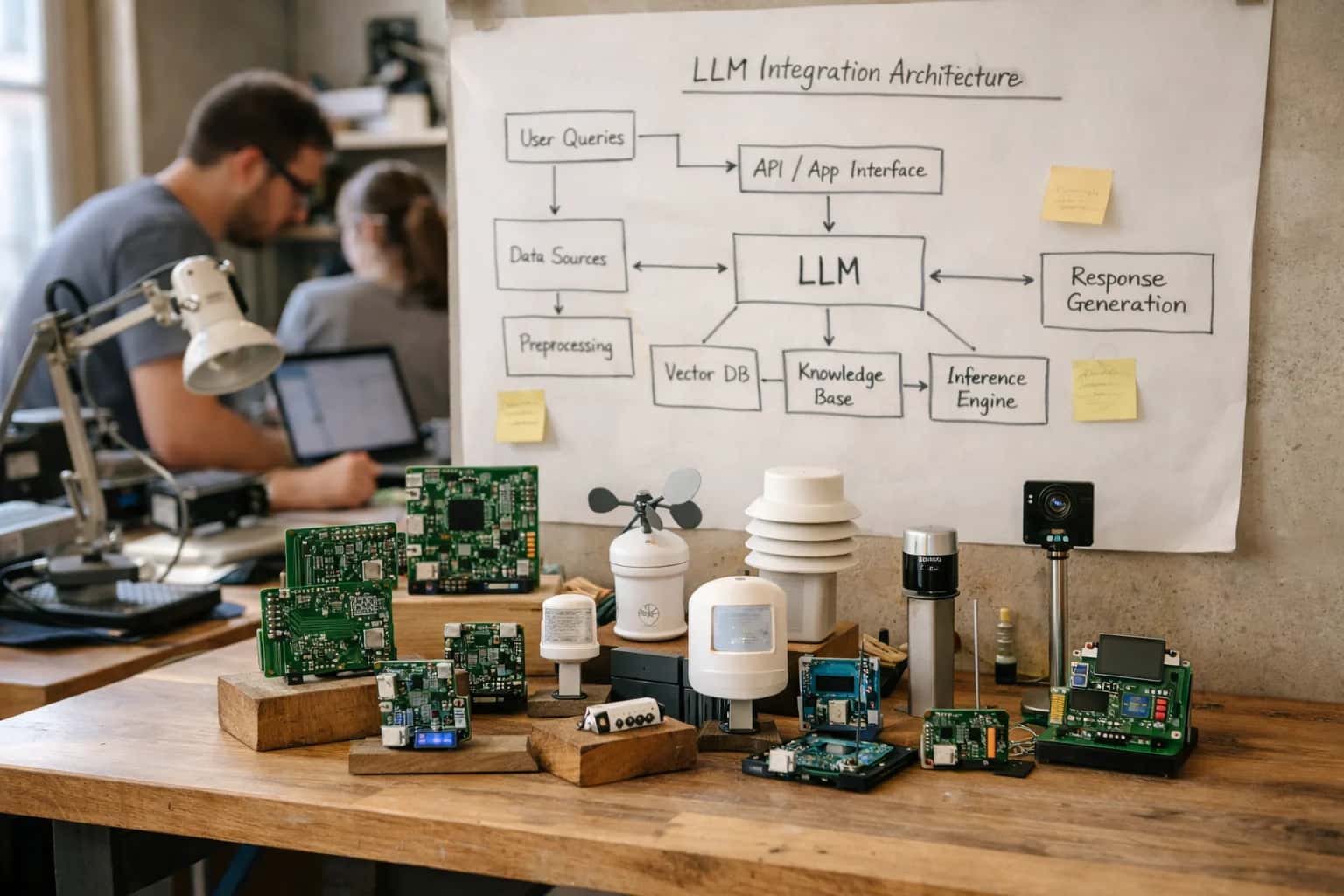
ARCHITECTING DYNAMIC GAMIFICATION
From Static Rules to Adaptive Motivation
Move beyond fixed point systems to AI-driven gamification that adapts to individual learner motivation, engagement patterns, and skill progression.
Implementation involves deploying a lightweight microservice that subscribes to LMS webhooks for key events (user.completed, assessment.submitted, content.accessed). This service uses a decisioning model to calculate a personalized "motivation score" and triggers API calls back to the LMS's gamification engine to adjust parameters. For example:
- A learner struggling with compliance modules might receive encouragement badges for persistence rather than just completion.
- A high-performer might be offered bonus "expert" points for mentoring peers, triggered via the LMS's social learning API.
- Leaderboards can be segmented dynamically (by skill, department, tenure) to foster relevant competition, using the LMS's group and role data.
Rollout requires careful governance. Start with a pilot cohort, using the LMS's reporting module to A/B test static vs. adaptive gamification on metrics like course completion rate and return visits. Configure the AI service with ethical guardrails to avoid demotivating loops—for instance, capping negative adjustments. Audit logs should track all automated reward modifications, linking them to the underlying learner activity data for transparency. This approach transforms gamification from a generic feature into a core component of the personalized learning journey, driving sustained engagement by meeting learners where they are.
ARCHITECTURE BLUEPRINT
Integration Points in Your LMS Gamification Stack
Core Gamification Engine & APIs
The gamification engine is the central system that calculates points, awards badges, and updates leaderboards. Integration here is foundational.
Key Integration Surfaces:
- Points API: Trigger point awards by sending structured payloads from external AI systems. For example, an AI that analyzes forum posts for quality could call
POST /api/v1/users/{userId}/pointswith areason_codeof"quality_contribution". - Badges & Achievements API: Dynamically grant badges based on AI-detected milestones. An AI skills inference model could award a
"Python_Proficiency"badge upon detecting sufficient completion of relevant coding exercises. - Leaderboard Services: Inject AI-calculated composite scores or create custom leaderboards (e.g., "Weekly Most Improved") based on personalized progress metrics, not just raw activity.
Implementation Pattern: Build a middleware service that listens to LMS webhooks (completion, quiz score) and AI model outputs, then orchestrates calls to the gamification engine's REST API.
FOR CORPORATE LMS PLATFORMS
High-Value AI Gamification Use Cases
Move beyond static points and badges. Use AI to analyze individual learner behavior, motivation, and progress to dynamically adjust challenges, rewards, and social elements, creating a truly adaptive and engaging gamification layer within your LMS.
01
Dynamic Challenge & Badge Personalization
AI analyzes a learner's skill gaps, past engagement, and role to generate personalized achievement paths. Instead of a generic 'Complete 5 courses' badge, the system creates challenges like 'Master 3 advanced negotiation modules' for a sales rep or 'Complete safety protocol refresher' for a plant operator, served at optimal times to boost motivation.
Static -> Adaptive
Engagement model
02
Intelligent Leaderboard Segmentation
Prevent disengagement by moving from one global leaderboard to AI-clustered cohorts. The system groups learners by similar roles, experience levels, or learning pace, fostering healthy competition within peer groups. A new hire competes with other new hires, while senior engineers are ranked on advanced skill mastery, making progress feel relevant and achievable.
1 -> Many
Competition tiers
03
Predictive Point & Reward Forecasting
Use AI to predict learner churn risk based on engagement velocity. The system can then proactively offer 'boost' rewards or adjust point multipliers for at-risk learners to re-engage them. For high performers, it can unlock exclusive challenges or preview content, using gamification mechanics to drive completion and retention strategically.
Reactive -> Proactive
Retention strategy
04
AI-Generated Quest Narratives
Transform compliance or mandatory training into engaging storylines.** Integrate a large language model (LLM) with the LMS's course metadata and user profile. For a cybersecurity module, the AI generates a personalized 'mission brief' casting the learner as an agent protecting company data, with narrative updates as they progress through sections, making dry content compelling.
Module -> Mission
Content framing
05
Social Learning & Peer Recognition Bots
Deploy an AI agent that monitors discussion forums and project submissions within the LMS. It identifies high-quality contributions or helpful peers and automatically awards 'kudos' points or suggests users for 'Community Champion' badges. This automates positive reinforcement at scale, encouraging collaborative learning behaviors.
Manual -> Automated
Recognition workflow
06
Gamification Tuning & A/B Testing
Continuously optimize gamification rules. AI analyzes the impact of different point schemes, badge designs, and reward frequencies on cohort completion rates and skill acquisition. It runs automated experiments (e.g., badge A vs. badge B) and provides data-backed recommendations to L&D admins on which mechanics drive the desired business outcomes.
Guesswork → Data-Driven
Program design
IMPLEMENTATION PATTERNS
Example AI-Gamification Workflows
These workflows illustrate how to connect AI models to your LMS's gamification engine, moving from static point systems to dynamic, personalized engagement that adapts to individual learner motivation and progress.
Trigger: A learner completes a foundational course module.
Context Pulled: The system queries the LMS API for the learner's historical engagement data (completion speed, assessment scores, content types preferred) and their current badge inventory.
AI Agent Action: A rules-based AI agent evaluates the learner's profile against a set of conditional logic and a lightweight ML model trained on engagement patterns. It selects from a library of available challenges (e.g., "Complete a peer review," "Score 90% on a advanced quiz," "Post in the discussion forum") that are slightly beyond their demonstrated comfort zone to promote growth.
System Update: The agent calls the LMS's Gamification API (e.g., Docebo's Rewards & Recognition API, Cornerstone's Badges endpoint) to award a "Module Master" badge and automatically issue the personalized follow-up challenge, which appears in the learner's activity feed.
Human Review Point: An L&D admin dashboard flags if a learner receives three "stretch" challenges in a row without completion, prompting a human check-in.
FROM STATIC RULES TO DYNAMIC ENGAGEMENT
Implementation Architecture: Data Flow & System Design
A practical architecture for connecting AI models to your LMS's gamification engine, transforming generic point systems into personalized, adaptive engagement loops.
The integration connects at two primary layers within platforms like Docebo, Cornerstone, or Absorb LMS: the Learner Profile/Activity API and the Gamification Engine API. The AI service acts as a middleware orchestrator, consuming a real-time feed of learner events (course starts, completions, assessment scores, forum posts, time spent) and platform-context (enrolled curricula, role, past reward history). This data is processed to generate a dynamic "engagement score" and personalized gamification directives, which are pushed back to the LMS via API calls to adjust badge criteria, point multipliers, leaderboard groupings, or unlock new challenges.
A typical workflow for a "Personalized Challenge" use case involves: 1) A learner completes a module but scores poorly on the quiz. 2) The LMS webhook sends this event to the AI orchestration layer. 3) The AI model, referencing the learner's history (e.g., they respond well to social recognition), generates a directive. 4) The system calls the LMS Gamification API to: instantly award a "Perseverance" badge for completing the module despite the low score, add a small point bonus, and post a congratulatory message to a team leaderboard visible to their cohort—turning a potential disengagement point into a positive reinforcement moment.
Rollout should be phased, starting with a single pilot cohort and non-critical reward types. Governance is critical: all AI-driven adjustments must be logged in an immutable audit trail within the LMS or a sidecar database, detailing the trigger event, input data, AI inference, and resulting action. This ensures transparency for L&D administrators and allows for fine-tuning of the AI's reward logic. The system should include a manual override console where admins can review and revert any automated gamification actions, maintaining ultimate human control over the learner experience.
IMPLEMENTATION PATTERNS
Code & Payload Examples
Trigger a Personalized Badge Award
This example shows a serverless function (e.g., AWS Lambda) that listens for a learner.completed_module webhook from your LMS. It calls an AI service to evaluate if the completion merits a special dynamic badge, then uses the LMS API to award it.
pythonimport requests import os from openai import OpenAI # 1. Receive webhook from LMS (e.g., Docebo) def lambda_handler(event, context): lms_payload = event['body'] learner_id = lms_payload['user_id'] module_id = lms_payload['module_id'] completion_time = lms_payload['completed_at'] # 2. Fetch learner's recent activity for context learner_context = get_learner_activity(learner_id) # 3. Call LLM to evaluate for a "Perseverance" badge client = OpenAI(api_key=os.environ['OPENAI_API_KEY']) response = client.chat.completions.create( model="gpt-4", messages=[ {"role": "system", "content": "Evaluate if a learner deserves a 'Perseverance' badge. Award it if they completed this module after multiple attempts or outside typical work hours, indicating extra effort."}, {"role": "user", "content": f"Learner completed module {module_id} at {completion_time}. Their recent activity: {learner_context}. Should we award the badge? Answer only YES or NO."} ] ) # 4. Conditionally award badge via LMS API if response.choices[0].message.content.strip() == "YES": award_badge_via_lms(learner_id, "badge_perseverance_2024") print(f"Awarded Perseverance badge to {learner_id}") # Helper functions to call LMS REST APIs def get_learner_activity(user_id): # Pseudocode: Fetch recent attempts, timestamps return "3 attempts, last completion at 21:30 UTC" def award_badge_via_lms(user_id, badge_code): # Pseudocode: POST to /users/{id}/badges pass
AI-ENHANCED GAMIFICATION
Realistic Operational Impact & Time Savings
How AI-driven personalization transforms static gamification into a dynamic engagement engine, reducing manual configuration and increasing learner participation.
| Gamification Workflow | Before AI (Static Rules) | After AI (Dynamic & Personalized) | Implementation Notes |
|---|---|---|---|
Badge & Reward Assignment | Manual rule creation by admins; one-size-fits-all criteria. | Automated, behavior-triggered assignment; criteria adapts to individual learner pace and style. | AI analyzes completion patterns, quiz scores, and forum activity to trigger relevant rewards. |
Leaderboard Curation | Single, global leaderboard often demotivates lower-performers. | Multiple, cohort-based leaderboards; learners compete with peers of similar skill levels. | AI clusters learners by proficiency and engagement to foster healthy competition. |
Challenge & Goal Generation | Generic, pre-set challenges for all learners in a course. | Personalized micro-challenges generated based on learner's recent activity and knowledge gaps. | Uses LMS activity data and assessment history to create just-in-time learning objectives. |
Point & Leveling Strategy | Fixed point values for activities; level thresholds are static. | Dynamic point multipliers and adaptive leveling based on learner motivation signals and difficulty. | AI adjusts the 'economy' to maintain engagement, offering bonus points for struggling learners. |
Engagement Risk Detection | Manual review of dashboards to identify disengaged learners. | Automated alerts for learners at risk of dropping out, with suggested intervention actions. | Models predict disengagement from login frequency, time-on-task, and challenge avoidance. |
Gamification Tuning & Reporting | Quarterly manual analysis to adjust rules; time-intensive report generation. | Weekly automated insights on gamification effectiveness; A/B testing of different reward strategies. | AI provides natural-language summaries of what's working and suggests rule optimizations. |
Content-to-Gameplay Linking | Manual tagging of learning objects to specific game mechanics. | Automatic suggestion of game mechanics (badges, points) for new content based on its type and learning objective. | Analyzes content metadata and historical engagement data to recommend optimal gamification hooks. |
ENSURING RESPONSIBLE AND EFFECTIVE AI-DRIVEN ENGAGEMENT
Governance, Ethics, and Phased Rollout
A practical framework for deploying AI-enhanced gamification in your LMS with appropriate controls, ethical considerations, and a low-risk rollout plan.
Integrating AI into your LMS's gamification engine—whether in Docebo, Cornerstone, Absorb LMS, or TalentLMS—requires careful governance. Start by defining the data scope: which learner activity events (module completions, quiz scores, time spent) and profile attributes (role, department, past engagement) will feed the AI model. Use the LMS's API or webhook system to send this data to a secure inference endpoint, ensuring PII is hashed or anonymized. Establish clear rules for the AI's influence: it can suggest point multipliers, badge unlocks, or challenge difficulty, but the final award logic should remain in the platform's native gamification module, maintaining a clear audit trail.
Ethical implementation is critical to avoid demotivating learners. The AI must be tuned for positive reinforcement, not punitive measures. For example, dynamically adjusting a leaderboard to highlight improvement for struggling learners, rather than just top performers, can maintain engagement. Implement a human-in-the-loop review for the first 30-60 days, where L&D administrators can approve or modify AI-suggested rewards via a simple dashboard before they are pushed to the LMS via PATCH /api/gamification/rules. This review period allows you to catch any unintended biases, such as the system disproportionately favoring certain learner segments, and refine the prompting logic.
Adopt a phased, cohort-based rollout to manage risk and measure impact. Phase 1 (Pilot): Connect the AI to a single, non-critical learning program (e.g., a soft skills library). Limit its influence to suggesting one gamification element, like personalized challenge badges. Monitor engagement metrics and gather qualitative feedback. Phase 2 (Expansion): Based on pilot data, expand to role-based cohorts (e.g., sales teams), allowing the AI to adjust point values for completing high-priority training. Phase 3 (Scale): Fully integrate AI across the LMS, enabling dynamic, multi-element personalization of the entire gamification layer. At each phase, document changes to prompts and logic in a version-controlled system, and ensure all automated actions are logged for compliance. This controlled approach allows you to realize the benefit of 'hours to minutes' in personalizing engagement while systematically de-risking the integration.
Enabling Efficiency, Speed & Accuracy
Intelligent Analysis, Decision & Execution
We build AI systems for teams that need search across company data, workflow automation across tools, or AI features inside products and internal software.
Talk to Us
Search across company data
Give teams answers from docs, tickets, runbooks, and product data with sources and permissions.
Useful when people spend too long searching or get different answers from different systems.
Enterprise searchRAGPermissions
Read more
Automate internal workflows
Use AI to route work, draft outputs, trigger actions, and keep approvals and logs in place.
Useful when repetitive work moves across multiple tools and teams.
AI agentsWorkflow automationGovernance
Read more
Add AI to products and internal tools
Build assistants, guided actions, or decision support into the software your team or customers already use.
Useful when AI needs to be part of the product, not a separate tool.
AI integrationDecision supportModel routing
Read moreIMPLEMENTATION AND OPERATIONS
Frequently Asked Questions
Practical questions for L&D teams, platform administrators, and technical architects planning to integrate AI into their gamification strategy.
AI personalizes gamification by analyzing individual learner data and dynamically adjusting challenges. Here’s a typical workflow:
-
Trigger & Data Pull: When a learner logs in or completes an activity, the system calls an AI service via API, passing context such as:
user_id,role,tenure- Recent course completions and scores
- Historical engagement with gamification (badges earned, points spent)
- Time since last login
-
Model Action: A lightweight classification or recommendation model processes this data to predict the learner's current motivation profile (e.g., "Achiever," "Socializer," "Explorer" based on Bartle's Taxonomy) and risk of disengagement.
-
System Update: The LMS receives a JSON payload back from the AI service with personalized rules:
json{ "user_id": "U12345", "personalized_rules": { "next_badge_suggestion": "Weekend Warrior", "point_multiplier_activity": "peer_review", "multiplier_value": 1.5, "leaderboard_filter": "department", "challenge_recommendation": "complete_2_microlearning_modules" } } -
Platform Application: The LMS's gamification engine uses these rules to modify the UI for that specific user, highlighting suggested badges, applying point bonuses for certain actions, and filtering leaderboards to show more relevant peers.

About the author
Prasad Kumkar
CEO & MD, Inference Systems
Prasad Kumkar is the CEO & MD of Inference Systems and writes about AI systems architecture, LLM infrastructure, model serving, evaluation, and production deployment. Over 5+ years, he has worked across computer vision models, L5 autonomous vehicle systems, and LLM research, with a focus on taking complex AI ideas into real-world engineering systems.
His work and writing cover AI systems, large language models, AI agents, multimodal systems, autonomous systems, inference optimization, RAG, evaluation, and production AI engineering.
LinkedIn
Limited slotsGet a Free AI Consultation
Partnered with leading AI, data, and software stack.





How We Work
Custom AI workflows for your Business
One-fit-all AI don't work for modern businesses. At Inferensys, we aim to understand your business & custom requirements; which we use to define most efficient agentic workflows, the data, and the tools for your business.
01
Review the use case
We understand the task, the users, and where AI can actually help.
Read more02
Pick the right approach
We define what needs search, automation, or product integration.
Read more03
Build the first useful version
We implement the part that proves the value first.
Read more04
Improve from there
We add the checks and visibility needed to keep it useful.
Read moreThe first call is a practical review of your use case and the right next step.
Talk to Us