AI integration in core banking payments targets three primary surfaces: the transaction posting engine, the payment exception queue, and the fraud screening module. For platforms like Temenos T24 Transact or Oracle FLEXCUBE, this means intercepting payment messages (e.g., ISO 8583, SWIFT MT) via API hooks or listening to event streams from the payment hub. The goal is to inject intelligence before a transaction is irrevocably posted to the general ledger, enabling real-time decisions on routing, fraud, and exception handling without disrupting the core settlement cycle.

Integration
AI Integration for Core Banking Platforms in Payments Processing
A technical blueprint for adding AI to core banking payment systems for real-time routing, automated exception handling, and intelligent fraud screening. Covers Temenos, Mambu, Oracle FLEXCUBE, and Finacle.
ARCHITECTURE AND ROLLOUT
Where AI Fits in Core Banking Payments
A practical guide to integrating AI into the payment processing engines of Temenos, Mambu, Oracle FLEXCUBE, and Finacle.
High-value implementation patterns include:
- Routing Optimization: An AI agent analyzes historical success rates, cost, and latency of correspondent banks and payment networks (e.g., Fedwire, SEPA, domestic ACH). It suggests or automatically applies the optimal route for each high-value payment, considering time-of-day and liquidity positions.
- Intelligent Exception Handling: For payments stuck in repair queues due to mismatched beneficiary details or invalid codes, an AI service parses the exception reason, cross-references past corrected transactions, and suggests fixes to operations staff, turning a manual investigation into a single-click approval.
- Context-Aware Fraud Screening: Moving beyond static rules, an AI model scores each transaction in real-time by enriching the core banking data with external context (e.g., device fingerprint, geolocation, recent behavioral patterns) to reduce false positives and catch sophisticated fraud patterns.
A production rollout requires a sidecar architecture where AI services run in parallel to the core banking platform. Payments are routed through a gateway that can call AI decisioning APIs (for scoring/routing) within the sub-second SLA required by real-time payments. All decisions and overrides must be written back to the core banking audit trail for compliance. Start with a pilot on a single payment corridor (e.g., domestic wires) and a defined set of exceptions before scaling to batch ACH or cross-border flows. Governance is critical: establish a model review board to validate AI-driven routing changes and maintain a human-in-the-loop for high-value transaction overrides.
PAYMENTS PROCESSING
Integration Surfaces by Core Banking Platform
Payment Routing & Exception Handling
AI integrates directly with the payment processing engines and exception queues within core banking platforms. For platforms like Temenos Transact or Oracle FLEXCUBE, this means connecting to the payment order management module (e.g., PAYMENT_ORDER table) and the exception handling workflows.
Key integration surfaces:
- Payment Instruction Validation: Use AI to pre-validate SWIFT/SEPA messages for formatting errors, missing fields, or sanctions list hits before submission to the clearing system.
- Exception Triage: Automatically categorize exceptions (e.g.,
NOSTRO_ACCOUNT_INSUFFICIENT_FUNDS,BENEFICIARY_NAME_MISMATCH) from the core's exception queue and suggest corrective actions or route to the appropriate operations team. - Routing Optimization: Analyze historical success rates, cost, and speed by corridor and currency pair to recommend the optimal clearing network or correspondent bank for each outgoing payment, updating the payment instruction's routing logic in real-time.
This reduces manual investigation from hours to minutes and improves straight-through processing (STP) rates.
CORE BANKING INTEGRATION PATTERNS
High-Value AI Use Cases for Payments Processing
AI integration for core banking payments focuses on automating exception handling, optimizing routing, and enhancing real-time fraud screening. These workflows connect to transaction posting engines, payment hubs, and settlement modules within Temenos, Mambu, Oracle FLEXCUBE, and Finacle.
01
Real-Time Payment Exception Triage
AI agents monitor the core banking payment exception queue (e.g., missing beneficiary details, invalid BICs, validation failures). They classify, enrich with customer data, and either auto-resolve or route to the correct operations team with suggested actions. Integrates via event listeners on the payment hub or transaction manager.
Hours -> Minutes
Exception resolution
02
Intelligent Payment Routing & Cost Optimization
For each outbound payment instruction, an AI model evaluates routing options (correspondent banks, payment networks, FX rates) based on cost, speed, and success probability. It injects the optimal route into the payment message before submission to the core banking settlement engine. Uses historical settlement data from the general ledger.
1-3% savings
Per-transaction cost
03
Batch Payment Pre-Flight Screening
Before executing bulk payment files (e.g., payroll, vendor runs), an AI service scans all transactions against internal watchlists, velocity checks, and pattern anomalies. Flags high-risk items for manual review, preventing post-execution fraud investigations. Plugs into the batch processing scheduler in the core banking back-office.
Batch -> Pre-emptive
Risk detection
04
Automated Returns & Recall Investigation
When a payment is returned (NACK) or recalled, AI parses the MT/N9xx reason code, retrieves the original transaction from the core banking ledger, and initiates a corrective workflow—whether re-routing, contacting the beneficiary bank, or notifying the originator. Reduces manual tracing across SWIFT and internal systems.
Same day
Investigation closure
05
Sanctions & AML Screening Augmentation
AI augments the core banking integrated sanctions screening engine by analyzing payment narrative fields, beneficiary names, and historical relationships to reduce false positives. Provides a risk score and context to investigators, streamlining the release of legitimate payments held for review.
30-50% reduction
False positive alerts
06
Liquidity Forecasting for High-Value Payments
AI models predict intraday liquidity positions by analyzing scheduled high-value payments from the core banking payment calendar, expected incoming receipts, and market conditions. Provides recommendations to treasury to approve, delay, or fund payments, integrated with the treasury management module.
Hours -> Real-time
Visibility
CORE BANKING INTEGRATION PATTERNS
Example AI-Powered Payment Workflows
These workflows illustrate how AI agents and models connect to Temenos, Mambu, Oracle FLEXCUBE, and Finacle payment engines via APIs and event streams to optimize routing, handle exceptions, and screen for fraud in real-time and batch processing.
Trigger: A payment initiation request hits the core banking platform's payment gateway API (e.g., Temenos Payments).
Context Pulled: The AI agent retrieves:
- Payment details (amount, currency, beneficiary country, urgency).
- Current status of available corridors and settlement networks from the core banking's payment hub.
- Real-time FX rates and fee schedules from integrated treasury systems.
- Historical success rates and cost data for similar payments.
Agent Action: A routing model evaluates multiple settlement paths (e.g., SWIFT, SEPA, local ACH, card network) against cost, speed, and reliability objectives. It selects the optimal route and may dynamically split large payments across corridors.
System Update: The agent calls the core banking's payment order API (POST /api/paymentOrders) with the enriched instruction, including the selected route, predicted fees, and expected value date.
Human Review Point: If the model's confidence score is below a threshold or the payment exceeds a predefined amount/risk tier, the instruction is placed in a PENDING_APPROVAL status in the core banking workflow engine, alerting a treasury operator.
PAYMENTS PROCESSING
Implementation Architecture and Data Flow
A practical blueprint for integrating AI into core banking payment engines to optimize routing, handle exceptions, and screen for fraud.
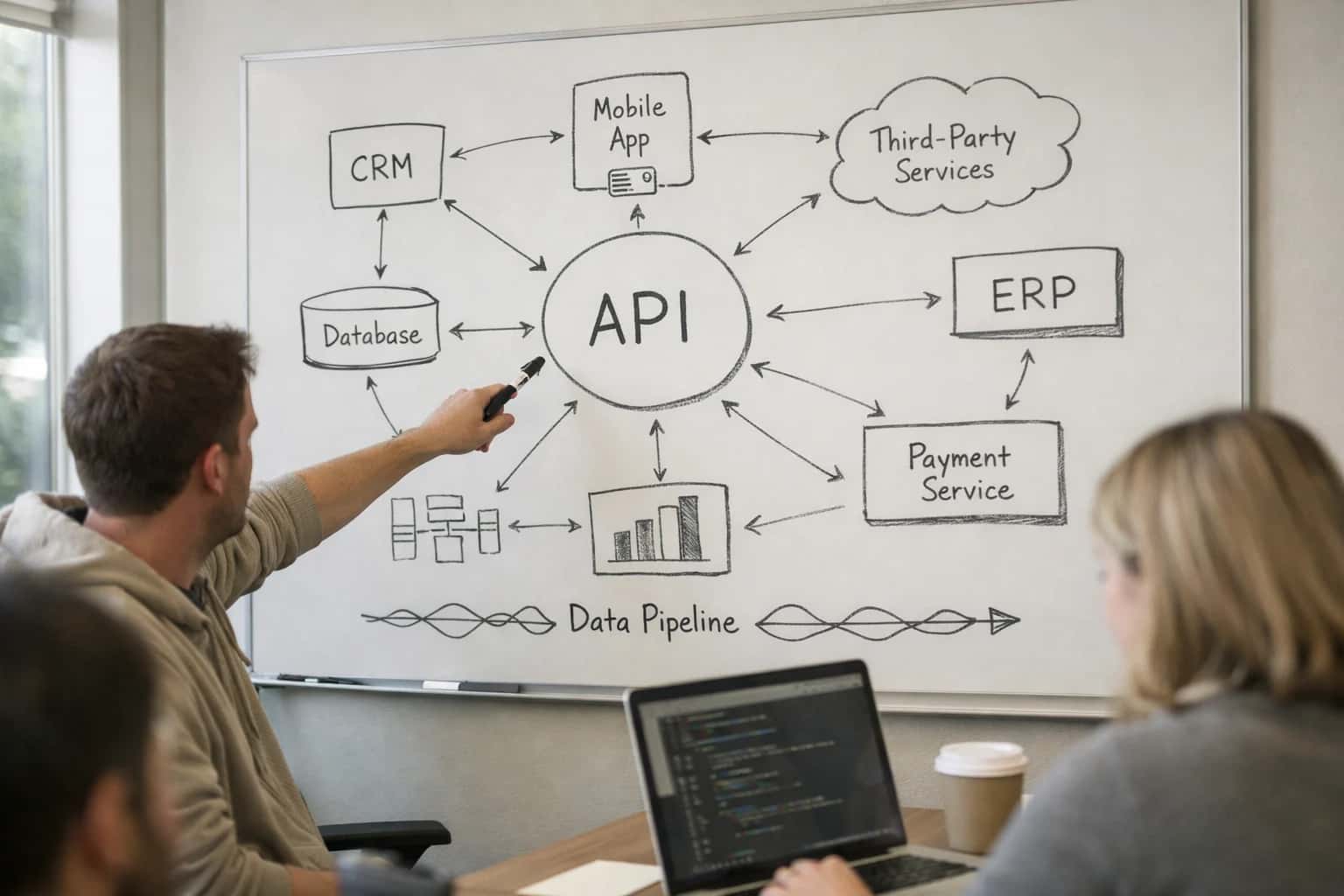
AI integration for payments processing connects directly to the core banking platform's transaction posting engine and payment hub. For platforms like Temenos Transact, Oracle FLEXCUBE, or Mambu, this typically involves intercepting payment messages (e.g., ISO 8583, SWIFT MT, SEPA) via API hooks or listening to event streams. The AI layer acts as a real-time decisioning service that analyzes payment attributes—amount, counterparty, geography, historical patterns—to execute three key functions: optimal routing (selecting the cheapest/fastest corridor), exception triage (flagging items with missing data for automated enrichment or manual review), and fraud scoring (assigning a risk probability before final posting to the ledger).
A production implementation uses a microservices-based architecture where the AI service is deployed as a containerized component, separate from the core banking monolith. It subscribes to payment initiation events via a message queue (e.g., Kafka, RabbitMQ), processes each transaction in under 100-300ms, and returns a structured JSON payload with recommendations. For batch payment files (e.g., ACH, BACS), the integration taps into the platform's bulk processing modules, using AI to pre-validate entries, predict failures, and segment items for straight-through processing versus exception workflows. Governance is enforced through a human-in-the-loop approval step for high-risk or high-value exceptions, with all AI decisions logged to the core banking audit trail for model monitoring and regulatory compliance.
Rollout follows a phased approach, starting with non-critical payment types (e.g., internal transfers) to validate accuracy and latency before moving to high-volume retail or cross-border flows. The integration must respect the core platform's data residency and security policies, often requiring the AI model to be deployed within the bank's private cloud. Success is measured by reduction in manual exception handling, decrease in payment fraud losses, and improvement in routing cost efficiency—typically achieving a 20-40% reduction in operational touchpoints for targeted payment streams.
PAYMENTS PROCESSING
Code and API Payload Examples
Real-Time Fraud Scoring
Integrate AI directly into the payment authorization flow to score transactions before they post. This pattern listens for payment events (e.g., from Temenos Transact's T24.TransactionService or Mambu's POST /transactions), enriches them with customer history, and returns a risk score and recommended action (e.g., ALLOW, REVIEW, BLOCK). The decision is passed back to the core banking engine to hold or release the payment.
Example Workflow:
- Core banking platform publishes a payment event to a message queue.
- AI service consumes the event, retrieves the last 30 days of account activity via API.
- A fraud model scores the transaction based on amount, location, merchant, and behavioral patterns.
- Service returns a decision payload to the core system's transaction hold/release API.
python# Pseudo-code for a real-time scoring service from core_banking_sdk import get_account_transactions from ai_client import score_transaction def evaluate_payment(event): # Enrich with recent history recent_txns = get_account_transactions( account_id=event['accountId'], days=30 ) # Score with AI model risk_result = score_transaction({ 'current': event, 'history': recent_txns }) # Format decision for core banking API return { 'transactionId': event['id'], 'riskScore': risk_result['score'], 'recommendedAction': risk_result['action'], 'reasonCodes': risk_result['flags'] }
PAYMENTS PROCESSING
Realistic Time Savings and Operational Impact
How AI integration for core banking platforms transforms key payments operations from batch-driven to real-time intelligent workflows.
| Metric | Before AI | After AI | Notes |
|---|---|---|---|
Payment Exception Triage | Manual review of 1000+ daily exceptions | AI-assisted prioritization & routing | Ops team focuses on top 5-10% of complex cases flagged by AI |
Fraud Screening Alert Volume | 1000+ daily alerts for manual review | AI pre-screens & clusters, reducing alerts by ~70% | Human analysts review high-risk clusters; low-risk auto-cleared |
Payment Routing Optimization | Static rules-based routing | Dynamic routing based on cost, speed, and success rate | AI suggests optimal corridor; human approves for high-value payments |
Batch Payment Reconciliation | Overnight reconciliation, manual mismatch resolution | Near-real-time reconciliation with AI flagging discrepancies | Mismatches identified within minutes vs. next business day |
Sanctions & PEP Screening | Batch screening overnight, manual false-positive review | Real-time screening with AI reducing false positives by ~50% | Integrates with transaction posting engine; audit trail maintained |
Customer Inquiry on Payment Status | Agent manually traces through multiple systems | AI-powered chatbot provides real-time status & estimated completion | Deflects ~40% of status inquiries; escalates complex cases to agent |
Regulatory Reporting (e.g., Large Transaction Reports) | Monthly manual compilation from ledger extracts | AI auto-generates draft reports from transaction data | Compliance officer reviews & submits; cuts preparation time by 60% |
ARCHITECTING FOR PRODUCTION
Governance, Security, and Phased Rollout
Integrating AI into payment processing requires a controlled, audit-ready approach that preserves the integrity of core banking ledgers.
Production AI for payments is not a single model but a governed workflow that interacts with core banking objects. This typically involves a middleware layer that subscribes to payment events (e.g., via Temenos T24's jBase or Temenos Integration Framework, Mambu's webhooks, or Oracle FLEXCUBE's Event Notification Framework). The AI service receives a payload containing the transaction details, account data, and historical context, processes it for routing, fraud, or exception handling, and returns a decision or enrichment payload. This decision is logged to a dedicated audit table before any core banking transaction (FT, STMT, ACCT) is posted or modified, ensuring a complete, reversible trail.
A phased rollout is critical. Phase 1 often starts with shadow mode, where AI recommendations are generated and logged but not acted upon, running parallel to existing rules engines. This builds confidence in the model's accuracy for tasks like identifying exception items for manual review or scoring SWIFT MT103 messages for potential fraud. Phase 2 introduces assisted decisioning, where the AI's output is presented to a payments operator in the core banking workstation or a separate dashboard for approval before posting. The final phase is guarded automation for low-risk, high-volume decisions—like optimizing payment routing based on cost and speed—with hard business rule guardrails and continuous performance monitoring.
Security is paramount. The AI service must operate under the principle of least privilege, accessing only the payment and customer data necessary for its specific task via secure, authenticated APIs. Sensitive data like full account numbers should be tokenized or masked in prompts. All model inputs, outputs, and the reasoning chain (via tracing tools) must be logged to a secure, immutable store separate from the core banking platform for compliance reviews and model drift detection. This architecture ensures that AI enhances payment operations without introducing unmanaged risk into the financial ledger.
Enabling Efficiency, Speed & Accuracy
Intelligent Analysis, Decision & Execution
We build AI systems for teams that need search across company data, workflow automation across tools, or AI features inside products and internal software.
Talk to Us
Search across company data
Give teams answers from docs, tickets, runbooks, and product data with sources and permissions.
Useful when people spend too long searching or get different answers from different systems.
Enterprise searchRAGPermissions
Read more
Automate internal workflows
Use AI to route work, draft outputs, trigger actions, and keep approvals and logs in place.
Useful when repetitive work moves across multiple tools and teams.
AI agentsWorkflow automationGovernance
Read more
Add AI to products and internal tools
Build assistants, guided actions, or decision support into the software your team or customers already use.
Useful when AI needs to be part of the product, not a separate tool.
AI integrationDecision supportModel routing
Read moreAI INTEGRATION FOR PAYMENTS
Frequently Asked Questions
Practical questions for architects and operations leaders planning to embed AI into payment processing workflows within Temenos, Mambu, Oracle FLEXCUBE, or Finacle.
AI models are triggered by the core banking platform's payment posting engine via an API call or event stream (e.g., Kafka).
- Trigger: A payment instruction (SWIFT, SEPA, Faster Payments) hits the core platform's transaction processing module.
- Context Pulled: The integration layer extracts the transaction payload, sender/receiver history, account balances, and recent activity patterns via core banking APIs.
- Model Action: A fraud scoring model (or routing optimization model) evaluates the transaction in milliseconds. For fraud, it might check for anomalies in amount, location, or beneficiary patterns.
- System Update: The model returns a score (e.g.,
risk_score: 0.87) and recommendation (e.g.,action: "HOLD_FOR_REVIEW"). - Human Review Point: High-risk scores are routed to a dedicated case queue in the core banking system's exception handling module, where investigators receive the AI's reasoning alongside the transaction details.
Key Integration Point: The hook is typically in the pre-validation or pre-posting stage of the payment lifecycle. This requires read access to customer and transaction master data and write access to the exception/workflow management tables.

About the author
Prasad Kumkar
CEO & MD, Inference Systems
Prasad Kumkar is the CEO & MD of Inference Systems and writes about AI systems architecture, LLM infrastructure, model serving, evaluation, and production deployment. Over 5+ years, he has worked across computer vision models, L5 autonomous vehicle systems, and LLM research, with a focus on taking complex AI ideas into real-world engineering systems.
His work and writing cover AI systems, large language models, AI agents, multimodal systems, autonomous systems, inference optimization, RAG, evaluation, and production AI engineering.
LinkedIn
Limited slotsGet a Free AI Consultation
Partnered with leading AI, data, and software stack.





How We Work
Custom AI workflows for your Business
One-fit-all AI don't work for modern businesses. At Inferensys, we aim to understand your business & custom requirements; which we use to define most efficient agentic workflows, the data, and the tools for your business.
01
Review the use case
We understand the task, the users, and where AI can actually help.
Read more02
Pick the right approach
We define what needs search, automation, or product integration.
Read more03
Build the first useful version
We implement the part that proves the value first.
Read more04
Improve from there
We add the checks and visibility needed to keep it useful.
Read moreThe first call is a practical review of your use case and the right next step.
Talk to Us